



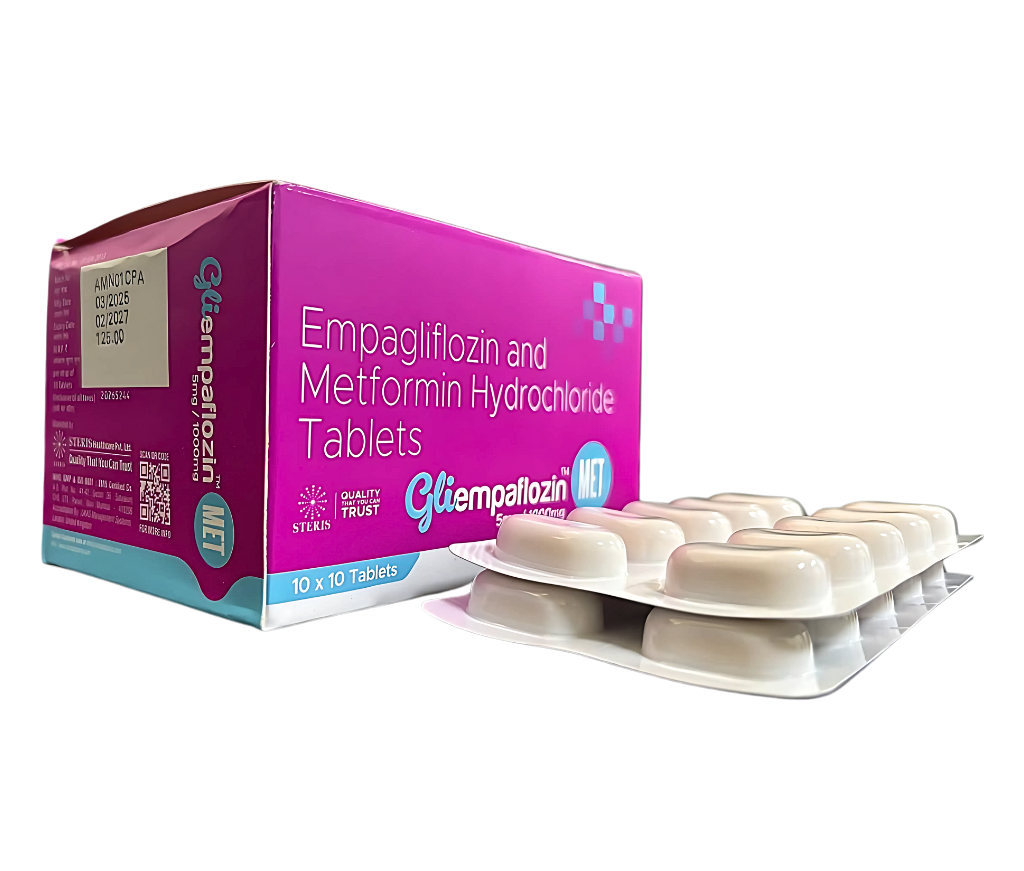
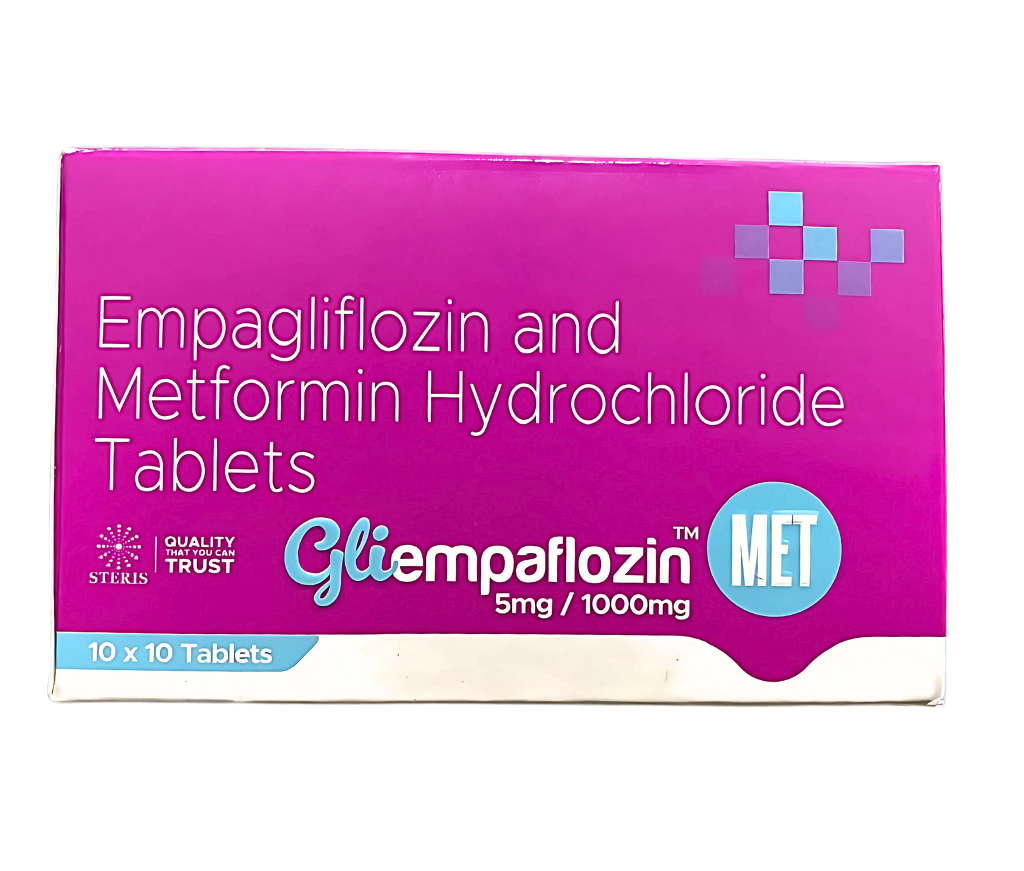
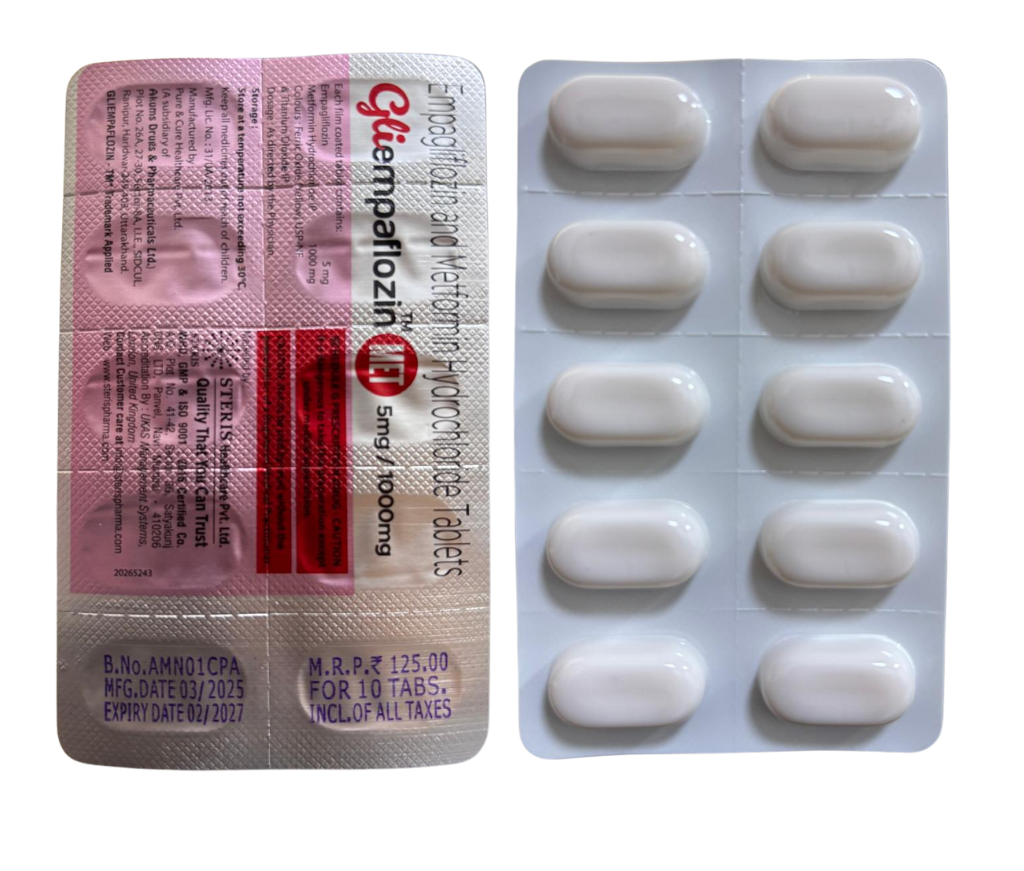
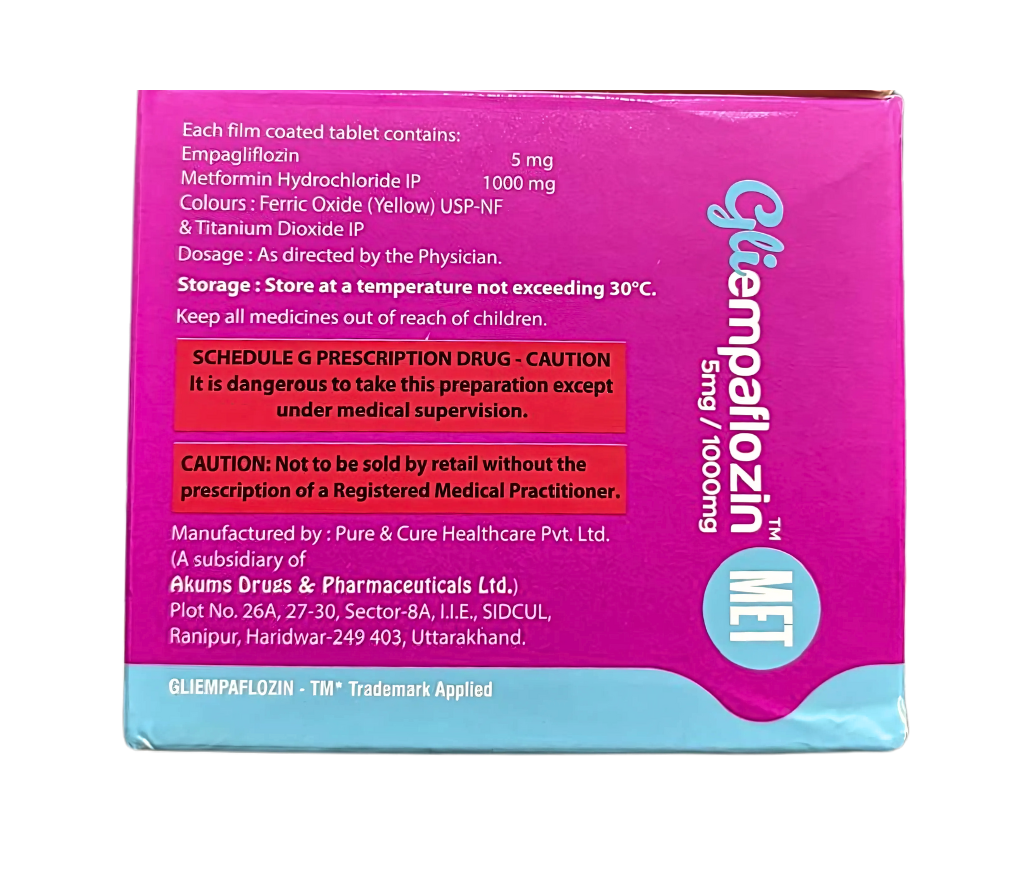
GLIEMPAFLOZIN MET 5mg/ 1000mg
 Item requires a valid prescription
Manufactured By Steris Healthcare Pvt Ltd
Composition Empagliflozin (5mg) , Metformin Hydrochloride (1000mg)
Rs 80.28
MRP Rs 114.68
(30% OFF)
Includes all taxes
Package SIZE
( for 10 tablets )

100% Authentic
Products

Free
Shipping*

Products
Return Policy
Description:
Empagliflozin/metformin hydrochloride is a combination of two medicines used to improve blood-glucose control in people with type 2 diabetes mellitus:
- Empagliflozin — a sodium-glucose cotransporter-2 (SGLT2) inhibitor.
- Metformin hydrochloride — a biguanide that improves insulin sensitivity and reduces glucose production by the liver.
Combination products such as empagliflozin/metformin are used together with diet and exercise when treatment with both medicines is appropriate. Current U.S. prescribing information also recognizes important cardiovascular benefits of empagliflozin in specified adults with type 2 diabetes and established cardiovascular disease or heart failure.
The exact product can be available in different strengths and formulations, including immediate-release and extended-release versions. Therefore, consumers should always check the exact empagliflozin and metformin strengths on the prescription and product packaging.
Empagliflozin Metformin Hydrochloride Uses
1. Type 2 Diabetes
The primary empagliflozin metformin hydrochloride use is improving blood-sugar control in adults with type 2 diabetes as an adjunct to diet and exercise. The FDA also approved empagliflozin and the combination product Synjardy for improving glycemic control in children aged 10 years and older with type 2 diabetes.
The two ingredients work differently, making the combination useful when both mechanisms are clinically appropriate.
2. Cardiovascular Risk Reduction in Selected Patients
Empagliflozin has benefits extending beyond glucose lowering. When used as part of the combination product, empagliflozin is indicated in certain adults with type 2 diabetes and established cardiovascular disease to reduce the risk of cardiovascular death. It is also indicated in adults with heart failure to reduce cardiovascular death and hospitalization for heart failure.
These benefits do not mean that every person taking empagliflozin/metformin has the same cardiovascular indication. Treatment should be based on the patient's diagnosis and medical history.
How Does Empagliflozin Metformin Work?
The combination uses two complementary mechanisms.
How empagliflozin works
Empagliflozin blocks SGLT2, a protein involved in glucose reabsorption by the kidneys. Blocking SGLT2 causes more glucose to be eliminated through the urine.
This can lower blood glucose and may also contribute to beneficial effects on cardiovascular and kidney-related outcomes in appropriate patients.
How metformin works
Metformin primarily reduces glucose production by the liver and improves the body's response to insulin.
Why combine them?
Using the two medicines together can address blood glucose through different pathways. The combination may therefore provide greater glucose-lowering activity than either component alone when both are appropriate for the patient.
Key Benefits of Empagliflozin Metformin Hydrochloride
1. Helps improve blood-glucose control
The principal benefit is better management of blood glucose in people with type 2 diabetes when combined with appropriate diet and exercise.
2. Combines two diabetes medicines in one treatment
A fixed-dose combination can simplify treatment for patients who have been prescribed both empagliflozin and metformin.
3. Potential cardiovascular benefits
Empagliflozin has demonstrated clinically important cardiovascular benefits in specific patient populations. Current labeling includes reduction of cardiovascular death in adults with type 2 diabetes and established cardiovascular disease and reduction of cardiovascular death and hospitalization for heart failure in adults with heart failure.
4. May support kidney-related protection in appropriate patients
SGLT2 inhibitors have important kidney-related effects, although the specific indication depends on the individual medicine, formulation and patient's condition. Empagliflozin should not be represented as a universal treatment for every type of kidney disease.
Empagliflozin Metformin Dosage
The appropriate dose depends on:
- Current diabetes treatment
- Kidney function
- Blood-glucose control
- Tolerability
- The exact product formulation
- Other medicines being taken
For the U.S. immediate-release combination product described in current prescribing information, available strengths include 5 mg/500 mg, 5 mg/1,000 mg, 12.5 mg/500 mg and 12.5 mg/1,000 mg of empagliflozin/metformin hydrochloride. The maximum recommended daily amount is 25 mg of empagliflozin and 2,000 mg of metformin hydrochloride for that product.
Do not use these figures to select your own dose. Extended-release products can have different dosing instructions.
Renal function should be assessed before starting therapy and monitored as clinically appropriate. The current combination labeling states that initiation is not recommended below an eGFR of 45 mL/min/1.73 m² for the referenced immediate-release product because of the metformin component, while severe renal impairment, end-stage renal disease or dialysis are contraindications.
Empagliflozin Metformin Side Effects
Like all medicines, empagliflozin/metformin can cause side effects.
Commonly reported effects include:
- Diarrhea
- Nausea
- Vomiting
- Abdominal discomfort
- Indigestion
- Increased urination
- Urinary tract infections
- Genital fungal infections
- Headache
- Weakness or fatigue
The FDA identifies urinary tract infections and female genital mycotic infections among common adverse reactions associated with empagliflozin, while gastrointestinal effects such as diarrhea, nausea and vomiting are common with metformin.
Not every patient experiences these effects.
Important Serious Side Effects
Diabetic Ketoacidosis
Empagliflozin can increase the risk of diabetic ketoacidosis (DKA), which can occasionally occur even when blood glucose is not extremely high.
Warning symptoms can include:
- Nausea or vomiting
- Abdominal pain
- Unusual tiredness
- Difficulty breathing
- Confusion
- Unusual sleepiness
If ketoacidosis is suspected, urgent medical evaluation is required. Current labeling recommends evaluating patients with symptoms of metabolic acidosis for ketoacidosis regardless of their blood-glucose level.
Empagliflozin/metformin is not recommended for type 1 diabetes because of this increased DKA risk.
Lactic Acidosis
Metformin carries a boxed warning for metformin-associated lactic acidosis, a rare but potentially life-threatening complication. Risk can increase with factors such as significant renal impairment, certain acute illnesses, excessive alcohol intake and other conditions that affect oxygenation or lactate metabolism.
This is one reason kidney function is important when considering treatment.
Dehydration and Low Blood Pressure
Empagliflozin increases urinary glucose and can contribute to increased urination and fluid loss. In susceptible people, this can cause volume depletion, dizziness or low blood pressure.
Older adults and people with impaired kidney function or those taking loop diuretics may require particular attention to hydration and renal function.
Genital and Urinary Infections
Because empagliflozin increases glucose excretion in urine, it can increase the risk of urinary tract and genital fungal infections.
Persistent pain, fever, burning urination, unusual genital symptoms or severe discomfort should be discussed promptly with a healthcare professional.
Who Should Use Empagliflozin Metformin With Caution?
Tell your healthcare professional if you have:
- Kidney disease
- Liver disease
- Heart failure
- Frequent urinary or genital infections
- Low blood pressure
- A history of diabetic ketoacidosis
- Type 1 diabetes
- A planned surgery
- A planned contrast-enhanced imaging procedure
- Heavy alcohol consumption
The combination can require temporary interruption during certain illnesses, procedures or situations that increase the risk of dehydration or ketoacidosis.
Current prescribing information also notes that the medicine may need to be discontinued around iodinated contrast imaging procedures in appropriate circumstances.
Empagliflozin Metformin and Kidney Function
Kidney function is particularly important with this combination because both clinical safety and dosing are influenced by renal function, especially because of metformin.
Before treatment and periodically during therapy, your healthcare professional may check kidney function using measures such as eGFR.
Patients should not assume that an older prescription remains appropriate if kidney function has changed.
Empagliflozin Metformin and Weight
Empagliflozin can cause some patients to lose weight because glucose and calories are eliminated through urine. However, the amount of weight change varies considerably between individuals.
This medicine should not be marketed as a dedicated weight-loss drug. Its primary role in the combination is treatment of type 2 diabetes, with additional approved cardiovascular benefits for certain patients.
Buying Empagliflozin Metformin Hydrochloride
For transactional searches such as “buy empagliflozin metformin hydrochloride,” “empagliflozin metformin price,” “buy empagliflozin metformin tablets online,” or “empagliflozin metformin tablets,” buyers should focus on authenticity and the exact prescribed formulation.
Before purchasing, check:
- Active ingredients: Empagliflozin + metformin hydrochloride.
- Exact strength: Confirm both strengths.
- Formulation: Immediate-release or extended-release.
- Manufacturer: Clearly identified.
- Batch/lot number: Present.
- Expiry date: Check before use.
- Packaging: Should be intact and properly labeled.
- Seller: Use a legitimate, appropriately licensed pharmacy.
- Prescription requirements: Follow applicable local regulations.
Do not choose a product simply because it has the lowest advertised price. A different strength or release formulation may not be an appropriate substitute.
E-E-A-T: What Makes a Trustworthy Product Page?
For medical SEO, Experience, Expertise, Authoritativeness and Trustworthiness (E-E-A-T) are particularly important.
A credible empagliflozin/metformin product page should:
- Clearly identify both active ingredients.
- Explain the medicine's role in type 2 diabetes.
- Distinguish immediate-release from extended-release formulations.
- Explain cardiovascular benefits without overpromising.
- Mention kidney-function considerations.
- Explain common and serious side effects.
- Include warnings about DKA and metformin-associated lactic acidosis.
- Avoid describing the medicine as a general weight-loss product.
- Provide transparent manufacturer, strength and packaging information.
- Encourage professional medical supervision.
The current DailyMed listing for SYNJARDY was updated January 30, 2026, providing particularly relevant current safety information about lactic acidosis and other precautions.
Frequently Asked Questions
1. What is empagliflozin metformin hydrochloride used for?
Empagliflozin metformin hydrochloride is primarily used to improve blood-glucose control in people with type 2 diabetes, together with diet and exercise. Empagliflozin also has specific cardiovascular indications in certain adults.
2. What are the main benefits of empagliflozin and metformin?
The combination provides two complementary mechanisms for controlling blood glucose. Empagliflozin may also provide cardiovascular benefits in appropriately selected patients with type 2 diabetes or heart failure.
3. What are the common side effects of empagliflozin metformin?
Common side effects can include diarrhea, nausea, vomiting, abdominal discomfort, increased urination, urinary tract infections and genital fungal infections.
4. Can empagliflozin metformin cause low blood sugar?
The combination does not necessarily cause hypoglycemia by itself as frequently as some other diabetes medicines, but the risk can increase when it is combined with insulin or insulin secretagogues. The patient's complete diabetes regimen should therefore be considered.
5. Can empagliflozin metformin be used for type 1 diabetes?
No. Empagliflozin/metformin is not recommended for type 1 diabetes because empagliflozin can increase the risk of diabetic ketoacidosis.
6. Does empagliflozin metformin help with weight loss?
Empagliflozin can lead to some weight reduction in certain patients, but empagliflozin/metformin is a diabetes medicine, not a dedicated weight-loss treatment.
7. Is empagliflozin metformin safe for people with kidney problems?
It depends on the degree of kidney impairment. Kidney function must be assessed before and during treatment, and severe renal impairment can make the combination inappropriate.
8. Can I buy empagliflozin metformin hydrochloride online?
Where online prescription purchasing is legally permitted, use a legitimate licensed pharmacy. Confirm the exact empagliflozin/metformin strength, formulation, manufacturer, batch number and expiry date before purchasing.
Conclusion
Empagliflozin metformin hydrochloride is a combination diabetes medicine containing an SGLT2 inhibitor and metformin. Its primary purpose is to improve blood-glucose control in type 2 diabetes, while empagliflozin provides additional cardiovascular benefits for certain appropriately selected patients.