


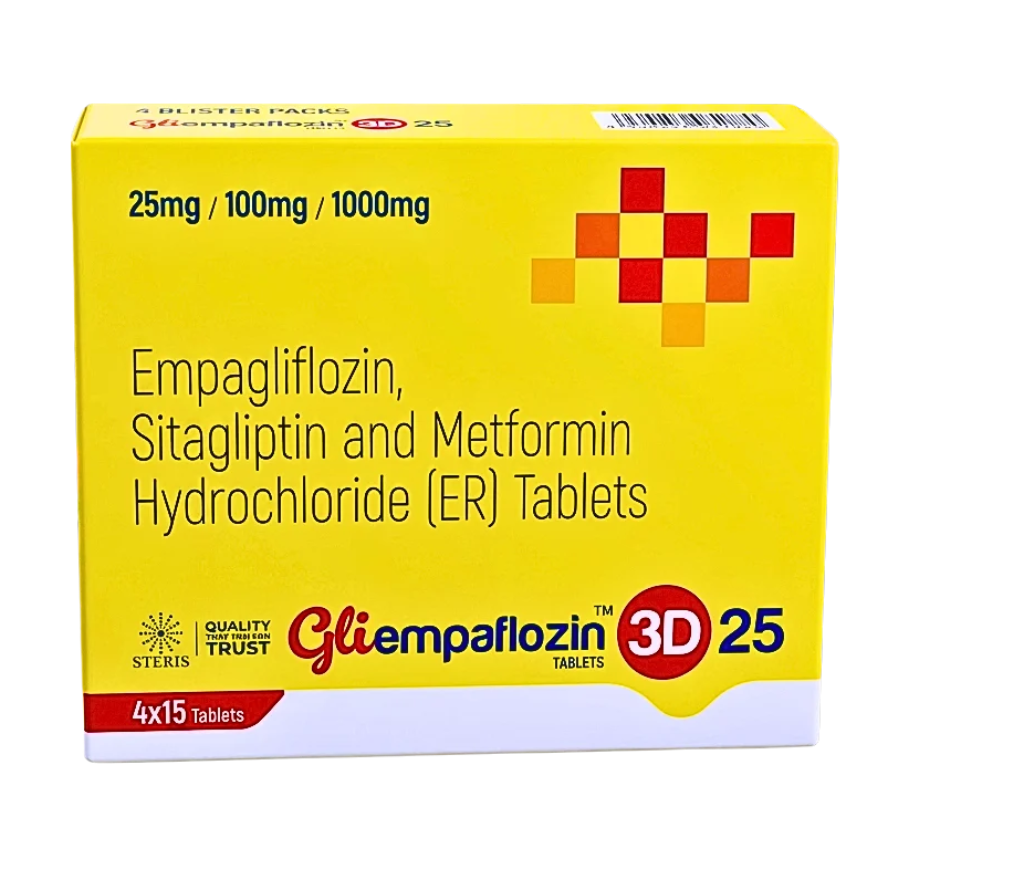
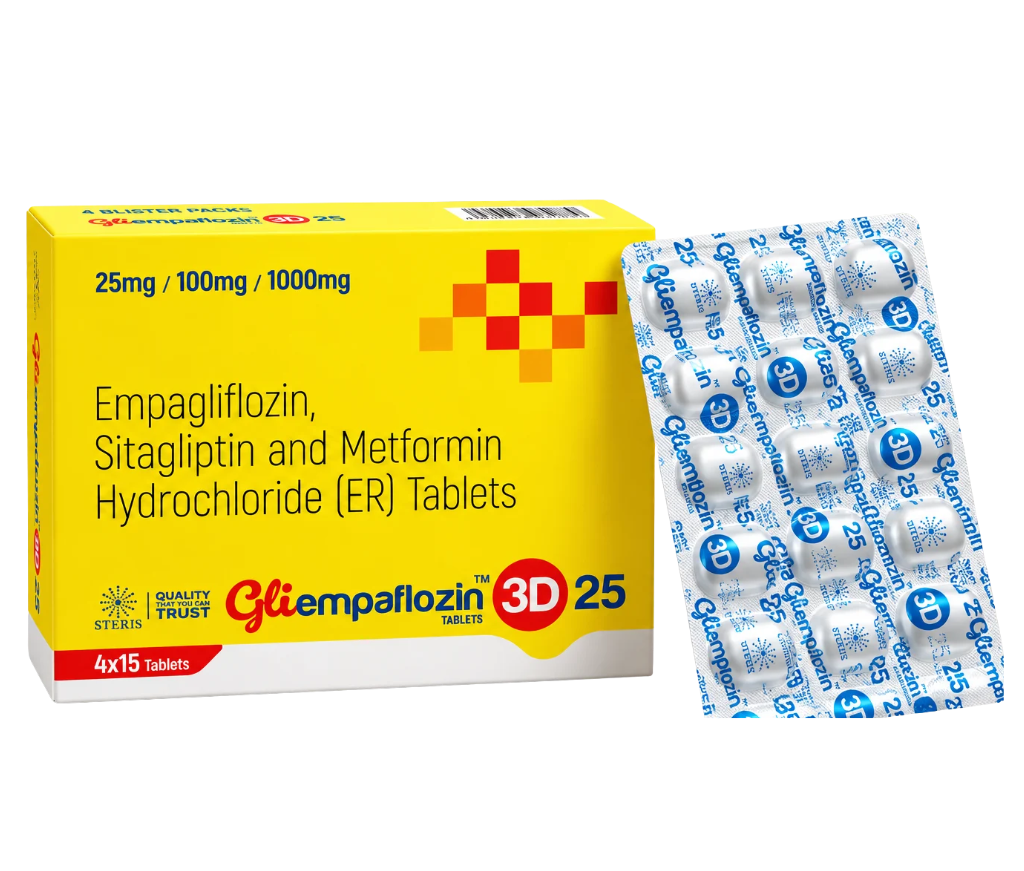
Gliempaflozin 3D 25
 Item requires a valid prescription
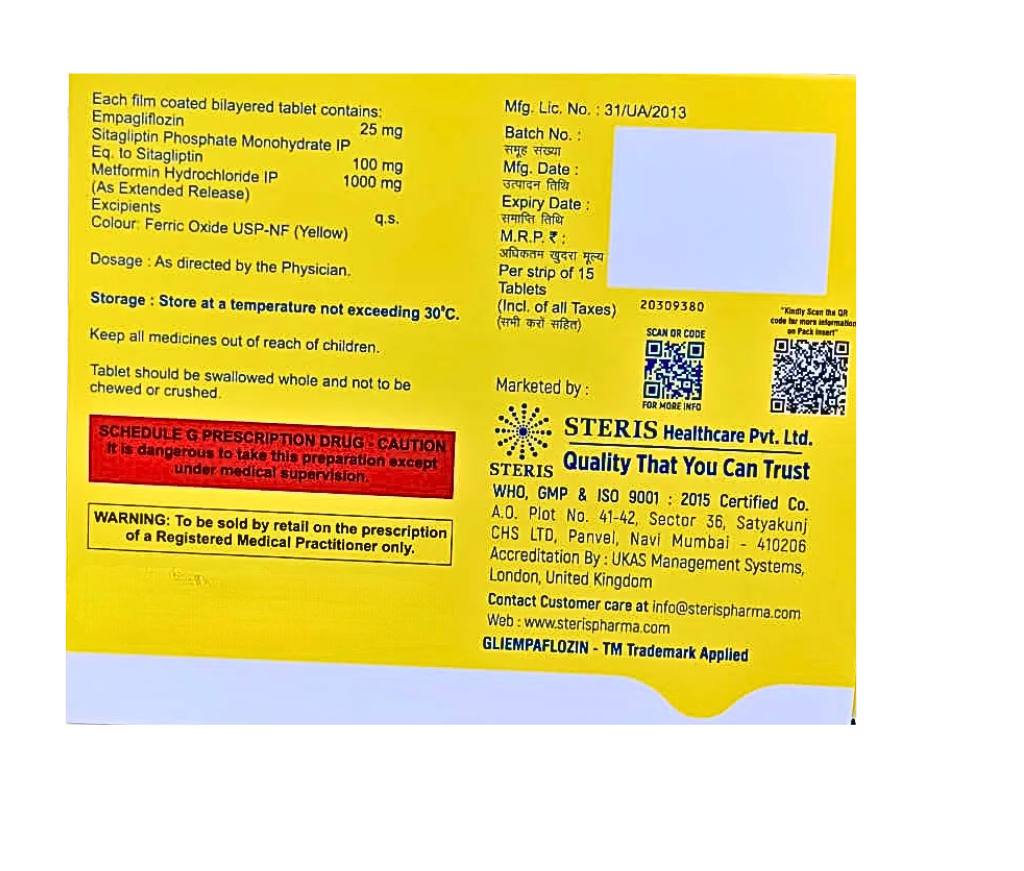
Manufactured By Steris Healthcare Pvt Ltd
Composition Empagliflozin 25 mg, Sitagliptin 100 and Metformin hydrochloride 1000
Rs 161.00
MRP Rs 230.00
(30% OFF)
Includes all taxes
Package SIZE
( For 15 Tablets )

100% Authentic
Products

Free
Shipping*

Products
Return Policy
Description:
How Do the Three Medicines Work?
Empagliflozin (SGLT2 inhibitor)
Healthy kidneys filter glucose and then reabsorb it into the blood. Empagliflozin blocks the SGLT2 protein responsible for most of this reabsorption, so extra glucose leaves the body in urine. Its action does not depend on insulin, so it can work even when insulin production is reduced. Beyond sugar control, it is associated with modest weight and blood pressure reduction.
Sitagliptin (DPP-4 inhibitor)
After meals, the gut releases hormones called incretins that tell the pancreas to release insulin and tell the liver to reduce glucagon. The enzyme DPP-4 breaks these hormones down quickly. Sitagliptin blocks DPP-4, so incretins act for longer. Because this effect depends on blood glucose level, sitagliptin carries a low risk of hypoglycemia when used on its own.
Metformin hydrochloride (biguanide)
Metformin is the most widely used first-line medicine for type 2 diabetes. It reduces glucose production by the liver, improves how muscle and fat cells respond to insulin, and slightly slows glucose absorption in the gut.
Why combine all three?
Each drug targets a different problem in type 2 diabetes: the kidney (glucose loss), the pancreas and gut hormones (insulin signalling), and the liver and tissues (insulin resistance). Using complementary mechanisms often lowers HbA1c more than increasing the dose of a single drug.
Uses of Empagliflozin, Sitagliptin and Metformin Tablets
A doctor may prescribe this combination:
- To improve blood sugar control in adults with type 2 diabetes, along with diet and exercise.
- When dual therapy is not enough and the HbA1c remains above target.
- To replace multiple separate tablets for patients already stable on the same three drugs at equivalent doses.
- When additional benefits of SGLT2 inhibitors are desired, such as support in patients with established heart or kidney disease, as judged by the treating doctor.
Key Benefits of Empagliflozin, Sitagliptin and Metformin Combination
1. Three-way glucose control
Fasting and post-meal glucose are both addressed, since each ingredient acts on a different pathway.
2. Lower pill burden
One tablet instead of three can simplify routines and support adherence, which is a major factor in long-term diabetes outcomes.
3. Low intrinsic hypoglycemia risk
None of the three drugs causes strong insulin release independent of glucose. The risk of low blood sugar is generally lower than with sulfonylureas or insulin, although it can rise when combined with those drugs.
4. Weight and blood pressure advantages
Empagliflozin is associated with weight loss and a small reduction in blood pressure. Sitagliptin and metformin are generally weight-neutral or weight-friendly.
5. Potential heart and kidney support
Empagliflozin has clinical trial evidence for cardiovascular and kidney benefits in certain patients with type 2 diabetes. Whether this matters for you is a decision for your doctor.
6. Well-established safety record of each component
Metformin has decades of use, and both sitagliptin and empagliflozin have large clinical programs behind them.
How to Take This Medicine
- Take it with meals, which reduces metformin-related stomach upset.
- Swallow the tablet whole with water. Do not crush or chew if it is an extended-release tablet.
- Take it at the same time every day.
- Drink adequate fluids, since empagliflozin increases urination.
- Do not skip, double, or stop doses without medical advice.
- Follow your diet and exercise plan, and monitor blood glucose as advised.
- Get regular HbA1c, kidney function (eGFR), and vitamin B12 checks.
Side Effects of Empagliflozin, Sitagliptin and Metformin Tablets
Common side effects
- Nausea, diarrhea, stomach discomfort, or metallic taste (mainly metformin)
- Increased urination
- Genital yeast infections (more commonly reported in women, but also seen in men)
- Urinary tract infections
- Headache, or cold-like symptoms such as a stuffy or runny nose and sore throat (sitagliptin)
Serious side effects
- Lactic acidosis (rare, from metformin): unusual muscle pain, difficulty breathing, extreme weakness, stomach pain, or feeling very cold.
- Ketoacidosis, including euglycemic type (empagliflozin): nausea, vomiting, abdominal pain, unusual tiredness, or fast breathing, even when blood sugar is not very high.
- Dehydration or low blood pressure: dizziness, fainting, or very dry mouth.
- Pancreatitis (sitagliptin): severe, persistent abdominal pain that may spread to the back, with or without vomiting.
- Severe joint pain (reported with DPP-4 inhibitors).
- Blistering skin reactions (bullous pemphigoid) and allergic reactions such as swelling of the face or throat.
- Serious genital or perineal infection (Fournier’s gangrene, very rare): pain, redness, or swelling in the genital area with fever.
- Kidney function changes.
Precautions and Who Should Avoid It
Do not use if you have:
- Type 1 diabetes or a history of diabetic ketoacidosis
- Allergy to empagliflozin, sitagliptin, metformin, or any ingredient
- Severe kidney impairment or on dialysis
- Acute conditions that may affect kidneys or cause dehydration or lactic acidosis, such as severe infection, shock, or heart attack
- Significant liver impairment
- A history of pancreatitis, unless your doctor decides otherwise
Use with caution and only under medical advice if you:
- Have reduced kidney function. Sitagliptin 100 mg is generally suited to those with preserved kidney function, and a fixed-dose tablet cannot be adjusted for kidney decline, so your doctor will check eGFR before and during treatment.
- Are elderly or on diuretics or blood pressure medicines (risk of dehydration)
- Drink alcohol heavily
- Have recurrent urinary or genital infections
- Are pregnant, planning pregnancy, or breastfeeding. This combination is generally not recommended in these situations.
- Are scheduled for surgery, prolonged fasting, or an iodinated contrast scan. Metformin and SGLT2 inhibitors often need to be paused beforehand on medical advice.
Interactions to be aware of
- Diuretics (water pills) can add to fluid loss.
- Insulin or sulfonylureas can increase the risk of low blood sugar, so doses may need adjusting.
- Alcohol raises the risk of lactic acidosis and hypoglycemia.
- Certain medicines affecting kidney function or metformin clearance may need review.
Sick-Day and Lifestyle Guidance
- Sick-day rule: If you have vomiting, diarrhea, fever, or cannot eat or drink, contact your doctor. You may be advised to temporarily pause this medicine to protect your kidneys and avoid ketoacidosis.
- Maintain good genital hygiene and stay hydrated.
- Choose balanced meals with portion-controlled carbohydrates, fibre, and lean protein.
- Stay physically active, as your doctor permits.
- Do not follow very low-carbohydrate or prolonged fasting diets without medical advice.
Buying Guide: How to Purchase Safely
If you are comparing brands, checking availability, or planning to buy:
- A valid prescription is mandatory. Reputable pharmacies, online or offline, will ask for it.
- Match the exact strength. Confirm that the pack states 25 mg empagliflozin, 100 mg sitagliptin, and 1000 mg metformin hydrochloride as prescribed. Do not switch strengths or release types yourself.
- Buy from licensed pharmacies with a verifiable drug licence and pharmacist.
- Check the label for brand name, composition, batch number, manufacturing and expiry dates, and manufacturer details.
- Prefer manufacturers with quality certifications such as WHO-GMP and ISO.
- Inspect the packaging for tampering, damage, or unclear printing.
- Compare value properly. Price varies by brand, pack size, and seller. Compare cost per tablet and the manufacturer’s stated quality standards, not just the lowest price.
- Avoid unverified sellers and deep discounts, which raise the risk of counterfeit medicines.
- Confirm current availability and pricing with your pharmacist or the manufacturer’s authorised distributor, as these can change.
- For bulk, institutional, or distributor enquiries, contact the company through its official channels for current stock and terms.
Why Trust This Information?
This guide summarises the established pharmacology, labelled uses, and safety considerations of each ingredient as described in standard drug references and product information. It is written for educational purposes and should be medically reviewed before publishing. For your CMS page, add a “Medically reviewed by [Name, Qualification, Date]” line and a “Last updated [Date]” line to strengthen trust signals. Prescribing information, dosing, and approved indications differ between countries and brands, so always rely on your doctor and the approved label.
Conclusion
Empagliflozin 25 mg, Sitagliptin 100 mg and Metformin Hydrochloride 1000 mg tablets bring three complementary mechanisms into a single prescription tablet for adults with type 2 diabetes. By helping the kidneys remove excess glucose, supporting the body’s incretin and insulin response, and reducing liver glucose output, the combination can help improve HbA1c when dual therapy falls short, with the convenience of fewer tablets. Benefits come with responsibilities. Staying hydrated, watching for infections, knowing the warning signs of ketoacidosis and lactic acidosis, and keeping up with kidney and B12 checks are all part of safe use. Because the dose is fixed, this tablet suits patients whose doctor has confirmed they need all three components at these strengths. Buy only from licensed sources with a valid prescription, and never start, change, or stop the medicine without medical advice.
Frequently Asked Questions
1. What are Empagliflozin, Sitagliptin and Metformin tablets used for?
They are used to control blood sugar in adults with type 2 diabetes, along with diet and exercise, usually when one or two medicines are not enough.
2. How does this triple combination work?
Empagliflozin removes extra glucose through urine, sitagliptin boosts the body’s mealtime insulin response, and metformin reduces liver glucose production and improves insulin sensitivity.
3. When should I take this tablet?
Take it with a meal as directed by your doctor, which helps reduce stomach side effects from metformin.
4. Is a prescription required to buy it?
Yes. It is a prescription-only medicine and should be purchased from a licensed pharmacy.
5. What are the common side effects?
Common effects include nausea, diarrhea, increased urination, genital yeast infections, urinary tract infections, headache, and cold-like symptoms.
6. Can it cause low blood sugar?
The risk is generally low when used alone, but it increases if combined with insulin or sulfonylureas, or if you drink alcohol or skip meals.
7. Does Empagliflozin, Sitagliptin and Metformin cause weight loss?
Many people lose a small amount of weight, mainly due to empagliflozin. It is not a weight-loss medicine.
8. Can I take this combination if I have kidney problems?
It depends on your kidney function. Severe kidney impairment is a contraindication, and a fixed-dose tablet cannot be adjusted for declining kidney function, so your doctor will check your eGFR.
9. Is it safe for people with heart disease?
Empagliflozin has shown cardiovascular benefits in certain patients with type 2 diabetes, but suitability must be decided by your doctor.
10. What is euglycemic diabetic ketoacidosis?
It is a rare but serious condition seen with SGLT2 inhibitors, in which ketones build up even when blood sugar is near normal. Symptoms include nausea, vomiting, abdominal pain, and unusual tiredness.
11. Can I drink alcohol while taking this medicine?
Alcohol is best avoided or limited, as it raises the risk of lactic acidosis and low blood sugar.
12. Can I take this tablet during pregnancy or breastfeeding?
It is generally not recommended. Talk to your doctor about safer alternatives.
13. Why do I need to drink more water on this medicine?
Empagliflozin increases urine output, which can lead to dehydration, especially in hot weather, illness, or if you take diuretics.
14. Does metformin cause vitamin B12 deficiency?
Long-term metformin use can reduce vitamin B12 levels, so your doctor may check it periodically.
15. Should I stop this medicine before surgery or a contrast scan?
Often yes, for a short period, but only on your doctor’s instructions. Always inform the medical team that you take this combination.
16. What should I do on sick days?
If you have vomiting, diarrhea, fever, or cannot eat or drink, contact your doctor promptly. You may need to pause the medicine temporarily.
17. How long does it take to work?
Blood sugar often begins to fall within days, while the full effect on HbA1c is usually assessed after about three months.
18. Can I stop taking it once my sugar is normal?
No. Normal readings are often the result of treatment. Stopping without medical advice can cause blood sugar to rise again.
19. What is the difference between Sitagliptin and Empagliflozin?
Sitagliptin is a DPP-4 inhibitor that supports the body’s insulin response, while empagliflozin is an SGLT2 inhibitor that helps the kidneys remove glucose through urine.
20. How can I identify a genuine product when buying online?
Buy only from licensed pharmacies, check the manufacturer details, batch number, and expiry date, and be cautious of unusually low prices or sellers who do not ask for a prescription.

