


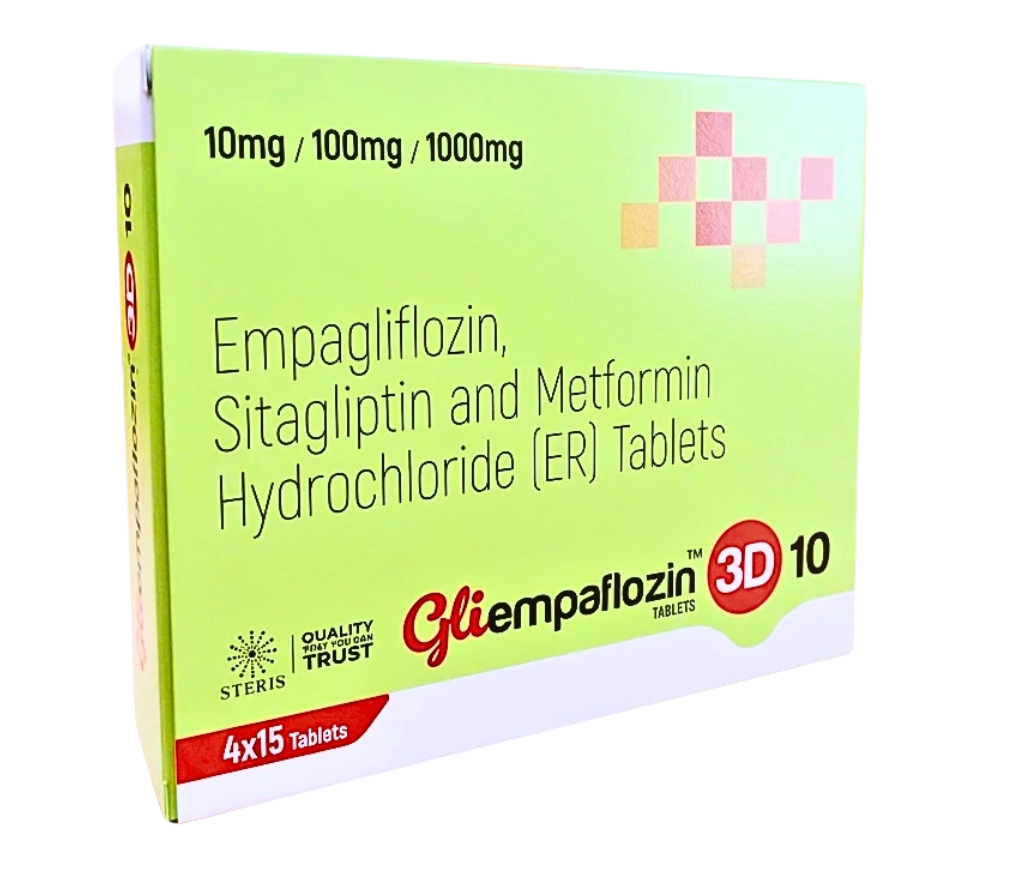
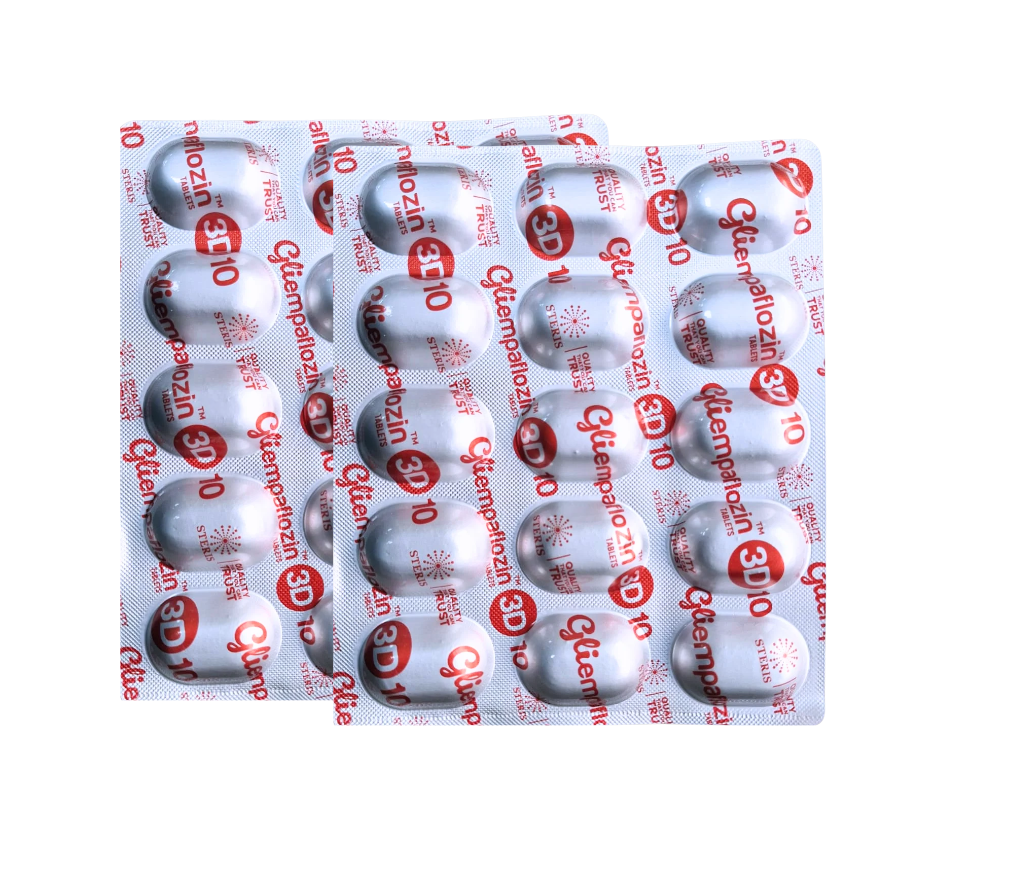
Gliempaflozin 3D 10
 Item requires a valid prescription
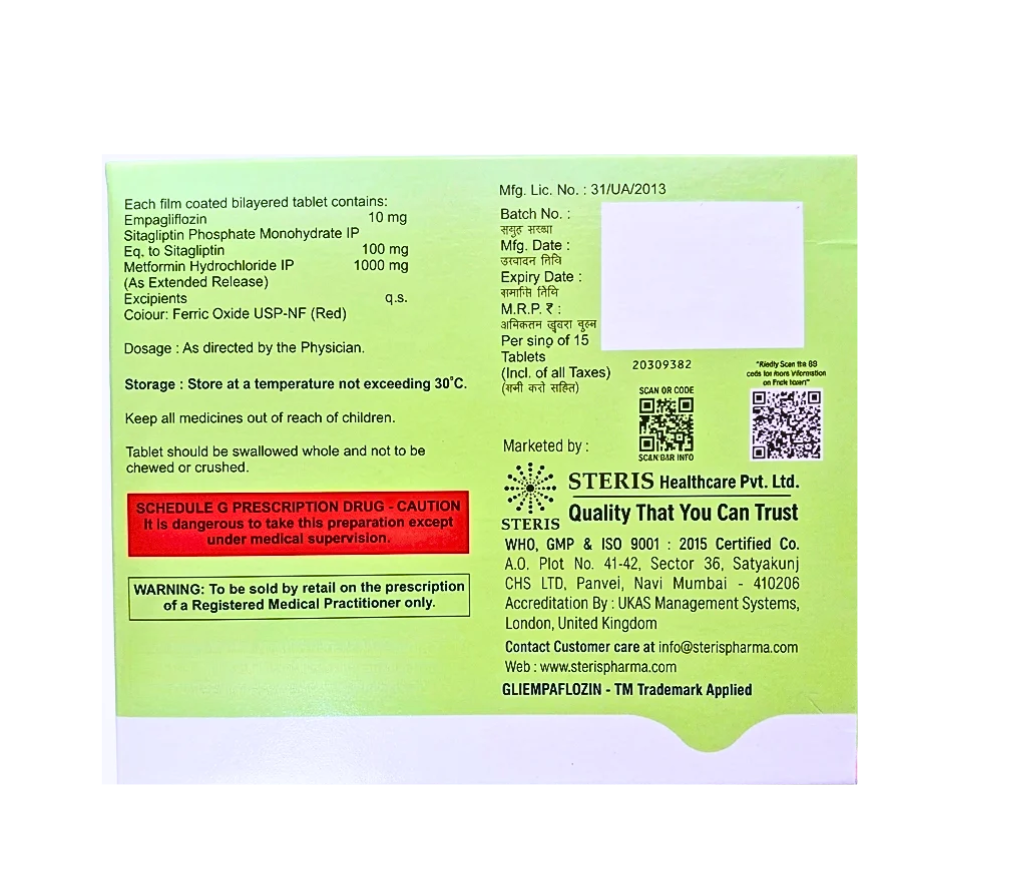
Manufactured By Steris Healthcare Pvt Ltd
Composition Empagliflozin 10 mg, Sitagliptin 100 and Metformin hydrochloride 1000
Rs 147.00
MRP Rs 210.00
(30% OFF)
Includes all taxes
Package SIZE
( For 15 tablets )

100% Authentic
Products

Free
Shipping*

Products
Return Policy
Description:
Empagliflozin 10 mg, Sitagliptin 100 mg and Metformin Hydrochloride 1000 mg tablets are a prescription-only, three-in-one medicine for adults with type 2 diabetes mellitus. They combine three actions in one tablet:
- Empagliflozin 10 mg helps the kidneys pass excess sugar out in the urine.
- Sitagliptin 100 mg prolongs the gut hormones that trigger insulin release after meals.
- Metformin 1000 mg lowers sugar production in the liver and improves insulin sensitivity.
Overview: What Is This Combination Tablet?
Type 2 diabetes changes over time. Many people who start on a single medicine eventually need two or three drugs working together. This tablet is a fixed-dose combination (FDC) that places three well-known drug classes in a single dose, so patients already stable on all three can take one tablet instead of several.
| Detail | Information |
|---|---|
| Product name | Empagliflozin 10 mg + Sitagliptin 100 mg + Metformin Hydrochloride 1000 mg Tablets |
| Dosage form | Oral tablet |
| Drug classes | SGLT2 inhibitor + DPP-4 inhibitor + Biguanide |
| Category | Anti-Diabetic / Oral Antidiabetic Combination |
| Condition | Type 2 diabetes mellitus (adults) |
| Product type | Prescription (Rx) only |
| Timing | With food, as directed by your doctor |
Why the 10 mg strength of empagliflozin matters
Empagliflozin 10 mg is the commonly used standard dose of this SGLT2 inhibitor. Doctors may choose 10 mg when a patient needs the benefits of an SGLT2 inhibitor with a gentler effect on urine output and fluid balance, or when kidney function, age or blood pressure call for a cautious approach. A higher strength is used only when the doctor decides additional glucose lowering is needed. Your doctor chooses the strength based on your kidney function, hydration status, other medicines and treatment goals.
How Do the Three Ingredients Work?
Empagliflozin: removing sugar through the kidneys
The kidneys normally return filtered glucose to the bloodstream. Empagliflozin blocks a transporter called SGLT2, which handles most of that return trip. Extra glucose is then excreted in the urine. Because this action does not rely on insulin, it can still work when the pancreas is tiring out. Many patients also see modest drops in body weight and blood pressure.
Sitagliptin: supporting the body’s own insulin signals
When you eat, the gut releases incretin hormones that tell the pancreas to release insulin and tell the liver to ease off glucagon. An enzyme called DPP-4 breaks these hormones down quickly. Sitagliptin inhibits that enzyme, so the hormones stay active longer. The effect is tied to blood sugar levels, which is why hypoglycemia is uncommon with sitagliptin alone.
Metformin: the long-standing foundation of therapy
Metformin reduces glucose output from the liver, helps muscles and fat tissue use insulin better, and slightly slows sugar absorption from the gut. It has been a cornerstone of type 2 diabetes care for decades.
The combined effect
Uses of Empagliflozin, Sitagliptin and Metformin Tablets
A doctor may prescribe this combination:
- To improve blood sugar control in adults with type 2 diabetes, alongside diet and physical activity.
- When two-drug therapy is no longer enough to keep HbA1c in the target range.
- To simplify treatment for patients already taking empagliflozin, sitagliptin and metformin separately at matching doses.
- When SGLT2 inhibitor benefits are wanted for patients who also have heart or kidney conditions, as judged by their doctor.
Key Benefits
1. Comprehensive glucose control
Fasting sugar, post-meal sugar and overall HbA1c are all targeted through different pathways.
2. Fewer tablets, better adherence
Taking one tablet instead of three makes it easier to stay consistent, and consistency is one of the strongest predictors of good long-term control.
3. Low risk of hypoglycemia on its own
None of the three drugs forces insulin release regardless of blood sugar. The risk rises mainly when combined with insulin or sulfonylureas, or with skipped meals and alcohol.
4. Helpful side benefits
Empagliflozin is linked with modest weight reduction and lower blood pressure, while metformin and sitagliptin are generally weight-neutral.
5. Evidence for heart and kidney protection in selected patients
Empagliflozin has clinical trial data showing cardiovascular and kidney benefits in certain people with type 2 diabetes. Whether that applies to you is a decision for your doctor.
6. Established components
Each ingredient has been studied extensively, and clinicians are familiar with their safety monitoring.
How to Take This Medicine
- Take the tablet with food to reduce metformin-related stomach upset.
- Swallow it whole with water. Do not crush, split or chew unless the label allows it, especially for extended-release forms.
- Take it at the same time each day.
- Drink enough fluids, as empagliflozin increases urination.
- Do not double a missed dose. Take it when you remember, unless the next dose is near.
- Keep up your meal plan and exercise routine.
- Check blood sugar as advised and attend follow-up tests, including HbA1c, kidney function (eGFR) and periodic vitamin B12 levels.
Side Effects
Common
- Nausea, loose stools, stomach discomfort or a metallic taste (usually metformin, often easing with time)
- Passing urine more often
- Genital yeast infections (reported in both women and men)
- Urinary tract infections
- Headache, stuffy or runny nose, sore throat (sitagliptin)
Serious: stop the tablet and contact a doctor urgently if you notice
- Lactic acidosis (rare): unusual muscle pain, rapid breathing, deep tiredness, stomach pain, feeling cold or dizzy
- Ketoacidosis, including the “euglycemic” type: nausea, vomiting, belly pain, unusual fatigue or fast breathing, even with near-normal sugar readings
- Dehydration or low blood pressure: lightheadedness, fainting, very dry mouth
- Pancreatitis: severe belly pain that may spread to the back, with or without vomiting
- Severe joint pain (reported with DPP-4 inhibitors)
- Blistering skin lesions or allergic reactions such as swelling of face, lips or throat
- Serious genital or perineal infection (Fournier’s gangrene, very rare): pain, redness or swelling with fever
- Changes in kidney function
Precautions and Who Should Avoid It
Do not use if you have:
- Type 1 diabetes or a past episode of diabetic ketoacidosis
- Allergy to any of the three ingredients
- Severe kidney impairment or dialysis
- Conditions that can trigger lactic acidosis or sudden dehydration, such as severe infection, shock or a recent heart attack
- Significant liver disease
- A history of pancreatitis, unless your doctor decides otherwise
Use only with medical guidance if you:
- Have reduced kidney function. A fixed-dose tablet cannot be adjusted for each ingredient, so your doctor will check eGFR before and during treatment.
- Are elderly, or take diuretics or blood pressure tablets
- Drink alcohol regularly or heavily
- Have repeated urinary or genital infections
- Are pregnant, planning pregnancy or breastfeeding. This combination is generally not advised in these situations.
- Have surgery, prolonged fasting or an iodinated contrast scan coming up. Metformin and empagliflozin often need a temporary pause on medical advice.
Interactions to be aware of
- Diuretics may add to fluid loss.
- Insulin or sulfonylureas can increase hypoglycemia risk, so doses may need review.
- Alcohol raises the risk of lactic acidosis and low sugar.
- Some medicines that affect kidney function or metformin clearance may need review.
Buying Guide: How to Purchase Safely
If you are comparing brands, checking availability or planning a purchase:
- Prescription first. Licensed pharmacies, online or offline, will ask for a valid prescription.
- Match the strengths exactly. The pack should clearly state Empagliflozin 10 mg, Sitagliptin 100 mg and Metformin Hydrochloride 1000 mg. Do not substitute with a different strength or release type unless your doctor says so.
- Use licensed sellers with a verifiable drug licence and registered pharmacist.
- Read the label for brand, composition, batch number, manufacturing and expiry dates, and manufacturer details.
- Favour certified manufacturers following WHO-GMP and ISO standards.
- Inspect the packaging for tampering, damage or faded print.
- Compare cost per tablet and quality credentials, not only the headline price. Prices vary by brand, pack size and seller.
- Be cautious with deep discounts and sellers who skip the prescription step, as these may signal counterfeit or substandard products.
- Confirm current availability and pricing with your pharmacist or the company’s authorised distributor, since these can change.
- For bulk, hospital or distributor enquiries, contact the manufacturer through official channels to confirm stock and terms.
Why Trust This Information?
This guide summarises the established pharmacology, labelled uses and safety considerations of empagliflozin, sitagliptin and metformin as found in standard drug references and product information. It is educational and should be reviewed by a qualified physician, such as a diabetologist or endocrinologist, before publication. For your CMS page, add a “Medically reviewed by [Name, Qualification, Date]” line and a “Last updated [Date]” line to strengthen expertise and trust signals. Approved indications, dosing and age limits vary between countries and brands, so always rely on your doctor and the approved label.
Conclusion
Empagliflozin 10 mg, Sitagliptin 100 mg and Metformin Hydrochloride 1000 mg tablets bring together three complementary approaches to managing type 2 diabetes: helping the kidneys remove excess glucose, supporting the body’s natural mealtime insulin response, and reducing glucose production in the liver. For adults who need triple therapy, one tablet can make daily treatment simpler and more consistent, with added advantages such as modest weight and blood pressure effects in many patients.
Good results depend on safe use. Stay hydrated, watch for infections, learn the warning signs of ketoacidosis and lactic acidosis, follow sick-day rules, and keep up with kidney and vitamin B12 tests. Because the doses are fixed, this tablet suits people whose doctor has confirmed they need all three ingredients at these strengths. Buy only from licensed sources with a valid prescription, check the label carefully, and never start, change or stop treatment without professional advice.
Frequently Asked Questions
1. What is Empagliflozin 10 mg, Sitagliptin 100 mg and Metformin 1000 mg used for?
It is used to control blood sugar in adults with type 2 diabetes, together with diet and exercise, usually when one or two medicines are not enough.
2. How does this triple combination work?
Empagliflozin removes extra glucose through urine, sitagliptin prolongs gut hormones that boost insulin release, and metformin reduces liver glucose output and improves insulin sensitivity.
3. When should I take this tablet?
Take it with a meal as directed by your doctor, which helps lessen metformin-related stomach upset.
4. Do I need a prescription to buy it?
Yes. It is a prescription-only medicine and should be purchased from a licensed pharmacy.
5. What is the difference between the 10 mg and 25 mg empagliflozin versions?
Both contain the same drug at different strengths. 10 mg is the commonly used standard dose, while 25 mg may be chosen when more glucose lowering is needed. Your doctor decides which suits you.
6. What are the most common side effects?
Nausea, loose stools, increased urination, genital yeast infections, urinary tract infections, headache and cold-like symptoms are the most common.
7. Can it cause low blood sugar?
The risk is generally low alone, but it increases if taken with insulin or sulfonylureas, or with alcohol or skipped meals.
8. Will this medicine make me lose weight?
Some people lose a small amount of weight, mostly due to empagliflozin. It is not a weight-loss medicine.
9. Is it safe if I have kidney problems?
It depends on your kidney function. It is not suitable for severe kidney impairment, and your doctor will check your eGFR regularly.
10. Can people with heart disease take it?
Empagliflozin has shown heart benefits in certain patients with type 2 diabetes, but your doctor must decide whether this combination is right for you.
11. What is euglycemic diabetic ketoacidosis?
It is a rare but serious condition seen with SGLT2 inhibitors in which ketones build up even when blood sugar looks near normal. Warning signs include nausea, vomiting, belly pain and unusual tiredness.
12. Can I drink alcohol while taking it?
It is best to avoid or limit alcohol, as it raises the risk of lactic acidosis and low blood sugar.
13. Is it safe during pregnancy or breastfeeding?
It is generally not recommended. Speak to your doctor about safer alternatives.
14. Why should I drink more water on this medicine?
Empagliflozin increases urine output, which can lead to dehydration, especially in hot weather, during illness, or with diuretics.
15. Does metformin cause vitamin B12 deficiency?
Long-term use can lower vitamin B12, so your doctor may test it periodically.
16. Should I stop it before surgery or a contrast scan?
Often a short pause is needed, but only on your doctor’s instructions. Always tell the medical team you take this combination.
17. What should I do if I am sick and cannot eat or drink?
Contact your doctor promptly. You may need to pause the medicine temporarily to protect your kidneys and avoid ketoacidosis.
18. How long does it take to work?
Blood sugar may start to improve within days, while the full effect on HbA1c is usually assessed after about three months.
19. Can I stop once my sugar levels are normal?
No. Normal readings usually reflect effective treatment. Stopping without advice can cause sugar levels to rise again.
20. How do I confirm I am buying a genuine product?
Buy from licensed pharmacies, check manufacturer details, batch number and expiry date, and be wary of unusually low prices or sellers who do not ask for a prescription.

