


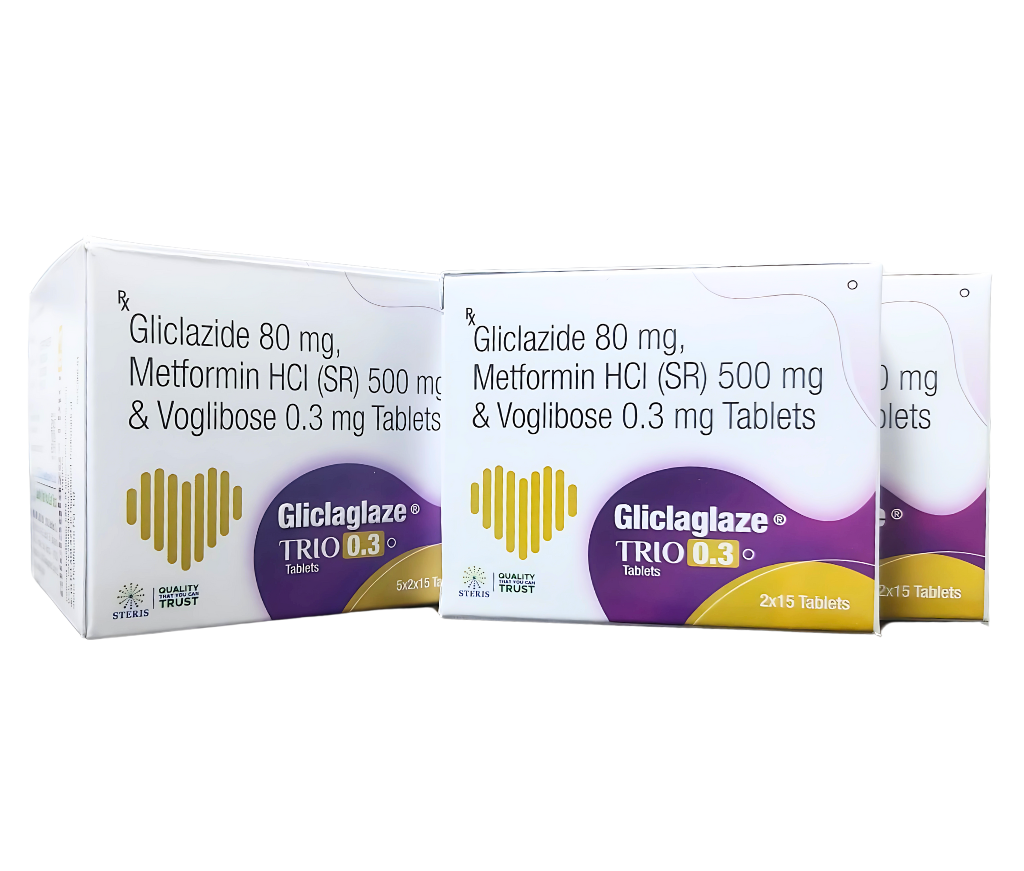
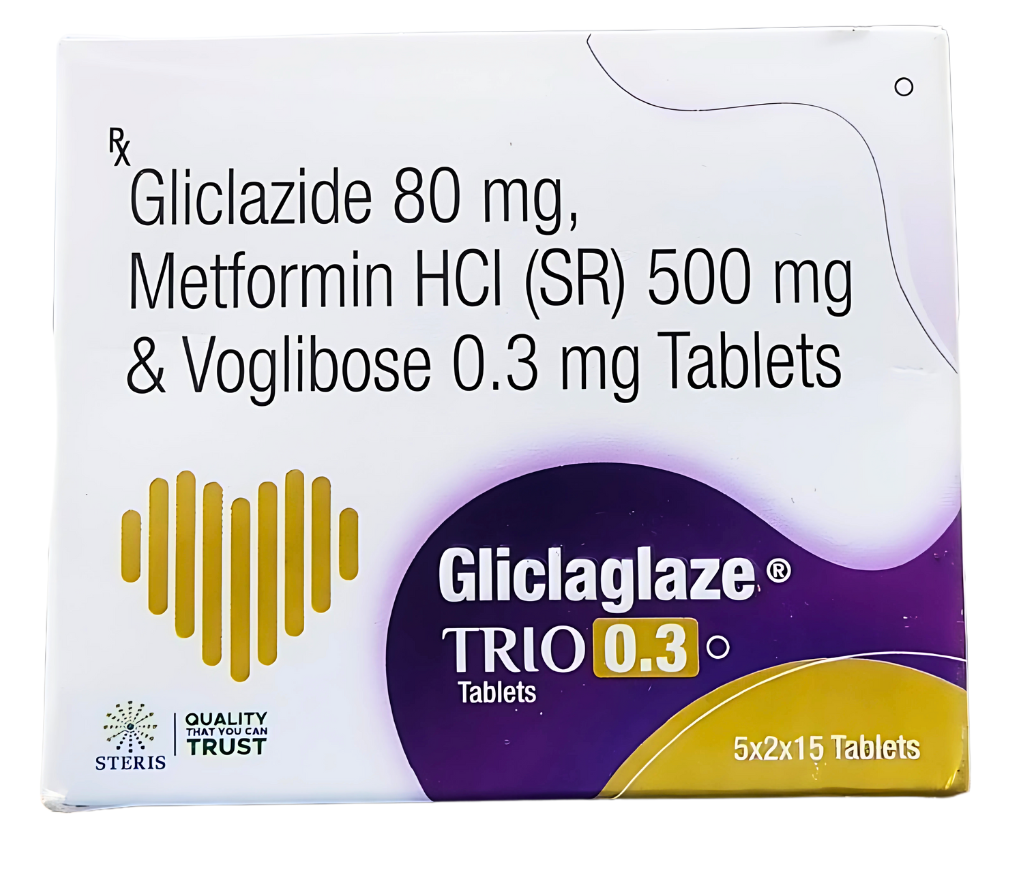
GLICLAGLAZE TRIO 0.3
 Item requires a valid prescription
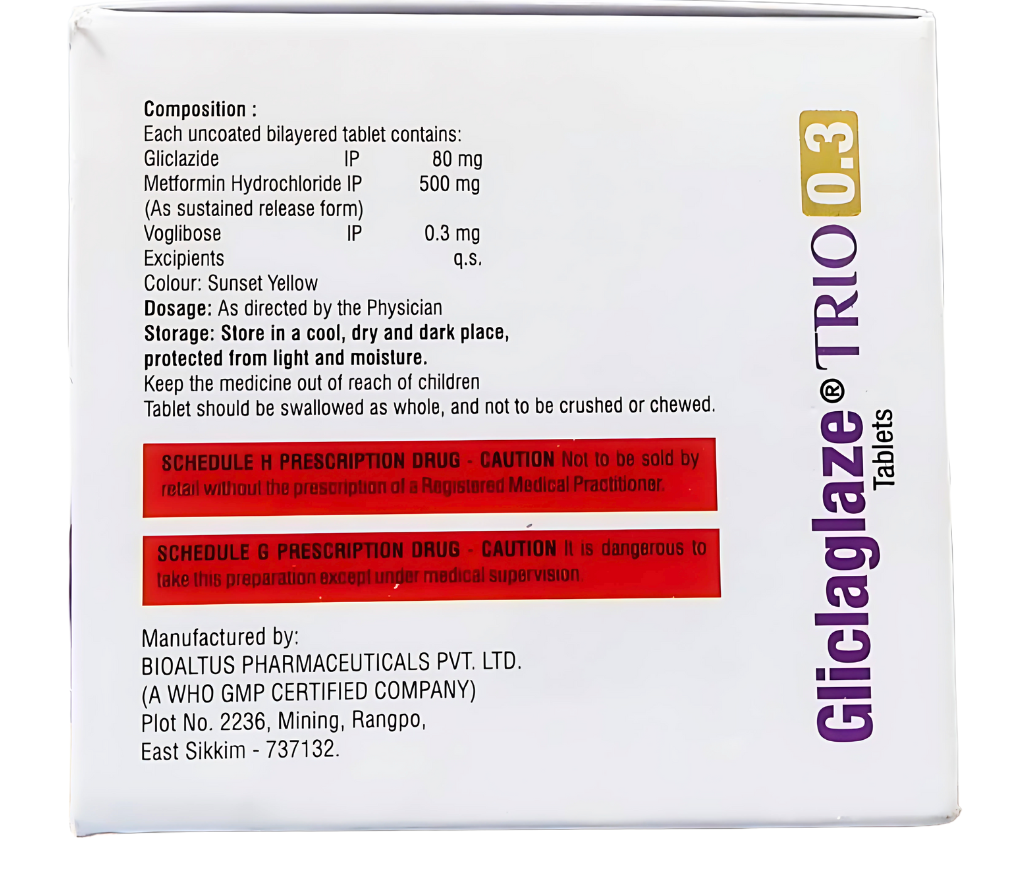
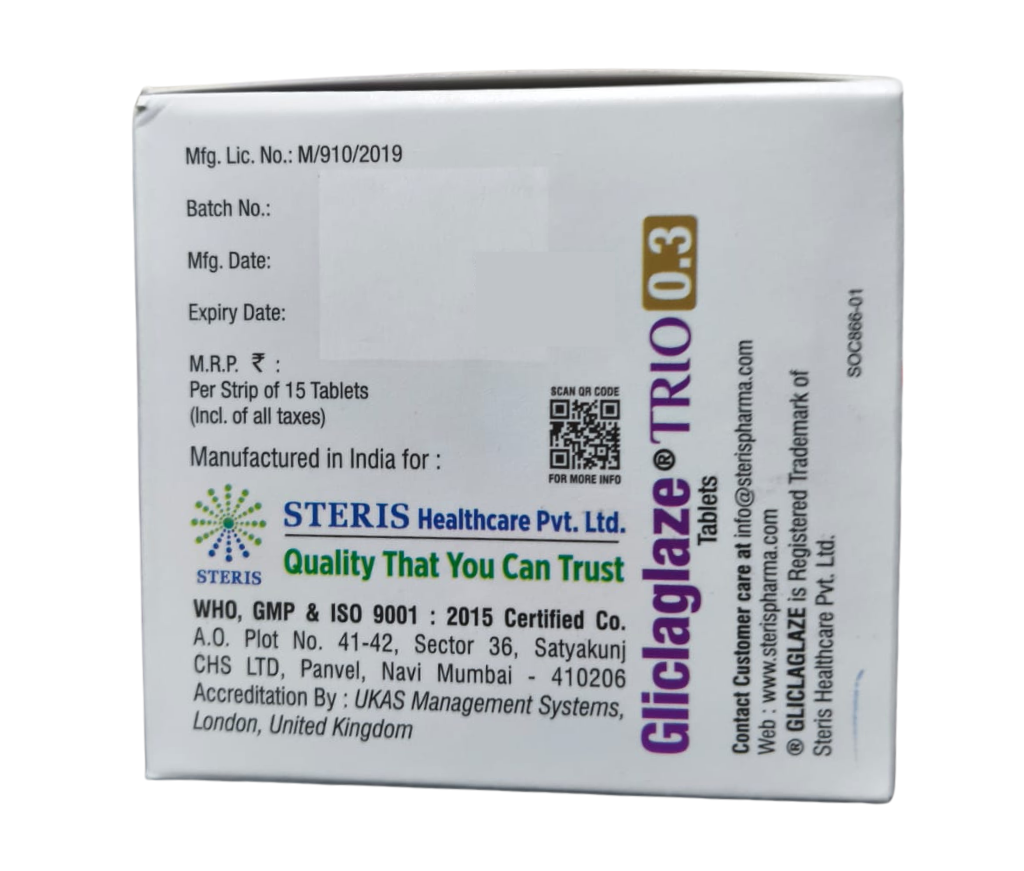
Manufactured By Steris Healthcare Pvt Ltd
Composition Voglibose (0.3mg), Metformin (500mg), Gliclazide (80mg)
Rs 121.40
MRP Rs 173.43
(30% OFF)
Includes all taxes
Package SIZE
( For 15 Tablet )

100% Authentic
Products

Free
Shipping*

Products
Return Policy
Description:
Voglibose, metformin, and gliclazide is a combination of three oral blood-glucose-lowering medicines used for the management of type 2 diabetes mellitus in appropriate adults.
The three medicines work through different mechanisms:
-
Metformin improves insulin sensitivity and reduces glucose production by the liver.
-
Gliclazide is a sulfonylurea that stimulates the pancreas to release more insulin.
-
Voglibose is an alpha-glucosidase inhibitor that slows the digestion and absorption of carbohydrates in the intestine, helping reduce the rise in blood glucose after meals.
Several products marketed in India contain this three-drug combination. For example, current Indian listings include formulations containing voglibose 0.2 mg + metformin 500 mg + gliclazide 80 mg, although strengths and release characteristics can vary by brand.
Because the exact formulation matters, consumers should check the medicine strip or prescription rather than assuming every voglibose, metformin, and gliclazide tablet contains the same doses.
What Is Voglibose Metformin Gliclazide Used For?
The primary use of Voglibose, Metformin, and Gliclazide is the treatment of type 2 diabetes mellitus when a healthcare professional determines that combination therapy is appropriate.
The combination may be considered when blood-glucose levels are not adequately controlled with lifestyle measures and/or fewer medicines.
The three components target different aspects of glucose regulation:
| Medicine | Drug class | Main role |
|---|---|---|
| Metformin | Biguanide | Reduces hepatic glucose production and improves insulin sensitivity |
| Gliclazide | Sulfonylurea | Stimulates pancreatic insulin release |
| Voglibose | Alpha-glucosidase inhibitor | Reduces the post-meal rise in blood glucose |
The advantage of combining medicines with different mechanisms is that they can address multiple contributors to high blood glucose. However, combination treatment also means patients need to understand the side effects and hypoglycemia risks associated with each component.
The 2026 American Diabetes Association Standards of Care emphasizes person-centered selection of glucose-lowering medicines, taking into account glycemic effectiveness, cardiovascular and kidney considerations, weight, hypoglycemia risk, adverse effects, cost, access, and patient preferences.
How Does Voglibose Metformin Gliclazide Work?
1. How does metformin work?
Metformin primarily decreases glucose production by the liver and improves the body's response to insulin.
It is widely used in type 2 diabetes. The ADA's 2026 guidance describes metformin as an effective, generally weight-neutral glucose-lowering medicine with a low risk of hypoglycemia when used alone.
Metformin can cause gastrointestinal symptoms, particularly when treatment begins. Slow dose escalation, taking it with food, and using an extended-release formulation when appropriate can improve tolerability.
2. How does gliclazide work?
Gliclazide belongs to the sulfonylurea class.
It stimulates the pancreas to produce more insulin, which lowers blood glucose.
Because it increases insulin release, gliclazide can cause hypoglycemia, especially when meals are skipped, food intake is inadequate, alcohol is consumed, or the dose is too high. NHS guidance identifies low blood sugar as an important adverse effect of gliclazide.
3. How does voglibose work?
Voglibose inhibits intestinal alpha-glucosidase enzymes involved in carbohydrate digestion.
As a result, carbohydrates are broken down and absorbed more slowly, helping reduce post-meal blood glucose spikes.
Gastrointestinal effects such as flatulence, bloating, abdominal discomfort, and diarrhea are characteristic of alpha-glucosidase inhibition because undigested carbohydrates remain in the intestine longer.
Key Benefits of Voglibose, Metformin, and Gliclazide
1. Multiple mechanisms for blood-glucose control
One of the main advantages of the combination is that each component works differently.
Metformin primarily addresses excessive hepatic glucose production and insulin resistance, gliclazide increases insulin secretion, and voglibose targets carbohydrate absorption after meals.
This complementary approach can help some people achieve better glycemic control than a single medicine alone.
2. Helps control blood sugar in type 2 diabetes
The combination is specifically used to help lower elevated blood glucose in adults with type 2 diabetes.
However, the goal is not simply to reduce a single glucose reading. Long-term diabetes management generally involves monitoring measures such as HbA1c, blood glucose patterns, body weight, kidney function, and cardiovascular risk.
3. Can target post-meal glucose elevations
Voglibose is particularly relevant to glucose rises after eating.
This can be useful when post-meal blood glucose contributes significantly to overall glycemic exposure.
4. Metformin generally has a low hypoglycemia risk when used alone
Metformin itself does not typically cause hypoglycemia when used as monotherapy. However, when it is combined with an insulin-releasing medicine such as gliclazide, the overall treatment regimen can cause low blood sugar.
The ADA specifically identifies sulfonylureas as medicines with hypoglycemia risk.
5. Oral combination therapy
For eligible patients, an oral combination can simplify treatment compared with taking multiple separate tablets, although whether a fixed-dose combination is appropriate depends on the patient's prescribed doses and clinical situation.
Voglibose Metformin Gliclazide Dosage
There is no single universal dose for every voglibose, metformin, and gliclazide product.
Different brands may contain different amounts of each medicine and may use immediate-release or modified-release formulations.
For example, current Indian product listings include the following:
Voglibose 0.2 mg + Metformin 500 mg + Gliclazide 80 mg.
But this should not be interpreted as the correct dose for every patient.
Your doctor may select the dose according to the following:
-
Current HbA1c
-
Fasting blood glucose
-
Post-meal glucose
-
Previous diabetes medicines
-
Kidney function
-
Liver function
-
Age
-
Diet
-
Risk of hypoglycemia
-
Other medical conditions
-
Other medicines being taken
Why shouldn't you choose the strength yourself?
Gliclazide can cause hypoglycemia, while metformin requires attention to kidney function. Voglibose can cause gastrointestinal effects.
Therefore, changing the dose without medical supervision can create unnecessary risk.
How to Take Voglibose Metformin Gliclazide
Follow the exact instructions on your prescription and medicine packaging.
Many combination products are intended to be taken with meals, particularly because voglibose works on carbohydrate digestion and gliclazide is commonly coordinated with food intake.
For gliclazide, NHS guidance states that standard formulations may be taken with meals, while modified-release gliclazide is generally taken once daily with breakfast.
However, the instructions for your particular fixed-dose combination take priority.
Important practical points
-
Take the medicine exactly as prescribed.
-
Do not skip meals when taking gliclazide unless your doctor has given you a specific sick-day plan.
-
Do not double the next dose after forgetting one unless specifically instructed.
-
Do not crush or chew modified-release tablets.
-
Continue appropriate diet and physical activity.
-
Monitor glucose as recommended by your diabetes care team.
What Happens If You Miss a Dose?
The appropriate action depends on the formulation and how close you are to the next scheduled dose.
As a general safety principle, do not take a double dose to compensate for a missed dose.
For gliclazide specifically, NHS guidance advises skipping a missed dose and taking the next dose at the usual time rather than doubling it.
Because a combination tablet contains three medicines, ask your pharmacist or doctor if you are unsure what to do after missing a dose.
Common Side Effects
Because this medicine contains three active ingredients, side effects can come from any component.
Commonly reported problems can include:
-
Nausea
-
Abdominal discomfort
-
Diarrhea
-
Constipation
-
Vomiting
-
Bloating
-
Gas or flatulence
-
Loss of appetite
-
Indigestion
-
Low blood sugar
Indian medicine information for this combination lists nausea, hypoglycemia, abdominal pain, and constipation among possible common adverse effects.
Voglibose is particularly associated with gastrointestinal symptoms such as flatulence, bloating, abdominal discomfort, diarrhea, and nausea.
Metformin commonly causes gastrointestinal intolerance, including bloating, abdominal discomfort, and diarrhea.
Hypoglycemia: The Most Important Side Effect to Understand
Hypoglycemia means blood glucose is too low.
This is especially important with the gliclazide component.
Symptoms may include:
-
Shaking
-
Sweating
-
Strong hunger
-
Dizziness
-
Fast heartbeat
-
Confusion
-
Difficulty concentrating
-
Weakness
-
Blurred vision
-
Irritability
-
Drowsiness
Gliclazide-associated hypoglycemia is more likely when meals are skipped or delayed, during fasting, with excessive exercise without adequate carbohydrate intake, after excessive alcohol consumption, or with kidney/liver problems.
If you experience symptoms of hypoglycemia, follow the low-blood-sugar treatment plan given by your diabetes team. Severe or prolonged hypoglycemia can require urgent medical attention.
Can Voglibose Metformin Gliclazide Cause Weight Gain?
The answer is possibly, because gliclazide belongs to the sulfonylurea class, which can be associated with weight gain.
Metformin is generally weight neutral and may be associated with modest weight loss, while sulfonylureas tend to have a weight-gain effect. The ADA's 2026 medication comparison identifies sulfonylureas as having weight-gain effects and hypoglycemia risk.
Therefore, people using this combination should monitor weight as part of their overall diabetes-management plan.
Voglibose, Metformin, Gliclazide, and Kidney Function
Kidney function is particularly important because metformin is cleared through the kidneys.
The ADA's 2026 Standards state that metformin is contraindicated when eGFR is below 30 mL/min/1.73 m², with additional caution needed at lower eGFR ranges.
Your doctor may therefore request kidney-function testing before and during treatment.
Do not assume that a previously tolerated dose remains appropriate if your kidney function changes.
Voglibose, Metformin, Gliclazide, and Liver Problems
Liver disease should be disclosed to your healthcare professional before starting treatment.
Gliclazide can rarely be associated with liver problems, and some product guidance recommends medical review when symptoms such as jaundice occur.
Seek medical advice if you develop:
-
Yellowing of the eyes or skin
-
Dark urine
-
Unusual persistent abdominal symptoms
-
Severe loss of appetite
-
Unexplained weakness
Metformin and Vitamin B12
Long-term metformin use can be associated with vitamin B12 deficiency.
The ADA's 2026 Standards specifically note this association and recommend monitoring and replacement when appropriate.
People taking metformin for extended periods should discuss B12 monitoring with their healthcare professional, particularly if they develop symptoms that could suggest deficiency.
Who Should Be Careful With This Medicine?
Tell your doctor if you have:
-
Kidney disease
-
Liver disease
-
Frequent hypoglycemia
-
Irregular eating patterns
-
A history of severe diabetes complications
-
Heavy alcohol use
-
Heart or circulatory problems
-
Severe gastrointestinal disease
-
A planned operation
-
Pregnancy or plans to become pregnant
-
Breastfeeding
-
A history of medication allergies
Your healthcare professional may need to modify the treatment plan or select another medicine.
Pregnancy and Breastfeeding
Do not assume that this three-drug combination is appropriate during pregnancy or breastfeeding.
Diabetes treatment frequently requires individualized changes during pregnancy, and insulin may be preferred in certain circumstances.
If you are pregnant, planning pregnancy, or breastfeeding, contact your doctor before taking or continuing a prescription combination.
Drug and Food Interactions
Before taking Voglibose, Metformin, and Gliclazide, provide your doctor or pharmacist with a complete list of
-
Prescription medicines
-
Over-the-counter medicines
-
Vitamins
-
Herbal supplements
-
Diabetes medicines
-
Blood-pressure medicines
-
Steroids
-
Other medicines that can affect blood glucose
Alcohol deserves particular attention because it can contribute to hypoglycemia in people taking gliclazide, especially when meals are skipped.
Always follow your healthcare professional's advice regarding alcohol.
Voglibose, Metformin, and Gliclazide vs. Metformin Alone
These are not interchangeable.
Metformin alone contains one active glucose-lowering medicine.
Voglibose, Metformin, and Gliclazide contain three medicines with different mechanisms.
The combination may provide greater glucose-lowering effectiveness for some patients but also introduces additional considerations, particularly hypoglycemia from gliclazide and gastrointestinal effects from metformin and voglibose.
The ADA's current approach emphasizes individualized treatment rather than automatically selecting the most medicines possible.
Voglibose, Metformin, and Gliclazide vs. Other Diabetes Combinations
Modern diabetes treatment includes several drug classes, including:
-
Metformin
-
Sulfonylureas
-
SGLT2 inhibitors
-
GLP-1 receptor agonists
-
Dual GIP/GLP-1 receptor agonists
-
DPP-4 inhibitors
-
Thiazolidinediones
-
Insulin
The right treatment depends on the patient's glucose levels, cardiovascular and kidney status, weight goals, hypoglycemia risk, cost/access, tolerability, and preferences.
The 2026 ADA Standards note that GLP-1-based therapy is preferred to insulin for initial or add-on treatment in adults with type 2 diabetes without severe hyperglycemia or a hyperglycemic crisis and that SGLT2 inhibitors or GLP-1 receptor agonists can be particularly important when cardiovascular or kidney considerations are present.
This does not mean Voglibose, Metformin, or Gliclazide is unsuitable. It means that treatment should be selected for the individual rather than based only on the number of ingredients in a tablet.
Buying Voglibose Metformin Gliclazide Online: What Buyers Should Check
If your search intent is "buy Voglibose Metformin Gliclazide online," safety should come before price.
Because this is a prescription medicine, purchase it through a legitimate pharmacy and use the exact product prescribed by your healthcare professional.
Current Indian online listings show that products with this combination are available in different brands and prices. For example, listings updated in 2026 include products containing 0.2 mg voglibose + 500 mg metformin + 80 mg gliclazide. Prices can change according to brand, pack size, discounts, location, and seller.
Before you buy, check:
-
Exact strength of all three ingredients.
-
Brand and manufacturer.
-
Immediate-release or modified-release formulation.
-
Pack size.
-
Expiry date.
-
Batch number.
-
Packaging integrity.
-
Prescription requirement.
-
Seller/pharmacy authenticity.
-
Storage conditions.
Do not purchase a cheaper product simply because the medicine names appear identical. A different strength or release formulation may not be an equivalent substitute.
Buyer-Intent Guide: How to Choose the Right Product
Someone searching for this medicine may have one of several different intentions:
"Voglibose, Metformin, and Gliclazide uses"
The user wants to understand what the combination treats.
"Voglibose, metformin, and gliclazide side effects"
The user wants safety information before taking the medicine.
"Voglibose Metformin Gliclazide price"
The user is comparing purchase options.
"Buy Voglibose, Metformin, and Gliclazide online."
The user has transactional intent and may already have a prescription.
"Voglibose, Metformin, Gliclazide 0.2/500/80"
The user may be looking for an exact strength.
For all these searches, the safest purchasing decision is to match the exact prescription and formulation, rather than simply searching for the lowest price.
E-E-A-T and Evidence-Based Perspective
High-quality diabetes content should not simply say that a medicine "controls sugar."
A trustworthy explanation should identify the following:
-
The active ingredients
-
Their mechanisms
-
Approved/recognized therapeutic use
-
Important adverse effects
-
Kidney and liver considerations
-
Hypoglycemia risk
-
Drug interactions
-
Current treatment guidance
-
The importance of individualized prescribing
The ADA Standards of Care 2026 provides current professional guidance for choosing glucose-lowering therapies based on individual clinical factors.
Gliclazide information from the NHS and medicines guidance highlights hypoglycemia as a key safety issue.
For voglibose, clinical literature identifies gastrointestinal symptoms such as flatulence, bloating, abdominal discomfort, diarrhea, and nausea as characteristic adverse effects of alpha-glucosidase inhibition.
This evidence-based approach is more useful to consumers than promising that a particular three-drug combination will work for everyone.
Frequently Asked Questions
1. What are Voglibose, Metformin, and Gliclazide used for?
Voglibose, metformin, and gliclazide is an oral combination medicine used to help control type 2 diabetes mellitus in adults when combination treatment is prescribed.
2. What are the three medicines in Voglibose, Metformin, and Gliclazide?
The combination contains voglibose, metformin, and gliclazide. The exact strength varies by product; one commonly listed Indian formulation contains 0.2 mg voglibose, 500 mg metformin, and 80 mg gliclazide.
3. How do voglibose, metformin, and gliclazide work?
Metformin reduces excessive glucose production by the liver and improves insulin sensitivity, gliclazide increases insulin release from the pancreas, and voglibose slows carbohydrate digestion and absorption.
4. Do voglibose, metformin, and gliclazide lower blood sugar?
Yes. The three medicines are glucose-lowering agents used together to improve blood-glucose control in appropriate people with type 2 diabetes.
5. Can voglibose, metformin, and gliclazide cause low blood sugar?
Yes. Gliclazide can cause hypoglycemia, particularly if meals are skipped, food intake is inadequate, alcohol is consumed, or the dose is excessive.
6. What are the common side effects of voglibose, metformin, and gliclazide?
Possible side effects include nausea, abdominal discomfort, diarrhea, constipation, bloating, gas, vomiting, and low blood sugar.
7. Does Voglibose cause gas?
Yes. Flatulence, bloating, abdominal discomfort, and diarrhea are recognized effects associated with voglibose and other alpha-glucosidase inhibitors.
8. Can I take voglibose, metformin, and gliclazide without food?
Do not change the prescribed timing. Because gliclazide and voglibose are related to meals, many formulations are taken with food. Follow the specific instructions supplied with your product and prescription.
9. Can I take this medicine if I skip breakfast?
Do not routinely skip meals while taking a medicine containing gliclazide because irregular or missed meals can increase the risk of hypoglycemia.
10. Is Voglibose, Metformin, or Gliclazide safe for kidney disease?
It depends on the severity of kidney impairment and the exact clinical situation. Metformin requires particular attention to eGFR, and the ADA states it is contraindicated below an eGFR of 30 mL/min/1.73 m².
11. Can this medicine cause weight gain?
It can. Gliclazide, as a sulfonylurea, can contribute to weight gain, whereas metformin is generally weight neutral or may cause modest weight loss.
12. Can I drink alcohol while taking voglibose, metformin, and gliclazide?
Ask your doctor or pharmacist. Alcohol can increase the risk of hypoglycemia with gliclazide, particularly when meals are skipped.
13. Can I stop voglibose, metformin, and gliclazide when my blood sugar becomes normal?
Do not stop it without medical advice. A normal glucose reading may indicate that the treatment is working; stopping medication without guidance can cause blood sugar to rise again.
14. What happens if I miss a dose?
Do not automatically double your next dose. Follow your product's missed-dose instructions or ask your pharmacist. Gliclazide guidance specifically advises against taking two doses to compensate for a missed dose.
15. Can I buy Voglibose, Metformin, and Gliclazide online?
In markets where online prescription dispensing is permitted, it should be purchased from a legitimate pharmacy and according to a valid prescription. Verify the exact strength, formulation, manufacturer, expiry date, and packaging before accepting the medicine.
16. What is Voglibose Metformin Gliclazide 0.2 mg/500 mg/80 mg?
It is a formulation containing voglibose 0.2 mg, metformin 500 mg, and gliclazide 80 mg. Current Indian listings show products with this combination, but you should verify the strength on your own prescription and packaging.
17. Is Voglibose Metformin Gliclazide the same as metformin?
No. Metformin is only one component. The combination also contains gliclazide and voglibose, which have different mechanisms and side-effect profiles.
18. Do voglibose, metformin, and gliclazide cure diabetes?
No. Type 2 diabetes is generally a long-term condition. Medicines help control blood glucose and reduce the risk of complications but should be combined with appropriate lifestyle and medical care.
19. Does this medicine replace a diabetic diet?
No. Medication works alongside appropriate nutrition, physical activity, weight management when appropriate, glucose monitoring, and regular medical follow-up.
20. Can I take Voglibose, Metformin, and Gliclazide with other diabetes medicines?
Only if prescribed. Combining glucose-lowering medicines can change both effectiveness and hypoglycemia risk. The ADA recommends reassessing medicines with higher hypoglycemia risk when additional glucose-lowering therapy is initiated.
21. Can metformin cause vitamin B12 deficiency?
Long-term metformin treatment can be associated with vitamin B12 deficiency. Periodic monitoring may be appropriate depending on individual risk factors.
22. What should I do if I experience a severe low blood sugar episode?
Follow your diabetes team's hypoglycemia plan and seek urgent medical assistance for severe, prolonged, recurrent, or unconscious episodes. Severe hypoglycemia can be life-threatening.
23. Can I take this medicine during pregnancy?
Do not take or continue this combination during pregnancy without direct medical advice. Diabetes treatment during pregnancy requires individualized management.
24. Do Voglibose, Metformin, and Gliclazide work immediately?
The medicines begin acting according to their pharmacological properties, but improvement in overall diabetes control is assessed over time using glucose readings and measures such as HbA1c. Do not change the dose based on a single reading.
25. Is Voglibose, Metformin, or Gliclazide suitable for everyone with diabetes?
No. It is intended for appropriate patients with type 2 diabetes. The treatment decision depends on kidney function, liver health, hypoglycemia risk, current glucose control, other medicines, cardiovascular and kidney conditions, and individual treatment goals.
Conclusion
Voglibose, metformin, and gliclazide is a three-drug oral combination used to manage type 2 diabetes when a healthcare professional considers combination therapy appropriate. Metformin, gliclazide, and voglibose address different aspects of glucose regulation, potentially providing broader glucose-lowering coverage than a single medicine.
Its most important advantages are its multiple mechanisms, ability to improve overall glucose control, and potential reduction of post-meal glucose elevations. However, the combination also requires careful attention to adverse effects.
The biggest safety point is hypoglycemia from gliclazide, particularly when meals are skipped or delayed. Voglibose and metformin can contribute to gastrointestinal symptoms such as bloating, abdominal discomfort, diarrhea, and nausea.
Kidney function is especially important because metformin is renally cleared, while long-term metformin therapy may also warrant attention to vitamin B12 status.
From a current treatment-guideline perspective, the 2026 ADA Standards of Care recommend person-centered selection of diabetes medicines based not only on glucose lowering but also cardiovascular and kidney disease, weight, hypoglycemia risk, adverse effects, cost, access, and patient preferences.