


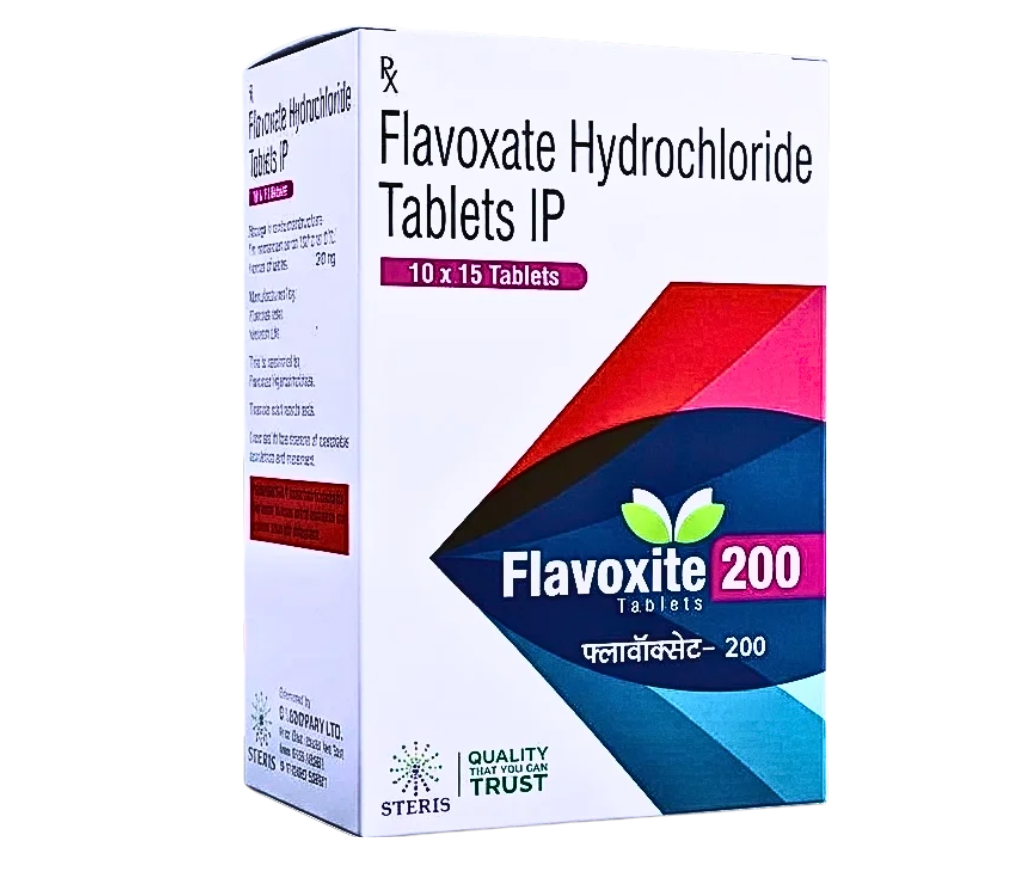
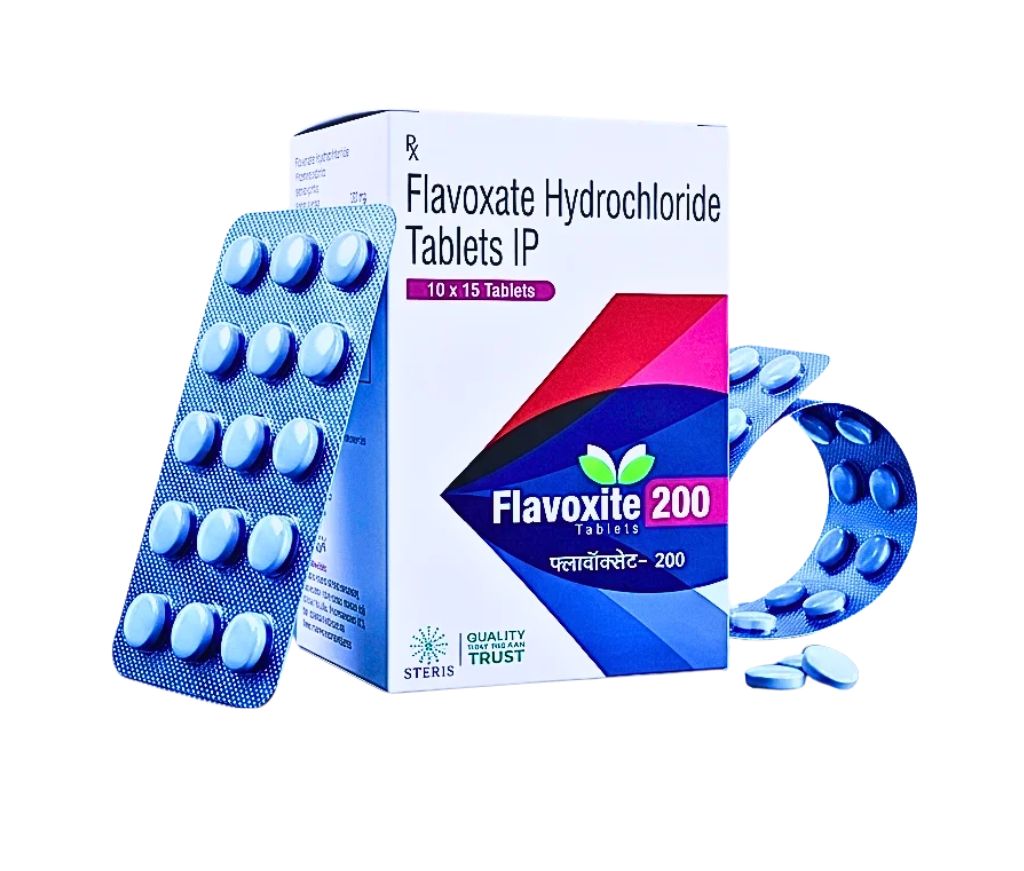
FLAVOXITE 200
 Item requires a valid prescription
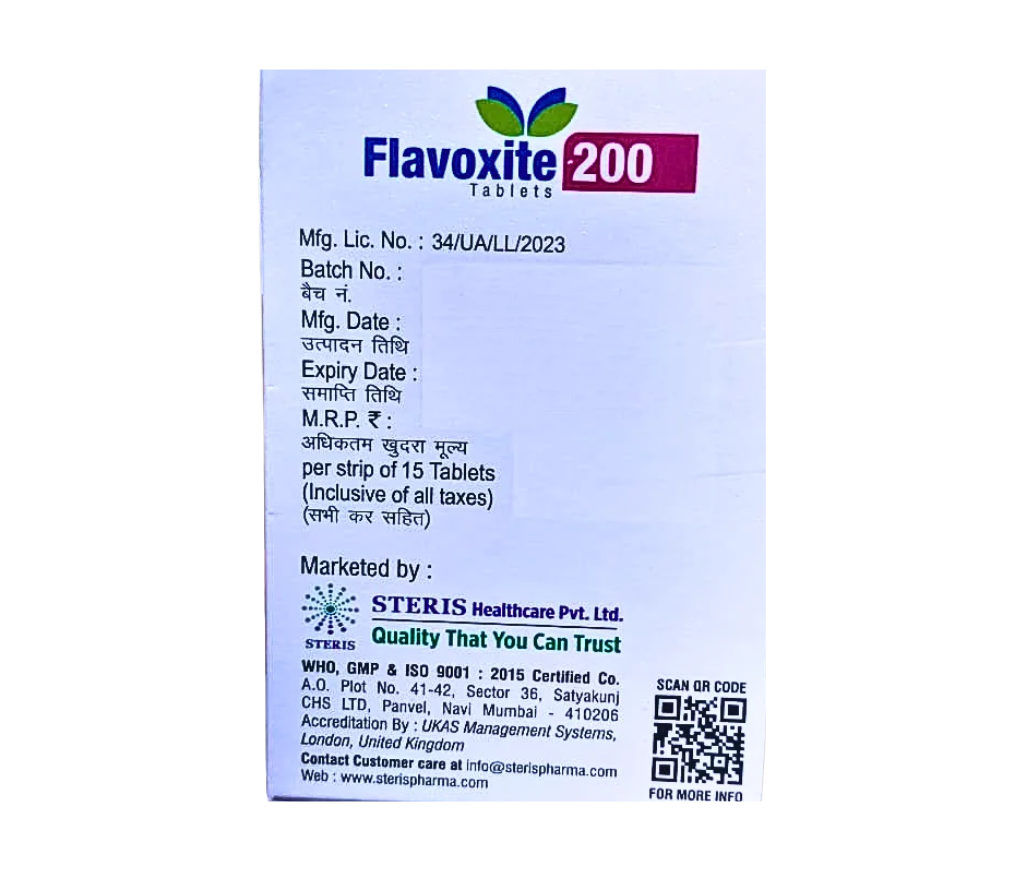
Manufactured By Steris Healthcare Pvt Ltd
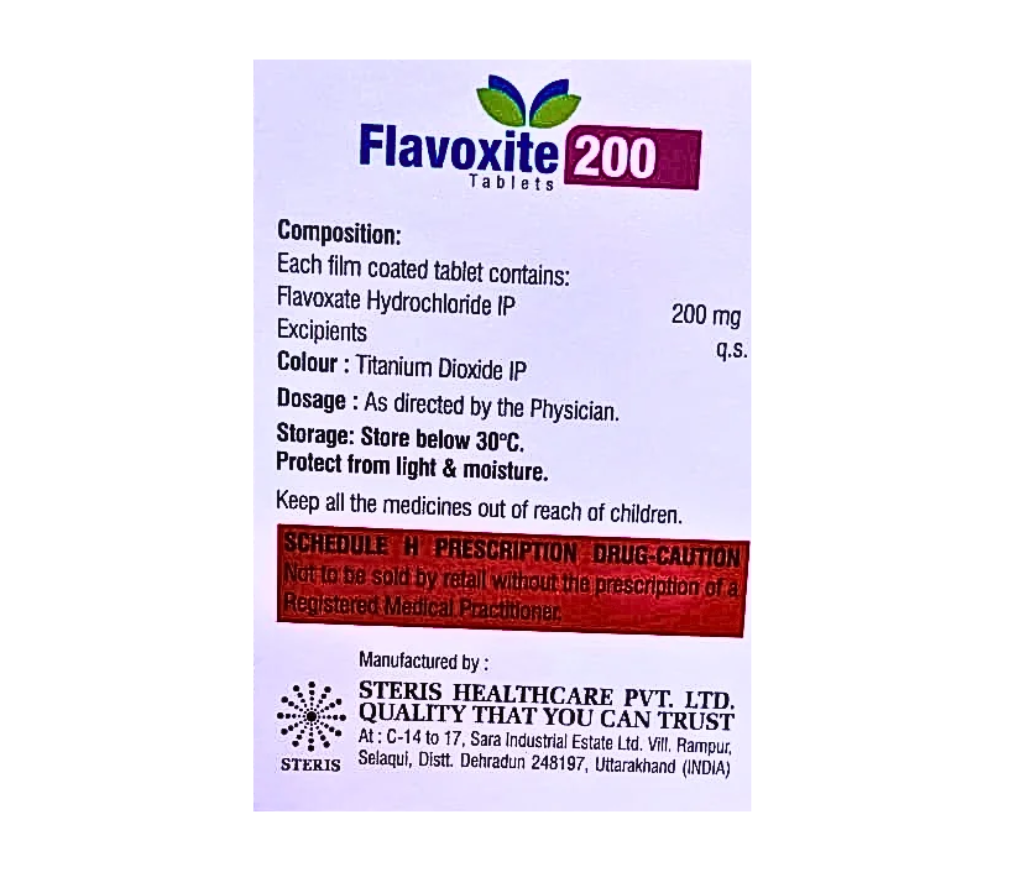
Composition Flavoxate (200mg)
Rs 185.50
MRP Rs 265.00
(30% OFF)
Includes all taxes
Package SIZE
( For 15 tablets )

100% Authentic
Products

Free
Shipping*

Products
Return Policy
Description:
What Is FLAVOXITE 200?
FLAVOXITE 200 contains 200 mg of flavoxate. It is a prescription tablet. Flavoxate is one of the drugs in a group of urinary antispasmodics (bladder smooth-muscle relaxants). It is used to relieve symptoms of bladder and urinary tract irritation, including burning pain when passing urine, sudden urges to urinate, frequent urination, and pain above the pubic bone.
Key product facts
| Attribute | Details |
|---|---|
| Brand name | FLAVOXITE 200 |
| Composition | Flavoxate Hydrochloride 200 mg per tablet |
| Dosage form | Tablet |
| Drug class | Urinary antispasmodic / bladder smooth-muscle relaxant |
| Manufacturer / marketer | Steris Healthcare Pvt. Ltd., India |
| Pack size | [For 15 Tabs] |
| Regulatory status | Schedule H – prescription only |
| Price (MRP) | [MRP – PLACEHOLDER; use "Check Price" CTA] |
What Is Flavoxate 200 mg Used For?
Flavoxate is used to relieve the symptoms of lower urinary-tract irritation. It treats how the bladder feels and behaves, not the underlying cause. Doctors commonly consider it for the following situations.
| Condition | Symptoms flavoxate may help relieve |
|---|---|
| Cystitis (bladder inflammation) | Burning, urgency, frequency, lower abdominal pain |
| Prostatitis | Painful or frequent urination, pelvic discomfort |
| Urethritis / urethrocystitis | Burning during urination, urethral irritation |
| Irritation after urological procedures (as judged by the doctor) | Bladder spasm, urgency, discomfort |
| Overactive-bladder-type symptoms (at the doctor's discretion) | Urgency, frequency, night-time urination |
How Does Flavoxate Work?
Flavoxate acts directly on the smooth muscle of the urinary bladder. In simple terms:
- Relaxes bladder muscle. It reduces involuntary bladder contractions, so the urge to urinate becomes less sudden and less frequent.
- Eases pain and irritation. It is described as having a mild local anaesthetic-like effect that helps with burning and suprapubic pain.
- Works on the muscle itself. It is described as acting mainly on the muscle tissue rather than only blocking nerve signals. This is why its side-effect profile differs somewhat from classic anticholinergic drugs.
Key Benefits of FLAVOXITE 200
- Helps relieve burning and pain while passing urine
- Helps reduce urgency and frequency, including night-time trips
- Eases lower abdominal and pelvic discomfort from bladder irritation
- Can be used alongside antibiotics when an infection is present, as directed by the doctor
- Convenient oral tablet from an Indian WHO-GMP certified manufacturer
Dosage: How to Take FLAVOXITE 200
- Swallow the tablet whole with water.
- Take it at evenly spaced times through the day.
- It can be taken with or without food. If it upsets your stomach, take it after a meal.
- Do not crush or chew the tablet unless your doctor says so.
- Do not change the dose or stop early without advice, and finish any antibiotic course you were given.
- Safety in children is not well established. Use only on a doctor's instruction. [REVIEWER: confirm paediatric age restriction on the label.]
Side Effects of Flavoxate
Most people tolerate flavoxate well, but side effects can occur.
Common (usually mild)
- Dry mouth
- Nausea or vomiting
- Dizziness, drowsiness or headache
- Blurred vision or difficulty focusing
- Nervousness
Serious (contact a doctor promptly)
- Rapid heartbeat or palpitations
- Confusion, especially in elderly patients
- Eye pain or sudden vision changes
- Skin rash, itching, or swelling of the face or lips (possible allergy)
- Difficulty passing urine, or new fever with worsening urinary symptoms
Precautions and Who Should Avoid Flavoxate
Do not use FLAVOXITE 200 if you have:
- Known allergy to flavoxate or any ingredient in the tablet
- Blockage in the stomach outlet (pyloric) or intestine, paralytic ileus, or achalasia
- Gastrointestinal bleeding
- Obstruction in the lower urinary tract (such as significant urinary retention from a blocked outflow)
Tell your doctor before use if you:
- Have glaucoma or are at risk of it
- Have an enlarged prostate or difficulty passing urine
- Have kidney or liver problems
- Are pregnant, planning pregnancy or breastfeeding
- Are elderly (more prone to confusion, dizziness and dry mouth)
- Take other medicines, especially other anticholinergic drugs
Flavoxate vs Other Bladder Medicines
This table is for general awareness only. The right choice is always your doctor's decision.
| Medicine (class) | Main use | How it differs from flavoxate |
|---|---|---|
| Flavoxate (urinary antispasmodic) | Relief of dysuria, urgency, frequency from bladder irritation | Often used for painful, inflammatory bladder symptoms |
| Oxybutynin (antimuscarinic) | Overactive bladder, urge incontinence | Classic anticholinergic; dry mouth is a common complaint |
| Tolterodine / Solifenacin (antimuscarinics) | Overactive bladder | Targeted at urge symptoms; typically once or twice daily |
| Mirabegron (beta-3 agonist) | Overactive bladder | Different mechanism; avoids typical anticholinergic effects |
Conclusion
FLAVOXITE 200 (flavoxate 200 mg tablet) from Steris Healthcare Pvt. Ltd. is a urinary antispasmodic for relief of painful, urgent and frequent urination caused by bladder and urinary-tract irritation. It treats the symptoms, not the infection, so an antibiotic may be needed alongside it. Take it exactly as prescribed, watch for side effects such as dry mouth, drowsiness and blurred vision, and speak to your doctor if symptoms persist or worsen. Check price and availability through Steris Healthcare.
Frequently Asked Questions
1. Can flavoxate be used for UTI?
Flavoxate can be used alongside treatment for a urinary tract infection (UTI), but it does not treat the infection itself. It relieves symptoms such as burning, urgency and frequent urination. A UTI caused by bacteria needs an appropriate antibiotic prescribed by a doctor. If you have fever, back pain, blood in urine or symptoms that do not improve, see a doctor promptly.
2. Is flavoxate safe for the kidneys?
Flavoxate is not generally known as a kidney-damaging drug, and it works on the bladder muscle rather than the kidneys. However, people with kidney problems should only take it after a doctor reviews their condition, because reduced kidney function can affect how medicines are handled by the body. Tell your doctor about any kidney disease before starting. [REVIEWER: confirm renal-impairment guidance against the prescribing information.]
3. What is flavoxate used for?
Flavoxate is used to relieve symptoms of bladder and urinary-tract irritation: painful urination, a sudden strong urge to urinate, frequent urination, night-time urination and lower abdominal pain. It is commonly considered in conditions such as cystitis, prostatitis and urethritis, as decided by the treating doctor.
4. What is flavoxate 200mg used for?
Flavoxate 200mg tablets are used to ease bladder spasm and the burning, urgency and frequency that come with bladder or urethral irritation. Each FLAVOXITE 200 tablet contains 200 mg of flavoxate and is taken as directed by the doctor, often alongside an antibiotic when an infection is present.
5. What is flavoxate 200 mg used for?
In practical terms, flavoxate 200 mg is for people who feel pain or burning when they pass urine, need to go urgently or too often, or have discomfort above the pubic bone because the bladder is irritated or inflamed. It relieves these symptoms but does not remove the underlying cause, so your doctor may also test for and treat an infection or other condition.
6. What is FLAVOXITE 200 tablet and who makes it?
FLAVOXITE 200 is a prescription tablet containing flavoxate 200 mg. It is manufactured and marketed in India by Steris Healthcare Pvt. Ltd., a WHO-GMP and ISO-certified pharmaceutical company.
7. How does flavoxate work in the bladder?
Flavoxate relaxes the smooth muscle of the bladder wall, which reduces sudden, involuntary contractions. This lowers the urge to urinate and eases pain and spasm. It is also described as having a mild local pain-relieving effect on irritated urinary tissue.
8. How should I take FLAVOXITE 200?
Take it exactly as your doctor prescribes, usually several times a day at evenly spaced intervals. Swallow it whole with water, with or without food. If it upsets your stomach, take it after a meal. Do not change the dose or stop early without medical advice.
9. What are the common side effects of flavoxate?
Common side effects include dry mouth, nausea, dizziness, drowsiness, headache and blurred vision. These are usually mild. Seek medical help if you notice a fast heartbeat, confusion, eye pain, rash, or swelling of the face or lips.
10. Is flavoxate an antibiotic?
No. Flavoxate is an antispasmodic that relaxes bladder muscle and relieves symptoms. It does not kill bacteria. If you have a bacterial urinary infection, your doctor will prescribe a separate antibiotic.
11. How long does flavoxate take to work?
Many people notice symptom relief within a short time after taking doses, but response varies from person to person and depends on the cause of the symptoms. If your symptoms do not improve, or get worse, consult your doctor rather than increasing the dose. [REVIEWER: onset-of-action wording only if supported by the prescribing information.]
12. Can I drive or drink alcohol while taking flavoxate?
Flavoxate can cause drowsiness, dizziness and blurred vision, so avoid driving or operating machinery until you know how it affects you. Alcohol can add to drowsiness, so it is best avoided or limited.
13. Who should not take flavoxate?
People who are allergic to flavoxate, or who have a blocked stomach outlet or intestine, paralytic ileus, achalasia, gastrointestinal bleeding, or a blockage in the lower urinary tract, should not take it. Use caution and ask your doctor first if you have glaucoma, an enlarged prostate, or kidney or liver disease.
14. Is flavoxate safe in pregnancy and breastfeeding?
Information on use in pregnancy and breastfeeding is limited. Do not take FLAVOXITE 200 during pregnancy or while breastfeeding unless your doctor decides the benefit outweighs the risk. Always tell your doctor if you are pregnant or planning pregnancy. [REVIEWER: confirm lactation and pregnancy wording from the prescribing information.]
15. Is flavoxate safe for elderly patients?
Older adults may be more sensitive to side effects such as dizziness, dry mouth and confusion. A doctor should review the dose and the full medicine list, especially if the person also has glaucoma, prostate enlargement or memory problems.
16. How is flavoxate different from oxybutynin?
Both relax the bladder, but they are different drug types. Flavoxate is a urinary antispasmodic often used for painful, irritative symptoms, while oxybutynin is an antimuscarinic mainly used for overactive bladder and urge incontinence. Which is suitable depends on your symptoms and health, so the choice should come from your doctor.
18. How should I store FLAVOXITE 200?
Store the tablets in a cool, dry place below 30°C, away from direct sunlight and out of reach of children. Check the carton for the exact storage instructions. [REVIEWER: confirm storage temperature from the label.]
19. What should I do if I miss a dose or take too much?
If you miss a dose, take it when you remember, unless the next dose is near. Do not double up. If you take too much, seek medical help immediately, especially if you have drowsiness, confusion, a fast heartbeat or vision problems.
Available Substitutes


