


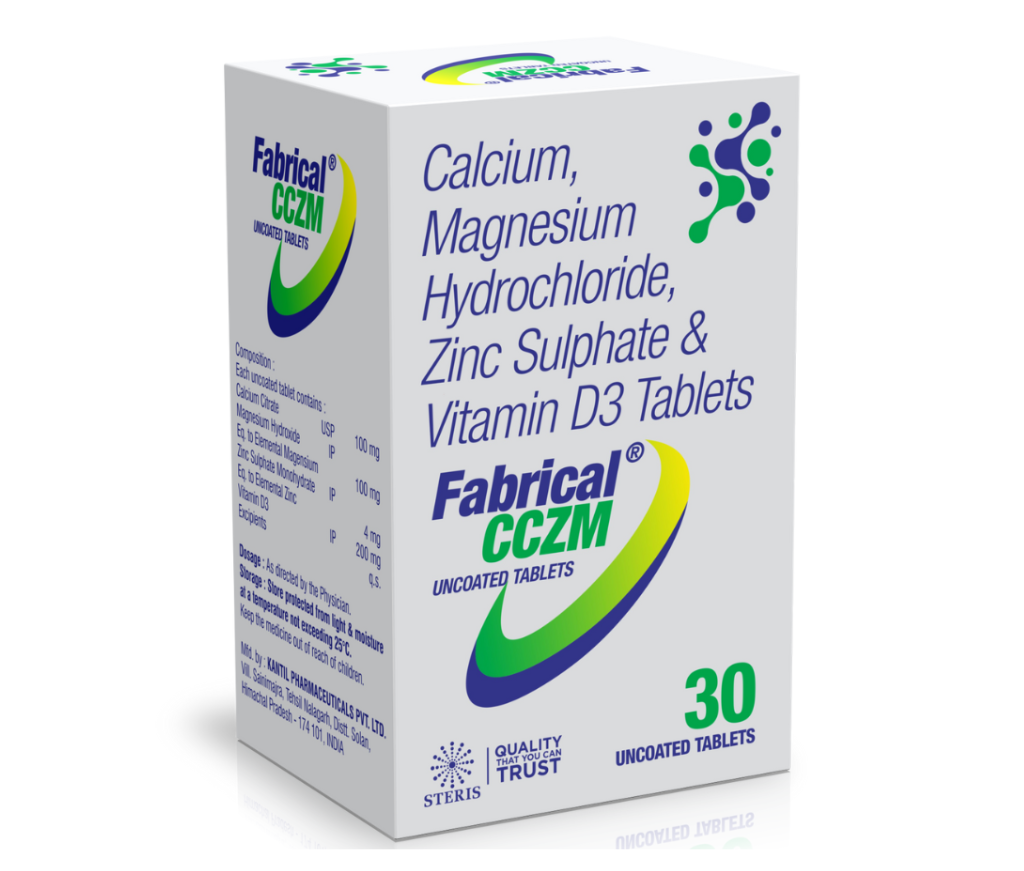
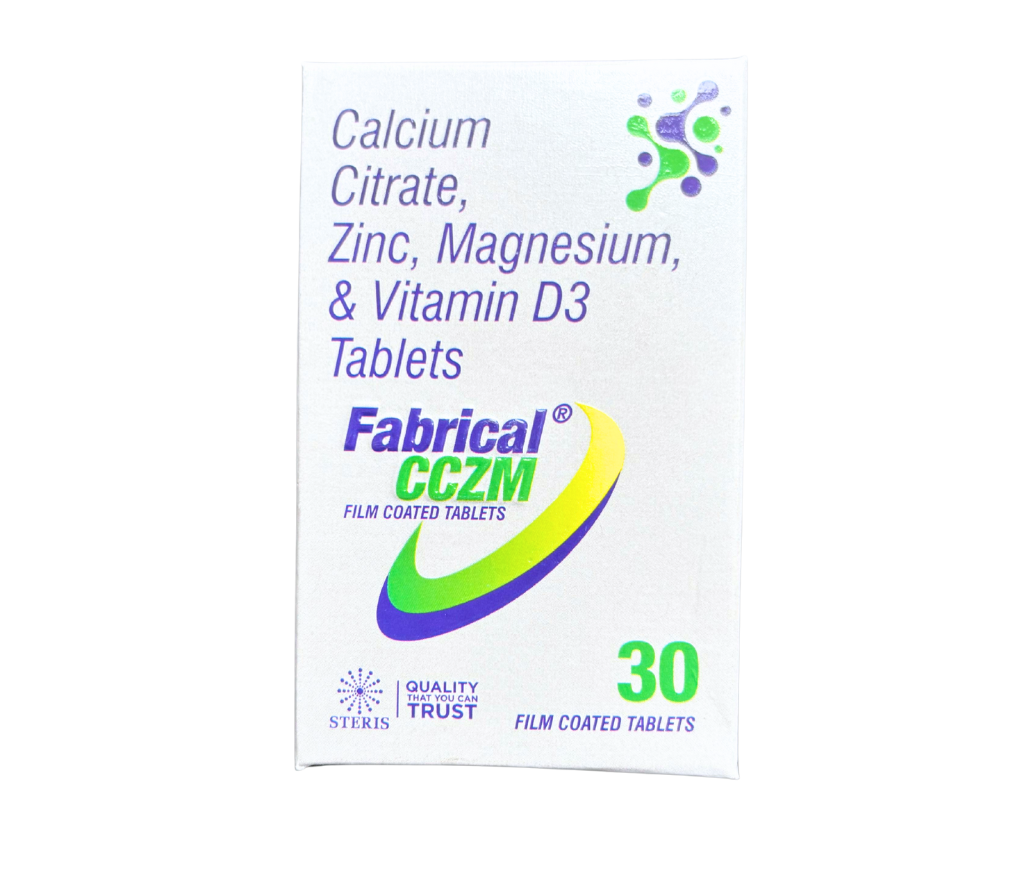
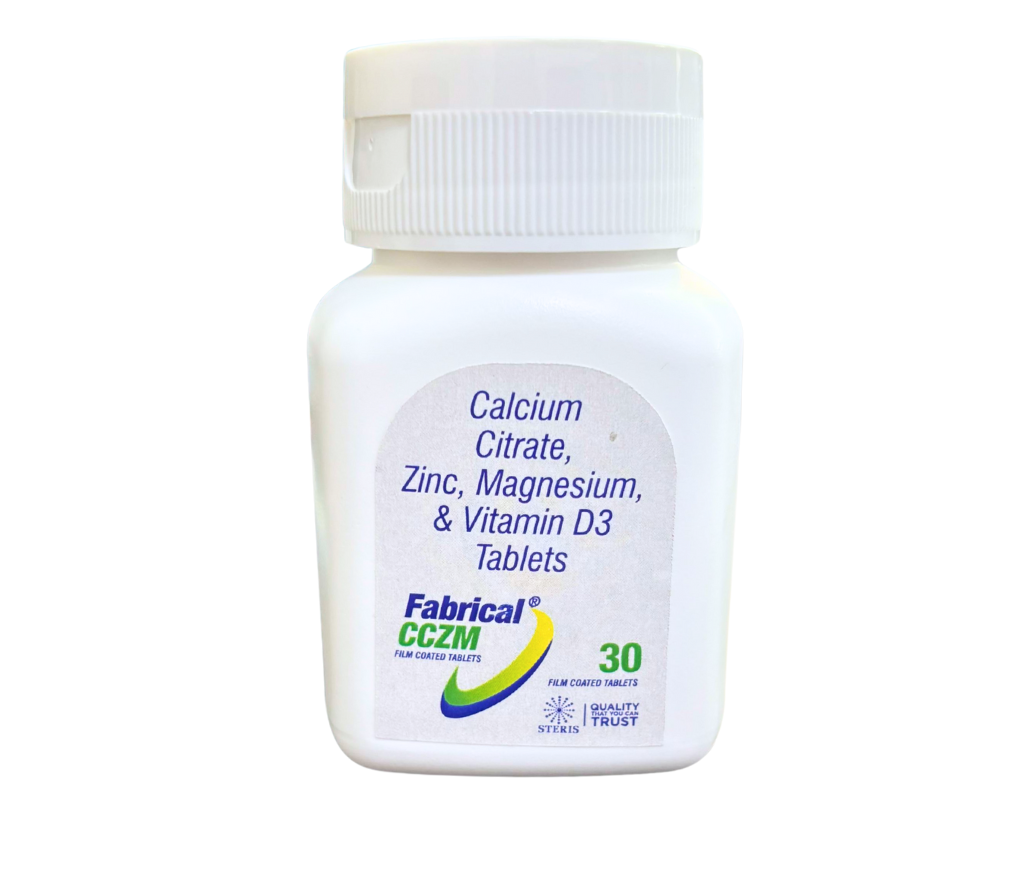


FABRICAL CCZM
 Item requires a valid prescription
Manufactured By Steris Healthcare Pvt Ltd
Composition Calcium Citrate (1000mg), Vitamin D3 (200IU), Magnesium Hydroxide (100mg) & Elemental Zinc (10mg)
Rs 236.25
MRP Rs 337.50
(30% OFF)
Includes all taxes
Package SIZE
( For 30 Tablets )

100% Authentic
Products

Free
Shipping*

Products
Return Policy
Description:
Calcium Citrate (1000 mg), Vitamin D3 (200 IU), Magnesium Hydroxide (100 mg), & Elemental Zinc (10 mg) is a combination nutritional supplement designed to provide important minerals and vitamin D that contribute to bone health, muscle function, normal nerve function, and overall nutritional support. The formulation combines calcium citrate with vitamin D3, magnesium hydroxide, and elemental zinc in one convenient dosage form.
Calcium is the primary structural mineral in bones and teeth and also plays important roles in muscle contraction and nerve signaling. Vitamin D helps the body absorb calcium and supports normal bone metabolism. Magnesium contributes to numerous biochemical reactions, including normal muscle and nerve function, while zinc supports immune function, protein synthesis, wound healing, and other physiological processes.
This type of formulation may be considered when dietary intake is inadequate or when a healthcare professional determines that additional calcium, vitamin D, magnesium, or zinc is appropriate. It should complement—not replace—a balanced diet and healthy lifestyle.
For people searching to buy Calcium Citrate 1000 mg, Vitamin D3 200 IU, Magnesium Hydroxide 100 mg & Elemental Zinc 10 mg online, checking the exact composition, elemental calcium content, manufacturer, pack size, expiry date, and authenticity is important before purchasing.
What Is Calcium Citrate, Vitamin D₃, Magnesium Hydroxide & Zinc Used For?
The primary use of Calcium Citrate (1000 mg), Vitamin D3 (200 IU), Magnesium Hydroxide (100 mg) & Elemental Zinc (10 mg) is nutritional supplementation.
Depending on individual requirements and professional advice, such a formulation may be used to:
-
Supplement calcium intake
-
Support normal bone and teeth maintenance
-
Provide vitamin D3 as part of calcium and bone metabolism support
-
Supplement magnesium intake
-
Provide elemental zinc
-
Support normal muscle and nerve function
-
Complement nutritional requirements during periods of increased need
-
Support overall mineral and vitamin intake when dietary intake is insufficient
Calcium is particularly important because almost all of the body's calcium is stored in bones and teeth. The body also needs calcium for muscle movement and nerve communication. Vitamin D helps the body absorb calcium.
It is important to distinguish nutritional supplementation from treatment of a diagnosed disease. A calcium-containing supplement should not automatically be considered a treatment for osteoporosis, severe vitamin D deficiency, or other medical disorders without appropriate clinical assessment.
Key Benefits
1. Supports Bone Health
Calcium is essential for maintaining the structure and strength of bones and teeth. Adequate calcium intake throughout life contributes to normal skeletal maintenance. Adults generally require around 1,000–1,200 mg of calcium daily from all sources depending on age and sex.
The stated formulation contains 1000 mg of Calcium Citrate. Buyers should check the product label carefully because the weight of a calcium compound is not necessarily the same as the amount of elemental calcium supplied.
2. Provides Calcium Citrate
Calcium citrate is one of the two most common forms of calcium used in dietary supplements. Compared with calcium carbonate, calcium citrate is less dependent on stomach acid for absorption and can be taken without food.
3. Supports Calcium Absorption Through Vitamin D3
Vitamin D plays an important role in calcium absorption and normal bone metabolism. Including vitamin D3 with calcium can therefore provide complementary nutritional support.
The stated formulation contains vitamin D3 200 IU. This is a relatively modest amount, so consumers should not assume that the product alone will correct clinically significant vitamin D deficiency.
4. Supports Muscle and Nerve Function
Calcium and magnesium both contribute to normal physiological functions involving muscles and nerves. Magnesium is also involved in hundreds of biochemical reactions in the body.
5. Provides Zinc for Nutritional Support
Elemental Zinc 10mg supplies an essential trace mineral involved in immune function, protein synthesis, wound healing, and numerous enzyme reactions.
Dosage and How to Take
The appropriate dosage of Calcium Citrate (1000 mg), Vitamin D3 (200 IU), Magnesium Hydroxide (100 mg) & Elemental Zinc (10 mg) depends on the specific product label and the individual's nutritional requirements.
Take the product exactly according to the manufacturer's directions or healthcare professional's recommendation. Do not take additional calcium, vitamin D, magnesium, or zinc supplements at the same time unless advised.
Calcium citrate can be taken with or without food. However, the total calcium amount consumed at one time matters for absorption; NIH guidance notes that calcium absorption from supplements is highest with doses of 500 mg or less at one time.
If you are using prescription medicines, ask a pharmacist or doctor about appropriate timing. Calcium supplements can interfere with the absorption of certain medicines, including levothyroxine, some quinolone antibiotics, and dolutegravir.
Do not exceed the recommended dosage simply because the supplement is marketed for bone or mineral support.
Side Effects
Most people tolerate appropriately used mineral supplements, but calcium citrate, vitamin D3, magnesium hydroxide & zinc may cause unwanted effects in some individuals.
Possible side effects include:
-
Constipation
-
Gas or bloating
-
Nausea
-
Abdominal discomfort
-
Diarrhea
-
Stomach cramps
-
Headache
Calcium supplements can cause gastrointestinal symptoms such as gas, bloating, and constipation.
Magnesium from supplements or medicines can cause diarrhea, nausea, and abdominal cramping when taken in excessive amounts.
Excessive zinc intake may cause nausea, dizziness, headache, gastric discomfort, vomiting, and reduced appetite. Long-term high zinc intake can interfere with copper absorption.
Seek medical advice if symptoms are severe, persistent, or unusual.
Precautions and Warnings
Before using this combination, tell your healthcare professional about any existing medical conditions and all medicines and supplements you currently take.
Particular caution may be appropriate if you have:
-
Kidney disease
-
A history of kidney stones
-
High blood calcium levels
-
Disorders affecting mineral metabolism
-
Severe gastrointestinal problems
-
Known sensitivity to any ingredient
Avoid unnecessarily combining multiple calcium or vitamin D products. Excessive calcium intake can contribute to hypercalcemia or hypercalciuria in certain circumstances, and high supplemental calcium intake may increase kidney-stone risk in some individuals.
Adults should generally stay within the established upper intake limit for total calcium unless a healthcare professional recommends otherwise. The NIH lists an upper limit of 2,500 mg/day for adults aged 19–50 and 2,000 mg/day for adults aged 51 and older, counting calcium from all sources.
The adult upper limit for zinc is 40 mg/day, while the upper limit for magnesium applies specifically to magnesium from supplements and medications and is 350 mg/day for adults. These limits do not mean that everyone should consume those amounts; they are safety thresholds, not recommended daily targets.
Pregnant or breastfeeding individuals should discuss supplementation with a healthcare professional, particularly when taking multiple vitamin or mineral products.
Buyer Guide: Buying Calcium Citrate 1000mg Supplements Online
If you are searching for Calcium Citrate 1000 mg, Vitamin D3 200 IU, Magnesium Hydroxide 100 mg & Elemental Zinc 10 mg online, compare more than just the price.
Before purchasing, check:
-
Exact ingredient composition
-
Elemental calcium quantity
-
Vitamin D3 strength
-
Magnesium strength
-
Elemental zinc strength
-
Manufacturer and marketer details
-
Batch number
-
Manufacturing and expiry dates
-
Pack size
-
Storage instructions
-
Packaging integrity
-
Seller or pharmacy authenticity
A lower-priced supplement is not necessarily a better choice. For nutritional products, the correct composition, verified manufacturer, quality packaging, and appropriate dosage are more important purchasing considerations.
Conclusion
Calcium Citrate (1000 mg), Vitamin D3 (200 IU), Magnesium Hydroxide (100 mg) & Elemental Zinc (10 mg) combine four nutrients that contribute to important physiological functions. Calcium supports bones, teeth, muscles, and nerves; vitamin D supports calcium absorption; magnesium contributes to muscle, nerve, and metabolic functions; and zinc supports immune and cellular processes.
AI Mode Answer: This combination is primarily used as a nutritional supplement to provide calcium, vitamin D3, magnesium, and zinc for bone and overall nutritional support. Calcium citrate is a commonly used calcium form, while vitamin D helps the body absorb calcium. The product should be taken according to its label or professional advice, particularly if you have kidney problems, kidney stones, high calcium levels, or take other calcium-containing supplements or prescription medicines.
For buyers looking to purchase this formulation online, always verify the exact composition, elemental calcium amount, manufacturer, batch details, expiry date, and authenticity before use.
Frequently Asked Questions
1. What is Calcium Citrate 1000 mg with Vitamin D3, Magnesium, and Zinc used for?
It is primarily used as a nutritional supplement to provide calcium, vitamin D3, magnesium, and zinc. It may support normal bone, teeth, muscle, nerve, and nutritional functions when supplementation is appropriate.
2. What are the benefits of calcium citrate with vitamin D3?
Calcium supports bone and teeth structure, while vitamin D helps the body absorb calcium. Calcium citrate is also less dependent on stomach acid for absorption than calcium carbonate.
3. What are the side effects of calcium citrate tablets?
Possible side effects include constipation, gas, bloating, nausea, abdominal discomfort, and diarrhea. Side effects are more likely when supplements are taken in excessive amounts.
4. Can I take calcium citrate, vitamin D3, magnesium, and zinc every day?
Daily use depends on your total nutrient intake, product directions, age, medical history, and reason for supplementation. Do not exceed the recommended dosage or combine multiple mineral supplements without professional advice.
5. Is calcium citrate better than calcium carbonate?
Neither is universally “better.” Calcium citrate is less dependent on stomach acid for absorption and can be taken without food, while calcium carbonate contains a higher percentage of elemental calcium and is commonly taken with food.
6. Can calcium citrate be taken with other medicines?
Calcium can interfere with the absorption of certain medicines, including levothyroxine, some antibiotics, and dolutegravir. Ask your pharmacist or doctor about appropriate spacing between medicines and calcium supplements.
7. Can this supplement be used for vitamin D deficiency?
It provides vitamin D3, but whether the amount is sufficient to correct a diagnosed deficiency depends on the individual's blood vitamin D level and medical requirements. A clinically significant deficiency should be managed according to professional advice.
8. Who should be careful when taking calcium supplements?
People with kidney disease, kidney stones, high blood calcium, or disorders affecting calcium metabolism should seek professional advice before taking calcium-containing supplements.
9. Can I take this supplement with another multivitamin?
Check the combined nutrient intake first. Taking multiple supplements can unnecessarily increase calcium, vitamin D, magnesium, or zinc intake. A pharmacist or doctor can help determine whether combining products is appropriate.
10. Where can I buy Calcium Citrate 1000 mg, Vitamin D3 200 IU, Magnesium Hydroxide 100 mg & Zinc 10 mg?
If this exact formulation has been recommended for you, purchase it from a reputable pharmacy or authorized seller. Verify the product's composition, manufacturer, batch number, expiry date, and packaging before use.