


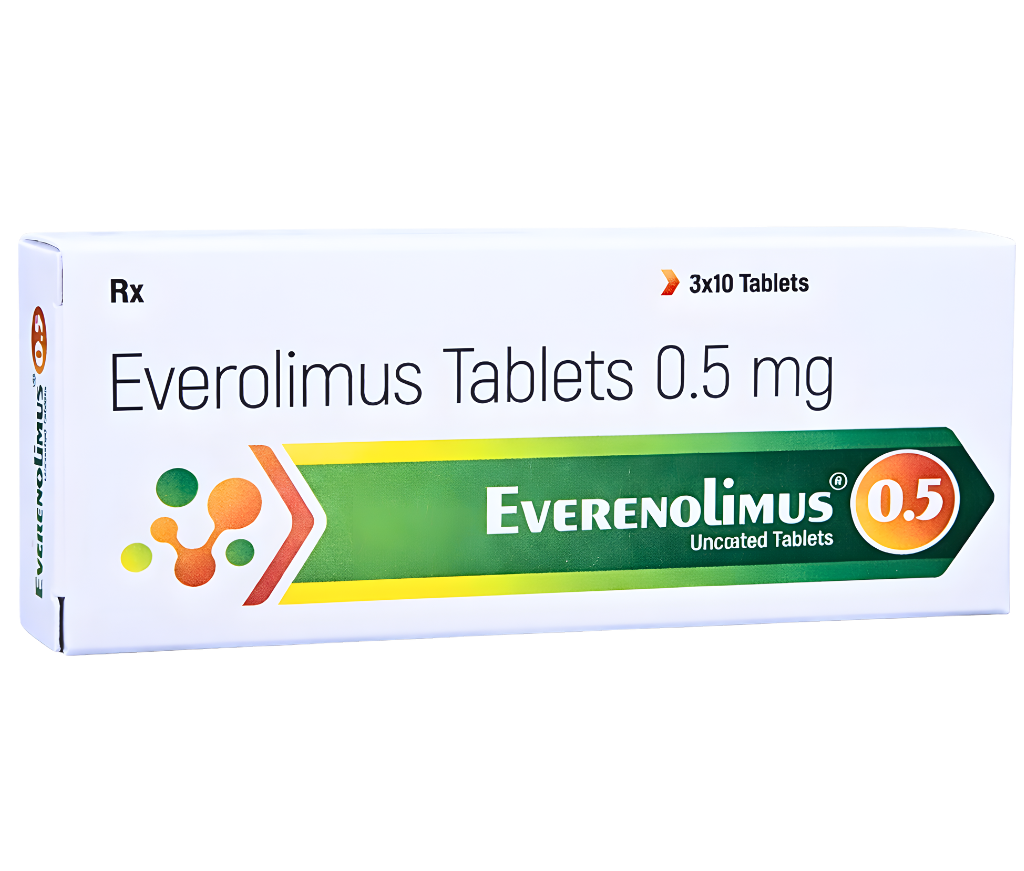
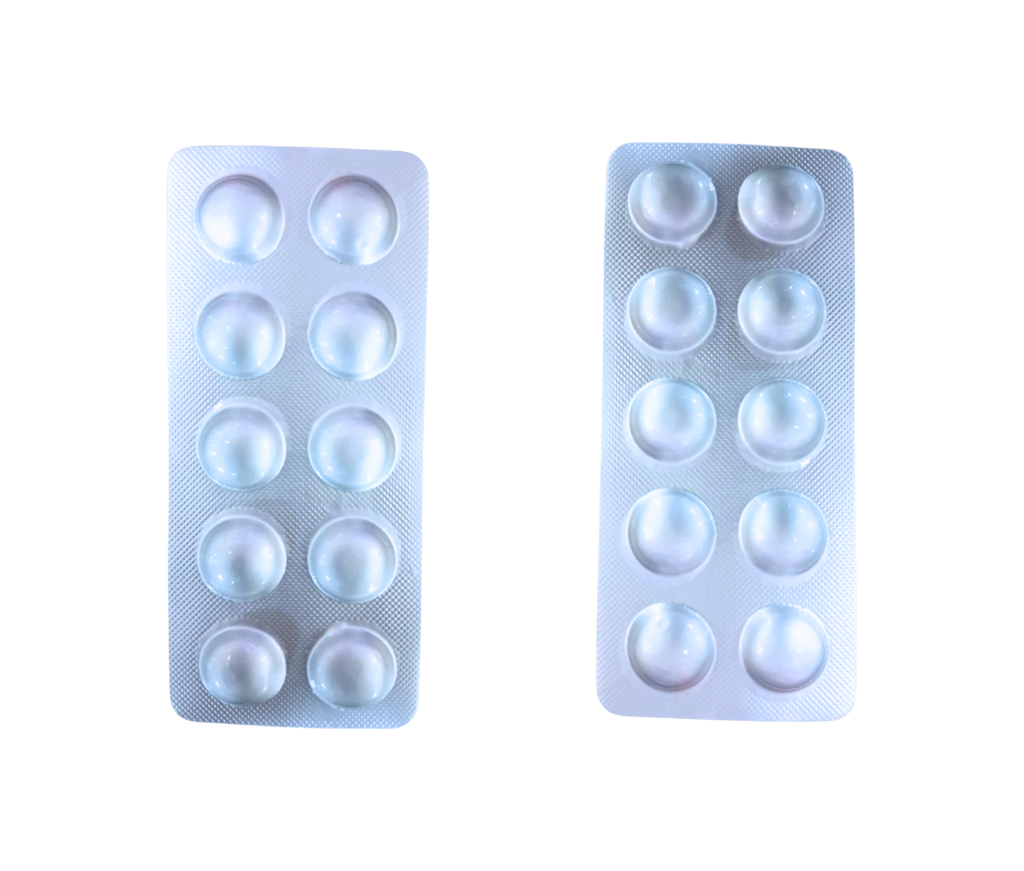
EVERENOLIMUS 0.5
 Item requires a valid prescription
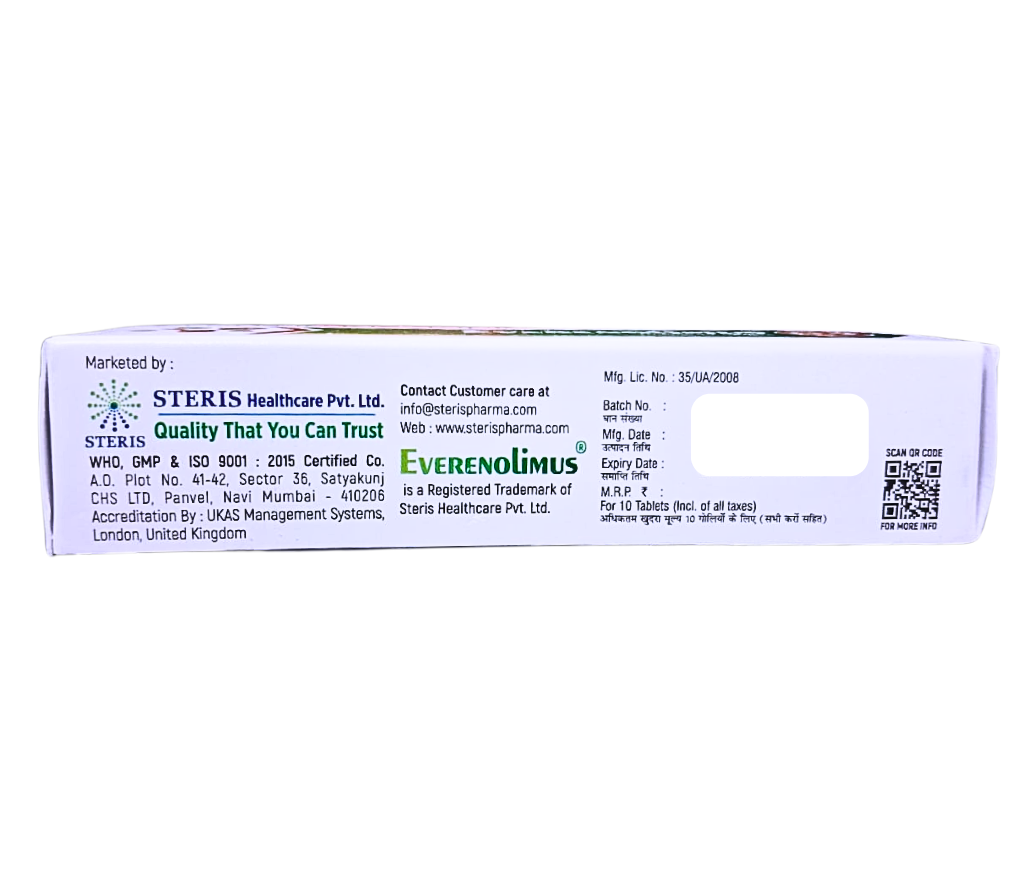
Manufactured By Steris Healthcare Pvt Ltd
Composition Everolimus Tablets 0.5 mg
Rs 450.33
MRP Rs 643.33
(30% OFF)
Includes all taxes
Package SIZE
( For 10 Tablets )

100% Authentic
Products

Free
Shipping*

Products
Return Policy
Description:
Everolimus Tablets 0.5 mg, marketed as EVERENOLIMUS 0.5 by Steris Healthcare Pvt. Ltd., is an mTOR (mammalian Target of Rapamycin) inhibitor prescribed mainly to prevent organ rejection after kidney, liver, or heart transplant, usually alongside cyclosporine or tacrolimus and low-dose steroids. It works by blocking a specific growth-signalling pathway inside immune cells, which stops the body's T-cells from multiplying and attacking the transplanted organ. Everolimus is also used in select oncology indications (advanced kidney cancer, certain breast cancers, and neuroendocrine tumours) at higher strengths under close oncologist supervision. Everolimus 0.5 mg is a narrow therapeutic index (NTI) drug, meaning even small changes in blood levels can affect safety or effectiveness — regular blood level monitoring (trough levels) is essential. It is available only on a valid prescription (Schedule H1) and should never be started, stopped, or dose-adjusted without your transplant physician's guidance.
Product Information
| Attribute | Detail |
|---|---|
| Brand Name | EVERENOLIMUS 0.5 |
| Composition | Everolimus Tablets 0.5 mg |
| Manufacturer/Marketer | Steris Healthcare Pvt. Ltd. |
| Product Form | Tablet |
| Pack Size | 10 Tablets |
| Drug Class | mTOR Inhibitor / Immunosuppressant |
| Schedule | Schedule H1 (Prescription Only, NTI Drug) |
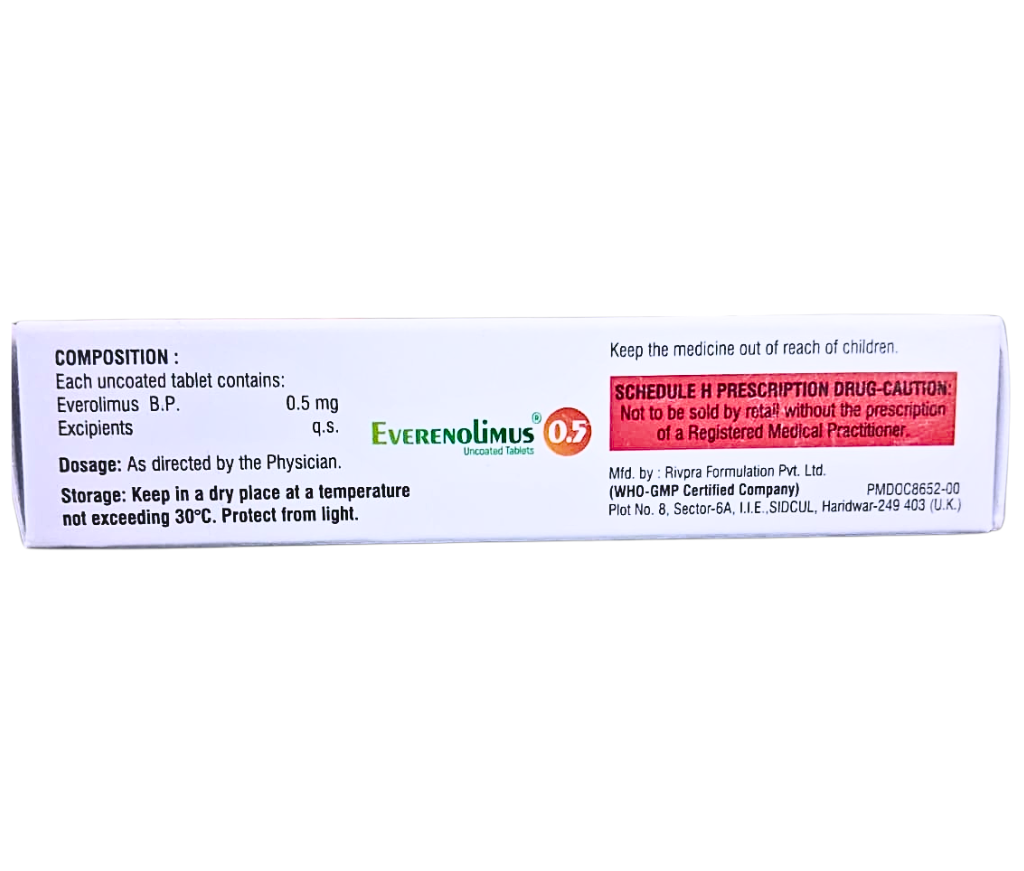
| Storage | Store below 30°C, in a dry place, away from light; keep out of reach of children |
| Country of Origin/Sale | India |
What Is Everolimus 0.5 mg Used For?
| Indication | How Everolimus Helps |
|---|---|
| Prevention of organ transplant rejection (kidney, liver, heart) | Suppresses immune (T-cell) activity so the body does not attack the newly transplanted organ |
| Maintenance immunosuppression (combination therapy) | Used together with a calcineurin inhibitor (tacrolimus/cyclosporine) and corticosteroids for long-term rejection prevention |
| Advanced renal cell carcinoma (higher strengths) | Slows tumour blood vessel growth and cell proliferation |
| Hormone receptor-positive, HER2-negative advanced breast cancer (higher strengths, with hormonal therapy) | Reverses hormonal-therapy resistance by blocking the mTOR growth pathway |
| Pancreatic and GI neuroendocrine tumours, subependymal giant cell astrocytoma (SEGA) associated with tuberous sclerosis | Inhibits abnormal cell growth signalling |
How Does Everolimus Work?
Everolimus belongs to a class of medicines called mTOR inhibitors. Inside the body, a protein called mTOR acts like a "growth switch" that tells immune cells (T-lymphocytes) and, in cancer, tumour cells, when to divide and multiply. Everolimus binds to a protein called FKBP-12, and this complex blocks mTOR activity. The downstream effect is twofold:
- In transplant patients: T-cell proliferation slows down, reducing the immune system's ability to recognise and attack the donor organ as "foreign" — lowering the risk of acute rejection.
- In cancer cells: Blocking mTOR also cuts off signals that drive tumour cell growth and reduces the formation of new blood vessels (angiogenesis) that feed a tumour.
This is a different mechanism from calcineurin inhibitors like tacrolimus, which is why the two are often combined — they suppress the immune system through complementary pathways, allowing lower doses of each and potentially reducing kidney-related side effects.
Key Benefits of EVERENOLIMUS 0.5
- Proven role in rejection prevention as part of standard combination immunosuppressive regimens post-transplant
- Calcineurin-inhibitor-sparing option — allows lower doses of cyclosporine/tacrolimus, which may help protect kidney function long-term
- Oral tablet formulation — convenient once/twice-daily dosing compared to injectable immunosuppressants
- Dual-purpose molecule — the same active ingredient has an established role in select cancer therapies at oncology-specific strengths
- Manufactured by Steris Healthcare Pvt. Ltd., a WHO-GMP and ISO-certified facility, offering consistent tablet quality batch after batch
Dosage & How to Take Everolimus 0.5 mg Tablets
- Take Everolimus tablets exactly as prescribed by your transplant physician or oncologist — dose is individualised based on body weight, blood levels, and concomitant immunosuppressants
- Usually taken twice daily, 12 hours apart, consistently either with or without food — but stay consistent with whichever method your doctor recommends, since food affects absorption
- Swallow the tablet whole with a glass of water; do not crush, chew, or split unless your doctor specifically instructs otherwise
- Never take with grapefruit or grapefruit juice — this can dangerously raise everolimus blood levels
- Regular blood tests (trough levels) will be required to fine-tune your dose — never adjust the dose yourself based on how you feel
- If you miss a dose, take it as soon as you remember, unless it is almost time for your next dose — do not double up
- Do not stop the medicine suddenly without consulting your doctor, even if you feel well — this can trigger organ rejection
Side Effects of Everolimus Tablets
Common Side Effects
- Mouth ulcers / stomatitis
- Increased cholesterol and triglyceride levels
- High blood sugar (new-onset or worsened diabetes)
- Swelling in hands, feet, or ankles (peripheral oedema)
- Fatigue and headache
- Diarrhoea, nausea, or loss of appetite
- Increased susceptibility to minor infections
- Skin rash or acne-like eruptions
Serious Side Effects (Seek Medical Attention)
- Signs of serious infection — persistent fever, chills, productive cough
- Shortness of breath, dry cough, or chest tightness (possible non-infectious pneumonitis)
- Unusual bleeding, bruising, or blood in urine/stool
- Yellowing of skin or eyes, dark urine (possible liver involvement)
- Significant swelling, rapid weight gain, or reduced urine output (possible kidney or fluid-related issue)
- Delayed wound healing after any cut, surgery, or dental procedure
- Signs of an allergic reaction — facial swelling, difficulty breathing, severe rash
Everolimus vs Other Immunosuppressants: Comparison
| Parameter | Everolimus | Tacrolimus | Mycophenolate Mofetil |
|---|---|---|---|
| Drug class | mTOR inhibitor | Calcineurin inhibitor | Antiproliferative (IMPDH inhibitor) |
| Primary role | Combination therapy, CNI-sparing | Cornerstone calcineurin inhibitor | Combination antiproliferative agent |
| Kidney impact | Generally kidney-sparing at lower CNI doses | Can be nephrotoxic long-term | Not directly nephrotoxic |
| Monitoring needed | Trough blood levels, lipids, glucose | Trough blood levels, kidney function | Blood counts, GI tolerance |
| Common side effect | Mouth ulcers, high cholesterol | Tremor, high blood sugar | GI upset, low blood counts |
Precautions & Warnings
- Narrow Therapeutic Index (NTI) drug: blood levels must stay within a specific range; routine monitoring is mandatory
- Not for use during pregnancy — effective contraception is advised for individuals who could become pregnant, during treatment and for a period after stopping (confirm duration with your doctor)
- Avoid live vaccines while on everolimus, as immune suppression may reduce vaccine safety/effectiveness
- Inform your doctor about all other medicines, including OTC drugs and herbal supplements — everolimus interacts with several drug classes (antifungals, certain antibiotics, anticonvulsants) via liver enzyme pathways
- Use with caution in patients with pre-existing lung disease, diabetes, or high cholesterol
- Routine dental and skin checks are advisable due to mouth ulcer risk and reduced wound healing
- Keep all follow-up appointments and blood test schedules — missed monitoring can increase rejection or toxicity risk
- Store tablets as per label instructions, away from moisture, heat, and direct sunlight; keep out of reach of children
Buy Everolimus Tablets 0.5 mg Online in India
Looking for a reliable source for Everolimus Tablets 0.5 mg? EVERENOLIMUS 0.5, manufactured by Steris Healthcare Pvt. Ltd. at a WHO-GMP and ISO-certified facility, is available through authorised pharmacy partners across India. Because this is a Schedule H1 narrow-therapeutic-index transplant medicine, it is dispensed strictly against a valid prescription from your transplant physician or oncologist, with batch traceability and quality assurance built into every pack of 10 tablets.
Conclusion
Everolimus Tablets 0.5 mg play a vital role in helping transplant recipients keep their new organ safe from rejection, working through a distinct mTOR-blocking mechanism that complements other immunosuppressants like tacrolimus. Because it is a narrow therapeutic index medicine, success with EVERENOLIMUS 0.5 depends heavily on consistent dosing, regular blood-level monitoring, and close coordination with your transplant care team. Never start, stop, or change your dose independently — always follow your physician's guidance, attend every scheduled test, and report new symptoms early. With the right monitoring in place, everolimus-based regimens have supported long-term transplant success for many patients worldwide.
Frequently Asked Questions
1. What are Everolimus tablets used for?
Everolimus tablets are mainly used to prevent organ rejection after a kidney, liver, or heart transplant, usually combined with other immunosuppressants like tacrolimus. Certain higher strengths are also used in specific cancers, including advanced kidney cancer and some breast cancers.
2. How much does Everolimus tablet cost?
The price of Everolimus tablets varies by strength, pack size, and brand. Please check the current price for EVERENOLIMUS 0.5 (10 tablets) with your pharmacy or through the price-check option on this page.
3. What is Everolimus 0.25mg tablet used for?
Everolimus 0.25 mg is a lower starting-dose or titration strength typically used in transplant rejection prevention, allowing doctors to fine-tune the dose based on individual blood levels and tolerance. The exact use should always be confirmed by your prescribing physician.
4. How long can you take Everolimus?
Everolimus is generally taken long-term (often for the life of the transplanted organ) as part of maintenance immunosuppression, unless your doctor changes your regimen due to side effects or other clinical reasons. In cancer treatment, duration depends on how well the tumour responds and how the medicine is tolerated.
5. How successful is Everolimus?
Everolimus-based immunosuppressive regimens have supported long-term transplant survival in many patients when used correctly with proper monitoring. Success in cancer treatment varies by tumour type and individual response, and your oncologist can give you a realistic outlook based on your specific case. [Reviewer placeholder: specific success/survival statistics pending clinical citation.]
6. Is Everolimus a chemotherapy?
Everolimus is not a traditional chemotherapy drug. It belongs to a class called mTOR inhibitors, which work by blocking specific growth-signalling pathways rather than directly killing rapidly dividing cells the way classic chemotherapy agents do.
7. Can Everolimus be taken with tacrolimus or cyclosporine?
Yes, Everolimus is frequently prescribed alongside tacrolimus or cyclosporine as part of a combination immunosuppressive regimen, often allowing lower doses of the calcineurin inhibitor to help protect kidney function.
8. What foods or drinks should be avoided with Everolimus?
Grapefruit and grapefruit juice should be strictly avoided, as they can significantly raise everolimus blood levels and increase side-effect risk. Always ask your doctor about other dietary interactions specific to your regimen.
9. Does Everolimus cause mouth ulcers?
Yes, mouth ulcers (stomatitis) are one of the most commonly reported side effects of everolimus. Using an alcohol-free mouthwash and maintaining good oral hygiene can help; inform your doctor if ulcers are painful or persistent.
10. Why do I need regular blood tests while on Everolimus?
Everolimus is a narrow therapeutic index drug, meaning the difference between an effective dose and a risky dose is small. Regular blood tests (trough levels) help your doctor keep your dose in the safe and effective range.
11. Is Everolimus safe during pregnancy?
Everolimus is generally not recommended during pregnancy, and effective contraception is advised during treatment. Speak to your doctor about family planning before starting or continuing this medication.
12. What happens if I miss a dose of Everolimus?
Take the missed dose as soon as you remember, unless it is close to your next scheduled dose, in which case skip it and continue your normal schedule. Never take a double dose to make up for a missed one.
13. Can Everolimus affect blood sugar or cholesterol? Yes, everolimus can raise blood sugar and cholesterol/triglyceride levels in some patients. Your doctor may monitor these periodically and adjust your diet, lifestyle, or other medications accordingly.
14. Is a prescription required to buy Everolimus tablets in India?
Yes, Everolimus Tablets 0.5 mg are a Schedule H1 prescription-only medicine in India and cannot be legally dispensed without a valid prescription from a registered physician.
15. Where can I buy EVERENOLIMUS 0.5 tablets online in India?
EVERENOLIMUS 0.5 (Everolimus Tablets 0.5 mg) manufactured by Steris Healthcare Pvt. Ltd. is available through authorised pharmacy channels across India against a valid prescription. Use the price-check option above to know current availability and pricing.
16. Can Everolimus be stopped suddenly?
No, Everolimus should never be stopped suddenly without your transplant physician's guidance, as this can increase the risk of organ rejection. Any changes to your regimen must be doctor-supervised.
17. Does Everolimus weaken the immune system?
Yes, by design, Everolimus suppresses parts of the immune system to prevent organ rejection, which also means patients may be more susceptible to infections. Practising good hygiene and avoiding sick contacts is advisable during treatment.

