


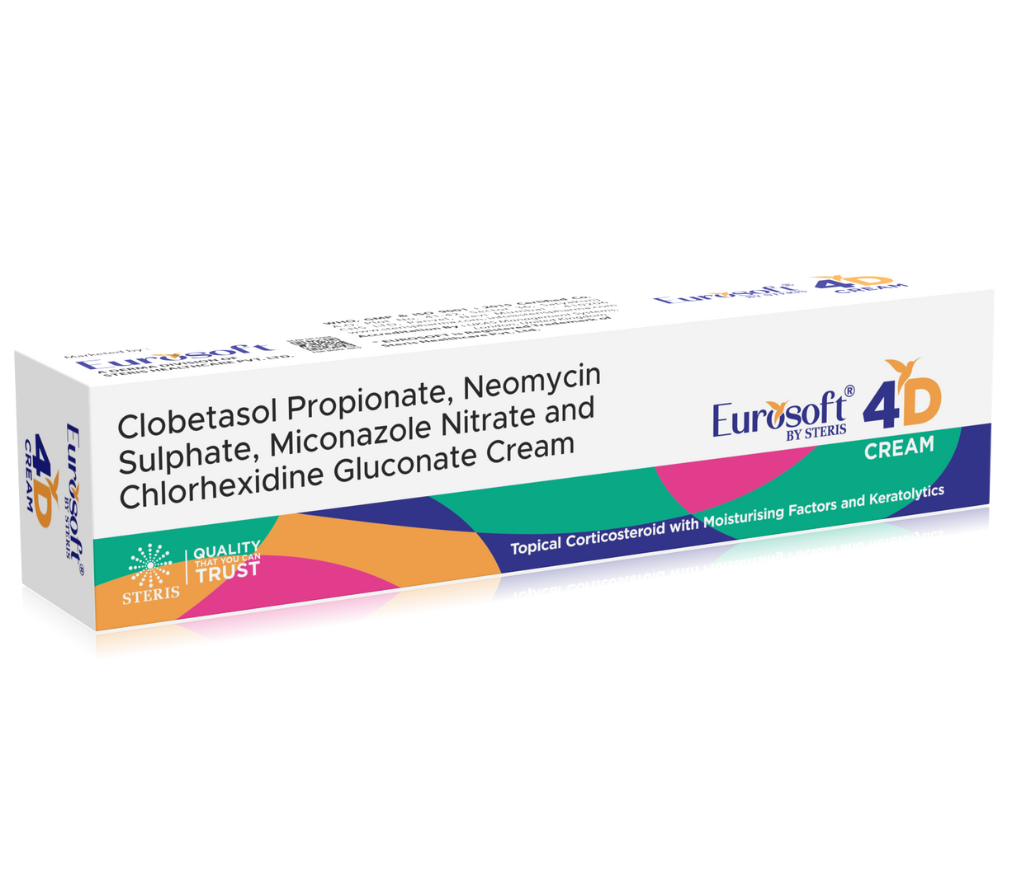
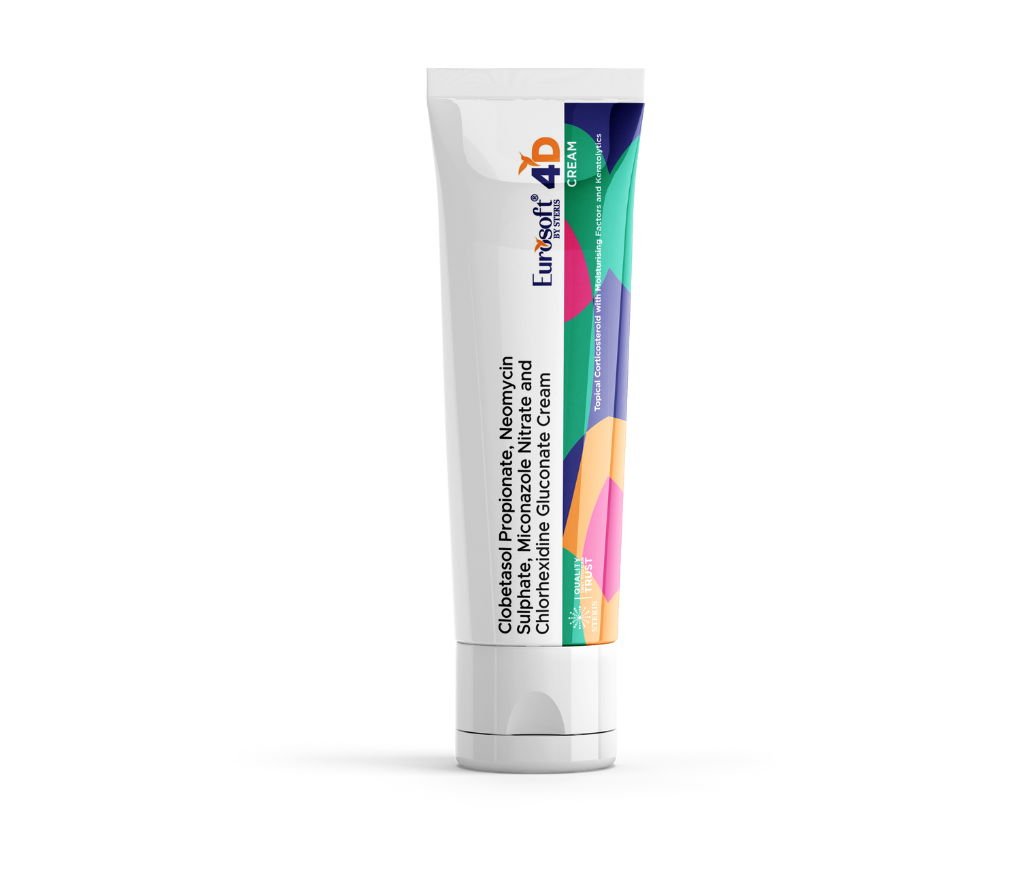
EUROSOFT 4D CREAM
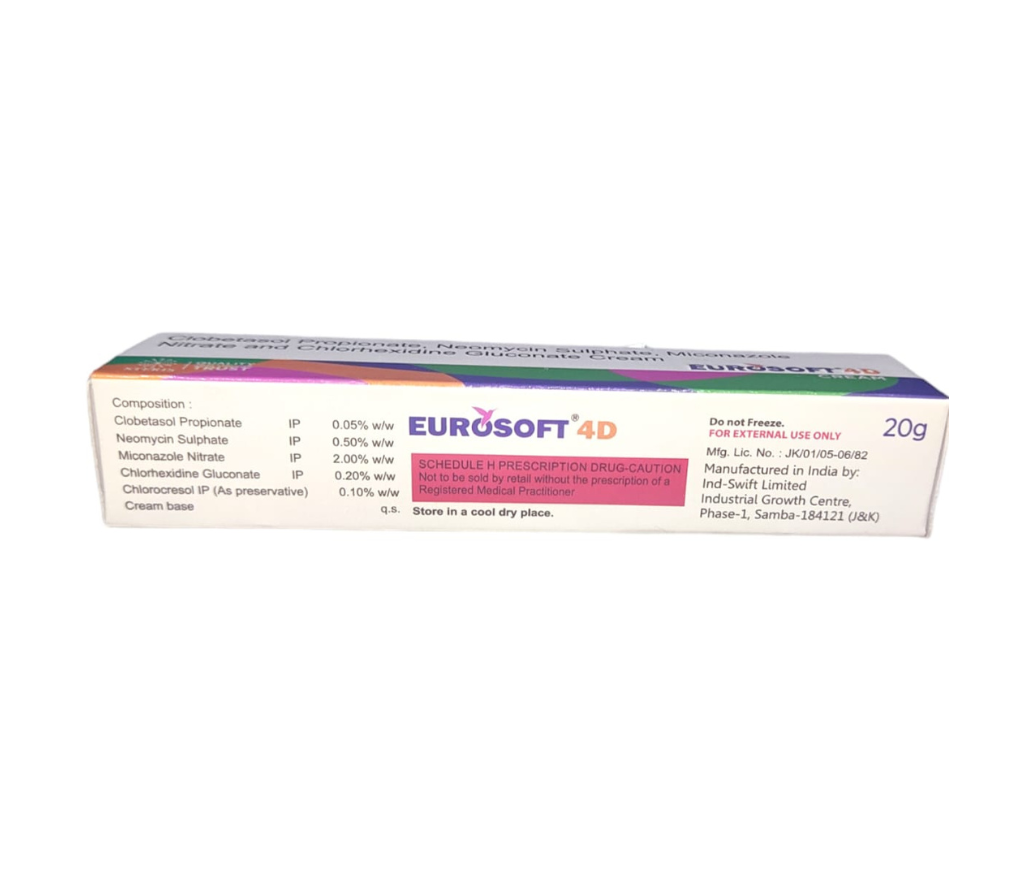
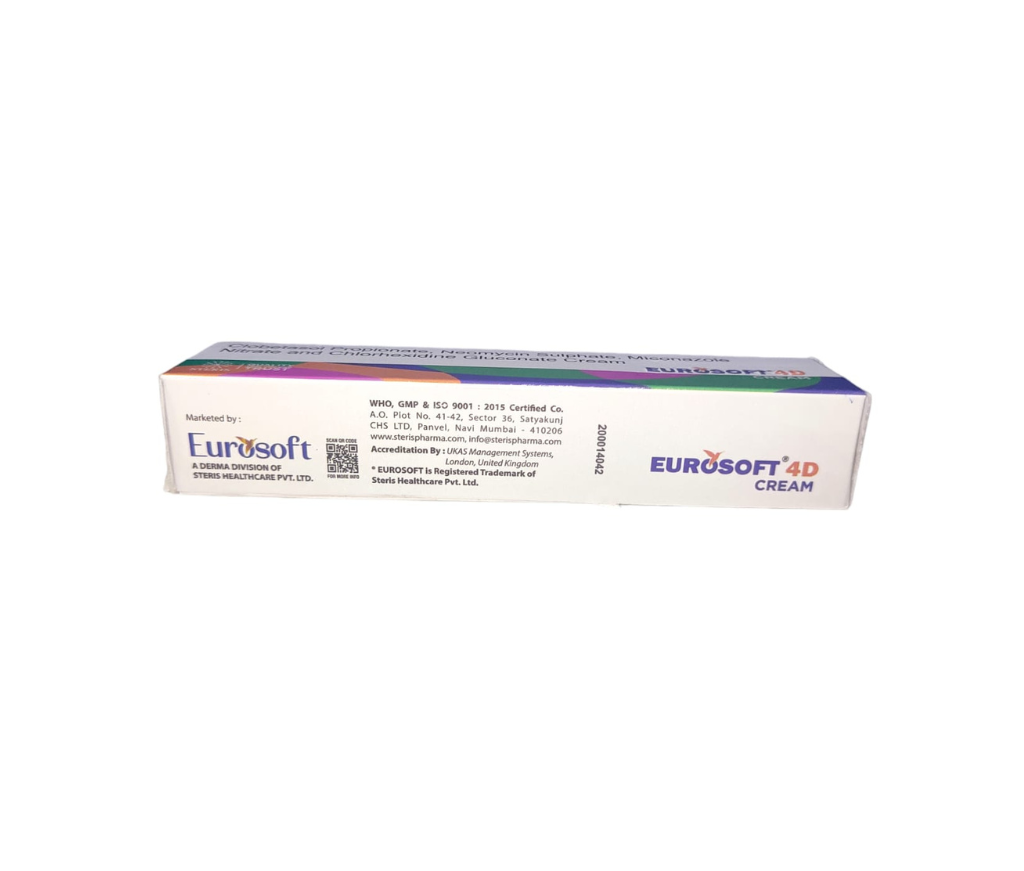
Manufactured By steris healthcare pvt ltd
Composition Clobetasol Propionate 0.5% w/w, Neomycin Sulphate 0.50%w/w, Miconazole Nitrate 2.00%w/w, Chlorhexidine Gluconate 0.20%w/w, Chlorocresol 0.10%w/w Cream
Rs 88.67
MRP Rs 91.41
(3% OFF)
Includes all taxes
Package SIZE
( 20 Gram )

100% Authentic
Products

Free
Shipping*

Products
Return Policy
Description:
Medical information notice: This content is for educational purposes and does not replace diagnosis or treatment from a qualified healthcare professional. Always check the exact composition, strength, indications, and directions on the product packaging or prescription.
What Is This Combination Cream?
Clobetasol Propionate 0.5% w/w, Neomycin Sulphate 0.50% w/w, Miconazole Nitrate 2.00% w/w, Chlorhexidine Gluconate 0.20% w/w, Chlorocresol 0.10% w/w Cream is described as a multi-ingredient topical preparation designed to address inflammation and certain superficial microbial skin problems.
The ingredients have different roles. Clobetasol is a potent topical corticosteroid that reduces inflammation, redness, swelling, and itching. Miconazole is an antifungal medicine, while neomycin is an antibacterial antibiotic. Chlorhexidine is an antiseptic, and chlorocresol is commonly used as a preservative in topical formulations.
However, there is an important product-identification issue. Current Indian listings for comparable combination creams commonly show clobetasol 0.05% w/w, neomycin 0.5% w/w, miconazole 2% w/w, and chlorocresol 0.1% w/w; some products add chlorhexidine gluconate 0.2%.
Therefore, consumers should verify whether their product actually states 0.5% or 0.05% clobetasol before use or purchase. These concentrations should not be treated as interchangeable.
What Is This Cream Used For?
Combination creams containing clobetasol, miconazole, and neomycin are marketed for certain inflammatory skin conditions associated with or complicated by superficial fungal or bacterial infection. Product information for comparable formulations describes use in skin infections accompanied by symptoms such as itching, redness, and inflammation.
Depending on the exact product and diagnosis, a healthcare professional may consider such a combination when both inflammation and a suspected susceptible microbial infection require treatment.
Potential clinical situations can include:
-
Certain infected inflammatory skin conditions
-
Some superficial fungal skin infections with significant inflammation
-
Selected bacterial skin infections
-
Mixed or suspected mixed superficial infections
-
Dermatitis or eczema complicated by infection, when specifically prescribed
This does not mean the cream is suitable for every rash, fungal infection, eczema flare, or bacterial skin problem. A steroid-containing combination can mask symptoms and may make an incorrectly diagnosed fungal infection more difficult to recognize or control.
India's CDSCO documentation has specifically raised concerns about fixed-dose combinations containing topical steroid, antibacterial, and antifungal ingredients, including the possibility of misuse, resistance, adverse effects, and worsening of fungal infection when a steroid is used inappropriately.
How Do the Ingredients Work?
Clobetasol Propionate
Clobetasol is a highly potent topical corticosteroid. It reduces inflammatory activity in the skin and can relieve symptoms including redness, swelling, and itching.
Because of its potency, clobetasol is not an ordinary moisturizing or mild anti-itch ingredient. Current U.S. labeling for 0.05% clobetasol describes it as a super-high-potency corticosteroid and places limits on treatment duration and total weekly quantity for specific indications.
Miconazole Nitrate
Miconazole is an antifungal medicine. It interferes with fungal cell membranes and can inhibit or kill susceptible fungi.
This makes miconazole the antifungal component of the combination.
Neomycin Sulphate
Neomycin is an antibiotic that acts against susceptible bacteria. In topical combination products, it is intended to address susceptible bacterial involvement rather than fungal infection.
Antibiotics should not be used unnecessarily because inappropriate exposure can contribute to resistance and may cause sensitization in some individuals.
Chlorhexidine Gluconate
Chlorhexidine is an antiseptic ingredient used in some topical formulations to reduce microorganisms on the skin. Its presence and concentration depend on the exact product.
Chlorocresol
Chlorocresol is commonly included as a preservative in topical pharmaceutical preparations. Current Indian product listings for comparable clobetasol/miconazole/neomycin creams identify chlorocresol as a preservative.
Key Benefits of the Combination
When a healthcare professional determines that a combination formulation is appropriate, its potential advantages come from the different actions of its ingredients.
1. Helps Reduce Inflammation
Clobetasol can rapidly suppress inflammatory skin activity, helping reduce redness, swelling, and itching.
2. Provides Antifungal Activity
Miconazole provides treatment directed at susceptible fungal organisms.
3. Provides Antibacterial Activity
Neomycin can act against susceptible bacteria that may contribute to a superficial skin infection.
4. Addresses Several Symptoms Together
Because the formulation combines anti-inflammatory, antifungal, and antibacterial activity, it may be prescribed when an inflammatory skin condition is complicated by infection.
5. Convenient Topical Application
A combination cream can provide several active components in a single topical preparation when all components are clinically justified.
However, more ingredients do not automatically mean better treatment. The correct medicine depends on the actual cause of the skin problem.
How to Use This Cream
Use this medicine only according to the directions provided by your doctor, pharmacist, or the product label.
For topical products of this type, general application principles include:
-
Wash and gently dry the affected area.
-
Apply a thin layer to the affected skin as directed.
-
Wash your hands before and after application unless your hands are the treatment area.
-
Avoid contact with the eyes, mouth, nose, and other sensitive areas.
-
Do not cover the treated area with an airtight dressing unless specifically instructed.
-
Do not apply it more frequently or for longer than prescribed.
-
Do not share the cream with another person.
Comparable combination-product guidance recommends applying a thin layer only to affected areas and avoiding unnecessary occlusive dressings.
Why You Should Not Overuse Clobetasol
The most important safety consideration is the clobetasol component.
Clobetasol is highly potent, and excessive, prolonged, or inappropriate topical corticosteroid exposure can cause local and systemic problems. Current prescribing information warns about skin thinning and other local reactions, as well as systemic absorption and hypothalamic-pituitary-adrenal (HPA) axis suppression.
Possible steroid-related complications include:
-
Skin thinning or atrophy
-
Stretch marks
-
Visible small blood vessels
-
Changes in skin pigmentation
-
Folliculitis or acne-like eruptions
-
Increased hair growth
-
Perioral dermatitis
-
Secondary infection
-
Delayed recognition of an underlying infection
Children can be more susceptible to systemic corticosteroid effects.
Do not assume that a cream is safe for long-term daily use simply because it is applied to the skin.
Common Side Effects
Comparable products containing clobetasol, miconazole, neomycin, and related antiseptic/preservative ingredients may cause local reactions such as:
-
Burning
-
Itching
-
Redness
-
Irritation
-
Dryness
-
Skin discomfort
Current clobetasol prescribing information also lists reactions such as folliculitis, skin atrophy, cracking or fissuring, telangiectasia, and irritation.
Neomycin can also cause allergic contact dermatitis in susceptible individuals. If the treated area becomes increasingly irritated, swollen, blistered, or develops a new rash after application, contact a healthcare professional.
Who Should Be Careful With This Cream?
Tell your healthcare professional if you have:
-
An allergy to clobetasol, neomycin, miconazole, chlorhexidine, chlorocresol, or another ingredient
-
A known fungal infection that has not been professionally assessed
-
Viral skin infections
-
Acne
-
Rosacea
-
Open wounds or damaged skin
-
Recurrent skin infections
-
A history of sensitivity to topical antibiotics
-
Pregnancy or breastfeeding
-
A child who may need treatment
Comparable product guidance recommends caution in people with fungal or viral infections, acne, rosacea, or psoriasis and advises consultation during pregnancy or breastfeeding.
Can You Use It on the Face?
Do not routinely use a clobetasol-containing combination cream on the face unless a qualified healthcare professional specifically instructs you to do so.
Facial skin is relatively sensitive to potent topical corticosteroids, and prolonged or inappropriate exposure can produce significant adverse effects. Current U.S. clobetasol labeling specifically restricts certain 0.05% formulations from use on the face, groin, and axillae.
The exact restrictions can differ between formulations, so always follow the label for your specific product.
Is This Cream Suitable for Ringworm?
Not automatically.
Miconazole is an antifungal, so it can have activity against susceptible fungi. However, combining an antifungal with a very potent corticosteroid is not necessarily the preferred approach for an uncomplicated fungal infection.
The steroid may reduce redness and itching while potentially obscuring the underlying infection. Regulatory documentation has highlighted this concern for steroid-antifungal-antibacterial combinations.
If ringworm, athlete's foot, jock itch, or another fungal infection is suspected, obtain an appropriate diagnosis rather than self-treating indefinitely with a potent steroid combination.
Buying This Combination Cream: What Should You Check?
If you are searching online for this product, verify the formulation before placing an order.
Check:
-
Exact active ingredients
-
Exact concentration of every ingredient
-
Whether clobetasol is listed as 0.05% or 0.5%
-
Tube size
-
Manufacturer
-
Batch number
-
Manufacturing and expiry dates
-
Storage requirements
-
Prescription requirements
-
Pharmacy legitimacy
-
Packaging integrity
Current Indian listings demonstrate that similarly named products can have different compositions, including products containing chlorhexidine and products where chlorocresol is listed as the preservative.
For a prescription medicine, do not select a product solely because it is cheaper or has more active ingredients.
Frequently Asked Questions
1. What is Clobetasol Propionate, Neomycin, Miconazole, Chlorhexidine, and Chlorocresol Cream used for?
It is a multi-ingredient topical preparation intended for selected inflammatory skin conditions associated with susceptible fungal or bacterial involvement. The exact indication depends on the specific formulation and diagnosis.
2. Is this cream an antibiotic?
Partly. Neomycin is an antibiotic, but the cream may also contain an antifungal and a corticosteroid, depending on the formulation.
3. Is this cream antifungal?
It can be. Miconazole is the antifungal ingredient in formulations containing miconazole nitrate.
4. Does this cream contain a steroid?
Yes. Clobetasol propionate is a potent topical corticosteroid.
5. Is clobetasol 0.5% the same as clobetasol 0.05%?
No. These concentrations are different. Many comparable Indian products list clobetasol at 0.05% w/w, not 0.5%. Verify the exact strength printed on your product before use.
6. Can I use this cream for itching?
It may reduce itching when inflammation is part of the condition for which it has been prescribed. However, itching can have many causes, so treatment should be based on the underlying diagnosis.
7. Can I use this cream for fungal infection?
Only when a healthcare professional determines that the particular combination is appropriate. A potent steroid can mask or worsen some fungal infections if used inappropriately.
8. Can I apply this cream to my face?
Do not apply it to the face unless specifically directed by a healthcare professional. Potent topical corticosteroids can cause significant facial skin complications with inappropriate use.
9. Can I use this cream for ringworm?
Do not self-treat ringworm with a potent steroid combination. A suitable antifungal-only treatment may be more appropriate for an uncomplicated fungal infection.
10. What are the common side effects?
Possible effects include burning, itching, redness, dryness, irritation, and other local skin reactions. Potent corticosteroid exposure can also cause skin thinning and other complications.
11. Can this cream cause skin thinning?
Yes. Clobetasol is a high-potency corticosteroid, and skin atrophy is a recognized adverse effect, particularly with inappropriate or prolonged use.
12. Can children use this cream?
Children may be more vulnerable to systemic effects from potent topical corticosteroids. Use in children should therefore be determined by a healthcare professional and the specific product labeling.
13. Can I use this cream during pregnancy?
Do not start or continue a potent multi-ingredient topical medicine during pregnancy without discussing it with your doctor.
14. Can I use this cream while breastfeeding?
Ask your healthcare professional before use, particularly if treatment is near the breast or could come into contact with an infant.
15. How often should I apply this cream?
The correct frequency depends on the exact product, diagnosis, treatment area, and prescription. Do not choose the frequency yourself based on another cream.
16. Can I cover the treated area with a bandage?
Avoid occlusive dressings unless your healthcare professional specifically recommends them. Occlusion can increase absorption of topical corticosteroids and potentially increase adverse effects.
17. Can I use this cream for eczema?
It may be prescribed for selected inflammatory skin conditions, including some infected or complicated cases, but not every eczema flare requires an antibiotic-antifungal-steroid combination.
18. Can I use this cream for psoriasis?
Do not assume it is appropriate for psoriasis. Clobetasol can be used for certain corticosteroid-responsive dermatoses and plaque psoriasis in specific formulations, but the additional antimicrobial ingredients may not be necessary.
19. What should I do if the rash gets worse?
Stop self-treatment and contact a healthcare professional for assessment, particularly if the rash spreads, becomes painful, develops discharge, blisters, or shows signs of an allergic reaction or infection.
20. Can I buy this cream online?
Availability and prescription requirements vary by country and product. If purchasing online, use a legitimate pharmacy and verify the exact composition, strength, manufacturer, expiry date, and prescription status.

