


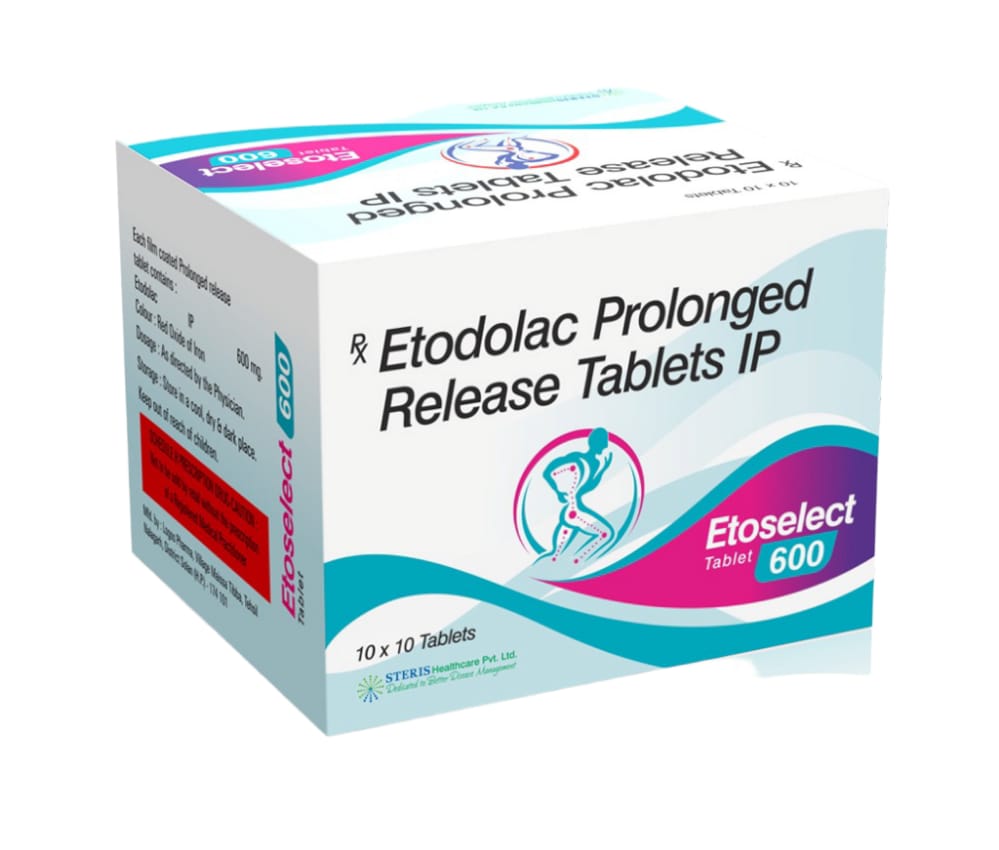
ETOSELECT 600
 Item requires a valid prescription
Manufactured By Steris Healthcare Pvt Ltd
Composition Etodolac PR (600mg)
Rs 130.59
MRP Rs 186.56
(30% OFF)
Includes all taxes
Package SIZE
( For 10 Tablet )

100% Authentic
Products

Free
Shipping*

Products
Return Policy
Description:
Etodolac 600 mg is a prescription-strength nonsteroidal anti-inflammatory drug (NSAID) used to help relieve pain and inflammation associated with certain musculoskeletal and arthritic conditions. The 600 mg strength is available in extended-release formulations, which are designed to release etodolac over a longer period. Current U.S. drug labeling confirms that 600 mg extended-release etodolac tablets are prescription medicines.
Etodolac works by reducing the body's production of prostaglandins, substances involved in pain, inflammation, and fever. It can therefore help reduce pain, tenderness, swelling, and stiffness, particularly in conditions such as osteoarthritis and rheumatoid arthritis.
What is etodolac 600 mg used for?
Etodolac 600 mg is used to manage pain and inflammation, particularly symptoms associated with arthritis such as osteoarthritis and rheumatoid arthritis. Depending on the formulation and the patient's condition, etodolac may also be prescribed for other types of pain.
Because 600 mg is an extended-release strength, it should not automatically be treated as interchangeable with an immediate-release etodolac tablet. The exact formulation, dose, and frequency should always match the prescription label.
Etodolac 600 mg Uses
The most established etodolac 600 mg uses involve controlling pain and inflammatory symptoms.
1. Osteoarthritis
Osteoarthritis can cause joint pain, stiffness, tenderness, and reduced mobility. Etodolac may help reduce the inflammatory component of symptoms and make everyday movement more comfortable. Etodolac is specifically indicated for relief of symptoms associated with osteoarthritis.
2. Rheumatoid arthritis
Rheumatoid arthritis is an inflammatory joint disease that can cause pain, swelling, tenderness, and stiffness. Etodolac can be prescribed to help manage these symptoms, although it does not cure the underlying autoimmune disease.
3. Other pain conditions
Immediate-release etodolac tablets and capsules can also be prescribed for certain other causes of pain. However, the appropriate formulation and dosing depend on the diagnosis and the prescriber's instructions.
Key Benefits of Etodolac 600 mg
The potential benefits of etodolac 600 mg are primarily related to pain and inflammation control.
Helps reduce pain
Etodolac is an NSAID that reduces the production of substances involved in pain signaling and inflammation. This can help relieve arthritis-related discomfort and certain other types of pain.
Helps reduce inflammation
By inhibiting prostaglandin production, etodolac can reduce inflammatory symptoms such as swelling, tenderness, and stiffness.
May improve movement
When arthritis pain and stiffness are reduced, some patients may find normal activities and joint movement easier. The medicine manages symptoms; it does not reverse structural joint damage caused by arthritis.
Extended-release option
Etodolac 600 mg is available as an extended-release tablet. Extended-release formulations are designed for prolonged drug release and may be prescribed according to a schedule different from immediate-release etodolac.
How Does Etodolac 600 mg Work?
Etodolac belongs to the NSAID class. It works primarily by inhibiting cyclooxygenase enzymes involved in the production of prostaglandins.
Prostaglandins have important roles in inflammation and pain. By lowering prostaglandin production, etodolac can decrease pain, tenderness, swelling, and stiffness.
This mechanism also explains why NSAIDs can affect tissues other than painful joints. Prostaglandins help protect the stomach lining, support kidney function, and participate in cardiovascular processes. Consequently, etodolac can produce significant gastrointestinal, kidney, cardiovascular, and other adverse effects in some people.
How to Take Etodolac 600 mg
Take etodolac 600 mg exactly as prescribed. Do not increase the dose, take it more frequently, or combine it with another NSAID unless your healthcare professional specifically instructs you to do so.
For extended-release tablets, the tablet should generally be swallowed whole rather than crushed, chewed, or split unless the specific product labeling says otherwise.
The appropriate dose depends on the formulation and medical condition. For this reason, online dosing schedules should not replace your prescription instructions.
If you forget a dose, follow the instructions provided by your pharmacist or prescriber. MedlinePlus advises taking a missed dose when remembered unless it is nearly time for the next scheduled dose, in which case the missed dose should be skipped rather than doubled.
How Long Does Etodolac Take to Work?
The time needed to notice improvement varies according to the condition, severity of symptoms, formulation, and individual response.
For arthritis treatment, MedlinePlus notes that the full benefit of etodolac may take one to two weeks to become apparent.
If pain is not improving or becomes worse despite taking the medicine as prescribed, speak with your healthcare professional rather than taking additional tablets.
Etodolac 600 mg Side Effects
Like other NSAIDs, etodolac 600 mg can cause side effects. Some are relatively mild, while others can be serious or potentially life-threatening.
Potentially common or less serious side effects include:
-
Constipation
-
Diarrhea
-
Gas or bloating
-
Vomiting
-
Headache
-
Dizziness
-
Ringing in the ears
-
Runny nose
-
Sore throat
-
Blurred vision
Not everyone experiences these effects. If a symptom is persistent, severe, or unusual, contact your doctor or pharmacist.
Serious Etodolac 600 mg Risks
The safety profile of etodolac deserves particular attention because NSAIDs carry important warnings.
Heart attack and stroke
NSAIDs such as etodolac can increase the risk of serious cardiovascular events, including heart attack and stroke. These events can occur without warning, and the risk can increase with longer use.
Seek emergency medical attention for symptoms such as chest pain, difficulty breathing, sudden weakness on one side of the body, or slurred speech.
Stomach and intestinal bleeding
Etodolac can increase the risk of stomach or intestinal ulcers, bleeding, and perforation. These complications can occur without obvious warning symptoms and can be serious or fatal.
Contact a healthcare professional urgently if you develop severe stomach pain, vomit containing blood or material resembling coffee grounds, blood in the stool, or black, tarry stools.
Kidney problems
NSAIDs can affect kidney function, particularly in people with existing kidney disease, dehydration, heart failure, or certain other risk factors. Your doctor may monitor kidney function when appropriate.
Liver problems
Etodolac can rarely be associated with liver-related adverse effects. Warning signs can include yellowing of the skin or eyes, unusual tiredness, loss of appetite, dark urine, or pain in the upper-right abdomen.
Serious allergic or skin reactions
Seek immediate medical attention for facial or throat swelling, difficulty breathing or swallowing, widespread rash, blistering, or other signs of a serious allergic reaction.
Who Should Avoid or Discuss Etodolac With a Doctor?
Etodolac may not be appropriate for everyone. Before taking it, tell your healthcare professional if you have:
-
A history of stomach ulcers or gastrointestinal bleeding
-
Heart disease
-
High blood pressure
-
Previous heart attack or stroke
-
Kidney disease
-
Liver disease
-
Heart failure
-
Asthma or nasal polyps associated with reactions to aspirin or other NSAIDs
-
A known allergy to etodolac, aspirin, or another NSAID
-
A planned surgical procedure
-
Pregnancy or plans to become pregnant
Etodolac should not be used immediately before or after coronary artery bypass graft (CABG) surgery.
Pregnancy also requires special attention. MedlinePlus advises discussing etodolac with a doctor if pregnancy is possible or confirmed and specifically warns against use around 20 weeks of pregnancy or later unless directed by a doctor because of fetal and delivery-related risks.
Etodolac 600 mg Drug Interactions
Before starting etodolac, provide your doctor or pharmacist with a complete list of prescription medicines, over-the-counter drugs, vitamins, and supplements.
Particular attention may be needed with:
-
Aspirin
-
Ibuprofen
-
Naproxen
-
Other NSAIDs
-
Blood thinners such as warfarin
-
Corticosteroids
-
Certain antidepressants, including SSRIs and SNRIs
-
Medicines affecting kidney function
-
Certain blood-pressure medicines
Combining NSAIDs can increase the risk of adverse effects without necessarily providing better pain control. MedlinePlus specifically advises discussing aspirin and other NSAIDs with a healthcare professional before taking them alongside etodolac.
Can You Buy Etodolac 600 mg Online?
Etodolac 600 mg is a prescription medicine in the U.S. Current DailyMed listings identify 600 mg extended-release etodolac as an Rx-only product.
For a transactional purchase, use a legitimate pharmacy and ensure that the product matches your prescription, including:
-
Active ingredient: etodolac
-
Strength: 600 mg
-
Formulation: extended-release, if prescribed
-
Manufacturer and packaging information
-
Expiration date
-
Prescription requirements
Avoid websites offering prescription-strength etodolac without appropriate medical oversight. The lowest advertised price should not be the only consideration when purchasing a prescription medicine.
Etodolac 600 mg vs. Other Pain Relievers
Etodolac is one of several NSAIDs used for pain and inflammation. Whether it is preferable to ibuprofen, naproxen, diclofenac, or another medicine depends on the patient's condition, other medications, cardiovascular and gastrointestinal risk, kidney function, and treatment goals.
It is not appropriate to assume that combining two NSAIDs will provide better relief. Doing so may increase the risk of stomach bleeding, kidney problems, and other adverse effects.
A healthcare professional can help determine which pain-management strategy offers the most appropriate balance between benefits and risks.
Expert Safety Takeaway
The strongest evidence-based takeaway is that etodolac 600 mg can provide meaningful relief from pain and inflammatory symptoms, but it should be used at the lowest effective dose for the shortest appropriate duration under medical supervision.
The medicine's benefits should always be weighed against its NSAID-related risks, particularly cardiovascular events and gastrointestinal bleeding. Current U.S. labeling continues to carry boxed warnings for these risks.
Do not use someone else's prescription, change your dose independently, or combine etodolac with another NSAID without professional advice.
Frequently Asked Questions
1. What is etodolac 600 mg used for?
Etodolac 600 mg is an NSAID used to help relieve pain and inflammation, particularly symptoms associated with osteoarthritis and rheumatoid arthritis.
2. Is etodolac 600 mg a strong painkiller?
Etodolac is a prescription NSAID for pain and inflammation. Whether 600 mg is appropriate depends on the formulation and individual treatment plan. It should not be considered interchangeable with other pain medicines on a milligram-for-milligram basis.
3. Is etodolac 600 mg an anti-inflammatory?
Yes. Etodolac is a nonsteroidal anti-inflammatory drug that reduces prostaglandin production and can decrease inflammation, pain, tenderness, and stiffness.
4. Is etodolac 600 mg used for arthritis?
Yes. Etodolac is used to relieve symptoms associated with osteoarthritis and rheumatoid arthritis.
5. Is etodolac 600 mg extended release?
The 600 mg strength is available as an extended-release tablet in U.S. prescription labeling. Always check the product packaging and prescription to confirm the formulation.
6. How often should I take etodolac 600 mg?
The frequency depends on the specific formulation and your prescription. Do not use a generic internet dosing schedule in place of your prescription instructions.
7. Can I take etodolac 600 mg every day?
Some patients are prescribed etodolac for regular treatment, including chronic arthritis symptoms, but daily use should be based on a clinician's assessment of benefits and risks.
8. How long does etodolac 600 mg take to work?
The response varies. For arthritis, the full benefit may take approximately one to two weeks, according to MedlinePlus.
9. What are the common side effects of etodolac 600 mg?
Possible side effects include headache, dizziness, constipation, diarrhea, gas or bloating, vomiting, ringing in the ears, and blurred vision.
10. Can etodolac 600 mg cause stomach problems?
Yes. NSAIDs can cause stomach irritation, ulcers, gastrointestinal bleeding, and, in severe cases, perforation. These complications can occur without warning.
11. Can etodolac 600 mg cause a heart attack?
NSAIDs including etodolac can increase the risk of heart attack and stroke. The risk may increase with longer treatment and may occur early in treatment.
12. Can I take ibuprofen with etodolac 600 mg?
Do not combine etodolac with ibuprofen unless your healthcare professional specifically tells you to. Both are NSAIDs, and combining them can increase adverse-effect risks.
13. Can I take naproxen with etodolac 600 mg?
Naproxen is also an NSAID. Taking it together with etodolac without medical advice can increase NSAID-related risks. Discuss any additional pain reliever with your doctor or pharmacist.
14. Can I take aspirin with etodolac?
Aspirin can interact with etodolac and may increase certain risks, particularly gastrointestinal bleeding. Your doctor should determine whether the combination is appropriate for you.
15. Can etodolac 600 mg damage the kidneys?
NSAIDs can affect kidney function, particularly in people with certain medical conditions or risk factors. Tell your doctor if you have kidney disease, heart failure, dehydration, or other relevant health problems.
16. Can I take etodolac 600 mg during pregnancy?
Pregnancy requires medical advice before using etodolac. MedlinePlus specifically warns about use around 20 weeks of pregnancy or later because of potential fetal and delivery-related complications.
17. Can etodolac 600 mg make you dizzy?
Yes. Dizziness is a reported side effect. Avoid driving or operating machinery if you feel dizzy or otherwise impaired.
18. Is etodolac 600 mg available without a prescription?
In the U.S., 600 mg extended-release etodolac is an Rx-only prescription product.
19. Can I crush or split etodolac 600 mg?
If your product is an extended-release tablet, do not crush or chew it. Check the specific package insert or ask your pharmacist before splitting any tablet.
20. What should I do if I miss an etodolac dose?
If you miss a dose, follow your prescription instructions. MedlinePlus advises taking the missed dose when remembered unless it is almost time for the next dose; do not double the dose.
21. What should I do if etodolac causes black stools?
Black, tarry stools can indicate gastrointestinal bleeding. Stop and seek urgent medical advice rather than taking another dose until a healthcare professional has assessed the situation.
22. Is etodolac 600 mg addictive?
Etodolac is an NSAID, not an opioid pain medicine. It is not generally considered an addictive painkiller. However, it can cause serious adverse effects if misused or taken at inappropriate doses.
23. Is etodolac 600 mg better than ibuprofen?
Not necessarily. Etodolac and ibuprofen are different NSAIDs, and the better choice depends on the individual's diagnosis, risk factors, other medicines, and treatment response.
24. Can I buy etodolac 600 mg online?
Prescription-strength etodolac should be obtained through a legitimate pharmacy with appropriate prescription authorization. Verify the strength and formulation before purchasing, particularly because 600 mg is associated with extended-release products in U.S. labeling.
25. What is the most important safety warning for etodolac 600 mg?
The major warnings concern increased cardiovascular risk and serious gastrointestinal bleeding, ulceration, or perforation. Use etodolac only as directed and discuss your personal risk factors with your healthcare professional.