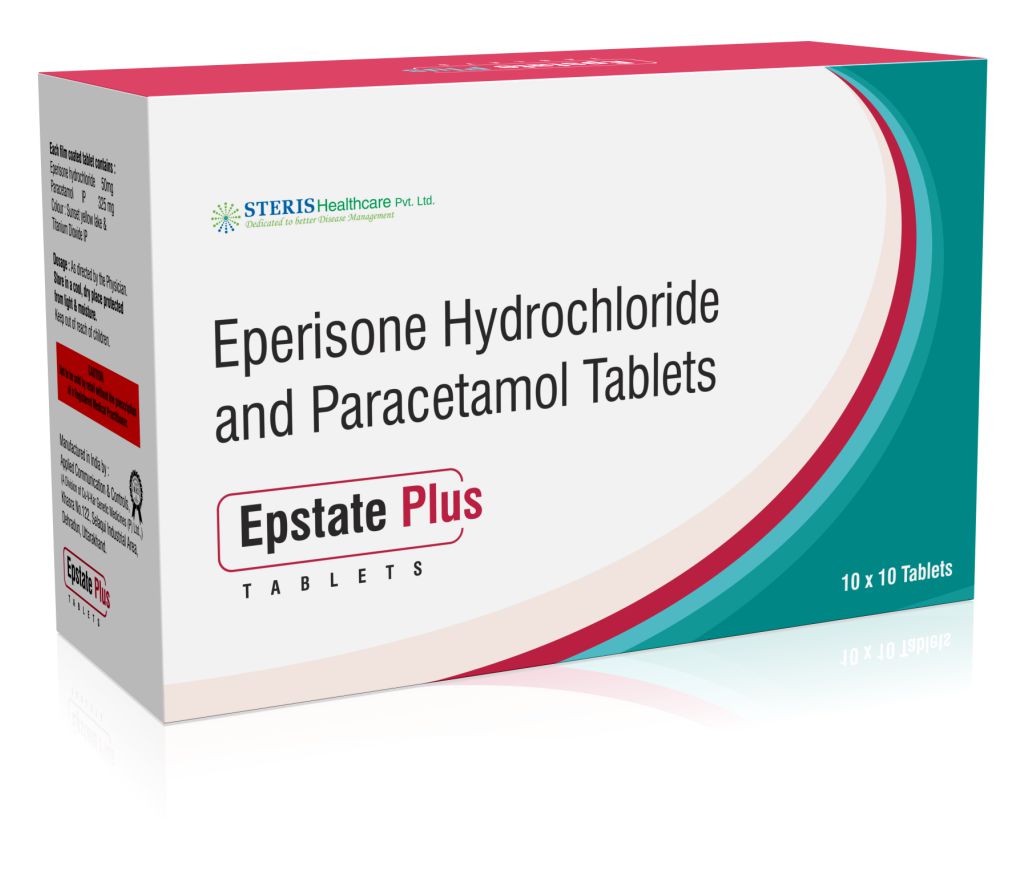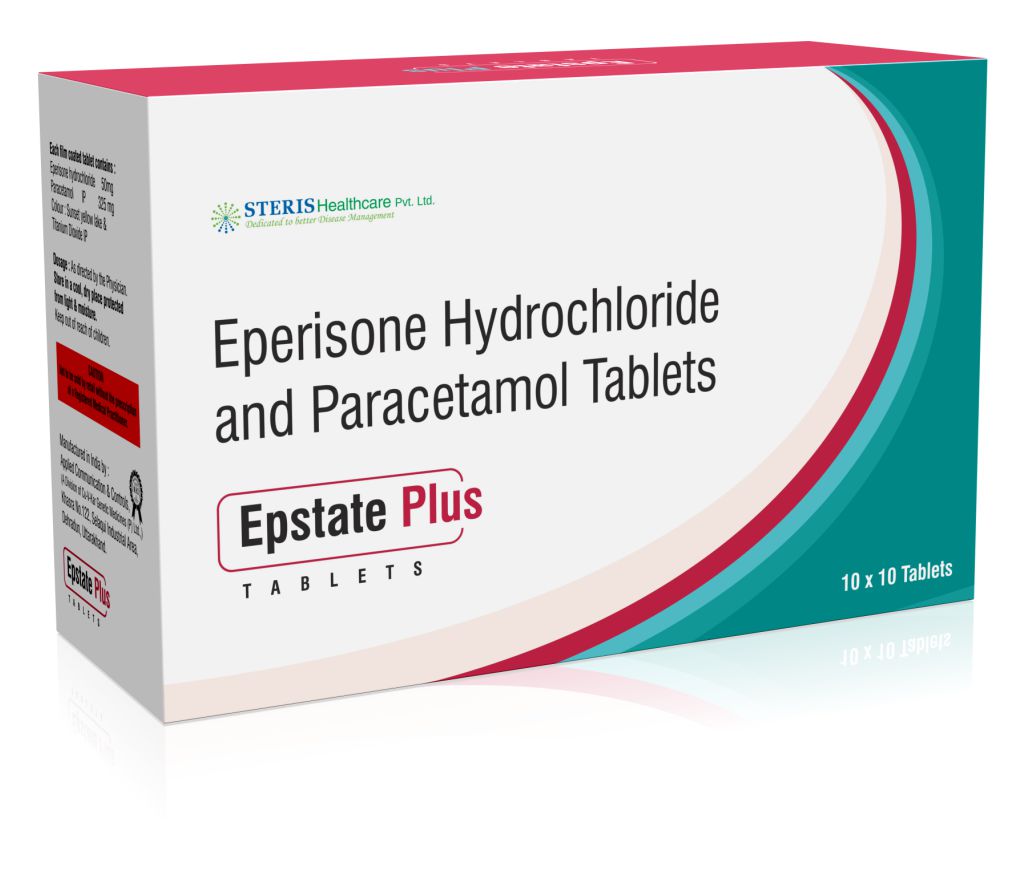
EPSTATE PLUS
 Item requires a valid prescription
Manufactured By Steris Healthcare Pvt Ltd
Composition Eperisone Hydrochloride and Paracetamol Tablets
Rs 72.29
MRP Rs 74.53
(3% OFF)
Includes all taxes
Package SIZE
( FOR 10 TABS )

100% Authentic
Products

Free
Shipping*

Products
Return Policy
Description:
If you are searching for eperisone hydrochloride and paracetamol tablets, you may want to know what this medicine is used for, how it helps with muscle-related pain, what benefits it may offer, and which side effects or precautions you should consider before taking it. This combination is generally used when pain is associated with muscle spasm, stiffness, or musculoskeletal conditions and treatment has been recommended by a healthcare professional.
Eperisone is a centrally acting muscle relaxant, while paracetamol (acetaminophen) is an analgesic used to relieve pain. Pharmaceutical products marketed in India may contain different strengths, including combinations such as eperisone hydrochloride 50 mg + paracetamol 325 mg or eperisone hydrochloride 50 mg + paracetamol 500 mg. Therefore, always check the strength printed on your specific medicine pack rather than assuming that every product has the same composition.
What Are Eperisone Hydrochloride and Paracetamol Tablets?
Eperisone hydrochloride and paracetamol tablets combine two medicines that work differently but can complement each other in the management of painful muscle spasm.
- Eperisone hydrochloride: a centrally acting muscle relaxant that helps reduce excessive muscle tension and spasm.
- Paracetamol: an analgesic that helps reduce pain and fever.
The combination is therefore particularly relevant when muscle spasm and pain occur together. Product information from Indian pharmaceutical manufacturers describes the combination as being used for pain associated with muscle spasm and for relaxing affected muscles.
Clinical research has also evaluated eperisone in patients with acute musculoskeletal spasm associated with low-back pain. In a randomized, double-blind, placebo-controlled Indian trial involving 240 randomized patients, eperisone treatment produced greater improvement in several measures of pain and mobility than placebo over 14 days and was reported as well tolerated.
Eperisone Hydrochloride and Paracetamol Tablets Uses
The primary epinephrine hydrochloride and paracetamol tablets use relate to painful conditions in which muscle spasm or stiffness is an important component.
A doctor may consider this type of combination for:
- Painful muscle spasms
- Acute musculoskeletal pain associated with muscle tightness
- Certain episodes of lower-back pain involving muscle spasm
- Neck or shoulder muscle stiffness when clinically appropriate
- Pain following a muscle strain or similar musculoskeletal injury, depending on the diagnosis
Importantly, this medicine is not simply a general-purpose painkiller for every type of pain. The epinephrine component is intended to address muscle spasm or increased muscle tension, while paracetamol provides pain relief.
Evidence from clinical studies supports the use of eperisone in selected patients with acute low-back pain and muscle spasm. However, treatment should be based on the underlying diagnosis rather than on symptoms alone.
Key Benefits of Eperisone + Paracetamol
The main potential benefit of this combination is that it approaches two components of a painful muscle-spasm episode: muscle tightness and pain.
1. Helps relieve pain
Paracetamol is an established analgesic. It can help reduce mild-to-moderate pain when used at an appropriate dose.
2. Helps reduce muscle spasm
Eperisone acts as a muscle relaxant. Research has investigated its ability to improve painful muscle spasm and associated functional limitations.
3. May support improved movement
When muscle spasm contributes to restricted movement, reducing muscle tightness and pain may make normal movement easier. Clinical trials of eperisone in low-back pain have measured improvements in mobility-related outcomes as well as pain.
4. Addresses pain and spasm together
A combination product may be prescribed when the clinician believes both analgesic treatment and muscle relaxation are appropriate. This does not mean the combination is necessarily superior for every patient; the choice depends on the cause and severity of symptoms.
How Does Eperisone Work?
Eperisone is classified as a centrally acting muscle relaxant. It acts on pathways involved in muscle tone and the pain-spasm cycle, helping reduce excessive muscle tension.
This is clinically relevant because painful muscle spasm can create a cycle in which pain promotes muscle tightening, while muscle tightening can contribute to further discomfort and restricted movement.
Clinical trials have found eperisone useful in selected patients with low-back pain and muscle spasm, although results from individual studies should not be interpreted as proof that it is suitable for every back-pain patient.
How Does Paracetamol Work?
Paracetamol is an analgesic and antipyretic medicine used to relieve pain and reduce fever. Unlike NSAIDs, it is not primarily used for its anti-inflammatory effect.
One important safety consideration is total paracetamol intake. Patients should check other medicines they are taking because cold, flu, headache, and other combination products can also contain paracetamol. Taking multiple paracetamol-containing products can unintentionally increase the total daily dose and raise the risk of liver injury.
Eperisone Hydrochloride and Paracetamol Tablets Dosage
The appropriate dosage depends on the exact formulation, the patient's age and medical history, other medicines being used, and the condition being treated.
Some Indian products are available as eperisone 50 mg + paracetamol 325 mg, while others contain eperisone 50 mg + paracetamol 500 mg.
Therefore:
Do not choose the dose based solely on information found online. Take the medicine exactly as prescribed by your doctor or as directed on the product's approved prescribing information.
Do not increase the frequency or number of tablets because pain has not improved. In particular, do not combine the product with another paracetamol-containing medicine without checking the total dose with a doctor or pharmacist.
For standard adult paracetamol products, NHS guidance states that doses should be separated by at least four hours and that adults should not exceed the recommended maximum on the product instructions.
People with liver disease, chronic alcohol use, malnutrition, dehydration, or other risk factors may require a lower paracetamol dose.
Eperisone Hydrochloride and Paracetamol Tablets Side Effects
Like all medicines, eperisone hydrochloride and paracetamol tablets side effects can occur, although not everyone experiences them.
Possible side effects associated with eperisone include:
- Dizziness or light-headedness
- Headache
- Nausea
- Vomiting
- Abdominal or stomach discomfort
- Weakness or sleepiness
- Skin rash or itching
Clinical research involving eperisone has reported adverse events such as nausea, abdominal pain, headache, and dizziness.
Hypersensitivity reactions are uncommon but potentially serious. Pharmacovigilance data have documented reactions, including urticaria, itching, angioedema, and, rarely, anaphylaxis associated with eperisone.
Paracetamol is generally well tolerated when used correctly, but serious allergic reactions can rarely occur, and excessive intake can cause potentially severe liver damage.
When Should You Seek Medical Help?
Stop taking the medicine and seek urgent medical attention if you develop symptoms suggesting a severe allergic reaction, such as:
- Swelling of the face, lips, mouth, tongue, or throat
- Difficulty breathing
- Severe or rapidly spreading rash
- Fainting or severe weakness
An accidental or intentional overdose involving paracetamol requires prompt medical advice even when the person initially feels well, because liver injury may not produce immediate severe symptoms.
Who Should Take Extra Precautions?
Tell your doctor or pharmacist before using this medicine if you:
- Have liver disease or abnormal liver function
- Regularly consume significant amounts of alcohol
- Have previously experienced an allergy to epinephrine, paracetamol, or another medicine
- Are taking other medicines containing paracetamol
- Are pregnant or breastfeeding
- Are elderly or have significant medical conditions
- Are taking medicines that can cause drowsiness or dizziness
Eperisone may cause dizziness, weakness, or sleepiness in some patients. If you experience these effects, use caution with driving, operating machinery, or other activities requiring full alertness.
Eperisone + Paracetamol: What Buyers Should Check Before Purchasing
If you are comparing or purchasing eperisone hydrochloride and paracetamol tablets, don't select a product based on price or brand name alone.
Check these details on the pack:
- Exact composition: Confirm the amount of eperisone and paracetamol per tablet.
- Strength: 50 mg + 325 mg and 50 mg + 500 mg are not interchangeable on a tablet-for-tablet basis.
- Manufacturer: Check that the product comes from a legitimate pharmaceutical manufacturer or authorized pharmacy.
- Prescription requirements: Follow applicable prescription and dispensing rules.
- Expiry date and packaging: Avoid damaged, opened, or improperly stored packs.
- Storage instructions: Product information commonly recommends protection from excessive heat, light, and moisture and storage according to the manufacturer's instructions.
- Other paracetamol medicines: Check your existing medicines to prevent accidental duplication.
Online listings can contain inaccurate specifications. For example, some marketplace listings may display inconsistent dosage information, so the physical medicine packaging and prescribing information should take priority over an online product listing.
Is Eperisone + Paracetamol Suitable for Back Pain?
It can be prescribed for back pain associated with muscle spasm, but back pain has many possible causes. A muscle relaxant combination should not be used as a substitute for proper diagnosis.
Research has specifically evaluated eperisone for acute low-back pain with musculoskeletal spasm and reported improvements in pain and functional measures in selected patients.
Seek medical evaluation promptly if back pain is accompanied by significant weakness, loss of bladder or bowel control, numbness around the genital or anal area, major trauma, unexplained weight loss, fever, or other concerning symptoms.
E-E-A-T Medical Content Note
For health-related content, Experience, Expertise, Authoritativeness, and Trustworthiness (E-E-A-T) should mean more than adding keywords. Reliable medical content should distinguish established information from marketing claims, identify the active ingredients and strengths accurately, discuss meaningful safety risks, and encourage professional assessment where appropriate.
The clinical evidence cited here includes peer-reviewed research indexed by PubMed, while product-composition information has been cross-checked against pharmaceutical manufacturer information. Clinical evidence should not be interpreted as an individual treatment recommendation.
Conclusion
Eperisone hydrochloride and paracetamol tablets are a combination medicine designed to help manage pain associated with muscle spasm or stiffness. Eperisone provides the muscle-relaxant component, while paracetamol provides analgesic action. The combination may be useful when both muscle spasm and pain are contributing to a patient's symptoms.
The most important safety point is to use the exact strength and dose prescribed, avoid taking additional paracetamol-containing products without professional advice, and watch for dizziness or allergic reactions. People with liver problems or other relevant medical conditions should discuss treatment with a healthcare professional before use.
Because formulations differ—for example, some products contain 50 mg eperisone + 325 mg paracetamol while others contain 50 mg + 500 mg—always verify the composition on your specific pack.
Frequently Asked Questions
1. What are eperisone hydrochloride and paracetamol tablets used for?
They are generally used to relieve pain associated with muscle spasm, stiffness, or certain musculoskeletal conditions. Eperisone helps relax muscles, while paracetamol helps relieve pain.
2. Can epinephrine and paracetamol tablets be used for back pain?
They may be prescribed for back pain accompanied by muscle spasm. Clinical studies have evaluated eperisone in acute low-back pain with musculoskeletal spasm. However, the cause of back pain should be assessed before choosing treatment.
3. What are the common side effects of eperisone hydrochloride and paracetamol tablets?
Possible effects include dizziness, headache, nausea, stomach discomfort, weakness, sleepiness, and skin reactions. Seek urgent medical help for breathing difficulty, facial or throat swelling, or other signs of a severe allergic reaction.
4. Can I take eperisone and paracetamol with another painkiller?
Do not add another painkiller without checking with a doctor or pharmacist. Most importantly, check whether the other medicine also contains paracetamol, because taking multiple paracetamol-containing medicines can result in an overdose and liver damage.
5. Does eperisone cause sleepiness or dizziness?
It can. Dizziness, light-headedness, headache, and sleepiness have been reported with eperisone. If you experience these effects, avoid driving or operating machinery until you know how the medicine affects you.
6. Can I take eperisone hydrochloride and paracetamol tablets without a prescription?
Whether a particular product requires a prescription depends on the formulation and applicable local regulations. Some Indian manufacturer information specifically states that these products should not be sold at retail without a prescription from a registered medical practitioner.
7. Are eperisone hydrochloride and paracetamol safe for everyone?
No medicine is appropriate for everyone. People with liver disease, previous drug allergies, significant alcohol use, pregnancy, breastfeeding, or other medical conditions should discuss the medicine with a healthcare professional before taking it.
8. What should I do if I accidentally take too much paracetamol?
Seek urgent medical advice. Paracetamol overdose can cause serious liver injury, and symptoms may not always be obvious immediately. Take the medicine packaging and information about any other medicines you have taken when seeking medical care.
Available Substitutes