


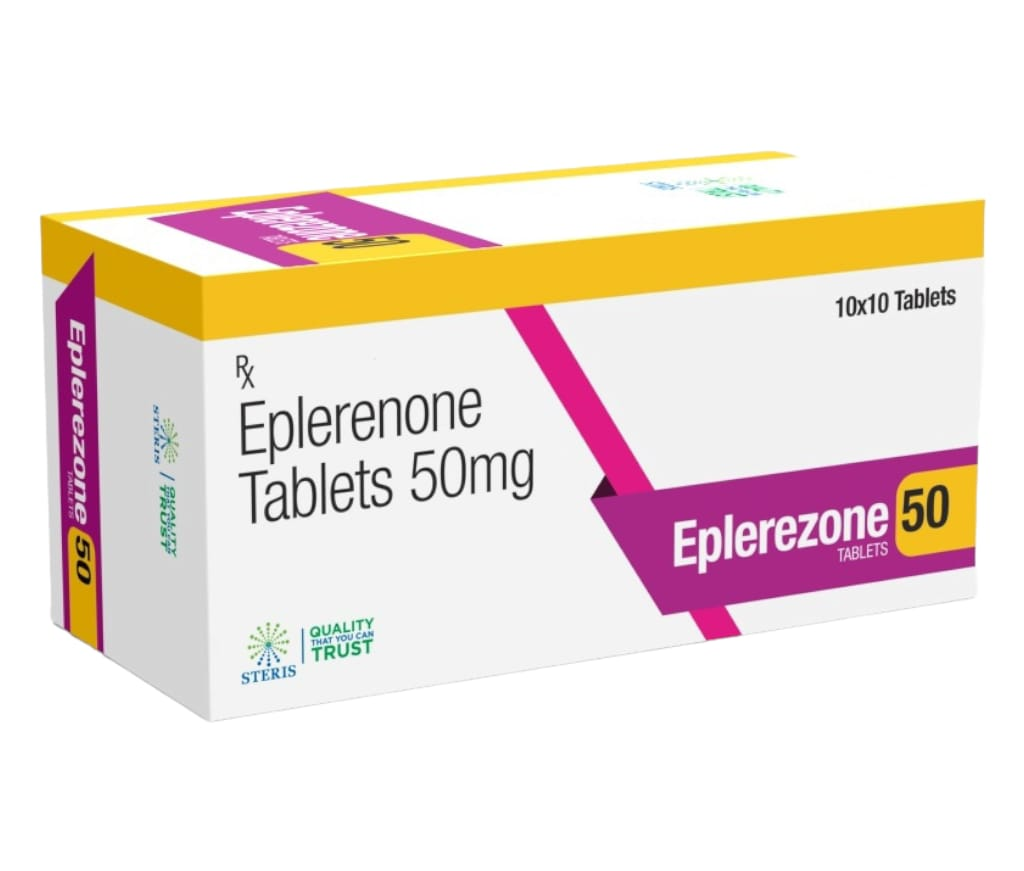
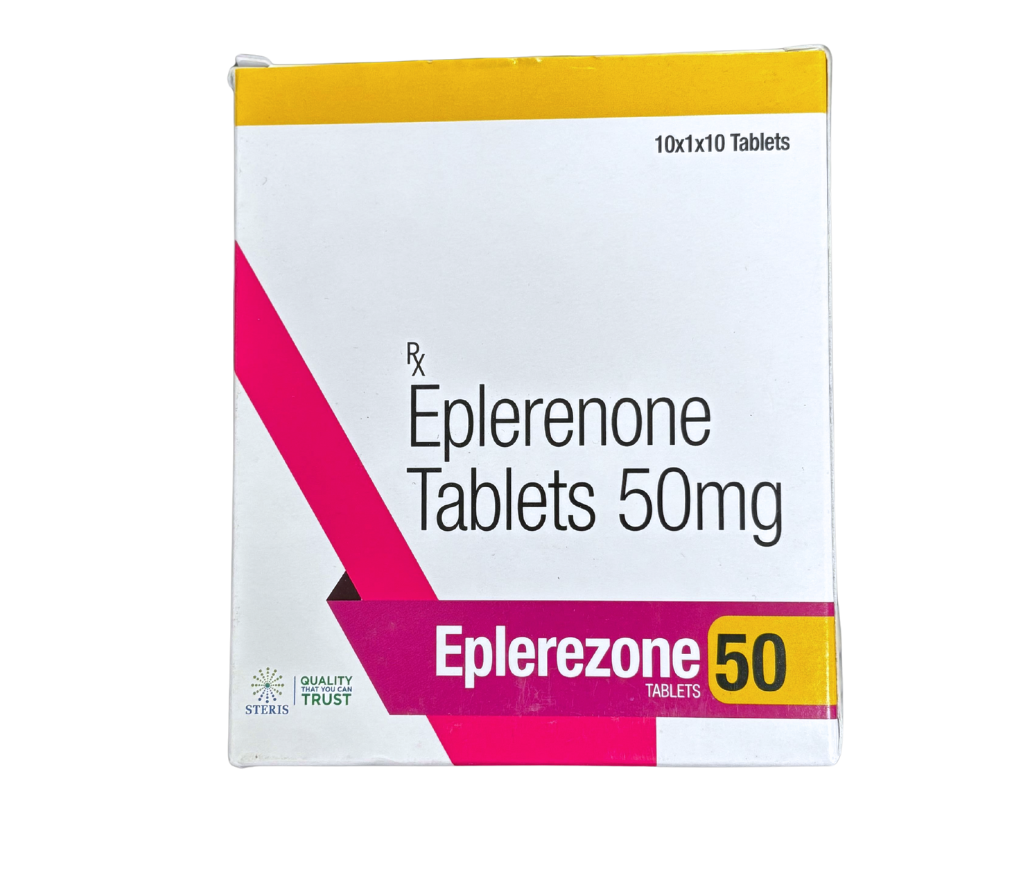
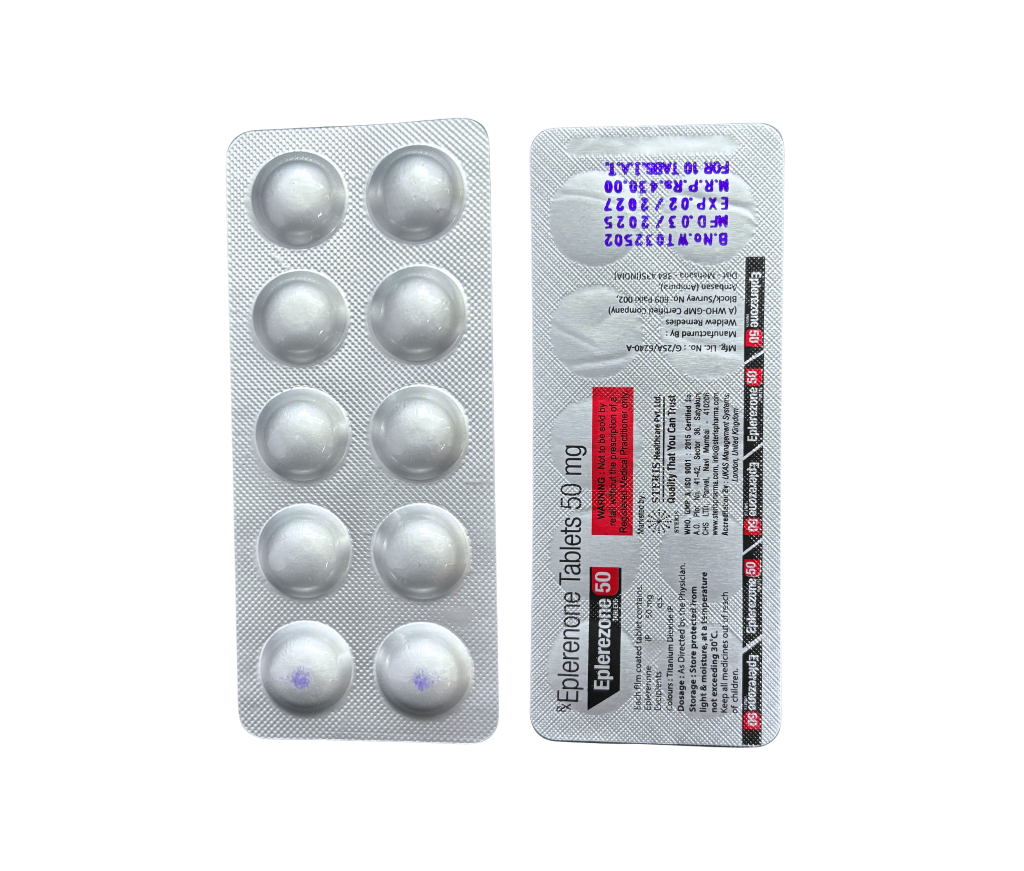
EPLEREZONE 50
 Item requires a valid prescription
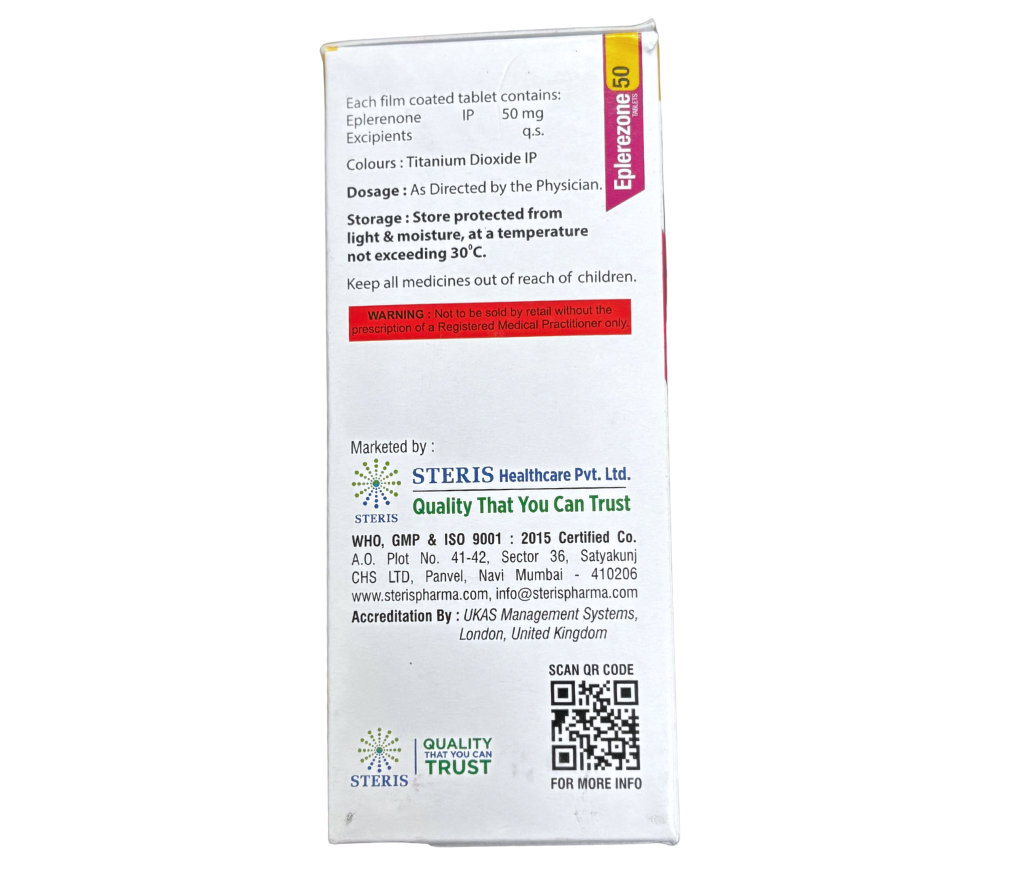
Manufactured By Steris Healthcare Pvt Ltd
Composition Eplerenone (50mg)
Rs 282.19
MRP Rs 403.13
(30% OFF)
Includes all taxes
Package SIZE
( For 10 Tablet )

100% Authentic
Products

Free
Shipping*

Products
Return Policy
Description:
Eplerenone 50 mg is a prescription cardiovascular medicine used primarily to manage high blood pressure and certain forms of heart failure. It belongs to a group of medicines called mineralocorticoid receptor antagonists (MRAs) and works by blocking the effects of aldosterone, a hormone that can contribute to sodium and water retention, increased blood pressure, and cardiovascular stress.
For people researching eplerenone 50 mg uses, benefits, side effects, dosage, safety, interactions, and how to take it, this guide provides a practical overview based on current prescribing information and established medical drug references. The latest U.S. DailyMed labeling available in June 2026 confirms eplerenone's indications for hypertension and, depending on the specific product labeling, heart failure with reduced ejection fraction (HFrEF), including use following myocardial infarction.
What Is Eplerenone 50 mg?
Eplerenone 50 mg contains 50 milligrams of eplerenone, an aldosterone-blocking medicine. Unlike conventional diuretics that primarily work by increasing urine production, eplerenone specifically blocks mineralocorticoid receptors activated by aldosterone.
Aldosterone encourages the body to retain sodium and water while promoting potassium retention through its effects on the kidneys. By blocking aldosterone's action, eplerenone can help reduce blood pressure and provide important cardiovascular benefits in appropriately selected patients.
Eplerenone is available in different strengths, including 25 mg and 50 mg. The 50 mg strength is not automatically the correct dose for every patient. For some heart-failure patients, treatment begins at 25 mg once daily and is gradually increased to 50 mg once daily, depending on potassium levels, kidney function, blood pressure, and tolerability.
Eplerenone 50 mg Uses
1. High Blood Pressure
One of the established uses of eplerenone 50 mg is the treatment of hypertension. By blocking aldosterone, eplerenone can reduce the hormonal effects that contribute to sodium and fluid retention and help lower blood pressure. Lowering elevated blood pressure reduces the long-term risk of cardiovascular events such as stroke and myocardial infarction.
For hypertension, current prescribing information lists 50 mg once daily as a recommended starting dose for adults, although treatment must be individualized. If the blood-pressure response is inadequate, some labeling permits increasing the dose to 50 mg twice daily, provided this is medically appropriate.
2. Heart Failure With Reduced Ejection Fraction
Eplerenone is also used in selected adults with heart failure with reduced ejection fraction (HFrEF). Certain formulations are indicated to improve outcomes in stable adults with symptomatic HFrEF, while other labeling specifically includes patients with left-ventricular dysfunction following an acute myocardial infarction.
For this indication, the usual approach is more cautious than simply starting every patient on 50 mg. Current prescribing information recommends initiating treatment at 25 mg once daily and titrating toward 50 mg once daily within four weeks, as tolerated and according to potassium levels and other clinical factors.
Key Benefits of Eplerenone 50 mg
When prescribed for an appropriate patient, potential benefits include:
Helps lower blood pressure
Eplerenone can reduce elevated blood pressure by counteracting aldosterone's effects. Its blood-pressure-lowering effect may become more apparent over several weeks rather than immediately. The prescribing information notes that the full therapeutic effect for hypertension may be apparent within approximately four weeks.
Supports cardiovascular protection
Effective blood-pressure control can reduce the risk of serious cardiovascular complications. In appropriate heart-failure patients, eplerenone can also provide benefits beyond simply lowering blood pressure, which is why MRAs are used as part of comprehensive heart-failure treatment.
Useful when aldosterone blockade is clinically appropriate
Eplerenone directly targets the mineralocorticoid receptor. This makes it different from medicines that lower blood pressure through calcium-channel blockade, beta blockade, or other mechanisms.
Generally more selective than spironolactone
Eplerenone is designed to selectively block the mineralocorticoid receptor and has less interaction with androgen and progesterone receptors than spironolactone. Consequently, some hormone-related adverse effects associated with spironolactone may be less prominent with eplerenone. However, eplerenone still has important risks—particularly hyperkalemia—and is not automatically safer for every patient.
How Does Eplerenone 50 mg Work?
The body naturally produces aldosterone, a hormone involved in maintaining blood pressure and electrolyte balance.
When aldosterone activates mineralocorticoid receptors in the kidneys, the body tends to retain sodium and water while retaining potassium differently. Excessive aldosterone activity can contribute to hypertension and cardiovascular remodeling.
Eplerenone blocks mineralocorticoid receptors. This reduces aldosterone's effects and can help lower blood pressure and reduce harmful cardiovascular effects in appropriate patients.
Because eplerenone affects potassium handling, potassium monitoring is an essential part of treatment.
How to Take Eplerenone 50 mg
Take eplerenone exactly as prescribed by your healthcare professional. It is generally taken orally and may be taken with or without food unless your specific product instructions say otherwise.
For hypertension, current prescribing information lists 50 mg once daily as a recommended starting dose, with possible adjustment according to response. For HFrEF or post-myocardial-infarction treatment, the starting dose can be 25 mg once daily with gradual titration.
Do not assume that a 50 mg tablet means you should take 50 mg twice daily. Higher exposure can increase the risk of hyperkalemia without providing additional benefit in situations where higher doses are not recommended.
If you miss a dose, follow your prescription instructions or ask your pharmacist. Do not routinely double the next dose to compensate.
Eplerenone 50 mg Side Effects
Like all prescription medicines, eplerenone can cause adverse effects.
Possible side effects include:
-
Dizziness
-
Headache
-
Diarrhea
-
Fatigue
-
Cough
-
Increased potassium levels
-
Low blood pressure in some patients
-
Changes in kidney function
The most important adverse effect to understand is hyperkalemia, meaning potassium becomes too high in the blood. This can sometimes cause weakness, muscle symptoms, nausea, palpitations, or abnormal heart rhythms and may become medically serious.
When to seek medical attention
Contact a healthcare professional promptly if you develop symptoms that could indicate high potassium, such as unusual muscle weakness, significant nausea, palpitations, or other concerning symptoms.
Seek urgent medical care for severe weakness, fainting, serious heart-rhythm symptoms, or other potentially dangerous reactions.
Who Should Be Careful With Eplerenone 50 mg?
Eplerenone requires particular caution in people with:
-
Kidney impairment
-
High blood potassium
-
Diabetes with certain kidney complications
-
A history of hyperkalemia
-
Certain cardiovascular conditions requiring multiple RAAS-blocking medicines
Your clinician may order blood tests before starting eplerenone and periodically afterward. Potassium and kidney function are especially important because impaired kidney function can increase the risk of potassium accumulation.
Eplerenone 50 mg Drug Interactions
Eplerenone can interact with other medicines, making medication review essential.
Potassium supplements
Do not take potassium supplements routinely with eplerenone unless specifically instructed by your healthcare professional. Combining medicines that raise potassium can increase the risk of hyperkalemia.
ACE inhibitors and ARBs
Medicines that affect the renin-angiotensin-aldosterone system—including ACE inhibitors and ARBs—can increase potassium retention when combined with eplerenone. Close monitoring may therefore be necessary.
Other potassium-sparing medicines
Combining eplerenone with other potassium-retaining medicines may substantially increase potassium levels.
CYP3A4 inhibitors
Certain medicines that strongly inhibit CYP3A4 can increase eplerenone exposure. Your doctor or pharmacist should review your complete medication list before treatment.
Grapefruit and grapefruit juice
Some clinical drug references advise avoiding grapefruit products with eplerenone because of potential effects on drug metabolism. Follow the instructions supplied with your specific product and ask your pharmacist if you regularly consume grapefruit.
Eplerenone 50 mg and Kidney Function
Kidney health is particularly important when taking eplerenone because the medicine can increase potassium levels, and reduced kidney function can make potassium control more difficult.
A doctor may check serum potassium and kidney function before treatment and during therapy. The frequency of monitoring depends on your medical condition, kidney function, other medicines, and potassium level.
Do not skip recommended blood tests simply because you feel well.
Eplerenone 50 mg vs Spironolactone
Both eplerenone and spironolactone are mineralocorticoid receptor antagonists, but they are not identical.
Eplerenone is more selective for the mineralocorticoid receptor, whereas spironolactone interacts with additional steroid hormone receptors. This difference can affect side-effect profiles.
However, the decision between them depends on the patient's diagnosis, kidney function, potassium level, other medicines, clinical guidelines, cost, tolerability, and physician judgment. Eplerenone should not be substituted for spironolactone—or vice versa—without medical supervision.
Buying Eplerenone 50 mg Safely
If you are looking to buy eplerenone 50 mg, use a legitimate, licensed pharmacy and a valid prescription where required.
Before purchasing, verify:
-
The medicine name is eplerenone.
-
The strength is 50 mg.
-
The manufacturer's packaging is intact.
-
The batch number and expiry date are visible.
-
The medicine comes from a licensed pharmacy.
-
The product matches the dosage form prescribed by your doctor.
Avoid websites promising prescription cardiovascular medicines without appropriate safeguards or offering unusually low prices without verifiable product information.
For a chronic cardiovascular medicine, authenticity, correct strength, storage, and professional guidance are more important than simply finding the cheapest listing.
Frequently Asked Questions
1. What is eplerenone 50 mg used for?
Eplerenone 50 mg is used primarily for hypertension and, depending on the clinical indication and product labeling, certain forms of heart failure and heart dysfunction following myocardial infarction.
2. Is eplerenone 50 mg a blood pressure medicine?
Yes. Eplerenone is an aldosterone antagonist that can lower high blood pressure by blocking mineralocorticoid receptors.
3. Is eplerenone 50 mg used for heart failure?
Yes. Eplerenone is used in selected patients with heart failure with reduced ejection fraction and in certain patients with heart dysfunction following a heart attack.
4. Is eplerenone 50 mg a diuretic?
Eplerenone is often described as a potassium-sparing diuretic, but pharmacologically it is more specifically a mineralocorticoid receptor antagonist. Its principal action is blocking aldosterone rather than simply producing urine.
5. How does eplerenone 50 mg work?
It blocks aldosterone at mineralocorticoid receptors, reducing aldosterone-related sodium and water retention and helping control blood pressure.
6. What are the common side effects of eplerenone 50 mg?
Possible side effects include dizziness, headache, diarrhea, fatigue, low blood pressure, and increased potassium.
7. Can eplerenone 50 mg increase potassium?
Yes. Hyperkalemia is one of the most important risks of eplerenone, which is why potassium monitoring is important during treatment.
8. Can I take potassium supplements with eplerenone 50 mg?
Do not take potassium supplements unless your healthcare professional specifically recommends them. Combining potassium supplements with eplerenone can increase the risk of high potassium.
9. Can eplerenone 50 mg be taken every day?
Yes, when prescribed as a daily medicine. The appropriate dose and frequency depend on the indication and the patient's medical status.
10. Is 50 mg of eplerenone a high dose?
It can be an appropriate dose for some patients, but the meaning of 50 mg depends on the indication. Some heart-failure patients begin at 25 mg daily and are titrated to 50 mg daily.
11. How long does eplerenone 50 mg take to work?
Blood-pressure improvement develops over time rather than necessarily immediately. The prescribing information states that the full antihypertensive effect may become apparent within about four weeks.
12. Can eplerenone 50 mg be taken with other blood pressure medicines?
Yes, eplerenone may be used with other antihypertensive medicines when prescribed. However, combinations that affect potassium or kidney function require appropriate medical monitoring.
13. Can eplerenone 50 mg cause dizziness?
Yes. Dizziness can occur, particularly if blood pressure falls. If dizziness is severe, persistent, or associated with fainting, contact your healthcare professional.
14. Can I take eplerenone 50 mg if I have kidney disease?
Not necessarily. Kidney function is an important factor in determining whether eplerenone is appropriate and how it should be monitored. Your doctor may need blood tests before and during treatment.
15. Can eplerenone 50 mg be taken with spironolactone?
They are both mineralocorticoid receptor antagonists, so combining them is generally not something to do without specialist medical direction because of the increased risk of high potassium and other adverse effects.
16. Can eplerenone 50 mg be taken after a heart attack?
Eplerenone is used in selected patients with left-ventricular dysfunction or heart failure following myocardial infarction, according to applicable prescribing criteria.
17. Does eplerenone 50 mg lower blood pressure immediately?
It may begin affecting blood pressure before the full therapeutic effect develops, but optimal blood-pressure response can take several weeks.
18. Can eplerenone 50 mg cause kidney problems?
Eplerenone can affect kidney-related laboratory values and requires caution in people with impaired kidney function. Monitoring is important, particularly because kidney impairment can increase the risk of hyperkalemia.
19. Should I stop eplerenone 50 mg if I feel better?
No. If it has been prescribed for hypertension or heart failure, feeling better does not necessarily mean the underlying condition has resolved. Discuss any dose change or discontinuation with your doctor.
20. What should I do if I miss an eplerenone 50 mg dose?
Follow your prescription or pharmacist's missed-dose instructions. Do not take an extra dose unless your healthcare professional specifically tells you to do so.
21. Can I buy eplerenone 50 mg without a prescription?
Eplerenone is a prescription cardiovascular medicine in many markets. Purchase it through a legitimate pharmacy and follow the prescription requirements applicable in your country.
22. Is eplerenone 50 mg safe for everyone?
No. Kidney function, potassium levels, other medicines, blood pressure, and the underlying cardiovascular condition all influence whether eplerenone is appropriate.