


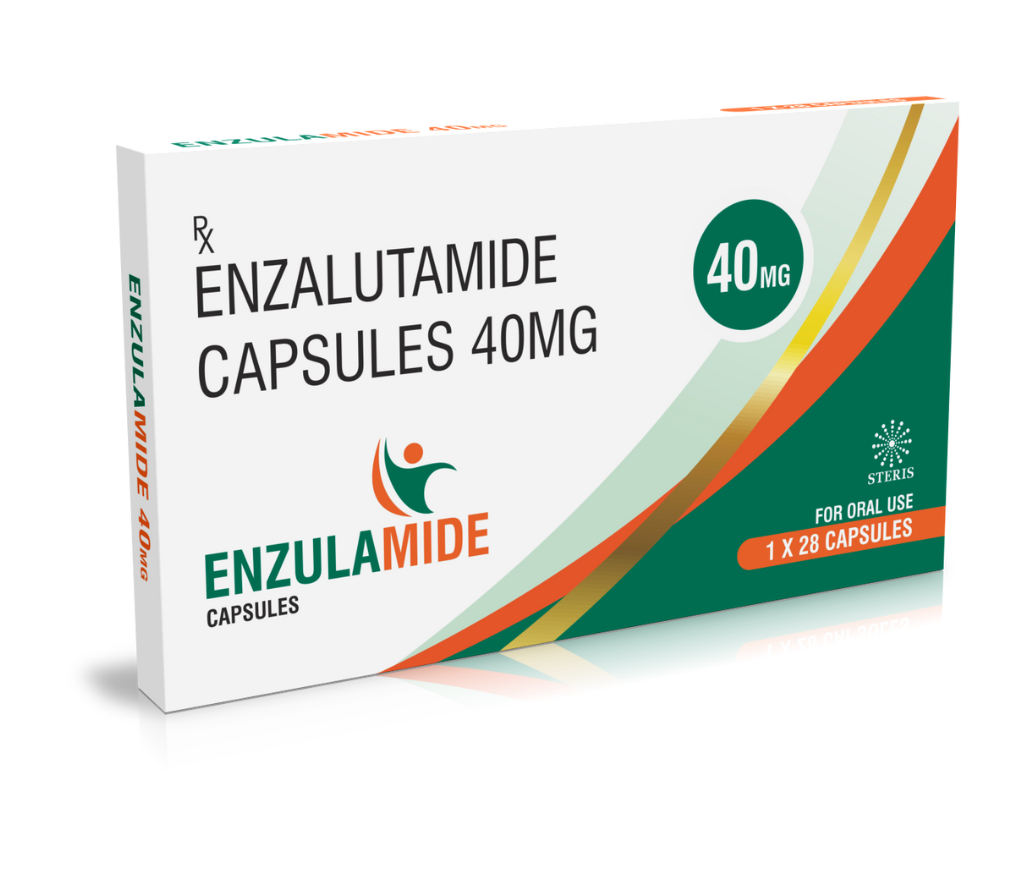
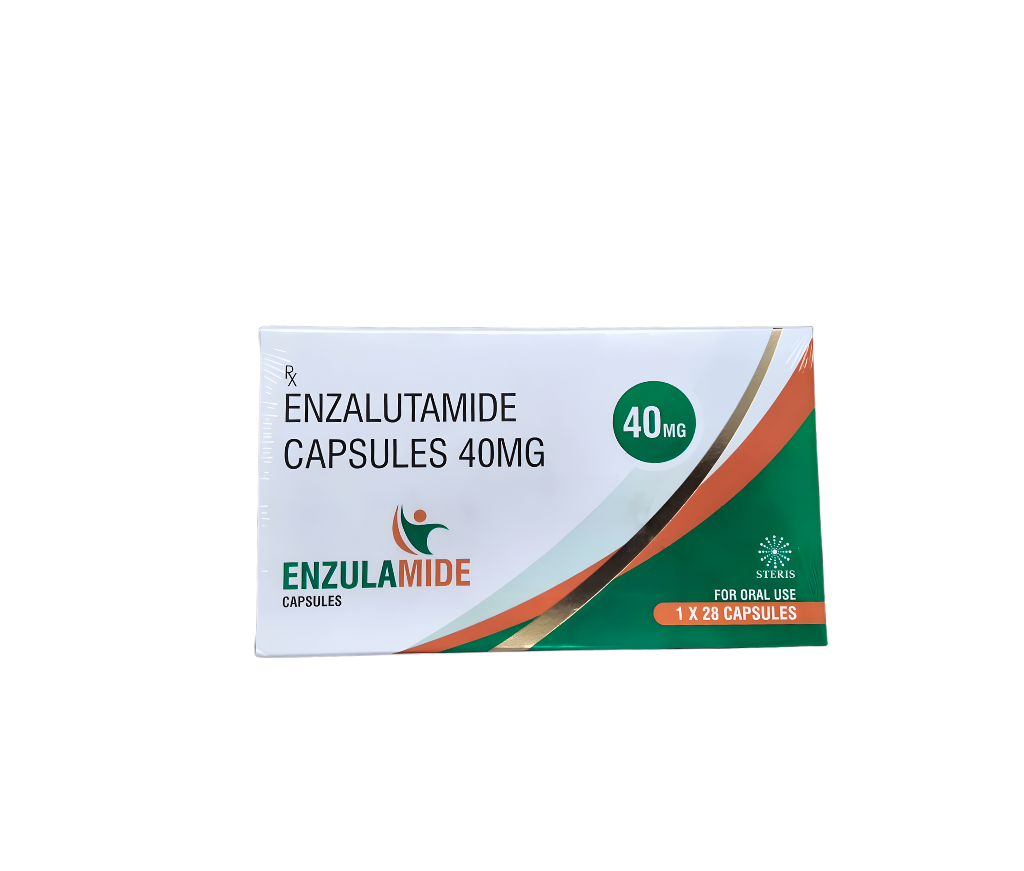
ENZULAMIDE 40
 Item requires a valid prescription
Manufactured By STERIS HEALTHCARE PVT LTD
Composition Enzalutamide 40mg
Rs 7546.88
MRP Rs 10781.20
(30% OFF)
Includes all taxes
Package SIZE
( For 28 capsules )

100% Authentic
Products

Free
Shipping*

Products
Return Policy
Description:
Enzalutamide 40mg An oral anti-androgen medicine used to treat prostate cancer by blocking testosterone activity. It works by blocking androgen receptors, preventing testosterone-driven cancer cell growth. Enzalutamide is not chemotherapy — it belongs to a class of drugs called androgen receptor inhibitors and works through hormonal pathway blockade rather than directly killing rapidly dividing cells. Common side effects include fatigue, hot flashes, high blood pressure, and joint pain, while serious risks include seizures and falls. Enzalutamide is typically continued long-term, for as long as it remains clinically effective and well-tolerated, under close oncologist supervision.
Brand Name: ENZULAMIDE 40 (STERIS HEALTHCARE PVT LTD)
Composition Name: Enzalutamide 40 mg
Formulation: Capsule
Pack Size: 1 × 28 Capsules
Marketed By: Steris Healthcare Pvt Ltd
Regulatory Standard: WHO-GMP Certified
Schedule: Valid Prescription Required (Prescription Only)
What Is Enzalutamide 40mg?
Enzalutamide is a targeted oral medication used in the treatment of prostate cancer, specifically forms of the disease that continue to progress despite low testosterone levels achieved through standard hormone therapy — a condition known as castration resistance. It is classified as an androgen receptor inhibitor, meaning it works by directly blocking the receptors that testosterone and other androgens use to fuel prostate cancer cell growth.
Enzalutamide 40mg tablets or capsules are typically prescribed by oncologists or urologists as part of a broader prostate cancer management plan, often alongside ongoing androgen deprivation therapy (ADT). It is classified as a Schedule H prescription drug in India and must only be used under continued medical and specialist supervision, given its role in a serious oncological condition and its distinct safety monitoring requirements.
Clinical Indications
| Indication | Purpose of Enzalutamide Use |
|---|---|
| Metastatic castration-resistant prostate cancer (mCRPC) | Slows cancer progression when the disease no longer responds to standard hormone therapy alone |
| Non-metastatic castration-resistant prostate cancer (nmCRPC) | Delays progression to metastatic disease in high-risk patients |
| Metastatic hormone-sensitive prostate cancer (mHSPC) | Used in combination with androgen deprivation therapy in select patients |
| Post-surgical or post-radiation recurrence (select cases) | Manages disease recurrence under oncologist guidance |
Mechanism of Action
Enzalutamide works through targeted blockade of the androgen signaling pathway, which prostate cancer cells rely on to grow:
- Androgen receptor binding inhibition: Enzalutamide binds directly to the androgen receptor, preventing testosterone and dihydrotestosterone (DHT) from activating it.
- Blocks nuclear translocation: It prevents the androgen receptor from moving into the cell nucleus, a critical step required for the receptor to influence gene expression.
- Inhibits DNA binding: Even if some receptor activity occurs, enzalutamide interferes with the receptor's ability to bind to DNA and trigger cancer-promoting gene transcription.
- Multi-step blockade: Because enzalutamide interferes with the androgen receptor pathway at multiple points, it offers a more complete blockade compared to some earlier-generation anti-androgens, which is part of why it remains effective even in cancers that have become resistant to standard hormone therapy.
- Not chemotherapy: Unlike chemotherapy, which broadly targets rapidly dividing cells throughout the body, enzalutamide specifically targets the hormonal signaling pathway driving prostate cancer growth, resulting in a different mechanism and side effect profile.
Key Benefits of Enzalutamide 40mg
- Slows Cancer Progression—Helps delay the progression of castration-resistant prostate cancer, extending the time before disease advances.
- Oral Convenience – Available as an oral tablet/capsule, allowing at-home administration rather than requiring infusion visits.
- Effective in Castration-Resistant Disease—Specifically designed to work even when cancer has stopped responding to standard hormone therapy.
- Delays Metastasis—In non-metastatic disease, helps delay the cancer's spread to other parts of the body.
- Can Be Combined with ADT – Often used alongside ongoing androgen deprivation therapy for a more comprehensive treatment approach.
- Distinct Mechanism from Chemotherapy—Offers a hormonal-pathway-targeted option, which may be preferred in certain treatment stages or patient profiles.
- Established Clinical Use – Backed by extensive oncological research and used as part of standard prostate cancer treatment protocols worldwide.
- May Improve Quality of Life—By slowing disease progression, may help maintain functional status and delay symptom-related complications for a period of time.
Dosage Guidelines
- Standard dose: Enzalutamide 40mg is often given as part of a total daily dose determined by the treating oncologist (commonly involving multiple 40mg units to reach the prescribed total daily amount).
- Administration: Usually taken once daily, at approximately the same time each day, with or without food.
- Concurrent therapy: Often continued alongside ongoing androgen deprivation therapy (ADT), such as LHRH agonists, unless the patient has had surgical removal of the testes.
- Dose adjustments: May be modified by your doctor based on side effects, liver function, or interacting medications.
- Missed dose: If a dose is missed on a given day, do not double the next day's dose — contact your doctor for guidance.
- Duration: Treatment is typically continued long-term, for as long as it remains effective and side effects are manageable, based on regular oncology follow-up and imaging/lab monitoring.
Side Effects
Common Side Effects
- Fatigue or weakness
- Hot flashes
- High blood pressure
- Joint pain or muscle aches
- Decreased appetite
- Diarrhea
Serious Side Effects (Seek Immediate Medical Attention)
- Seizures (enzalutamide carries a known risk of lowering seizure threshold)
- Falls or fractures (linked to fatigue, dizziness, or muscle weakness)
- Signs of heart problems (chest pain, irregular heartbeat, shortness of breath)
- Posterior reversible encephalopathy syndrome (PRES) — rare but serious, presenting as headache, confusion, vision changes, or seizures
- Severe allergic reactions: rash, swelling, difficulty breathing
What Foods and Substances Should Be Avoided When Taking Enzalutamide
- Grapefruit and grapefruit juice: Can interfere with how the body metabolizes enzalutamide and should generally be avoided or discussed with your doctor.
- Alcohol: May increase fatigue, dizziness, or interact with the medication's side effect profile — discuss safe limits with your doctor.
- St. John's Wort and certain herbal supplements: Can significantly reduce enzalutamide's effectiveness by altering liver enzyme activity.
- Other CYP3A4-interacting medications: Many drugs metabolized through the same liver pathway can interact with enzalutamide — always inform your doctor of all medications and supplements you are taking.
- High-risk activities: Due to seizure risk and fatigue, activities like driving or operating heavy machinery should be approached cautiously, especially when starting treatment or adjusting doses.
Precautions
- Never start, stop, or adjust enzalutamide dosing without consulting your treating oncologist.
- Inform your doctor of any history of seizures, brain conditions, or heart disease before starting treatment.
- Regular blood pressure monitoring is recommended, as enzalutamide can cause or worsen hypertension.
- Report any falls, seizures, or unusual neurological symptoms to your doctor immediately.
- Enzalutamide is not intended for use in women and is contraindicated in pregnancy due to potential fetal harm; appropriate precautions should be discussed if there is any possibility of exposure to pregnant partners.
- Store at room temperature, away from moisture and direct sunlight, and keep out of reach of children.
Conclusion
Enzalutamide 40mg represents an important oral treatment option for men with castration-resistant and certain hormone-sensitive forms of prostate cancer, working through targeted androgen receptor blockade rather than the broad cytotoxic action of chemotherapy. Its ability to slow disease progression, delay metastasis, and integrate with existing hormone therapy has made it a widely used part of modern prostate cancer management. That said, enzalutamide carries specific risks — including seizure risk, cardiovascular effects, and fatigue-related fall risk — that require ongoing specialist supervision, regular monitoring, and open communication between patient and oncologist. Anyone prescribed enzalutamide should follow their treatment plan closely, report new or worsening symptoms promptly, and never adjust dosing independently.
Frequently Asked Questions
1. What is enzalutamide 40mg used for?
Enzalutamide 40mg is used to treat advanced prostate cancer, including metastatic and non-metastatic castration-resistant prostate cancer, by blocking androgen receptors that drive cancer cell growth.
2. What are the side effects of enzalutamide?
Common side effects include fatigue, hot flashes, high blood pressure, and joint pain, while serious side effects can include seizures, falls, and rare neurological complications requiring immediate medical attention.
3. Is enzalutamide a chemotherapy?
No, enzalutamide is not chemotherapy — it is an androgen receptor inhibitor that works by blocking hormone signaling pathways driving prostate cancer growth, rather than broadly targeting rapidly dividing cells like traditional chemotherapy.
4. What foods should I avoid when taking enzalutamide?
Grapefruit and grapefruit juice should generally be avoided, along with certain herbal supplements like St. John's Wort, as these can interfere with how the body processes enzalutamide.
5. How long can you take enzalutamide?
Enzalutamide is typically taken long-term, for as long as it continues to effectively control the cancer and side effects remain manageable, based on regular monitoring by your oncologist.
6. How does enzalutamide work?
Enzalutamide works by binding to androgen receptors and blocking their activity, preventing testosterone from fueling prostate cancer cell growth at multiple steps in the signaling pathway.
7. Can enzalutamide cause seizures?
Yes, enzalutamide carries a known risk of lowering the seizure threshold, and patients with a history of seizures or certain brain conditions should discuss this risk carefully with their doctor.
8. Is enzalutamide taken with or without food?
Enzalutamide is generally taken once daily with or without food, at approximately the same time each day, as directed by your doctor.
9. Can enzalutamide be combined with hormone therapy?
Yes, enzalutamide is often used alongside ongoing androgen deprivation therapy (ADT) as part of a comprehensive prostate cancer treatment plan.
10. What is the difference between enzalutamide and chemotherapy?
Enzalutamide targets the androgen receptor pathway specific to prostate cancer, while chemotherapy broadly affects rapidly dividing cells throughout the body, resulting in different mechanisms and side effect profiles.
11. Can enzalutamide affect blood pressure?
Yes, enzalutamide can cause or worsen high blood pressure, so regular blood pressure monitoring is recommended during treatment.
12. What happens if I miss a dose of enzalutamide?
If a dose is missed, do not take an extra dose to make up for it the next day — contact your doctor for specific guidance.
13. Does enzalutamide cause hair loss?
Hair loss is not a commonly reported side effect of enzalutamide, unlike traditional chemotherapy agents, though individual reactions can vary and should be discussed with your doctor.
14. Can enzalutamide be used in women?
No, enzalutamide is not intended for use in women and is specifically indicated for prostate cancer treatment in men.
15. What monitoring is needed while taking enzalutamide?
Regular monitoring typically includes blood pressure checks, liver function tests, and periodic imaging or PSA level assessments to track treatment response, as determined by your oncologist.
16. Can enzalutamide be stopped if side effects occur?
Enzalutamide should not be stopped without consulting your doctor, as they may adjust the dose or provide supportive care to manage side effects while continuing treatment when appropriate.
17. Is enzalutamide effective for all types of prostate cancer?
Enzalutamide is specifically indicated for certain advanced forms of prostate cancer, including castration-resistant and select hormone-sensitive cases, and its suitability depends on individual disease characteristics assessed by an oncologist.

