


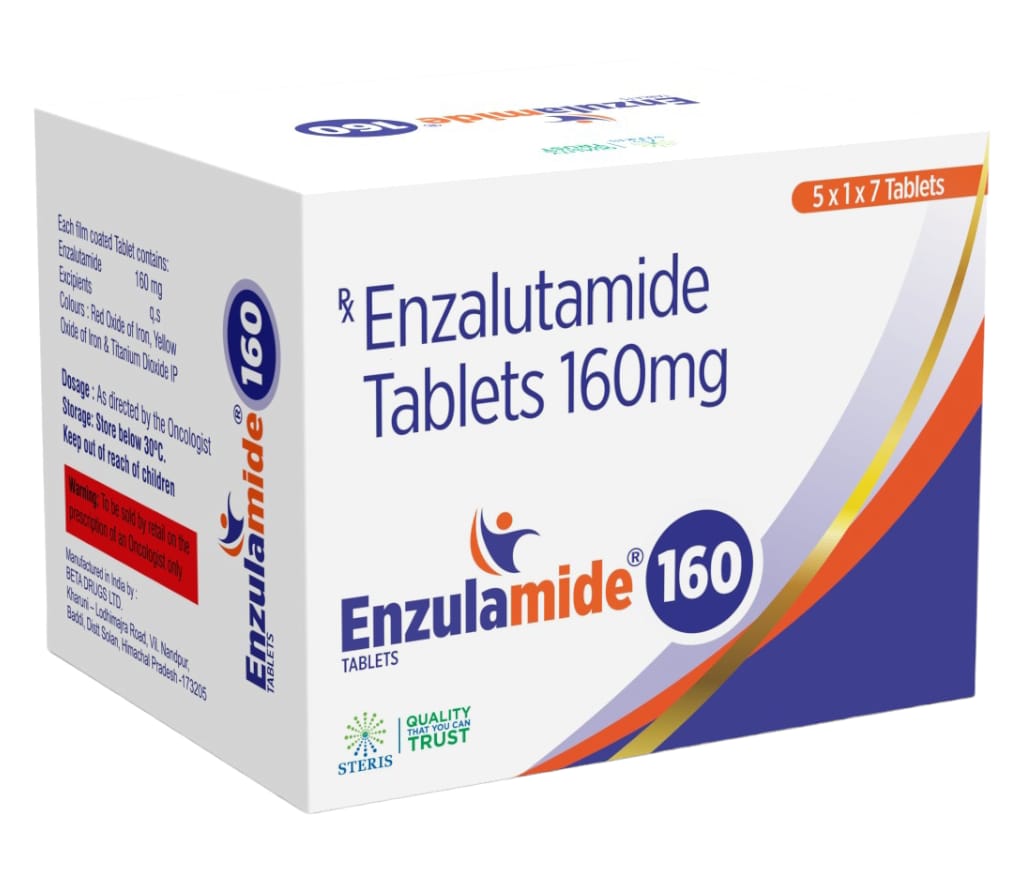
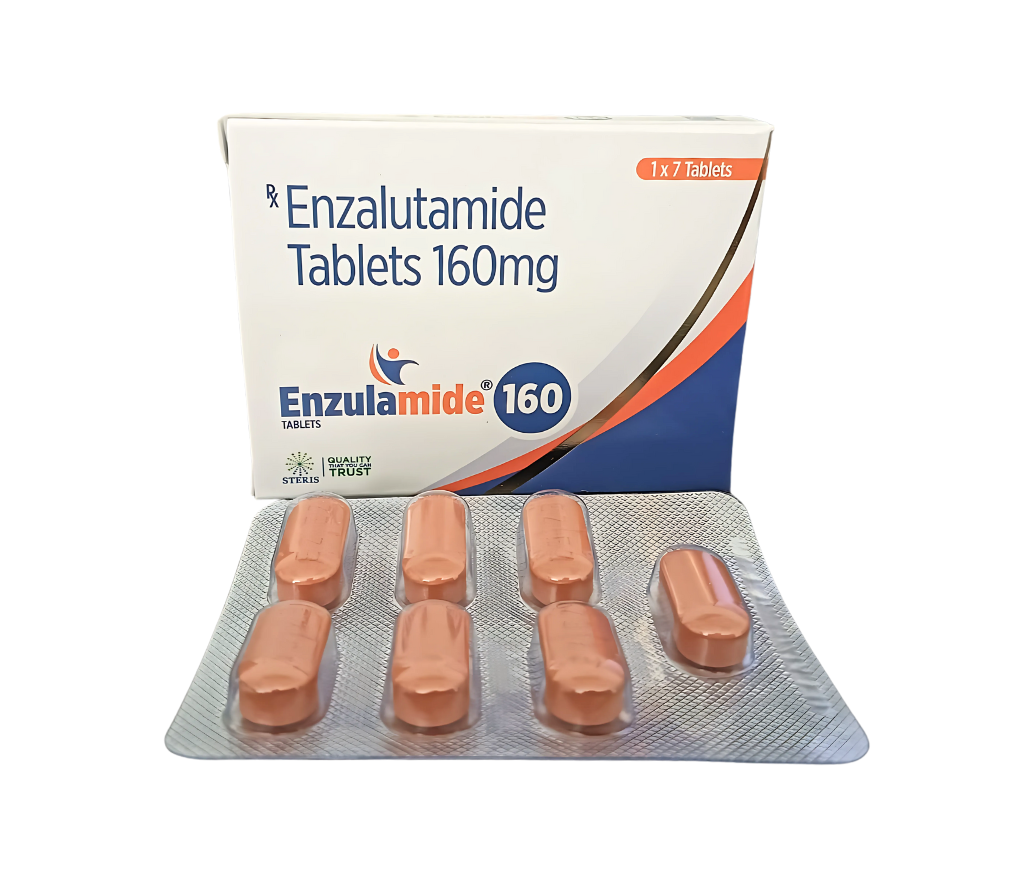
Enzalutamide 160 mg Tablet | ENZULAMIDE 160
 Item requires a valid prescription
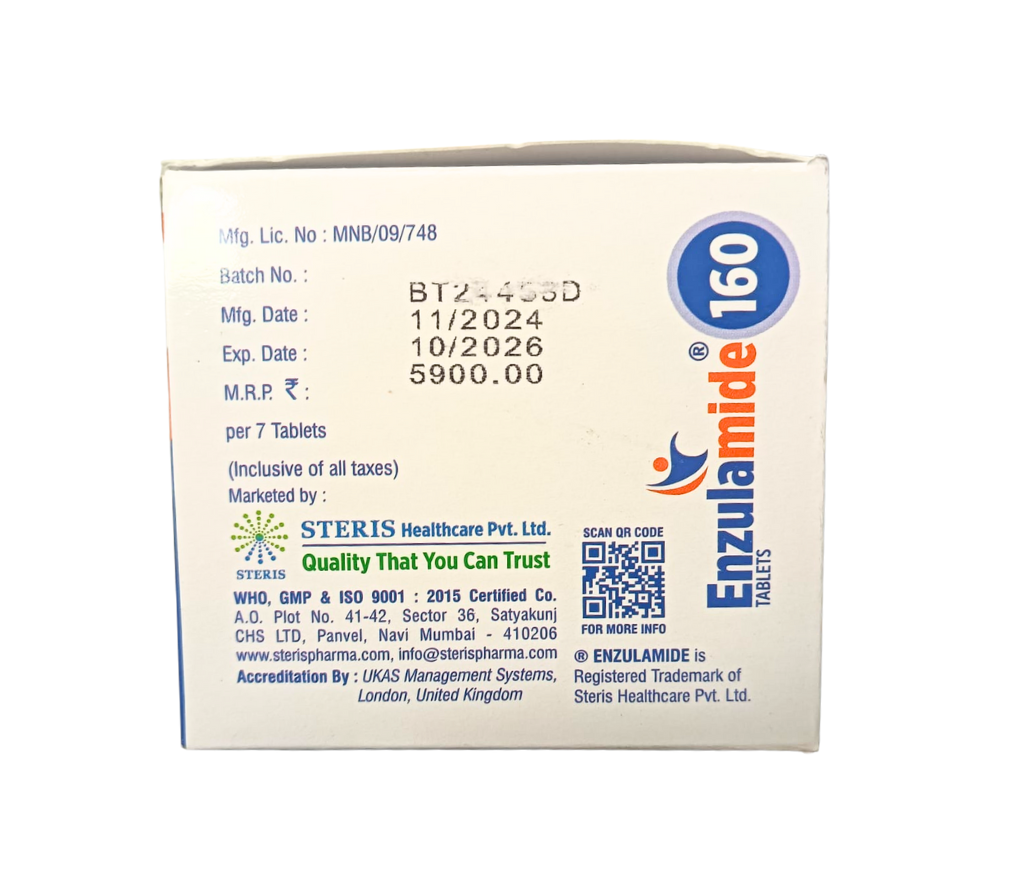
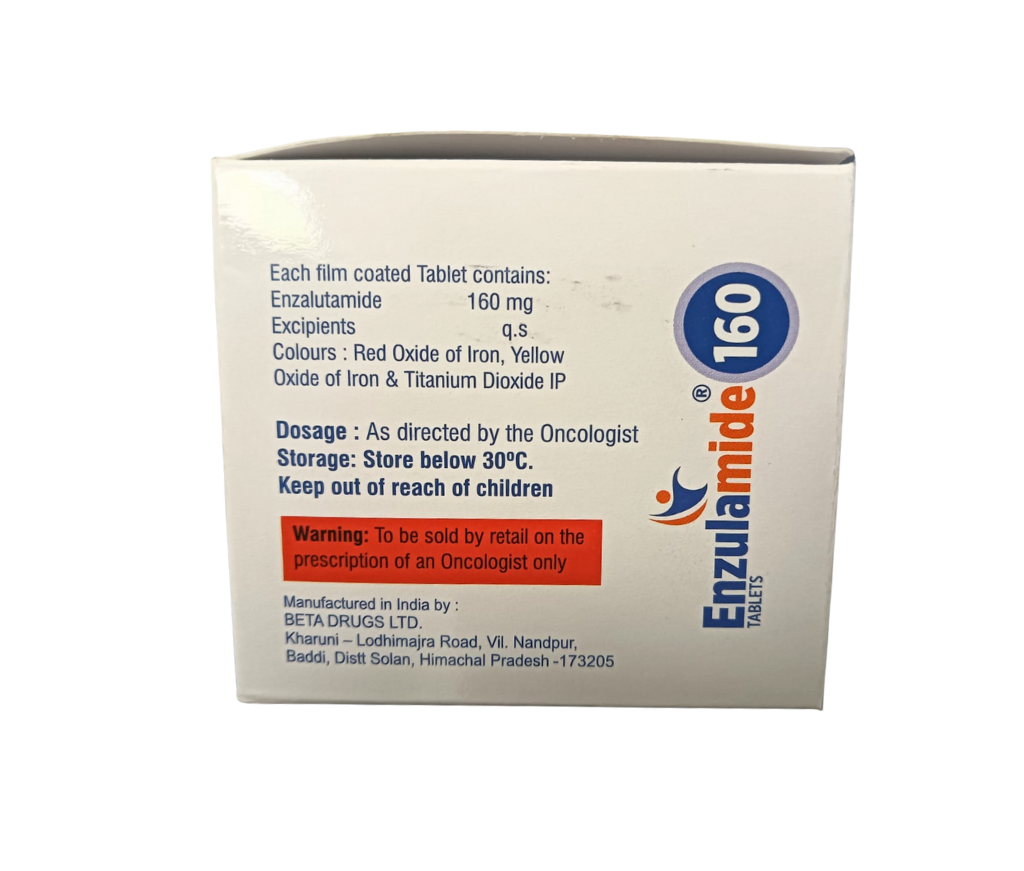
Manufactured By Steris Healthcare Pvt Ltd
Composition Enzalutamide (160mg)
Rs 3871.87
MRP Rs 5531.25
(30% OFF)
Includes all taxes
Package SIZE
( For 7 TABLETS )

100% Authentic
Products

Free
Shipping*

Products
Return Policy
Description:
What Is Enzalutamide 160 mg Tablet?
Enzalutamide is a prescription antiandrogen medicine used to treat prostate cancer in men who have already had surgery or hormone therapy to lower testosterone. It is sometimes used when cancer no longer responds to treatment but hasn't spread beyond the prostate, and it's also used when cancer has responded to hormone therapy but has spread to other parts of the body. It is not known to be safe or effective in children or in females.
Enzalutamide was approved for use in the United States in 2012, and current indications cover castration-resistant prostate cancer as well as metastatic, high-risk castration-sensitive prostate cancer. It's available as 40 mg capsules and as 40 mg or 80 mg tablets, with the 160 mg total daily dose typically administered as a combination of these tablet strengths.
How Does Enzalutamide Work?
Enzalutamide belongs to a class of drugs called androgen receptor inhibitors. It works by binding to the intracellular androgen receptor and preventing its translocation to the cell nucleus, which blocks the receptor's DNA-binding activity and stops it from driving cancer cell growth. By interrupting this signaling pathway at multiple points, enzalutamide slows the growth of prostate cancer cells that depend on androgen hormones like testosterone to survive and multiply.
Approved Medical Uses of Enzalutamide 160 mg
Doctors prescribe enzalutamide 160 mg for:
- Metastatic castration-resistant prostate cancer (mCRPC) — prostate cancer that has spread and no longer responds to standard hormone-lowering treatment
- Non-metastatic castration-resistant prostate cancer (nmCRPC) — cancer that resists hormone therapy but hasn't yet spread to distant sites
- Metastatic castration-sensitive prostate cancer (mCSPC) — cancer that has spread but still responds to hormone therapy, in patients at high risk of progression
Patients who have not had a bilateral orchiectomy should also receive a gonadotropin-releasing hormone (GnRH) analog alongside enzalutamide to maintain adequate testosterone suppression. This combination approach is standard practice and something your oncologist will manage as part of your overall treatment plan.
Key Benefits of Enzalutamide 160 mg Tablet
- Proven survival benefit — clinical trials have shown enzalutamide can prolong relapse-free and overall survival in men with metastatic, castration-resistant prostate cancer who had previously failed other treatments .
- Slower quality-of-life decline — in the PREVAIL trial, patients on enzalutamide experienced a significantly slower decline in health-related quality of life scores compared to those on placebo, with the difference in EQ-5D index scores reaching statistical significance
- Oral, once-daily dosing — no infusions or injections required, making it more convenient for long-term management
- Effective across disease stages — approved for use in both castration-resistant and castration-sensitive prostate cancer, giving doctors flexibility depending on where a patient is in their treatment journey
- Generally well-tolerated dosing profile — in the pivotal CRPC2 (AFFIRM) trial, enzalutamide 160 mg daily was generally well-tolerated among patients with progressive castration-resistant prostate cancer who had previously received docetaxel-based chemotherapy
Recommended Dosage
The standard adult dose of enzalutamide is 160 mg taken orally once a day. The medication can be taken with or without food, and tablets or capsules should be swallowed whole — never chewed, crushed, dissolved, or opened. If a dose is missed, it should be taken as soon as remembered; if an entire day is missed, the dose should be skipped and the regular schedule resumed the next day — but always confirm this with your prescribing doctor.
For patients who develop significant toxicity, dosing may be withheld for about a week until symptoms improve, after which treatment typically resumes at the usual dose or is reduced to 120 mg or 80 mg once daily if necessary. No dose adjustment is generally needed for mild or moderate kidney impairment, though caution is advised in severe renal impairment or end-stage renal disease.
Side Effects of Enzalutamide 160 mg Tablet
Common side effects:
Fatigue, diarrhea, decreased appetite, weight loss, constipation, joint and muscle pain, hot flashes, headache, dizziness, high blood pressure, low potassium levels, fluid retention, and swelling are among the most commonly reported side effects. Headache affects around 12% of patients and dizziness or vertigo affects around 11%, making them the most frequently reported adverse effects overall.
Serious side effects requiring immediate medical attention:
- Seizures — rare but serious; in controlled trials, roughly 0.6% of patients treated with 160 mg daily experienced a seizure, compared with none on placebo, and the risk of seizure increases at daily doses above 160 mg
- Posterior reversible encephalopathy syndrome (PRES) — a rare but serious neurological condition that has been reported with enzalutamide use
- Heart problems, including ischemic heart disease — patients should seek immediate care for chest pain or discomfort in the chest, arms, jaw, back, or neck
- Falls and fractures — dizziness and drowsiness can increase the risk of falls and injuries, and the medication itself may raise fracture risk even without noticeable dizziness
- Spinal cord compression and cauda equina syndrome — reported in 1% to 10% of patients, requiring urgent evaluation if new weakness, numbness, or bowel/bladder changes occur
Important Safety Information
Enzalutamide is not intended for use by women. It can harm an unborn baby and may cause birth defects if the father is taking it at the time his partner becomes pregnant, so men with female partners of childbearing potential must use a condom along with a second effective form of contraception during treatment and for three months after the final dose.
Drug interactions are also an important consideration. Strong CYP3A4 inducers, such as rifampin, can reduce enzalutamide's effectiveness, sometimes requiring a dose increase from 160 mg to 240 mg once daily until the interacting medication is stopped. Conversely, strong CYP2C8 inhibitors should generally be avoided, and if unavoidable, the enzalutamide dose is typically reduced to 80 mg once daily. Always disclose every prescription drug, over-the-counter medicine, and supplement you're taking to your oncology team.
Buying Enzalutamide 160 mg Tablet: What Patients Should Know
Because enzalutamide is a high-cost, prescription-only oncology medication, it should only be sourced from licensed specialty or hospital pharmacies with a valid prescription from your treating oncologist. Many patients explore manufacturer patient assistance programs, insurance prior authorization support, or licensed generic alternatives (where available in your country) to help manage costs. Avoid unverified online sellers offering this medication without a prescription — counterfeit oncology drugs pose serious health risks, and cancer treatment should never be managed outside proper medical supervision.
Conclusion
Enzalutamide 160 mg tablet remains a clinically proven, guideline-supported treatment for castration-resistant and castration-sensitive prostate cancer, offering meaningful survival benefits and a comparatively manageable quality-of-life profile when taken as prescribed. Like any oncology medication, it carries real risks — from common side effects like fatigue and hot flashes to rare but serious risks like seizures and heart problems — which is why ongoing monitoring by an oncologist is essential throughout treatment. If you or a loved one have been prescribed enzalutamide, discuss your full medical history, current medications, and any new symptoms with your care team promptly, and only obtain this medication through a licensed pharmacy.
Frequently Asked Questions
1. What is enzalutamide 160 mg tablet used for?
Enzalutamide 160 mg is used to treat prostate cancer, including metastatic and non-metastatic castration-resistant prostate cancer and metastatic castration-sensitive prostate cancer, typically after hormone therapy or surgery to lower testosterone.
2. How should I take enzalutamide 160 mg tablet?
The standard dose is 160 mg taken by mouth once daily, with or without food. Tablets and capsules should be swallowed whole and never crushed, chewed, or dissolved.
3. What are the most common side effects of enzalutamide?
The most commonly reported side effects include fatigue, diarrhea, decreased appetite, weight loss, constipation, joint and muscle pain, hot flashes, headache, and dizziness.
4. Can enzalutamide cause seizures?
Yes, though rarely. Clinical trials found seizures occurred in about 0.6% of patients taking 160 mg daily, and the risk increases at higher doses, which is why the prescribed dose should never be exceeded.
5. Does enzalutamide affect fertility or pregnancy risk?
Yes. Enzalutamide can cause birth defects if the father is taking it when his partner becomes pregnant, so men with partners of childbearing potential must use a condom plus an additional form of contraception during treatment and for three months afterward.
6. Can I take other medications with enzalutamide?
Some drugs interact significantly with enzalutamide, including strong CYP3A4 inducers and CYP2C8 inhibitors, which may require dose adjustments. Always tell your oncologist about every medication and supplement you're taking.
7. Is enzalutamide the same as chemotherapy?
No. Enzalutamide is a targeted hormone therapy (androgen receptor inhibitor), not traditional chemotherapy. It works by blocking androgen signaling that fuels prostate cancer growth, rather than directly killing rapidly dividing cells.
8. Enzalutamide 160 mg price in india?
Enzalutamide 160 mg tablet for price please contact at steris healthcare.

