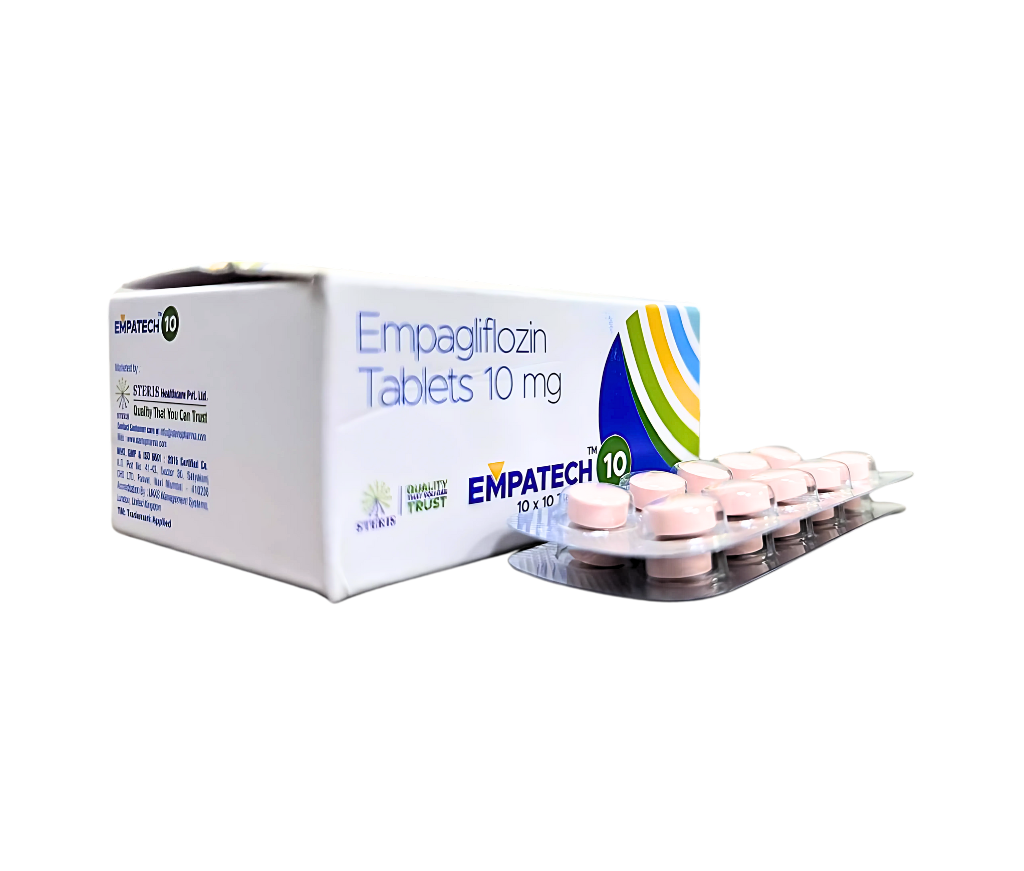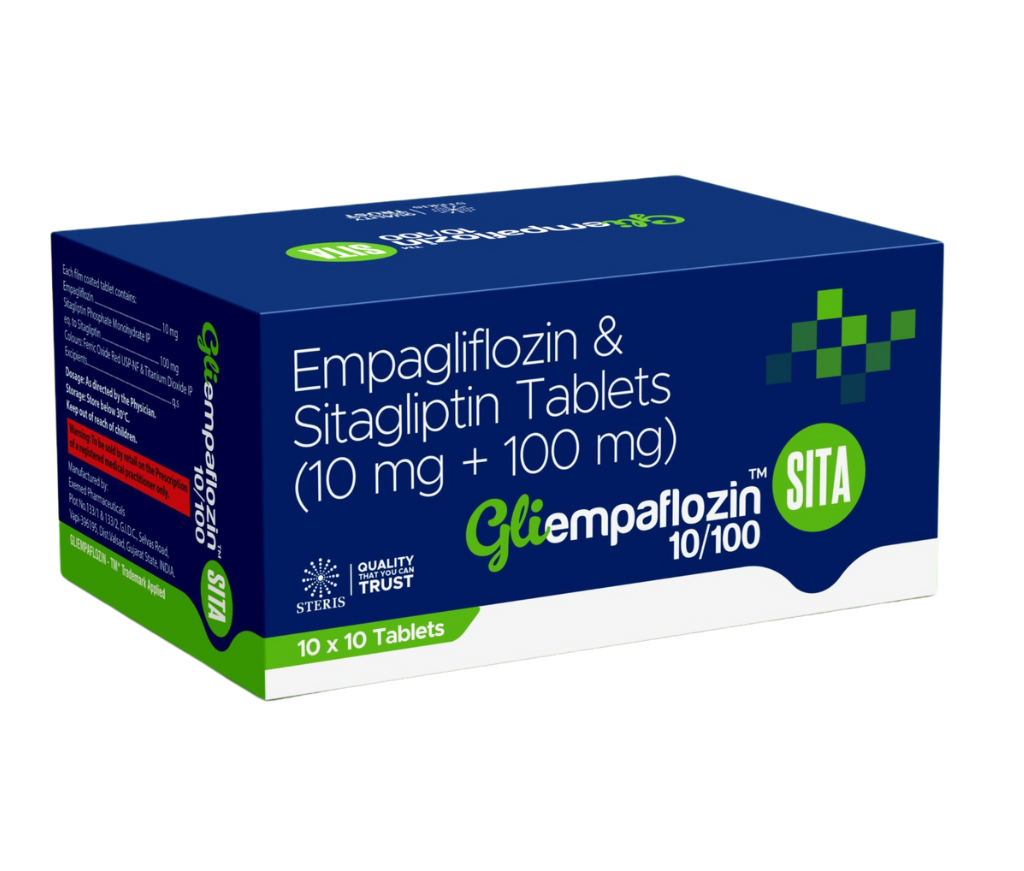

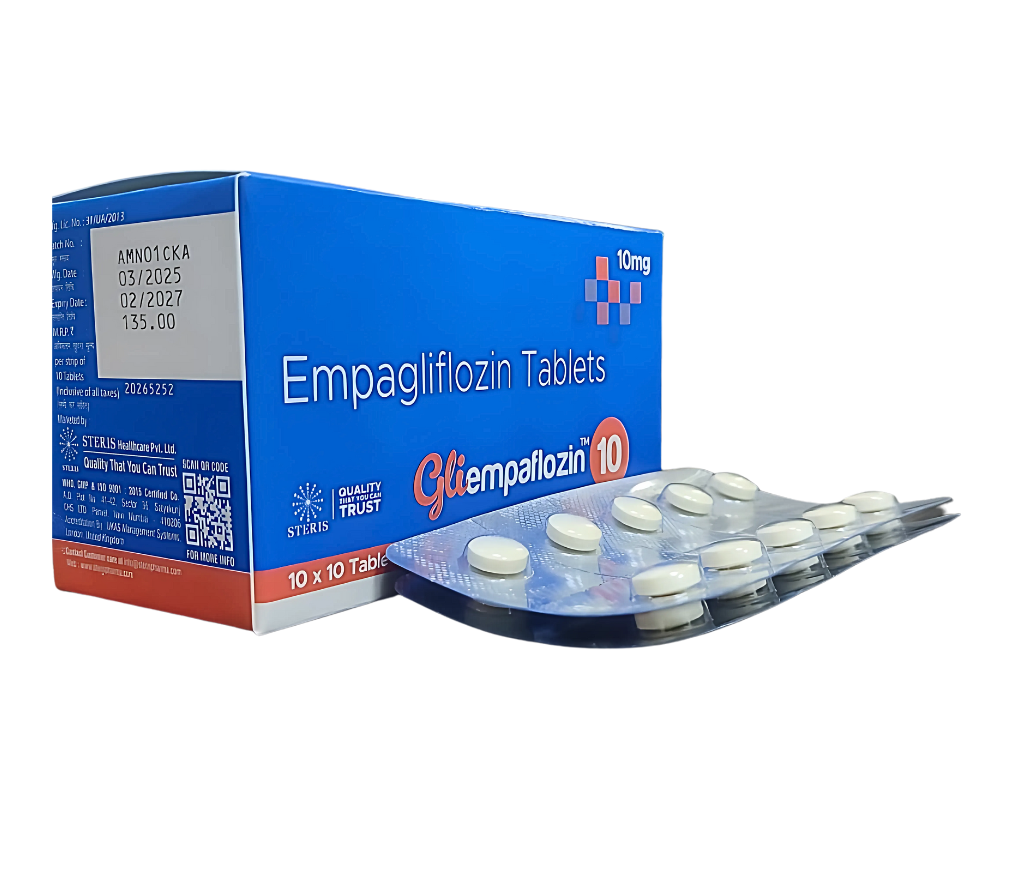
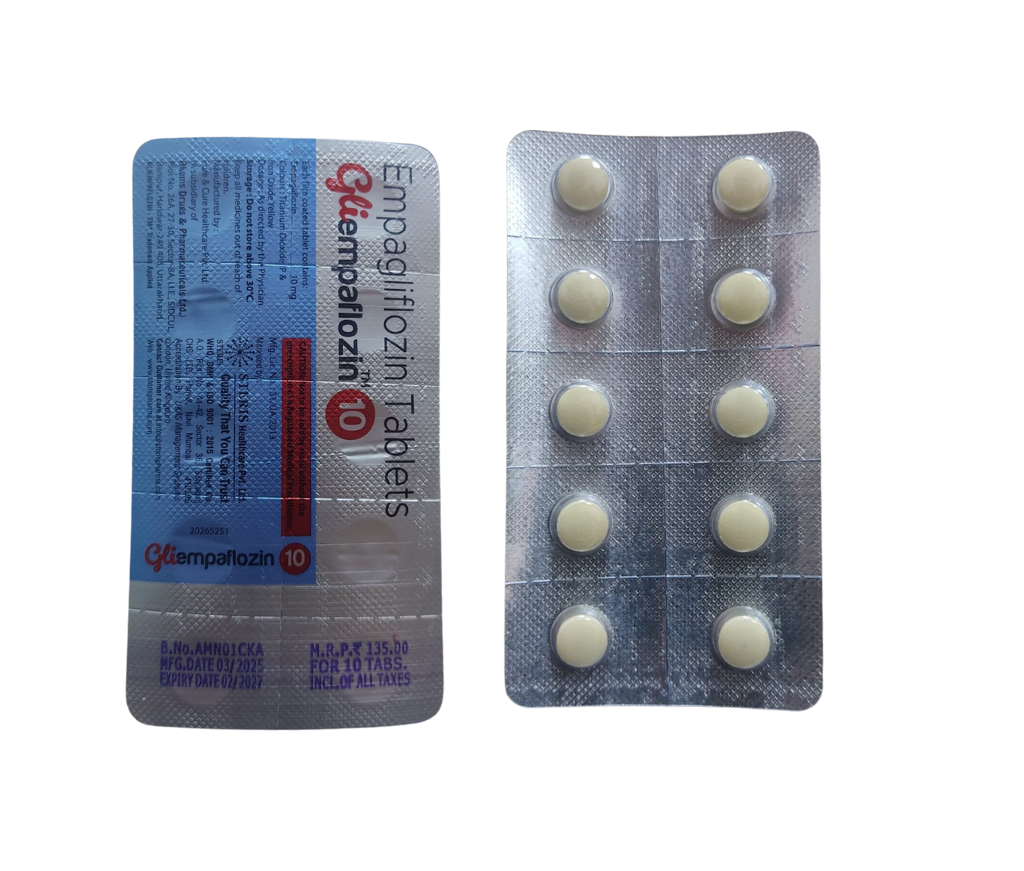

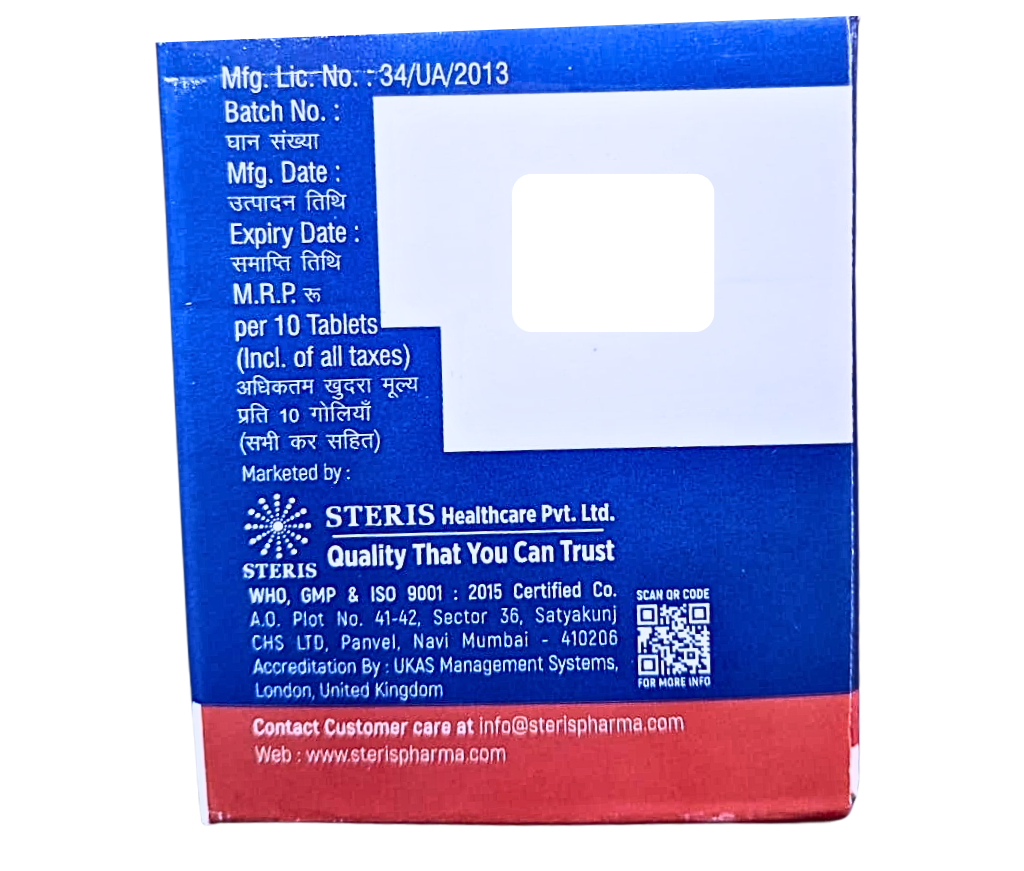
Empagliflozin 10 mg tablet | GLIEMPAFLOZIN 10
 Item requires a valid prescription
Manufactured By Steris Healthcare Pvt Ltd
Composition Empagliflozin (10mg)
Rs 88.55
MRP Rs 126.50
(30% OFF)
Includes all taxes
Package SIZE
( FOR 10 TABLETS )

100% Authentic
Products

Free
Shipping*

Products
Return Policy
Description:
Empagliflozin 10 mg tablet is a prescription tablet used for the treatment of type 2 diabetes, heart failure, and chronic kidney disease. It works by making the kidneys dump excess glucose in the urine, instead of reabsorbing it into the bloodstream. It is usually taken once a day in the morning with or without food. Key benefits include better blood sugar control, heart protection, kidney protection and modest weight loss. Common side effects include urinary tract infections, genital yeast infections, and increased urination. Rare but serious risks include diabetic ketoacidosis, dehydration and less commonly, changes in kidney function. That's why it's important to monitor regularly during treatment.
What Is Empagliflozin 10 mg Tablet?
Empagliflozin 10 mg tablet belongs to a new class of medicines called SGLT2 inhibitors used to treat diabetes. Unlike older diabetes drugs, which mainly act on insulin secretion or sensitivity, empagliflozin acts directly on the kidneys by blocking the SGLT2 protein, which reabsorbs glucose back into the blood. This results in the excretion of excess sugar in the urine and a reduction of blood glucose levels independent of insulin.
Over the past decade, empagliflozin has become one of the most researched and widely prescribed medicines in its class, supported by large-scale cardiovascular and renal outcome trials. This extensive clinical trial backing and consistent real-world prescribing experience make it a strong example of E-E-A-T (Experience, Expertise, Authoritativeness, Trustworthiness) in diabetes care—a medicine with proven, guideline-recognized benefits beyond glucose control alone, including established roles in heart failure and chronic kidney disease management.
Clinical Indications Table
| Indication | Empagliflozin Suitability | Notes |
|---|---|---|
| Type 2 diabetes (blood sugar control) | ✅ Approved primary use | Often combined with diet, exercise, or other diabetes medicines |
| Heart failure risk reduction | ✅ Approved use in eligible patients | Reduces cardiovascular death and hospitalization risk |
| Chronic kidney disease progression | ✅ Approved use in eligible patients | Helps slow decline in kidney function |
| Type 1 diabetes | ❌ Not approved | Risk of diabetic ketoacidosis is higher |
| Severe kidney failure (dialysis-dependent) | ❌ Not recommended | Reduced effectiveness and safety concerns |
| Weight loss as a standalone goal | ❌ Not an approved primary indication | Weight loss is a secondary benefit, not the primary purpose |
How Empagliflozin 10 mg Tablet Works
The kidneys normally filter glucose from the blood and then reabsorb most of it back into circulation through a protein called SGLT2 (sodium-glucose co-transporter-2). In people with type 2 diabetes, blood sugar levels remain elevated partly because this reabsorption process continues even when glucose levels are already too high.
Empagliflozin selectively blocks the SGLT2 protein, preventing this reabsorption. As a result, excess glucose is excreted in the urine instead of being returned to the bloodstream, lowering overall blood sugar levels. This insulin-independent mechanism is one of the reasons empagliflozin can be used alongside other diabetes medications, including insulin, and why it also produces beneficial effects on blood pressure and body weight — both linked to the mild fluid and calorie loss that occurs through increased glucose excretion.
Key Benefits of Empagliflozin 10 mg Tablet
- Effective Blood Sugar Control – Lowers blood glucose through a unique, insulin-independent kidney mechanism, making it useful alone or in combination therapy.
- Proven Cardiovascular Protection – Clinically shown to reduce the risk of cardiovascular death and hospitalization in patients with heart failure, including certain patients without diabetes.
- Kidney-Protective Effects – Helps slow the progression of chronic kidney disease in eligible patients, an increasingly important benefit for long-term diabetes management.
- Modest Weight Loss – Many patients experience gradual weight reduction due to calorie loss through glucose excretion.
- Blood Pressure Benefits – Mild reductions in blood pressure are commonly observed, offering additional cardiovascular support.
- Low Risk of Hypoglycemia (Alone) – When used without insulin or sulfonylureas, empagliflozin carries a comparatively low risk of causing dangerously low blood sugar.
- Once-Daily Oral Convenience—Simple once-a-day tablet supports better long-term treatment adherence compared to more complex regimens.
Dosage & Administration
General reference only — always follow your doctor's prescribed dosage and duration.
| Use Case | Typical Adult Dosage | Timing |
|---|---|---|
| Type 2 diabetes (initial) | 10 mg, once daily | Morning, with or without food |
| Dose escalation (if tolerated and needed) | May be increased to 25 mg once daily | As advised by physician |
| Heart failure / CKD indication | 10 mg, once daily | As per treating physician's guidance |
Administration tips:
- Take at the same time each morning for consistency.
- Maintain adequate hydration, as the medicine increases urination.
- Monitor for symptoms of urinary or genital infections and report them promptly.
- Do not stop or adjust the dose without consulting your doctor, especially before surgery or during illness with reduced food/fluid intake.
Side Effects of Empagliflozin 10 mg Tablet
Common Side Effects
- Increased urination
- Urinary tract infections (UTIs)
- Genital yeast infections (in both men and women)
- Increased thirst
- Mild nausea
Less Common but Notable
- Dizziness (often related to fluid loss)
- Joint pain
- Mild increase in cholesterol levels
Serious Side Effects (Seek Medical Attention)
- Diabetic ketoacidosis (DKA): Can occur even with near-normal blood sugar levels; symptoms include nausea, vomiting, abdominal pain, unusual fatigue, and difficulty breathing — requires emergency care.
- Dehydration and low blood pressure: Particularly in elderly patients or those on diuretics.
- Kidney function changes: Periodic monitoring of kidney function is recommended during treatment.
- Fournier's gangrene (rare but serious genital infection): Symptoms include severe pain, redness, or swelling in the genital/perineal area — requires urgent medical attention.
- Severe allergic reaction: Swelling of face/throat, difficulty breathing, severe rash.
- Necrotizing fasciitis of the perineum: Extremely rare, but any unusual genital pain/swelling should be evaluated immediately.
Empagliflozin vs Other SGLT2 Inhibitors
| Parameter | Empagliflozin | Dapagliflozin | Canagliflozin |
|---|---|---|---|
| Approved for heart failure | ✅ Yes | ✅ Yes | Limited data |
| Approved for CKD progression | ✅ Yes | ✅ Yes | ✅ Yes |
| Typical starting dose | 10 mg once daily | 10 mg once daily | 100 mg once daily |
| Weight loss effect | Moderate | Moderate | Moderate |
| Common side effect profile | Similar class-wide risks | Similar class-wide risks | Slightly higher amputation caution noted in some trials |
Precautions & Who Should Avoid Empagliflozin
- Type 1 diabetes: Not approved due to increased risk of diabetic ketoacidosis.
- Severe kidney impairment or dialysis: Generally not recommended, as effectiveness is reduced and risk profile changes.
- Dehydration-prone conditions: Use cautiously in elderly patients, those on diuretics, or during illness involving vomiting/diarrhea.
- Before surgery: Your doctor may advise temporarily stopping the medicine before major surgical procedures due to ketoacidosis risk.
- History of genital infections: Patients with recurrent yeast infections or UTIs should discuss this with their doctor before starting therapy.
- Pregnancy and breastfeeding: Not generally recommended; discuss alternative options with your doctor.
- Drug interactions: Use with insulin or sulfonylureas may increase hypoglycemia risk; diuretics may increase dehydration risk — share your full medication list with your doctor.
Conclusion
The empagliflozin 10 mg tablet stands out among diabetes medications for offering more than glucose control alone — with well-documented cardiovascular and kidney-protective benefits backed by extensive clinical research. Its once-daily convenience, low standalone hypoglycemia risk, and added benefits for heart failure and chronic kidney disease make it a valuable option for many patients with type 2 diabetes. At the same time, precautions around dehydration, genital infections, and rare but serious risks like diabetic ketoacidosis mean regular medical supervision is essential throughout treatment. If you have type 2 diabetes, heart failure, or chronic kidney disease and want to know if empagliflozin fits your treatment plan, consult your doctor for a personalized assessment.
Frequently Asked Questions
1. What is the danger of empagliflozin?
The main risks include diabetic ketoacidosis (which can occur even with normal blood sugar levels), dehydration and low blood pressure, urinary and genital infections, and rare but serious genital infections like Fournier's gangrene. Regular monitoring helps reduce these risks.
2. What are the possible side effects of taking empagliflozin 10 mg tablets?
Common side effects include increased urination, urinary tract infections, genital yeast infections, and increased thirst. Less common effects include dizziness and joint pain, while rare serious effects include diabetic ketoacidosis and kidney function changes.
3. Is empagliflozin bad for the kidneys?
No, in most eligible patients empagliflozin has shown kidney-protective effects and is used to slow the progression of chronic kidney disease, though periodic kidney function monitoring is still recommended during treatment.
4. Can empagliflozin increase creatinine?
A small, often temporary increase in serum creatinine can occur when starting empagliflozin due to changes in kidney filtration dynamics; this is usually monitored by your doctor and often stabilizes with continued use.
5. What are the benefits of taking empagliflozin?
Key benefits include effective blood sugar control, reduced risk of cardiovascular death and hospitalization in heart failure, slowed progression of chronic kidney disease, modest weight loss, and mild blood pressure reduction.
6. How does empagliflozin help with weight loss?
Empagliflozin causes excess glucose to be excreted through urine, resulting in mild calorie loss that can contribute to gradual, modest weight reduction over time.
7. Can empagliflozin cause low blood sugar (hypoglycemia)?
When used alone, empagliflozin carries a low risk of hypoglycemia; however, the risk increases when combined with insulin or sulfonylurea medications.
8. Is empagliflozin used for heart failure even without diabetes?
Yes, empagliflozin is approved to reduce cardiovascular death and hospitalization risk in certain heart failure patients, including some without type 2 diabetes, based on large clinical outcome trials.
9. What is the best time to take empagliflozin?
It is typically taken once daily in the morning, with or without food, to help align with daily glucose and fluid balance patterns.
10. Can empagliflozin cause urinary tract infections?
Yes, because it increases glucose excretion through urine, it can raise the risk of urinary tract infections and genital yeast infections; maintaining good hygiene and hydration can help reduce this risk.
11. What should I avoid while taking empagliflozin?
Avoid becoming dehydrated, monitor for signs of infection, and consult your doctor before any surgery or during illness involving vomiting or reduced fluid intake, as these increase ketoacidosis risk.
12. Is empagliflozin safe for elderly patients?
It can be used in elderly patients but requires closer monitoring for dehydration, blood pressure changes, and kidney function, especially if other medications like diuretics are also being used.
13. Can empagliflozin be taken with metformin?
Yes, empagliflozin is commonly prescribed alongside metformin or other diabetes medications as part of a combination treatment plan, based on your doctor's assessment.
14. What happens if I miss a dose of empagliflozin?
Take the missed dose as soon as you remember, unless it is close to your next scheduled dose—in that case, skip it and continue your regular schedule. Do not double the dose.
15. How long does it take for empagliflozin to lower blood sugar?
Blood sugar improvements can often be seen within the first few weeks of treatment, though full benefits, including cardiovascular and kidney effects, develop over a longer treatment period as assessed by your doctor.
16. Does empagliflozin interact with other medications?
Yes, it can interact with insulin, sulfonylureas (increasing hypoglycemia risk), and diuretics (increasing dehydration risk)—always share your complete medication list with your doctor.
17. Can empagliflozin be used in type 1 diabetes?
No, empagliflozin is not approved for type 1 diabetes due to an increased risk of diabetic ketoacidosis in this population.
If You Need More Information About GLIEMPAFLOZIN 10 Click here