


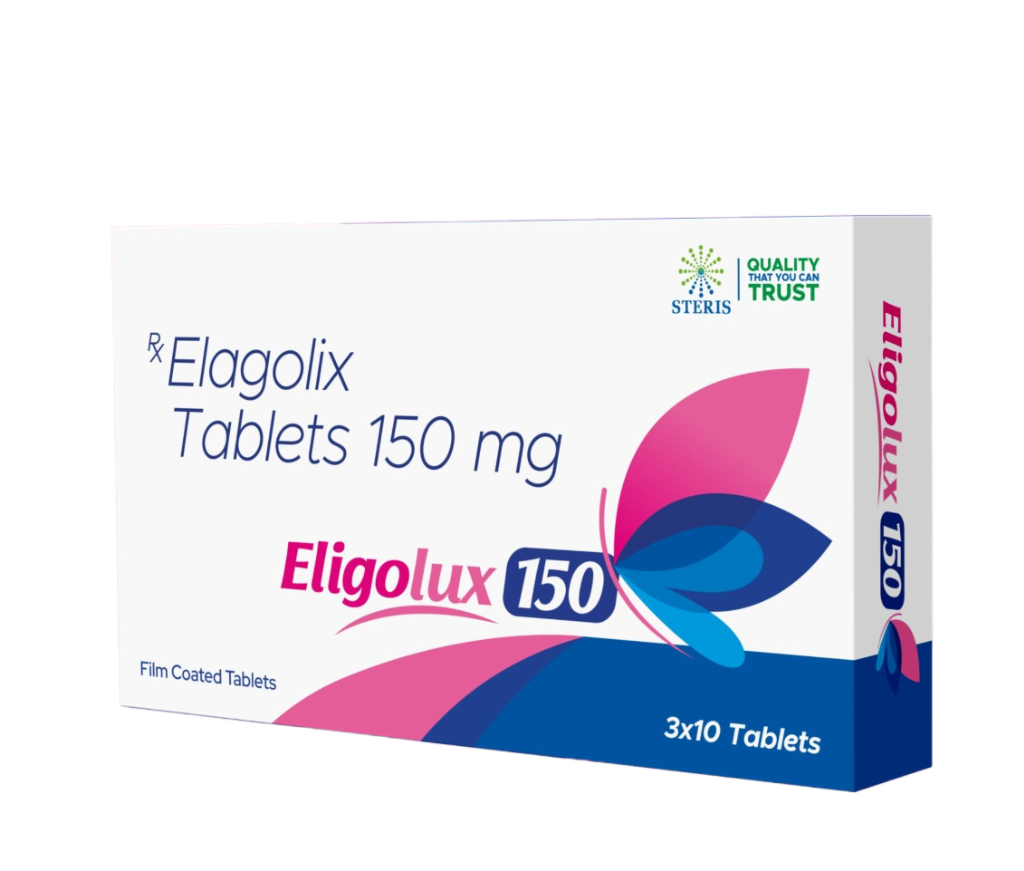
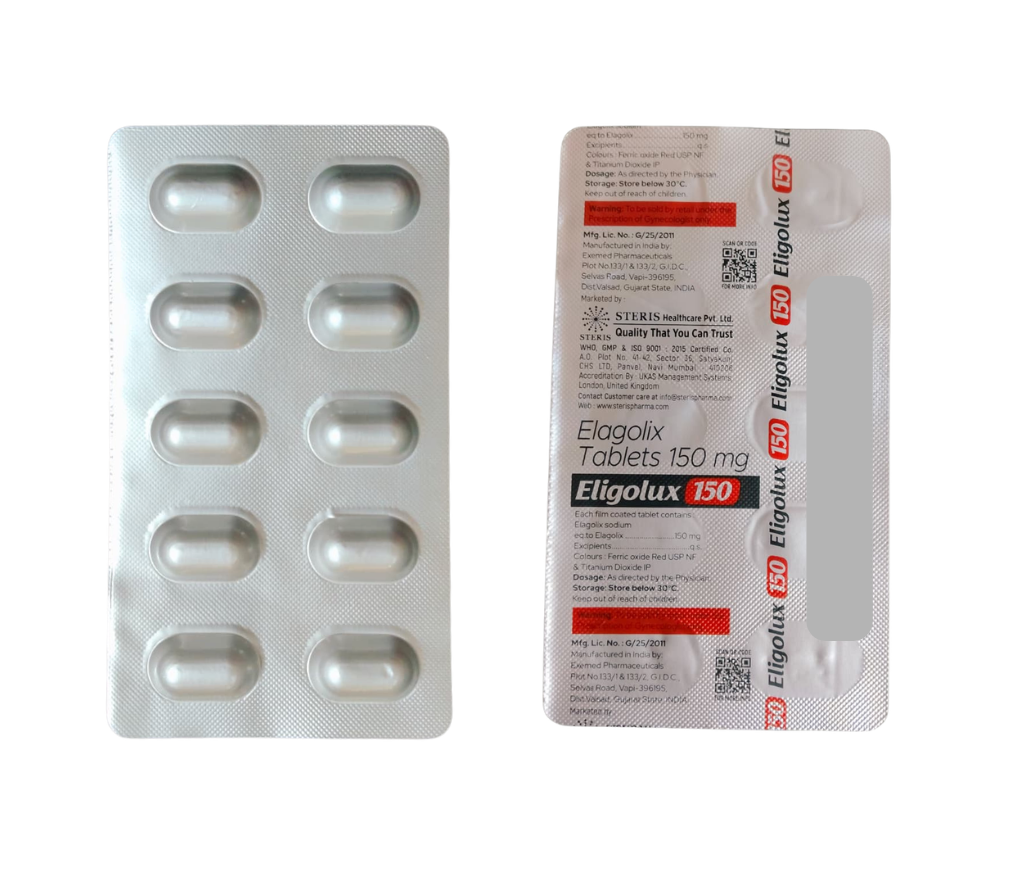
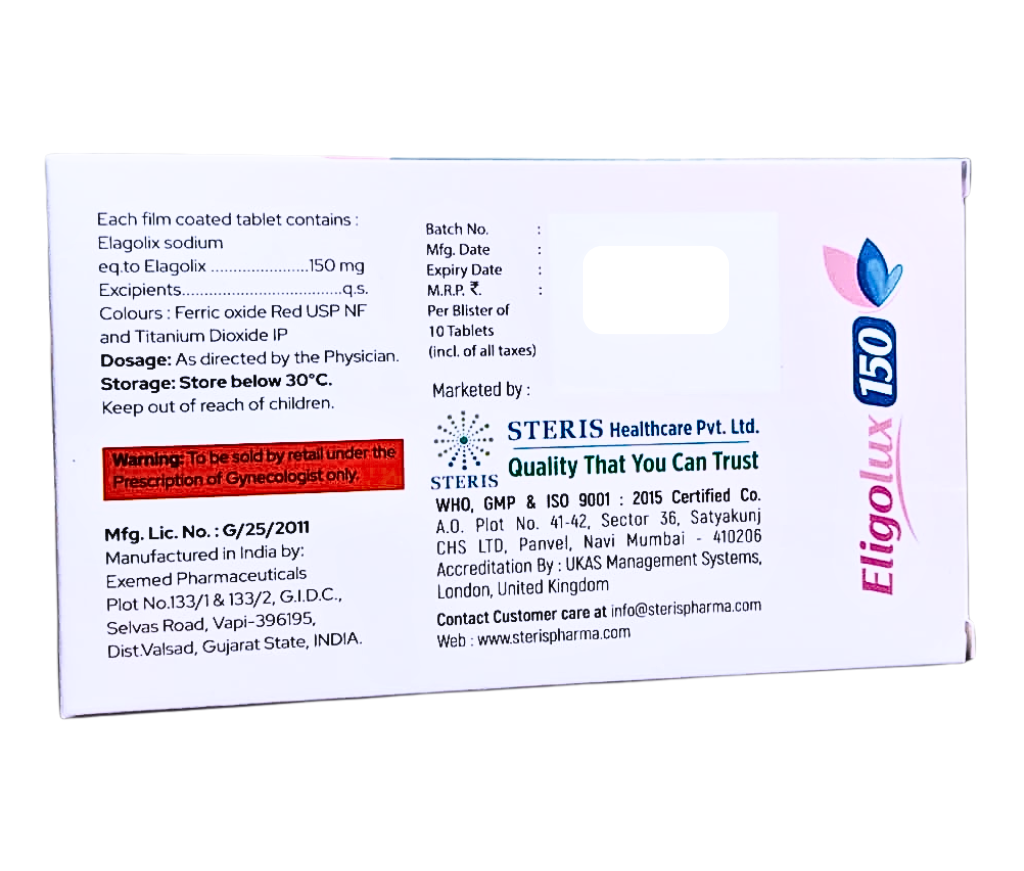
Elagolix 150 | ELIGOLUX 150
 Item requires a valid prescription
Manufactured By Steris Healthcare Pvt Ltd
Composition Elagolix 150mg tablet
Rs 490.00
MRP Rs 700.00
(30% OFF)
Includes all taxes
Package SIZE
( For 10 Tablet )

100% Authentic
Products

Free
Shipping*

Products
Return Policy
Description:
Elagolix 150 mg is an orally administered GnRH antagonist prescribed for the relief of moderate-to-severe endometriosis-associated pain. It works by lowering estrogen production in a dose-dependent way, which reduces the hormonal stimulation that drives endometriosis-related pelvic pain. The 150 mg once-daily dose is the lower-strength regimen, generally used for longer treatment durations (up to 24 months) compared to the 200 mg twice-daily dose. Common side effects include hot flashes, headache, nausea, and mood changes; long-term use requires monitoring of bone mineral density and liver function. Elagolix is a Schedule H prescription-only medicine and must never be self-administered without a licensed doctor's evaluation.
What Is Elagolix 150 mg?
Elagolix 150 mg is the once-daily, lower-dose formulation of elagolix, an orally active, non-peptide GnRH receptor antagonist. Unlike GnRH agonists (which initially stimulate hormone release before suppressing it), elagolix directly and immediately blocks GnRH receptors in the pituitary gland. This action produces a rapid, dose-dependent reduction in luteinizing hormone (LH), follicle-stimulating hormone (FSH), and, consequently, ovarian estrogen and progesterone production.
Because estrogen fuels the growth and inflammation of endometrial-like tissue outside the uterus, lowering circulating estrogen levels helps reduce the pain signals associated with endometriosis. The 150 mg once-daily strength is specifically designed to achieve partial estrogen suppression — enough to relieve pain while preserving more bone-protective estrogen activity than the higher 200 mg twice-daily dose, making it suitable for extended treatment courses.
Key Uses of Elagolix 150 mg
Elagolix 150 mg is primarily indicated for:
- Management of moderate-to-severe pain associated with endometriosis, including dysmenorrhea (painful periods), non-menstrual pelvic pain, and dyspareunia (pain during intercourse)
- Long-term hormonal pain management in women who need continued therapy beyond six months, where the once-daily dose allows extended use with a more favorable bone-density safety profile
- Adjunct management alongside other conservative or surgical approaches for endometriosis, as directed by a gynecologist
Clinical Indications Table
| Indication | Elagolix 150 mg (Once Daily) | Typical Duration |
|---|---|---|
| Moderate-to-severe endometriosis pain | Yes – first-line dosing strength | Up to 24 months |
| Dysmenorrhea associated with endometriosis | Yes | As advised by physician |
| Non-menstrual pelvic pain | Yes | As advised by physician |
| Dyspareunia related to endometriosis | Yes | As advised by physician |
| Severe pain unresponsive to 150 mg | May be escalated to 200 mg twice daily by doctor | Up to 6 months (per label) |
Mechanism of Action
- Binding competitively to GnRH receptors in the anterior pituitary gland
- Suppressing LH and FSH secretion, which in turn reduces ovarian stimulation
- Lowering circulating estradiol and progesterone in a dose-dependent manner — the 150 mg once-daily dose produces a moderate estrogen suppression window
- Reducing estrogen-driven proliferation of endometriotic lesions, thereby easing associated pain
Key Benefits of Elagolix 150 mg
- Oral, once-daily dosing — more convenient than injectable GnRH agonists
- No initial hormonal flare, unlike GnRH agonist injections
- Suitable for longer-term use (up to 24 months) due to its partial estrogen-suppression profile
- Rapid onset of pain relief reported by many patients within the first month of therapy
- Reversible effect on ovarian hormone suppression — menstrual cycles and hormone levels generally return after stopping treatment
- Non-invasive alternative to surgical management for appropriately selected patients
Dosage Guidelines
- Standard dose: Elagolix 150 mg, taken orally, once daily, at approximately the same time each day
- Administration: Can be taken with or without food, as advised by the prescribing physician
- Duration: Typically prescribed for use up to 24 months under continued physician supervision
- Missed dose: Take as soon as remembered unless it is close to the next scheduled dose; do not double the dose
- Dose escalation: Physicians may switch patients to the 200 mg twice-daily strength if pain is not adequately controlled, though this comes with a shorter recommended duration of use
Side Effects of Elagolix 150 mg
Common Side Effects
- Hot flashes / night sweats
- Headache
- Nausea
- Fatigue
- Mood changes, including anxiety or low mood
- Irregular vaginal bleeding or spotting, especially in early treatment months
Less Common but Important Side Effects
- Reduced bone mineral density with prolonged use
- Changes in liver enzyme levels
- Changes in menstrual bleeding pattern, including amenorrhea (absence of periods) in some patients
- Elevated cholesterol/lipid levels
Serious Warnings
- Elagolix carries a boxed warning regarding bone loss, which may be irreversible in some patients, particularly with long-term or high-dose use
- Not recommended in patients with known osteoporosis, severe hepatic impairment, or during pregnancy (elagolix can cause fetal harm and pregnancy must be ruled out before starting therapy)
- Should be used cautiously in patients with a history of depression or mood disorders, as mood-related side effects have been reported
Precautions Before Taking Elagolix 150 mg
- Confirm a negative pregnancy test before starting therapy; use non-hormonal contraception during treatment, as advised by your doctor
- Inform your doctor of any personal or family history of osteoporosis, fractures, or low bone density
- Disclose any liver disease or abnormal liver function test history
- Report any signs of depression, anxiety, or suicidal thoughts promptly to your treating physician
- Avoid concurrent use with strong CYP3A inducers/inhibitors unless approved by your doctor, as these may alter elagolix blood levels
- Periodic monitoring of bone density and liver function may be recommended for extended courses of therapy
Substitutes / Alternative Therapies (Doctor-Guided Comparison)
| Therapy | Class | Typical Use Case |
|---|---|---|
| Elagolix 150 mg / 200 mg | GnRH antagonist | First-line oral therapy for endometriosis pain |
| Leuprolide injections | GnRH agonist | Alternative when oral therapy is not preferred |
| Dienogest | Progestin | Hormonal suppression with different side-effect profile |
| Combined oral contraceptives | Estrogen-progestin | Milder symptom management, cycle regulation |
| NSAIDs | Analgesic | Adjunct symptomatic pain relief |
Conclusion
Elagolix 150 mg offers a convenient, oral, once-daily option for women living with the often debilitating pain of endometriosis. By directly and predictably suppressing the hormonal drivers of endometriotic pain — without the initial flare seen with older GnRH agonist therapies — it provides a modern, flexible approach suited to longer-term management under medical supervision. Because it carries important safety considerations, particularly around bone health, liver function, and pregnancy status, elagolix should only be started, continued, or stopped under the direct guidance of a licensed physician. If you are experiencing endometriosis-related pain, speak with your gynecologist to determine whether elagolix 150 mg is an appropriate part of your treatment plan.
Frequently Asked Questions
1. What is the drug elagolix 150 mg used for?
Elagolix 150 mg is used to manage moderate-to-severe pain associated with endometriosis, including painful periods, pelvic pain, and pain during intercourse, by reducing estrogen-driven stimulation of endometriotic tissue.
2. Does elagolix 150 stop periods?
In some patients, elagolix can reduce menstrual bleeding or lead to lighter, irregular, or absent periods due to its estrogen-suppressing effect, but it does not stop periods in every patient. Bleeding patterns vary and should be discussed with your doctor.
3. Does elagolix stop bleeding?
Elagolix can reduce abnormal or heavy bleeding associated with endometriosis for many patients by lowering estrogen levels, though some women may experience irregular spotting, especially in the first few months of treatment.
4. What are the side effects of elagolix?
Common side effects include hot flashes, headache, nausea, fatigue, and mood changes. Less common effects include reduced bone density, liver enzyme changes, and irregular bleeding. Serious concerns include bone loss with long-term use, which should be monitored by your doctor.
5. How long can I safely take elagolix 150 mg?
The 150 mg once-daily dose is generally approved for use up to 24 months under continued physician supervision, longer than the 200 mg twice-daily dose due to its milder estrogen-suppression profile.
6. Can elagolix 150 mg be taken during pregnancy?
No. Elagolix is not recommended during pregnancy, as it may cause fetal harm. A negative pregnancy test is required before starting treatment, and non-hormonal contraception is generally advised during therapy.
7. Is elagolix 150 mg a hormone or a hormone blocker?
Elagolix is not a hormone itself; it is a GnRH receptor antagonist that blocks the signals which trigger the body's natural production of estrogen and progesterone.
8. How quickly does elagolix 150 mg start working for pain relief?
Some patients report improvement in pain symptoms within the first month of therapy, though individual response times vary and should be monitored with your doctor.
9. Can elagolix affect bone density?
Yes. Prolonged use of elagolix, especially at higher doses, can reduce bone mineral density. This effect may not be fully reversible in all patients, which is why doctors may monitor bone health during extended treatment.
10. What should I avoid while taking elagolix 150 mg?
Avoid unsupervised use with strong CYP3A4 inducers or inhibitors, unconfirmed pregnancy, and self-adjusting your dose without physician guidance.
11. Can elagolix 150 mg be taken with food?
Yes, elagolix can generally be taken with or without food, but you should follow your physician's specific instructions.
12. What happens if I miss a dose of elagolix 150 mg?
Take the missed dose as soon as you remember, unless it is close to your next scheduled dose. Do not take a double dose to make up for a missed one.
13. Is elagolix 150 mg safe for long-term use?
It can be used for up to 24 months under medical supervision, with periodic monitoring of bone density, liver function, and overall response, as advised by your treating doctor.
14. Can elagolix 150 mg cause mood changes?
Yes, some patients report mood changes, anxiety, or low mood while on elagolix. Any new or worsening emotional symptoms should be reported to your doctor promptly.
15. What is the difference between elagolix 150 mg and 200 mg doses?
The 150 mg once-daily dose provides partial estrogen suppression suited for longer-term use (up to 24 months), while the 200 mg twice-daily dose provides more complete suppression typically reserved for shorter courses (up to 6 months) in patients with more severe symptoms.
16. Can I stop taking elagolix 150 mg suddenly?
Elagolix should not be stopped or restarted without consulting your doctor, as treatment changes should be guided by your individual clinical response and monitoring needs.
17. Does elagolix 150 mg cause weight changes?
Weight changes are not among the most commonly reported effects, but any unusual changes in weight or appetite while on therapy should be discussed with your physician.
18. Is elagolix 150 mg available without a prescription?
No. Elagolix is a Schedule H prescription-only medicine and must only be used under the supervision and prescription of a licensed physician.
Brand name: ELIGOLUX 150 (STERIS HEALTHCARE PVT LTD)
Composition Name: Elagolix Tablets 150 mg
Formulation: Film-Coated Tablets
Pack Size: 3 × 10 Tablets
Marketed By: Steris Healthcare Pvt Ltd
Regulatory Standard: WHO-GMP Certified
Schedule: Valid Prescription Required (Prescription Only)