


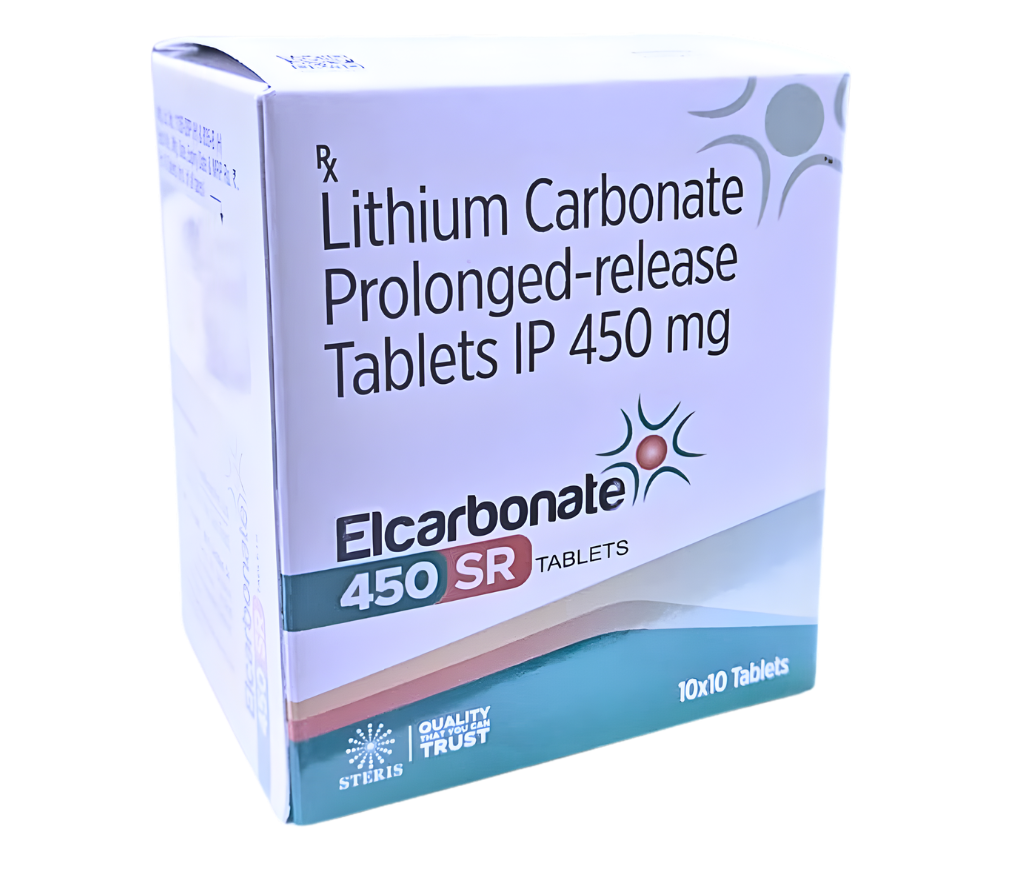
ELCARBONATE 450 SR
 Item requires a valid prescription
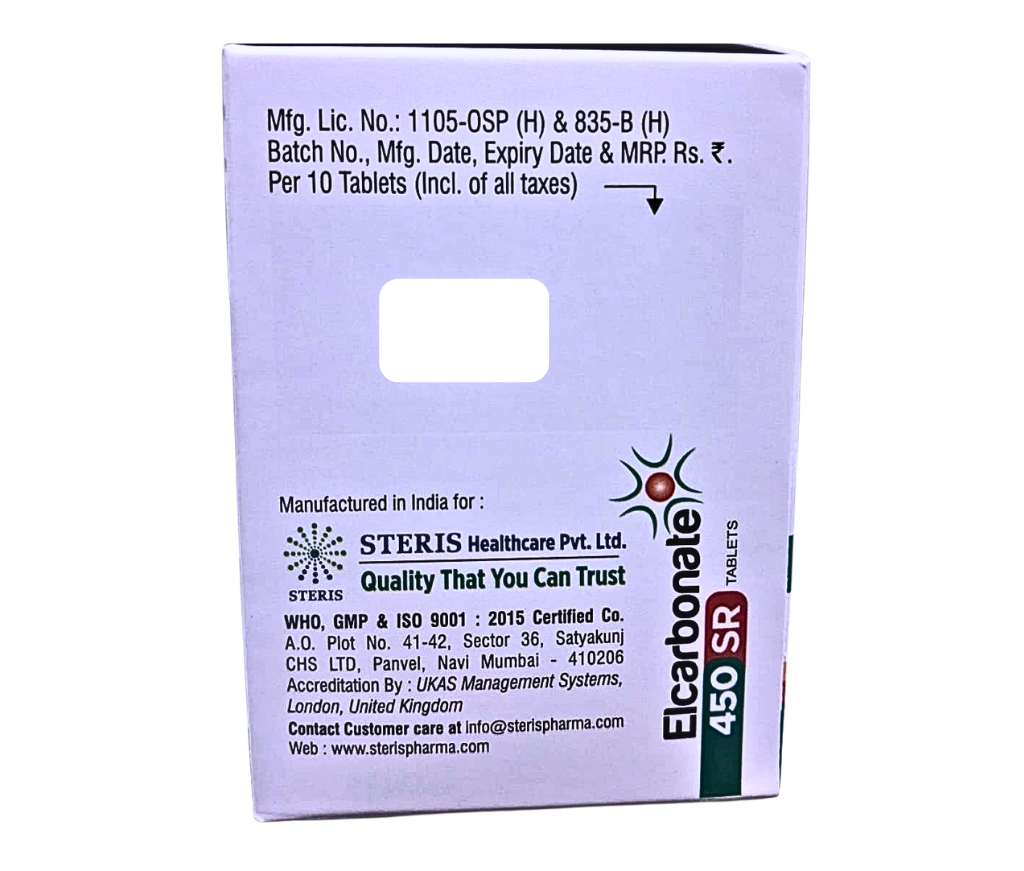
Manufactured By Steris Healthcare Pvt Ltd
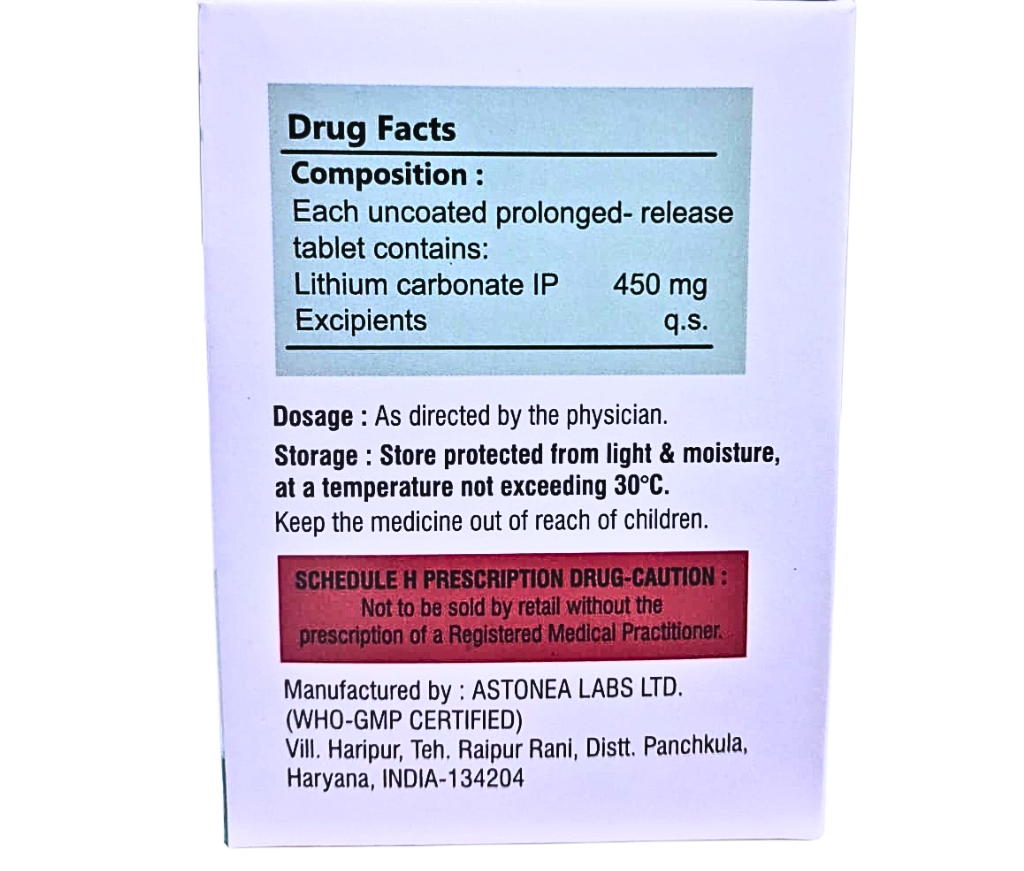
Composition Lithium Carbonate IP 450 mg
Rs 127.97
MRP Rs 182.81
(30% OFF)
Includes all taxes
Package SIZE
( for 10 tablets )

100% Authentic
Products

Free
Shipping*

Products
Return Policy
Description:
Lithium carbonate 450 mg is a slow-release oral tablet used mainly as a mood stabilizer for the long-term management of bipolar disorder. ELCARBONATE 450 SR is a sustained-release tablet of lithium carbonate 450 mg from Steris Healthcare Pvt. Ltd.
- Drug class: Mood stabilizer (antimanic agent). It is not an antipsychotic and not a sleeping pill.
- Prescription status: Schedule H – valid prescription required.
- Key safety point: Lithium has a narrow safety margin, so periodic serum lithium, kidney (creatinine/eGFR) and thyroid (TSH) tests are part of treatment.
- Availability: Enquire through Steris Healthcare using the Check Price details below.
What Is Lithium Carbonate 450 mg SR?
Lithium is a naturally occurring element that has been used in psychiatry for decades. In medicine it is given as a salt – most commonly lithium carbonate. A 450 mg tablet of lithium carbonate delivers roughly 12 mmol of elemental lithium, which is why doctors describe dosing in terms of both milligrams and blood levels (mmol/L).
ELCARBONATE 450 SR uses a sustained-release (SR) platform. Instead of dumping the whole dose into the bloodstream at once, an SR tablet releases lithium over many hours. This can reduce the sharp peaks that are linked to tremor, nausea, and other dose-related effects, and it usually allows once- or twice-daily schedules as advised by the prescriber.
In India, lithium is prescribed by psychiatrists and by physicians experienced in mood disorders. Because the difference between a helpful blood level and a harmful one is small, it is dispensed against a prescription only.
Product Information – ELCARBONATE 450 SR
| Attribute | Details |
|---|---|
| Brand name | ELCARBONATE 450 SR |
| Composition | Lithium Carbonate 450 mg (Sustained Release) |
| Drug class | Mood stabilizer / antimanic agent |
| Dosage form | Sustained-release tablet |
| Pack size | 10 tablets |
| Manufacturer / marketer | Steris Healthcare Pvt. Ltd., India |
| Prescription status | Schedule H – prescription only |
| Route | Oral |
| Primary use | Acute mania; long-term prevention of bipolar disorder episodes |
| Storage | Store in a cool, dry place, protected from light and moisture, out of reach of children. [REVIEWER: confirm exact storage temperature statement from the approved label] |
| Price | Check Price – MRP as printed on pack; institutional pricing on request |
Clinical Indications
| Use | Context | Status |
|---|---|---|
| Acute mania / hypomania | Elevated, irritable or overactive mood episodes | Established primary use |
| Prevention of bipolar disorder relapse (maintenance) | Long-term therapy to reduce the frequency and severity of manic and depressive episodes | Established primary use |
| Add-on in difficult-to-treat depression | Used with an antidepressant when the response has been partial | Specialist decision |
| Recurrent depression (prophylaxis) | Selected patients with repeated depressive episodes | Specialist decision |
| Other specialist uses | Certain aggressive/impulsive behaviour patterns or cluster headache prevention in selected cases | Specialist decision; may be outside the labelled indications |
How Does Lithium Carbonate Work?
The exact way lithium stabilizes mood is still being studied, which is honest to say – and one reason a specialist should guide its use. The best-supported explanations include:
- Calming overactive signalling inside brain cells. Lithium is thought to inhibit enzymes such as glycogen synthase kinase-3 (GSK-3) and inositol monophosphatase, which are involved in how neurons respond to signals.
- Balancing excitatory and inhibitory messengers. It appears to reduce excess glutamate activity and support GABA-related inhibition.
- Supporting neuronal resilience. Laboratory and imaging studies suggest lithium may influence neuroprotective pathways such as BDNF. [REVIEWER: add a peer-reviewed citation if this line is retained.]
Key Benefits of Lithium Carbonate 450 mg SR
- Evidence-backed mood stabilization. Lithium remains one of the most studied medicines for bipolar disorder, and major international guidelines continue to list it among first-line options for maintenance treatment. [REVIEWER: insert the specific guideline citation, e.g. NICE / CANMAT–ISBD, with year.]
- Protects against both poles. It is used to reduce the risk of manic and depressive relapses.
- Lower suicide-risk association. Several studies in mood disorders have linked long-term lithium treatment with reduced suicidal behaviour. [REVIEWER: add citation; do not state numerical risk reduction without a source.]
- Sustained-release convenience. Gradual release supports steadier levels and simpler schedules.
- Blood-level guided care. Unlike many medicines, lithium can be measured in the blood, so the prescriber can personalise the dose.
- Long clinical track record. Decades of clinical experience help doctors anticipate and manage side effects.
Dosage and How to Take ELCARBONATE 450 SR
Dosing is individual. The right dose depends on the diagnosis, age, kidney function, body weight, other medicines, and the serum lithium level the doctor is aiming for. Do not copy someone else's dose.
- Follow the prescription exactly. The prescriber may start with a lower dose and adjust based on blood tests.
- Swallow the tablet whole with water. Do not crush, chew, or split an SR tablet unless your doctor has specifically told you to, as this can release the dose too quickly. [REVIEWER: confirm whether the approved label permits splitting/scoring.]
- Take it at the same time(s) every day, ideally with or after food to reduce nausea.
- Blood test timing matters. Serum lithium is usually checked about 12 hours after the last dose, so tell the lab when you took your last tablet. Levels are commonly checked about a week after starting or changing the dose, and then at regular intervals decided by your doctor.
- Typical target ranges for maintenance are often described between about 0.4 and 1.0 mmol/L, depending on the individual and the guideline used; older adults are usually kept at the lower end. Only your prescriber should set your target.
- Missed dose: Take it when you remember unless the next dose is close. Never double up.
- Do not stop suddenly. Abrupt discontinuation can raise the risk of relapse. Your doctor will guide a gradual taper if needed.
[REVIEWER: insert the approved adult dosing statement from the Steris prescribing information here.]
Stay hydrated and keep salt intake consistent. In India's hot months, heavy sweating, fever, vomiting, or diarrhoea can dehydrate the body and push lithium levels up. Keep drinking fluids normally, avoid sudden crash diets or big changes in salt intake, and call your doctor early if you are unwell with vomiting or diarrhoea.
Side Effects of Lithium Carbonate
Common side effects (often settle or ease with dose adjustment)
- Fine hand tremor
- Increased thirst and frequent urination
- Nausea, mild stomach discomfort, or loose stools
- Metallic taste, dry mouth
- Weight gain
- Tiredness, mild mental dulling or poor concentration
Serious side effects – contact your doctor promptly
- Signs of lithium toxicity: coarse trembling, repeated vomiting, severe diarrhoea, unsteady walking, slurred speech, blurred vision, marked drowsiness, or confusion. This is a medical emergency – seek urgent care.
- Thyroid changes (underactive thyroid): unusual fatigue, cold intolerance, weight gain, neck swelling.
- Kidney effects: very high urine output and excessive thirst (nephrogenic diabetes insipidus); long-term kidney function may change, which is why regular tests are needed.
- Raised calcium (parathyroid effect) on long-term use.
- Heart rhythm changes, fainting, or palpitations.
- Skin flare-ups such as worsening acne or psoriasis in some people.
Report any side effect to your doctor. You can also report suspected adverse reactions through India's Pharmacovigilance Programme (PvPI).
Lithium Carbonate 450 mg SR vs Other Options
Lithium is not automatically interchangeable with other mood stabilizers, and switching – even between two lithium brands – should only be done by the prescriber, because absorption profiles can differ. The table below is for general understanding only.
| Option | Type | Monitoring | Notes |
|---|---|---|---|
| Lithium carbonate 450 mg SR (ELCARBONATE 450 SR) | Mood stabilizer, sustained release | Serum lithium, kidney, thyroid, calcium | Strong role in mania and long-term prevention; narrow safety margin |
| Lithium carbonate 300 mg SR | Mood stabilizer, lower strength | Same as above | Useful for finer titration or lower-dose regimens |
| Sodium valproate | Anticonvulsant mood stabilizer | Liver tests, blood counts | Not suitable in pregnancy without specialist advice |
| Lamotrigine | Anticonvulsant mood stabilizer | Rash vigilance | More helpful for depressive-pole prevention; slow titration |
| Quetiapine | Atypical antipsychotic | Weight, blood sugar, lipids | Can cover mania and bipolar depression |
Precautions, Interactions and Who Should Be Careful
Tell your doctor before starting ELCARBONATE 450 SR if you have:
- Kidney disease or a history of reduced kidney function
- Heart disease, rhythm problems, or a family history of sudden cardiac death
- Thyroid disease
- Low sodium levels, dehydration risk, or you are on a salt-restricted diet
- Addison's disease or other hormone disorders
- Plans for pregnancy, or you are breastfeedin
Medicines that can raise lithium levels (always ask your doctor or pharmacist before using them):
- NSAID painkillers such as ibuprofen, diclofenac, naproxen and similar
- ACE inhibitors and ARBs (common blood pressure medicines)
- Thiazide diuretics
- Some antibiotics such as metronidazole
Other important interactions:
- Certain antipsychotics, carbamazepine, or antiepileptics may increase the risk of nervous-system side effects.
- Antidepressants, tramadol, or other serotonergic drugs can raise the chance of serotonin-related reactions.
- Products that increase urinary lithium loss (for example some antacids containing sodium bicarbonate, acetazolamide, or theophylline) may lower levels.
- Alcohol can worsen dizziness, dehydration and drowsiness. Discuss safe limits with your doctor.
Pregnancy and breastfeeding: Lithium exposure in early pregnancy has been linked to a small increase in the risk of certain heart malformations, and levels shift during pregnancy and after delivery. It is not an automatic "never" – the decision is a careful risk–benefit judgement between the patient, psychiatrist and obstetrician. Breastfeeding is generally not advised without specialist guidance because lithium passes into breast milk. [REVIEWER: confirm wording against the approved label.]
Driving and machinery: Lithium may cause drowsiness or dizziness in some people. Avoid driving until you know how it affects you.
Older adults are more sensitive and usually need lower doses and closer monitoring.
| Buying details | Information |
|---|---|
| Product | ELCARBONATE 450 SR – Lithium Carbonate 450 mg SR Tablet |
| Pack size | 10 tablets |
| Price | Check Price – contact Steris Healthcare for current pricing |
| Prescription | Required (Schedule H) |
Why Trust Steris Healthcare?
Experience & manufacturing quality. Steris Healthcare Pvt. Ltd. is an Indian pharmaceutical manufacturer with WHO-GMP and ISO certifications, supplying prescription and OTC formulations across therapeutic segments including neuropsychiatry, cardiology, gastroenterology, and more.
Expertise. This article is prepared by Steris Healthcare's medical content team and is intended to be reviewed by a qualified physician or clinical pharmacologist before publication. Medically reviewed by: [REVIEWER: name, qualification, registration number, review date].
Authoritativeness. Information is aligned with standard references for lithium therapy, including the approved product label and recognised clinical guidelines.
Trustworthiness. This content is educational and does not replace medical advice. It contains no unverified clinical statistics; any figures will be added only after reviewer sign-off with sources.
Conclusion
Lithium carbonate 450 mg remains a cornerstone treatment for bipolar disorder, valued for its ability to treat mania and help prevent future episodes. ELCARBONATE 450 SR from Steris Healthcare Pvt. Ltd. offers this therapy as a sustained-release tablet in a convenient 10-tablet pack for the Indian market. Its benefits are greatest when it is used the way lithium is meant to be used: on prescription, with steady hydration, awareness of interacting medicines, and regular blood, kidney and thyroid checks.
Frequently Asked Questions
Q1. What is lithium carbonate mainly used for?
Lithium carbonate is mainly used to treat acute mania and to prevent relapses of bipolar disorder, which involves swings between elevated and low moods. In selected patients, specialists may also use it as an add-on in depression that has not responded fully to an antidepressant. ELCARBONATE 450 SR contains lithium carbonate 450 mg in a sustained-release tablet and is prescription-only.
Q2. Is lithium a sleeping pill?
No. Lithium is a mood stabilizer, not a sedative or sleeping pill. Some people feel mild drowsiness, especially early in treatment, but it is not prescribed to induce sleep. By steadying mood swings, it may indirectly improve sleep patterns in people whose sleep is disrupted by mania or depression. Never use lithium for sleep problems without medical advice.
Q3. What is the biggest side effect of lithium?
The most common side effects are fine tremor, increased thirst, frequent urination and nausea. The most serious risk is lithium toxicity, which can happen if blood levels get too high because of dehydration, kidney problems or interacting medicines. Warning signs include coarse tremor, vomiting, diarrhoea, unsteady walking and confusion, and they need urgent medical care. Long-term use can also affect the thyroid and kidneys, which is why regular tests are done.
Q4. Is lithium carbonate an antipsychotic?
No. Lithium carbonate is classified as a mood stabilizer, not an antipsychotic. Antipsychotics mainly act on dopamine and serotonin receptors, while lithium works through different pathways. Doctors sometimes combine lithium with an antipsychotic during a manic episode with psychotic symptoms, but they are separate medicine classes with different monitoring needs.
Q5. Why don't doctors like lithium?
It is a misconception that doctors dislike lithium. Many psychiatrists consider it a first-line, well-proven treatment for bipolar disorder. The reason it is used carefully is practical: it has a narrow therapeutic index, needs regular blood tests, interacts with common medicines such as NSAIDs, and can affect the kidneys and thyroid over time. Newer options that need less monitoring are sometimes preferred for convenience, but lithium remains valuable when properly supervised.
Q6. Is lithium a high risk drug?
Lithium is considered a high-alert medicine because the gap between an effective level and a toxic level is small. That does not mean it is unsafe when used correctly. With a prescription, scheduled serum lithium, kidney and thyroid tests, good hydration and awareness of interacting drugs, most people can take it safely. Problems arise mainly from unsupervised use, dehydration or unchecked drug interactions.
Q7. Is lithium good for mental health?
Lithium is good for specific mental health conditions, mainly bipolar disorder, where it can treat mania and reduce relapses. It has also been linked in studies to lower suicide risk in people with mood disorders. It is not a general mood booster or a treatment for everyday stress or anxiety. Whether it suits you is a decision for a psychiatrist after assessment.
Q8. What happens if a non-bipolar person takes lithium?
A person without a condition that needs lithium gets no mood benefit and takes on all the risks. They may experience tremor, thirst, nausea, dulled thinking and, if levels rise too high, lithium toxicity that can affect the brain, kidneys and heart. Lithium should never be taken without a prescription or shared with others, because the safe dose depends on blood levels that only a doctor can monitor.
Q9. What is the dose of lithium carbonate 450 mg SR?
There is no single dose for everyone. The prescriber chooses the dose based on the condition being treated, age, kidney function and the target serum lithium level, then adjusts it after blood tests. Take ELCARBONATE 450 SR exactly as prescribed, and never increase or decrease the dose on your own.
Q10. How should I take ELCARBONATE 450 SR tablets?
Swallow the sustained-release tablet whole with water, at the same time each day, preferably with or after food. Do not crush or chew it unless your doctor specifically instructs you to. Maintain regular fluid intake and consistent salt intake, and tell the lab when you took your last dose before a lithium blood test.
Q11. How long does lithium take to work?
For acute mania, improvement is usually seen within one to two weeks, though full stabilization can take longer. The relapse-prevention benefit is judged over months of steady treatment. Continue taking it as prescribed even when you feel well.
Q12. Can I stop lithium suddenly?
No. Stopping lithium abruptly can increase the chance of a rapid return of manic or depressive symptoms. If you want to stop or change your medicine, talk to your psychiatrist, who can plan a gradual reduction.
Q13. Which painkillers are safe with lithium?
NSAIDs such as ibuprofen, diclofenac and naproxen can raise lithium levels and lead to toxicity, so they should be avoided unless your doctor advises otherwise. Always ask your doctor or pharmacist which pain relief option is suitable for you before taking anything, including over-the-counter products.
Q14. Can I drink alcohol while taking lithium?
Alcohol can worsen dizziness, drowsiness and dehydration, which may affect lithium levels and mood stability. It is best to discuss alcohol use openly with your doctor, who can advise on limits that fit your situation.
Q15. Is lithium safe during pregnancy or breastfeeding?
Lithium in early pregnancy has been linked to a small increase in the risk of certain heart defects, and blood levels change during pregnancy and after delivery. The decision to continue or adjust lithium is made case by case by the psychiatrist and obstetrician, weighing the risk of untreated illness. Breastfeeding is generally not recommended without specialist guidance because lithium passes into breast milk.
Q16. Which tests are needed while taking lithium?
Doctors usually monitor serum lithium levels, kidney function (creatinine or eGFR), thyroid function (TSH) and often calcium. Lithium levels are checked soon after starting or changing the dose, then at regular intervals. Your doctor will set the schedule that suits you.
Q17. What are the signs of lithium toxicity?
Early signs include worsening tremor, nausea, vomiting, diarrhoea and unusual drowsiness. Later signs include unsteady walking, slurred speech, blurred vision, confusion, muscle twitching and seizures. If you notice these symptoms, stop taking the next dose and seek urgent medical help right away.
Q18. Is a prescription required to buy lithium carbonate 450 mg SR in India?
Yes. ELCARBONATE 450 SR is a Schedule H medicine, so it must be supplied against a valid prescription from a registered medical practitioner through a licensed pharmacy or authorised channel.
Q19. What is the price of ELCARBONATE 450 SR and where can I check availability?
The price depends on the pack MRP and supply channel. Use the Check Price details in the buyer guide to contact Steris Healthcare Pvt. Ltd. by email or phone for current pricing and availability of the 10-tablet pack. Institutional buyers and distributors can also ask about trade terms.
Q20. What is the difference between lithium carbonate 300 mg SR and 450 mg SR?
Both contain lithium carbonate in a sustained-release form, but the 450 mg tablet carries a higher amount per tablet. Which strength you need depends on your prescribed dose and blood level. Do not switch strengths or brands yourself, because absorption can differ between products.
If You Need More Information About ELCARBONATE 450 SR Click here