


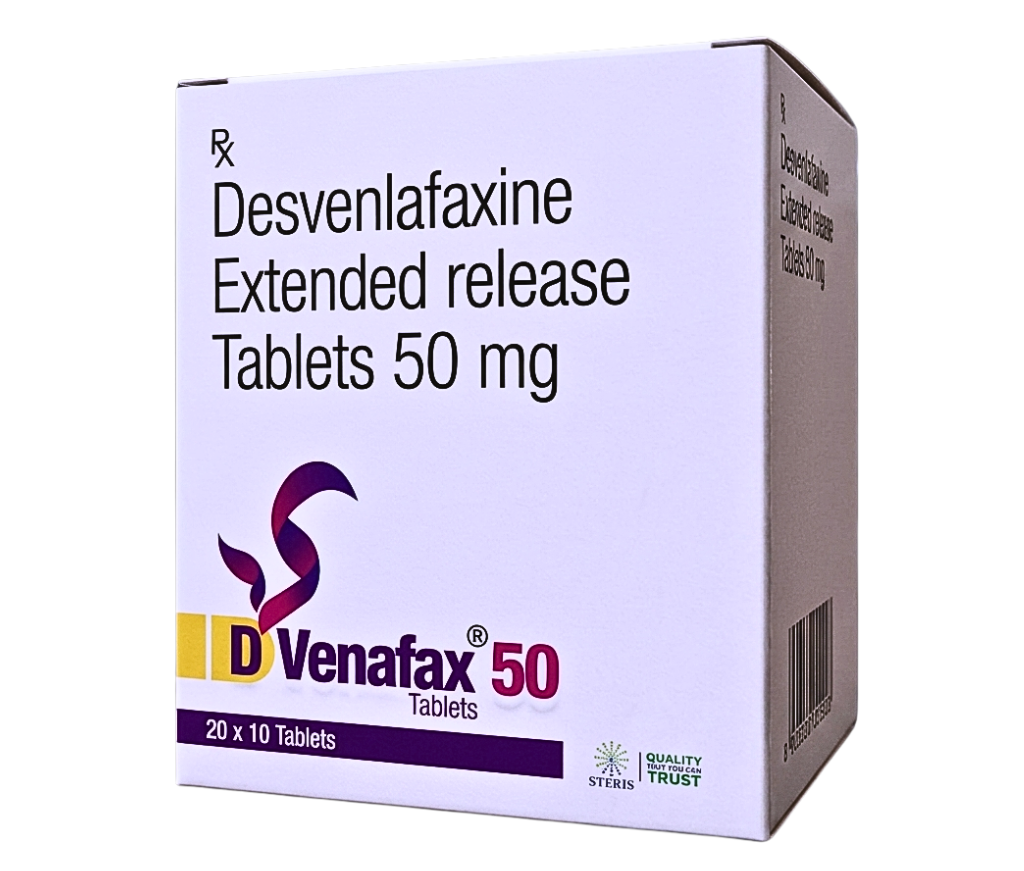
DVENAFAX 50
 Item requires a valid prescription
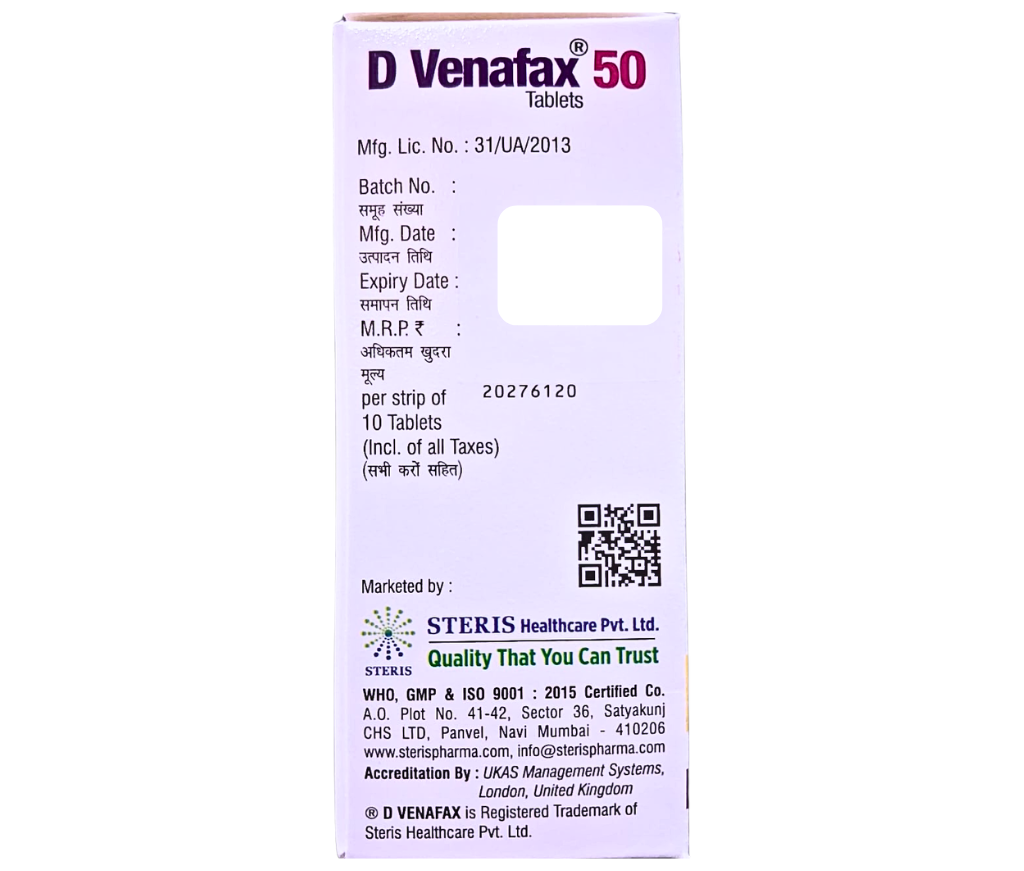
Manufactured By Steris Healthcare Pvt Ltd
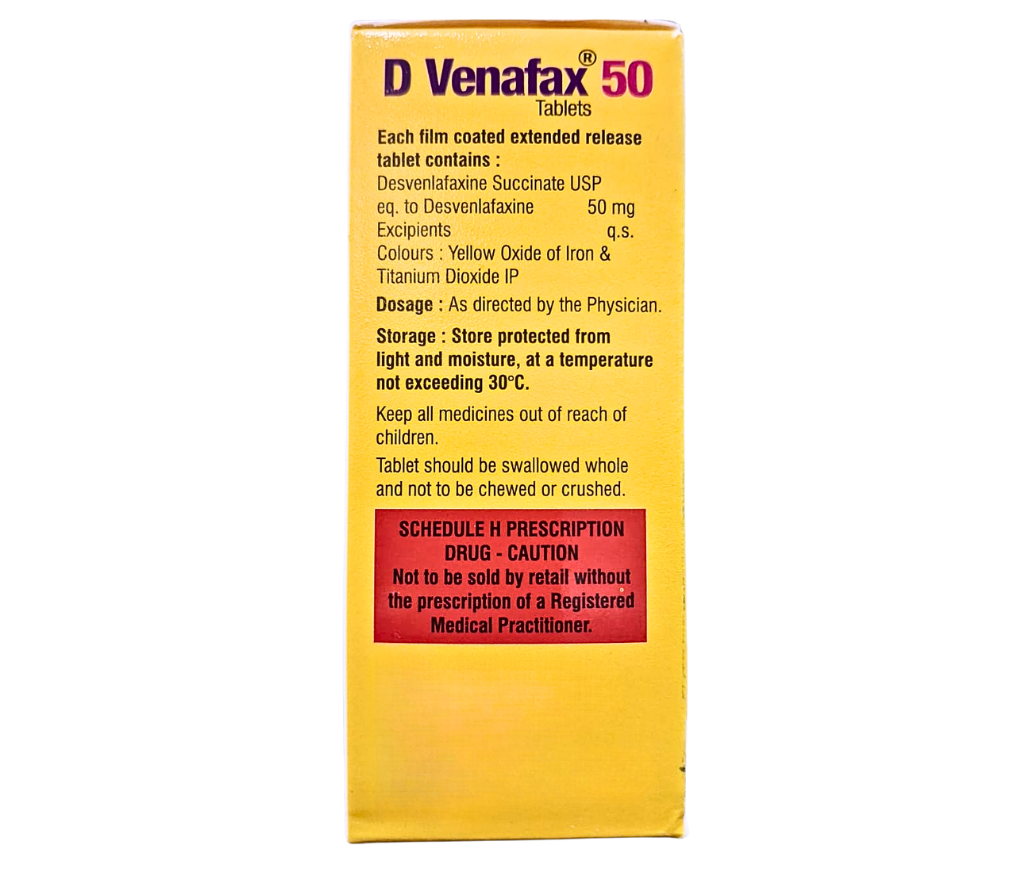
Composition Desvenlafaxine ER 50 mg
Rs 78.09
MRP Rs 111.56
(30% OFF)
Includes all taxes
Package SIZE
( For 10x10 Tablets )

100% Authentic
Products

Free
Shipping*

Products
Return Policy
Description:
Desvenlafaxine ER 50 mg is an extended-release prescription antidepressant used primarily to treat major depressive disorder (MDD) in adults. It belongs to a group of medicines called serotonin-norepinephrine reuptake inhibitors (SNRIs). By affecting serotonin and norepinephrine signaling in the brain, desvenlafaxine can help improve mood and other symptoms associated with depression.
If you are searching for desvenlafaxine ER 50 mg uses, benefits, side effects, dosage, price, or where to buy it, this guide provides a practical overview of what patients and buyers should know before using the medicine.
Important: Desvenlafaxine ER 50 mg is a prescription medicine. It should be taken only as directed by a qualified healthcare professional. This information is educational and should not replace individualized medical advice.
What Is Desvenlafaxine ER 50 mg?
Desvenlafaxine ER 50 mg is an extended-release formulation of desvenlafaxine, an SNRI antidepressant. The “ER” designation means extended release, allowing the medicine to be administered as a once-daily tablet under standard prescribing recommendations.
Current U.S. professional labeling identifies desvenlafaxine extended-release tablets as an SNRI indicated for the treatment of major depressive disorder in adults. The recommended dose is 50 mg once daily, with or without food.
The 50 mg strength is particularly important because the prescribing information states that it is both the recommended starting and therapeutic dose for adults, while clinical studies did not demonstrate additional benefit from doses above 50 mg per day and higher doses were associated with more adverse reactions and discontinuations.
Desvenlafaxine ER 50 mg Uses
The primary approved use of desvenlafaxine ER 50 mg is the treatment of major depressive disorder (MDD) in adults.
Depression can involve much more than feeling sad. Symptoms may include:
- Persistent low mood
- Loss of interest or pleasure
- Low energy or fatigue
- Changes in sleep
- Changes in appetite
- Difficulty concentrating
- Feelings of worthlessness or excessive guilt
- Changes in activity or motivation
Desvenlafaxine is intended to help manage the underlying depressive disorder rather than provide an immediate mood boost.
Some online medicine listings in India describe 50 mg desvenlafaxine products simply as medicines for depression and require a prescription. The exact product indication should always be confirmed against the package information and your doctor's prescription.
How Does Desvenlafaxine ER 50 mg Work?
Desvenlafaxine works primarily by inhibiting the reuptake of two neurotransmitters: serotonin and norepinephrine.
These chemical messengers are involved in mood, emotional regulation, attention, and other neurological functions. By increasing their availability in relevant neural pathways, desvenlafaxine can help reduce symptoms of depression over time.
It is important to understand that this mechanism does not mean the medicine works immediately. Antidepressant treatment commonly requires consistent use and clinical monitoring before its full therapeutic effect can be assessed.
Key Benefits of Desvenlafaxine ER 50 mg
1. Helps treat major depressive disorder
The principal benefit of desvenlafaxine ER 50 mg is its established use for major depressive disorder in adults. Clinical evidence supporting its approval comes from controlled clinical studies of patients with MDD.
2. Convenient once-daily dosing
The recommended adult dose is 50 mg once daily, and it can be taken with or without food. Taking it at approximately the same time each day can help maintain a consistent routine.
3. Extended-release formulation
The ER formulation is designed to release the medication over time. Tablets should therefore be swallowed whole with fluid and should not be divided, crushed, chewed, or dissolved.
4. A well-established SNRI option
Desvenlafaxine provides an SNRI treatment approach, affecting both serotonin and norepinephrine pathways. Your doctor may select it based on your symptoms, previous treatment history, other medicines, and individual risk factors.
Desvenlafaxine ER 50 mg Side Effects
Like all prescription antidepressants, desvenlafaxine can cause side effects. Not everyone experiences them, and their severity can vary.
Reported adverse reactions include:
- Nausea
- Dizziness
- Insomnia
- Sleepiness
- Dry mouth
- Constipation
- Increased sweating
- Decreased appetite
- Fatigue
- Headache
- Sexual side effects
- Increased blood pressure
The FDA-approved labeling also contains important warnings concerning serotonin syndrome, elevated blood pressure, abnormal bleeding risk, activation of mania or hypomania, discontinuation symptoms, and other potential adverse reactions.
Serious symptoms requiring medical attention
Contact a healthcare professional promptly if you experience severe or unusual symptoms such as:
- Significant changes in blood pressure
- Severe agitation, confusion, fever, sweating, or muscle rigidity
- Abnormal bleeding
- Seizures
- Severe allergic symptoms
- Manic or unusually elevated mood
- Severe mood deterioration or suicidal thoughts
Antidepressants carry a boxed warning regarding an increased risk of suicidal thoughts and behaviors in children, adolescents, and young adults, and patients should be monitored for clinical worsening or emerging suicidal thoughts. Desvenlafaxine is not approved for pediatric patients under the cited U.S. labeling.
If you or someone else is experiencing an immediate risk of self-harm, seek emergency medical assistance immediately.
Desvenlafaxine ER 50 mg Dosage
For adults with major depressive disorder, the standard recommended dose in current U.S. prescribing information is 50 mg once daily, with or without food.
However, the correct dose for an individual patient depends on their medical circumstances.
People with kidney impairment may require dose adjustments. The prescribing information specifies a maximum of 50 mg per day for moderate renal impairment and lower dosing for severe renal impairment or end-stage renal disease.
Do not increase the dose because you feel the medicine is not working quickly enough.
Higher doses have not demonstrated additional benefit over 50 mg/day in the cited prescribing information, while adverse reactions and treatment discontinuations became more frequent at higher doses.
How to Take Desvenlafaxine ER 50 mg
Take the medicine exactly as prescribed.
For standard extended-release tablets:
- Take the prescribed dose once daily.
- Take it with or without food.
- Try to take it at approximately the same time each day.
- Swallow the tablet whole with fluid.
- Do not crush, chew, dissolve, or divide the tablet unless your specific product labeling expressly permits it.
If you miss a dose, follow your prescription's missed-dose instructions or ask your pharmacist rather than taking extra tablets to compensate.
Do Not Stop Desvenlafaxine ER 50 mg Suddenly
Stopping desvenlafaxine abruptly can cause discontinuation symptoms. The prescribing information recommends gradually reducing the dose whenever possible.
Possible discontinuation symptoms can include dizziness, nausea, headache, irritability, sleep disturbance, anxiety, sweating, and sensory disturbances.
If you want to stop treatment, speak with your doctor so the medicine can be tapered appropriately.
Desvenlafaxine ER 50 mg Interactions and Precautions
Before starting treatment, tell your doctor about every medicine, supplement, and herbal product you use.
Particular caution is needed with medicines that affect serotonin, because combining serotonergic medicines can increase the risk of serotonin syndrome.
Your healthcare professional should also know if you have:
- High blood pressure
- Heart problems
- Kidney disease
- Liver problems
- Bipolar disorder or a history of mania
- Seizure disorders
- Bleeding disorders
- Glaucoma
- A history of suicidal thoughts or behavior
Do not assume that a prescription antidepressant is appropriate simply because someone else takes the same strength.
When purchasing desvenlafaxine ER 50 mg, verify:
- The medicine name and strength
- Active ingredient
- Manufacturer
- Pack size
- Prescription requirement
- Expiry date
- Packaging integrity
- Pharmacy authenticity
- Storage instructions
Avoid purchasing prescription medicines from unverified websites or sellers simply because they advertise an unusually low price.
Desvenlafaxine ER 50 mg Storage
Storage requirements can vary by product. For example, current Indian listings for several desvenlafaxine 50 mg products instruct storage below 30°C. Always follow the storage instructions printed on your specific product packaging.
Keep medicines away from children and do not use tablets that are damaged, expired, or improperly stored.
Desvenlafaxine ER 50 mg vs. Higher Strengths
Desvenlafaxine extended-release tablets are available in multiple strengths, including 25 mg, 50 mg, and 100 mg in the cited U.S. labeling.
However, more milligrams do not automatically mean better results. Current prescribing information specifically reports no additional benefit above 50 mg per day while noting more adverse reactions at higher doses.
Your doctor—not an online article—should determine whether your prescribed strength needs to change.
Who Should Use Desvenlafaxine ER 50 mg?
Desvenlafaxine ER 50 mg is intended for patients for whom a healthcare professional has diagnosed an appropriate indication, particularly major depressive disorder in adults.
It should not be started simply because you recognize symptoms of depression in yourself. Depression can have different causes and severities, and treatment may involve psychotherapy, lifestyle interventions, medication, or a combination of approaches.
Conclusion
Desvenlafaxine ER 50 mg is an extended-release SNRI antidepressant primarily used to treat major depressive disorder in adults. Its key advantages include established antidepressant efficacy and convenient once-daily dosing. The recommended adult dose is generally 50 mg once daily, with or without food, but individual dosing may need modification for certain medical conditions, particularly impaired kidney function.
The most important desvenlafaxine ER 50 mg side effects can include nausea, dizziness, insomnia, dry mouth, constipation, sweating, fatigue, and changes in blood pressure. More serious risks include serotonin syndrome, abnormal bleeding, mania or hypomania, discontinuation symptoms, and suicidal thoughts or behaviors in younger patients.
For buyers researching desvenlafaxine ER 50 mg price or where to buy desvenlafaxine ER 50 mg, current Indian online listings demonstrate that prices vary between brands and sellers. Because it is a prescription medicine, authenticity, correct strength, prescription verification, and professional guidance should take priority over finding the lowest advertised price.
Frequently Asked Questions
1. What is desvenlafaxine ER 50 mg used for?
Desvenlafaxine ER 50 mg is primarily used to treat major depressive disorder in adults. It is an SNRI antidepressant that affects serotonin and norepinephrine signaling in the brain.
2. What are the most common desvenlafaxine ER 50 mg side effects?
Common side effects can include nausea, dizziness, insomnia, sleepiness, dry mouth, constipation, sweating, decreased appetite, fatigue, and headache. Some people may also experience sexual side effects or increased blood pressure. D
3. How should I take desvenlafaxine ER 50 mg?
The standard adult recommendation is 50 mg once daily, with or without food. Extended-release tablets should generally be swallowed whole and should not be crushed, chewed, dissolved, or divided.
4. Is desvenlafaxine ER 50 mg a strong antidepressant?
It is an established SNRI antidepressant for major depressive disorder. However, “strong” is not a clinically useful way to compare antidepressants because the appropriate medicine depends on the individual's diagnosis, symptoms, medical history, other medicines, and response to treatment.
5. Can I stop desvenlafaxine ER 50 mg suddenly?
It is generally recommended not to stop it suddenly. Gradual dose reduction is recommended whenever possible to reduce the risk of discontinuation symptoms.
6. How long does desvenlafaxine ER 50 mg take to work?
Antidepressants generally require consistent treatment before their full benefit can be evaluated. The timing varies between individuals. Continue taking the medicine according to your prescription and discuss lack of improvement with your doctor rather than increasing the dose yourself.
7. Can I buy desvenlafaxine ER 50 mg without a prescription?
Desvenlafaxine ER 50 mg is a prescription medicine. Current Indian online pharmacy listings identify 50 mg products as requiring a prescription.
8. What is the price of desvenlafaxine ER 50 mg in India?
The price varies by brand, manufacturer, seller, pack size, location, and discounts. For example, September 2026 listings showed some 50 mg products around ₹139–₹197 for a 10-tablet pack, but these are current listing examples rather than a universal market price.
9. Can desvenlafaxine ER 50 mg cause high blood pressure?
Yes. Increased blood pressure is an important potential adverse effect, and blood pressure monitoring may be appropriate during treatment. People with pre-existing hypertension should tell their healthcare professional before starting treatment.
10. Is desvenlafaxine ER 50 mg safe for everyone?
No. Its suitability depends on the patient's medical history, kidney function, other medicines, psychiatric history, and other factors. A doctor should determine whether desvenlafaxine is appropriate and how it should be monitored.
11. What should I do if desvenlafaxine ER 50 mg is not helping?
Do not increase the dose yourself. Contact your prescribing doctor. They can assess treatment response, adherence, side effects, diagnosis, other medicines, and whether another treatment strategy is appropriate.
12. Can desvenlafaxine ER 50 mg be used in children?
The cited U.S. prescribing information states that desvenlafaxine is not approved for pediatric patients and includes a boxed warning concerning suicidal thoughts and behaviors in children, adolescents, and young adults taking antidepressants.

