


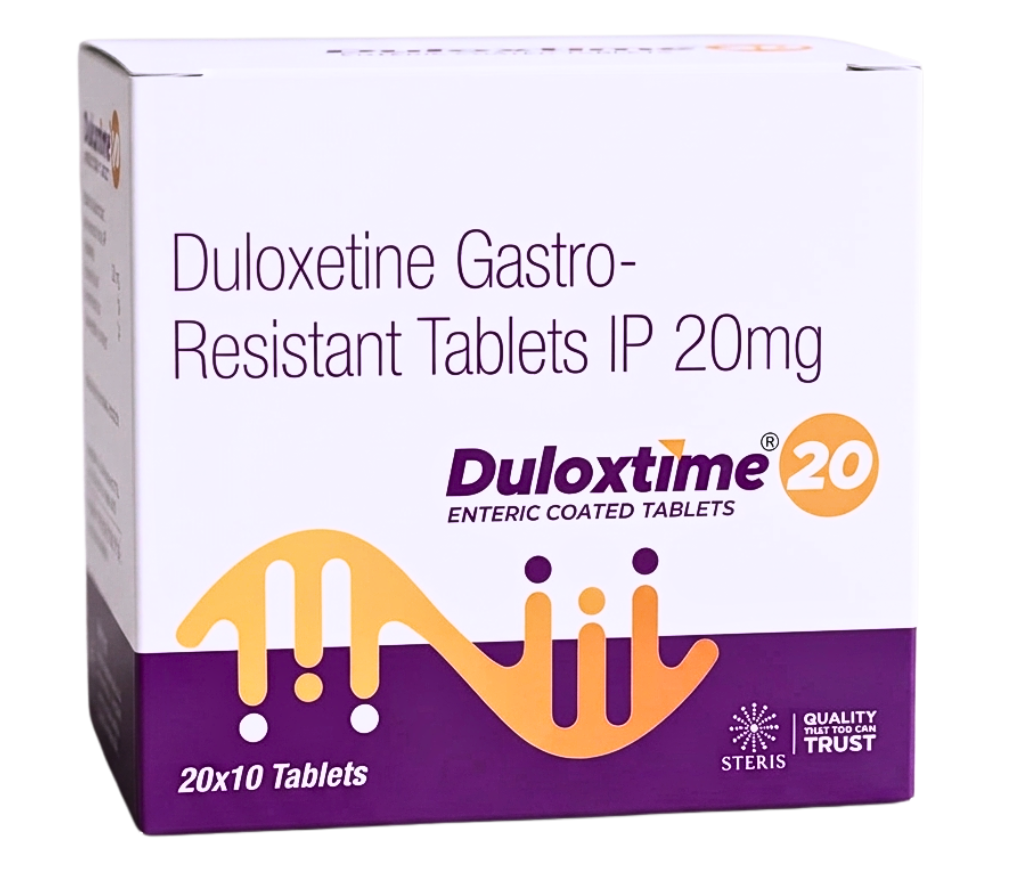
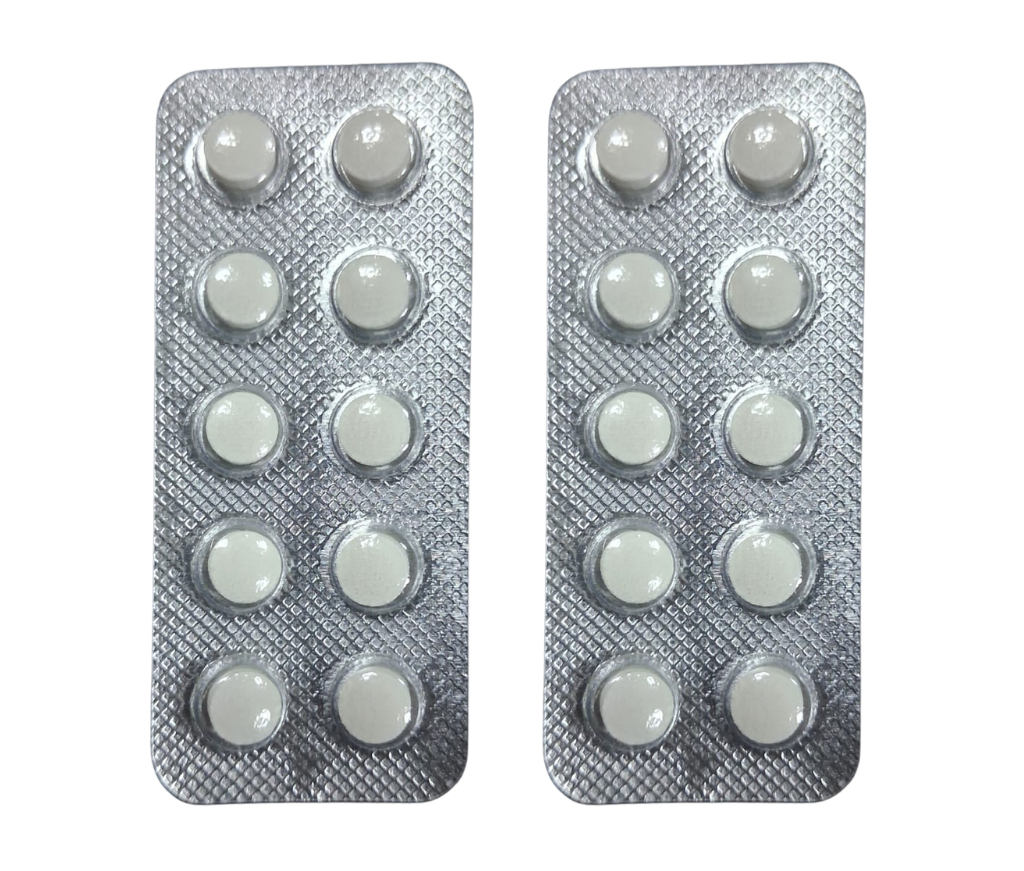
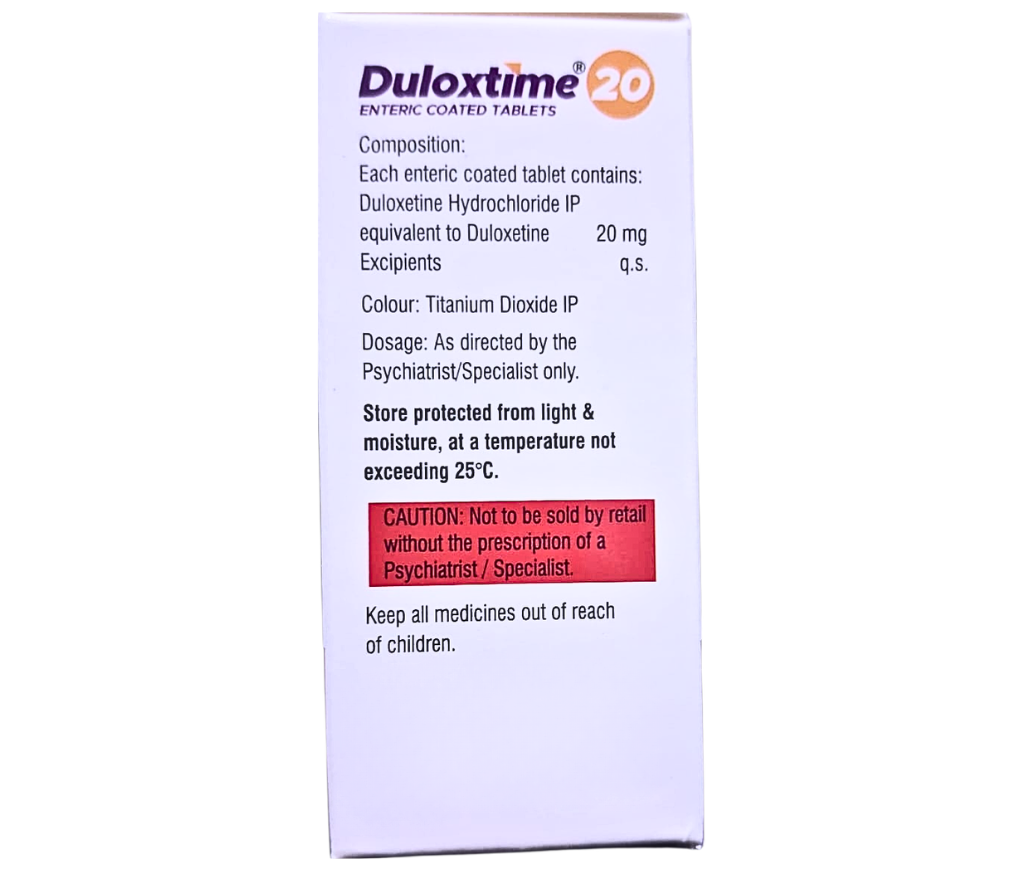
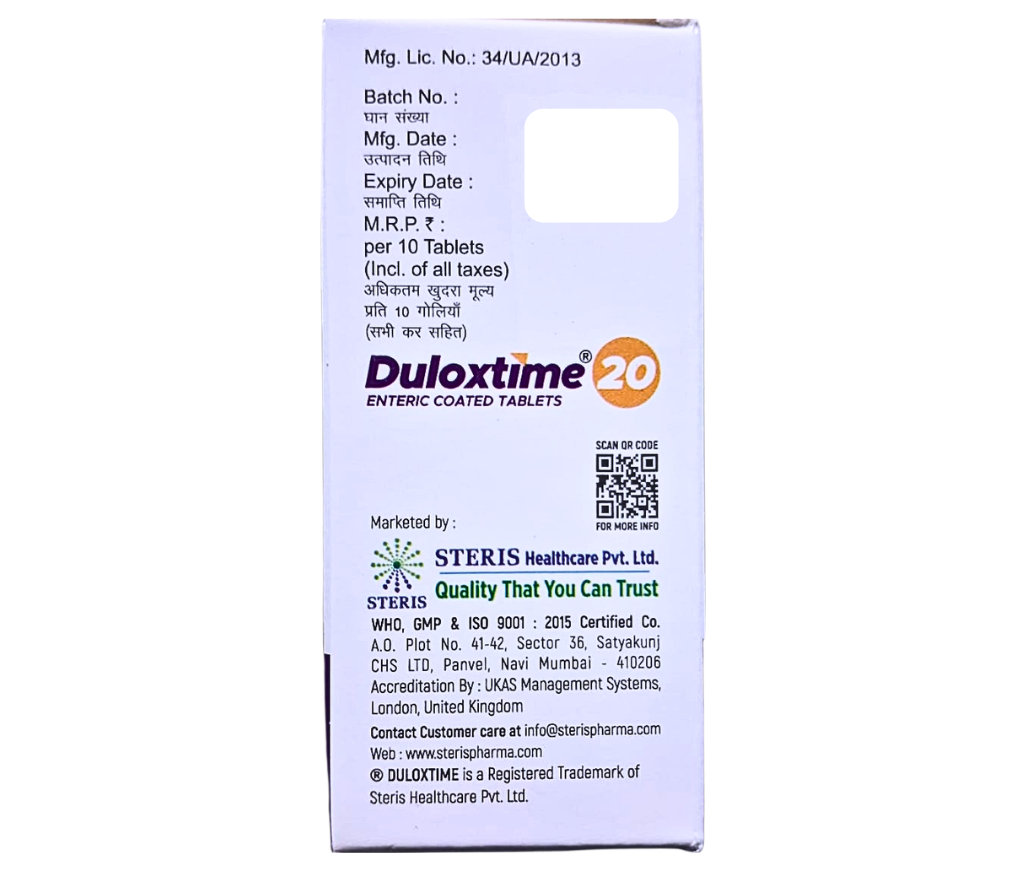
Duloxetine 20 | DULOXTIME 20
 Item requires a valid prescription
Manufactured By Steris Healthcare Pvt Ltd
Composition Duloxetine GR (20mg)
Rs 55.76
MRP Rs 79.65
(30% OFF)
Includes all taxes
Package SIZE
( For 10 Tablets )

100% Authentic
Products

Free
Shipping*

Products
Return Policy
Description:
Duloxtime 20 is a prescription medicine containing Duloxetine 20mg in a gastro-resistant (GR) formulation. It belongs to a class of medicines called SNRIs (Serotonin-Norepinephrine Reuptake Inhibitors), widely used to treat several mental health and pain-related conditions.
In simple terms: Duloxetine works by increasing the levels of two important brain chemicals — serotonin and norepinephrine — which play a central role in regulating mood, emotional balance, and how the body processes pain signals. The "gastro-resistant" coating on the tablet is designed to protect it from breaking down in the stomach's acidic environment, allowing it to dissolve further along in the digestive tract for better absorption and reduced stomach irritation.
Product Information
| Detail | Description |
|---|---|
| Brand Name | Duloxtime 20 |
| Composition | Duloxetine Gastro Resistant 20mg |
| Manufacturer/Marketer | Steris Healthcare Pvt. Ltd. |
| Product Form | Tablet (Gastro Resistant) |
| Pack Size | 10 Tablets |
| Drug Class | SNRI (Serotonin-Norepinephrine Reuptake Inhibitor) |
| Therapeutic Use | Depression, Anxiety, Neuropathic Pain, Fibromyalgia |
| Recommended Dosage | Once daily, as prescribed by doctor |
| Route of Administration | Oral |
| Prescription Status | Rx Required — Not to be self-administered without medical supervision |
| Storage | Store below 30°C, in a dry place, away from direct sunlight and moisture |
| Availability | India-wide, through licensed pharmacies with valid prescription |
Why Duloxtime 20 Is Important
Mental health conditions like depression and anxiety, along with chronic pain disorders, are far more common in India than public conversation often reflects. Many patients silently manage both emotional distress and physical pain for years before finding an effective, structured treatment path. Understanding why a medicine like Duloxtime 20 matters can help patients approach treatment with clarity rather than hesitation.
Here's why it holds genuine clinical value:
- It treats the mind and body together. Unlike medicines that address only mood or only pain, duloxetine works on both fronts by regulating serotonin and norepinephrine — chemicals involved in both emotional regulation and pain perception. This makes it especially valuable for patients whose depression or anxiety is intertwined with chronic physical discomfort.
- It's backed by strong global clinical evidence. Duloxetine has been studied extensively worldwide for its efficacy in depression, generalized anxiety disorder, and several chronic pain conditions, with a well-established safety and monitoring framework.
- Gastro-resistant formulation improves tolerability. The GR coating helps minimize stomach-related irritation that can otherwise make early treatment uncomfortable, supporting better adherence to the medication schedule.
- Consistent treatment supports long-term stability. Depression, anxiety, and chronic pain conditions often require sustained treatment over weeks to months. Starting and continuing therapy as advised by a doctor gives patients the best chance at meaningful, lasting improvement.
- It supports overall quality of life. By addressing both emotional wellbeing and physical pain, Duloxtime 20 can help patients re-engage with work, relationships, and daily activities that chronic illness often disrupts.
For someone searching "duloxetine gastro resistant tablet" after a psychiatrist consultation or a diagnosis involving chronic pain, this context often provides the reassurance needed to begin treatment with confidence.
Key Benefits
| Benefit | Real-World Impact |
|---|---|
| Improves depressive symptoms | Helps lift persistent low mood, hopelessness, and loss of interest over time |
| Reduces anxiety symptoms | Supports better management of excessive worry and tension |
| Relieves neuropathic pain | Helps ease burning, tingling, or shooting nerve pain, especially in diabetic patients |
| Eases fibromyalgia-related pain | Reduces widespread muscle and joint discomfort associated with fibromyalgia |
| Gastro-resistant formulation | Reduces stomach irritation and supports better tolerability |
| Once-daily dosing | Simple, convenient dosing schedule that supports long-term adherence |
| Dual-action mechanism | Addresses both emotional and physical symptoms in a single medicine |
Precautions
Duloxetine affects brain chemistry and interacts with several body systems, so certain patients need closer monitoring. Inform your doctor before starting if you have:
- Liver disease — duloxetine is processed by the liver and is generally avoided in patients with significant liver impairment
- Kidney disease — may require dose adjustment, particularly in patients with severe kidney impairment
- Glaucoma — especially angle-closure glaucoma, as duloxetine can increase eye pressure in some individuals
- History of seizures — caution is advised as SNRIs can occasionally lower the seizure threshold
- Bleeding disorders — duloxetine may increase bleeding risk, especially when combined with blood thinners, aspirin, or NSAIDs
- High blood pressure or heart conditions — blood pressure should be monitored, as duloxetine can occasionally raise it
- History of mania or bipolar disorder — antidepressants can sometimes trigger manic episodes in predisposed individuals
- Pregnancy or breastfeeding — use only if clearly advised by a doctor, weighing benefits against potential risks
- Alcohol use — combining alcohol with duloxetine may increase the risk of liver-related side effects and is generally best avoided
Possible Side Effects
Most patients tolerate Duloxtime 20 reasonably well, though side effects are possible, particularly during the first few weeks of treatment.
Commonly reported (often mild, may ease with continued use):
- Nausea
- Dry mouth
- Fatigue or drowsiness
- Constipation
- Reduced appetite
- Excessive sweating
- Dizziness
- Sleep disturbances (insomnia or unusual drowsiness)
Frequently Asked Questions
1. Where can I buy duloxetine gastro resistant tablet online?
You can buy duloxetine gastro resistant tablets through licensed online pharmacies or authorized pharmaceutical suppliers in India. Before purchasing, verify the product name, strength, manufacturer, batch number, and expiry date. For DULOXTIME 20, the composition is Duloxetine GR 20 mg.
2. What is the price of duloxetine gastro resistant tablet?
The price of duloxetine gastro resistant tablet may vary depending on the brand, strength, pack size, seller, and applicable taxes or delivery charges. For DULOXTIME 20, the pack contains 10 tablets. Check the current price with Steris Healthcare or an authorized supplier.
3. Can I order duloxetine gastro resistant tablet online?
Yes, duloxetine gastro resistant tablets can generally be ordered online through licensed pharmacies or authorized pharmaceutical suppliers where legally permitted. Since duloxetine is a prescription medicine, you may need to provide a valid prescription before the order can be dispensed.
4. Is duloxetine gastro resistant tablet available from Steris Healthcare?
DULOXTIME 20 contains Duloxetine GR 20 mg and is manufactured/marketed by Steris Healthcare Pvt. Ltd. Current availability and stock can vary, so contact Steris Healthcare or an authorized supplier to confirm availability before placing an order.
5. What is duloxetine gastro resistant tablet used for?
Duloxetine gastro resistant tablet may be prescribed for conditions such as depression, certain anxiety disorders, and some types of nerve-related or chronic pain. Duloxetine affects serotonin and norepinephrine pathways involved in mood regulation and pain signalling. Its specific use should be determined by a qualified healthcare professional.
6. What is the composition of duloxetine gastro resistant tablet?
DULOXTIME 20 contains Duloxetine GR 20 mg. It is supplied as a gastro-resistant tablet in a pack of 10 tablets and is manufactured/marketed by Steris Healthcare Pvt. Ltd.
7. Is a prescription required?
Duloxetine is generally a prescription medicine. A valid prescription may be required when purchasing or dispensing duloxetine gastro resistant tablets, depending on applicable regulations and the pharmacy's requirements. Use it only under the guidance of a qualified healthcare professional.
8. How should duloxetine gastro resistant tablet be taken?
Take duloxetine gastro resistant tablet exactly as prescribed by your doctor. The tablet should generally be swallowed whole with water and should not be crushed or chewed because it is gastro-resistant. Take it according to the prescribed schedule and do not suddenly stop treatment without medical advice.
9. What should I know before buying duloxetine gastro resistant tablet?
Before buying, verify the correct strength, formulation, manufacturer, batch number, expiry date, packaging, and storage information. Inform your doctor about liver or kidney problems, blood-pressure issues, bipolar disorder, seizures, glaucoma, pregnancy or breastfeeding, and all medicines or supplements you take. Also check that the product comes from a licensed pharmacy or authorized supplier.
10. How can I order duloxetine gastro resistant tablet online?
To order duloxetine gastro resistant tablet online, use a licensed online pharmacy or authorized pharmaceutical supplier. Select the prescribed strength and formulation, provide a prescription if required, verify the product and pack details, and complete the order according to the supplier's process. For DULOXTIME 20, confirm the Duloxetine GR 20 mg composition and 10-tablet pack before purchasing.