


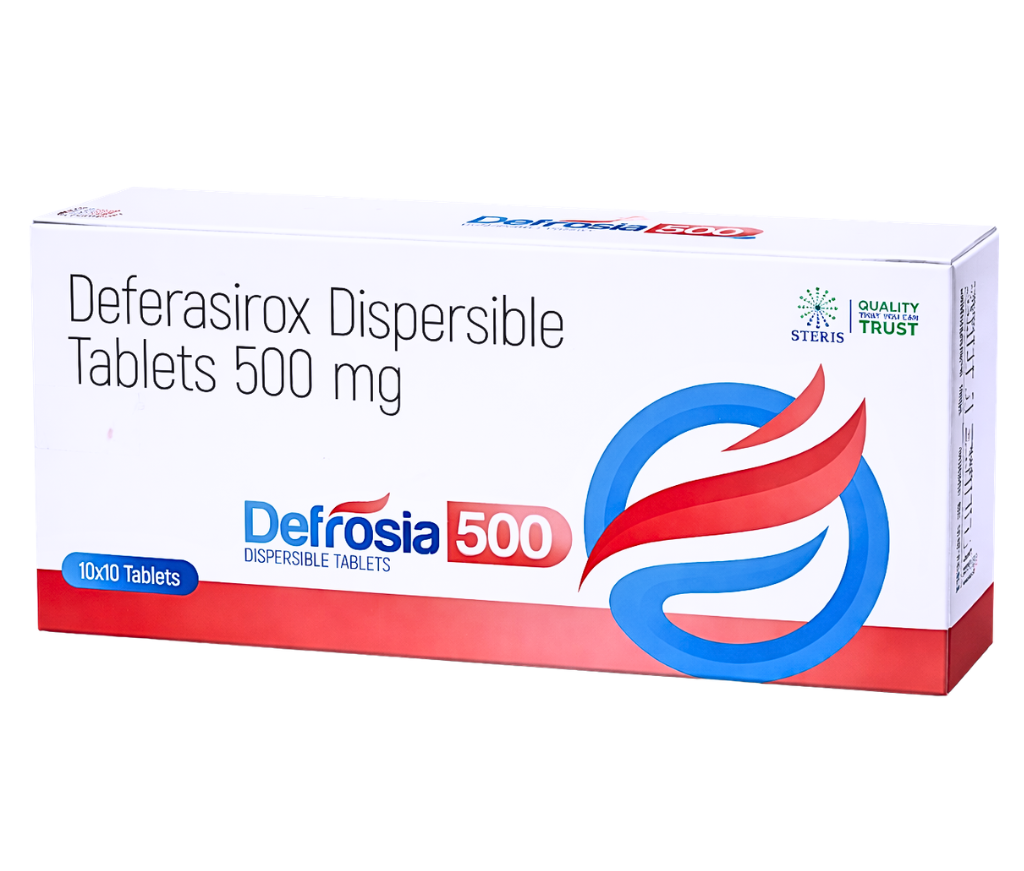
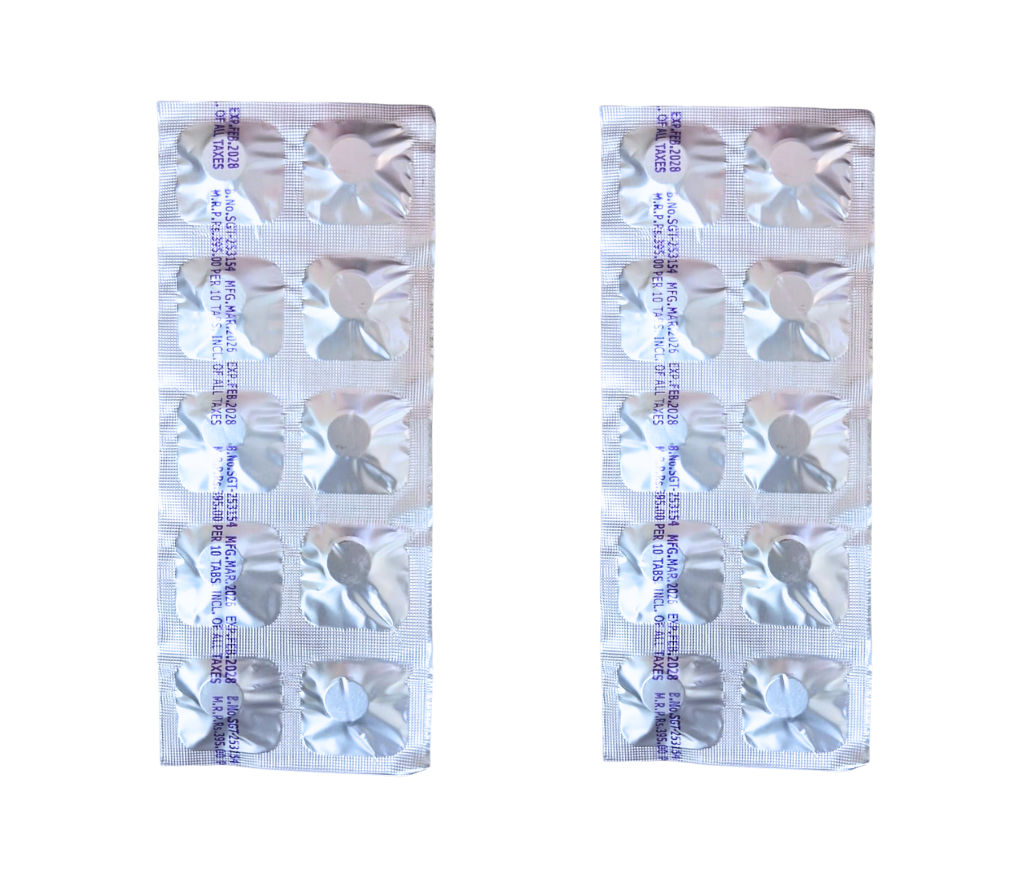
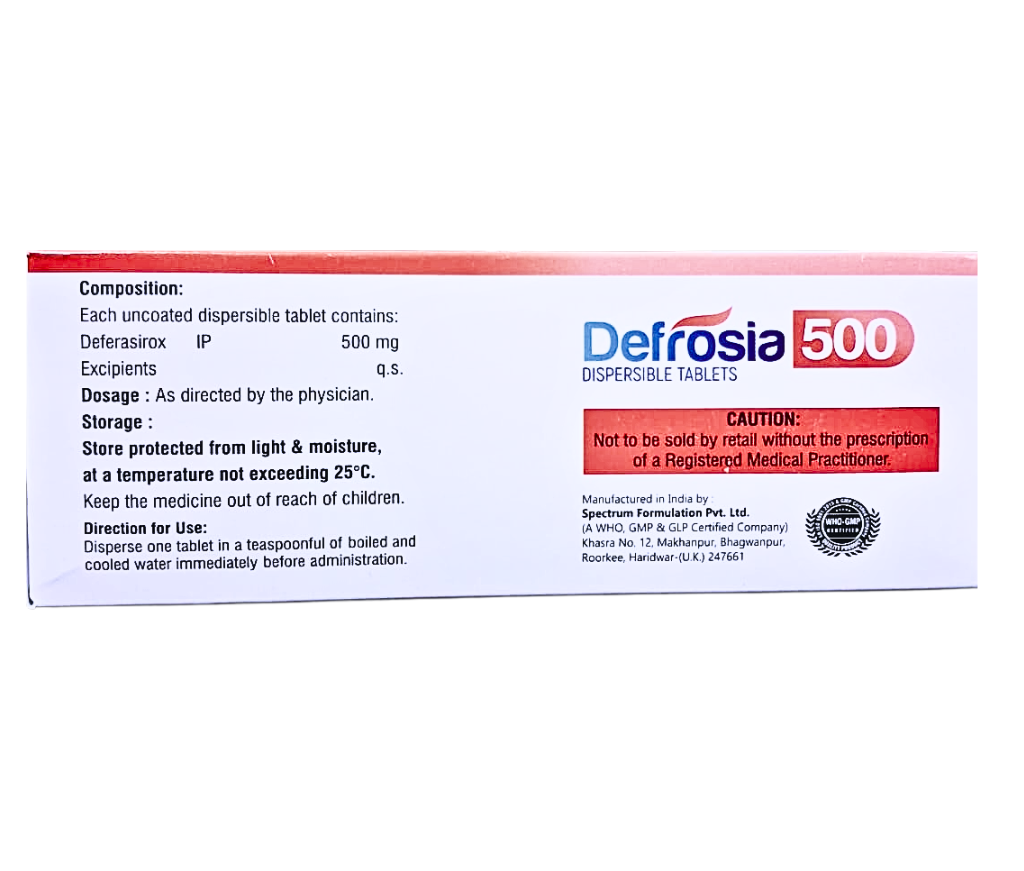
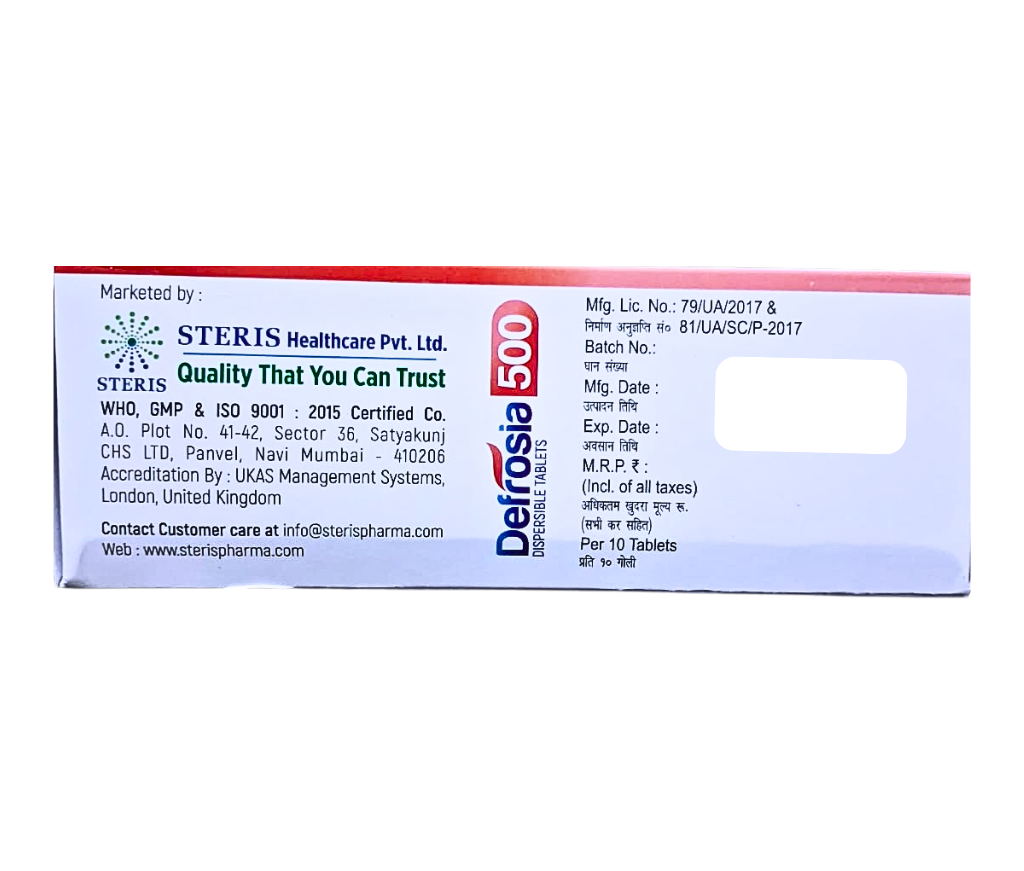
DEFROSIA 500
 Item requires a valid prescription
Manufactured By Steris Healthcare Pvt Ltd
Composition Deferasirox Dispersable Tablets 500 mg
Rs 276.50
MRP Rs 395.00
(30% OFF)
Includes all taxes
Package SIZE
( For 10 Tablets )

100% Authentic
Products

Free
Shipping*

Products
Return Policy
Description:
DEFROSIA 500 is a prescription iron chelator from Steris Healthcare Pvt. Ltd. Each tablet contains Deferasirox 500 mg in a dispersible form. It is used when repeated blood transfusions or certain blood disorders leave the body with more iron than it can safely handle. Doctors in India commonly prescribe deferasirox 500 for chronic iron overload in conditions such as beta-thalassemia major and other transfusion-dependent anaemias, and in some non-transfusion-dependent thalassemia syndromes. The tablet is dispersed in liquid and drunk as a suspension, which makes dosing easier for children and for adults who find swallowing large tablets difficult.
Product Information
|
Product details |
Information |
|---|---|
|
Brand name |
DEFROSIA 500 |
|
Generic name |
Deferasirox |
|
Composition |
Deferasirox Dispersible Tablets 500 mg |
|
Strength |
500 mg |
|
Product form |
Dispersible tablet |
|
Pack size |
10 tablets |
|
Manufacturer/Marketer |
Steris Healthcare Pvt. Ltd. |
|
Therapeutic category |
Iron chelator |
|
Target market |
India |
Why Is It Important?
The body has no natural way to remove extra iron. Each unit of transfused blood adds a significant amount of iron, and over months and years this builds up in the liver, heart, and endocrine glands such as the pancreas and thyroid. Untreated iron overload can lead to liver damage, heart rhythm problems, heart failure, diabetes, delayed growth, and delayed puberty. For people who depend on regular transfusions to stay well, controlling iron is as essential as the transfusions themselves.
Deferasirox is an oral chelator. It binds free iron in the body and helps remove it through the stool, so it can be taken at home instead of through the long infusions that older chelation therapies require. Many families managing thalassemia in India value this convenience. Regular chelation, together with monitoring of serum ferritin, helps protect organs over the long term. DEFROSIA 500 should always be used under the supervision of a haematologist or treating physician, because the dose is tailored to body weight, transfusion history, and iron levels.
Key Benefits
- Oral, once-daily therapy: One daily dose can replace long injection or infusion sessions, which supports consistent treatment.
- Reduces body iron load: Helps lower serum ferritin and liver iron over time when taken regularly as prescribed.
- Helps protect vital organs: Controlling iron may reduce the risk of damage to the liver, heart, and endocrine glands.
- Dispersible tablet: The tablet is mixed into water or juice, which suits patients who cannot swallow tablets whole, including children.
- Flexible for different needs: Used for transfusion-related iron overload and, in selected patients, iron overload in non-transfusion-dependent thalassemia.
- Easier to fit into daily life: Home-based dosing reduces hospital visits for chelation alone.
How to Take It
Take DEFROSIA 500 exactly as your doctor prescribes, usually once daily at the same time each day. Drop the tablet into water, apple juice, or orange juice and stir until a fine suspension forms. Drink it immediately, then rinse the glass with a little more liquid and drink that too, so no medicine is left behind. Do not chew the tablet or swallow it whole. Do not mix it with milk or carbonated drinks. Follow your doctor’s advice on whether to take it on an empty stomach or with a light meal.
Precautions
- Kidney function: Deferasirox can affect the kidneys. Serum creatinine or eGFR must be checked before starting and monitored regularly. Do not use it if you have severely reduced kidney function.
- Liver function: Liver tests should be done at regular intervals. Tell your doctor if you have existing liver disease.
- Stomach and gut bleeding: Report black stools, vomiting blood, or severe stomach pain right away, especially if you are older or have a low platelet count.
- Blood counts: Regular monitoring is needed. Do not use it in people with very low platelet counts or certain advanced blood disorders unless the doctor specifically advises it.
- Hearing and eyes: Hearing and vision checks are recommended at the start and periodically, as rare changes have been reported.
- Pregnancy and breastfeeding: Inform your doctor if you are pregnant, planning pregnancy, or breastfeeding. Deferasirox may reduce the effect of hormonal contraceptives, so discuss additional contraception.
- Interactions: Avoid aluminium-containing antacids and other iron chelators unless prescribed. Tell your doctor about all medicines you take, including NSAIDs, steroids, and blood thinners, as these can raise the risk of stomach bleeding.
- Do not change the dose yourself: The dose depends on body weight and ferritin levels and is adjusted by your doctor.
Side Effects
Common side effects:
- Diarrhoea, nausea, or vomiting
- Abdominal pain or discomfort
- Skin rash
- Raised serum creatinine (a kidney function marker)
- Raised liver enzymes
- Headache
Frequently Asked Questions
1. What is Deferasirox 500 mg used for?
Deferasirox 500 mg is an oral iron chelator used to treat chronic iron overload. It is prescribed mainly for people who receive frequent blood transfusions, such as those with beta-thalassemia major, and for selected patients with non-transfusion-dependent thalassemia syndromes whose iron levels are raised.
2. How does Deferasirox 500 mg work?
Deferasirox binds free iron in the body to form a stable complex. The body then removes this complex mainly through the stool. Over time, regular use lowers the total iron load and helps reduce serum ferritin levels.
3. Can Deferasirox 500 mg reduce excess iron in the body?
Yes. When taken regularly at the dose set by your doctor, it can lower serum ferritin and liver iron concentration. The pace of improvement depends on your dose, how much iron you receive through transfusions, and how consistently you take the medicine. Your doctor will track progress with periodic blood tests.
4. Why is Deferasirox prescribed for iron overload?
The body cannot naturally excrete extra iron, so it accumulates in the liver, heart, and endocrine glands. Left untreated, this can cause liver damage, heart problems, diabetes, and delayed growth or puberty. Deferasirox is prescribed because it is taken by mouth once daily, which is easier to continue long term than infusion-based chelation.
5. What are the side effects of Deferasirox 500 mg?
Common side effects may include:
- Diarrhoea, nausea, or vomiting
- Abdominal pain
- Skin rash
- Headache
- Raised serum creatinine or liver enzymes on blood tests
Seek medical help immediately if you notice reduced urine output, swelling, yellowing of the skin or eyes, black or bloody stools, severe skin reactions, or changes in hearing or vision.
6. How should Deferasirox 500 mg be taken?
Take it once daily at the same time each day, as prescribed. The dispersible tablet should be stirred into water, apple juice, or orange juice until a fine suspension forms, and then drunk right away. Rinse the glass with a little more liquid and drink that as well so the full dose is taken. Do not chew or swallow the tablet whole, and do not mix it with milk or carbonated drinks. Follow your doctor’s instructions on taking it on an empty stomach or with a light meal.
7. Is Deferasirox 500 mg used for thalassemia?
Yes. It is widely used in thalassemia care. In transfusion-dependent thalassemia, such as beta-thalassemia major, it removes the iron that builds up from repeated transfusions. In some non-transfusion-dependent thalassemia patients, doctors also use it when iron levels become high.
8. Can Deferasirox help remove excess iron from the body?
Yes. That is its main purpose. It binds excess iron and helps eliminate it through the gut. It does not replace transfusions or treat the underlying blood disorder, but it helps prevent iron-related organ damage.
9. What precautions should I take before using Deferasirox?
- Get kidney function (serum creatinine or eGFR), liver function, and blood counts checked before starting and at regular intervals.
- Tell your doctor if you have kidney disease, liver disease, low platelet counts, or a history of stomach ulcers or bleeding.
- Avoid aluminium-containing antacids and other iron chelators unless prescribed.
- Inform your doctor about medicines like NSAIDs, steroids, or blood thinners, which can raise the risk of stomach bleeding.
- Tell your doctor if you are pregnant, planning pregnancy, or breastfeeding. Deferasirox may reduce the effect of hormonal contraceptives.
- Have hearing and eye checks at the start and periodically.
- Never change the dose without your doctor’s advice.
10. Is Deferasirox 500 mg a prescription medicine?
Yes. It is a Schedule H prescription drug in India and must be used only under the supervision of a qualified doctor, usually a haematologist, because the dose depends on body weight and iron levels, and regular monitoring is essential.
11. Where can I buy Deferasirox 500 mg in India?
You can buy it with a valid prescription from licensed pharmacies, hospital pharmacies, or authorised online platforms. Always check the batch number, expiry date, and seal on delivery, and buy only from trusted sources.
12. How long does Deferasirox treatment take?
Treatment is usually long term. Iron overload develops over years of transfusions, and chelation continues for as long as transfusions continue or iron levels stay high. Your doctor will review serum ferritin and other tests regularly and adjust the dose, pause, or stop treatment when your iron levels reach the target range. Do not stop on your own, even if you feel well.