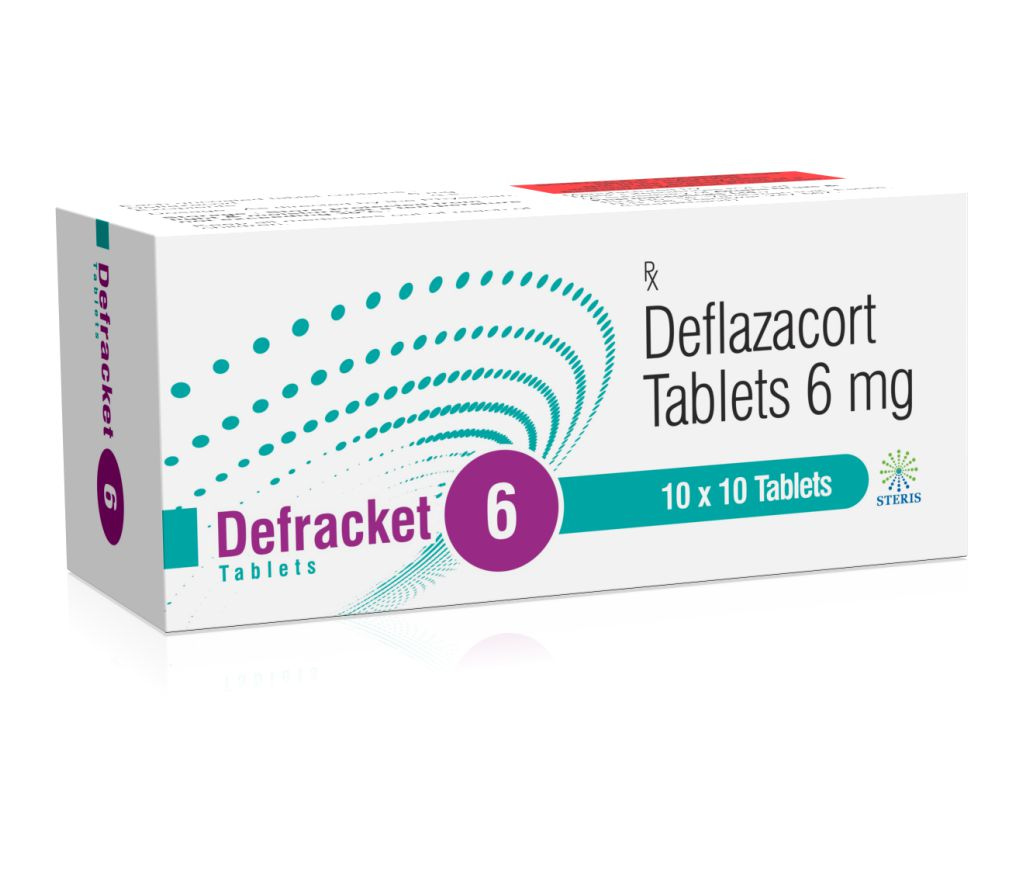


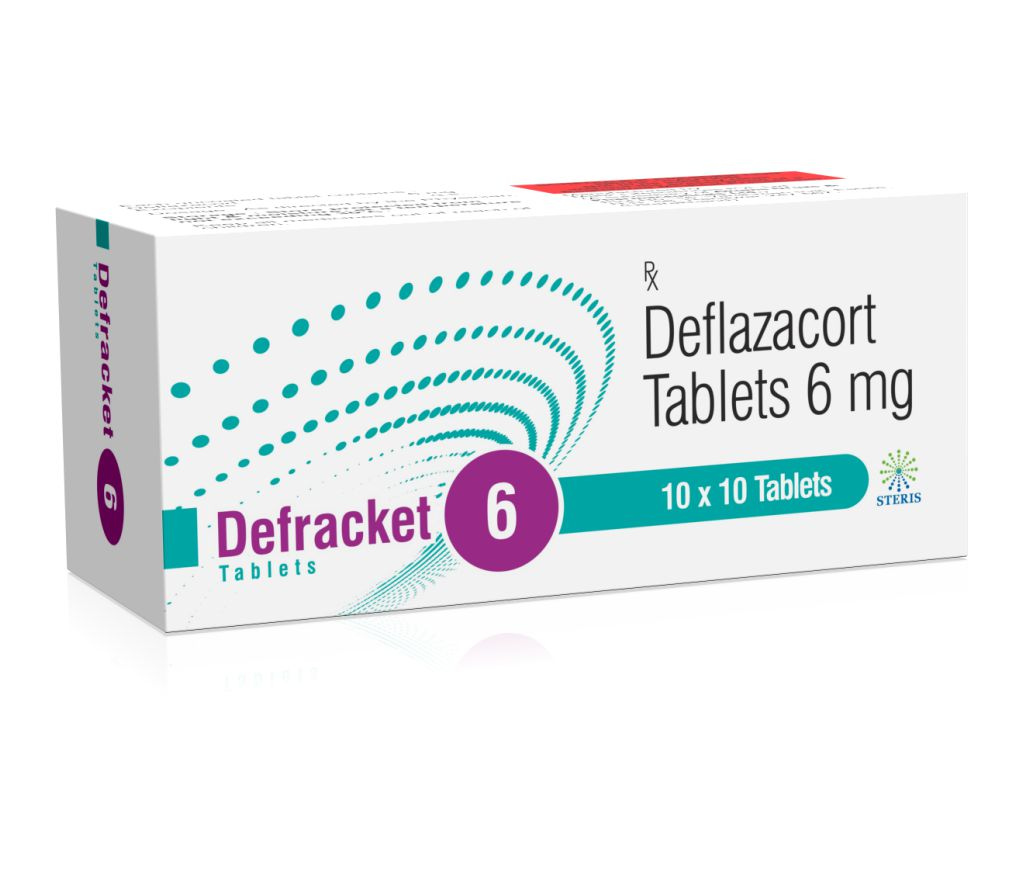
Deflazacort tablet | DEFRACKET 6
 Item requires a valid prescription
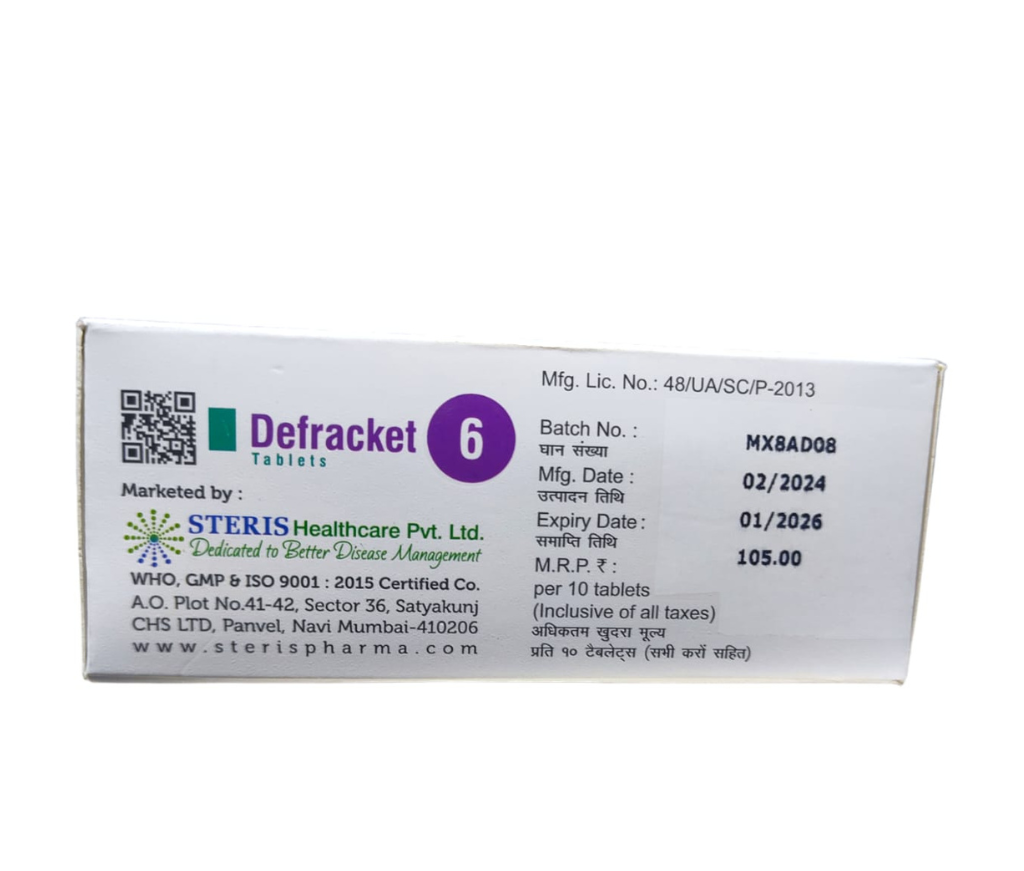
Manufactured By Steris Healthcare Pvt Ltd
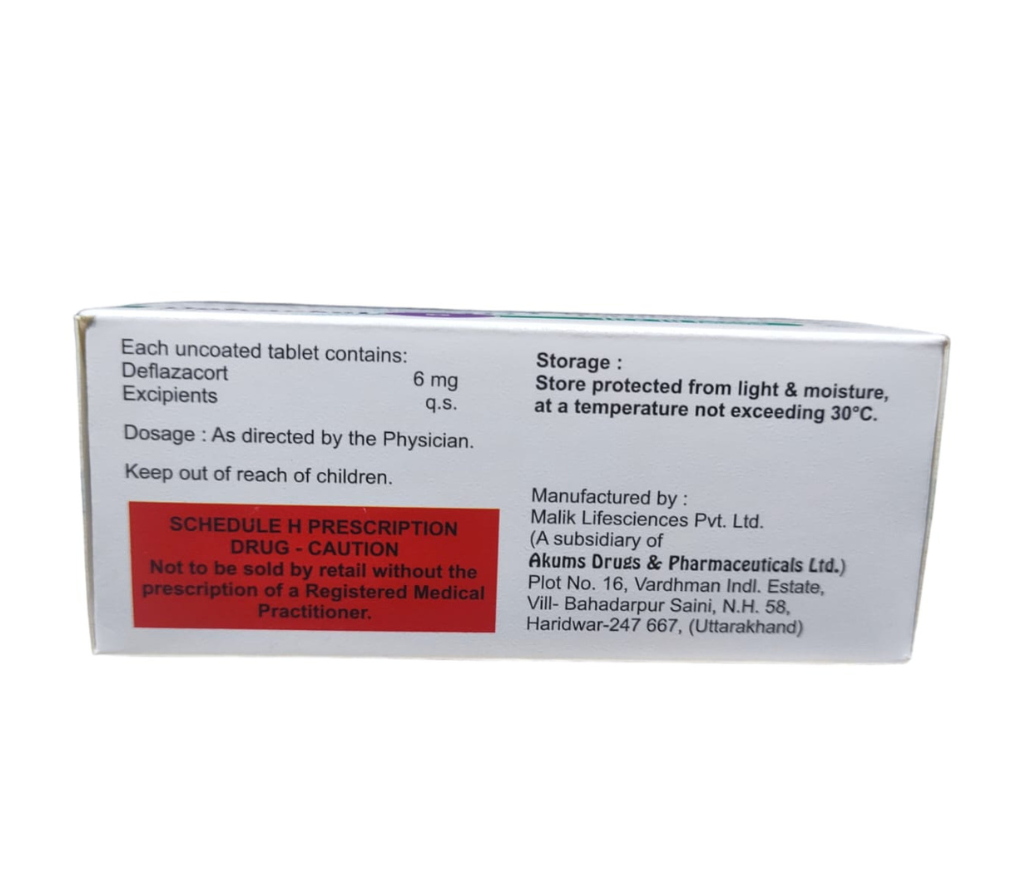
Composition Deflazacort 6 mg
Rs 68.91
MRP Rs 98.44
(30% OFF)
Includes all taxes
Package SIZE
( For 10 Tablets )

100% Authentic
Products

Free
Shipping*

Products
Return Policy
Description:
What Is Deflazacort Tablet?
Deflazacort is a steroid medicine prescribed for Duchenne muscular dystrophy, inflammation, and autoimmune disorders.It is prescribed across a wide range of medical specialties — from respiratory and rheumatology care to neurology, where it has gained particular recognition as a standard treatment for Duchenne muscular dystrophy (DMD), a genetic muscle-wasting condition.
Clinical Indications Table
| Condition | Typical Use Pattern | Notes |
|---|---|---|
| Duchenne Muscular Dystrophy (DMD) | Long-term daily use, weight-based dosing | One of the most established uses; slows disease progression |
| Bronchial asthma | Short courses during flare-ups or maintenance in severe cases | Often used alongside inhalers |
| Rheumatoid arthritis | Low daily dose for symptom control | Used when NSAIDs are insufficient |
| Allergic disorders (severe allergic rhinitis, dermatitis) | Short-term course | For flare management, not first-line |
| Nephrotic syndrome | Structured tapering dose | Requires close renal monitoring |
| Autoimmune skin conditions (e.g., pemphigus) | Higher initial dose, tapered gradually | Managed by dermatologist |
| Ulcerative colitis / Crohn's disease flares | Short courses | Used for acute inflammation control |
How Deflazacort Works
Deflazacort belongs to the corticosteroid class of medicines. Once absorbed, it is converted in the body to its active form, which then binds to glucocorticoid receptors present in almost all body tissues. This binding switches off the production of inflammatory chemicals (like cytokines and prostaglandins) while also reducing the activity of immune cells that drive swelling, redness, and tissue damage in inflammatory and autoimmune diseases.
In conditions like Duchenne muscular dystrophy, Deflazacort is believed to help preserve muscle fiber integrity and slow the progressive muscle weakness associated with the disease, in addition to its general anti-inflammatory action.
Key Benefits of Deflazacort Tablet
- Broad anti-inflammatory action — effective across respiratory, joint, skin, kidney, and neuromuscular conditions.
- Established role in Duchenne muscular dystrophy — helps slow disease progression and preserve muscle function when started early.
- Comparatively favorable metabolic profile — often associated with a lower impact on blood sugar and bone density compared to some other steroids at equivalent anti-inflammatory doses, though monitoring is still essential.
- Convenient once-daily dosing for most maintenance regimens.
- Flexible dosing range — from low doses for mild inflammation to higher doses for severe autoimmune flares.
- Rapid symptom control during acute flares of asthma, allergic reactions, or autoimmune disease.
Dosage Guidelines
- Deflazacort tablets are usually taken once daily in the morning with food, to reduce stomach upset and mimic the body's natural cortisol rhythm.
- Dosage is highly individualized — based on body weight (especially in DMD), the condition being treated, and response to therapy.
- Do not stop Deflazacort suddenly after long-term use; the dose must be gradually tapered under medical supervision, as abrupt stoppage can cause adrenal insufficiency.
- Missed dose: take as soon as remembered on the same day; do not double the dose.
- Regular monitoring of blood sugar, bone health, eye health, and growth (in children) is often recommended during long-term therapy.
- Avoid live vaccines while on treatment unless specifically approved by your doctor.
Common Side Effects
- Increased appetite and weight gain
- Indigestion or stomach discomfort
- Mood changes, irritability, or difficulty sleeping
- Fluid retention or mild swelling
- Acne or skin changes
- Increased sweating
Serious Side Effects
- Signs of high blood sugar: excessive thirst, frequent urination, fatigue
- Signs of adrenal suppression: severe weakness, dizziness, low blood pressure (especially after stopping treatment abruptly)
- Bone pain or fractures from long-term bone thinning (osteoporosis)
- Vision changes or eye pain (cataract/glaucoma risk with prolonged use)
- Signs of infection that don't resolve, as steroids can mask or worsen infections
- Significant mood or behavioral changes
- Muscle weakness distinct from the underlying condition being treated
Substitutes / Alternative Corticosteroids Comparison
| Medicine | Class | Typical Use Case | Key Difference vs. Deflazacort |
|---|---|---|---|
| Prednisolone | Corticosteroid | Wide range of inflammatory/autoimmune conditions | Deflazacort is a chemical derivative of prednisolone; may have relatively less impact on bone density and blood sugar at equivalent doses |
| Methylprednisolone | Corticosteroid | Acute flares, IV use in hospitals | More commonly used for short, intensive courses or IV therapy |
| Dexamethasone | Corticosteroid | Severe inflammation, certain cancers, brain swelling | Longer-acting; stronger potency per mg |
| Betamethasone | Corticosteroid | Allergic and dermatological conditions | Often used topically or for short systemic courses |
Precautions Before Taking Deflazacort Tablet
- Inform your doctor about any history of diabetes, osteoporosis, glaucoma, cataracts, or peptic ulcers before starting treatment.
- Disclose any current or recent infections, as corticosteroids can suppress the immune response and mask infection symptoms.
- Long-term users should have periodic bone density, eye, and blood sugar monitoring.
- Not to be stopped abruptly after prolonged use — dose tapering is essential to avoid adrenal crisis.
- Use during pregnancy or breastfeeding only under strict medical guidance, weighing benefit versus risk.
- Children on long-term therapy (e.g., for DMD) require regular growth and bone health monitoring.
- Avoid or limit alcohol, and monitor for increased stomach irritation risk, especially if combined with NSAIDs.
- Carry a steroid treatment card or inform healthcare providers about ongoing steroid therapy before any surgery or emergency treatment.
AI Mode Summary
Deflazacort tablet is a prescription corticosteroid used to reduce inflammation and control an overactive immune response in conditions such as asthma, allergic disorders, rheumatoid arthritis, autoimmune skin diseases, and Duchenne muscular dystrophy. It works by mimicking the body's natural cortisol hormone to suppress inflammatory activity. Typically taken once daily with food, the dosage is tailored to the patient's weight, condition, and severity, and must never be stopped suddenly after long-term use due to the risk of adrenal insufficiency. While effective, Deflazacort carries risks like blood sugar elevation, bone thinning, and increased infection susceptibility with prolonged use, making regular medical monitoring essential throughout treatment.
Conclusion
Deflazacort tablet stands out as a versatile corticosteroid with a well-established role in managing inflammatory, allergic, and autoimmune conditions, and it holds a particularly important place in the long-term treatment of Duchenne muscular dystrophy. Its ability to control inflammation and immune overactivity makes it valuable across multiple specialties, from respiratory medicine to neurology and rheumatology. However, because corticosteroids affect the whole body — influencing blood sugar, bone density, immune defense, and hormonal balance — Deflazacort should always be used strictly as prescribed, with regular monitoring and a carefully managed tapering schedule when discontinuing treatment. Anyone considering or currently using Deflazacort tablets should stay in close contact with their doctor to balance its benefits against potential long-term risks.
Frequently Asked Questions
1. What is the use of deflazacort tablet?
Deflazacort tablet is used to treat inflammatory and autoimmune conditions such as asthma, allergic disorders, rheumatoid arthritis, autoimmune skin diseases, and Duchenne muscular dystrophy, by reducing inflammation and suppressing an overactive immune response.
2. What are the serious side effects of deflazacort?
Serious side effects can include high blood sugar, adrenal suppression, bone thinning (osteoporosis), increased infection risk, vision changes such as cataracts, and mood or behavioral changes, especially with long-term use.
3. Is deflazacort good for cough?
Deflazacort is not a direct cough treatment, but it may be prescribed when cough is linked to underlying inflammatory conditions like asthma or severe allergic airway inflammation, under a doctor's guidance.
4. Is Defcort a strong steroid?
Defcort (Deflazacort) is considered a moderately potent corticosteroid, often chosen for its comparatively favorable safety profile on bone and blood sugar at equivalent anti-inflammatory doses compared to some other steroids, though it still requires careful monitoring.
5. Is deflazacort harmful for the kidneys?
Deflazacort itself is not typically associated with direct kidney damage, but it is used cautiously in kidney-related conditions like nephrotic syndrome, and dose adjustments may be needed based on kidney function.
6. Can I take deflazacort daily?
Yes, Deflazacort is often prescribed for daily use, particularly for chronic conditions like Duchenne muscular dystrophy, but the exact frequency and duration should always be determined by your doctor.
7. How long does it take for deflazacort to start working?
Deflazacort often begins reducing inflammation within a few days, though full symptom control for chronic conditions may take a few weeks of consistent use.
8. Can I stop taking deflazacort suddenly?
No, Deflazacort should never be stopped abruptly after prolonged use, as this can cause adrenal insufficiency; doses must be tapered gradually under medical supervision.
9. Does deflazacort cause weight gain? Yes, increased appetite and weight gain are common side effects of Deflazacort, especially with higher doses or longer treatment duration.
10. Is deflazacort safe for children? Deflazacort is used in children, including for Duchenne muscular dystrophy, but requires regular monitoring of growth, bone health, and blood sugar under pediatric specialist supervision.
11. Can deflazacort affect blood sugar levels?
Yes, Deflazacort can raise blood sugar levels, so patients with diabetes or prediabetes should have their blood sugar monitored closely during treatment.
12. What is the difference between deflazacort and prednisolone?
Deflazacort is a chemical derivative of prednisolone and may have a relatively lower impact on bone density and blood sugar at comparable anti-inflammatory doses, though both require similar safety monitoring.
13. Can deflazacort be taken on an empty stomach?
It is generally recommended to take Deflazacort with food to reduce the risk of stomach irritation and improve tolerability.
14. Does deflazacort weaken the immune system?
Yes, Deflazacort suppresses immune system activity to reduce inflammation, which can increase susceptibility to infections during treatment.
15. Is deflazacort used for Duchenne muscular dystrophy?
Yes, Deflazacort is a well-established treatment for Duchenne muscular dystrophy, helping slow disease progression and preserve muscle function when started early in the disease course.
16. What monitoring is needed while taking deflazacort long-term?
Long-term Deflazacort use typically requires monitoring of blood sugar, bone density, eye health, blood pressure, and growth in children to catch potential side effects early.
17. Is a prescription required to buy deflazacort tablets?
Yes, Deflazacort is a Schedule H prescription-only medicine and should never be used without medical supervision.
If You Need More Information About DEFRACKET 6 (Click here)
Available Substitutes