


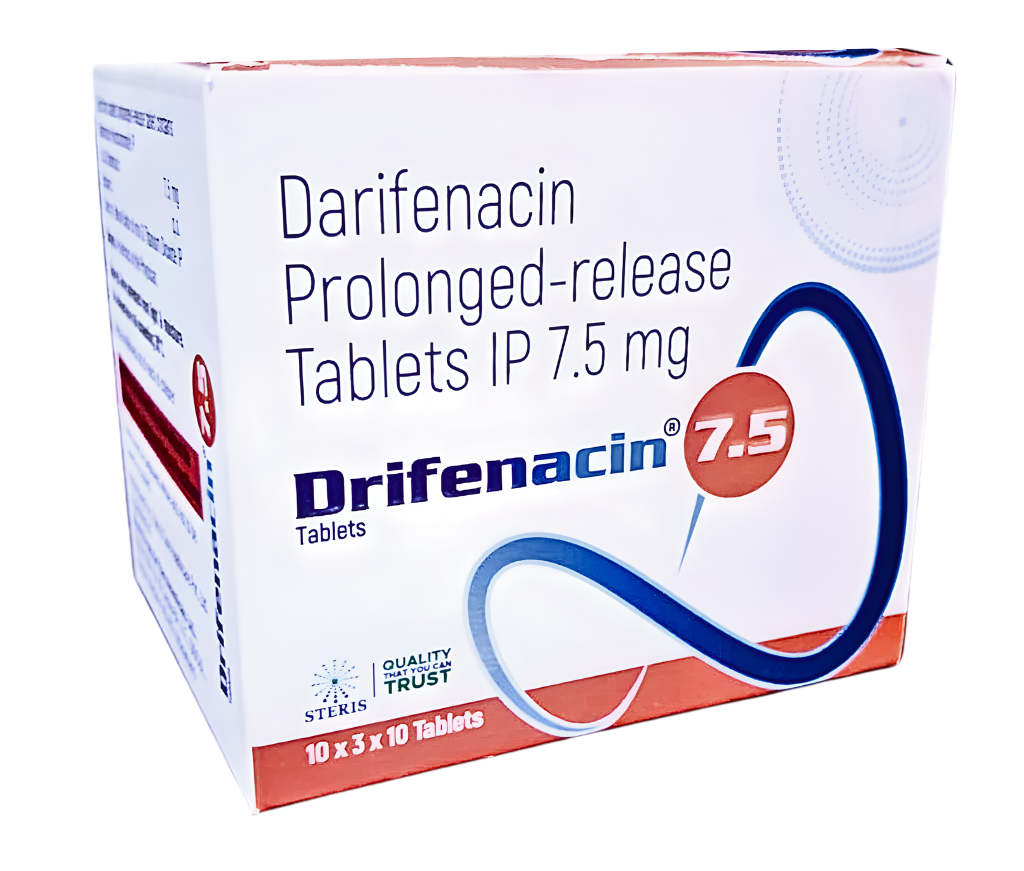
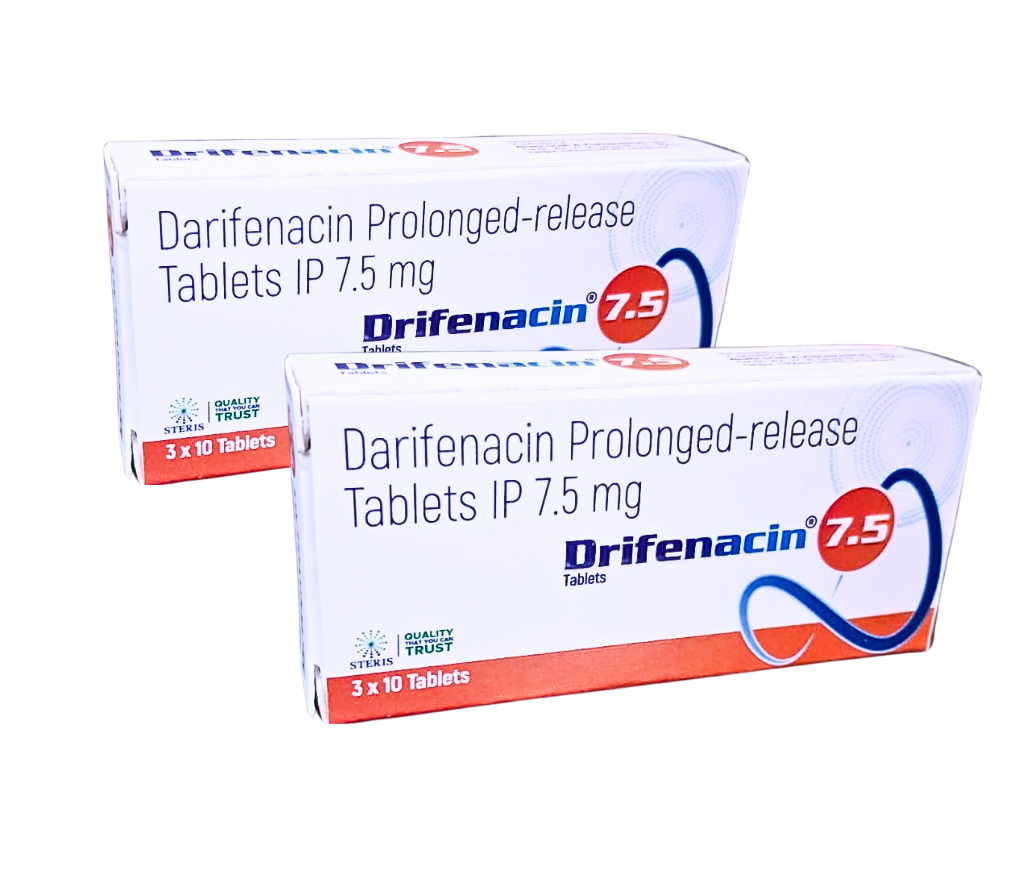
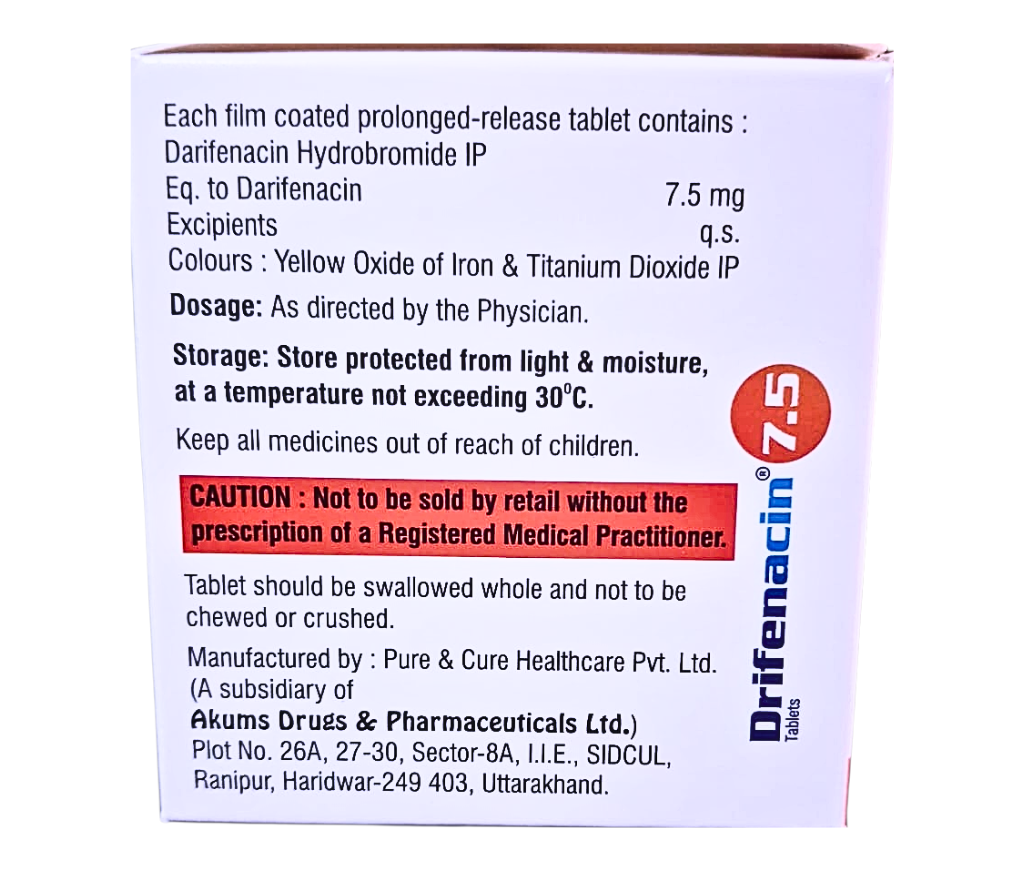
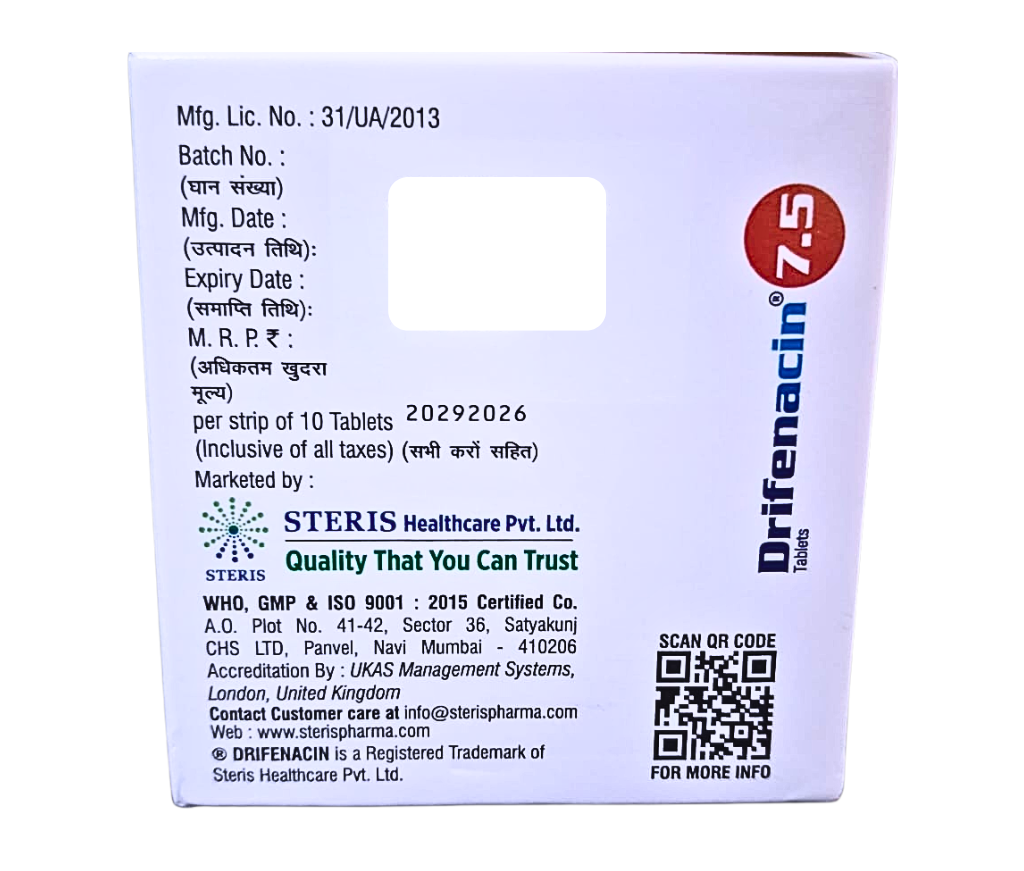
Darifenacin 7.5 mg | DRIFENACIN 7.5
 Item requires a valid prescription
Manufactured By Steris Healthcare Pvt Ltd
Composition Darifenacin Prolonged-Release Tablets IP 7.5 mg
Rs 157.26
MRP Rs 224.66
(30% OFF)
Includes all taxes
Package SIZE
( For 10 Tabs )

100% Authentic
Products

Free
Shipping*

Products
Return Policy
Description:
Darifenacin Prolonged-Release 7.5mg is a selective muscarinic M3 receptor antagonist, distinguishing it from older, less selective anticholinergic medications historically used for bladder control. This receptor selectivity is clinically significant, as it allows darifenacin to target the specific muscarinic receptor subtype most responsible for bladder muscle contraction, while minimizing action on other muscarinic receptors found throughout the body.
Under the brand name Drifenacin 7.5, manufactured by Steris Healthcare, this prolonged-release formulation is prescribed by urologists, gynecologists, and physicians for patients experiencing the disruptive symptoms of overactive bladder, offering steady, once-daily symptom control.
Product Information
| Attribute | Detail |
|---|---|
| Brand Name | Drifenacin 7.5 |
| Composition | Darifenacin Prolonged-Release Tablets IP 7.5mg |
| Manufacturer/Marketer | Steris Healthcare Pvt. Ltd. |
| Product Form | Tablet (Prolonged Release) |
| Pack Size | 10 Tablets |
| Target Market | India |
| Drug Category | Antimuscarinic / Anticholinergic (Selective M3 Receptor Antagonist) |
| Prescription Status | Schedule H — Prescription Required |
Why It's Important
Overactive bladder is a remarkably common but often under-discussed condition, affecting a significant proportion of adults — particularly women and older individuals — yet many patients hesitate to seek treatment due to embarrassment or the mistaken belief that frequent urination and urgency are simply an inevitable part of aging. Left unmanaged, overactive bladder can severely disrupt daily life, from constant anxiety about finding a bathroom to sleep disruption from nocturia, and can significantly affect confidence, social participation, and overall quality of life.
Darifenacin's clinical importance lies in its selective mechanism of action. Older-generation anticholinergic bladder medications often acted broadly across multiple muscarinic receptor subtypes throughout the body, which frequently led to bothersome side effects such as pronounced dry mouth, constipation, and, notably, central nervous system effects like confusion or cognitive impairment — particularly concerning in elderly patients who represent a large proportion of the overactive bladder patient population. By selectively targeting M3 receptors, which are predominantly responsible for bladder detrusor muscle contraction, darifenacin offers effective symptom relief with a comparatively more favorable tolerability profile, particularly regarding central nervous system effects.
The prolonged-release formulation used in Drifenacin 7.5 further enhances this clinical value, providing smooth, sustained drug delivery over 24 hours that supports consistent bladder symptom control with simple, once-daily dosing — an important factor in long-term treatment adherence for a chronic, quality-of-life-affecting condition like overactive bladder.
Key Benefits
What Are the Benefits of Drifenacin 7.5?
Darifenacin Prolonged-Release 7.5mg, as formulated in Drifenacin 7.5, offers several clinically meaningful advantages:
- Selective M3 receptor targeting: By selectively acting on the muscarinic receptor subtype most responsible for bladder contraction, darifenacin offers effective symptom relief with reduced action on other body systems compared to non-selective anticholinergics.
- Effective reduction in urinary urgency and frequency: Clinical use has demonstrated meaningful improvement in the core overactive bladder symptoms of urgency, frequency, and urge incontinence episodes.
- Comparatively favorable central nervous system tolerability: Due to its receptor selectivity and limited ability to cross the blood-brain barrier, darifenacin is associated with a lower incidence of cognitive side effects compared to older anticholinergic bladder medications — a particularly important consideration for elderly patients.
- Improved bladder storage capacity: By relaxing the detrusor muscle, darifenacin helps increase the bladder's functional capacity, allowing longer intervals between urination.
- Smooth, sustained symptom control: The prolonged-release formulation provides consistent 24-hour drug levels, supporting stable symptom management throughout the day and night.
- Convenient once-daily dosing: Simplifies long-term treatment for patients managing a chronic condition, supporting better adherence over time.
- Quality-of-life improvement: Effective bladder symptom control can meaningfully improve confidence, sleep quality, and social participation for patients previously restricted by urgency and frequency concerns.
- Trusted manufacturing standards: Drifenacin 7.5 is manufactured by Steris Healthcare, a WHO-GMP and ISO 9001:2018 certified pharmaceutical company, ensuring consistent potency and reliable prolonged-release performance across every batch.
Side Effects
Common side effects associated with Darifenacin Prolonged-Release include:
- Dry mouth, the most commonly reported side effect
- Constipation
- Headache
- Dry eyes
- Dyspepsia (indigestion)
- Abdominal pain or discomfort
- Nausea
- Urinary tract infection, occasionally reported
Most of these effects are related to darifenacin's anticholinergic action and tend to be dose-related, often manageable with simple measures such as adequate fluid intake and dietary fiber for constipation, or sugar-free lozenges for dry mouth.
Precautions & Warnings
Before starting Drifenacin 7.5, patients and prescribers should consider the following precautions:
- Urinary Retention: Should be used with caution in patients with significant bladder outlet obstruction, given the risk of worsening urinary retention.
- Gastrointestinal Conditions: Should be avoided or used with caution in patients with severe constipation, decreased gastrointestinal motility, or a history of bowel obstruction.
- Narrow-Angle Glaucoma: Contraindicated in patients with uncontrolled narrow-angle glaucoma, given the anticholinergic effect on intraocular pressure.
- Myasthenia Gravis: Should be used with caution in patients with myasthenia gravis, a condition that can be worsened by anticholinergic medications.
- Hepatic Impairment: Dose adjustment or avoidance may be necessary depending on the severity of liver dysfunction.
- Elderly Patients: While generally well tolerated, elderly patients should still be monitored for anticholinergic side effects, particularly constipation and dry mouth.
- Heat Exposure: Anticholinergic medications like darifenacin can reduce sweating, so caution is advised regarding heat exposure and the risk of heatstroke, particularly in hot climates.
- Pregnancy and Lactation: Should only be used if clearly necessary and under medical supervision, with careful risk-benefit assessment.
- Drug Interactions: Caution is required when combining with other anticholinergic medications (additive effects), and certain CYP3A4 or CYP2D6 interacting drugs, which can affect darifenacin blood levels.
Mechanism of Action
Drifenacin 7.5 exerts its therapeutic effects through selective muscarinic receptor antagonism:
- Selective M3 Muscarinic Receptor Antagonism: Darifenacin selectively blocks the M3 muscarinic acetylcholine receptor subtype, which is the predominant receptor mediating detrusor (bladder) smooth muscle contraction, while having comparatively less affinity for other muscarinic receptor subtypes (such as M1, M2, M4, and M5) found in other body tissues.
- Reduced Detrusor Muscle Overactivity: By blocking acetylcholine's action at M3 receptors in the bladder wall, darifenacin reduces involuntary detrusor muscle contractions, which are the primary driver of urgency, frequency, and urge incontinence symptoms in overactive bladder.
- Increased Bladder Capacity: This reduction in involuntary contractions allows the bladder to relax and fill to a greater volume before triggering the urge to urinate, effectively increasing functional bladder capacity.
- Reduced Systemic Anticholinergic Burden: Because of its receptor selectivity and comparatively limited ability to cross the blood-brain barrier, darifenacin's action is more focused on the bladder, reducing the incidence of central nervous system anticholinergic effects seen with less selective agents.
- Sustained Release Mechanism: The prolonged-release tablet formulation ensures steady darifenacin blood levels over 24 hours, supporting consistent M3 receptor blockade and stable bladder symptom control throughout the day.
This selective, sustained mechanism is what distinguishes darifenacin within the broader anticholinergic overactive bladder treatment class, offering effective symptom control with a generally more favorable tolerability profile, particularly for elderly patients.
Frequently Asked Questions
1. Where can I buy Darifenacin 7.5 mg online?
You can purchase Darifenacin 7.5 mg through licensed online pharmacies or authorized pharmaceutical suppliers. Verify the manufacturer, strength, batch number, expiry date, and packaging before purchasing.
2. What is the price of Darifenacin 7.5 mg?
The price of Darifenacin 7.5 mg may vary depending on the brand, manufacturer, pack size, seller, and applicable pharmacy charges. Check the current listed price before ordering.
3. Can I order Darifenacin 7.5 mg online?
Yes, Darifenacin 7.5 mg can be ordered online where legally available. As it is a prescription medicine, purchase it through a licensed pharmacy and provide a valid prescription when required.
4. Is Darifenacin 7.5 mg available from Steris Healthcare?
Availability depends on Steris Healthcare's current product range and stock status. Contact Steris Healthcare or an authorized distributor to confirm availability, strength, pack size, and ordering details.
5. What is Darifenacin 7.5 mg used for?
Darifenacin 7.5 mg is used to treat symptoms of overactive bladder, such as frequent urination, urinary urgency, and urge urinary incontinence. It works by relaxing the bladder muscle and helping it store urine more effectively.
6. What is the composition of Darifenacin 7.5 mg?
Darifenacin 7.5 mg contains Darifenacin 7.5 mg as the active pharmaceutical ingredient. The inactive ingredients may vary depending on the manufacturer and formulation.
7. Is a prescription required?
Yes, Darifenacin 7.5 mg is generally a prescription medicine and should be used under the supervision of a qualified healthcare professional.
8. How should Darifenacin 7.5 mg be taken?
Take Darifenacin 7.5 mg exactly as prescribed by your doctor. It is generally taken once daily and should be swallowed whole with water. Do not crush, chew, or split the tablet unless specifically instructed.
9. What should I know before buying Darifenacin 7.5 mg?
Before purchasing, verify the strength, manufacturer, batch number, expiry date, packaging, and storage instructions. Inform your doctor about urinary retention, stomach or intestinal problems, glaucoma, liver or kidney problems, and other medicines you take. Darifenacin may cause dry mouth, constipation, or blurred vision in some patients.
10. How can I order Darifenacin 7.5 mg online?
Order Darifenacin 7.5 mg through a licensed online pharmacy or authorized pharmaceutical supplier. Provide a valid prescription if required, select the prescribed strength and pack size, and verify the product and delivery details before completing your purchase.