


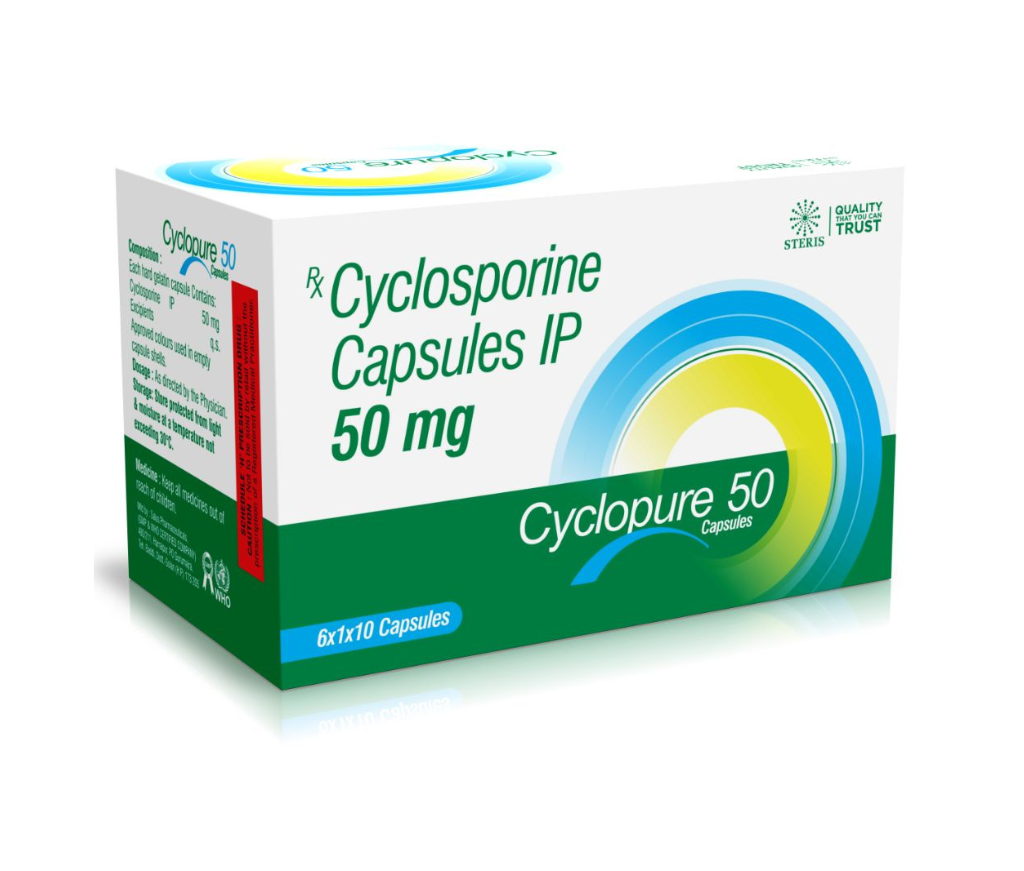



CYCLOPURE 50
 Item requires a valid prescription
Manufactured By Steris Healthcare Pvt Ltd
Composition cyclosporine 50 mg
Rs 404.60
MRP Rs 578.00
(30% OFF)
Includes all taxes
Package SIZE
( For 10 Capsule )

100% Authentic
Products

Free
Shipping*

Products
Return Policy
Description:
Cyclosporine 50 mg is an oral medicine containing 50 mg of cyclosporine, a potent immunosuppressive drug. It works by suppressing specific immune-system activity and is used in several important medical situations, particularly to help prevent rejection after certain organ transplants. Certain modified cyclosporine formulations are also approved for severe rheumatoid arthritis and severe plaque psoriasis when other treatments have not been sufficiently effective or appropriate.
Cyclosporine is a high-monitoring medicine rather than a routine over-the-counter product. The FDA-approved labeling warns that treatment should be managed by clinicians experienced in systemic immunosuppressive therapy, with appropriate laboratory and supportive resources available.
One important point for anyone researching cyclosporine 50 mg is that different formulations are not necessarily interchangeable. Modified and non-modified cyclosporine products have different absorption characteristics, so patients should use the exact formulation prescribed by their healthcare professional.
Cyclosporine 50 mg Uses
1. Preventing Organ Rejection After Transplantation
One of the principal cyclosporine 50 mg uses is immunosuppression following kidney, liver or heart transplantation.
After a transplant, the immune system can recognize the transplanted organ as foreign and attack it. Cyclosporine suppresses immune activity to help reduce the risk of organ rejection. Modified cyclosporine formulations are approved for prevention of rejection in kidney, liver and heart allogeneic transplants.
Cyclosporine is commonly used as part of a broader immunosuppressive regimen rather than as a standalone treatment.
2. Severe Rheumatoid Arthritis
Certain modified cyclosporine formulations are indicated for adults with severe, active rheumatoid arthritis that has not responded adequately to methotrexate. It may be used with methotrexate in selected patients.
Because cyclosporine can affect kidney function and blood pressure, careful patient selection and monitoring are important.
3. Severe Plaque Psoriasis
Modified cyclosporine is also approved for selected adults with severe, disabling, recalcitrant plaque psoriasis who have failed to respond adequately to at least one systemic treatment or cannot tolerate or receive other systemic therapies.
This is generally a specialist-managed treatment because prolonged or inappropriate immunosuppression can increase serious risks.
How Does Cyclosporine 50 mg Work?
Cyclosporine suppresses certain immune responses by interfering with T-cell activation.
In simplified terms:
Cyclosporine → inhibits calcineurin-related immune signaling → reduces T-cell activation → decreases excessive immune activity.
This immunosuppressive action is why cyclosporine can help prevent transplanted-organ rejection and control certain severe immune-mediated diseases.
However, suppressing the immune system also means the body may become more vulnerable to infections. The official labeling specifically warns about increased susceptibility to bacterial, viral, fungal and protozoal infections.
Key Benefits of Cyclosporine 50 mg
Helps protect transplanted organs
Cyclosporine is an established immunosuppressant used to help prevent rejection of transplanted kidneys, livers and hearts.
Provides an option for difficult autoimmune disease
For appropriately selected patients with severe rheumatoid arthritis or severe plaque psoriasis, modified cyclosporine can provide another systemic treatment option when other therapies have not worked adequately or are unsuitable.
Potent immune suppression
Its ability to substantially reduce T-cell-mediated immune activity makes cyclosporine clinically valuable in conditions where excessive immune activity needs to be controlled.
Oral administration
Cyclosporine is available in oral formulations, including capsules and oral solutions, allowing long-term treatment in appropriately selected patients.
Cyclosporine 50 mg Dosage
There is no universal cyclosporine 50 mg dosage that is appropriate for everyone.
The prescribed dose depends on:
- The medical condition
- Body weight
- Age
- Kidney function
- Liver function
- Other medicines
- Cyclosporine blood concentration
- Response to treatment
- Type of cyclosporine formulation
For transplant patients, dosing is individualized and may be adjusted according to clinical response and measured drug concentrations.
For rheumatoid arthritis and psoriasis, the dosage also differs from transplant dosing.
Therefore, a 50 mg capsule should not be interpreted as meaning that every patient should take one capsule once or twice daily.
Do not increase the dose because symptoms have not improved and do not reduce it because you feel well. Both decisions can be medically dangerous.
Why Cyclosporine Requires Regular Monitoring
Monitoring is one of the most important aspects of safe cyclosporine treatment.
The medicine can cause nephrotoxicity, meaning kidney injury or deterioration in kidney function. The official labeling recommends frequent monitoring of serum creatinine and emphasizes that renal function must be monitored during treatment.
Doctors may monitor:
- Serum creatinine
- Kidney function
- Blood pressure
- Liver function
- Cyclosporine blood concentrations
- Electrolytes
- Other laboratory parameters based on the patient's condition
The frequency of monitoring depends on the indication and individual circumstances.
Cyclosporine 50 mg Side Effects
Like all medicines, cyclosporine can cause side effects.
Potential side effects include:
- Headache
- Increased blood pressure
- Tremor
- Increased hair growth
- Gum enlargement
- Nausea
- Diarrhea
- Abdominal discomfort
- Increased potassium
- Reduced magnesium
- Kidney-function abnormalities
The specific adverse-effect profile can vary according to dose, treatment duration, formulation and the underlying condition.
Serious Side Effects of Cyclosporine
1. Kidney Damage
Nephrotoxicity is one of the most important risks associated with cyclosporine.
Cyclosporine can cause elevated creatinine and other changes in kidney function. Prolonged or inadequately monitored treatment may result in persistent renal dysfunction or structural kidney damage.
Seek medical advice if you notice:
- Significant changes in urination
- Swelling
- Unexplained fatigue
- Sudden weight changes
- Other symptoms your doctor has associated with kidney problems
Routine laboratory testing is particularly important because kidney injury may not always cause obvious symptoms in its early stages.
2. High Blood Pressure
Cyclosporine can cause systemic hypertension, and the risk can increase with dose and duration.
Patients taking cyclosporine may therefore need regular blood-pressure checks.
3. Serious Infections
Because cyclosporine suppresses immune function, it can increase susceptibility to infections, including bacterial, viral, fungal and protozoal infections. Some infections can be serious or life-threatening.
Contact your healthcare professional if you develop persistent fever, chills, severe cough, painful urination or other signs of infection.
4. Increased Risk of Certain Cancers
Long-term immunosuppression can increase the risk of certain malignancies, including lymphomas and skin cancers. The risk is associated with the degree and duration of immunosuppression.
Patients receiving cyclosporine should follow their clinician's recommendations for cancer and skin surveillance.
Cyclosporine 50 mg and Drug Interactions
Cyclosporine has many clinically important drug interactions.
Always tell your doctor and pharmacist about prescription medicines, over-the-counter products, vitamins and herbal supplements.
Particular caution may be required with medicines that:
- Affect kidney function
- Change cyclosporine metabolism
- Affect blood pressure
- Increase potassium
- Increase the risk of infection
- Affect cholesterol
- Interact with CYP3A enzymes or transport proteins
The official labeling specifically advises caution when cyclosporine is combined with other nephrotoxic medicines.
Do not add a new medicine or supplement without checking with your healthcare professional.
Can You Eat Grapefruit While Taking Cyclosporine?
Grapefruit and grapefruit juice can affect the metabolism of several medicines, including cyclosporine.
Because maintaining an appropriate cyclosporine concentration is important, discuss grapefruit consumption with your doctor or pharmacist and follow the instructions specific to your formulation.
Cyclosporine 50 mg and Alcohol
Alcohol may worsen certain adverse effects such as dizziness or gastrointestinal discomfort and can complicate management of some underlying conditions.
More importantly, people taking cyclosporine should follow their doctor's advice regarding alcohol because treatment often involves monitoring liver, kidney and cardiovascular health.
Cyclosporine During Pregnancy and Breastfeeding
If you are pregnant, planning pregnancy or breastfeeding, speak with your specialist before taking cyclosporine.
The decision requires balancing the potential risks of the medicine against the risks of uncontrolled transplant rejection or autoimmune disease.
Do not discontinue transplant immunosuppression on your own. Sudden changes to treatment can have serious consequences.
Can Cyclosporine 50 mg Be Stopped Suddenly?
Patients taking cyclosporine after transplantation should never stop treatment without their transplant team's instructions.
Stopping immunosuppression can expose a transplanted organ to rejection.
For autoimmune diseases, treatment discontinuation should also be planned with the prescribing physician.
The fact that you feel well does not necessarily mean that immunosuppression is no longer needed.
Modified vs. Non-Modified Cyclosporine: Why It Matters
A major purchasing and safety consideration is the distinction between modified and non-modified cyclosporine.
Modified cyclosporine formulations have altered absorption characteristics and are designed to provide more consistent bioavailability than conventional formulations.
Because switching formulations can change cyclosporine exposure, do not substitute one cyclosporine formulation for another without medical supervision.
This is particularly important for transplant recipients, where maintaining an appropriate drug concentration is critical.
When purchasing cyclosporine 50 mg, check the exact formulation prescribed on your prescription and packaging.
Buying Cyclosporine 50 mg: Transactional Buyer Guide
If your search intent is “buy cyclosporine 50 mg,” “cyclosporine 50 mg price,” “cyclosporine 50 mg capsules online,” or “cyclosporine 50 mg supplier,” safety and authenticity should come before price.
Before buying, verify:
1. Correct strength:
Confirm that the package states 50 mg.
2. Correct formulation:
Check whether your prescription specifies modified or non-modified cyclosporine.
3. Manufacturer:
Look for a clearly identified and legitimate manufacturer.
4. Batch and expiry information:
Avoid products with missing, damaged or suspicious labeling.
5. Packaging integrity:
Do not use medicine with evidence of tampering.
6. Licensed pharmacy:
Purchase prescription medicines through an appropriately licensed pharmacy.
7. Prescription and monitoring:
Cyclosporine should be used under professional supervision, particularly for transplant patients.
Why choosing the cheapest product can be risky
Cyclosporine has a relatively narrow therapeutic margin and clinically important interactions. An inappropriate formulation, strength or dosing schedule can have serious consequences.
For a transplant patient, continuity of the prescribed product and monitoring plan is particularly important.
E-E-A-T: What Patients Should Know Before Choosing Cyclosporine
High-quality medical content should not present cyclosporine 50 mg as an ordinary consumer product.
A trustworthy product page should demonstrate:
- Experience: Address practical issues such as monitoring, formulation changes and missed doses.
- Expertise: Explain why cyclosporine requires individualized dosing.
- Authoritativeness: Base medical claims on current regulatory and prescribing information.
- Trustworthiness: Clearly disclose serious risks rather than using exaggerated claims.
- Patient safety: Encourage appropriate medical supervision and laboratory monitoring.
Claims such as “completely safe,” “no side effects,” “permanent cure,” or “best immunosuppressant for everyone” are medically inappropriate.
Frequently Asked Questions
1. What is cyclosporine 50 mg used for?
Cyclosporine 50 mg is used as part of immunosuppressive treatment, particularly to help prevent rejection after kidney, liver or heart transplantation. Certain modified formulations are also indicated for severe rheumatoid arthritis and severe plaque psoriasis in selected patients.
2. What are the main benefits of cyclosporine 50 mg?
Its main benefit is suppressing immune activity when excessive immune responses need to be controlled, particularly preventing transplanted-organ rejection. It can also provide a treatment option for certain severe autoimmune conditions.
3. What are the side effects of cyclosporine 50 mg?
Potential side effects include kidney-function problems, high blood pressure, headache, tremor, gastrointestinal symptoms and increased hair growth. Serious risks include severe infections, kidney injury and increased malignancy risk.
4. Does cyclosporine 50 mg affect the kidneys?
Yes. Kidney toxicity is a major known risk of cyclosporine. Doctors monitor kidney function during treatment, and dosage may need adjustment depending on laboratory results and clinical circumstances.
5. Can I buy cyclosporine 50 mg online?
Cyclosporine is a prescription medicine. If online purchasing is permitted where you live, use an appropriately licensed pharmacy, verify the 50 mg strength and exact formulation, and follow your healthcare professional's prescription.
6. Is cyclosporine 50 mg safe for long-term use?
It can be used long term in selected patients, including some transplant recipients, but long-term treatment requires ongoing medical monitoring because risks such as kidney toxicity, hypertension, infection and malignancy can increase with immunosuppression.
7. Can I stop cyclosporine 50 mg when I feel better?
No. Especially after an organ transplant, stopping cyclosporine without medical advice can put the transplanted organ at risk of rejection.
8. Is modified cyclosporine the same as regular cyclosporine?
No. Modified and non-modified formulations have different absorption characteristics. Do not switch between them without instructions from your doctor or transplant team.
9. Does cyclosporine lower immunity?
Yes. Cyclosporine suppresses immune-system activity, which is why it can prevent organ rejection and control certain immune-mediated diseases. The same effect can increase susceptibility to infections.
10. What monitoring is needed with cyclosporine 50 mg?
Monitoring commonly includes kidney function and blood pressure, with additional laboratory testing and cyclosporine blood-level monitoring when clinically appropriate. The exact monitoring schedule depends on the indication and individual patient.
Conclusion
Cyclosporine 50 mg is a prescription immunosuppressant used primarily to help prevent rejection after kidney, liver and heart transplantation, while certain modified formulations are also used for severe rheumatoid arthritis and severe plaque psoriasis.
Its key benefit is powerful control of immune activity, but that benefit comes with important responsibilities. Kidney toxicity, high blood pressure, serious infections and increased malignancy risk are among the major safety concerns associated with cyclosporine. Regular medical and laboratory monitoring is therefore essential.