


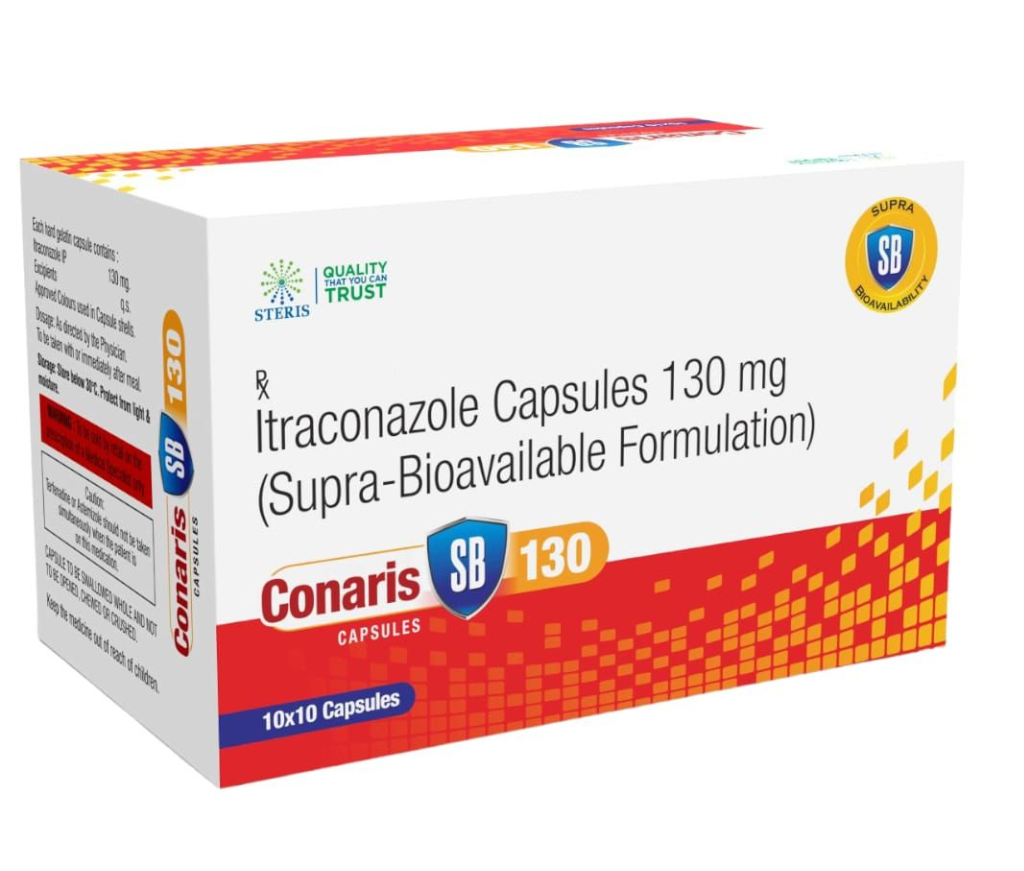
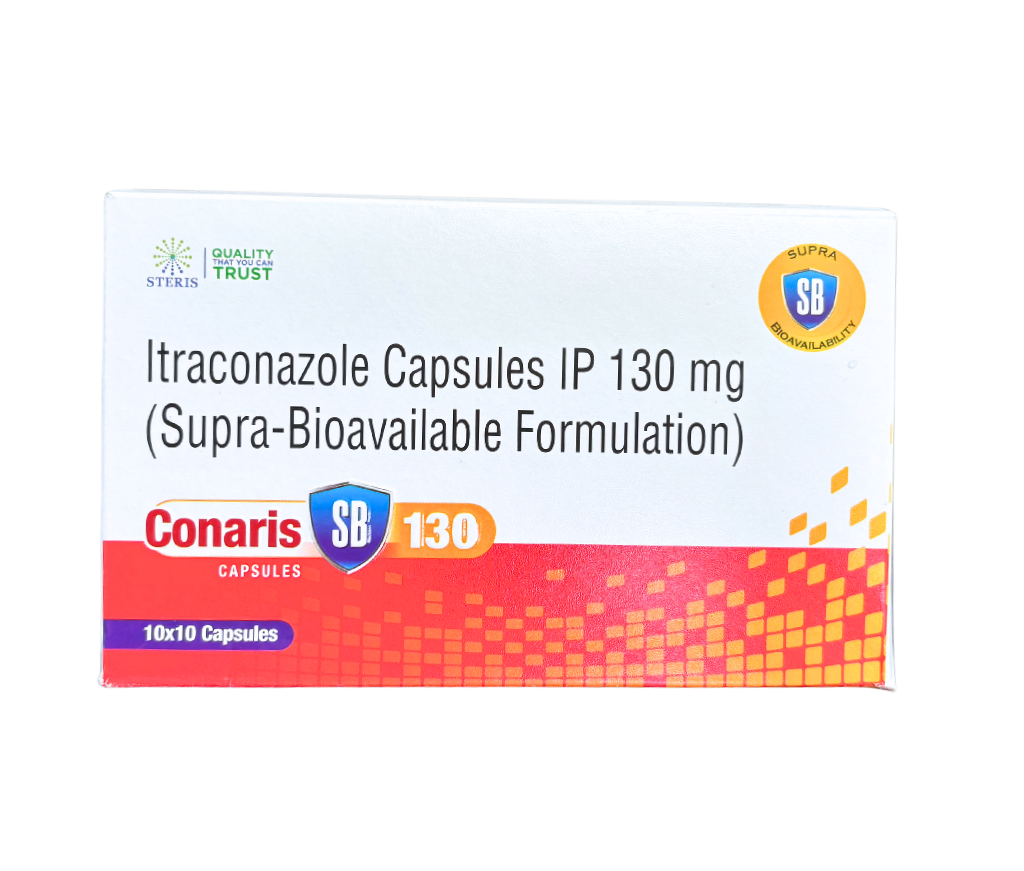
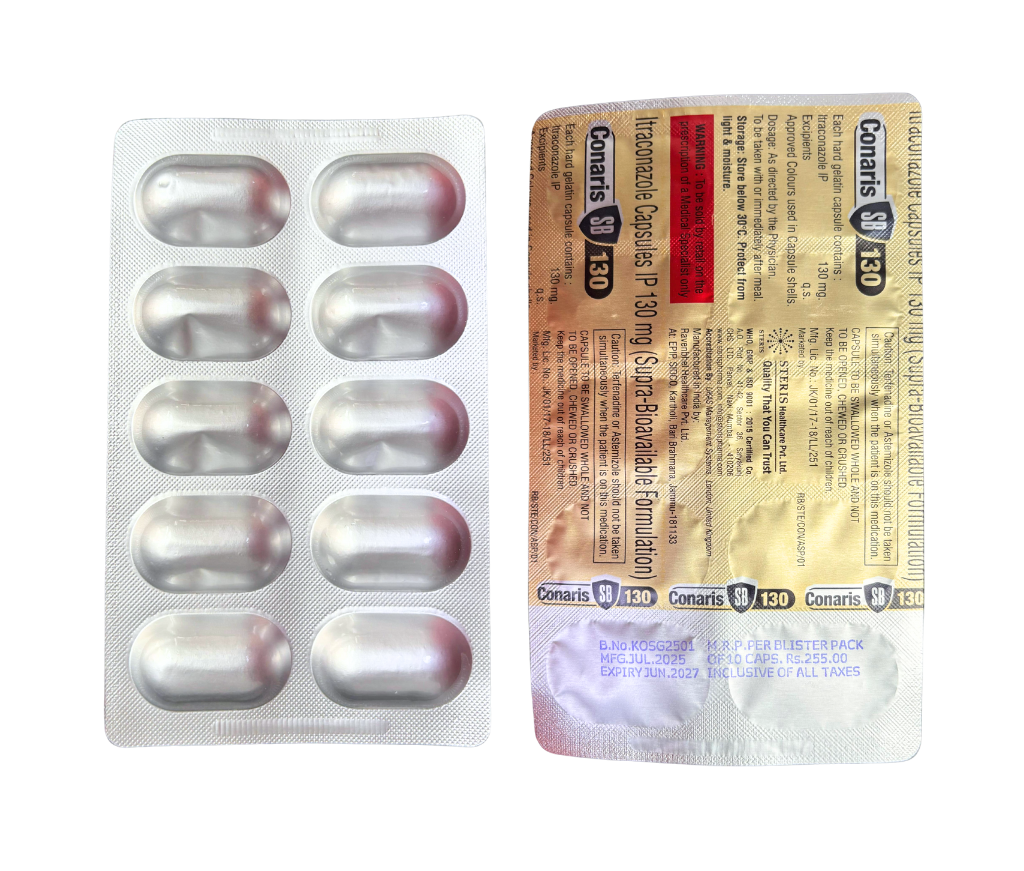
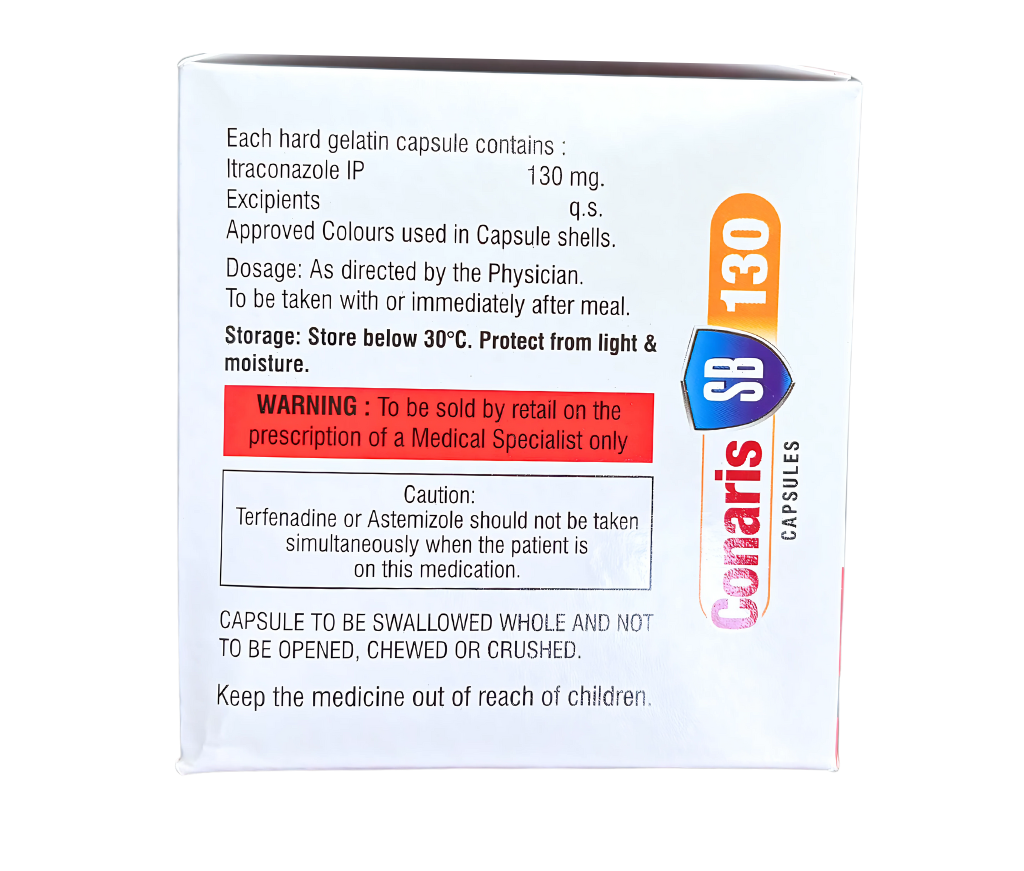
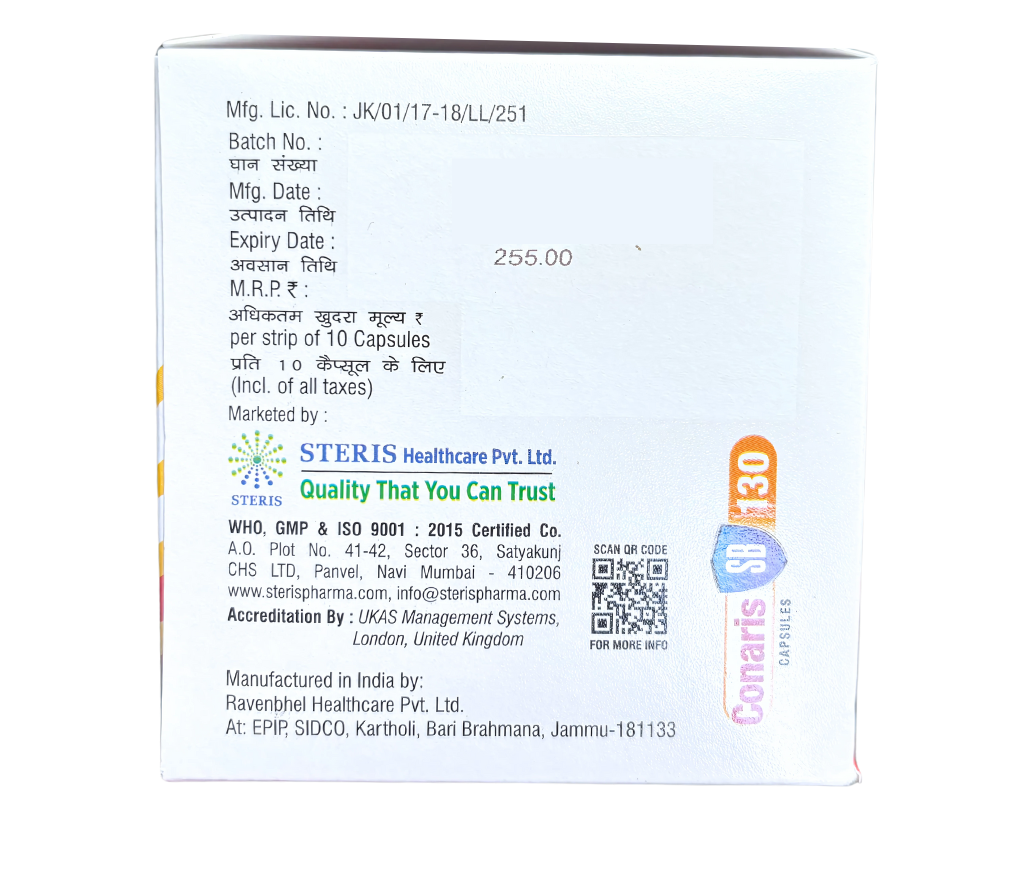
Itraconazole | CONARIS SB 130
 Item requires a valid prescription
Manufactured By Steris Healthcare Pvt Ltd
Composition Itraconazole 130 mg
Rs 231.89
MRP Rs 239.06
(3% OFF)
Includes all taxes
Package SIZE
( For 10 Capsule )

100% Authentic
Products

Free
Shipping*

Products
Return Policy
Description:
Itraconazole capsules are an oral antifungal medication belonging to the triazole class, prescribed to treat a wide range of fungal infections — including nail fungus (onychomycosis), skin fungal infections, oral and vaginal candidiasis, and more serious systemic fungal infections such as aspergillosis and histoplasmosis. Itraconazole works by disrupting the fungal cell membrane, stopping the fungus from growing and spreading. It is typically taken with food to improve absorption, and treatment duration varies from a few days to several months depending on the infection. Common side effects include nausea, headache, and stomach upset. Itraconazole requires liver function monitoring for extended use and has multiple drug interactions.
What Are Itraconazole Capsules?
Itraconazole is a broad-spectrum oral antifungal belonging to the triazole (azole) class of antifungal agents. Unlike topical antifungal creams that only treat surface-level infections, itraconazole capsules work systemically — traveling through the bloodstream to reach fungal infections in the nails, skin, mouth, lungs, and other internal tissues.
It is widely prescribed by dermatologists, physicians, and ENT specialists for infections that are resistant to topical treatment, recurrent, or affecting deeper tissue.
| Attribute | Details |
|---|---|
| Drug Class | Triazole antifungal |
| Common Strengths | 100 mg, 200 mg |
| Route | Oral (capsule) |
| Absorption | Enhanced when taken with food |
| Onset | Varies by infection type (days to weeks) |
Clinical Indications
| Condition | How Itraconazole Helps |
|---|---|
| Onychomycosis (nail fungus) | Penetrates the nail bed to clear stubborn fungal infections resistant to topical treatment |
| Tinea infections (ringworm, athlete's foot, jock itch) | Treats widespread or recurrent skin fungal infections |
| Oral and esophageal candidiasis | Clears fungal (yeast) overgrowth in the mouth and food pipe |
| Vaginal candidiasis | Used as an alternative to topical antifungals for recurrent yeast infections |
| Pityriasis versicolor | Treats fungal skin discoloration patches |
| Systemic fungal infections (aspergillosis, histoplasmosis, blastomycosis) | Used in more serious, internal fungal infections, often in immunocompromised patients |
Key Benefits
- Broad-spectrum coverage – Effective against a wide range of fungal species, making it a versatile first-line or second-line option across dermatology and internal medicine.
- Reaches deep and hard-to-treat infections – Unlike topical treatments, it addresses infections in nails, lungs, and internal tissues that creams cannot reach.
- Convenient oral dosing – Capsule form allows for simpler at-home treatment compared to IV antifungal therapy for many indications.
- Effective for recurrent infections – Particularly useful where topical antifungals have failed or infections keep returning.
- Flexible dosing regimens – Available in continuous and pulse-dosing schedules (e.g., short bursts for nail infections), allowing dosing tailored to infection severity.
Mechanism of Action
Itraconazole works by inhibiting an enzyme called lanosterol 14-alpha-demethylase, which fungi need to produce ergosterol — a critical component of the fungal cell membrane. Without adequate ergosterol, the fungal cell membrane becomes unstable and permeable, halting fungal growth and eventually leading to fungal cell death. Because this enzyme pathway is specific to fungal cells, itraconazole selectively targets fungi with relatively lower impact on human cells at therapeutic doses.
How to Use
- Itraconazole capsules should be taken with a full meal, as food significantly improves absorption.
- Swallow capsules whole with water — do not crush or chew.
- Dosing schedules vary by condition:
- Nail infections often use pulse dosing (e.g., one week on, three weeks off, repeated over 2–3 months)
- Skin infections may require shorter continuous courses
- Systemic infections typically require longer continuous treatment, sometimes several months
- Do not stop the medication early even if symptoms improve, unless advised — incomplete courses can lead to recurrence or resistance.
- Avoid taking with antacids or acid-reducing medications close to dosing time, as stomach acid is needed for proper absorption.
Side Effects
Common (usually mild):
- Nausea or stomach upset
- Headache
- Diarrhea
- Dizziness
Less common but important to monitor:
- Liver enzyme elevation (requires monitoring with prolonged use)
- Skin rash or allergic reaction
- Swelling of hands/feet (fluid retention)
- Changes in taste
When to stop and seek medical attention immediately:
- Signs of liver problems: yellowing of skin/eyes, dark urine, severe fatigue, loss of appetite
- Signs of heart failure: shortness of breath, unexplained weight gain, swelling in legs
- Severe allergic reaction: difficulty breathing, facial swelling, widespread rash
- Numbness, tingling, or hearing changes
Comparison with Substitutes
| Antifungal | Route | Best For | Key Consideration |
|---|---|---|---|
| Itraconazole Capsules | Oral | Nail, skin, systemic fungal infections | Requires liver monitoring with prolonged use |
| Fluconazole | Oral | Candidiasis, vaginal yeast infections | Fewer drug interactions, narrower spectrum |
| Terbinafine | Oral | Nail and skin dermatophyte infections | Different side effect profile, less effective for yeast infections |
| Ketoconazole (topical/oral) | Topical/Oral | Skin and scalp fungal infections | Oral form largely limited due to liver risk |
| Clotrimazole cream | Topical | Localized mild skin/vaginal infections | Only for surface-level infections |
Precautions
- Liver function tests are often recommended before and during prolonged treatment, especially for courses longer than a month.
- Not recommended in patients with active liver disease or a history of liver problems, unless specifically directed by a doctor.
- Heart failure caution: Itraconazole should be used carefully or avoided in patients with a history of congestive heart failure.
- Drug interactions are significant — itraconazole interacts with many common medications (certain statins, blood thinners, heart rhythm drugs, some antihistamines) by affecting liver enzyme pathways. Always disclose your full medication list to your doctor.
- Pregnancy: Generally avoided during pregnancy except for life-threatening systemic infections, and not recommended during breastfeeding without medical advice.
- Avoid alcohol during treatment, as it may increase liver strain.
- Take at the same time each day with food for consistent absorption.
Conclusion
Itraconazole capsules remain a trusted, versatile oral antifungal for treating everything from stubborn nail fungus to serious systemic infections, thanks to their broad-spectrum action and ability to reach infections that topical treatments simply cannot. That said, because it is metabolized through the liver and carries a notable drug interaction profile, itraconazole should always be taken exactly as prescribed, with regular monitoring for longer courses, and never self-adjusted or discontinued early. If you're dealing with a fungal infection that hasn't responded to topical treatment, discuss with your doctor whether itraconazole is the right systemic option for your specific case.
Frequently Asked Questions
1. What are itraconazole capsules used for?
Itraconazole capsules are used to treat fungal infections including nail fungus, skin infections like ringworm and athlete's foot, oral and vaginal yeast infections, and more serious systemic fungal infections such as aspergillosis and histoplasmosis.
2. Is itraconazole good for skin?
Yes, itraconazole is effective for treating fungal skin infections such as ringworm, tinea infections, and pityriasis versicolor, especially when topical creams alone haven't worked.
3. Can I take itraconazole 100 mg daily?
Dosage and frequency depend entirely on the type and severity of infection being treated, and should only be taken as prescribed by your doctor — never adjust the dose or frequency on your own.
4. Is itraconazole safe for kidneys? Itraconazole is primarily processed by the liver rather than the kidneys, but anyone with existing kidney or liver conditions should inform their doctor before starting treatment so dosing can be adjusted safely.
5. Is itraconazole a strong antifungal? Yes, itraconazole is considered a potent, broad-spectrum antifungal effective against a wide range of fungal species, including infections that don't respond well to topical or other oral antifungals.
6. How long does it take for itraconazole to work?
Improvement timelines vary by infection — skin infections may improve within 1–2 weeks, while nail infections often require several months of pulse-dosed treatment for visible results.
7. Can I drink alcohol while taking itraconazole?
It's best to avoid alcohol during treatment, as both alcohol and itraconazole are processed by the liver, and combining them may increase strain on liver function.
8. Does itraconazole need to be taken with food?
Yes, itraconazole capsules should be taken with a full meal, as food significantly improves how well the medication is absorbed into the bloodstream.
9. What foods or medications should I avoid with itraconazole?
Avoid taking antacids or acid-reducing medications close to your itraconazole dose, and always inform your doctor of other medications you're taking, since itraconazole has several significant drug interactions.
10. Can itraconazole cause liver damage?
In rare cases, itraconazole can affect liver function, which is why doctors often recommend liver function monitoring for treatment courses longer than a few weeks.
11. Is itraconazole safe for long-term use?
Long-term use is sometimes necessary for systemic infections but requires regular medical monitoring, including liver function tests, to ensure safety throughout treatment.
12. What happens if I miss a dose of itraconazole?
Take the missed dose as soon as you remember with food, but if it's close to your next dose, skip the missed one — never double up doses without medical advice.
13. Can pregnant women take itraconazole?
Itraconazole is generally avoided during pregnancy unless treating a serious, life-threatening fungal infection, and its use during breastfeeding should also be discussed with a doctor.
14. Is itraconazole effective for nail fungus (onychomycosis)?
Yes, itraconazole is one of the most commonly prescribed oral treatments for nail fungus, often given in pulse-dose cycles over 2–3 months for effective clearance.
15. Can itraconazole interact with other medications?
Yes, itraconazole has a significant number of drug interactions, including with certain statins, blood thinners, and heart medications, so it's essential to share your complete medication list with your doctor before starting treatment.
16. Is itraconazole available over the counter?
No, itraconazole capsules are a prescription-only medication and should only be used under a doctor's guidance due to their potency and interaction risks.
17. How is itraconazole different from fluconazole?
Itraconazole has a broader spectrum of antifungal activity and is often used for infections fluconazole may not cover, though it also carries a higher potential for drug interactions and requires more monitoring.