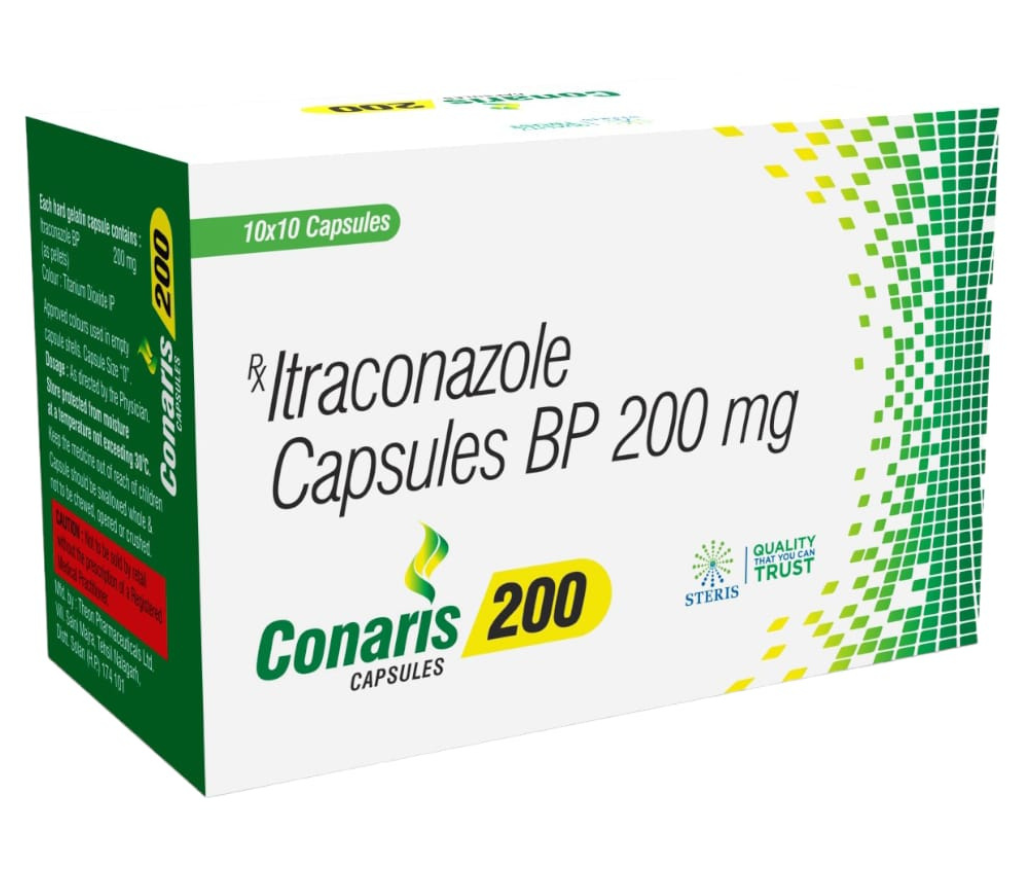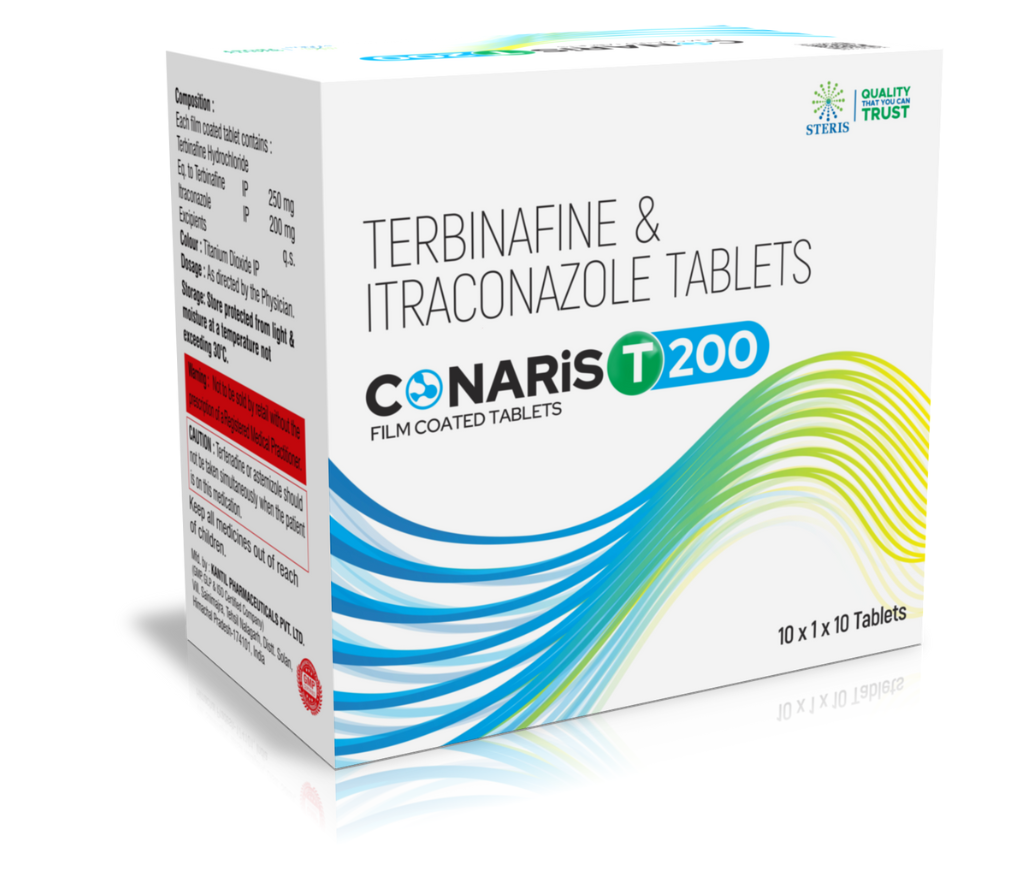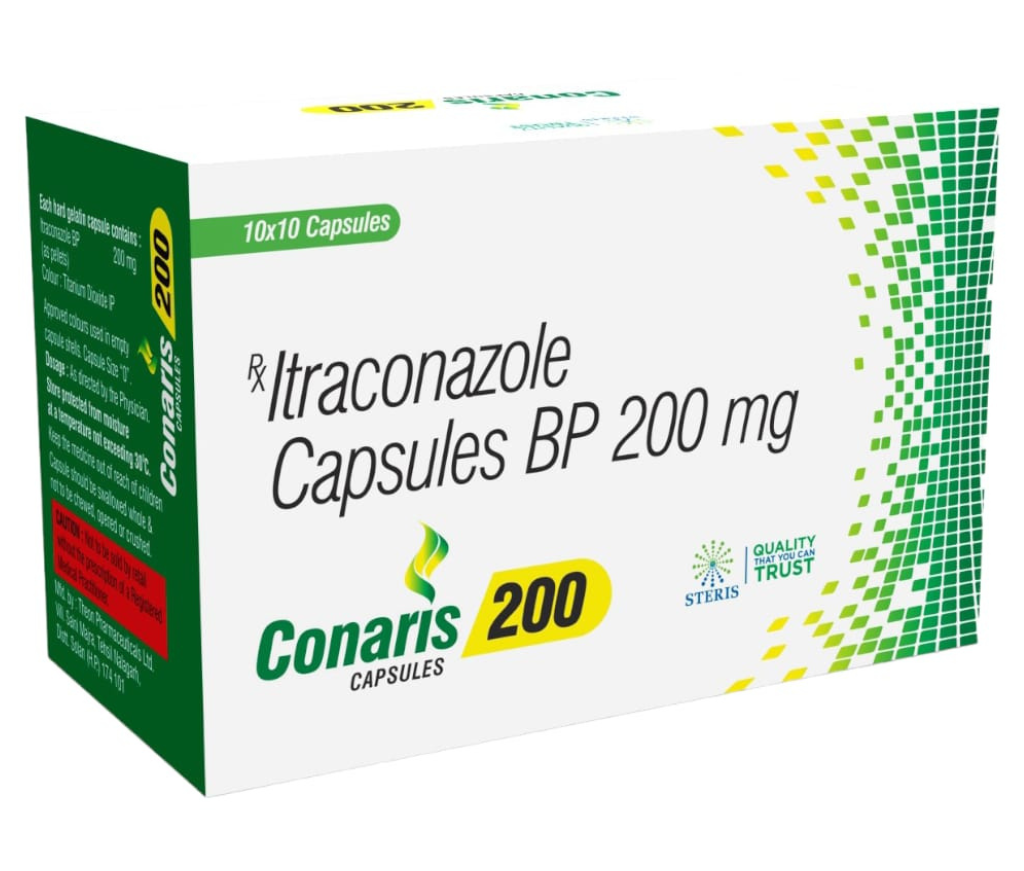
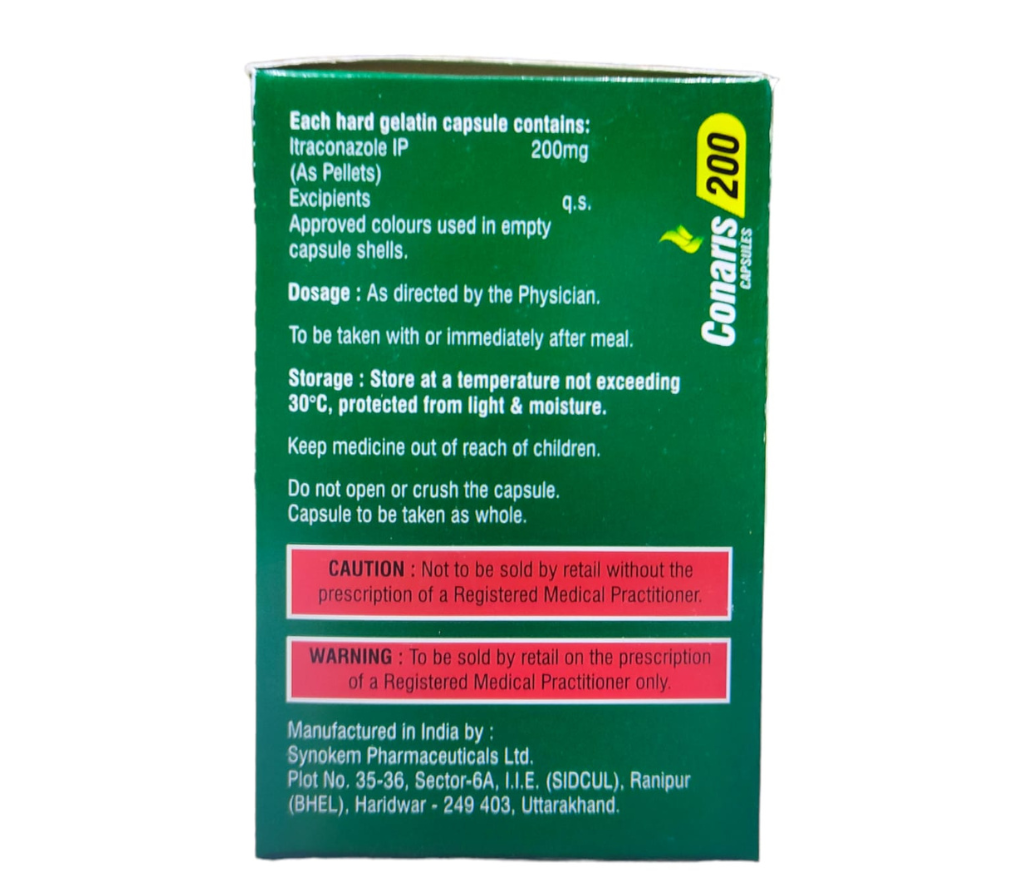
CONARIS 200
 Item requires a valid prescription
Manufactured By Steris Healthcare Pvt Ltd
Composition Itraconazole (200mg)
Rs 129.28
MRP Rs 184.69
(30% OFF)
Includes all taxes
Package SIZE
( For 10 Capsule )

100% Authentic
Products

Free
Shipping*

Products
Return Policy
Description:
Itraconazole 200 mg is a broad-spectrum oral antifungal medication belonging to the triazole class, widely prescribed to treat fungal infections ranging from nail and skin infections to serious systemic fungal diseases. It works by disrupting the fungal cell membrane, effectively stopping fungal growth. Below is a complete breakdown of how it works, its key clinical benefits, dosage patterns by condition, side effects, and what buyers should check when sourcing it.
What Is Itraconazole 200 mg?
Itraconazole is a triazole antifungal, sold under brand names like Sporanox and manufactured widely across India in capsule and tablet form at 100 mg and 200 mg strengths. It's a prescription-only medicine used to treat fungal infections that don't respond well to topical treatment, or that involve internal organs, nails, or the bloodstream. Indian manufacturers commonly export it in blister-packed strips to pharmacies and distributors across global markets.
How Itraconazole 200 mg Works
Itraconazole inhibits an enzyme called CYP51, which fungi need to make ergosterol — a critical building block of their cell membrane. Without enough ergosterol, the fungal cell membrane becomes unstable, stopping the fungus from growing and spreading. This mechanism is why itraconazole is effective against a broad range of fungal species, including dermatophytes, Candida, and Aspergillus.
Key Uses
- Fungal nail infections (onychomycosis) — typically fingernail and toenail infections requiring extended treatment courses
- Skin fungal infections (dermatophytosis) — including ringworm and related skin conditions
- Oropharyngeal and esophageal candidiasis (oral and throat thrush)
- Blastomycosis, histoplasmosis, and aspergillosis — serious systemic fungal infections, particularly in immunocompromised patients
- Sporotrichosis — a fungal skin infection often linked to plant or soil exposure
Key Benefits
- Broad-spectrum coverage against a wide range of fungal organisms, reducing the need for multiple antifungal agents
- Oral formulation — avoids the need for IV antifungal therapy in most non-critical cases
- Once-daily or twice-daily dosing depending on the condition, which supports better treatment adherence
- Well-established efficacy for both superficial (skin/nail) and deep systemic fungal infections
- Widely manufactured at competitive cost by GMP-certified Indian pharmaceutical companies, making it accessible for both retail pharmacies and bulk institutional buyers
Dosage & Administration
Dosing varies significantly depending on the infection being treated, and should always be set by a prescribing physician:
- Fungal nail infections (toenails): commonly 200 mg once daily for 12 weeks
- Oral/esophageal candidiasis: typically 200 mg once daily, adjusted based on response
- Pulse-dose regimens for nail infections: 200 mg twice daily for one week, followed by a three-week treatment-free period, repeated for two to three cycles
- Systemic or serious fungal infections: doses can range up to 200 mg twice daily under close medical supervision
Itraconazole capsules are generally taken with food to improve absorption, while the oral solution is better absorbed on an empty stomach — the two formulations are not interchangeable without a doctor's guidance. Treatment should be completed for the full prescribed duration, even if symptoms improve early, since stopping too soon increases the risk of drug-resistant infection.
Side Effects
Common side effects:
- Nausea, vomiting, or diarrhea
- Stomach pain
- Headache
- Skin rash
Serious side effects requiring immediate medical attention:
- Signs of liver problems — persistent nausea, loss of appetite, dark urine, yellowing of the skin or eyes (jaundice), which is why regular liver function monitoring is recommended for longer courses
- Signs of heart failure — fatigue, shortness of breath, cough with mucus, rapid heartbeat, swelling in the legs, or sudden weight gain; itraconazole carries a documented risk of reducing heart muscle contractility, particularly at doses above 400 mg/day
- Allergic reactions — hives, severe rash, swelling of the face or throat, difficulty breathing
- Hearing changes or tinnitus, which are usually reversible after stopping treatment
Precautions & Drug Interactions
Itraconazole is metabolized through the liver's CYP3A4 enzyme system, which means it has a high potential for drug interactions — including with certain heart rhythm medications, sedatives, and oral diabetes medications, where combinations can lead to serious complications. It should not be used in people with a history of congestive heart failure or reduced heart function unless the treating physician determines the benefit outweighs the risk. It's generally avoided during pregnancy except in life-threatening infections, and caution is advised while breastfeeding, since small amounts pass into breast milk.
Sourcing Itraconazole 200 mg: What Buyers Should Verify
For pharmacies, hospitals, and distributors evaluating suppliers, key sourcing checkpoints include:
- WHO-GMP and regulatory-compliant manufacturing facility
- Certificate of Analysis (COA) confirming potency and dissolution per batch
- Bioequivalence documentation, since itraconazole capsules and oral solutions are not bioequivalent and switching formulations without proper labeling can affect patient outcomes
- Verified export licensing and drug manufacturing credentials
- Transparent wholesale/bulk pricing for institutional and pharmacy-chain procurement
Conclusion
Itraconazole 200 mg remains one of the most versatile oral antifungal options available, effective against everything from stubborn nail infections to serious systemic fungal disease. Its broad-spectrum action and oral convenience make it a preferred first step before more invasive antifungal therapy, but its interaction profile and rare cardiac and liver risks mean it should always be used strictly as prescribed, with appropriate monitoring for longer treatment courses. For pharmacies and distributors sourcing the product, working with WHO-GMP-certified manufacturers with clear batch documentation remains essential for consistent quality and regulatory compliance.
This content is for general informational purposes and does not replace advice from a licensed healthcare provider. Itraconazole is a prescription-only medicine.
Frequently Asked Questions
1. What is itraconazole 200 mg used for?
It's used to treat fungal infections ranging from nail and skin infections to serious systemic infections like aspergillosis, histoplasmosis, and oral or esophageal thrush.
2. How does itraconazole 200 mg work?
It blocks an enzyme fungi need to build their cell membrane, which stops the fungus from growing and eventually kills it.
3. How long does it take for itraconazole 200 mg to treat a nail fungal infection?
Toenail infections typically require about 12 weeks of daily treatment, while some nail infection protocols use pulse dosing over multiple shorter cycles.
4. What are the serious side effects of itraconazole 200 mg?
The most serious risks are liver problems and heart failure symptoms — itraconazole can reduce heart muscle function, especially at higher doses, so any signs of shortness of breath or swelling should be reported to a doctor immediately.
5. Can itraconazole 200 mg be taken with other medications?
It has a high risk of drug interactions because of how it's processed by the liver, so it's important to tell your doctor about all medications you're taking, including certain heart, sedative, and diabetes drugs.
6. Should itraconazole capsules be taken with food?
Yes, itraconazole capsules are best absorbed when taken with a full meal, while the oral solution works better on an empty stomach — the two forms should not be swapped without medical guidance.