


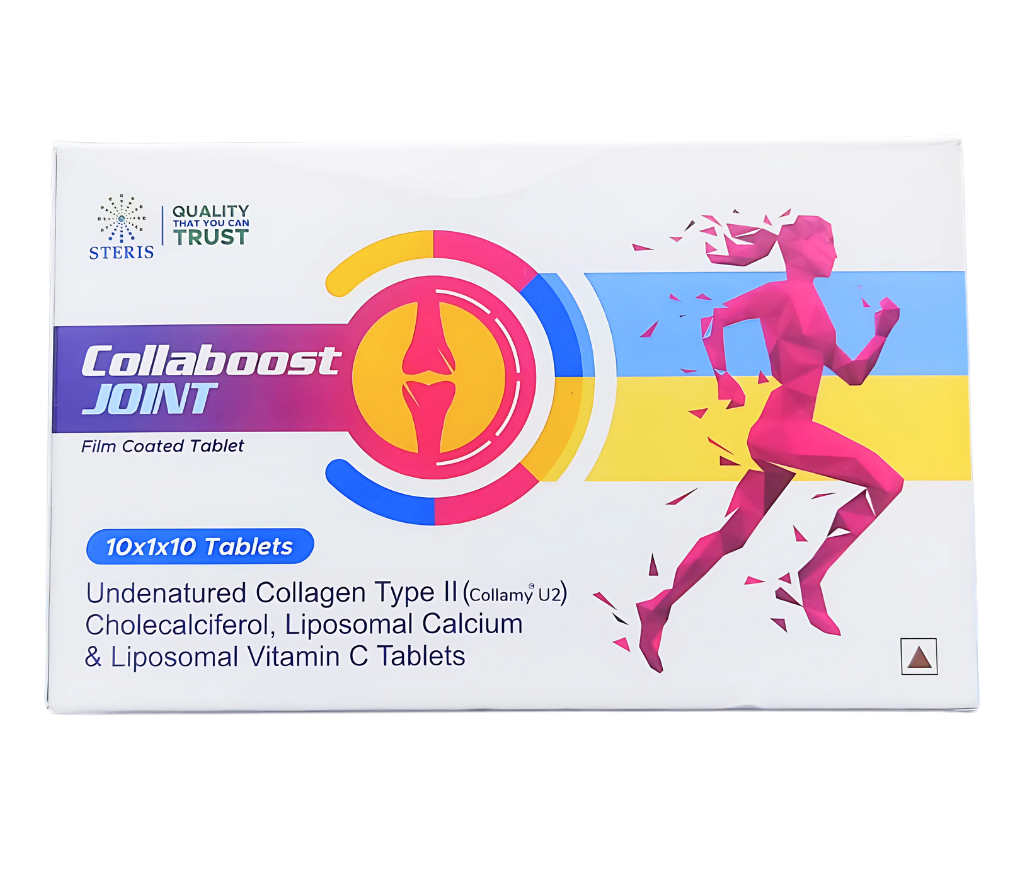
COLLABOOST JOINT
 Item requires a valid prescription
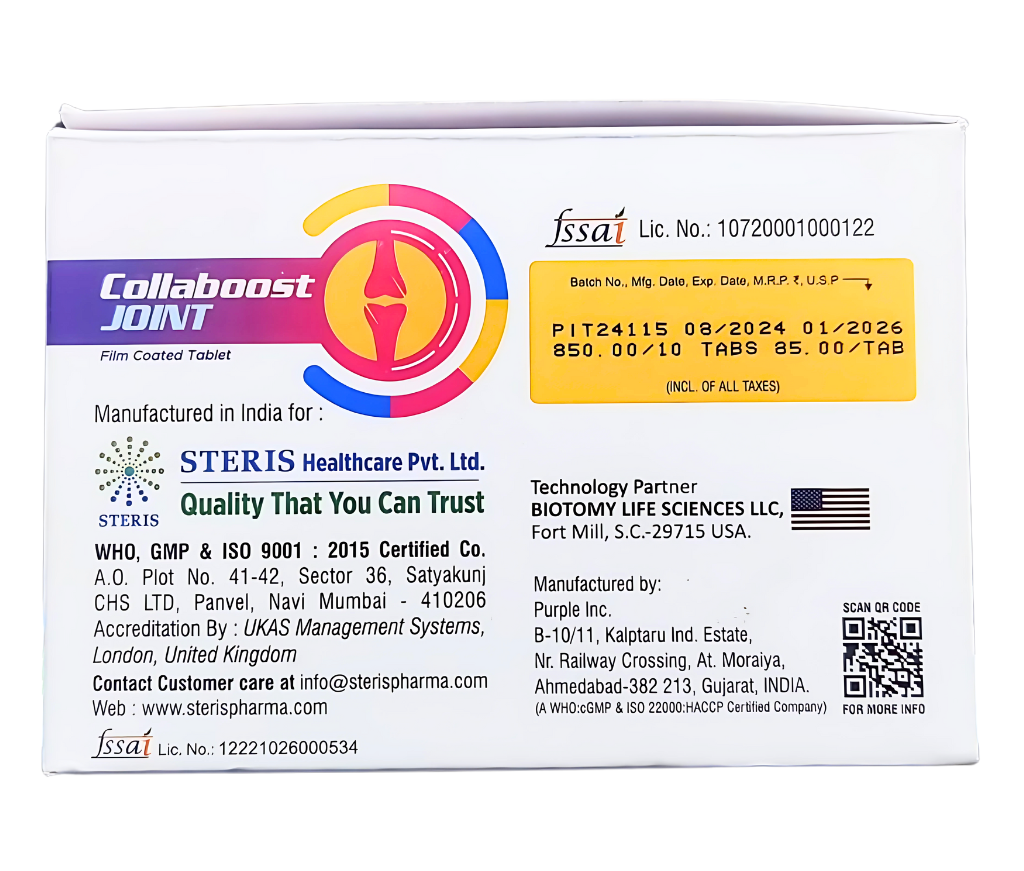
Manufactured By Steris Healthcare Pvt Ltd
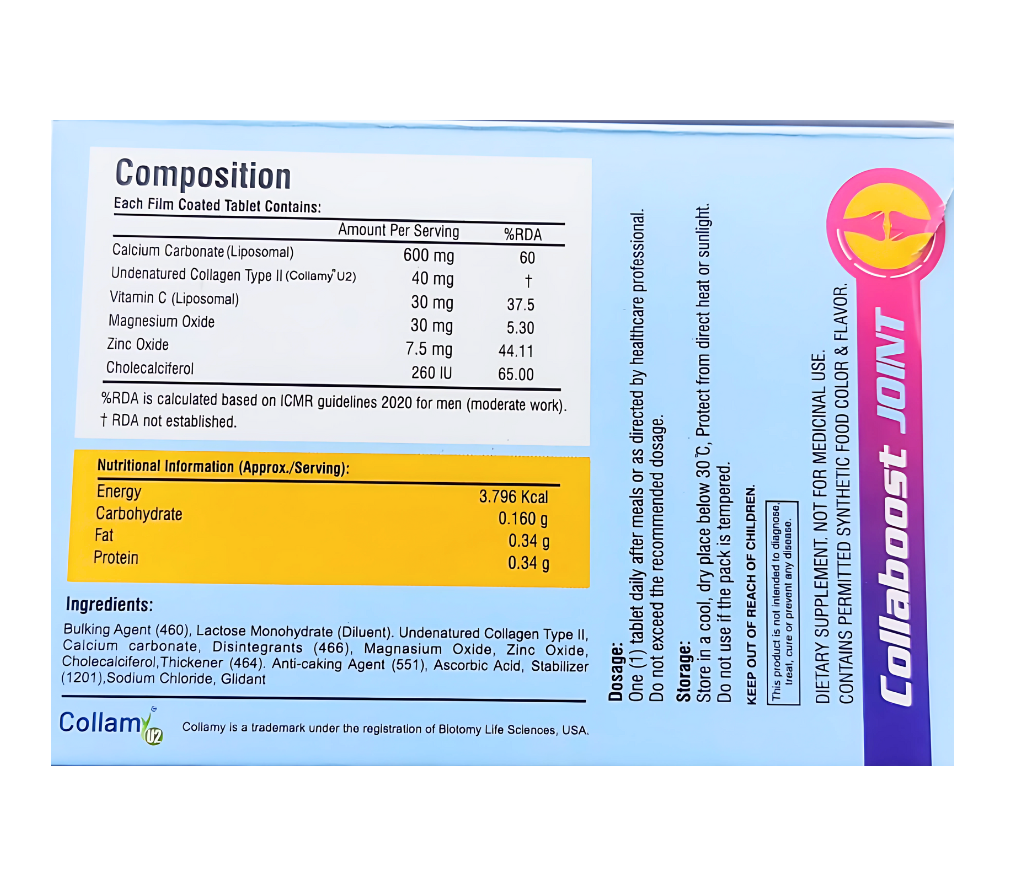
Composition Calcium Carbonate (600 mg), Undenatured Collagen Type II (Collamy U2) (40 mg), Magnesium Oxide(30 mg) Vitamin C (30 mg), Zinc Oxide (7.5 mg), Cholecalciferol(260 UI)
Rs 557.20
MRP Rs 796.00
(30% OFF)
Includes all taxes
Package SIZE
( FOR 10 TABLETS )

100% Authentic
Products

Free
Shipping*

Products
Return Policy
Description:
Calcium Carbonate Tablet with Undenatured Collagen Type II is a bone and joint health supplement that strengthens bones and nourishes cartilage for long-term mobility support.This combination is commonly recommended for adults with early joint stiffness, age-related bone density concerns, active lifestyles with joint strain, or those seeking preventive bone-joint support alongside diet and exercise. It is generally taken once daily, preferably with food, and is available as an over-the-counter (OTC) supplement—not a substitute for prescription osteoporosis or arthritis therapy.
What Is Calcium Carbonate + Undenatured Collagen Type II?
This tablet combines two ingredients that address bone and joint health from different angles:
- Calcium carbonate is one of the most bioavailable and widely used calcium salts in nutraceuticals. It supplies elemental calcium, the mineral responsible for bone mineralization, nerve signaling, muscle contraction, and blood clotting.
- Undenatured Collagen Type II (UC-II) is a specialized, minimally processed form of chicken sternum cartilage-derived collagen. Unlike hydrolyzed collagen (which is broken into small peptides), UC-II retains its native triple-helix protein structure, which is essential to how it interacts with the body's immune-mediated joint support pathway.
Together, they form a bone-plus-joint formula rather than a single-purpose calcium supplement, making it relevant for people who want combined skeletal and cartilage support in one tablet.
Clinical Indications Table
| Indication | Calcium Carbonate Role | UC-II Role |
|---|---|---|
| Low dietary calcium intake | Direct calcium replenishment | — |
| Age-related bone density decline | Supports bone mineralization | — |
| Early-stage joint stiffness/discomfort | Indirect (bone-joint interface support) | Supports cartilage matrix and joint comfort |
| Active/athletic joint strain | — | Supports cartilage resilience |
| Preventive bone-joint maintenance (40+ age group) | Core calcium support | Core cartilage support |
| Adjunct to physiotherapy/exercise regimens | Supportive | Supportive |
Mechanism of Action
Calcium Carbonate: Once ingested, calcium carbonate reacts with stomach acid (hydrochloric acid) to release ionized calcium, which is absorbed primarily in the small intestine. This absorbed calcium is deposited into bone matrix (hydroxyapatite) to maintain bone density and is also used systemically for muscle and nerve function. Because this reaction depends on stomach acid, calcium carbonate is best absorbed when taken with food.
Undenatured Collagen Type II (UC-II): UC-II works differently from typical calcium or joint-support ingredients. Rather than being absorbed intact into cartilage, small amounts of undenatured UC-II protein interact with gut-associated lymphoid tissue (GALT) in the small intestine. This is believed to help modulate the body's immune response toward cartilage proteins through a process researchers describe as "oral tolerization," which may help support a balanced joint environment and cartilage matrix maintenance over time. Because this mechanism depends on the collagen remaining in its undenatured (native) form, the manufacturing process for UC-II is deliberately low-heat to preserve structure — this is what differentiates it from standard hydrolyzed collagen supplements.
Key Benefits
- Supports Bone Mineral Density – Calcium carbonate provides a concentrated calcium dose to help maintain bone strength, particularly relevant for adults with declining dietary calcium intake.
- Supports Joint Comfort and Flexibility – UC-II's oral tolerization mechanism is associated with joint comfort support, distinct from the mineral-based approach of calcium alone.
- Dual Bone-Joint Formula in One Tablet – Reduces the need for separate calcium and joint-support supplements, simplifying a daily routine.
- Low Daily Dose Requirement for UC-II – UC-II is typically formulated at low milligram doses per serving compared to hydrolyzed collagen or glucosamine products that often require multi-gram daily intake.
- Supports Active Lifestyles – May help individuals engaged in regular physical activity manage everyday joint strain.
- Convenient Once-Daily Use – Simplifies adherence to a bone-joint health regimen compared to multi-dose supplements.
- Non-Prescription Accessibility – Available as an OTC nutraceutical, making it accessible for preventive, long-term use under general guidance.
Recommended Dosage
- Typical Adult Dose: One tablet daily, preferably with a meal, or as directed by a physician or the product label.
- Best Time to Take: With or after food, to support calcium carbonate absorption via stomach acid activity; morning or evening both work, but consistency matters more than the specific time of day.
- Duration: Joint-support benefits associated with UC-II are generally reported over consistent, longer-term use (commonly discussed in weeks-to-months timeframes) rather than short-term use; calcium supports bone health with ongoing daily use.
- Missed Dose: Take as soon as remembered; skip if close to the next dose. Do not double the dose.
Side Effects
Common (Usually Mild)
- Mild constipation
- Bloating or gas
- Stomach upset if taken on an empty stomach
- Mild nausea
Less Common
- Belching
- Changes in bowel habits with prolonged high-dose use
Serious (Rare — Seek Medical Advice)
- Signs of excess calcium (hypercalcemia): unusual fatigue, confusion, excessive thirst, frequent urination
- Signs of allergic reaction to collagen source (chicken-derived): rash, itching, swelling, difficulty breathing
- Severe or persistent abdominal pain
Who Should Avoid This Combination / Precautions
- Individuals with hypercalcemia or hypercalciuria
- Individuals with a history of kidney stones (calcium-containing stones) without physician guidance
- People with chronic kidney disease should consult a doctor, as calcium and mineral handling is altered in kidney impairment
- Individuals with known poultry or chicken protein allergy (relevant to UC-II sourcing)
- Pregnant or breastfeeding women should use only under medical supervision
- People on medications where calcium may interact — including certain antibiotics (tetracyclines, fluoroquinolones), thyroid hormone replacement, bisphosphonates, and iron supplements — should separate dosing timing as advised by a pharmacist or physician
- Not intended as a replacement for prescribed osteoporosis medication or arthritis treatment
Substitutes / Comparison Table
| Product Type | Calcium Source | Joint Support Ingredient | Typical Dosing Frequency |
|---|---|---|---|
| This Product | Calcium Carbonate | Undenatured Collagen Type II (UC-II) | Once daily |
| Calcium Citrate Tablets (standalone) | Calcium Citrate | None | 1–2x daily |
| Glucosamine + Chondroitin | None (usually) | Glucosamine/Chondroitin | 2–3x daily, higher gram dose |
| Hydrolyzed Collagen Peptides | None (usually) | Hydrolyzed Collagen | Daily, higher gram dose |
| Calcium + Vitamin D3 Tablets | Calcium Carbonate/Citrate | None (Vitamin D3 instead) | Once daily |
Conclusion
Calcium Carbonate Tablet with Undenatured Collagen Type II offers a practical, once-daily approach to supporting two interconnected areas of musculoskeletal health: bone density and joint cartilage comfort. By combining a well-established calcium source with a scientifically distinct, low-dose joint-support ingredient, this formula is suited to adults looking for preventive bone-joint care, active individuals managing daily joint strain, and anyone seeking to simplify a two-supplement routine into one tablet. As with any nutraceutical, individual response varies, and people with kidney conditions, calcium metabolism disorders, or poultry allergies should consult a healthcare provider before starting. Used consistently alongside a balanced diet, adequate hydration, and regular movement, this combination can be a useful part of a long-term bone and joint wellness plan.
Frequently Asked Questions
1. Is calcium carbonate safe for daily use?
Yes, calcium carbonate is generally considered safe for daily use within recommended dosage limits, especially when taken with food. However, long-term high-dose use should be monitored by a doctor, particularly in people with kidney concerns.
2. What are the main uses of calcium carbonate?
Calcium carbonate is mainly used as a dietary calcium supplement to support bone health, and it is also used as an antacid for heartburn and acid indigestion due to its acid-neutralizing property.
3. What is the best time to take calcium carbonate?
Calcium carbonate is best taken with or right after a meal, since it needs stomach acid for proper absorption. Taking it on an empty stomach may reduce absorption and increase the chance of stomach upset.
4. What is the side effect of taking calcium carbonate?
The most common side effects include constipation, bloating, gas, and mild stomach discomfort. Taking high doses over a long period may rarely lead to excess calcium levels (hypercalcemia).
5. Who should avoid calcium carbonate?
People with hypercalcemia, a history of calcium-based kidney stones, chronic kidney disease, or certain parathyroid disorders should avoid calcium carbonate unless specifically advised by a doctor.
6. Is calcium carbonate safe for kidneys?
In healthy individuals with normal kidney function, calcium carbonate is generally safe when taken at recommended doses. However, people with existing kidney disease or impaired calcium regulation should use it only under medical supervision, since the kidneys play a central role in calcium balance.
7. Can calcium carbonate cause kidney stones?
Excessive calcium intake, especially without adequate hydration or in people already prone to calcium oxalate stones, may contribute to kidney stone risk. This risk is generally associated with very high, prolonged intake rather than standard recommended supplement doses, but anyone with a history of kidney stones should consult a doctor first.
8. What damages the kidneys the most?
Common contributors to kidney damage include uncontrolled diabetes, high blood pressure, long-term overuse of certain painkillers (like NSAIDs), chronic dehydration, and untreated urinary tract obstructions. Supplement-related kidney damage is uncommon when products are used at recommended doses under medical guidance.
9. How does calcium affect the kidneys?
The kidneys help regulate calcium balance in the body by controlling how much calcium is excreted in urine versus retained. When calcium intake is very high or kidney function is already impaired, this balance can be disrupted, potentially contributing to calcium buildup or stone formation.
10. What is Undenatured Collagen Type II (UC-II) and how is it different from regular collagen?
UC-II is a form of collagen that retains its natural, unprocessed protein structure, unlike hydrolyzed collagen which is broken down into smaller peptides. This intact structure allows UC-II to work through a different pathway believed to support joint comfort at much lower daily doses.
11. How long does it take for UC-II to show joint benefits?
Joint comfort benefits associated with UC-II are typically reported with consistent daily use over several weeks to a few months, rather than immediately, since its mechanism works gradually over time.
12. Can this tablet be taken with other calcium or vitamin D supplements?
It's best to avoid combining multiple calcium-containing supplements without medical advice, to prevent exceeding safe daily calcium limits. Speak with a doctor or pharmacist before stacking supplements.
13. Is this product suitable for people with arthritis?
This tablet is a nutraceutical intended for general joint comfort and bone support, and may be used alongside — but not as a replacement for — prescribed arthritis treatment. Consult your doctor for a personalized arthritis management plan.
14. Can this tablet be taken by vegetarians?
Calcium carbonate is typically vegetarian-friendly, but Undenatured Collagen Type II is generally sourced from chicken cartilage, making the combination unsuitable for strict vegetarians or vegans. Check the product label for sourcing confirmation.
15. Does this product interact with any medications?
Yes, calcium carbonate can interact with certain antibiotics, thyroid medications, bisphosphonates, and iron supplements by reducing their absorption if taken together. It's recommended to separate dosing times and consult a pharmacist or doctor if you're on other medications.
16. Can I take this tablet if I have a poultry allergy?
Since UC-II is derived from chicken sternum cartilage, individuals with a known poultry or chicken protein allergy should avoid this product or consult an allergist first.
17. What happens if I miss a dose?
If you miss a dose, take it as soon as you remember. If it's almost time for your next dose, skip the missed one — do not double up to make up for it.
If You Need More Information About COLLABOOST JOINT Click here