


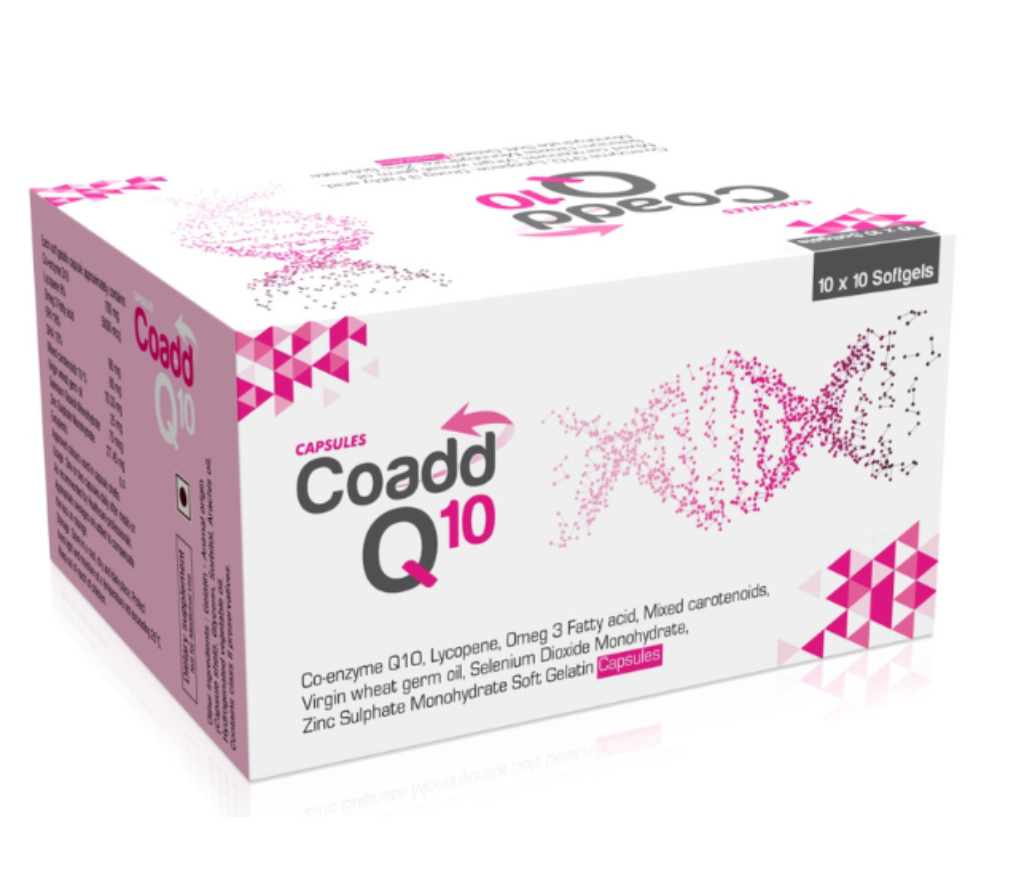
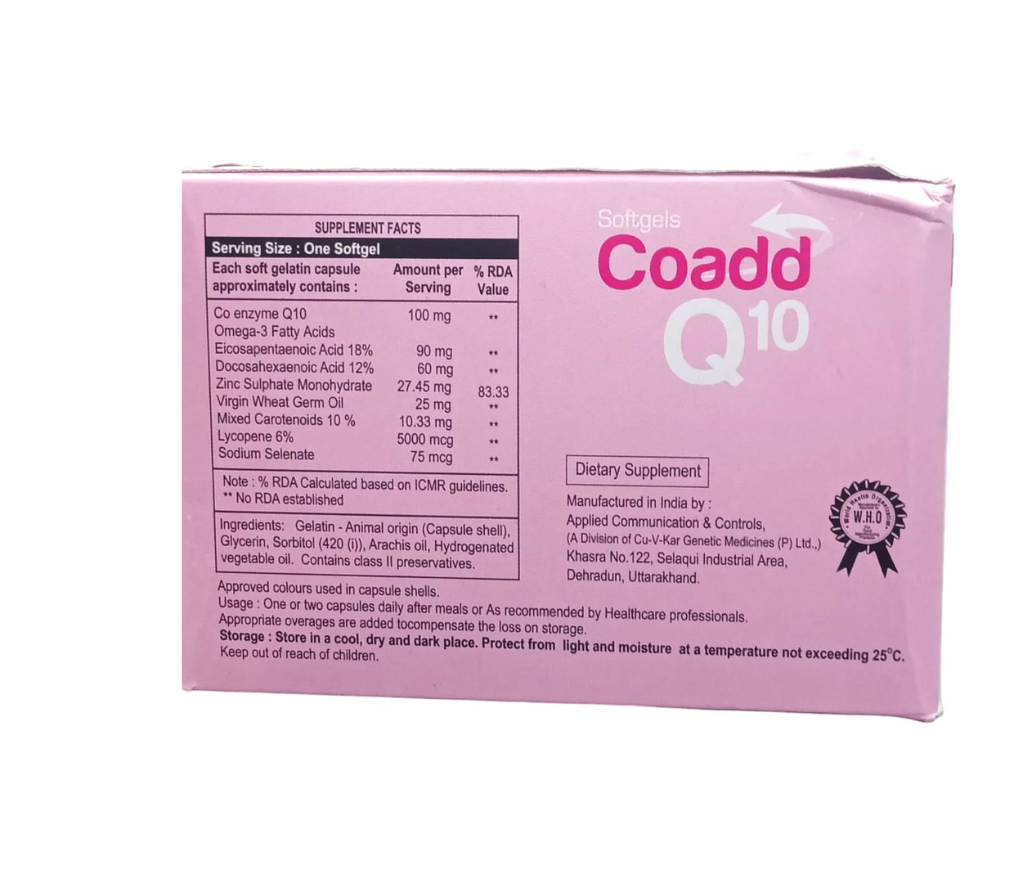
CO ADD Q 10
 Item requires a valid prescription
Manufactured By Steris Healthcare Pvt Ltd
Composition Co Enzyme q10+Lycopene+Omega 3 Fatty Acid + Carotenoid+ Wheat Germ Oil + Selenium+Zinc Sulphate
Rs 305.27
MRP Rs 436.10
(30% OFF)
Includes all taxes
Package SIZE
( For 10 Capsules )

100% Authentic
Products

Free
Shipping*

Products
Return Policy
Description:
Coenzyme Q10 + Lycopene + Omega-3 Fatty Acid + Carotenoid + Wheat Germ Oil + Selenium + Zinc Sulfate is a multi-ingredient nutritional supplement designed to provide a combination of antioxidant compounds, omega-3 fatty acids, essential minerals, and nutrients from plant or oil-based sources.
The formulation combines Coenzyme Q10 (CoQ10), lycopene, omega-3 fatty acids, carotenoids, wheat germ oil, selenium, and zinc sulfate in one product. Because these ingredients have different nutritional roles, the product may appeal to adults looking for convenient nutritional support rather than purchasing several individual supplements.
CoQ10 participates in cellular energy production and also has antioxidant properties. Omega-3 fatty acids are important components of cell membranes and participate in several biological signaling processes. Selenium and zinc are essential minerals involved in numerous physiological functions, including antioxidant defenses and immune function.
However, it is important to distinguish nutritional support from disease treatment. Evidence for individual supplement ingredients varies substantially, and a multi-ingredient supplement should not automatically be considered a treatment for heart disease, infertility, sexual dysfunction, cancer, diabetes, or any other medical condition. The NIH Office of Dietary Supplements emphasizes that the evidence for dietary supplements differs considerably from ingredient to ingredient.
Key Ingredients and Their Roles
Coenzyme Q10
Coenzyme Q10 (CoQ10) is a naturally occurring compound involved in mitochondrial energy production. It is particularly concentrated in tissues with high energy requirements.
CoQ10 has been researched for cardiovascular health, migraine, fertility, exercise performance, and several other conditions. However, the strength of evidence differs depending on the intended use. For example, the National Center for Complementary and Integrative Health notes that available evidence does not demonstrate a meaningful effect of CoQ10 on blood pressure, and research for several other conditions remains limited.
CoQ10 is therefore best described in a product description as a cellular-energy and antioxidant nutrient, rather than promising that it prevents or treats a particular disease.
Lycopene
Lycopene is a naturally occurring carotenoid pigment found in foods such as tomatoes and other red fruits and vegetables. It has antioxidant properties and is commonly included in nutritional supplements marketed for antioxidant and general wellness support.
The presence of lycopene does not mean that a supplement can prevent cancer or other diseases. Product claims should remain consistent with the available scientific evidence and applicable advertising regulations.
Omega-3 Fatty Acids
Omega-3 fatty acids are polyunsaturated fats. Important omega-3s include EPA, DHA, and ALA.
EPA and DHA are commonly obtained from fatty fish and fish-oil supplements, while ALA is found in plant foods such as flaxseed and certain vegetable oils. Omega-3 fatty acids are structural components of cell membranes and participate in signaling pathways throughout the body.
For a buyer, one of the most important things to check is the product label for the actual amount and type of omega-3 provided, rather than judging a supplement simply by the words "omega-3" on the front of the package.
Carotenoids
Carotenoids are naturally occurring pigments found in many colorful fruits and vegetables. Some carotenoids are related to vitamin A metabolism, while others primarily function as antioxidant compounds.
The exact benefits depend on the specific carotenoid present and its quantity. Therefore, consumers should check the ingredient panel rather than assuming that every product containing "carotenoids" provides the same nutritional profile.
Wheat Germ Oil
Wheat germ oil is an oil derived from the germ portion of wheat. It can provide various lipids and naturally occurring compounds and is sometimes included in nutritional formulations as an oil-based ingredient.
Anyone with a known wheat allergy or sensitivity should carefully review the manufacturer's allergen information before purchasing a product containing wheat germ oil.
Selenium
Selenium is an essential trace mineral involved in several biological processes. It contributes to the function of selenium-dependent proteins and antioxidant systems.
Adequate selenium is important, but more is not necessarily better. Excessive selenium intake can cause symptoms such as garlic-like breath odor, metallic taste, hair or nail changes, gastrointestinal symptoms, fatigue, and nervous-system abnormalities. The NIH Office of Dietary Supplements identifies 400 mcg per day as the adult tolerable upper intake level from all sources.
The amount of selenium in the product should therefore be checked carefully, particularly if you already take a multivitamin or another mineral supplement.
Zinc Sulphate
Zinc is an essential mineral required for numerous enzymes and biological processes. It contributes to normal immune function and supports cellular metabolism.
Zinc sulfate is one of several forms of zinc used in dietary supplements. The NIH notes that zinc supplements can contain forms such as zinc sulfate, zinc acetate, and zinc gluconate, and it is not clear that one form is universally superior to the others.
Potential Benefits of This Combination
The principal attraction of Coenzyme Q10 + Lycopene + Omega 3 Fatty Acid + Carotenoid + Wheat Germ Oil + Selenium + Zinc Sulfate is convenience: multiple nutritional ingredients are combined into a single formulation.
Potential nutritional benefits may include:
1. Antioxidant nutritional support
CoQ10, lycopene, carotenoids, and selenium are associated with antioxidant functions in the body. A diet rich in fruits, vegetables, whole grains, nuts, seeds, and other nutrient-dense foods remains the foundation of adequate nutrition.
2. Support for normal cellular energy metabolism
CoQ10 participates in mitochondrial energy production. This makes it a popular ingredient in nutritional products designed around energy and general wellness. However, supplementation does not guarantee increased energy in healthy individuals, and clinical evidence varies according to the intended use.
3. Omega-3 nutritional support
Omega-3 fatty acids provide important structural components of cell membranes and participate in physiological signaling. Some evidence suggests that omega-3 supplementation can be useful in particular circumstances, but benefits depend on the specific omega-3, dose, and health context.
4. Immune and metabolic nutritional support
Zinc is necessary for normal immune-system function and numerous metabolic processes. Selenium also contributes to important biological functions.
5. Convenient multi-nutrient formulation
For consumers who have been advised to supplement several nutrients, a combination product may be more convenient than purchasing multiple separate products.
That convenience should be balanced against the need to check total daily intake. Taking multiple supplements containing the same nutrients can unintentionally increase intake beyond recommended levels.
Who May Consider This Supplement?
A combination supplement containing these ingredients may be considered by adults seeking general nutritional support, particularly when a healthcare professional or qualified nutrition professional has identified a reason for supplementation.
Potential users should first examine their diet and existing supplements. The NIH notes that supplements can help people obtain adequate nutrients in some circumstances, but they cannot replace the variety of foods that form a healthy eating pattern.
This product should not be positioned as a guaranteed solution for:
-
Heart disease
-
High cholesterol
-
Infertility
-
Erectile dysfunction
-
Cancer
-
Diabetes
-
Arthritis
-
Weight loss
-
Chronic fatigue
-
Any other diagnosed medical condition
If a person has a medical condition, the appropriate treatment should come from a qualified healthcare professional.
How to Use It
Use the product according to the manufacturer's current label or the recommendation of your healthcare professional.
Do not assume that the serving size of one combination supplement is interchangeable with another product containing similar ingredients. Concentrations can differ substantially.
Before starting the supplement:
-
Read the Supplement Facts or ingredient label.
-
Check the serving size.
-
Review the amount of CoQ10, omega-3, selenium, and zinc.
-
Check whether EPA and DHA are specifically listed.
-
Review allergens, particularly because the formulation contains wheat germ oil.
-
Check the expiry date and packaging.
-
Review your other supplements to avoid unnecessary duplication.
-
Ask a pharmacist or healthcare professional about interactions if you take prescription medicines.
Possible Side Effects
The side effects of a combination product depend on its exact ingredients and doses.
CoQ10
CoQ10 is generally well tolerated, although mild digestive upset or insomnia can occur. It may interact with warfarin, insulin, and potentially some cancer treatments.
Omega-3
Omega-3 supplements can cause an unpleasant taste, bad breath, heartburn, nausea, gastrointestinal discomfort, diarrhea, headache, or an unusual body odor. Higher doses may also interact with anticoagulant medicines because omega-3s can influence platelet activity.
Selenium
Excessive selenium intake can cause garlic-like breath, a metallic taste, hair or nail loss or brittleness, nausea, diarrhea, rash, fatigue, irritability, and neurological symptoms.
Zinc
Excessive zinc intake can cause gastrointestinal problems and, when taken at high levels for prolonged periods, can contribute to copper deficiency and other nutritional problems.
Wheat germ oil
People with wheat-related allergies or sensitivities should carefully check the product's allergen information.
If you experience a severe allergic reaction, difficulty breathing, swelling, severe vomiting, or another serious unexpected reaction, seek urgent medical care.
Drug Interactions and Precautions
A multi-ingredient supplement can interact with medicines even when individual ingredients appear familiar.
CoQ10 may interact with warfarin and insulin, according to NCCIH.
Omega-3 supplements may interact with anticoagulants and can potentially influence blood pressure.
People taking prescription medicines should therefore provide their doctor or pharmacist with the complete supplement label, not merely the product name.
Extra caution is appropriate for people who:
-
Take blood-thinning medicines
-
Take diabetes medicines
-
Take blood-pressure medicines
-
Receive cancer treatment
-
Have a bleeding disorder
-
Are pregnant or breastfeeding
-
Have a known food allergy
-
Already take multivitamins or mineral supplements
-
Have a chronic medical condition
-
Are preparing for surgery
How to Choose and Buy This Product
If you are searching for Coenzyme Q10 + Lycopene + Omega 3 Fatty Acid + Carotenoid + Wheat Germ Oil + Selenium + Zinc Sulfate online, focus on product quality rather than selecting the lowest advertised price.
Check the label
A trustworthy listing should clearly identify the ingredients, serving size, quantities, manufacturer, batch information where applicable, expiry date, storage requirements, and applicable regulatory information.
The NIH notes that dietary supplement labels should identify active ingredients and amounts per serving, while manufacturers' suggested serving sizes do not necessarily mean that every person should consume that amount.
Verify the omega-3 content
Do not assume that "fish oil" or "omega-3" tells you how much EPA and DHA you are receiving. Check the Supplement Facts panel for the actual quantities.
Compare total nutrient intake
If you already take zinc, selenium, fish oil, CoQ10, carotenoids, or a multivitamin, compare the labels before adding another combination product.
Purchase from a reputable source
When buying online, choose an established pharmacy, authorized seller, or reputable supplement retailer. Check packaging and seals when the product arrives, and do not use products with damaged packaging or unclear labeling.
Do not buy based solely on medical claims
A product page promising to "cure" disease, guarantee fertility, reverse cardiovascular disease, or provide instant results should be treated cautiously. Evidence for dietary supplements varies, and regulatory standards differ by market.
Frequently Asked Questions
It is a multi-ingredient nutritional supplement intended to provide CoQ10, omega-3 fatty acids, carotenoids, lycopene, wheat germ oil, selenium, and zinc. It is generally used for nutritional and antioxidant support rather than as a substitute for medical treatment.
2. What are the main benefits of this supplement?
Its ingredients provide different nutritional functions. CoQ10 participates in cellular energy production, and omega-3s contribute to cell-membrane structure and signaling, while zinc and selenium support essential biological processes.
3. Is this supplement good for heart health?
Some ingredients in the formulation, particularly omega-3 fatty acids and CoQ10, have been researched in cardiovascular contexts. However, this product should not be described as a treatment or cure for heart disease. The evidence varies by ingredient, dose, and health condition.
4. Does CoQ10 increase energy?
CoQ10 is involved in mitochondrial energy production, but taking a CoQ10 supplement does not necessarily increase energy or reduce fatigue in every person. Clinical benefits depend on the individual's circumstances and the reason for supplementation.
5. Does this product contain omega-3?
Yes, the product description identifies omega-3 fatty acid as an ingredient. However, buyers should check the current label to determine the precise amount and whether EPA and DHA are specified.
6. What is lycopene used for?
Lycopene is a carotenoid with antioxidant properties and is commonly used in nutritional supplements as part of an antioxidant-focused formulation.
7. What does selenium do in the body?
Selenium is an essential trace mineral involved in several biological functions, including the activity of selenium-dependent proteins and antioxidant systems.
8. What does zinc sulfate do?
Zinc is an essential mineral required for numerous enzymes, cellular processes, and normal immune function. Zinc sulfate is one form used in dietary supplements.
9. Can I take this supplement every day?
Daily use depends on the product's specific serving instructions, nutrient amounts, diet, other supplements, medicines, and individual health circumstances. Follow the manufacturer's label or professional advice.
10. Can I take this supplement with other vitamins?
Possibly, but check the labels first. Taking multiple supplements containing zinc, selenium, omega-3s, or other overlapping nutrients can unnecessarily increase total intake.
11. Does this supplement have side effects?
It can. Possible effects depend on the individual ingredients and their quantities and may include digestive discomfort, heartburn, nausea, insomnia, or other reactions. Excessive selenium or zinc intake can cause additional problems.
12. Can omega-3 supplements cause bleeding?
High doses of EPA and DHA can affect platelet aggregation, and omega-3 supplements may interact with anticoagulant medicines. People taking blood thinners should discuss supplementation with their healthcare professional.
13. Can I take CoQ10 if I use warfarin?
Do not start CoQ10 without discussing it with your healthcare professional if you take warfarin. NCCIH specifically identifies a potential interaction between CoQ10 and warfarin.
14. Is this supplement safe during pregnancy?
Pregnant or breastfeeding individuals should consult a healthcare professional before taking a multi-ingredient supplement. The complete ingredient list and doses should be reviewed rather than assuming that a nutritional supplement is automatically safe.
15. Is wheat germ oil safe for people with wheat allergies?
Anyone with a known wheat allergy should check the manufacturer's allergen statement and seek professional advice before using a product containing wheat germ oil.
16. Can children take this supplement?
Do not assume that an adult combination supplement is appropriate for children. Pediatric supplementation should be guided by a qualified healthcare professional.
17. How long does this supplement take to work?
There is no single timeframe because this is a multi-ingredient nutritional supplement rather than a medicine with one defined therapeutic endpoint. Results, if any, depend on nutritional status, ingredient dose, diet, and individual circumstances.
18. Should I take this supplement with food?
Follow the product label. Because the formulation contains oil-based ingredients, taking it with food may be appropriate for some products, but the manufacturer's specific directions should take priority.
19. Can this supplement replace a healthy diet?
No. Supplements can help provide nutrients in certain circumstances but do not replace the nutritional variety of a healthy diet.
20. What should I check before buying this supplement online?
Check the complete ingredient list, amounts per serving, EPA/DHA information where applicable, manufacturer, batch/expiry details, packaging, storage instructions, seller reputation, and applicable regulatory information. Avoid listings that make unsupported disease-treatment claims.
21. Is a higher dose better?
No. More is not automatically better. Excessive intake of nutrients such as selenium and zinc can be harmful, while high-dose omega-3 supplementation may have additional considerations.
22. Can I take this supplement with prescription medicines?
Potentially, but it depends on the medicines. CoQ10 and omega-3s, among other ingredients, can have clinically relevant interactions. Give your doctor or pharmacist the complete product label before combining it with prescription medication.
Conclusion
Coenzyme Q10 + Lycopene + Omega-3 Fatty Acid + Carotenoid + Wheat Germ Oil + Selenium + Zinc Sulfate is a broad-spectrum nutritional formulation combining antioxidant compounds, omega-3 fatty acids, essential minerals, and oil-based nutrients in one product.
Its principal appeal is convenient nutritional support from multiple ingredients: CoQ10 contributes to mitochondrial energy production, and omega-3 fatty acids have important structural and signaling roles, while selenium and zinc support essential physiological functions. Lycopene and other carotenoids add antioxidant-oriented nutritional components.
For buyers, the most important considerations are not simply price or the number of ingredients. Check the exact dosage, EPA/DHA content, serving size, manufacturer, expiry date, allergen information, authenticity, and seller reliability. If you already take supplements or prescription medicines, compare the complete labels to prevent unnecessary duplication or interactions.

