


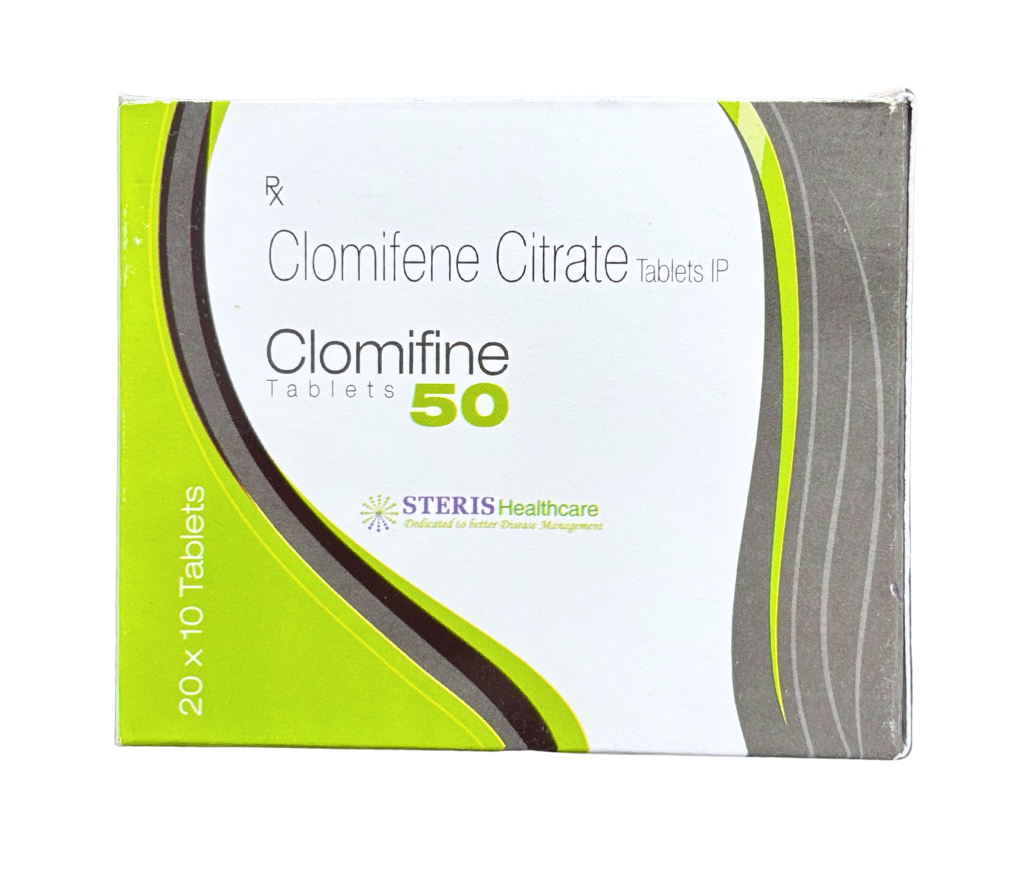
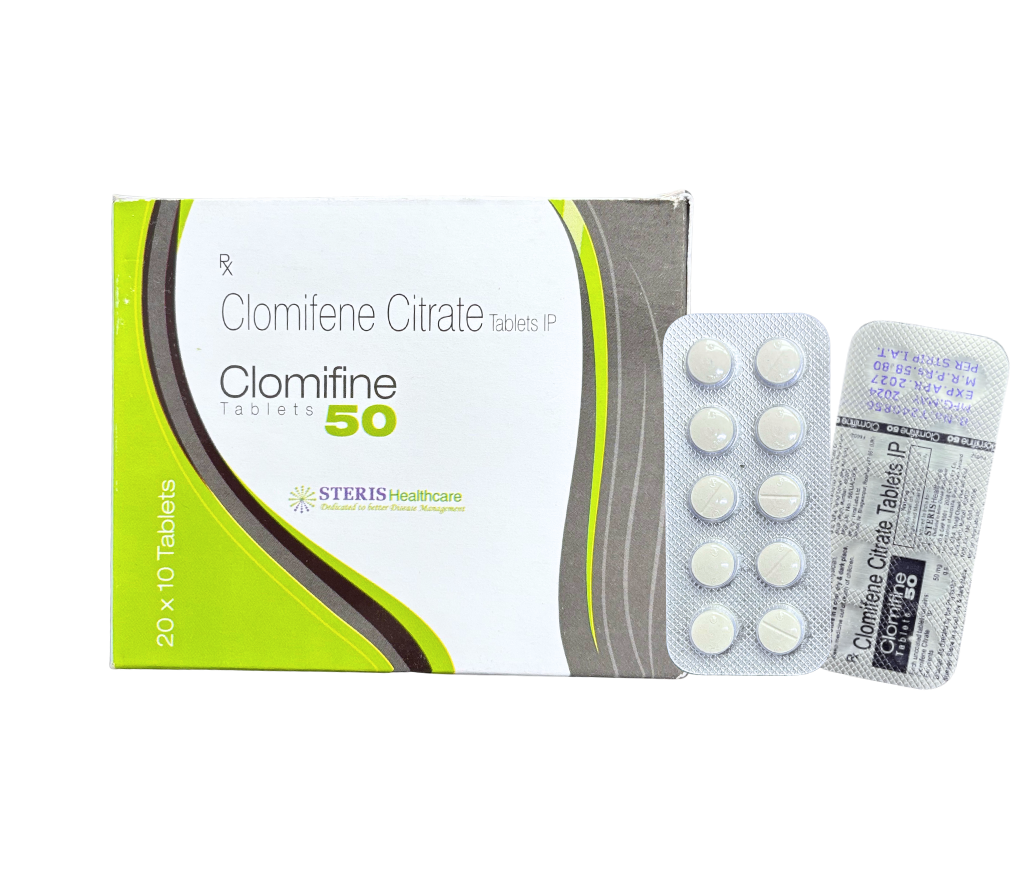
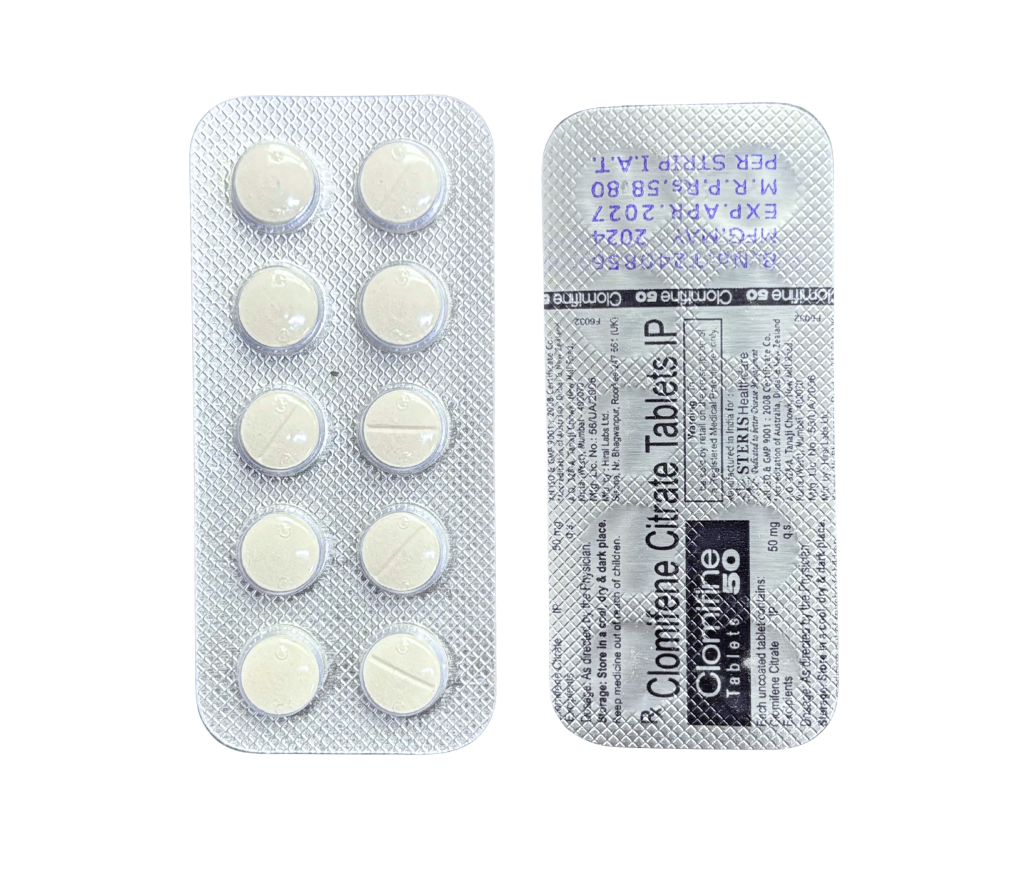
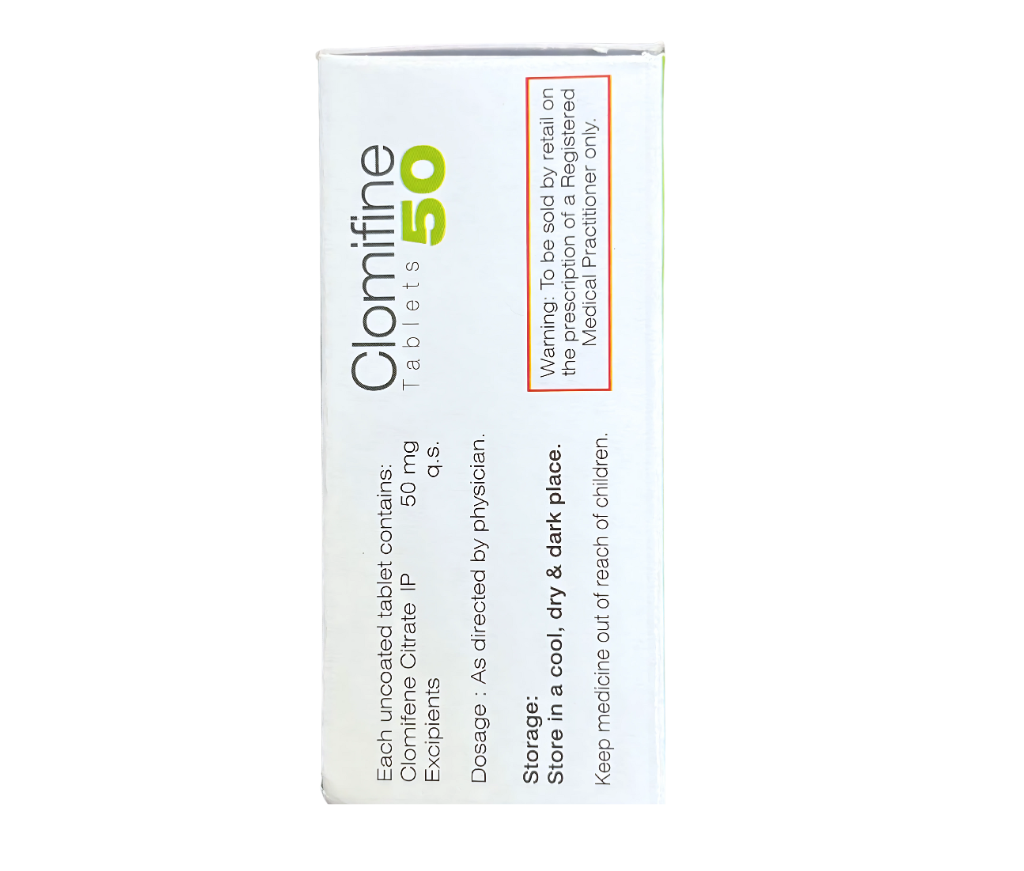
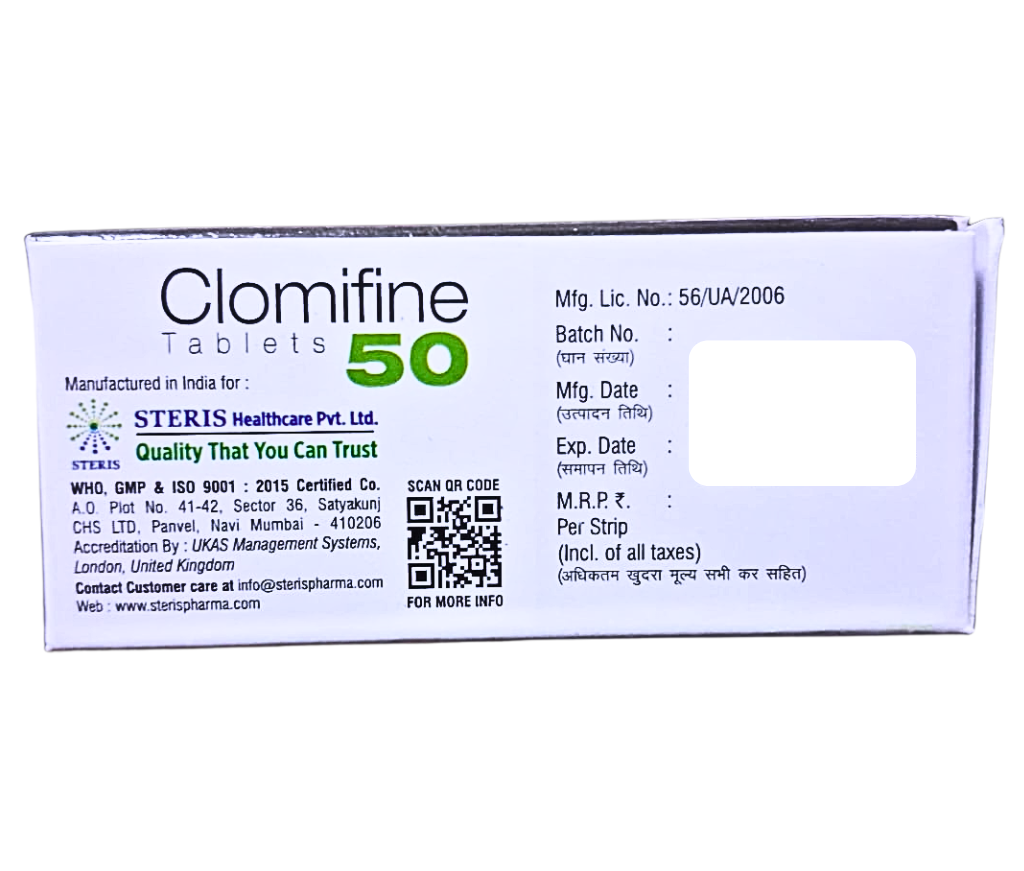
CLOMIFINE 50
 Item requires a valid prescription
Manufactured By Steris Healthcare Pvt Ltd
Composition Clomiphene (50mg)
Rs 38.58
MRP Rs 55.12
(30% OFF)
Includes all taxes
Package SIZE
( For 10 Tablets )

100% Authentic
Products

Free
Shipping*

Products
Return Policy
Description:
CLOMIFINE 50 is an oral tablet containing Clomiphene 50 mg, a widely used fertility medicine and the standard starting dose for inducing ovulation in women experiencing infertility due to ovulatory dysfunction. As a Selective Estrogen Receptor Modulator (SERM), Clomiphene works by stimulating the body's natural hormonal pathways to trigger the release of an egg, making it one of the most commonly prescribed first-line treatments for women trying to conceive, particularly those with irregular ovulation or conditions like Polycystic Ovary Syndrome (PCOS).
Product Information
| Product Detail | Information |
|---|---|
| Brand Name | CLOMIFINE 50 |
| Salt Composition | Clomiphene 50 mg |
| Drug Class | Selective Estrogen Receptor Modulator (SERM) / Ovulation Stimulant |
| Form | Oral Tablet |
| Pack Size | 10 Tablets |
| Manufacturer/Marketer | Steris Healthcare Pvt. Ltd. |
| Primary Use | Ovulation induction for female infertility (standard starting dose) |
| Prescription Status | Prescription Required (Rx) |
| Storage | Store below 30°C, in a dry place, away from direct sunlight |
How Does Clomiphene Work?
Clomiphene works by selectively blocking estrogen receptors in the hypothalamus, which causes the brain to perceive estrogen levels as lower than they actually are. In response, the hypothalamus increases the release of Gonadotropin-Releasing Hormone (GnRH), prompting the pituitary gland to release more Follicle-Stimulating Hormone (FSH) and Luteinizing Hormone (LH). This hormonal surge stimulates the ovaries to develop and release a mature egg, helping restore regular ovulation in women who weren't ovulating consistently.
Why It Is Important
Beginning fertility treatment at the right starting dose matters — both for effectiveness and for safety. Starting at 50 mg allows your fertility specialist to carefully observe how your body responds to Clomiphene before considering any dose changes, striking an important balance between giving the treatment a genuine chance to work and avoiding unnecessary over-stimulation of the ovaries.
For many women, particularly those newly navigating a PCOS diagnosis or unexplained ovulatory difficulties, this starting dose represents the first concrete, actionable step in their fertility journey. Its importance lies in offering an accessible, well-studied, and relatively gentle introduction to ovulation induction — one that has helped countless women achieve successful ovulation and pregnancy without needing to immediately progress to more intensive or invasive fertility treatments.
Key Benefits
What are the benefits?
- Effective starting-dose ovulation induction: Successfully triggers ovulation in a significant proportion of women at this standard first dose.
- Lower risk of ovarian over-stimulation: Starting at 50 mg helps minimize the chance of excessive ovarian response compared to higher starting doses.
- Simple oral administration: A convenient tablet-based treatment, avoiding the need for injections at this stage of fertility treatment.
- Allows personalized dose planning: Gives your doctor a clear baseline to assess your individual response and adjust future cycles accordingly if needed.
- Well-established, extensively studied option: Decades of use in reproductive medicine provide strong clinical confidence in appropriate starting-dose prescribing.
- Cost-effective first step: An accessible starting point in many fertility treatment protocols before considering more advanced or expensive interventions.
Who Is CLOMIFINE 50 For?
CLOMIFINE 50 is typically prescribed for women who:
- Are beginning ovulation induction treatment for the first time
- Have been diagnosed with ovulatory dysfunction, including irregular or absent ovulation
- Have Polycystic Ovary Syndrome (PCOS) and are starting fertility treatment
- Have unexplained infertility, as part of an initial treatment protocol determined by a fertility specialist
This medicine should only be prescribed and monitored by a gynecologist or fertility specialist, who will track your response through follicle monitoring and adjust future treatment plans accordingly.
Possible Side Effects
Most women tolerate this starting dose reasonably well, though side effects can occur:
- Hot flashes
- Mood swings or emotional sensitivity
- Mild bloating or abdominal discomfort
- Breast tenderness
- Headache
- Nausea
- Visual disturbances (blurred vision or seeing spots) — report this to your doctor promptly if it occurs
Important Precautions
Do not take CLOMIFINE 50 if you:
- Are already pregnant — always confirm you're not pregnant before starting a new treatment cycle
- Have liver disease
- Have abnormal uterine bleeding of undetermined cause
- Have ovarian cysts unrelated to PCOS, unless specifically cleared by your doctor
- Have a known hypersensitivity to Clomiphene or its components
Use with particular caution and close medical supervision if you:
- Have a history of depression or mood disorders, as Clomiphene can occasionally affect mood
- Have visual disturbances or eye conditions, requiring careful monitoring during treatment
- Have uncontrolled thyroid or adrenal gland conditions
Ready to Buy CLOMIFINE 50?
If your gynecologist or fertility specialist has prescribed Clomiphene 50 mg as the starting point for your fertility treatment, CLOMIFINE 50 by Steris Healthcare Pvt. Ltd. offers a dependable, well-established option in a practical 10-tablet pack.
Before you order:
- Upload or share your valid prescription (required for purchase).
- Confirm the dosage strength (50 mg) and treatment days match exactly what your doctor prescribed for your specific cycle.
- Purchase only from a licensed, verified pharmacy to ensure product authenticity and safe handling during delivery.
- Confirm you are not pregnant before beginning your treatment cycle, as advised by your doctor.
- Keep all scheduled follicle tracking and monitoring appointments — consistent monitoring is an essential part of safe, effective fertility treatment, especially during your first cycle.
Frequently Asked Questions
1. Where can I buy Clomiphene 50 mg online?
You can buy Clomiphene 50 mg through licensed online pharmacies or authorized pharmaceutical suppliers in India. Verify the manufacturer, strength, batch number, and expiry date before purchasing.
2. What is the price of Clomiphene 50 mg?
The price of Clomiphene 50 mg may vary depending on the brand, pack size, manufacturer, and seller. Check the current price with a licensed pharmacy or authorized supplier.
3. Can I order Clomiphene 50 mg online?
Yes, Clomiphene 50 mg can be ordered online through licensed pharmacies or authorized suppliers where legally available. A valid prescription may be required.
4. Is Clomiphene 50 mg available from Steris Healthcare?
Availability depends on Steris Healthcare's current product range and stock status. Contact Steris Healthcare or an authorized distributor to confirm the available strength, pack size, and ordering details.
5. What is Clomiphene 50 mg used for?
Clomiphene 50 mg is a fertility medicine primarily used to stimulate ovulation in women who have difficulty ovulating. It works by influencing hormonal signals that encourage the ovaries to release an egg and should be used under medical supervision.
6. What is the composition of Clomiphene 50 mg?
Clomiphene 50 mg contains Clomiphene Citrate as the active ingredient at a strength of 50 mg. The inactive ingredients may vary depending on the manufacturer and formulation.
7. Is a prescription required for Clomiphene 50 mg?
Yes, Clomiphene is a prescription fertility medicine and should be used under the supervision of a qualified healthcare professional. Appropriate medical evaluation is important before starting treatment.
8. How should Clomiphene 50 mg be taken?
Take Clomiphene 50 mg exactly as prescribed by your doctor. The treatment schedule is usually based on the menstrual cycle and individual fertility requirements. Do not change the dose or treatment duration without medical advice.
9. What should I know before buying Clomiphene 50 mg?
Before buying, verify the strength, manufacturer, batch number, expiry date, packaging, and storage instructions. Clomiphene should not be used during pregnancy and may not be suitable for people with certain ovarian, liver, thyroid, or adrenal conditions. Discuss your medical history and current medicines with your doctor.
10. How can I order Clomiphene 50 mg online?
To order Clomiphene 50 mg online, choose a licensed pharmacy or authorized supplier, select the prescribed strength and pack size, provide a valid prescription where required, and verify the product details before completing your purchase.