


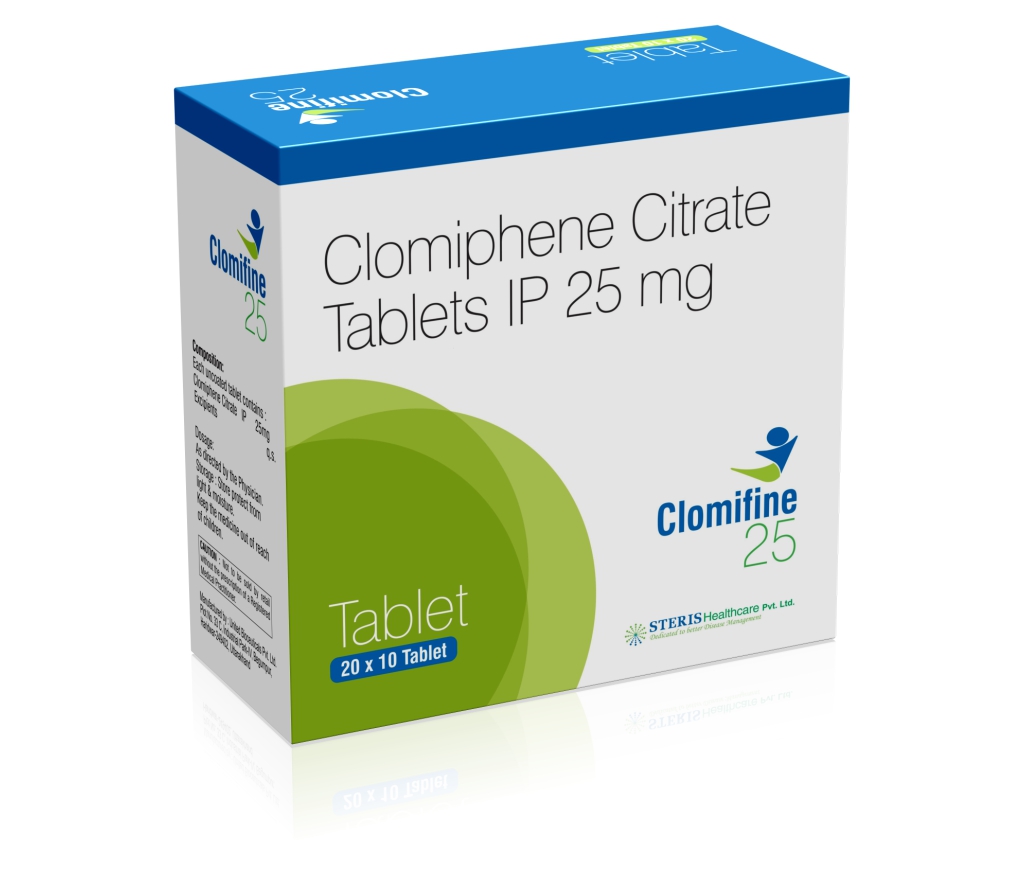
CLOMIFINE 25
 Item requires a valid prescription
Manufactured By Steris Healthcare Pvt Ltd
Composition Clomiphene (25mg)
Rs 41.51
MRP Rs 59.30
(30% OFF)
Includes all taxes
Package SIZE
( For 10 Tablets )

100% Authentic
Products

Free
Shipping*

Products
Return Policy
Description:
Clomiphene 25 mg is a lower-dose formulation of clomiphene citrate, a selective estrogen receptor modulator (SERM) best known for inducing ovulation in women with fertility challenges. It's also increasingly prescribed off-label to raise natural testosterone in men. The 25 mg strength is typically used for patients who are sensitive to the standard 50 mg dose, or in specific off-label male fertility and low-testosterone protocols. Here's a complete breakdown of what it does, its clinical benefits, dosing patterns, side effects, and what to check when sourcing it.
What Is Clomiphene 25 mg?
Clomiphene citrate works by blocking estrogen receptors in the hypothalamus. The body interprets this as low estrogen, so it ramps up the release of gonadotropin-releasing hormone (GnRH), which in turn increases follicle-stimulating hormone (FSH) and luteinizing hormone (LH). In women, this triggers follicle development and ovulation. In men, the same hormonal cascade boosts natural testosterone and sperm production. The 25 mg tablet is essentially a fine-tuned dose used when the standard 50 mg strength is too strong for the patient's response or treatment goal.
How Clomiphene 25 mg Works in the Body
Because clomiphene "tricks" the brain into thinking estrogen is low, it restarts the body's own reproductive hormone signaling rather than introducing external hormones. This is why it's often the first-line oral option for anovulatory infertility — it works with the body's existing hormonal feedback loop instead of overriding it.
Key Uses of Clomiphene 25 mg
- Female infertility due to anovulation, including PCOS-related irregular or absent ovulation
- Ovulation induction for women trying to conceive who aren't ovulating regularly
- Off-label male infertility and low testosterone (secondary hypogonadism) — clomiphene stimulates the body's own testosterone production instead of suppressing it, which is why some clinicians prefer it over external testosterone replacement for men who still want to preserve fertility
- Hormonal support protocols where a lower, more gradual dose is clinically preferred over 50 mg or 100 mg strengths
Key Benefits
- Oral and convenient — no injections required, unlike many other fertility hormone therapies
- Well-established efficacy, with decades of clinical use for ovulation induction
- Preserves fertility in men, since it stimulates the body's own hormone axis rather than shutting it down the way external testosterone does
- Flexible, adjustable dosing — the 25 mg strength allows finer titration for patients sensitive to hormonal shifts or prone to ovarian cysts
- Cost-effective compared to injectable fertility treatments, making it accessible as a first-line option
Dosage & Administration
For female ovulation induction, the standard starting dose is usually 50 mg daily for five days early in the menstrual cycle, but 12.5–25 mg per day is used in women who are sensitive to clomiphene or prone to developing large ovarian cysts, based on established clinical dosing references. For off-label male use, dosing commonly ranges from 25 mg every other day up to 50 mg daily, adjusted according to testosterone response on follow-up bloodwork. Regulatory guidance generally caps treatment at around six ovulatory cycles for women, with no more than 12 cycles total, since prolonged use has been linked to increased risk in some studies. As always, the exact dose, cycle timing, and duration should be determined and monitored by a treating physician — this is not information for self-directed dosing.
Side Effects of Clomiphene 25 mg
Common side effects:
- Hot flashes
- Bloating and abdominal discomfort
- Nausea
- Headache
- Breast tenderness (in both women and men, due to hormonal shifts)
- Mood changes
Less common but clinically important effects:
- Visual disturbances, including blurred vision or, rarely, persistent visual afterimages — patients are advised to stop treatment and consult a doctor if vision changes occur
- Ovarian enlargement or cysts, which usually resolve on their own after stopping treatment
- Ovarian hyperstimulation syndrome (OHSS) — a rare but serious reaction that can cause abdominal pain, fluid buildup, and in severe cases requires urgent care
- Rare reports of pancreatitis linked to clomiphene-induced spikes in triglycerides, particularly in patients with pre-existing metabolic risk factors
Precautions & Contraindications
Clomiphene should be avoided during pregnancy, in patients with liver disease, undiagnosed abnormal uterine bleeding, or existing ovarian cysts unrelated to PCOS. It's also contraindicated in people with certain intracranial lesions, including pituitary tumors. Long-term or repeated-cycle use should always be physician-monitored, since extended use is associated with a possible increase in ovarian tumor risk in some research. Men using it off-label for testosterone support should have periodic bloodwork to track hormone levels and avoid unsupervised long-term use.
Sourcing Clomiphene 25 mg: What Buyers Should Verify
For pharmacies, fertility clinics, and distributors evaluating suppliers, a few sourcing checkpoints matter:
- GMP-certified manufacturing with documented quality control
- Certificate of Analysis (COA) per batch for potency and purity verification
- Proper blister or strip packaging for tablet stability during transit and storage
- Valid drug manufacturing and export licensing
- Transparent bulk/wholesale pricing and minimum order quantities for procurement planning
Conclusion
Clomiphene 25 mg is a lower-strength, finely adjustable option within the broader clomiphene citrate family, valued for its oral convenience, established efficacy in ovulation induction, and growing off-label role in male fertility and testosterone support. Its side-effect profile is generally manageable, but the rare risks — visual changes, OHSS, and prolonged-use concerns — mean it should always be prescribed, dosed, and monitored by a qualified physician rather than used independently. For healthcare businesses sourcing the product, prioritizing GMP-certified manufacturers with verifiable documentation remains the safest path to consistent quality.
Frequently Asked Questions
1. What is clomiphene 25 mg used for?
It's mainly used to induce ovulation in women with fertility issues caused by irregular or absent ovulation, and off-label to raise natural testosterone in men.
2. How does clomiphene 25 mg work?
It blocks estrogen receptors in the brain, prompting the body to release more FSH and LH — the hormones that trigger ovulation in women and natural testosterone production in men.
3. Why would someone take 25 mg instead of the standard 50 mg dose?
The lower 25 mg dose is typically used for patients sensitive to clomiphene, those prone to ovarian cysts, or in off-label male protocols where a gentler hormonal adjustment is preferred.
4. What are the most common side effects of clomiphene 25 mg?
Hot flashes, bloating, nausea, headache, and breast tenderness are the most frequently reported side effects.
5. Is clomiphene 25 mg safe for long-term use?
It's generally limited to a set number of treatment cycles under medical supervision, since prolonged use has been linked to increased risks in some studies — it's not intended for indefinite self-use.
6. Can men use clomiphene 25 mg for low testosterone?
Yes, it's used off-label in men with secondary hypogonadism because it stimulates the body's own testosterone production while preserving fertility, unlike standard testosterone replacement therapy.