


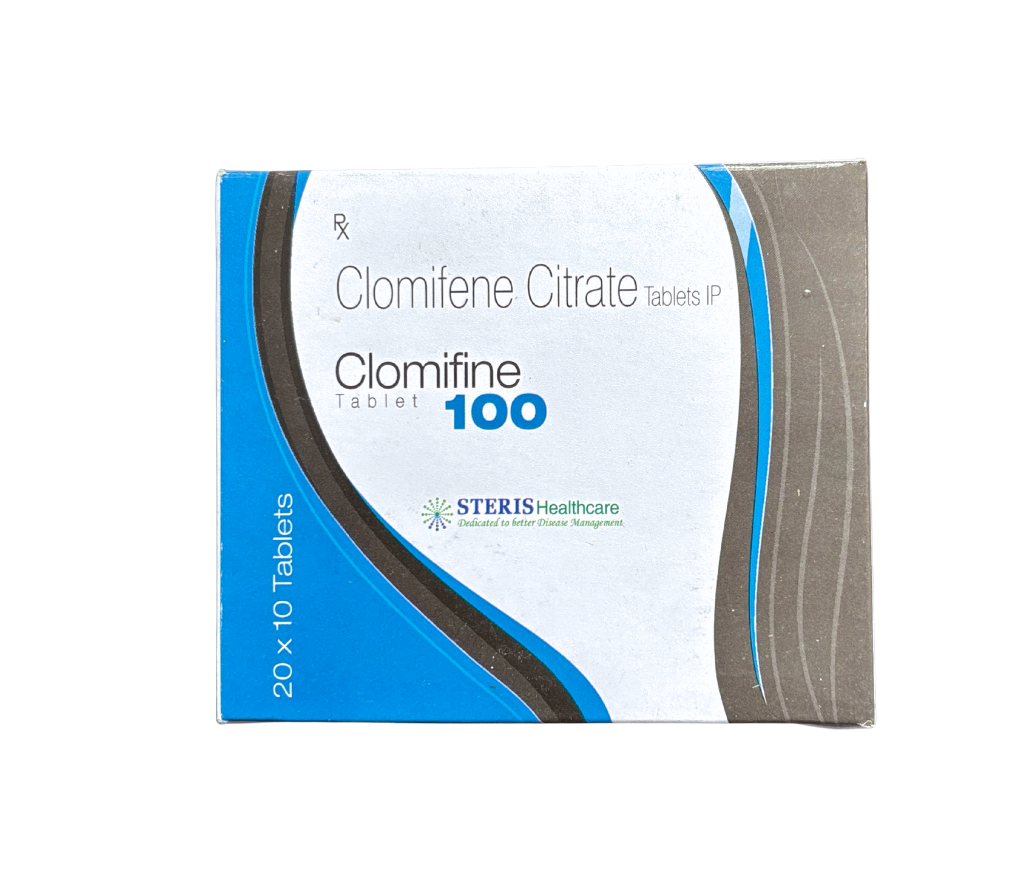
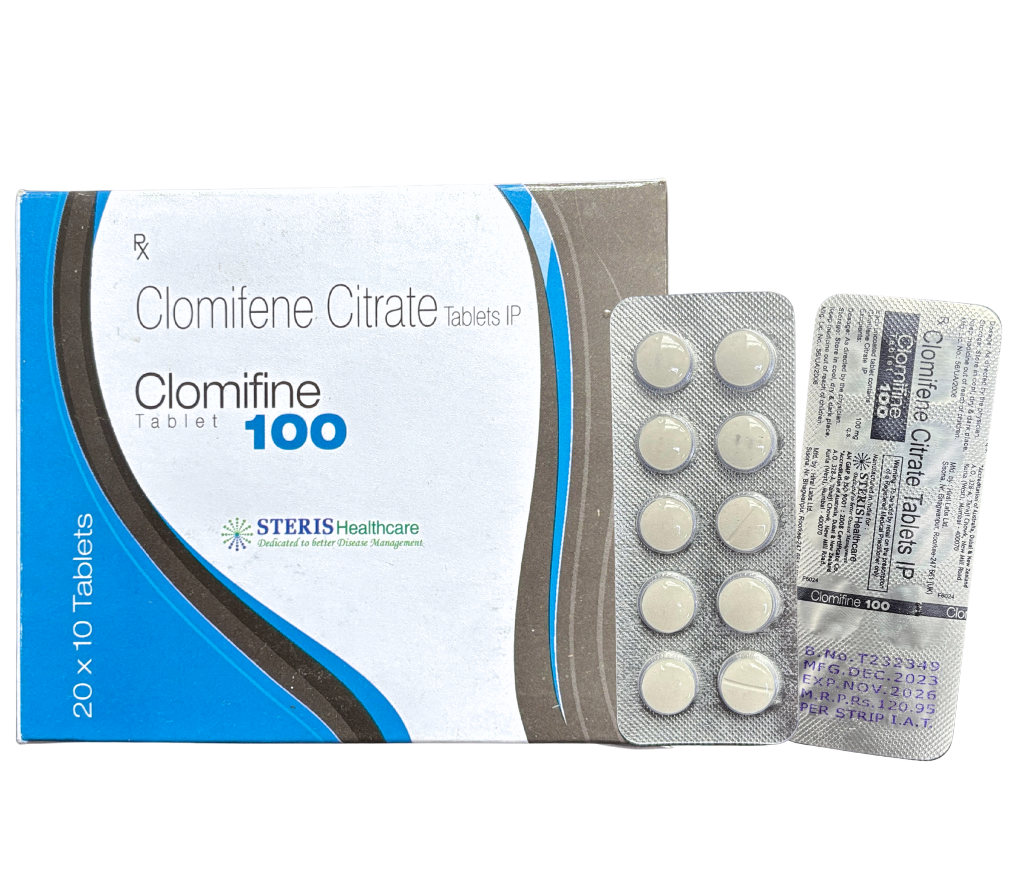
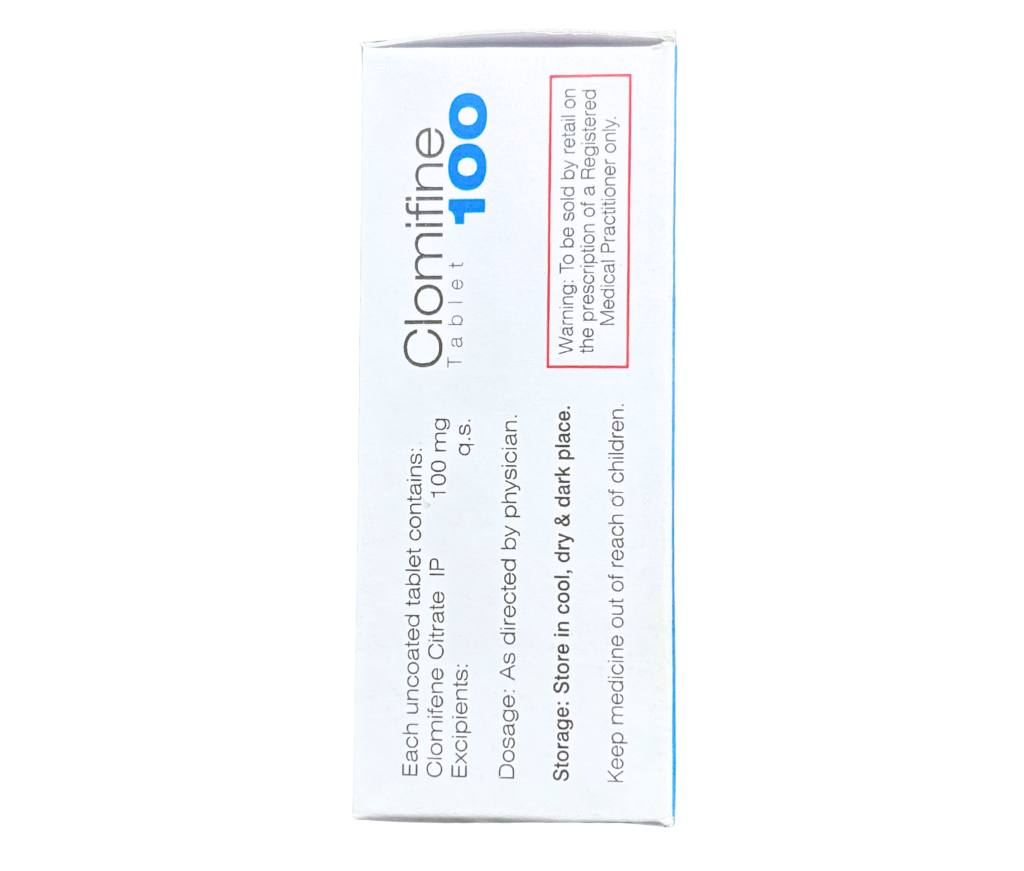
CLOMIFINE 100
 Item requires a valid prescription
Manufactured By Steris Healthcare Pvt Ltd
Composition Clomiphene (100mg)
Rs 79.37
MRP Rs 113.39
(30% OFF)
Includes all taxes
Package SIZE
( For 10 Tablets )

100% Authentic
Products

Free
Shipping*

Products
Return Policy
Description:
Clomiphene 100mg is a prescription-strength dose of clomiphene citrate, a selective estrogen receptor modulator (SERM) used primarily to stimulate ovulation in appropriately selected women with ovulatory dysfunction who are trying to become pregnant. It works by altering estrogen feedback to the hypothalamus and pituitary gland, encouraging the release of hormones that support ovarian follicle development and ovulation.
For people researching clomiphene 100mg online, the most important point is that 100mg is not automatically the starting dose. Current prescribing information generally describes treatment beginning with 50mg daily for five days, with an increase to 100mg daily for five days considered when ovulation does not occur after the initial course. Treatment should be supervised by an experienced healthcare professional.
What Is Clomiphene 100mg?
Clomiphene 100mg refers to a total daily dose of 100 milligrams of clomiphene citrate. It is commonly supplied as two 50mg tablets when that dose is prescribed.
Clomiphene is designed to address certain forms of ovulatory dysfunction. By blocking estrogen receptors in the hypothalamus, it can make the brain perceive estrogen levels as lower than they actually are. This stimulates hormonal signaling involving gonadotropins, particularly follicle-stimulating hormone (FSH) and luteinizing hormone (LH), which can promote follicular development and ovulation.
The FDA-approved indication is specifically related to ovulatory dysfunction in women who desire pregnancy; clomiphene should not be treated as a general fertility enhancer or a medication that guarantees conception.
What Is Clomiphene 100mg Used For?
The principal use of clomiphene 100mg is ovulation induction in women who have difficulty ovulating and meet appropriate clinical criteria.
A clinician may consider clomiphene when infertility is associated with anovulation or irregular ovulation. Before treatment, however, the underlying cause of infertility should be assessed. Fertility evaluation may include menstrual and ovulation history, appropriate laboratory testing, assessment of the reproductive tract, and evaluation of the partner when relevant.
Clomiphene may be considered in some patients with polycystic ovary syndrome (PCOS), although treatment choices have evolved. Current international PCOS guidance identifies letrozole as the preferred first-line pharmacological treatment for ovulation induction in women with PCOS and anovulatory infertility when there are no other infertility factors.
Therefore, clomiphene 100mg should be viewed as a clinician-selected treatment option, not a universal first choice for every fertility problem.
How Does Clomiphene 100mg Work?
Clomiphene acts primarily through estrogen receptors.
In simple terms:
-
Clomiphene interferes with estrogen feedback at the hypothalamus.
-
The brain responds by increasing reproductive hormone signaling.
-
The pituitary releases FSH and LH.
-
FSH supports ovarian follicle development.
-
The hormonal cycle may ultimately trigger ovulation.
This mechanism explains why clomiphene can be useful when infertility is related to inadequate or absent ovulation.
It does not, however, correct every cause of infertility. Blocked fallopian tubes, severe male-factor infertility, diminished ovarian reserve, certain uterine conditions, and other reproductive problems may require different approaches.
Clomiphene 100mg Dosage: What the Label Says
One of the most common searches is “clomiphene 100mg dosage.” The important distinction is between a prescribed dose and a self-selected dose.
Current clomiphene labeling describes a typical initial regimen of 50mg daily for five days. If ovulation does not occur, a subsequent course of 100mg daily for five days may be prescribed. Increasing the dose or duration beyond 100mg per day for five days is not recommended in the cited labeling.
The appropriate treatment schedule can depend on menstrual-cycle timing, previous response, medical history, ovarian findings, and the clinician's treatment plan.
Patients should also be evaluated between treatment cycles to exclude pregnancy and check for ovarian enlargement or cyst formation.
Do not start, increase, repeat, or extend clomiphene 100mg without medical supervision.
Potential Benefits of Clomiphene 100mg
When appropriately prescribed, potential benefits include:
1. Helps Induce Ovulation
The main therapeutic benefit is stimulating ovulation in selected patients with ovulatory dysfunction.
2. May Improve the Chance of Conception
For someone who is not ovulating regularly, restoring ovulation can create an opportunity for natural conception or conception with appropriately timed fertility treatment.
3. Oral Treatment Option
Clomiphene is administered orally, making it a relatively straightforward treatment option compared with injectable gonadotropin therapies.
4. Established Fertility Treatment
Clomiphene has been used in reproductive medicine for decades, and its efficacy, safety profile, contraindications, and monitoring requirements are well documented in prescribing information.
5. Can Be Considered in Selected PCOS Patients
Although letrozole is now preferred for many patients with PCOS-related anovulatory infertility, clomiphene remains a potential treatment option in selected circumstances.
Clomiphene 100mg Side Effects
Like all prescription medicines, clomiphene can cause adverse effects. Commonly reported reactions include:
-
Hot flashes or flushing
-
Abdominal or pelvic discomfort
-
Bloating
-
Nausea or vomiting
-
Breast discomfort
-
Headache
-
Abnormal uterine bleeding
-
Visual symptoms
Clinical-trial labeling reports ovarian enlargement among the more common adverse events, alongside vasomotor flushing, abdominal/pelvic discomfort, nausea or vomiting, breast discomfort, visual symptoms, headache, and abnormal uterine bleeding.
Important Visual Side Effects
Visual changes deserve particular attention. Blurred vision, spots, flashes, floaters, or other visual disturbances can occur. The prescribing information warns that the risk can increase with greater total exposure or longer treatment, and prolonged or potentially irreversible visual disturbances have been reported. Patients who develop visual symptoms should stop treatment and receive prompt ophthalmologic evaluation according to the labeling.
Ovarian Enlargement and Hyperstimulation
Ovarian enlargement can occur during or shortly after treatment. Significant abdominal or pelvic pain, marked bloating or distention, or rapid weight gain should be reported promptly to a healthcare professional.
Clomiphene treatment can also increase the likelihood of multiple pregnancy compared with natural conception because more than one follicle may develop.
Who Should Not Take Clomiphene 100mg?
Clomiphene is not appropriate for everyone. Prescribing information lists important contraindications, including pregnancy, certain ovarian cysts or ovarian enlargement, unexplained abnormal uterine bleeding, liver disease or a history of liver dysfunction, uncontrolled thyroid or adrenal disorders, and certain intracranial conditions such as a pituitary tumor.
A healthcare professional should review your medical history before treatment.
Is Clomiphene 100mg Safe?
Clomiphene can be an appropriate medication when prescribed for the right patient and used under medical supervision. However, “safe” does not mean risk-free.
The safest approach includes:
-
Confirming the cause of ovulatory dysfunction.
-
Excluding pregnancy before treatment.
-
Evaluating the ovaries before appropriate treatment cycles.
-
Following the prescribed cycle and dose.
-
Reporting visual symptoms immediately.
-
Reporting significant abdominal or pelvic symptoms.
-
Avoiding prolonged or unnecessary treatment.
The product labeling states that long-term cyclic therapy beyond approximately six cycles, including three ovulatory cycles, is not recommended.
Clomiphene 100mg vs. Letrozole
Clomiphene and letrozole are both used for ovulation induction, but they are not interchangeable.
For many women with PCOS-related anovulatory infertility, contemporary international guidance recommends letrozole as the preferred first-line pharmacological treatment. Clomiphene remains an established alternative in appropriate patients and circumstances.
The right medication depends on the individual's diagnosis, fertility history, ovarian function, other infertility factors, treatment availability, and clinician assessment.
Buying Clomiphene 100mg: What Should You Check?
Because clomiphene is a prescription medicine, consumers should prioritize legitimate, licensed medication sources and professional medical oversight rather than choosing a product solely because it advertises a low price or promises faster fertility results.
Before obtaining clomiphene, verify:
-
The medicine contains the stated active ingredient and strength.
-
The packaging is intact and appropriately labeled.
-
A qualified healthcare professional has prescribed it for you.
-
The dispensing source is legally authorized in your country.
-
You understand the prescribed dose and treatment schedule.
Avoid websites or sellers making claims such as “guaranteed pregnancy,” “no side effects,” or “use any dose you want.” Those claims are inconsistent with responsible medical information.
Frequently Asked Questions
1. What is clomiphene 100mg used for?
Clomiphene 100mg is used under medical supervision to induce ovulation in appropriately selected women with ovulatory dysfunction who are trying to become pregnant.
2. Is clomiphene 100mg a high dose?
It is higher than the commonly recommended initial 50mg daily course. The prescribing information allows 100mg daily for five days in patients who do not ovulate after the initial course.
3. Can I start directly with clomiphene 100mg?
Do not start with 100mg unless it has specifically been prescribed for you. Treatment commonly begins with 50mg, with escalation considered when appropriate.
4. How does clomiphene 100mg help fertility?
It stimulates hormonal signaling that can encourage ovarian follicle development and ovulation in women with appropriate forms of ovulatory dysfunction.
5. Does clomiphene 100mg guarantee pregnancy?
No. Clomiphene may induce ovulation, but pregnancy depends on multiple factors involving both partners and the reproductive system.
6. How quickly does clomiphene work?
Ovulation commonly occurs about 5–10 days after a course of clomiphene, although individual responses vary.
7. What are the most common clomiphene 100mg side effects?
Common effects include hot flashes, abdominal or pelvic discomfort, bloating, nausea, breast discomfort, headache, abnormal bleeding, and visual symptoms.
8. Can clomiphene cause blurred vision?
Yes. Blurred vision, spots, flashes, floaters, and other visual symptoms have been reported. New visual symptoms require prompt medical attention.
9. Can clomiphene cause twins?
Clomiphene can increase the chance of multiple pregnancy because ovarian stimulation may result in development of more than one follicle.
10. Is clomiphene used for PCOS?
Yes, it can be used in selected women with PCOS-related anovulatory infertility. However, current international PCOS guidance generally recommends letrozole as the preferred first-line pharmacological treatment in appropriate patients.
11. Can men take clomiphene 100mg?
Male use of clomiphene is an off-label application in the United States rather than its FDA-approved indication. Men should not use clomiphene without evaluation and supervision by an appropriate healthcare professional.
12. Can I take clomiphene while pregnant?
Clomiphene is not intended to be taken during pregnancy. Pregnancy should be excluded before treatment according to prescribing guidance.
13. How many cycles can clomiphene be used?
The prescribing information does not recommend prolonged cyclic treatment beyond approximately six cycles, including three ovulatory cycles.
14. Can clomiphene cause ovarian enlargement?
Yes. Ovarian enlargement is a recognized adverse effect, which is why appropriate evaluation and monitoring are important during treatment.
15. What should I do if I experience vision changes?
Stop treatment and contact your healthcare professional promptly for evaluation. The prescribing information specifically warns about potentially prolonged or irreversible visual disturbances.
16. Is clomiphene 100mg better than 50mg?
Not necessarily. A higher dose is not automatically more effective or safer. The dose is increased only when clinically appropriate, such as when ovulation does not occur with the initial regimen.
17. Can clomiphene 100mg be purchased without a prescription?
Clomiphene is a prescription medication in markets where it is regulated as such. Obtaining it from an unauthorized source can create risks involving counterfeit, incorrectly labeled, or inappropriate medication.
18. What is the safest way to use clomiphene 100mg?
Use it only after an appropriate fertility assessment and exactly according to the prescription. Do not increase the dose, extend treatment, or repeat cycles independently.

