


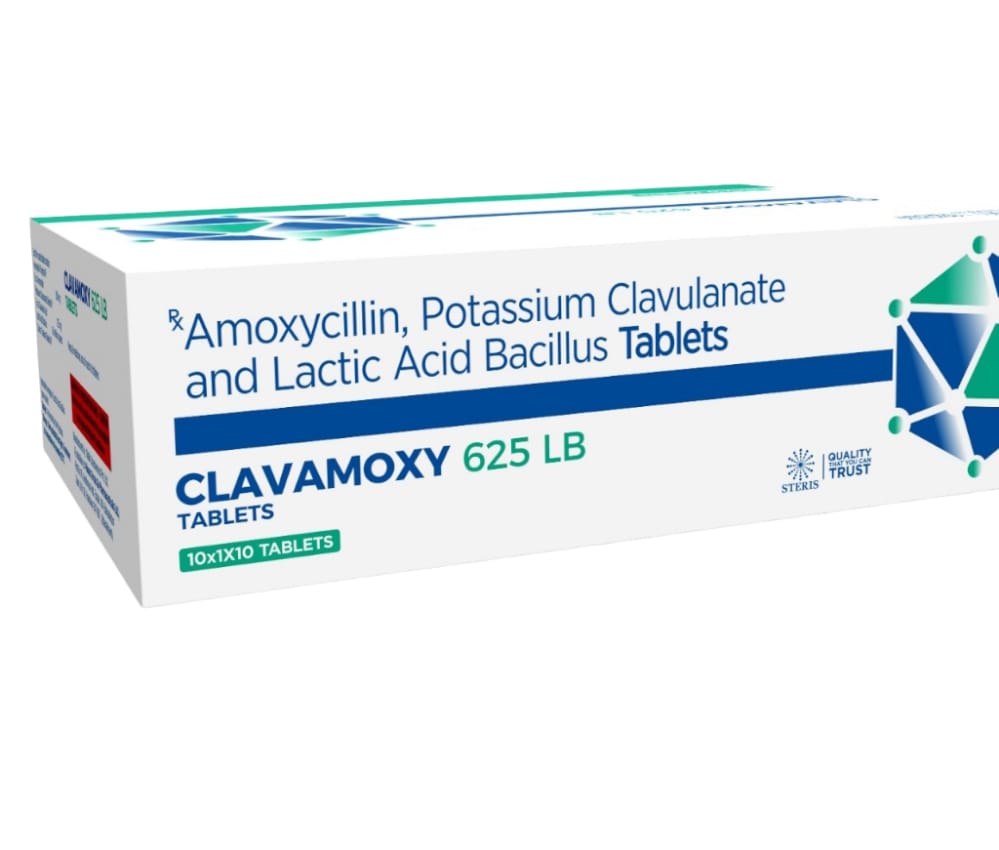
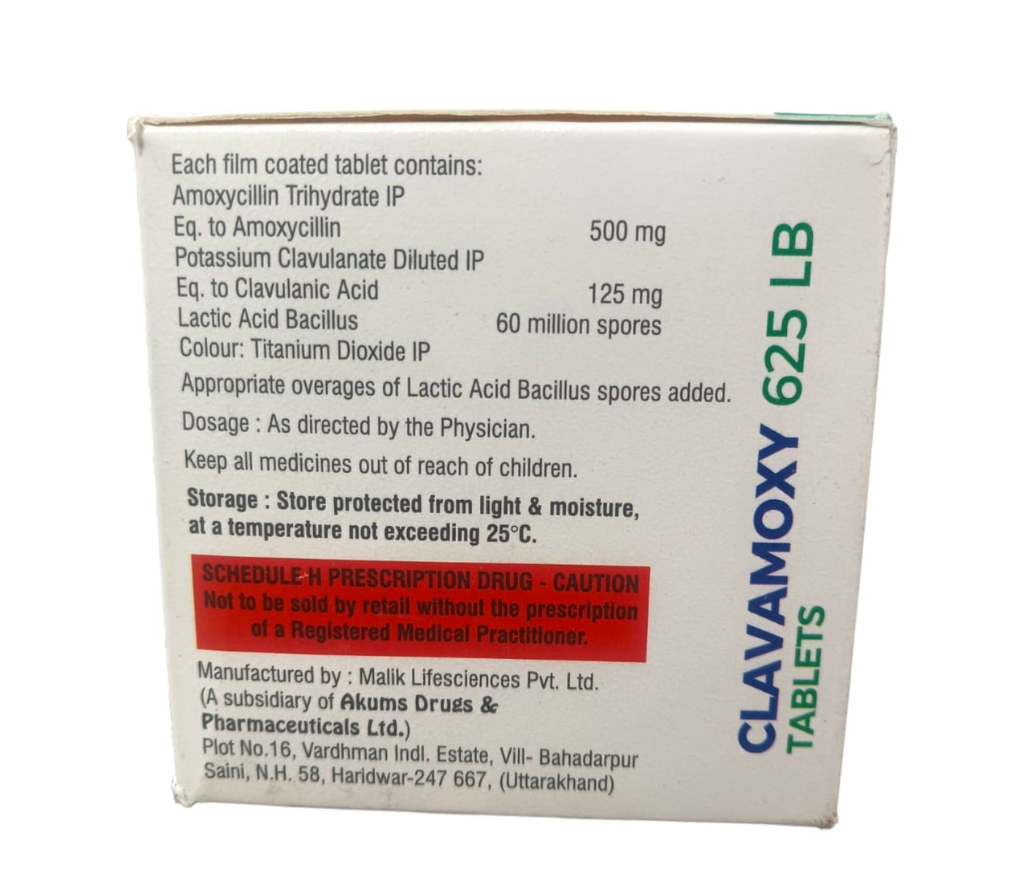
CLAVAMOXY 625 LB
 Item requires a valid prescription
Manufactured By Steris Healthcare Pvt Ltd
Composition Amoxicillin Potassium Clavulanate and Lactic Bacillus Tablets
Rs 167.34
MRP Rs 239.06
(30% OFF)
Includes all taxes
Package SIZE
( For 10 Tablet )

100% Authentic
Products

Free
Shipping*

Products
Return Policy
Description:
Amoxicillin potassium clavulanate is a combination antibiotic used to treat bacterial infections such as sinusitis, pneumonia, ear infections, and UTIs.The clavulanate component blocks bacterial enzymes that would otherwise destroy amoxicillin, making this combination effective even against amoxicillin-resistant bacteria. It is a prescription-only (Schedule H) medicine available as tablets, oral suspension, and injectable forms, typically taken every 8–12 hours with food to reduce stomach upset. Common side effects include diarrhea, nausea, and mild rash; serious but rare effects include liver problems and severe allergic reactions. This guide covers everything you need to know — from mechanism of action to buyer-relevant dosage and safety information — reviewed against current clinical prescribing practices.
What Is Amoxicillin Potassium Clavulanate?
Amoxicillin potassium clavulanate — often called co-amoxiclav or sold under names like Augmentin-type formulations — is a fixed-dose combination antibiotic. It merges two active pharmaceutical ingredients:
- Amoxicillin — a semi-synthetic penicillin antibiotic that kills bacteria by disrupting their cell wall synthesis.
- Potassium clavulanate — a beta-lactamase inhibitor with weak antibacterial activity on its own, but a powerful ability to block the enzyme (beta-lactamase) that many bacteria produce specifically to neutralize amoxicillin.
By combining the two, doctors get an antibiotic that retains amoxicillin's broad activity while overcoming one of the most common forms of bacterial resistance. This makes amoxicillin potassium clavulanate one of the most widely prescribed antibiotics globally for community-acquired infections.
Clinical Indications Table
| Infection Type | Common Causative Bacteria | Why This Combination Is Used |
|---|---|---|
| Sinusitis & Otitis Media (ear infections) | H. influenzae, M. catarrhalis, S. pneumoniae | Many strains produce beta-lactamase, resisting plain amoxicillin |
| Community-acquired pneumonia & bronchitis | S. pneumoniae, H. influenzae | Broader respiratory coverage than amoxicillin alone |
| Urinary tract infections (UTIs) | E. coli, Klebsiella spp. | Effective against beta-lactamase-producing uropathogens |
| Skin & soft tissue infections | S. aureus, Streptococcus spp. | Covers resistant staphylococcal strains |
| Dental abscess & periodontal infections | Mixed oral anaerobes | Broad-spectrum anaerobic and aerobic coverage |
| Animal/human bite wounds | Mixed flora including Pasteurella | Preferred first-line agent per clinical guidelines |
Mechanism of Action: How It Works in the Body
Understanding how amoxicillin potassium clavulanate works helps explain why it's often chosen over amoxicillin alone:
- Amoxicillin binds to penicillin-binding proteins (PBPs) on the bacterial cell wall, preventing the bacteria from building a stable wall. Without this wall, the bacteria cannot maintain internal pressure and eventually rupture (lysis).
- Potassium clavulanate has a beta-lactam ring structurally similar to amoxicillin, but instead of killing bacteria, it acts as a decoy. It binds irreversibly to beta-lactamase enzymes, neutralizing them before they can destroy the amoxicillin molecule.
- Together, this "protected penicillin" approach restores amoxicillin's effectiveness against many resistant bacterial strains that would otherwise survive treatment.
Key Benefits of Amoxicillin Potassium Clavulanate
- Broader antibacterial coverage — Effective against both amoxicillin-susceptible and many amoxicillin-resistant bacteria.
- Well-established safety profile — Decades of clinical use with predictable, well-documented side effects.
- Versatile dosage forms — Available as immediate-release tablets, extended-release tablets, oral suspension (useful for children and patients with swallowing difficulty), and IV/injectable forms for hospital use.
- First-line status — Recommended in many national and international treatment guidelines for sinusitis, otitis media, and animal bite wounds.
- Cost-effective compared to newer antibiotics — Offers broad-spectrum activity at a fraction of the cost of newer-generation antibiotics, making it accessible for high-volume outpatient use.
- Rapid onset of clinical improvement — Many patients report symptom relief within 48–72 hours of starting therapy for susceptible infections.
- Pediatric-friendly formulations — Flavored oral suspensions improve compliance in children, a key factor in successful treatment completion.
Dosage Guidance
| Population | Typical Dosing Pattern | Frequency |
|---|---|---|
| Adults (mild-moderate infection) | Standard tablet strength | Every 12 hours |
| Adults (severe infection) | Higher tablet strength | Every 8 hours |
| Children (weight-based) | Oral suspension per body weight | Every 12 hours |
| Renal impairment | Dose/interval adjusted | As advised by physician |
Important dosing notes:
- Always complete the full course, even if symptoms improve early — stopping early is a leading cause of antibiotic resistance.
- Take with the first bite of a meal to minimize gastrointestinal side effects and improve absorption.
- Space doses as evenly as possible across the day (e.g., 12-hourly dosing means roughly every 12 hours, not "twice during waking hours").
- Do not double the dose if one is missed — take it as soon as remembered unless it's close to the next dose.
Side Effects of Amoxicillin Potassium Clavulanate
Common (Usually Mild and Self-Limiting)
- Diarrhea (the most frequently reported side effect, due to disruption of normal gut flora)
- Nausea or vomiting
- Stomach discomfort or bloating
- Mild skin rash
- Headache
- Vaginal itching or discharge (yeast overgrowth) in some women
Less Common but Important
- Dark urine or pale stools (possible early sign of liver involvement)
- Yellowing of skin or eyes (jaundice)
- Persistent or bloody diarrhea (may indicate C. difficile-associated colitis)
- Unusual bruising or bleeding
Serious (Seek Immediate Medical Attention)
- Signs of a severe allergic reaction: swelling of the face/lips/tongue, difficulty breathing, widespread hives
- Severe skin reactions (blistering, peeling skin)
- Signs of liver dysfunction (marked fatigue, abdominal pain, jaundice)
- Severe, watery, or bloody diarrhea that doesn't improve
Who Should Be Cautious:
- Patients with a known penicillin or cephalosporin allergy should avoid this medicine entirely.
- Patients with a history of liver problems linked to this specific antibiotic combination should not be re-prescribed it.
- Pregnant or breastfeeding individuals should use only under medical supervision.
- Patients with kidney impairment may need dose adjustment.
Precautions and Drug Interactions
- Alcohol: While not strictly contraindicated, alcohol can worsen gastrointestinal side effects and stress the liver during antibiotic metabolism — moderation or avoidance is generally advised.
- Oral contraceptives: Antibiotics can occasionally reduce the reliability of hormonal birth control; backup contraception is often recommended during the course.
- Other medications: Inform your doctor about blood thinners (e.g., warfarin), allopurinol, or methotrexate, as interactions are possible.
- Existing conditions: Disclose any history of liver disease, kidney disease, mononucleosis, or gastrointestinal disorders (like colitis) before starting therapy.
- Vaccines: Live bacterial vaccines (e.g., typhoid oral vaccine) may be less effective if taken during antibiotic therapy — space them apart as advised by your doctor.
Comparison with Similar Antibiotic Substitutes
| Medicine | Class | Key Difference |
|---|---|---|
| Amoxicillin potassium clavulanate | Penicillin + beta-lactamase inhibitor | Broadest coverage among oral penicillins; overcomes common resistance |
| Amoxicillin (alone) | Penicillin | No protection against beta-lactamase-producing bacteria |
| Azithromycin | Macrolide | Alternative for penicillin-allergic patients; different resistance profile |
| Cefuroxime | Cephalosporin | Similar spectrum, used when penicillin allergy is mild/uncertain |
| Doxycycline | Tetracycline | Preferred for atypical pathogens; not first-line for most bacterial sinusitis/UTI |
Conclusion
Amoxicillin potassium clavulanate remains one of the most trusted and versatile antibiotics in modern medicine because it solves a very specific problem: bacterial resistance driven by beta-lactamase enzymes. By combining amoxicillin's proven bacteria-killing action with clavulanate's resistance-blocking function, this medicine offers reliable coverage across respiratory, urinary, skin, dental, and wound infections. Like all antibiotics, it works best — and most safely — when taken exactly as prescribed, for the full duration, and under a doctor's guidance. If you or a family member has been prescribed amoxicillin potassium clavulanate, understanding its uses, benefits, and possible side effects can help you use it more confidently and complete your treatment successfully.
Frequently Asked Questions
1. What is amoxicillin potassium clavulanate used for?
It is used to treat bacterial infections of the respiratory tract (sinusitis, bronchitis, pneumonia), ear (otitis media), urinary tract, skin and soft tissue, dental abscesses, and bite wounds — especially infections caused by bacteria resistant to plain amoxicillin.
2. What is amoxicillin potassium clavulanate acid used for?
"Clavulanic acid" (the acid form of clavulanate) is combined with amoxicillin to block bacterial enzymes called beta-lactamases. This prevents resistant bacteria from breaking down amoxicillin, allowing the antibiotic to work effectively against infections that plain amoxicillin might fail to treat.
3. Is amoxicillin Clav a strong antibiotic?
Yes, it is considered a broad-spectrum, moderately strong antibiotic. It is effective against a wide range of bacteria, including many resistant strains, which is why it's a first-line choice for several common infections. However, "strength" always depends on the specific bacteria being treated — it is not effective against viral infections like colds or flu.
4. What to avoid when taking amoxicillin Clav?
Avoid excessive alcohol consumption, skipping doses, stopping the course early even if you feel better, and taking it without food (which increases stomach upset). Also avoid it entirely if you have a known penicillin allergy or a prior history of liver problems linked to this antibiotic.
5. What should I tell my doctor before taking amoxicillin Clav?
Tell your doctor about any allergies to penicillin or cephalosporins, liver or kidney disease, history of antibiotic-associated diarrhea or colitis, pregnancy or breastfeeding status, and all other medicines or supplements you currently take.
6. When is the best time to take amoxicillin clavulanate?
It is best taken at the start of a meal, at evenly spaced intervals (such as every 8 or every 12 hours, depending on your prescription), to maximize absorption and reduce gastrointestinal side effects.
7. Can amoxicillin potassium clavulanate treat a tooth infection?
Yes, it is commonly prescribed for dental abscesses and periodontal infections because it covers the mixed bacteria typically found in oral infections.
8. How long does it take for amoxicillin Clav to start working?
Most patients notice improvement in symptoms within 48–72 hours. However, the full prescribed course should always be completed to fully clear the infection and prevent resistance.
9. Can I stop taking amoxicillin Clav once I feel better?
No. Stopping early — even if symptoms improve — can allow surviving bacteria to develop resistance and cause the infection to return, often more severely.
10. Is diarrhea a common side effect of amoxicillin Clav?
Yes, diarrhea is the most frequently reported side effect due to disruption of normal gut bacteria. Mild diarrhea usually resolves after the course ends, but persistent or bloody diarrhea should be reported to a doctor immediately.
11. Can pregnant women take amoxicillin potassium clavulanate? It may be prescribed during pregnancy when the benefits outweigh potential risks, but only under a doctor's supervision and after evaluating the specific clinical situation.
12. Does amoxicillin Clav interact with birth control pills?
It may reduce the effectiveness of hormonal contraceptives in some cases. Using a backup contraceptive method during treatment is generally recommended.
13. What is the difference between amoxicillin and amoxicillin potassium clavulanate?
Amoxicillin alone treats bacteria that are not resistant to it. Amoxicillin potassium clavulanate adds clavulanate, which blocks bacterial resistance enzymes, allowing it to treat a broader range of infections, including resistant strains.
14. Can children take amoxicillin potassium clavulanate?
Yes, it is commonly prescribed for children, usually as a flavored oral suspension dosed according to body weight, for infections like ear infections and sinusitis.
15. What should I do if I miss a dose of amoxicillin Clav?
Take the missed dose as soon as you remember. If it's almost time for your next dose, skip the missed one — never double up to make up for a missed dose.
16. Can amoxicillin potassium clavulanate cause an allergic reaction?
Yes, particularly in people with a penicillin allergy. Signs include rash, hives, swelling of the face or throat, and difficulty breathing — this requires immediate emergency medical attention.
17. Is it safe to drink alcohol while taking amoxicillin Clav?
Alcohol is not strictly forbidden, but it can intensify stomach side effects and put extra strain on the liver during treatment, so moderation or avoidance is generally advised.
If You Need More Information About CLAVAMOXY 625 LB Click here

