


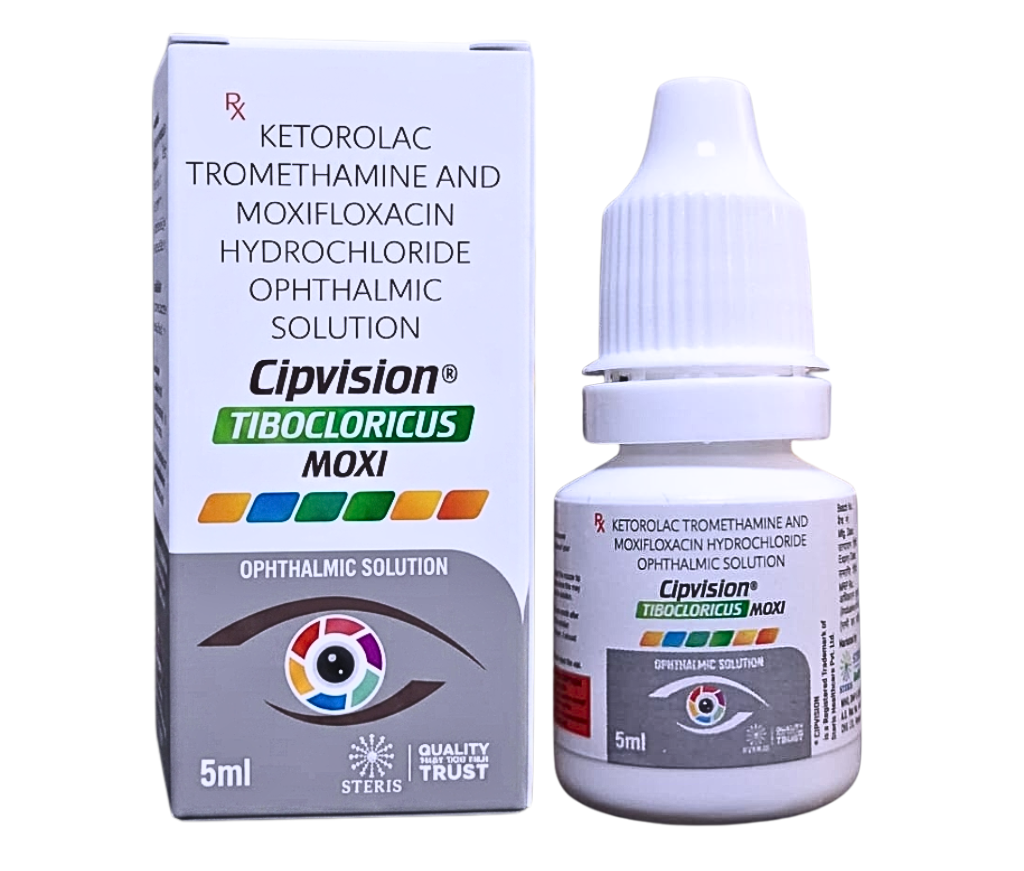
CIPVISION TIBOCLORICUS MOXI
 Item requires a valid prescription
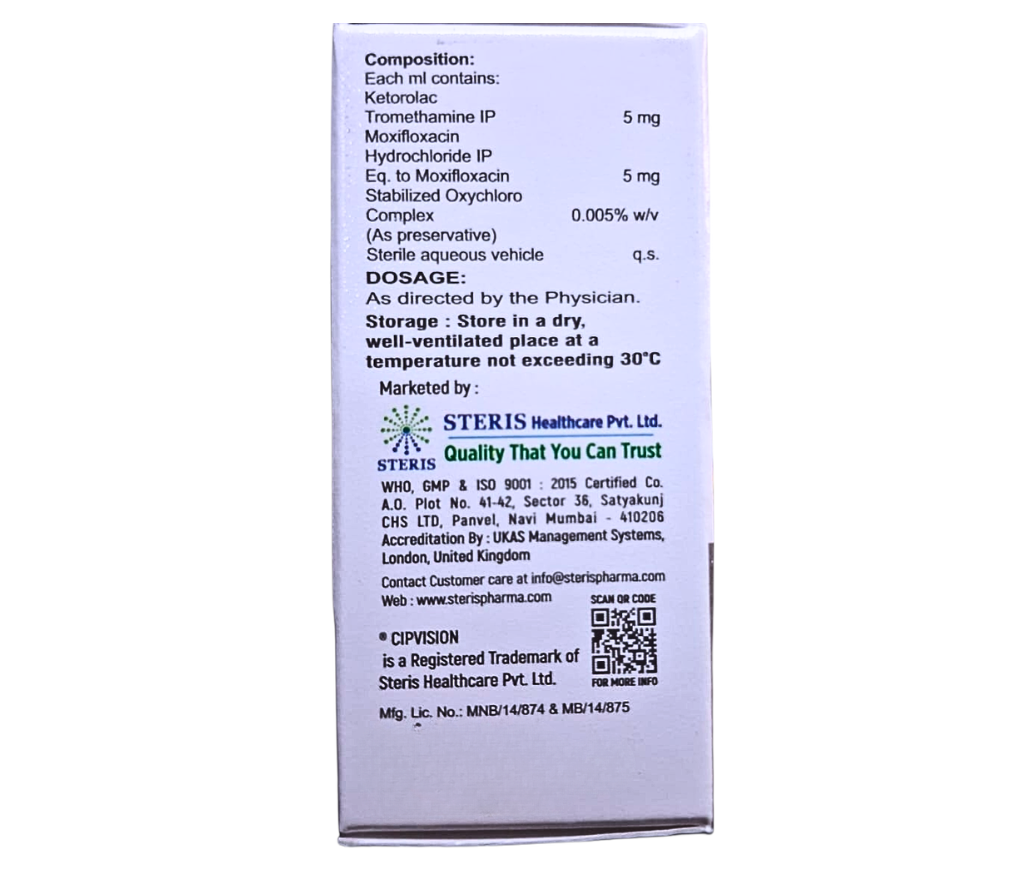
Manufactured By Steris Healthcare Pvt Ltd
Composition Ketorolac Tromethamine And Moxifloxacin Hydrochloride Ophthalmic Solution
Rs 105.00
MRP Rs 150.00
(30% OFF)
Includes all taxes
Package SIZE
( For 5 ml )

100% Authentic
Products

Free
Shipping*

Products
Return Policy
Description:
Ketorolac, tromethamine, and moxifloxacin hydrochloride ophthalmic solution are a combination ophthalmic medicine containing an NSAID (non-steroidal anti-inflammatory drug) and an antibiotic. It is designed for situations where an eye-care professional considers both ocular inflammation or discomfort and bacterial infection or the risk of bacterial infection relevant to treatment.
Ketorolac tromethamine helps control inflammation and associated ocular discomfort, while moxifloxacin is a fluoroquinolone antibiotic that acts against susceptible bacteria. The exact indication, concentration, dosing schedule, and approved uses depend on the particular product and the country in which it is marketed.
For consumers searching to buy ketorolac tromethamine and moxifloxacin hydrochloride ophthalmic solution, understanding the composition, intended use, benefits, side effects, precautions, and proper purchasing considerations is essential. This guide provides medically focused information to help patients and buyers make informed decisions.
What Is Ketorolac, Tromethamine, and Moxifloxacin Ophthalmic Solution?
This combination contains two active medicines with different functions.
Ketorolac tromethamine is an ophthalmic NSAID. It works by inhibiting cyclooxygenase enzymes involved in prostaglandin production, helping reduce inflammatory responses and associated ocular discomfort. Current prescribing information for ketorolac ophthalmic solution includes treatment of postoperative inflammation following cataract extraction and temporary relief of ocular itching associated with seasonal allergic conjunctivitis, depending on the formulation.
Moxifloxacin hydrochloride is a fluoroquinolone antibacterial medicine. In ophthalmic preparations, it is used to treat susceptible bacterial eye infections. The antibiotic component makes this combination different from an anti-inflammatory eye drop containing ketorolac alone.
The combination may therefore be selected when antibacterial coverage and anti-inflammatory treatment are both clinically appropriate. However, not every red, painful, or irritated eye requires an antibiotic or NSAID, and self-treatment can delay diagnosis of potentially serious eye conditions.
Uses of Ketorolac, Tromethamine, and Moxifloxacin Ophthalmic Solution
The specific uses depend on the manufacturer's approved product information and the patient's diagnosis. In clinical practice, the combination may be prescribed when an ophthalmologist wants to address bacterial infection together with ocular inflammation, including selected postoperative or inflammatory eye conditions.
Potential uses may include:
- Management of appropriate bacterial ocular infections accompanied by inflammation.
- Treatment following certain ophthalmic procedures when both antibacterial and anti-inflammatory therapy is prescribed.
- Reduction of inflammatory symptoms associated with a diagnosed condition where an ophthalmic NSAID is appropriate.
- Supporting recovery when an eye-care professional determines that combination therapy is necessary.
Ketorolac ophthalmic products are specifically indicated in current U.S. labeling for postoperative inflammation after cataract extraction and temporary relief of itching from seasonal allergic conjunctivitis.
Importantly, the presence of an antibiotic does not mean the product treats every type of eye infection. Antibiotics work against bacteria, not viral or fungal infections. An ophthalmologist should determine whether bacterial infection is present or suspected before treatment.
Key Benefits
The main potential benefit of Ketorolac, Tromethamine, and Moxifloxacin Hydrochloride Ophthalmic Solution is its dual-action approach.
Ketorolac can help reduce ocular inflammation and discomfort, while moxifloxacin provides antibacterial activity against susceptible organisms. Using a combination product, where clinically appropriate, may also simplify a treatment regimen compared with administering separate antibiotic and anti-inflammatory drops.
Potential benefits include:
- Anti-inflammatory action: Ketorolac helps reduce inflammatory activity in the eye.
- Antibacterial coverage: Moxifloxacin targets susceptible bacteria responsible for certain ocular infections.
- Convenient combination therapy: One prescribed ophthalmic preparation may reduce the number of separate bottles required.
- Postoperative support: Depending on the specific formulation and physician's assessment, combination therapy may be considered after ophthalmic procedures.
The expected benefit depends on the diagnosis, severity of the condition, bacterial susceptibility, treatment duration, and individual response. Ketorolac should not be regarded as a general-purpose painkiller for unexplained eye pain.
Dosage and How to Use It
There is no single universal dosage for every ketorolac-and-moxifloxacin ophthalmic product because concentrations and regulatory approvals can differ. Patients should use the exact dose and frequency prescribed by their ophthalmologist.
For comparison, current U.S. labeling for ketorolac tromethamine ophthalmic solution 0.5% recommends one drop four times daily for certain approved indications, including postoperative inflammation after cataract extraction. This information should not be automatically applied to a combination product.
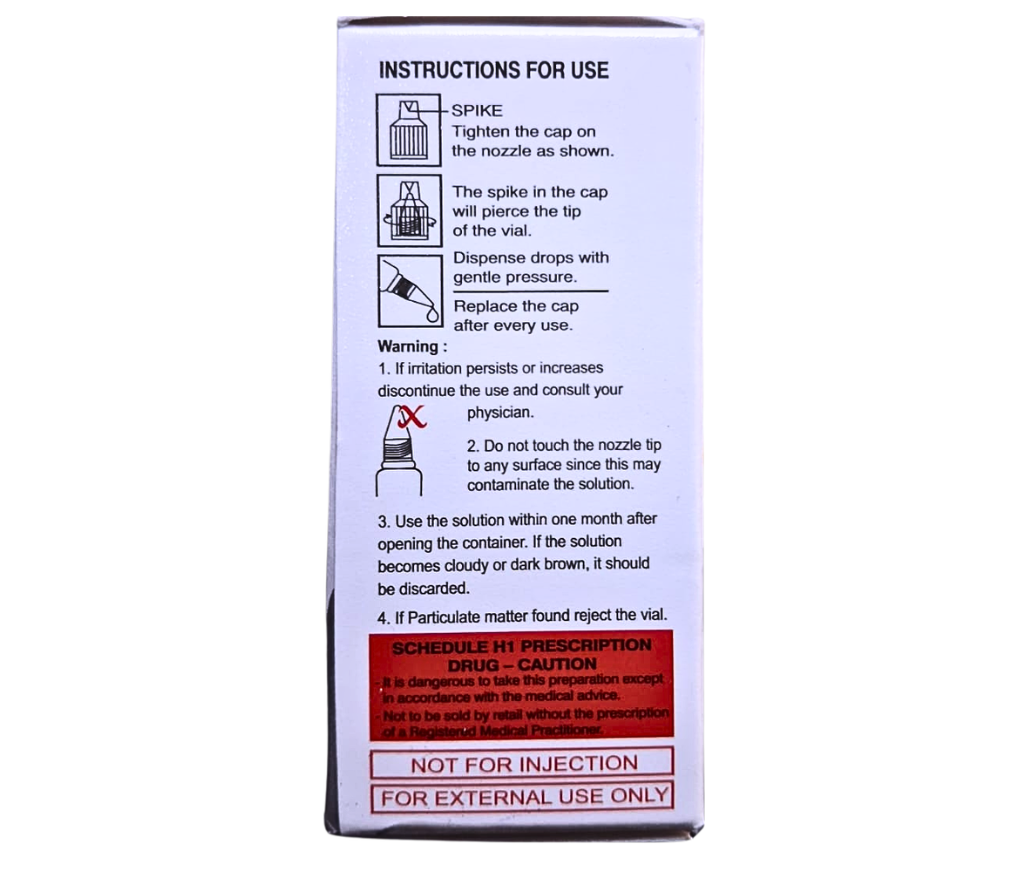
Before applying eye drops, wash your hands thoroughly. Avoid touching the dropper tip against your eye, eyelids, eyelashes, fingers, or other surfaces. Contamination can introduce microorganisms into an ophthalmic preparation.
If you use more than one eye medicine, ask your doctor or pharmacist how much time should be left between products. Do not increase the number of drops or extend treatment because symptoms have not improved.
If you miss a dose, follow the instructions provided with your prescription. Do not routinely double the next dose unless specifically instructed by your healthcare professional.
Side Effects
Possible side effects can include temporary burning, stinging, irritation, redness, itching, watering, blurred vision, or discomfort after application.
Transient stinging and burning are among the most frequently reported adverse reactions with ketorolac ophthalmic solution.
Ketorolac ophthalmic products also carry important warnings involving delayed healing, hypersensitivity, increased bleeding time, and corneal complications such as keratitis.
Because moxifloxacin is an antibiotic, hypersensitivity or allergic reactions are also possible. Seek prompt medical attention if you experience severe swelling, difficulty breathing, marked eye pain, significant vision changes, or symptoms of a serious allergic reaction.
Do not continue using the product indefinitely simply because mild redness or discomfort persists. Persistent symptoms require professional reassessment.
Precautions and Warnings
Appropriate precautions are particularly important with ophthalmic NSAIDs.
Ketorolac can potentially delay corneal healing and may contribute to serious corneal complications in susceptible patients. Current prescribing information also warns about increased bleeding time and hypersensitivity reactions.
Tell your ophthalmologist if you:
- Have previously experienced an allergy to ketorolac, aspirin, other NSAIDs, or quinolone antibiotics.
- Have a history of corneal disease or eye-surface problems.
- Have recently undergone eye surgery.
- Have bleeding problems or take medicines that affect blood clotting.
- Wear contact lenses.
- Are pregnant, planning pregnancy, or breastfeeding.
- Use other prescription or non-prescription eye medicines.
Contact-lens wearers should follow the exact instructions for their formulation. Some ophthalmic preparations contain preservatives that can be absorbed by soft contact lenses.
Do not share your eye drops with another person. Always keep the bottle properly closed and follow the manufacturer's storage instructions.
Buying Ketorolac Tromethamine and Moxifloxacin Hydrochloride Ophthalmic Solution
If you are searching for ketorolac tromethamine and moxifloxacin hydrochloride ophthalmic solution online, verify the product carefully before purchasing.
Check the:
- Exact active ingredients and their concentrations.
- Dosage form and bottle size.
- Manufacturer and regulatory information.
- Batch or lot number.
- Manufacturing and expiry dates.
- Packaging integrity.
- Storage requirements.
- Prescription requirements in your country.
For prescription ophthalmic medicines, choosing a legitimate pharmacy is more important than selecting the lowest advertised price. Avoid products with damaged packaging, unclear labeling, unusually low prices, or uncertain storage history.
A buyer should also confirm that the product actually contains both ketorolac tromethamine and moxifloxacin hydrochloride, because similarly named eye drops may contain only one active ingredient.
Conclusion
Ketorolac, tromethamine, and moxifloxacin hydrochloride ophthalmic solution combine an ophthalmic NSAID with an antibiotic, providing anti-inflammatory and antibacterial actions when both are medically appropriate. Ketorolac can help control ocular inflammation and discomfort, while moxifloxacin provides antibacterial treatment against susceptible organisms.
The most important buyer consideration is to verify the exact formulation, strength, manufacturer, expiry date, and prescription instructions rather than relying solely on a product name. Current ketorolac ophthalmic labeling highlights risks including delayed healing, corneal effects, hypersensitivity, and increased bleeding time, making professional guidance particularly important.
Frequently Asked Questions
1. What is Ketorolac Tromethamine and Moxifloxacin Hydrochloride Ophthalmic Solution used for?
It may be prescribed when an eye condition requires both antibacterial treatment and control of inflammation. The exact approved use depends on the particular product and the patient's diagnosis.
2. Is this eye drop an antibiotic or an anti-inflammatory?
It is a combination medicine. Moxifloxacin is the antibiotic component, while ketorolac tromethamine is an NSAID that helps reduce ocular inflammation.
3. Can I use ketorolac and moxifloxacin eye drops for any red eye?
No. Red eyes can have bacterial, viral, allergic, traumatic, or other causes. An antibiotic/NSAID combination should be used only when medically appropriate and prescribed or recommended by an eye-care professional.
4. What are the common side effects of ketorolac and moxifloxacin eye drops?
Temporary burning or stinging, irritation, redness, itching, watering, discomfort, or blurred vision may occur. Ketorolac ophthalmic products commonly report transient stinging and burning after administration.
5. Can Ketorolac, Tromethamine, and Moxifloxacin Ophthalmic Solution be used after eye surgery?
It may be prescribed after certain ophthalmic procedures when the treating ophthalmologist considers both antibacterial and anti-inflammatory treatment appropriate. The timing and duration depend on the specific surgery and product.
6. How often should I use this ophthalmic solution?
The correct schedule depends on the exact product and your prescription. Do not copy the dosing instructions for ketorolac-only or moxifloxacin-only eye drops. Follow the directions provided by your ophthalmologist.
7. Can I wear contact lenses while using this eye medicine?
Contact-lens use depends on the formulation and its ingredients. Ask your eye-care professional and check the product label for specific instructions before wearing lenses during treatment.
8. Can I buy Ketorolac, Tromethamine, and Moxifloxacin Hydrochloride Ophthalmic Solution online?
Where legally permitted, it should be purchased from a legitimate pharmacy and used according to a valid medical prescription or professional recommendation. Verify the ingredients, strength, manufacturer, expiry date, and packaging before purchase.
9. What should I do if the eye becomes more painful after using the drops?
Stop self-treatment and contact an eye-care professional promptly, particularly if pain is severe, vision becomes worse, light sensitivity increases, or the eye develops significant swelling or discharge.
10. Does this medicine treat viral or fungal eye infections?
No. Moxifloxacin is an antibacterial medicine and does not treat viral or fungal infections. Using an antibiotic-containing product without the correct diagnosis can delay appropriate treatment.
11. Why is ketorolac included with moxifloxacin?
Ketorolac and moxifloxacin have different therapeutic roles. Ketorolac addresses inflammation, while moxifloxacin targets susceptible bacteria. A combination may therefore be useful when both treatment objectives are clinically justified.
12. What should I check before buying this eye drop?
Check the active ingredients, concentration, manufacturer, batch number, expiry date, packaging, storage requirements, and pharmacy legitimacy.

