


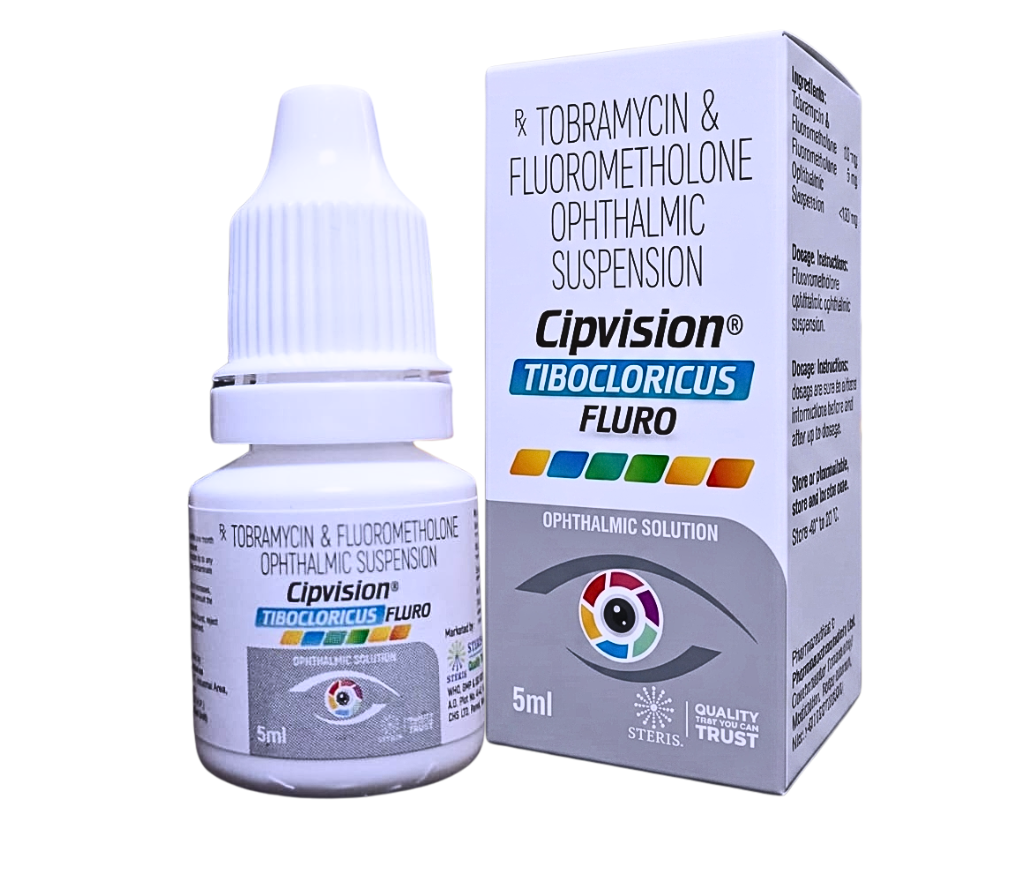


CIPVISION TIBOCLORICUS FLURO
 Item requires a valid prescription
Manufactured By Steris Healthcare Pvt Ltd
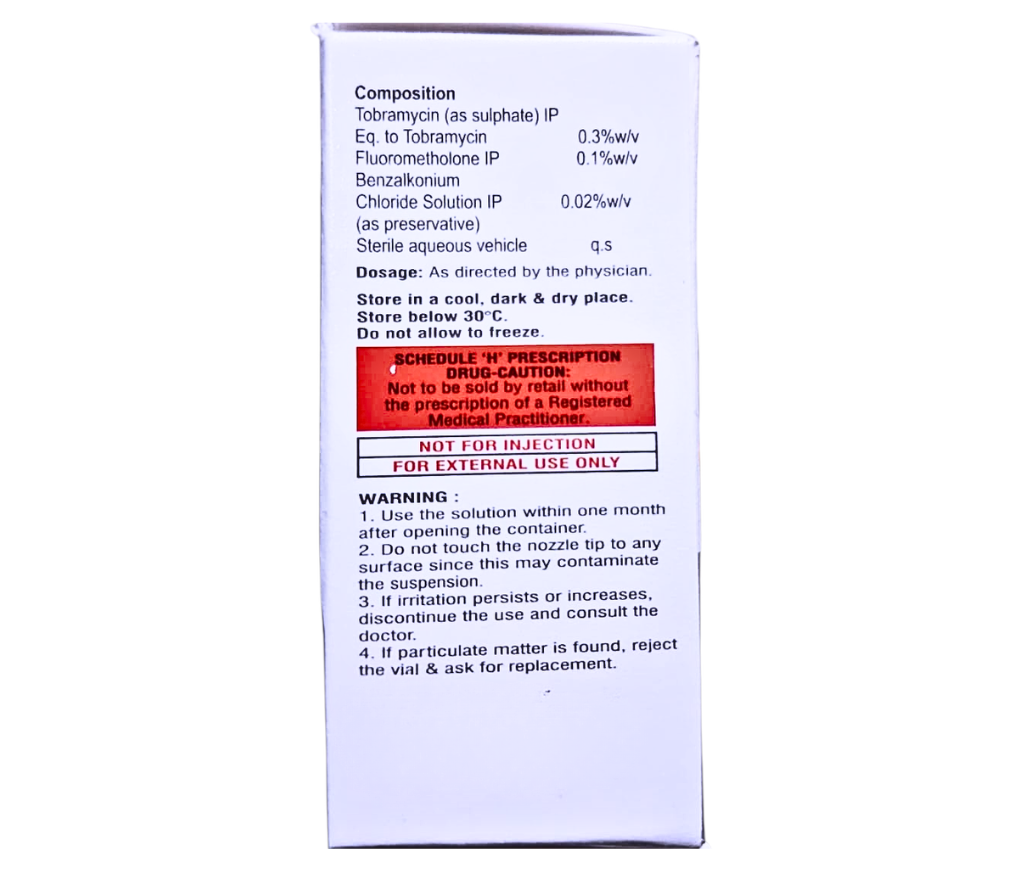
Composition Tobramycin & Fluorometholone Ophthalmic Suspension
Rs 112.00
MRP Rs 160.00
(30% OFF)
Includes all taxes
Package SIZE
( For 5 ml )

100% Authentic
Products

Free
Shipping*

Products
Return Policy
Description:
Tobramycin & fluorometholone ophthalmic suspension is a prescription eye medicine that combines an antibiotic with a corticosteroid. This type of combination is intended for certain eye conditions where bacterial infection or the risk of bacterial infection occurs together with steroid-responsive ocular inflammation. Tobramycin provides antibacterial activity, while fluorometholone helps reduce inflammation, redness, swelling, and related discomfort.
Because corticosteroid-containing eye medicines require careful diagnosis and monitoring, this product should be used only when prescribed by a qualified eye-care professional. Current ophthalmic labeling emphasizes that corticosteroids can increase intraocular pressure and may worsen or mask certain infections when used inappropriately.
What Is Tobramycin & Fluorometholone Ophthalmic Suspension?
Tobramycin is an aminoglycoside antibiotic used ophthalmically to treat susceptible bacterial eye infections. It works by interfering with bacterial protein production, helping eliminate bacteria responsible for infection.
Fluorometholone is an ophthalmic corticosteroid that reduces inflammatory responses in the eye. Fluorometholone ophthalmic suspension is indicated for corticosteroid-responsive inflammation involving structures such as the conjunctiva, cornea, and anterior segment of the eye.
A combination of these ingredients may therefore be useful when an eye condition requires both antibacterial treatment and control of inflammation. However, the precise indication depends on the particular manufacturer's formulation and local regulatory approval.
Uses of Tobramycin & Fluorometholone Ophthalmic Suspension
The product may be prescribed for selected inflammatory eye conditions associated with, or considered likely to be associated with, susceptible bacterial infection.
Potential therapeutic uses include:
- Managing bacterial eye infections when an accompanying inflammatory response requires corticosteroid treatment.
- Reducing ocular redness, swelling, irritation, and inflammation associated with appropriate conditions.
- Supporting treatment when both antimicrobial and anti-inflammatory effects are clinically indicated.
- Treating selected postoperative or other ocular inflammatory conditions when specifically prescribed by an ophthalmologist.
Tobramycin alone is specifically used to treat bacterial eye infections, while fluorometholone addresses steroid-responsive inflammation.
It is important to understand that this medicine is not appropriate for every red or irritated eye. Viral, fungal, and some other infections can be worsened or masked by ophthalmic corticosteroids. Fluorometholone labeling specifically contraindicates use in several viral, fungal, and mycobacterial ocular diseases.
Key Benefits
The principal potential benefit of tobramycin & fluorometholone ophthalmic suspension is its dual therapeutic approach.
Tobramycin targets susceptible bacteria, helping treat the infectious component of an appropriate eye condition. Fluorometholone suppresses inflammation, which can help reduce symptoms such as redness, swelling, irritation, and discomfort.
For appropriately selected patients, combining these actions in one ophthalmic formulation can simplify treatment compared with using separate antibiotic and corticosteroid products.
However, the benefit depends heavily on correct diagnosis. An antibiotic does not treat viral infections, while a steroid can potentially worsen certain untreated infections. Therefore, using this product without professional evaluation is not recommended.
How to Use It and Dosage
The dosage of a tobramycin & fluorometholone ophthalmic suspension should be based on the specific product's prescribing information and the ophthalmologist's instructions. Combination products can differ in ingredient concentrations and approved dosing schedules, so patients should not assume that the dose of one brand applies to another.
Before administration, wash your hands and avoid allowing the bottle tip to touch the eye, eyelashes, fingers, or other surfaces. Contamination of an ophthalmic dropper can introduce microorganisms into the product. MedlinePlus provides similar administration precautions for ophthalmic tobramycin.
If the product is a suspension, shake it well before use when instructed by the product labeling. Current fluorometholone suspension labeling specifically instructs patients to shake the bottle before administration.
Do not increase the frequency, extend treatment, or discontinue a corticosteroid-containing eye medicine prematurely without medical advice. If symptoms do not improve promptly or become worse, the eye should be reassessed.
Side Effects
Possible side effects of tobramycin & fluorometholone ophthalmic suspension can include temporary burning, stinging, irritation, itching, redness, tearing, swelling, blurred vision, or a foreign-body sensation.
Tobramycin ophthalmic preparations can cause eye tearing, itching, stinging, burning, swelling, and temporary visual blurring.
Fluorometholone can cause corticosteroid-related adverse effects, including increased intraocular pressure, glaucoma, delayed wound healing, cataract formation, and secondary ocular infections, particularly with prolonged use. DailyMed
Seek prompt medical attention for significant eye pain, worsening vision, severe swelling, breathing difficulty, severe allergic symptoms, or worsening infection.
Precautions and Warnings
The corticosteroid component makes this combination medicine particularly important to use under medical supervision.
Prolonged ophthalmic corticosteroid use may increase intraocular pressure and potentially contribute to glaucoma or optic-nerve damage. Current labeling recommends monitoring intraocular pressure when ophthalmic fluorometholone is used for 10 days or longer.
Corticosteroids may also suppress the immune response and increase the risk of secondary infections. They can mask an existing infection or allow certain infections to become more severe. Viral, fungal, and mycobacterial eye diseases require particular caution and may be contraindications.
Patients should tell their ophthalmologist about previous glaucoma, eye surgery, corneal problems, recurrent herpes eye disease, allergies to aminoglycoside antibiotics, and all other eye medicines being used.
Contact-lens wearers should follow the product-specific instructions. For fluorometholone suspension containing benzalkonium chloride, current labeling advises removing soft contact lenses before administration and waiting at least 15 minutes before reinserting them.
Buying Tobramycin & Fluorometholone Ophthalmic Suspension
If you are looking to buy tobramycin & fluorometholone ophthalmic suspension, verify the exact active ingredients, strengths, manufacturer, batch number, expiry date, packaging, and storage instructions. Because prescription ophthalmic combinations can vary by market, purchasing based only on the product name may lead to selecting the wrong formulation.
Buy prescription eye medicines from a legitimate, regulated pharmacy and follow the prescription provided by your eye-care professional. Avoid products with damaged packaging, unclear labeling, or uncertain storage history.
Conclusion
Tobramycin & fluorometholone ophthalmic suspension combines antibacterial and anti-inflammatory treatment in an ophthalmic formulation. Tobramycin targets susceptible bacterial infections, while fluorometholone reduces steroid-responsive ocular inflammation. This combination can be useful when both treatment objectives are medically appropriate.
Because the corticosteroid component can increase eye pressure, delay healing, and mask or worsen certain infections, this is not a routine treatment for unexplained red eyes. Correct diagnosis, appropriate dosing, and follow-up with an eye-care professional are essential.
Frequently Asked Questions
1. What is tobramycin & fluorometholone ophthalmic suspension used for?
It is used for selected eye conditions where bacterial infection or risk of bacterial infection occurs alongside steroid-responsive inflammation. The exact indication depends on the specific product and prescription.
2. Is tobramycin & fluorometholone an antibiotic or a steroid?
It contains both. Tobramycin is an antibiotic, while fluorometholone is a corticosteroid used to reduce ocular inflammation.
3. Can I use this eye suspension for red or irritated eyes?
Not without professional evaluation. Redness can have bacterial, viral, allergic, fungal, or other causes, and corticosteroids may worsen or mask some infections.
4. What are the common side effects of tobramycin and fluorometholone eye drops?
Possible effects include temporary burning or stinging, irritation, itching, redness, tearing, swelling, and blurred vision. Longer corticosteroid exposure can increase the risk of elevated eye pressure and other complications.
5. Can I use tobramycin & fluorometholone eye drops for a long time?
Long-term use should occur only under ophthalmic supervision. Prolonged corticosteroid use can increase intraocular pressure, contribute to glaucoma or cataracts, delay healing, and increase the risk of secondary infection.
6. Should I shake tobramycin and fluorometholone ophthalmic suspension before use?
If the specific product is a suspension, follow its labeling; fluorometholone ophthalmic suspension labeling specifically instructs users to shake well before use.
7. Can I wear contact lenses while using this medicine?
Follow your product's instructions and your ophthalmologist's advice. Products containing benzalkonium chloride may require soft contact lenses to be removed before administration and reinserted after the specified waiting period.
8. Can I buy tobramycin & fluorometholone ophthalmic suspension without a prescription?
Availability and prescription requirements vary by country. Because this product contains an ophthalmic corticosteroid, it should be purchased and used according to qualified medical advice rather than self-selected for eye redness or infection.
9. When should I contact a doctor while using it?
Contact your eye-care professional if symptoms worsen, fail to improve as expected, vision changes significantly, or significant pain develops. Urgent evaluation is appropriate for severe allergic symptoms, major vision changes, or serious eye complications.
10. Does this medicine cure every type of eye infection?
No. Tobramycin targets susceptible bacteria, while fluorometholone treats inflammation. The combination is not appropriate for every eye infection, particularly certain viral, fungal, and mycobacterial infections

