


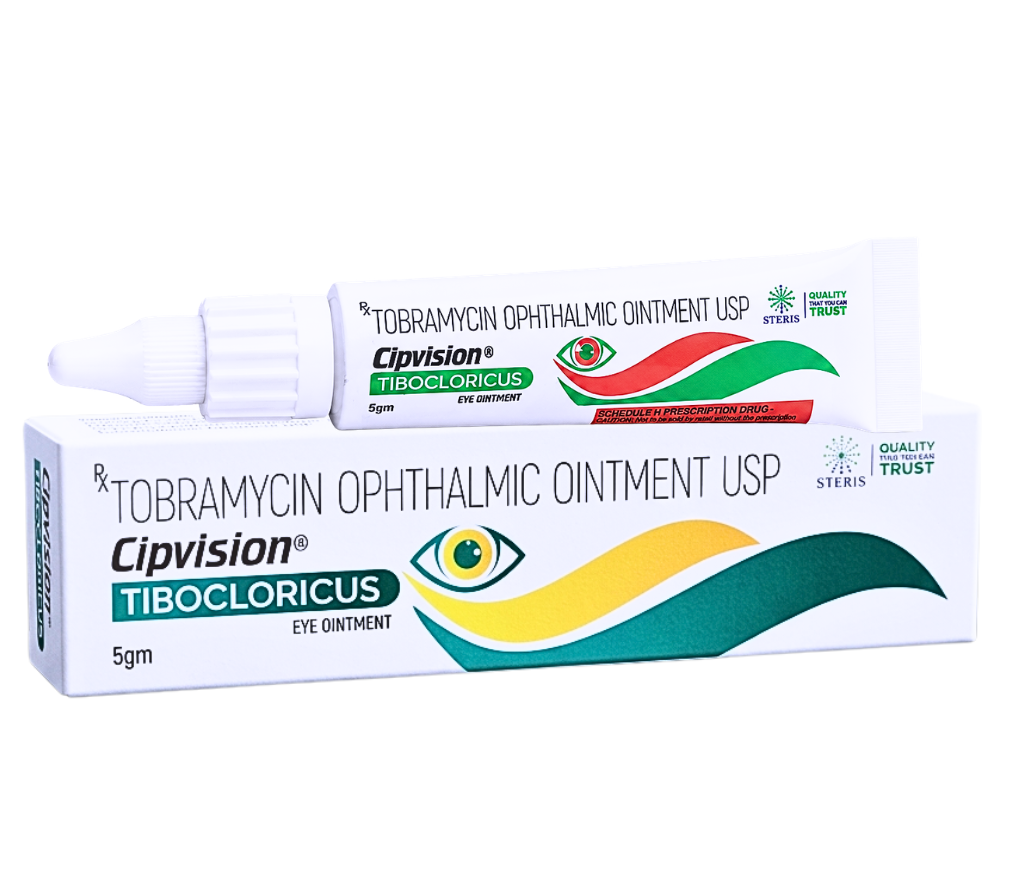
CIPVISION TIBOCLORICUS EYE OINTMENT
 Item requires a valid prescription
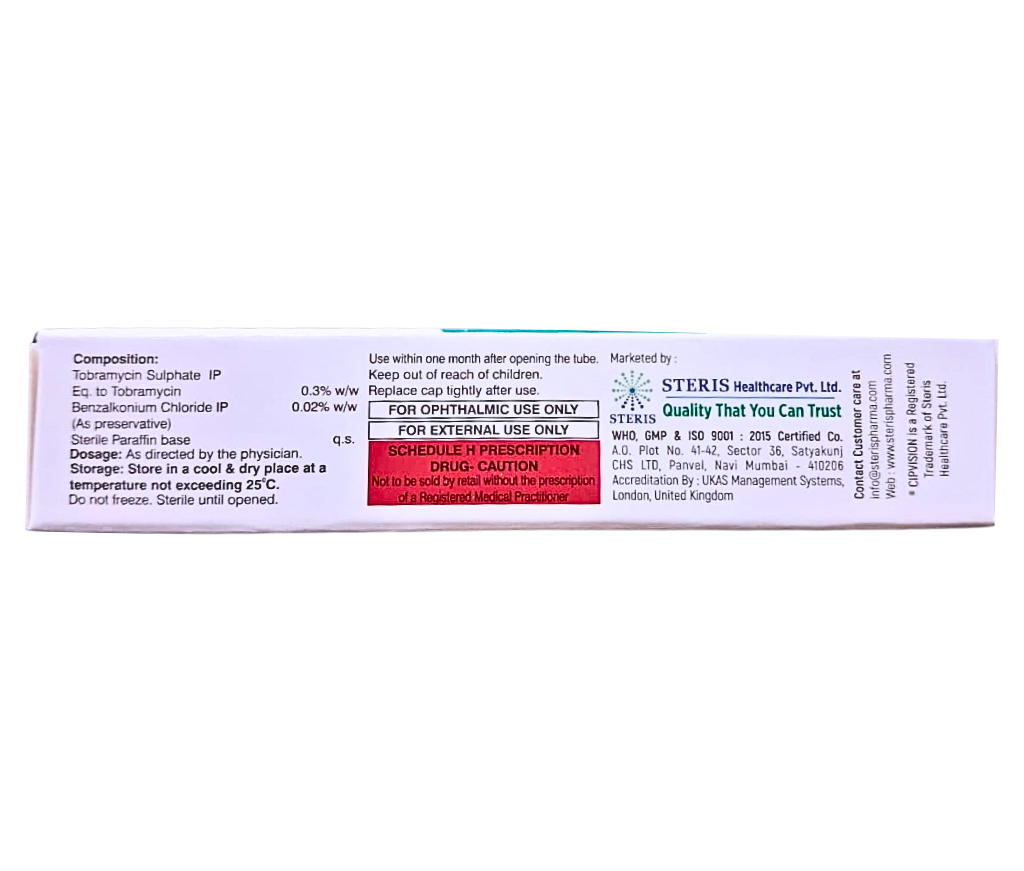
Manufactured By Steris Healthcare Pvt Ltd
Composition Tobramycin Ophthalmic Ointment USP
Rs 84.00
MRP Rs 120.00
(30% OFF)
Includes all taxes
Package SIZE
( For 5 gm )

100% Authentic
Products

Free
Shipping*

Products
Return Policy
Description:
Tobramycin Ophthalmic Ointment USP is a topical ophthalmic antibiotic used to treat certain external bacterial infections of the eye and its surrounding structures when the causative bacteria are susceptible to tobramycin. It belongs to the aminoglycoside class of antibiotics and is available as a 0.3% ophthalmic ointment in labeled products such as TOBREX. Current U.S. prescribing information identifies tobramycin ophthalmic ointment 0.3% as an antibiotic for susceptible bacterial eye infections
If you are looking for Tobramycin Ophthalmic Ointment USP for product use, benefits, dosage guidance, precautions, or side effects, this guide explains what the medicine is intended to do, what to expect during treatment, and when professional medical advice is important.
What Is Tobramycin Ophthalmic Ointment USP?
Tobramycin Ophthalmic Ointment USP is an antibiotic formulation intended specifically for topical use in the eye. Tobramycin works against susceptible bacteria by interfering with bacterial protein production, helping inhibit the growth of organisms responsible for certain infections.
The labeled indication is treatment of external infections of the eye and its adnexa caused by susceptible bacteria. Appropriate monitoring of the bacterial response to topical antibiotic therapy is recommended.
Because redness, irritation, discharge, watering, and discomfort can occur with many different eye conditions, not every red or irritated eye requires an antibiotic. Viral, allergic, fungal, inflammatory, or other eye conditions may require different treatment. For that reason, Tobramycin Ophthalmic Ointment USP should not be selected solely because an eye appears red or infected.
What Is Tobramycin Ophthalmic Ointment Used For?
The primary use of Tobramycin Ophthalmic Ointment USP is the treatment of susceptible bacterial infections affecting the external eye and associated structures. A healthcare professional may recommend it when the clinical presentation is consistent with a bacterial infection for which tobramycin is appropriate.
Potential symptoms associated with bacterial eye infection can include:
- Eye redness
- Mucus or discharge
- Eyelid irritation or swelling
- Eye discomfort
- Crusting around the eyelids
- Increased tearing
These symptoms are not specific to bacterial infection, however. An eye examination may be necessary to determine the appropriate treatment.
Key Benefits of Tobramycin Ophthalmic Ointment USP
1. Targeted topical antibiotic treatment
Tobramycin provides antibacterial activity directly at the site where the ophthalmic infection is being treated. It is intended for topical ophthalmic use rather than systemic treatment.
2. Available as an ophthalmic ointment
The ointment formulation can be useful when a clinician specifically prefers an ophthalmic ointment rather than an eye-drop formulation. Because ointment remains in contact with the ocular surface longer than a liquid drop, temporary blurred vision can occur after application.
3. Activity against susceptible bacteria
Tobramycin belongs to the aminoglycoside antibiotic class and has activity against various susceptible aerobic bacteria. However, antibacterial susceptibility varies, so the medicine should be used when it is clinically appropriate rather than assuming that every eye infection will respond.
4. Established ophthalmic use
Tobramycin ophthalmic products have established use in treating susceptible external bacterial eye infections, and labeled information includes pediatric clinical experience for ophthalmic tobramycin products.
How to Use Tobramycin Ophthalmic Ointment USP
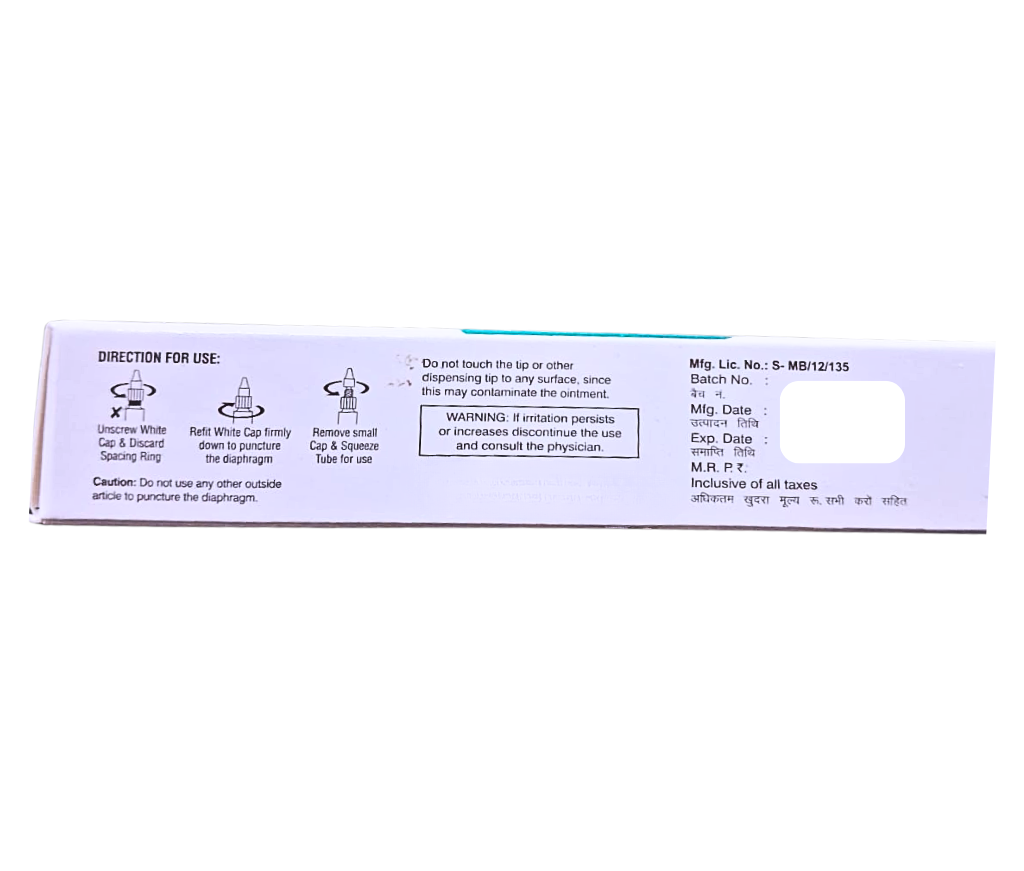
Use Tobramycin Ophthalmic Ointment USP exactly as prescribed by your healthcare professional. The labeled administration instructions for TOBREX 0.3% describe placing approximately ½ inch of ointment into the lower-lid pocket while avoiding contact between the tube tip and the eye or other surfaces
Before application:
- Wash your hands thoroughly.
- Avoid touching the tube tip to your eye, eyelids, fingers, or other surfaces.
- Gently pull down the lower eyelid to create a small pocket.
- Apply the prescribed amount into the pocket.
- Close the eye gently after application.
- Replace the cap securely.
Your vision may be temporarily blurred after applying an ophthalmic ointment. Avoid driving or operating machinery until your vision is clear enough to do so safely.
Do not change the prescribed frequency or treatment duration without medical advice.
Tobramycin Ophthalmic Ointment USP Side Effects
Like other medicines, Tobramycin Ophthalmic Ointment USP can cause adverse reactions. The labeling identifies hypersensitivity and localized ocular toxicity among the most frequent adverse reactions. Reported local reactions can include eye or eyelid discomfort, itching, swelling, and redness.
Possible side effects may include:
- Eye irritation
- Itching
- Eyelid swelling
- Eye redness
- Eye discomfort or pain
- Temporary blurred vision after applying the ointment
- Hypersensitivity reactions
Most importantly, severe allergic reactions are possible, although uncommon. The prescribing information warns that sensitivity to topical aminoglycosides can range from local reactions to more serious generalized reactions, including urticaria, rash, and anaphylactic reactions. If a sensitivity reaction occurs, treatment should be discontinued and appropriate medical care sought.
Important Warnings and Precautions
Tobramycin Ophthalmic Ointment USP is not for injection into the eye and is intended for topical ophthalmic use. Patients with known hypersensitivity to tobramycin or any component of the formulation should not use it.
Prolonged use of topical antibiotics can permit overgrowth of nonsusceptible organisms, including fungi. Cross-sensitivity with other aminoglycoside antibiotics may also occur
Contact lenses should generally be avoided when signs and symptoms of bacterial eye infection are present. Follow your ophthalmologist's specific instructions concerning contact-lens use during treatment.
Tell your healthcare professional about other medicines you use, particularly other aminoglycoside antibiotics or ophthalmic products.
Tobramycin Ophthalmic Ointment USP vs. Tobramycin Eye Drops
Both ointment and solution formulations contain tobramycin as an ophthalmic antibiotic, but they are not identical dosage forms. Tobramycin ophthalmic solution is commonly labeled as a 0.3% product, while ophthalmic ointment is also available at 0.3%. The appropriate formulation depends on the clinical situation and the prescriber's recommendation.
An ointment may temporarily blur vision after application, which can make it less convenient during daytime activities for some patients. Eye drops may be easier for daytime use, while an ointment may be selected when its formulation characteristics are considered appropriate.
Do not substitute one formulation for another without confirming the directions with your healthcare professional.
Is Tobramycin Ophthalmic Ointment USP Available Without a Prescription?
Availability and dispensing requirements can differ by country and product. In the United States, labeled tobramycin ophthalmic ointment products are prescription medicines. Consumers should purchase ophthalmic antibiotics only from legitimate, appropriately licensed pharmacies and should verify the exact active ingredient, strength, dosage form, manufacturer, packaging, and expiry information before use.
If purchasing Tobramycin Ophthalmic Ointment USP online, avoid products that make unrealistic claims such as “instant cure,” recommend using the antibiotic for every type of red eye, or do not provide adequate product and manufacturer information.
Who Should Avoid or Use Extra Caution With Tobramycin Ophthalmic Ointment?
People with a known allergy to tobramycin or another component should not use the product. People who have previously experienced an allergic reaction to an aminoglycoside antibiotic should discuss this history with a healthcare professional before treatment.
Pregnant or breastfeeding patients should also discuss treatment with their healthcare professional. The product labeling notes that adequate, well-controlled studies in pregnant women are lacking and that a decision regarding nursing should consider the importance of treatment to the mother and potential risk to the infant.
When Should You Seek Medical Attention?
Seek prompt medical attention if symptoms become significantly worse, vision changes occur, severe eye pain develops, swelling becomes pronounced, or symptoms suggest a serious allergic reaction.
A lack of improvement can also indicate that the infection may not be caused by susceptible bacteria or that another eye condition is responsible. In such cases, continued self-treatment with an antibiotic may delay appropriate diagnosis.
Conclusion
Tobramycin Ophthalmic Ointment USP is a topical aminoglycoside antibiotic formulated for treating susceptible external bacterial infections of the eye and its adnexa. Its main benefit is providing localized antibacterial therapy in an ophthalmic ointment formulation. However, it is not appropriate for every type of red, irritated, or watery eye.
For buyers, the most important considerations are the 0.3% strength, ophthalmic formulation, legitimate pharmacy source, correct diagnosis, proper application, and professional dosing instructions. Side effects can include localized eye or eyelid irritation, itching, swelling, redness, and hypersensitivity reactions
Because antibiotic resistance and incorrect treatment can complicate eye infections, Tobramycin Ophthalmic Ointment USP should be used only when medically appropriate and according to the product label or healthcare professional's instructions.
Frequently Asked Questions
1. What is Tobramycin Ophthalmic Ointment USP used for?
Tobramycin Ophthalmic Ointment USP is used as a topical antibiotic to treat external infections of the eye and its associated structures caused by bacteria susceptible to tobramycin. It is not intended to treat every cause of eye redness or irritation.
2. Is Tobramycin Ophthalmic Ointment USP an antibiotic?
Yes. Tobramycin is an aminoglycoside antibiotic. The ophthalmic ointment is formulated for topical treatment of susceptible bacterial eye infections.
3. What are the common side effects of Tobramycin Ophthalmic Ointment?
Possible adverse effects include localized eye or eyelid irritation, itching, swelling, redness, discomfort, and hypersensitivity reactions. Temporary blurred vision can also occur after applying an ophthalmic ointment.
4. Can Tobramycin Ophthalmic Ointment be used for pink eye?
It may be prescribed for bacterial conjunctival or external eye infections when susceptible bacteria are suspected or confirmed, but not every case of “pink eye” is bacterial. Viral and allergic conjunctivitis, for example, require different management. A healthcare professional can determine whether an antibiotic is appropriate.
5. How long does Tobramycin Ophthalmic Ointment take to work?
The response varies according to the cause and severity of the infection and the susceptibility of the bacteria. If symptoms worsen or do not improve as expected, contact your healthcare professional rather than extending treatment independently.
6. Can I wear contact lenses while using Tobramycin Ophthalmic Ointment?
Contact lenses should generally not be worn when signs and symptoms of bacterial ocular infection are present. Follow the specific instructions provided by your eye-care professional and the product labeling.
7. Can Tobramycin Ophthalmic Ointment be used in children?
Labeled ophthalmic tobramycin products have clinical experience supporting use in children, but the appropriate age, dose, and treatment duration should be determined by a healthcare professional.
8. Is Tobramycin Ophthalmic Ointment the same as Tobramycin eye drops?
No. Both can contain tobramycin and may be used for susceptible bacterial eye infections, but ointment and solution are different dosage forms. Use the formulation prescribed for your condition rather than switching between them independently.
9. Is Tobramycin Ophthalmic Ointment available over the counter?
In the United States, labeled tobramycin ophthalmic ointment products are prescription medicines. Availability and legal requirements can vary by country, so buyers should check local pharmacy and regulatory requirements.
10. Can Tobramycin Ophthalmic Ointment treat all eye infections?
No. It is specifically intended for susceptible bacterial external eye infections. Antibiotics do not treat viral or fungal eye infections, and some bacterial organisms may not be susceptible to tobramycin.

