


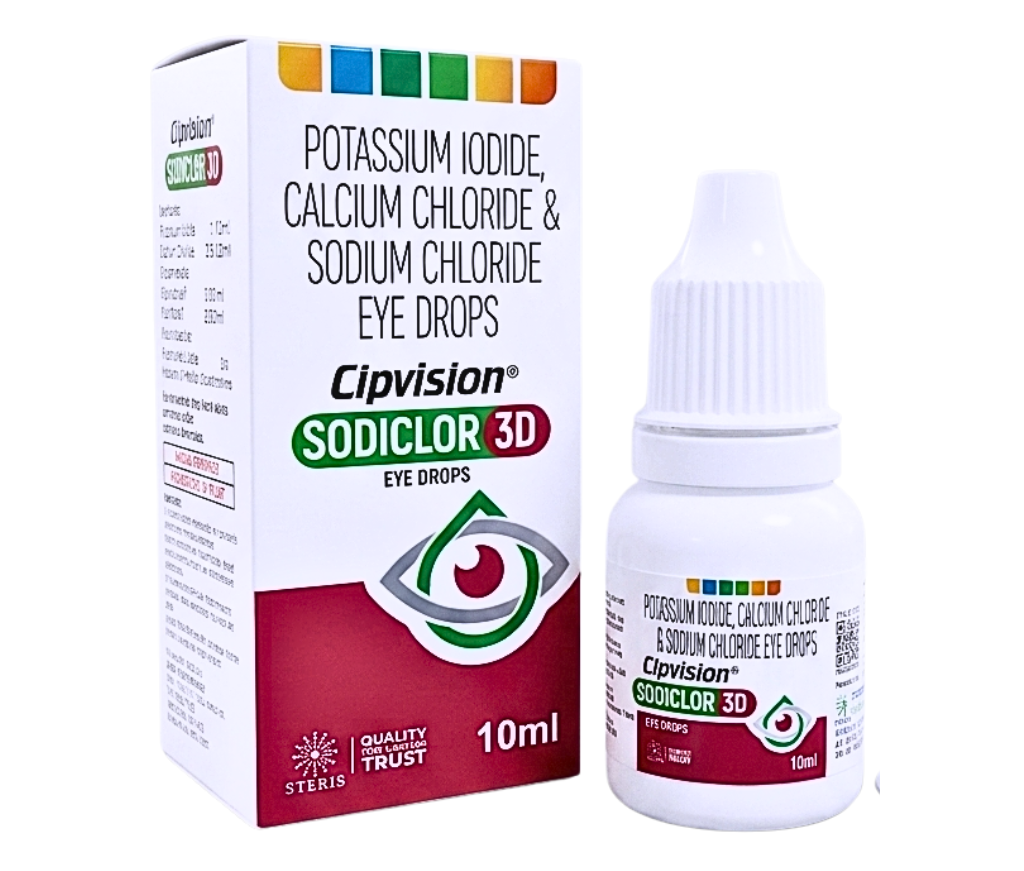

CIPVISION SODICLOR 3D
 Item requires a valid prescription
Manufactured By Steris Healthcare Pvt Ltd
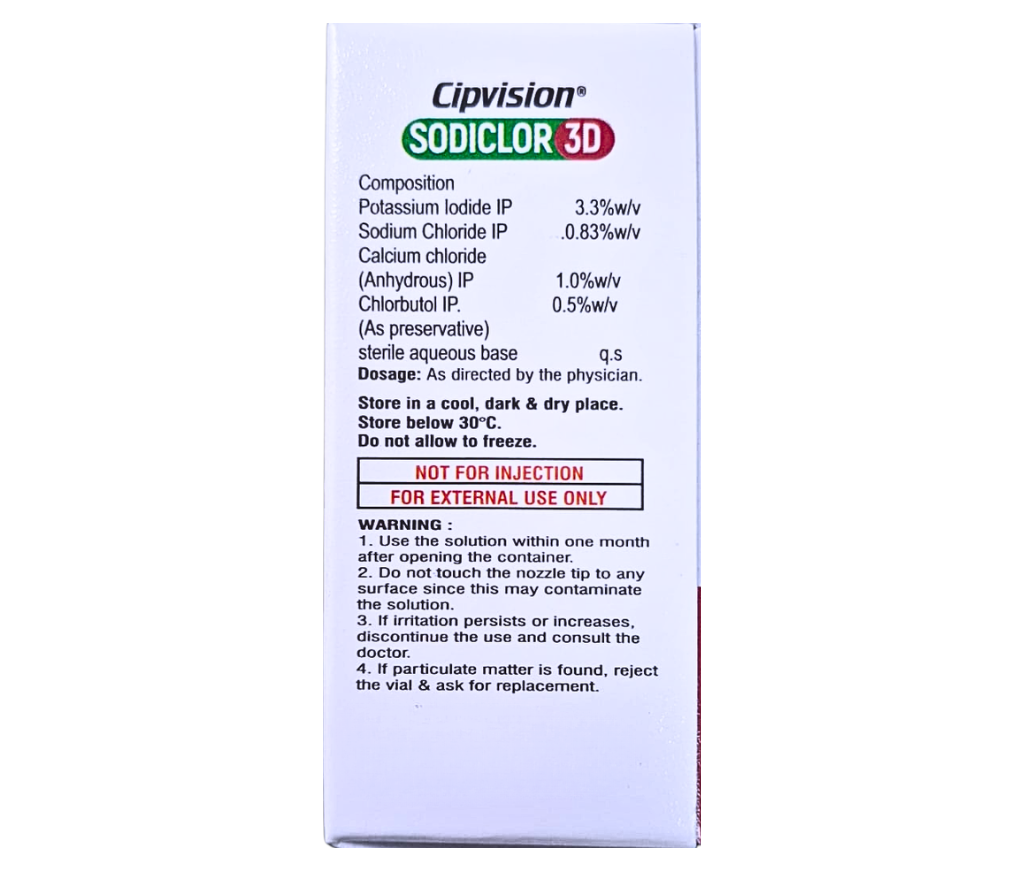
Composition Potassium Iodide,Calcium Chloride & Sodium Chloride Eye Drops
Rs 73.50
MRP Rs 105.00
(30% OFF)
Includes all taxes
Package SIZE
( For 10 ml )

100% Authentic
Products

Free
Shipping*

Products
Return Policy
Description:
Potassium iodide calcium chloride sodium chloride eye drops is a product-related search term that may refer to a formulation containing several mineral salts intended for ophthalmic use. However, consumers should check the product label carefully because potassium iodide and potassium chloride are different ingredients with different medical uses. This distinction is especially important when purchasing eye drops online or comparing products with similar ingredient names.
Some ophthalmic products contain sodium chloride, potassium chloride, calcium chloride, and other electrolytes to provide a balanced or lubricating solution for the eye. For example, FDA-listed ophthalmic products can contain sodium chloride together with calcium chloride and potassium chloride as inactive or formulation ingredients. A separate balanced ophthalmic irrigation product, BSS, contains sodium chloride, potassium chloride, calcium chloride, and additional electrolytes and is specifically labeled for ocular irrigation during certain surgical procedures.
By contrast, potassium iodide has established medical uses that are not the same as potassium chloride. MedlinePlus notes that potassium iodide is used in specific circumstances such as protection of the thyroid during a radioactive-iodine emergency and, under medical supervision, for certain other conditions. Therefore, a shopper should never assume that an eye drop containing potassium chloride is a potassium iodide product or substitute one for the other.
What Are Potassium Iodide, Calcium Chloride, and Sodium Chloride Eye Drops Used For?
The exact use depends on the specific commercial formulation and its approved labeling.
Eye drops containing sodium chloride and other electrolytes may be formulated as lubricating, isotonic, or hypertonic ophthalmic solutions. Sodium chloride 5% ophthalmic preparations, for example, are labeled for the temporary relief of corneal edema.
Other balanced electrolyte solutions have different purposes. BSS Sterile Irrigating Solution contains sodium chloride, potassium chloride, and calcium chloride among several electrolytes and is labeled for irrigation of ocular tissues during specified surgical procedures rather than as an ordinary daily eye drop.
For this reason, the product's active ingredients, concentration, indication, and route of administration should always be checked before use.
Potential Uses
Depending on the exact formulation, an electrolyte-based ophthalmic solution may be used for:
- Temporary relief of corneal swelling or edema when specifically labeled for that purpose.
- Lubrication or hydration of the ocular surface in products designed as artificial tears.
- Maintaining an appropriate electrolyte environment around ocular tissues.
- Eye irrigation in clinical or surgical settings when the product is specifically labeled for irrigation.
- Supporting ocular comfort when recommended by an eye-care professional.
A consumer should not assume that every product containing sodium chloride, calcium chloride, and potassium salts has the same indication.
Key Benefits
1. Helps provide an appropriate ocular environment
Electrolyte-containing ophthalmic solutions can be formulated to approximate the ionic environment required for ocular tissues. Balanced ophthalmic solutions may contain sodium, potassium, calcium, and other electrolytes. BSS, for example, is described as an isotonic balanced salt solution with an osmolality of approximately 300 mOsm/kg
2. May help with corneal edema when appropriately formulated
Hypertonic sodium chloride eye drops can draw excess fluid from the cornea and are labeled for temporary relief of corneal edema. This is different from ordinary lubricating eye drops and should not be treated as a universal remedy for blurred vision or eye swelling.
3. Convenient topical administration
When an ophthalmic product is intended for home use, applying drops directly to the affected eye can deliver the formulation to the ocular surface without requiring systemic administration.
4. Can be useful when selected for the correct eye condition
The biggest benefit comes from matching the formulation to the diagnosis. A product intended for dry-eye lubrication is not necessarily appropriate for corneal edema, while a sterile surgical irrigation solution is not necessarily intended for routine self-treatment.
Potassium Iodide vs. Potassium Chloride: An Important Difference
This is one of the most important points for anyone searching for potassium iodide, calcium chloride, and sodium chloride eye drops.
Potassium iodide (KI) contains iodine and potassium. Potassium chloride (KCl) contains potassium and chloride. They are chemically and medically different substances.
MedlinePlus describes potassium iodide as a medication with specific systemic indications and lists potential adverse effects, including nausea, vomiting, diarrhea, headache, metallic taste, and, in serious cases, allergic-type reactions or thyroid-related problems.
Therefore, do not purchase or use an eye product merely because its name resembles another formulation. Confirm the exact ingredient list on the package and, when necessary, ask a pharmacist or ophthalmologist.
Possible Side Effects
Side effects depend strongly on the formulation and concentration.
For ophthalmic sodium chloride products, official labeling states that temporary burning and irritation can occur after instillation.
Possible eye-related reactions can include:
- Temporary stinging or burning.
- Mild irritation or discomfort.
- Temporary blurred vision immediately after application.
- Redness or increased discomfort.
If eye pain, vision changes, persistent redness, or irritation occurs, official sodium chloride ophthalmic labeling recommends stopping use and seeking medical advice.
Do not confuse these local ophthalmic effects with the systemic adverse effects associated with oral or systemic potassium iodide.
How to Use Eye Drops Safely
Use the product exactly according to its approved label or your eye doctor's instructions.
Before applying drops:
- Wash your hands.
- Check that the bottle or single-use container is intact.
- Do not use a solution that is cloudy, discolored, or contaminated.
- Avoid touching the dropper tip to your eye, fingers, or another surface.
- Instill only the recommended number of drops.
- Replace the cap immediately after use when applicable.
Some sodium chloride ophthalmic products specifically instruct users not to use the product if the seal is broken or if the solution becomes cloudy or changes color.
If you use more than one ophthalmic medication, ask your pharmacist or eye specialist about appropriate spacing between products.
Who Should Be Careful?
People with unexplained eye pain, sudden vision changes, significant redness, eye injury, infection symptoms, or worsening swelling should seek professional assessment rather than relying on self-treatment.
Extra caution is also appropriate for people who have recently undergone eye surgery or who have been diagnosed with corneal disease. The appropriate formulation can depend on the underlying condition.
Most importantly, do not use a product for an indication that is not stated on its label.
Buyer’s Guide: What to Check Before Purchasing
If your search intent is transactional and you are considering buying an electrolyte-based eye drop, compare these details before choosing a product:
- Exact active ingredient: Check whether the product contains potassium iodide, potassium chloride, sodium chloride, or another ingredient.
- Concentration: Different concentrations can have substantially different uses.
- Indication: Look for the condition the manufacturer specifically states the product is intended to address.
- Sterility: Ophthalmic products must be sterile and handled carefully.
- Preservatives: Check whether the formulation contains preservatives, particularly if you need frequent application.
- Packaging: Confirm that the seal and container are intact.
- Expiry date: Do not use expired ophthalmic products.
- Manufacturer and regulatory information: Buy from a reputable pharmacy or authorized seller and verify the product labeling.
- Professional advice: If the product is intended to treat corneal edema, postoperative symptoms, or another diagnosed condition, follow your eye-care professional's recommendation.
For example, FDA-listed sodium chloride 5% ophthalmic products are specifically identified as hypertonicity agents for temporary relief of corneal edema and carry warnings concerning irritation, eye pain, vision changes, and persistent symptoms.
Frequently Asked Questions
1. What are potassium iodide, calcium chloride, and sodium chloride eye drops used for?
The answer depends on the exact formulation. Sodium chloride ophthalmic products may be used for conditions such as temporary corneal edema relief, while balanced electrolyte solutions can have different purposes. Always verify the product's active ingredients and labeled indication before use.
2. Are potassium iodide and potassium chloride the same thing in eye drops?
No. Potassium iodide and potassium chloride are different chemical compounds and should not be substituted for one another. Potassium iodide has specific systemic medical uses, while potassium chloride can be an electrolyte ingredient in ophthalmic formulations.
3. Can sodium chloride eye drops reduce corneal swelling?
Certain hypertonic sodium chloride ophthalmic preparations are specifically labeled for temporary relief of corneal edema. They should be used according to the product label or an ophthalmologist's instructions.
4. What are the side effects of sodium chloride eye drops?
Temporary burning or irritation may occur. Persistent redness, eye pain, vision changes, or worsening symptoms require medical advice.
5. Can I use potassium iodide eye drops for dry eyes?
Do not assume that potassium iodide is appropriate for dry eyes. The indication must come from the specific ophthalmic product's labeling and, when appropriate, an eye-care professional. Potassium iodide is not interchangeable with common electrolyte or lubricating eye-drop ingredients.
6. Can I buy potassium iodide, calcium chloride, and sodium chloride eye drops online?
You can find different electrolyte-containing ophthalmic products online, but the formulation should be verified before purchase. Check the exact ingredient list, concentration, intended use, manufacturer, sterility information, and regulatory labeling rather than relying only on the product title.
7. When should I stop using electrolyte eye drops?
Stop and seek professional advice if you develop significant eye pain, vision changes, persistent or worsening redness/irritation, or other unexpected symptoms. These warning signs are specifically included in labeling for sodium chloride ophthalmic products.
Conclusion
Potassium iodide calcium chloride sodium chloride eye drops is a high-specificity search phrase, but the exact formulation matters. Current authoritative labeling demonstrates that ophthalmic products can contain combinations of sodium chloride, calcium chloride, and potassium chloride, while potassium iodide is a separate medication with different indications.
For buyers, the safest approach is to verify the exact ingredients, concentration, intended use, and regulatory labeling before purchasing. Sodium chloride ophthalmic products may provide temporary relief of corneal edema when specifically formulated for that purpose, while balanced electrolyte solutions may be intended for lubrication or professional ocular irrigation depending on the product.