
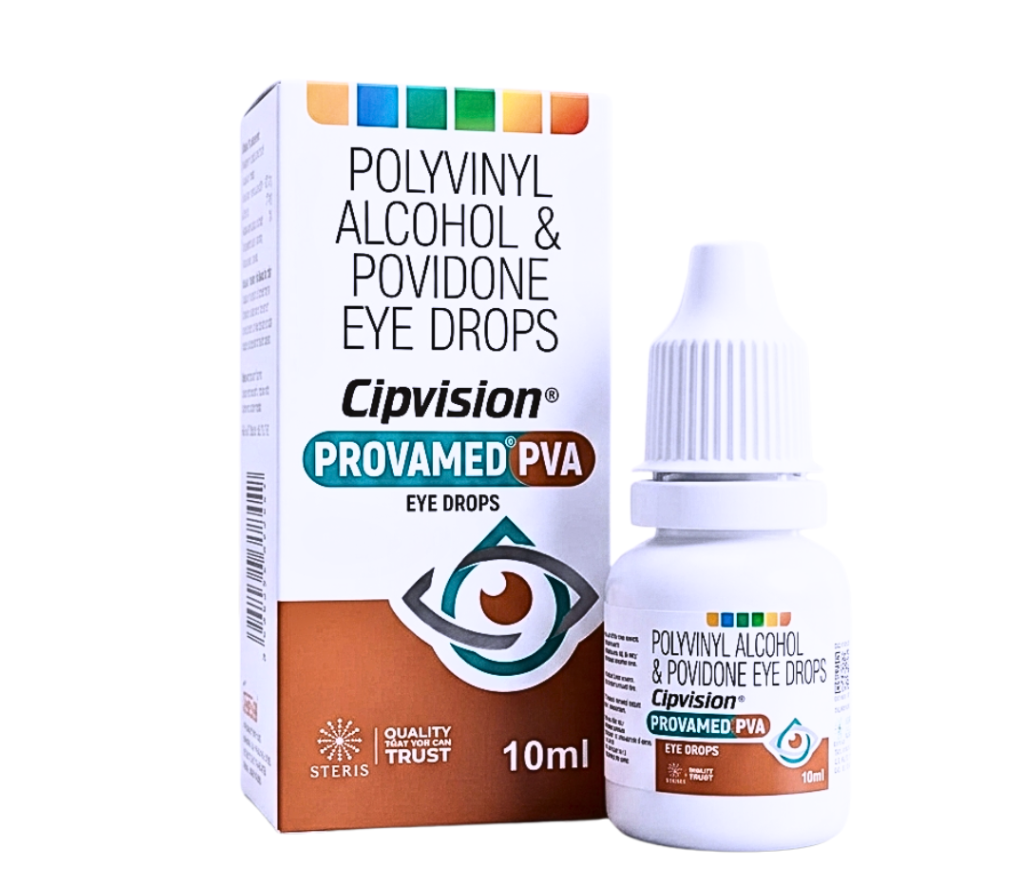
CIPVISION PROVAME PVA
Item requires a valid prescription
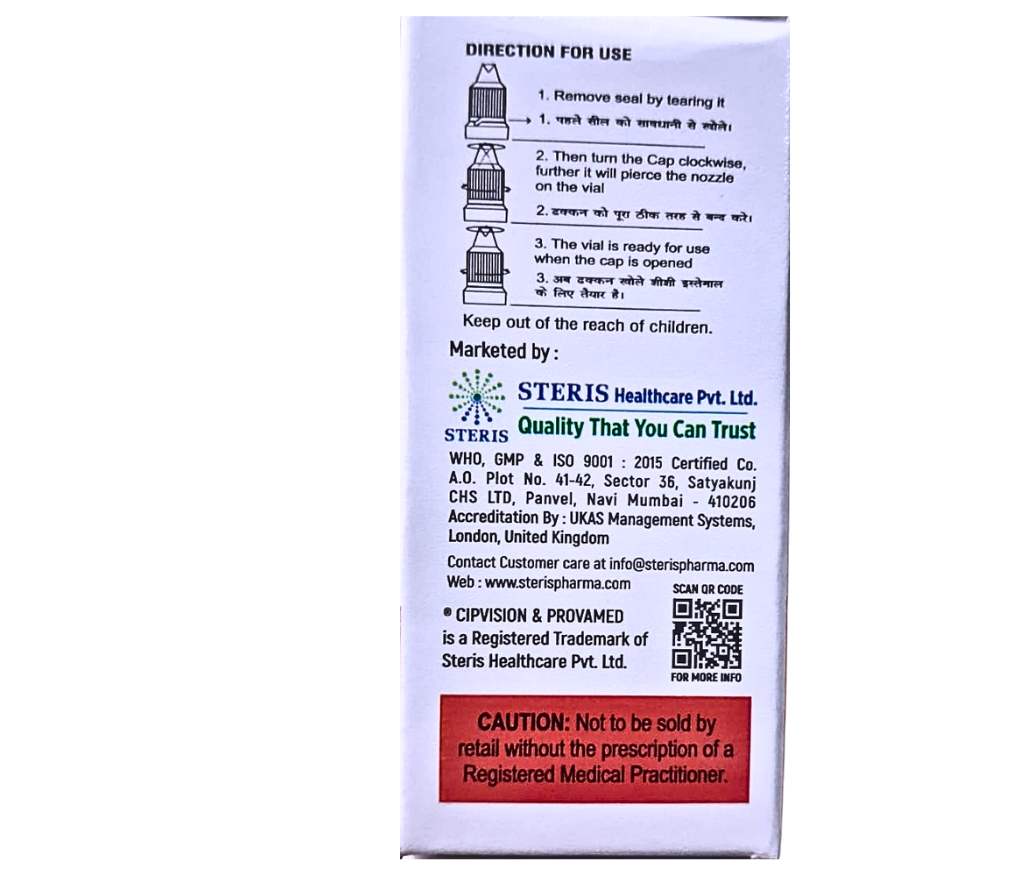
Manufactured By Steris Healthcare Pvt. Ltd.
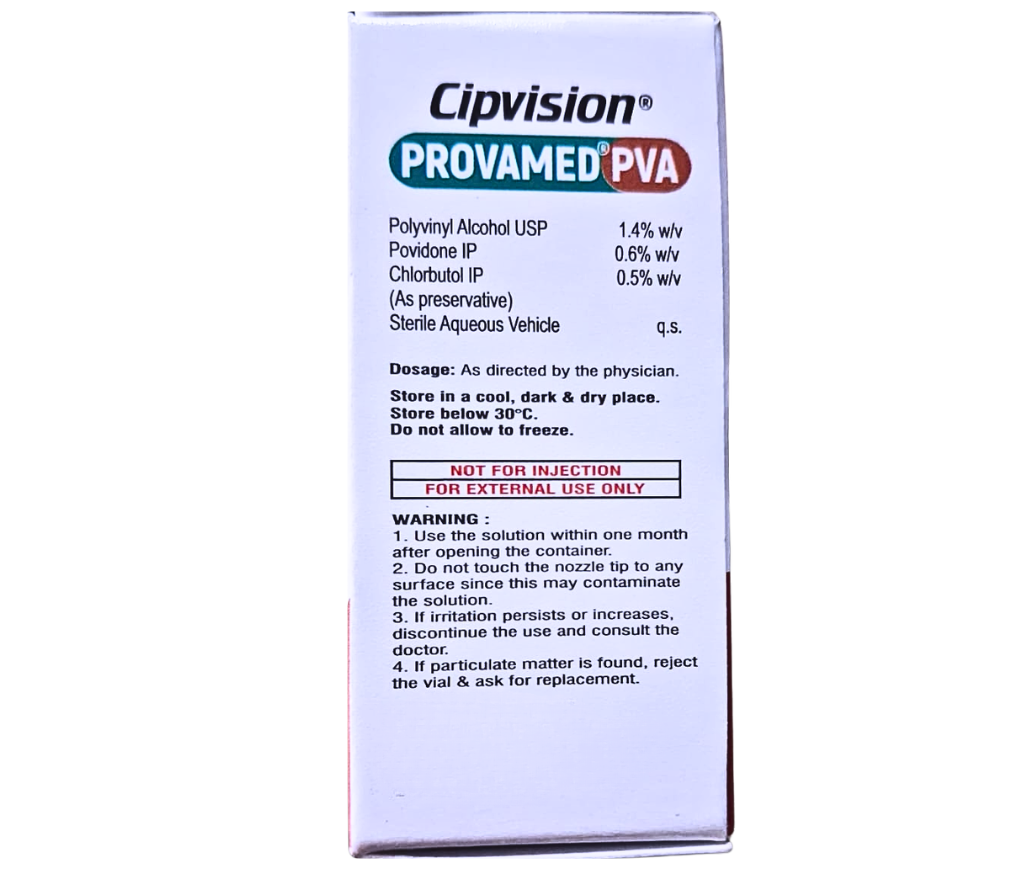
Composition polyvinyl alcohol and povidone eye drops
Rs 56.00
MRP Rs 80.00
(30% OFF)
Includes all taxes
Package SIZE
( 10 ml )
100% Authentic
Products
Free
Shipping*
Products
Return Policy
Description:
Polyvinyl alcohol and povidone eye drops A soothing combination lubricant that temporarily relieves burning, irritation, and dryness-related eye discomfort. This combination works as an artificial-tear formulation, helping lubricate the ocular surface and reduce the uncomfortable sensation associated with insufficient or unstable tears.
A commonly marketed formulation contains polyvinyl alcohol 0.5% and povidone 0.6%, with both ingredients acting as eye lubricants. Official drug labeling describes this type of formulation as being used to protect against further irritation and temporarily relieve dryness or discomfort caused by minor eye irritation or exposure to wind and sun.
What Are Polyvinyl Alcohol and Povidone Eye Drops?
Polyvinyl alcohol and povidone eye drops are lubricating eye drops, also known as artificial tears. They are designed to supplement the natural tear film and provide temporary relief when the eyes feel dry, irritated, gritty, or uncomfortable.
Polyvinyl Alcohol and Povidone Eye Drops Uses
The primary polyvinyl alcohol and povidone eye drops uses are associated with temporary relief of dryness and minor irritation.
Common uses include:
- Temporary relief of dry eyes
- Relief from mild eye irritation
- Lubrication of the ocular surface
- Temporary relief of burning or uncomfortable dry-eye sensations
- Relief from discomfort associated with wind exposure
- Relief from discomfort associated with sun exposure
- Protection against further irritation caused by dryness
- Supplementation of the natural tear film
- Artificial-tear support when the eyes feel uncomfortable or gritty
Official labeling for polyvinyl alcohol/povidone lubricating eye drops specifically identifies temporary relief of eye dryness and minor irritation, including discomfort associated with wind or sun exposure.
How Do Polyvinyl Alcohol and Povidone Eye Drops Work?
The eye normally has a tear film that covers and protects the cornea and conjunctiva. When tear quantity or quality is inadequate, the ocular surface may become dry and irritated.
Polyvinyl alcohol and povidone eye drops work primarily through lubrication.
Polyvinyl alcohol contributes to the lubricating properties of the formulation, while povidone also functions as an eye lubricant. Together, they can provide a temporary lubricating layer over the ocular surface.
This can help reduce sensations such as:
- Dryness
- Grittiness
- Mild burning
- Irritation
- Foreign-body sensation
- Discomfort associated with environmental exposure
The purpose is generally symptomatic relief, not treatment of the underlying cause of chronic dry-eye disease.
Key Benefits of Polyvinyl Alcohol and Povidone Eye Drops
1. Helps Relieve Dryness
One of the most important benefits is temporary relief from dry-eye symptoms. Lubricating eye drops can make the ocular surface feel more comfortable when natural tears are insufficient.
2. Provides Eye Lubrication
Both polyvinyl alcohol and povidone are classified as eye lubricants in the official labeling of representative products.
3. Helps Reduce Minor Irritation
These drops can temporarily relieve discomfort caused by minor eye irritation.
4. Supports Ocular Surface Comfort
By lubricating the eye, artificial tears can make activities such as reading, computer use, or spending time in dry or windy environments more comfortable for people experiencing dryness.
5. Useful for Environmental Dryness
Wind and sun exposure can contribute to temporary ocular discomfort. Polyvinyl alcohol/povidone lubricants may provide temporary relief in these situations.
6. Convenient Artificial-Tear Option
Lubricating drops can be useful when occasional dryness or irritation occurs and a person needs temporary symptomatic relief.
Polyvinyl Alcohol and Povidone Eye Drops for Dry Eyes
Are polyvinyl alcohol and povidone eye drops good for dry eyes?
They may be useful for temporary relief of mild dry-eye symptoms because both ingredients provide lubrication.
However, dry eye is not always caused by the same problem. Some people may have reduced tear production, while others may have excessive tear evaporation, eyelid problems, medication-related dryness, environmental triggers, or other ocular conditions.
Therefore, if dry-eye symptoms are persistent, severe, or repeatedly returning, it is better to have the eyes evaluated rather than continuously treating symptoms without identifying the cause.
For people who need lubricating drops frequently, the choice between preserved and preservative-free products may also matter. Product-specific instructions should always be followed.
How to Use Polyvinyl Alcohol and Povidone Eye Drops
Use the product according to its label or your healthcare professional's instructions.
General application technique
- Wash your hands thoroughly.
- Remove the cap from the eye-drop bottle.
- Avoid touching the dropper tip.
- Tilt your head slightly backward.
- Gently pull down the lower eyelid to create a small pocket.
- Place the recommended number of drops into the affected eye.
- Close your eye gently.
- Avoid squeezing or rubbing the eye immediately after application.
- Replace the cap securely.
- Wash your hands again if necessary.
Can You Use Polyvinyl Alcohol and Povidone Eye Drops With Contact Lenses?
Contact-lens users should check the individual product label before using these eye drops with lenses.
Some formulations may require contact lenses to be removed before application. For example, the labeling of representative polyvinyl alcohol/povidone artificial tears instructs users to remove contact lenses before use.
If you wear contact lenses regularly, ask your eye-care professional or pharmacist whether the particular formulation is appropriate for use with your lenses and how long you should wait before reinserting them.
Polyvinyl Alcohol and Povidone Eye Drops Side Effects
Most people use lubricating eye drops without serious problems, but temporary local effects can occur.
Possible side effects may include:
- Temporary mild stinging
- Brief burning sensation
- Temporary blurred vision immediately after instillation
- Mild irritation
- Temporary discomfort
- Increased tearing in some people
These effects are generally expected to be short-lived. However, individual reactions can differ depending on the formulation and sensitivity of the eyes.
When should you stop using the drops?
Official labeling advises stopping use and seeking medical advice if you experience eye pain, changes in vision, continued redness or irritation, or symptoms that worsen or persist beyond the specified period. One representative label uses 72 hours as the threshold for persistent or worsening symptoms.
Important Precautions
Before using polyvinyl alcohol and povidone eye drops, consider the following:
1. Check the product
Do not use the solution if it has changed color or become cloudy unless the product labeling specifically states otherwise.
2. Prevent contamination
Never allow the dropper tip to touch your eye or another surface.
3. Follow storage instructions
Store the product according to the manufacturer's instructions and keep the container properly closed.
4. Check the expiry date
Do not use expired eye drops.
5. Persistent symptoms need evaluation
Lubricating drops can relieve symptoms but may not treat the underlying cause of chronic or severe dry eye.
6. Tell your doctor about other eye medicines
If you are using multiple ophthalmic products, ask your healthcare professional about appropriate spacing between applications.
Polyvinyl Alcohol and Povidone Eye Drops vs Other Artificial Tears
Artificial tears are available with several different lubricating ingredients, including polyvinyl alcohol, povidone, carboxymethylcellulose, hypromellose, glycerin, polyethylene glycol, propylene glycol, and other formulations.
There is no single artificial tear that is best for everyone.
The appropriate product can depend on:
- Severity of dryness
- Frequency of symptoms
- Contact-lens use
- Preservative sensitivity
- Tear-film characteristics
- Other eye conditions
- Frequency of application
- Advice from an eye-care professional
Who May Benefit From Polyvinyl Alcohol and Povidone Eye Drops?
These lubricating eye drops may be considered for people experiencing temporary:
- Dryness
- Mild irritation
- Eye discomfort
- Burning associated with dryness
- Grittiness
- Environmental irritation
- Discomfort after exposure to wind or sun
When Should You See an Eye Doctor?
You should seek professional medical advice when:
- Eye pain is significant or persistent
- Vision changes occur
- Redness continues or worsens
- Symptoms do not improve
- Symptoms repeatedly return
- You have an eye injury
- You have marked sensitivity to light
- You develop discharge or other signs of infection
- Dryness significantly interferes with daily activities
- You need lubricating drops very frequently
Polyvinyl Alcohol and Povidone Eye Drops
When searching for polyvinyl alcohol and povidone eye drops online, buyers should focus on more than price.
Before purchasing, check:
- Active ingredients
- Strength/concentration
- Preservative status
- Pack size
- Manufacturer
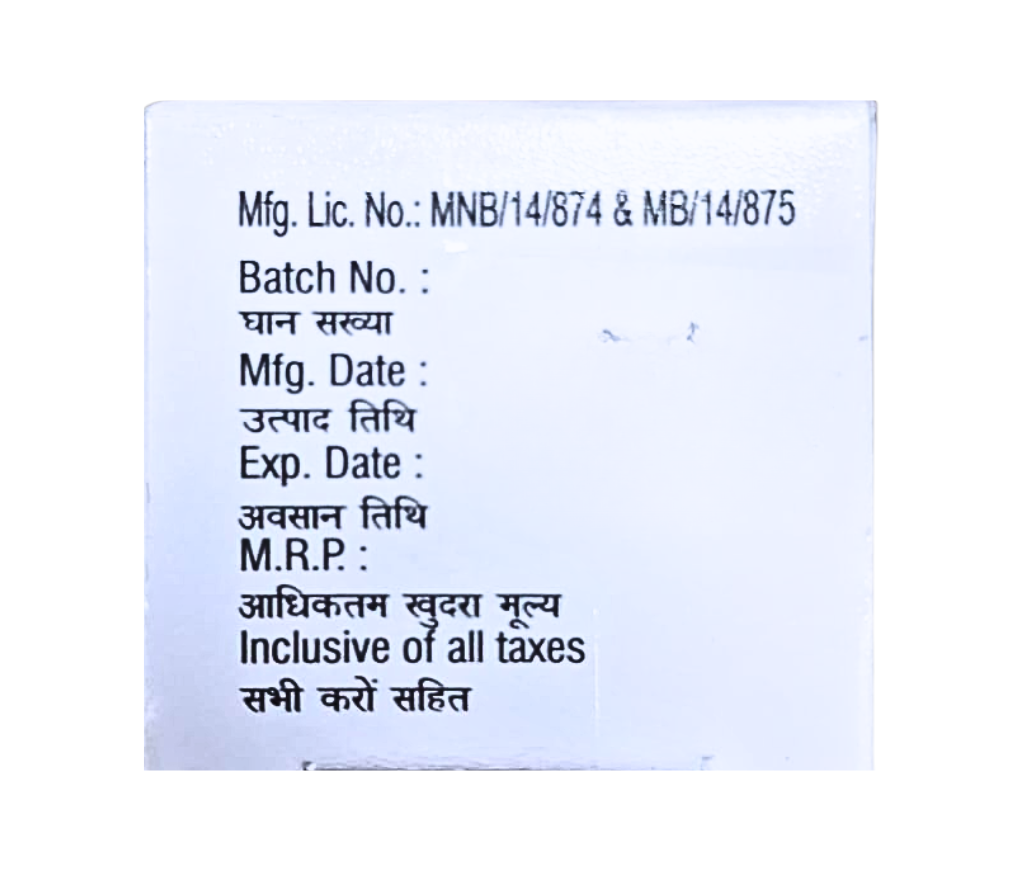
- Batch number
- Manufacturing and expiry dates
- Storage instructions
- Product authenticity
- Whether the formulation is appropriate for contact-lens users
- Directions for use
Why Choose a Quality Lubricating Eye-Drop Product?
For ophthalmic products, quality and proper handling are especially important because the preparation is applied directly to the eye.
Consumers should purchase from a reliable source and ensure that the package is intact. Proper sterile manufacturing, packaging, storage, and handling are important considerations for ophthalmic products.
Do not use a bottle if the packaging appears damaged, the solution is unexpectedly cloudy or discolored, or the product is expired.
Polyvinyl Alcohol and Povidone Eye Drops
What are polyvinyl alcohol and povidone eye drops used for?
They are lubricating artificial tears used for temporary relief of dry eyes and minor eye irritation.
Are polyvinyl alcohol and povidone eye drops artificial tears?
Yes. These ingredients are used as ophthalmic lubricants in artificial-tear formulations.
Do they help with dry eyes?
They can provide temporary symptomatic relief from dryness by lubricating the ocular surface.
Are they antibiotics?
No. Polyvinyl alcohol and povidone are lubricants; this combination should not be considered an antibiotic treatment.
Can they cure an eye infection?
No. Lubricating eye drops do not treat bacterial, viral, or fungal eye infections.
Can they be used every day?
Polyvinyl alcohol and povidone eye drops are artificial tears used to temporarily relieve dry eyes, minor eye irritation, burning, and discomfort. Polyvinyl alcohol and povidone act as lubricants that help moisturize and protect the ocular surface.
Frequently Asked Questions
1. What are polyvinyl alcohol and povidone eye drops used for?
Polyvinyl alcohol and povidone eye drops are lubricating artificial tears used for temporary relief of dry eyes, minor irritation, and discomfort associated with environmental exposure such as wind or sun.
2. Are polyvinyl alcohol and povidone eye drops good for dry eyes?
Yes, they can provide temporary relief from mild dry-eye symptoms by lubricating the surface of the eye. Persistent or severe dryness should be evaluated by an eye-care professional.
3. What are the benefits of polyvinyl alcohol and povidone eye drops?
Their main benefit is lubrication of the ocular surface, which can temporarily relieve dryness, irritation, burning, and discomfort.
4. Are polyvinyl alcohol and povidone eye drops artificial tears?
Yes. They are used as lubricating artificial tears to temporarily relieve symptoms associated with ocular dryness and minor irritation.
5. Can polyvinyl alcohol and povidone eye drops be used for burning eyes?
They may temporarily relieve burning caused by dryness or minor irritation. Persistent or severe burning requires professional evaluation.
6. Can these eye drops be used for red eyes?
They may help when redness is associated with dryness or minor irritation, but they are not a general treatment for unexplained or persistent red eyes.
7. Are polyvinyl alcohol and povidone eye drops antibiotics?
No. They are lubricating ingredients and do not treat bacterial eye infections.
8. Can I use polyvinyl alcohol and povidone eye drops with contact lenses?
It depends on the specific formulation. Some products instruct users to remove contact lenses before application, so always check the product label.
9. How often can I use polyvinyl alcohol and povidone eye drops?
Use them according to the product label or your doctor's instructions. Do not increase the frequency unnecessarily without professional advice.
10. What are the side effects of polyvinyl alcohol and povidone eye drops?
Possible effects include temporary stinging, burning, irritation, or transient blurred vision after application. Persistent pain, vision changes, or worsening redness should be medically evaluated.
11. Can polyvinyl alcohol and povidone eye drops cause blurred vision?
Temporary blurred vision may occur immediately after applying lubricating eye drops. If blurred vision persists or is significant, contact an eye-care professional.
12. Can I use these eye drops every day?
Some people may use lubricating eye drops regularly, but the appropriate frequency depends on the specific product and the reason for use. Frequent or long-term use should be discussed with an eye-care professional when symptoms persist.
13. Can polyvinyl alcohol and povidone eye drops cure dry eye?
They primarily provide symptomatic lubrication and temporary relief. They do not necessarily treat the underlying cause of chronic dry-eye disease.
14. Are polyvinyl alcohol and povidone eye drops safe?
Lubricating eye drops are generally intended to provide temporary relief when used according to their labeling. Safety depends on the individual product, correct use, sterile handling, and the user's eye condition.
15. Can I use these eye drops before sleeping?
Lubricating eye drops may be used at bedtime if the product directions allow it. If nighttime dryness is severe or persistent, ask an eye-care professional whether a different formulation may be more appropriate.
16. Can I use polyvinyl alcohol and povidone eye drops for eye irritation from wind?
Yes. Representative official labeling specifically includes temporary relief of discomfort associated with exposure to wind or sun.
17. How should polyvinyl alcohol and povidone eye drops be stored?
Follow the manufacturer's storage instructions. Keep the container tightly closed and avoid contaminating the dropper tip.
18. When should I stop using polyvinyl alcohol and povidone eye drops?
Stop and seek medical advice if you develop eye pain, vision changes, persistent or worsening redness/irritation, or symptoms that do not improve within the timeframe specified on the product label.
19. Can I use two different lubricating eye drops together?
Different eye drops may sometimes be used in the same treatment plan, but they should generally be separated appropriately. Ask your doctor or pharmacist for product-specific instructions.
20. What is the difference between polyvinyl alcohol and povidone eye drops and regular artificial tears?
Polyvinyl alcohol and povidone eye drops are themselves a type of artificial tear. The main difference between artificial tears is the lubricating formulation and additional ingredients used by each product.
Final Takeaway
Polyvinyl alcohol and povidone eye drops are lubricating artificial tears designed to provide temporary relief from dryness, minor eye irritation, burning, and discomfort. Polyvinyl alcohol and povidone both function as ocular lubricants, helping improve comfort when the eye's natural tear film is inadequate or temporarily disrupted.
A representative formulation contains polyvinyl alcohol 0.5% and povidone 0.6%, although the concentration and inactive ingredients can vary between brands and markets.
For occasional mild dryness, these drops may provide useful symptomatic relief. However, persistent redness, pain, vision changes, significant irritation, or recurring dry-eye symptoms should not be self-treated indefinitely. In such situations, professional eye evaluation can help identify the underlying cause and determine the most appropriate treatment.