

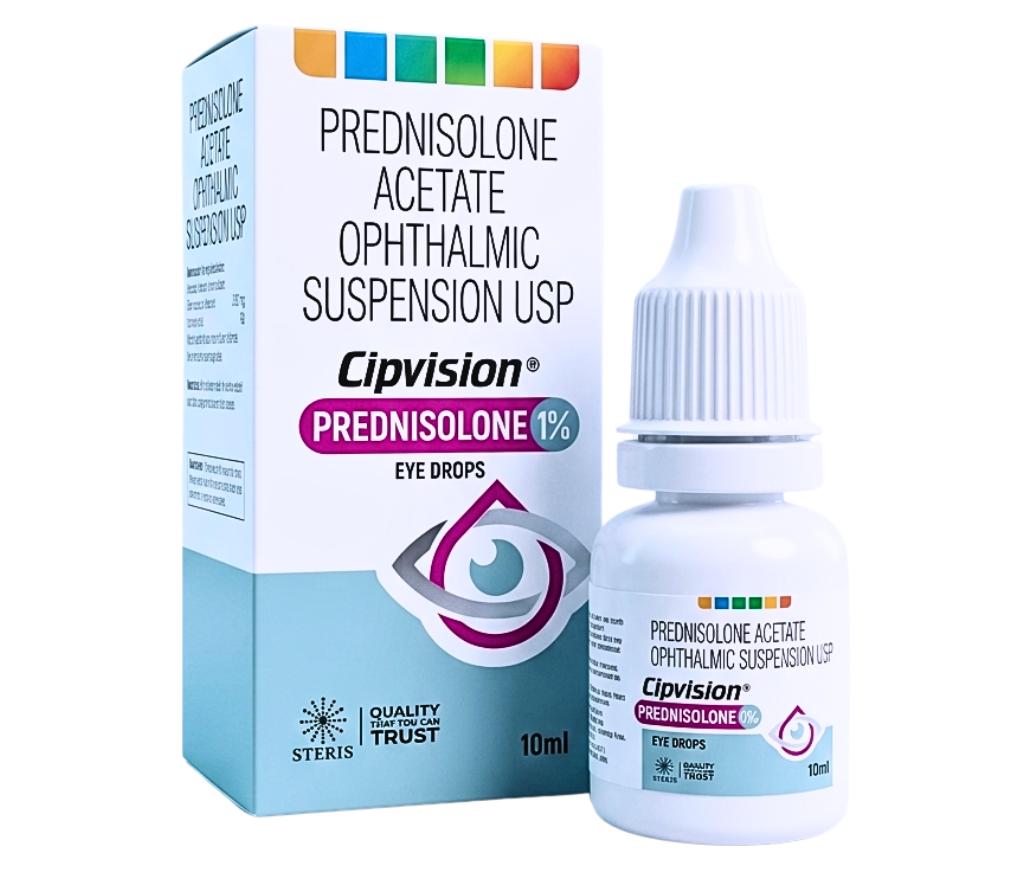
CIPVISION PREDNISOLONE 1%
 Item requires a valid prescription
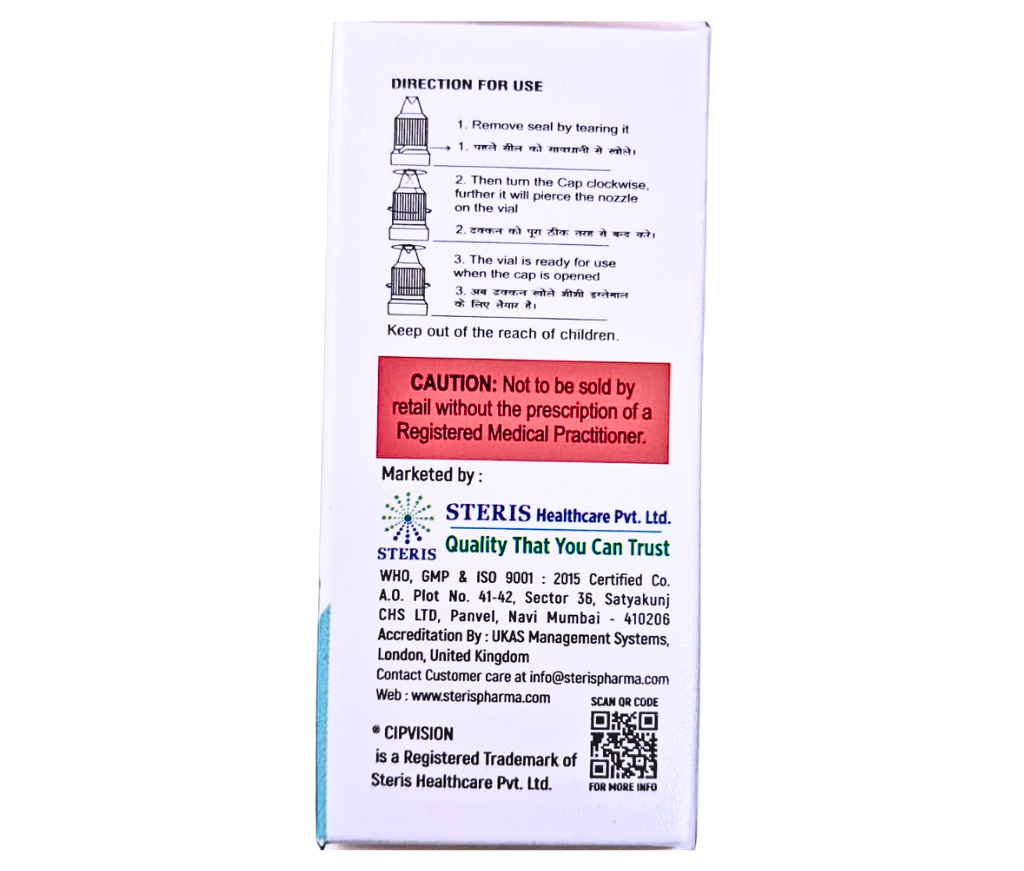
Manufactured By Steris Healthcare Pvt Ltd
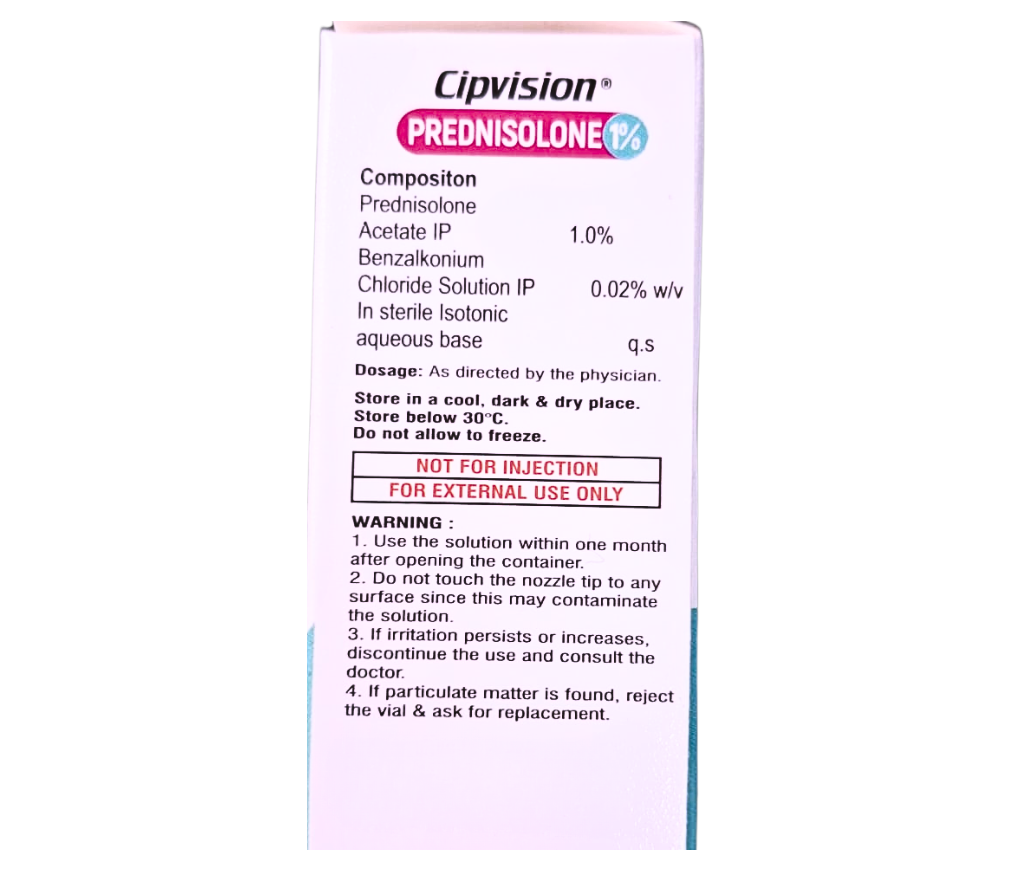
Composition Prednisolone Acetate Ophthalmic Suspension USP
Rs 43.40
MRP Rs 62.00
(30% OFF)
Includes all taxes
Package SIZE
( For 10 ml )

100% Authentic
Products

Free
Shipping*

Products
Return Policy
Description:
Prednisolone acetate ophthalmic suspension USP is a prescription corticosteroid eye medicine used to reduce inflammation associated with steroid-responsive conditions affecting the conjunctiva, cornea, and anterior segment of the eye. A commonly marketed formulation is prednisolone acetate ophthalmic suspension USP 1%, containing micronized prednisolone acetate as the active ingredient. Current DailyMed labeling confirms that the medicine is a sterile topical ophthalmic corticosteroid and remains prescription therapy.
What Is Prednisolone Acetate Ophthalmic Suspension USP?
Prednisolone acetate ophthalmic suspension USP 1% is a topical ophthalmic corticosteroid. Prednisolone acetate works by suppressing inflammatory processes in the eye, including mechanisms involved in edema, capillary dilation, and migration of inflammatory cells. Current labeling describes it as indicated for steroid-responsive inflammation of the palpebral and bulbar conjunctiva, cornea, and anterior segment of the globe.
The word “suspension” is significant. The medication is formulated as finely dispersed drug particles rather than a completely dissolved solution. Consequently, patients are instructed to shake the bottle well before use so the medication is adequately distributed before each dose.
A current 2026 DailyMed listing identifies a 1% formulation containing prednisolone acetate as the active ingredient and benzalkonium chloride as a preservative. Other marketed formulations can contain different inactive ingredients, so consumers should check the individual product label.
What Is Prednisolone Acetate Ophthalmic Suspension Used For?
The primary use of prednisolone acetate ophthalmic suspension is the treatment of steroid-responsive ocular inflammation.
Depending on the clinical situation and specific product labeling, ophthalmologists may prescribe it for inflammatory conditions involving:
- The conjunctiva.
- The cornea.
- The anterior segment of the eye.
- Iritis or other anterior inflammatory conditions.
- Certain allergic or inflammatory eye disorders.
- Selected conditions following ocular procedures or injury.
Current labeling specifically lists steroid-responsive inflammatory conditions involving the conjunctiva, cornea, and anterior segment. Some labels also identify conditions such as allergic conjunctivitis, superficial punctate keratitis, iritis, cyclitis, and selected infective conjunctivitis where the clinician determines that the benefit of corticosteroid treatment outweighs its risks.
This does not mean prednisolone acetate is appropriate for every red or irritated eye.
Eye redness can have many causes, including allergies, dry eye, bacterial disease, viral infections, fungal infections, trauma, and corneal disorders. Because corticosteroids suppress inflammation and immune responses, using one without the correct diagnosis can sometimes worsen or mask an underlying infection.
How Does Prednisolone Acetate Eye Suspension Work?
Prednisolone acetate belongs to the glucocorticoid corticosteroid class.
When inflammation develops in ocular tissues, numerous inflammatory mediators can contribute to swelling, redness, discomfort, and tissue irritation. Prednisolone suppresses aspects of this inflammatory response.
The result can be a reduction in inflammation-related symptoms when the underlying condition is steroid responsive.
This mechanism explains both the medicine's principal benefit and its major safety consideration: reducing inflammation is helpful when inflammation needs to be controlled, but suppressing the immune response can be harmful when certain infections are present.
Key Benefits of Prednisolone Acetate Ophthalmic Suspension USP
1. Strong anti-inflammatory activity
Prednisolone acetate is designed specifically to reduce ocular inflammation. This makes it considerably different from artificial tears, saline drops, and other non-steroidal comfort products.
2. Treats steroid-responsive eye inflammation
When a qualified clinician identifies an inflammatory condition that is appropriate for corticosteroid treatment, prednisolone acetate can provide targeted topical anti-inflammatory therapy.
3. Useful across several inflammatory eye conditions
Depending on the diagnosis and product labeling, prednisolone acetate can be used for inflammation involving the conjunctiva, cornea, and anterior segment of the eye.
4. Available as a concentrated 1% ophthalmic formulation
The commonly marketed USP formulation contains 1% prednisolone acetate, allowing topical treatment directly at the eye.
5. May be valuable when inflammation is causing significant ocular symptoms
By reducing inflammatory activity, treatment can help address symptoms associated with appropriate steroid-responsive conditions rather than merely providing temporary lubrication.
Prednisolone Acetate Ophthalmic Suspension Side Effects
Like all corticosteroid medicines, prednisolone acetate can cause side effects.
Commonly reported or possible eye-related effects include:
- Temporary burning or stinging after application.
- Eye irritation.
- Blurred vision.
- Foreign-body sensation.
- Eye pain.
- Itching.
- Increased redness.
- Visual disturbance.
- Allergic reactions.
Current labeling also identifies potentially more serious adverse effects, including elevated intraocular pressure, glaucoma, optic nerve damage, posterior subcapsular cataracts, and delayed wound healing. Secondary bacterial, fungal, or viral ocular infections can also occur.
The risk profile becomes particularly important with prolonged corticosteroid use.
Can Prednisolone Acetate Increase Eye Pressure?
Yes.
Ophthalmic corticosteroids can increase intraocular pressure in susceptible patients. Sustained pressure elevation can contribute to glaucoma and optic nerve damage.
Current labeling states that if prednisolone acetate ophthalmic suspension is used for 10 days or longer, intraocular pressure should be routinely monitored. Patients with glaucoma or a history of elevated eye pressure require particular caution.
This is one reason why patients should not continue an old prescription indefinitely or use someone else's steroid eye drops.
Important Warnings and Contraindications
Prednisolone acetate should not be treated as a general-purpose eye infection medicine.
Current labeling contraindicates prednisolone acetate ophthalmic suspension in acute untreated purulent ocular infections, most viral diseases of the cornea and conjunctiva, epithelial herpes simplex keratitis, certain mycobacterial eye infections, and fungal diseases of ocular structures. Hypersensitivity to the ingredients or corticosteroids is another contraindication.
Long-term corticosteroid treatment can also increase the risk of:
- Glaucoma.
- Cataract formation.
- Secondary ocular infection.
- Delayed wound healing.
- Corneal or scleral thinning.
- Potential corneal or scleral perforation in vulnerable eyes.
The current 2026 label specifically warns about these risks and recommends appropriate monitoring.
How to Use Prednisolone Acetate Ophthalmic Suspension USP
Follow the exact instructions provided by the prescribing clinician and the product label.
A key administration instruction is
Shake well before using.
Because the medicine is a suspension, shaking helps redistribute the active ingredient before administration. Current labeling for some 1% formulations specifies one to two drops two to four times daily, while other current formulations may have different directions. Therefore, patients should follow their own prescription rather than copying a dosage from another product or website
Additional safe-use practices include:
- Wash your hands before applying the drops.
- Do not touch the dropper tip to your eye or another surface.
- Close the bottle promptly after use.
- Do not share the medication.
- Do not continue treatment longer than prescribed.
- Do not restart leftover steroid eye drops without medical advice.
If symptoms fail to improve as expected, the eye should be reassessed rather than simply increasing the dosage yourself. Some current labeling advises reevaluation if signs and symptoms do not improve after two days.
Who Should Be Especially Careful?
Talk to an ophthalmologist before using prednisolone acetate if you have:
- Glaucoma or elevated intraocular pressure.
- A history of herpes simplex eye disease.
- A suspected or known fungal eye infection.
- A suspected viral eye infection.
- A corneal ulcer.
- Corneal or scleral thinning.
- Recent eye surgery.
- A known corticosteroid allergy.
- Persistent or unexplained eye pain or vision changes.
Pregnancy and breastfeeding should also be discussed with a healthcare professional because the benefits and potential risks need to be assessed individually.
Prednisolone Acetate vs. Ordinary Lubricating Eye Drops
These products serve different purposes.
Artificial tears primarily lubricate the ocular surface and can provide symptomatic relief from dryness.
Prednisolone acetate ophthalmic suspension is a prescription corticosteroid intended to control specific inflammatory eye conditions.
Therefore, someone with dry or tired eyes should not automatically choose prednisolone simply because it is marketed as an anti-inflammatory eye medicine.
Buying Prednisolone Acetate Ophthalmic Suspension USP: What Should You Check?
For consumers with commercial or transactional search intent, checking the product carefully is just as important as finding the lowest price.
Before purchasing, verify:
- Active ingredient: Prednisolone acetate.
- Strength: Commonly 1%.
- Dosage form: Ophthalmic suspension.
- Sterility: It should be an ophthalmic sterile product.
- Prescription status: This is prescription corticosteroid therapy.
- Manufacturer: Confirm the manufacturer and product labeling.
- Expiry date: Never use an expired product.
- Packaging: Avoid products with damaged or questionable packaging.
- Storage requirements: Follow the manufacturer's instructions.
- Authorized seller: Use a legitimate pharmacy or authorized medicine supplier.
Current DailyMed listings show multiple marketed prednisolone acetate ophthalmic suspension products, illustrating why buyers should verify the exact manufacturer's label rather than assuming that every product has identical inactive ingredients, packaging, or directions.
Frequently Asked Questions
1. What is prednisolone acetate ophthalmic suspension USP used for?
Prednisolone acetate ophthalmic suspension USP is a prescription corticosteroid used to treat steroid-responsive inflammation of the eye, including inflammation involving the conjunctiva, cornea, and anterior segment.
2. Is prednisolone acetate ophthalmic suspension an antibiotic?
No. Prednisolone acetate is a corticosteroid, not an antibiotic. It reduces inflammation. If a bacterial infection is present, an appropriate antibiotic may be required depending on the diagnosis.
3. Is prednisolone acetate 1% safe for the eyes?
It can be appropriate when prescribed for the correct condition, but it is not risk-free. Prolonged or inappropriate use can increase intraocular pressure, contribute to glaucoma or cataracts, delay healing, and increase the risk of secondary infections.
4. Can prednisolone acetate eye drops be used for red eyes?
Not without determining the cause of the redness. A corticosteroid can worsen or mask certain infections. Prednisolone acetate should be used when an eye-care professional has determined that the condition is appropriate for steroid treatment.
5. Does prednisolone acetate eye suspension need to be shaken?
Yes. Because it is an ophthalmic suspension, the product should be shaken well before use. This helps distribute the suspended medication properly.
6. What are the most common side effects of prednisolone acetate eye drops?
Possible effects include temporary burning or stinging, irritation, blurred vision, foreign-body sensation, itching, and eye discomfort. More serious risks include increased eye pressure, glaucoma, cataracts, delayed healing, and secondary infection
7. Can prednisolone acetate increase eye pressure?
Yes. Ophthalmic corticosteroids can increase intraocular pressure. Current labeling recommends routine pressure monitoring when treatment continues for 10 days or longer
8. Can I use prednisolone acetate for a viral eye infection?
You should not self-treat a suspected viral eye infection with prednisolone acetate. The medicine is contraindicated in most viral diseases of the cornea and conjunctiva, including epithelial herpes simplex keratitis.
9. How long can I use prednisolone acetate ophthalmic suspension?
The duration depends on the diagnosis and your clinician's treatment plan. Longer use requires greater attention to complications such as elevated intraocular pressure, glaucoma, cataracts, and secondary infection. Do not extend treatment without medical supervision.
10. Can I buy prednisolone acetate ophthalmic suspension USP without a prescription?
Prednisolone acetate ophthalmic suspension is prescription ophthalmic therapy in the U.S. and may have different dispensing requirements in other countries. Purchase it through a legitimate pharmacy and follow local prescribing requirements.
Conclusion
Prednisolone acetate ophthalmic suspension USP is a prescription corticosteroid eye medicine designed to control steroid-responsive ocular inflammation. Its principal benefit is powerful topical anti-inflammatory activity, but that benefit comes with important safety considerations. Current labeling confirms risks including increased intraocular pressure, glaucoma, cataracts, delayed healing, and secondary ocular infection, particularly with prolonged or inappropriate use.