


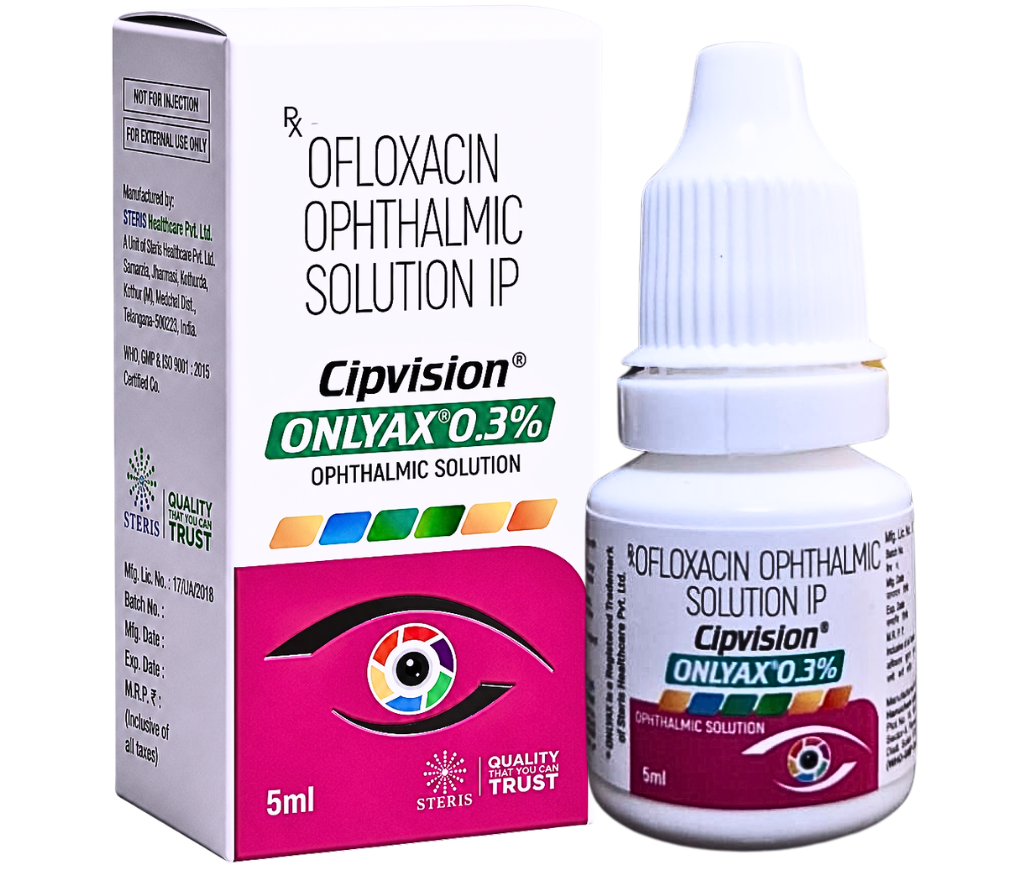
CIPVISION ONLYAX 0.3%
 Item requires a valid prescription
Manufactured By Steris Healthcare Pvt Ltd
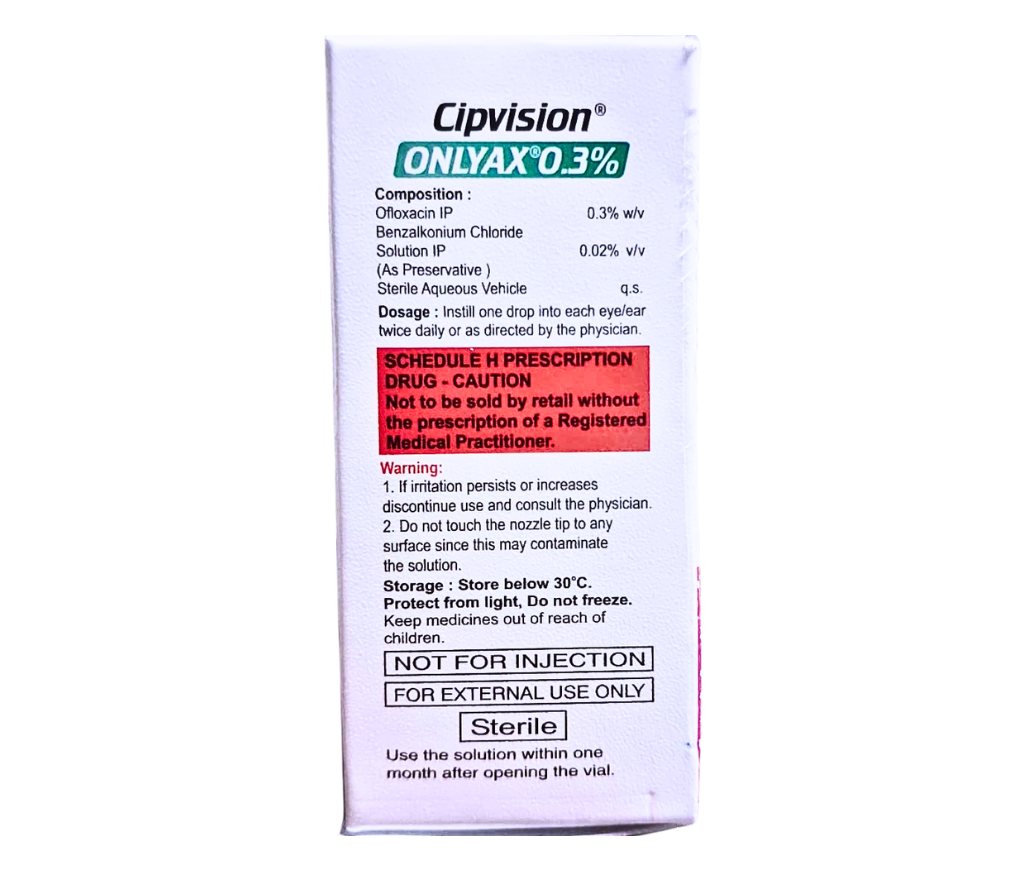
Composition Ofloxacin Ophthalmic Solution IP
Rs 31.50
MRP Rs 45.00
(30% OFF)
Includes all taxes
Package SIZE
( For 5 ml )

100% Authentic
Products

Free
Shipping*

Products
Return Policy
Description:
Ofloxacin ophthalmic solution IP is a prescription antibacterial eye drop used to treat certain bacterial infections affecting the eye. It contains ofloxacin, a fluoroquinolone antibiotic formulated specifically for topical ophthalmic use. A commonly marketed ophthalmic formulation contains ofloxacin 0.3% (3 mg/mL) in a sterile solution. Current official labeling confirms its use for susceptible bacterial infections, including bacterial conjunctivitis and certain bacterial corneal ulcers.
For people searching online for ofloxacin ophthalmic solution IP, the most important considerations are not simply price or availability. Buyers should verify the exact strength, manufacturer, batch information, expiry date, storage conditions, and whether the product is appropriate for the diagnosed eye condition.
This guide explains the uses, key benefits, dosage, side effects, precautions, and buying considerations for ofloxacin ophthalmic solution while distinguishing evidence-based product information from unsupported marketing claims.
What Is Ofloxacin Ophthalmic Solution IP?
Ofloxacin ophthalmic solution IP is a sterile eye-drop preparation containing ofloxacin, an antibacterial medicine belonging to the fluoroquinolone class.
A current U.S. product label describes ofloxacin ophthalmic solution 0.3% as a sterile ophthalmic solution containing 3 mg/mL of ofloxacin. The formulation is intended for topical use in the eye and is supplied in dropper bottles.
Ofloxacin works by interfering with bacterial enzymes required for DNA replication and repair. By inhibiting bacterial growth and reproduction, it can help eliminate susceptible bacteria responsible for certain ocular infections.
The term “IP” generally indicates compliance with the Indian Pharmacopoeia, the official standards publication for medicines in India. However, buyers should not assume that every product described as “ofloxacin ophthalmic solution IP” has exactly the same formulation. Strength, preservatives, excipients, packaging, manufacturer, and regulatory status can vary.
For example, the current U.S. 0.3% formulation listed by DailyMed contains ofloxacin 3 mg/mL and includes benzalkonium chloride as a preservative.
Uses of Ofloxacin Ophthalmic Solution IP
The primary purpose of ofloxacin ophthalmic solution IP is to treat susceptible bacterial infections of the eye.
Current official labeling identifies bacterial conjunctivitis and certain corneal ulcers among the ophthalmic indications for ofloxacin 0.3%. The labeled susceptible organisms include several Gram-positive and Gram-negative bacteria, including Staphylococcus aureus, Staphylococcus epidermidis, Streptococcus pneumoniae, Haemophilus influenzae, Proteus mirabilis, and Pseudomonas aeruginosa.
Bacterial conjunctivitis
Bacterial conjunctivitis can cause symptoms such as eye redness, discharge, irritation, and discomfort. When a susceptible bacterial organism is responsible, an ophthalmic antibiotic such as ofloxacin may be prescribed.
However, not every case of conjunctivitis is bacterial. Viral and allergic conjunctivitis can produce similar symptoms but require different treatment.
Bacterial corneal ulcers
Ofloxacin ophthalmic solution is also labeled for certain bacterial corneal ulcers. This is a more serious eye condition requiring professional ophthalmic management. The treatment schedule can be substantially more intensive than that used for routine bacterial conjunctivitis.
A suspected corneal ulcer should not be self-treated based solely on an online product description because delayed or inappropriate treatment can threaten vision.
Key Benefits of Ofloxacin Ophthalmic Solution
Targeted antibacterial treatment
The main benefit of ofloxacin ophthalmic solution IP is that it delivers an antibacterial medicine directly to the affected ocular surface.
Activity against susceptible bacteria
Ofloxacin has antibacterial activity against multiple organisms associated with ocular infections. Its labeled activity includes both Gram-positive and Gram-negative bacteria.
Convenient ophthalmic formulation
The sterile liquid formulation is administered as drops, making it practical for outpatient treatment when prescribed by an eye-care professional.
Established fluoroquinolone antibiotic
Ofloxacin belongs to an established class of antibacterial medicines used in ophthalmology. Its mechanism targets bacterial DNA-related enzymes rather than human cells.
Appropriate for specific bacterial eye infections
When an eye infection is correctly diagnosed and the causative bacteria are susceptible, ofloxacin can be an effective treatment option.
It is important not to overstate this benefit: ofloxacin is not a universal treatment for red eyes, watery eyes, allergies, or every form of conjunctivitis.
Dosage and How to Use Ofloxacin Ophthalmic Solution
The correct dose depends on the diagnosis, severity of infection, patient's age, and exact product.
For the current labeled 0.3% ophthalmic solution, the recommended regimen for bacterial conjunctivitis is
- Days 1 and 2: One to two drops in the affected eye(s) every two to four hours.
- Days 3 through 7: One to two drops four times daily.
For bacterial corneal ulcers, the regimen is considerably more frequent. Current labeling specifies one to two drops every 30 minutes while awake during the first two days, followed by hourly dosing during the subsequent period and then four-times-daily dosing toward treatment completion.
These are product-label dosing schedules, not individualized medical instructions. Patients should follow their prescription and the label supplied with their particular product.
Correct administration
To use ofloxacin eye drops safely:
- Wash your hands thoroughly before administration.
- Check the bottle, expiry date, and solution before use.
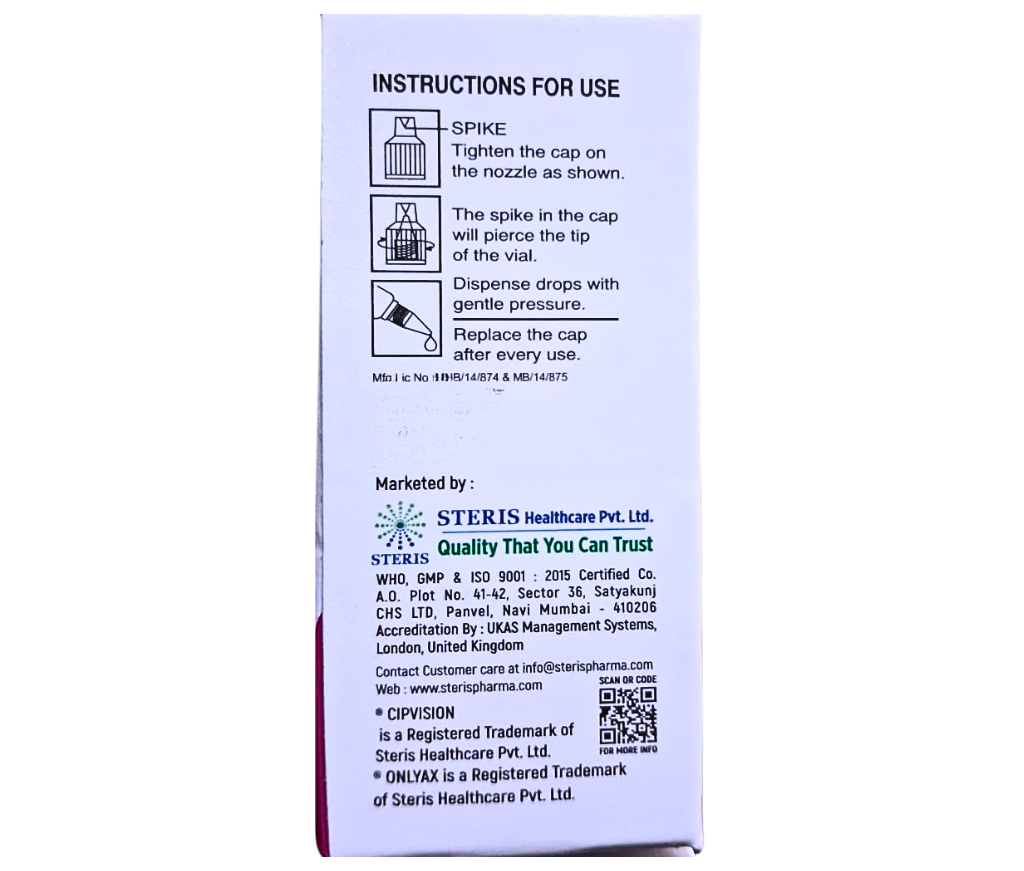
- Do not allow the dropper tip to touch your eye, eyelashes, eyelid, or another surface.
- Gently pull down the lower eyelid.
- Instill the prescribed number of drops.
- Close your eye gently after administration.
- Replace the cap securely.
Do not share eye drops with another person. If more than one ophthalmic medicine has been prescribed, ask your pharmacist or ophthalmologist how much time should be left between products.
Side Effects of Ofloxacin Ophthalmic Solution
Like other medicines, ofloxacin ophthalmic solution IP can cause side effects.
The most frequently reported drug-related ocular reaction in current labeling is temporary burning or discomfort. Other reported reactions include stinging, redness, itching, chemical conjunctivitis or keratitis, swelling around the eye or face, foreign-body sensation, sensitivity to light, blurred vision, tearing, dryness, and eye pain. Rare reports of dizziness and nausea have also been documented.
Possible side effects include:
- Temporary burning or stinging.
- Eye redness.
- Itching or irritation.
- Dryness.
- Increased tearing.
- Foreign-body sensation.
- Temporary blurred vision.
- Eye discomfort or pain.
- Photophobia, or increased sensitivity to light.
- Swelling around the eye in some patients.
Most mild local reactions may be temporary, but significant or worsening symptoms should not be ignored.
Serious allergic reactions
Ofloxacin is a quinolone antibiotic, and hypersensitivity reactions can occur. Current labeling warns that rare serious allergic reactions, including anaphylactic reactions, have been reported with quinolones. If a significant allergic reaction occurs, the medicine should be discontinued and urgent medical care sought.
Symptoms such as facial or throat swelling, breathing difficulty, widespread hives, or severe weakness require emergency medical attention.
Precautions and Warnings
Patients with a previous allergy to ofloxacin, other quinolone antibiotics, or any component of the formulation should not use the medicine unless a qualified healthcare professional has specifically determined an appropriate alternative.
For ophthalmic use only
Ofloxacin ophthalmic solution is designed for application to the eye. It should not be injected, administered subconjunctivally, or introduced directly into the anterior chamber of the eye.
Avoid contamination.
The dropper tip should never touch the eye, fingers, eyelashes, or other surfaces. Contamination can introduce microorganisms into the product and potentially cause an eye infection.
Antibiotic stewardship
Ofloxacin should be used only when a bacterial infection is suspected or diagnosed and the medicine is clinically appropriate. Unnecessary antibiotic use can contribute to antimicrobial resistance.
Do not use leftover antibiotic eye drops for a future episode of redness or discharge without medical advice.
Contact lenses
Patients who wear contact lenses should follow the specific instructions supplied with their formulation and their eye-care professional's advice. Preservatives such as benzalkonium chloride can interact with contact lenses or irritate the ocular surface in susceptible users.
Pregnancy and breastfeeding
People who are pregnant, planning pregnancy, or breastfeeding should discuss the use of ofloxacin ophthalmic solution with their healthcare professional before treatment.
When to seek urgent eye care
Prompt professional evaluation is important if symptoms include:
- Severe eye pain.
- Sudden or significant vision changes.
- Marked sensitivity to light.
- Severe swelling.
- A suspected corneal ulcer.
- Eye injury or chemical exposure.
- Symptoms that worsen despite treatment.
- Signs of a serious allergic reaction.
These symptoms can indicate conditions requiring treatment beyond a routine antibiotic eye drop.
Buying Ofloxacin Ophthalmic Solution IP Online
If your search intent is to buy ofloxacin ophthalmic solution IP, product authenticity and formulation accuracy should take priority over the cheapest advertised price.
Before purchasing, verify:
- Active ingredient: Ofloxacin.
- Strength: Commonly 0.3%, but confirm the exact product.
- Dosage form: Sterile ophthalmic solution.
- Manufacturer and regulatory information.
- Batch or lot number.
- Manufacturing and expiry dates.
- Packaging and tamper-evident seal.
- Storage instructions.
- Prescription requirements in your country.
A current DailyMed listing for a 0.3% product identifies a sterile ophthalmic solution containing 3 mg/mL oloxacin and lists 5 mL and 10 mL dropper-bottle presentations
Buyers should avoid products with unclear labeling, missing expiry information, damaged packaging, or an uncertain supply chain.
It is also important to distinguish ophthalmic ofloxacin from otic ofloxacin. Ofloxacin is available in formulations intended for the ear, and those products can carry explicit warnings that they are not for ophthalmic use.
Therefore, always verify that the package specifically states ophthalmic/eye use before administration.
Conclusion
Ofloxacin ophthalmic solution IP is a topical fluoroquinolone antibiotic used for certain bacterial eye infections caused by susceptible organisms. A commonly marketed formulation contains ofloxacin 0.3% (3 mg/mL) and is labeled for bacterial conjunctivitis and certain bacterial corneal ulcers.
Its key benefits include direct topical antibacterial treatment, activity against a range of susceptible organisms, and convenient administration as sterile eye drops. However, it should not be considered a general treatment for every red or irritated eye because viral, allergic, inflammatory, and other ocular conditions may require completely different therapies.
For consumers looking to buy ofloxacin ophthalmic solution IP, the most important factors are product authenticity, the correct strength, legitimate sourcing, intact packaging, expiry date, and appropriate storage. Buyers should also confirm that they are purchasing an ophthalmic formulation rather than an ear formulation.
From an AEO and voice-search perspective, the central answer is simple: Ofloxacin ophthalmic solution is an antibiotic eye drop used to treat certain susceptible bacterial eye infections, but it should be used according to professional diagnosis and the specific product's instructions.
Frequently Asked Questions
1. What is ofloxacin ophthalmic solution IP used for?
Ofloxacin ophthalmic solution is used to treat certain bacterial infections of the eye, including bacterial conjunctivitis and specific bacterial corneal ulcers caused by susceptible organisms.
2. Is ofloxacin ophthalmic solution an antibiotic?
Yes. Ofloxacin is a fluoroquinolone antibacterial medicine formulated for topical ophthalmic use.
3. What is the common strength of ofloxacin eye drops?
A commonly marketed formulation is ofloxacin 0.3%, equivalent to 3 mg/mL. Always verify the strength printed on the specific product you have been prescribed.
4. How often should I use ofloxacin ophthalmic solution?
For the labeled 0.3% product, bacterial conjunctivitis may be treated with one to two drops every two to four hours during the first two days, followed by one to two drops four times daily through days three to seven. More intensive regimens are used for bacterial corneal ulcers.
5. What are the side effects of ofloxacin eye drops?
Commonly reported reactions include temporary burning or discomfort, stinging, redness, itching, dryness, tearing, blurred vision, foreign-body sensation, and eye pain.
6. Can ofloxacin eye drops treat red eyes?
Only when the redness is related to an appropriate bacterial infection. Red eyes can also be caused by allergies, viruses, dry eye, injury, or other eye diseases, so an antibiotic should not be used automatically.
7. Can ofloxacin ophthalmic solution treat viral conjunctivitis?
No. Ofloxacin is an antibacterial medicine and does not treat viral conjunctivitis. The cause of conjunctivitis should be assessed before selecting treatment.
8. Can I buy ofloxacin ophthalmic solution IP online?
Where legally permitted, purchase it from a legitimate pharmacy or authorized pharmaceutical supplier. Verify the active ingredient, strength, manufacturer, batch number, expiry date, packaging, and storage information before use.
9. Is ofloxacin ophthalmic solution the same as ofloxacin ear drops?
No. Although both may contain ofloxacin, their intended routes and labeling differ. Some ofloxacin otic products explicitly state “not for ophthalmic use.” Always confirm that the product is specifically labeled for the eye.
10. Can children use ofloxacin eye drops?
The appropriate use in children depends on the specific product, diagnosis, and clinical circumstances. A pediatric patient should receive ophthalmic antibiotics under appropriate professional guidance.
11. What should I do if ofloxacin eye drops cause severe irritation?
Stop self-treatment and seek medical advice if you develop severe or worsening irritation, significant swelling, severe pain, vision changes, or symptoms of an allergic reaction. Serious hypersensitivity reactions are rare but have been reported with quinolone antibiotics.
12. Can I use leftover ofloxacin eye drops for a new eye infection?
It is better not to self-treat a new eye problem with leftover antibiotics. A new episode may have a different cause, and unnecessary antibiotic use can contribute to resistance. An eye-care professional can determine whether an antibiotic is actually appropriate.