


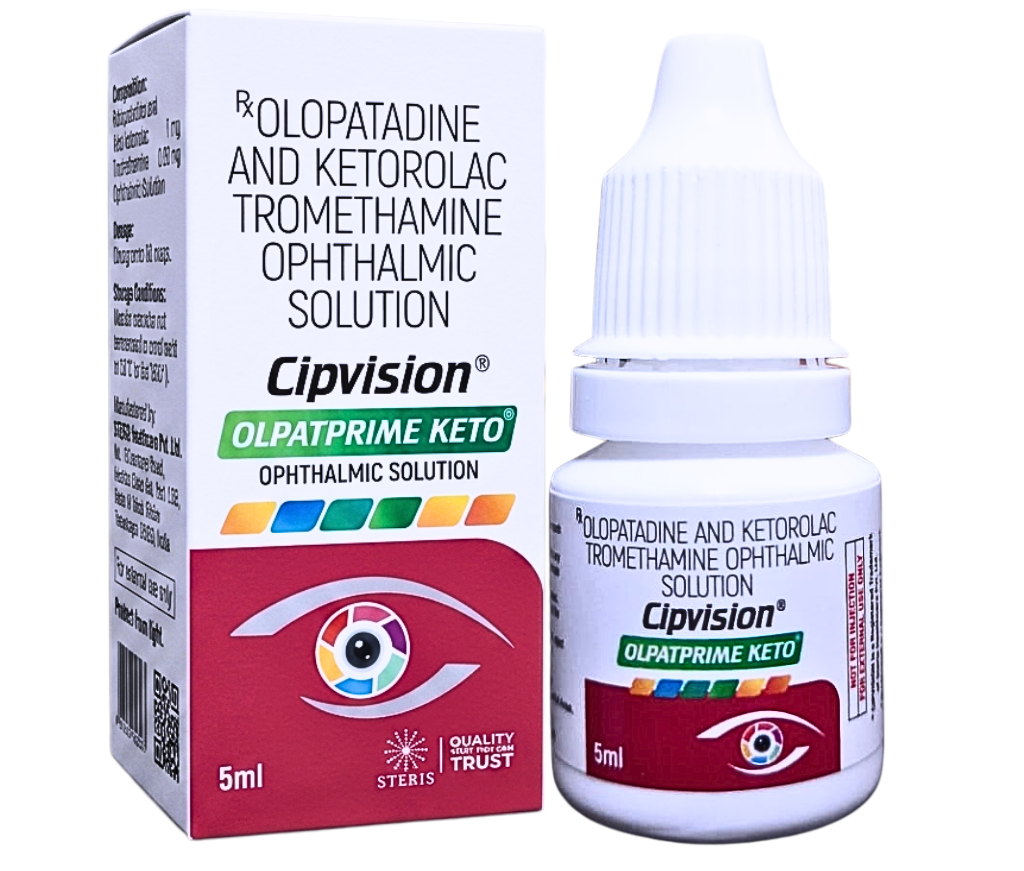
CIPVISION OLPATPRIME KETO
 Item requires a valid prescription
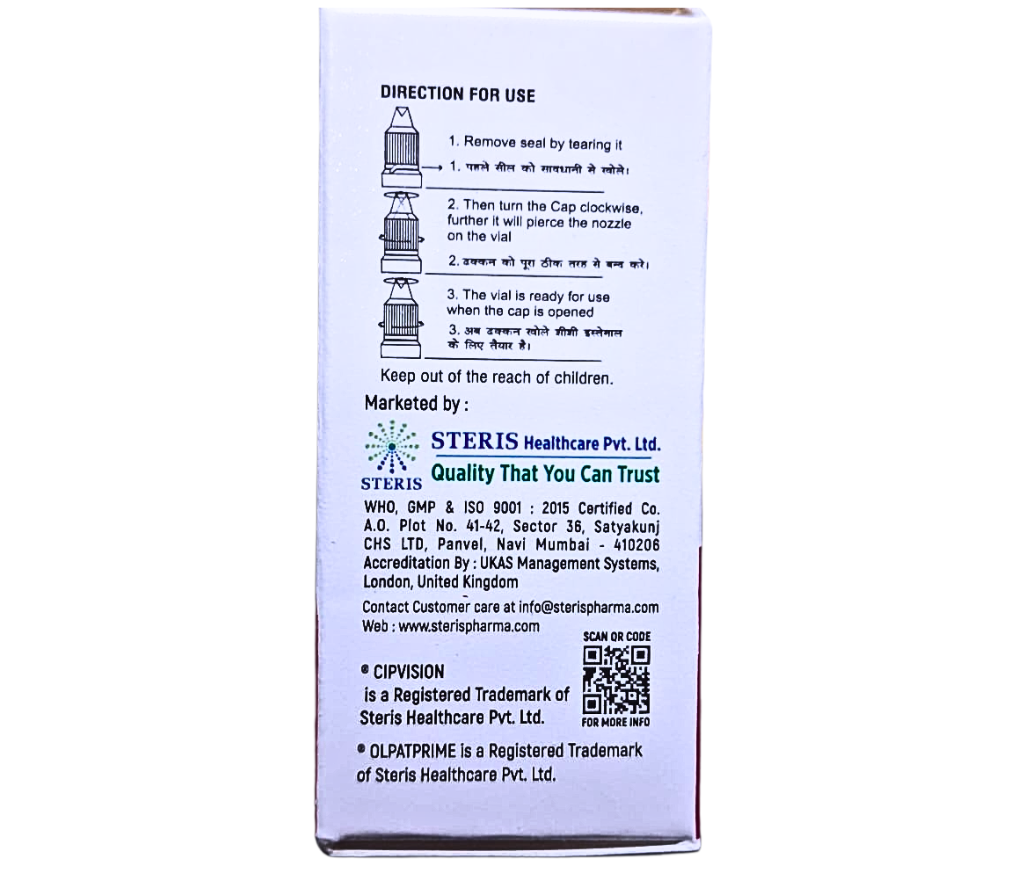
Manufactured By Steris Healthcare Pvt Ltd
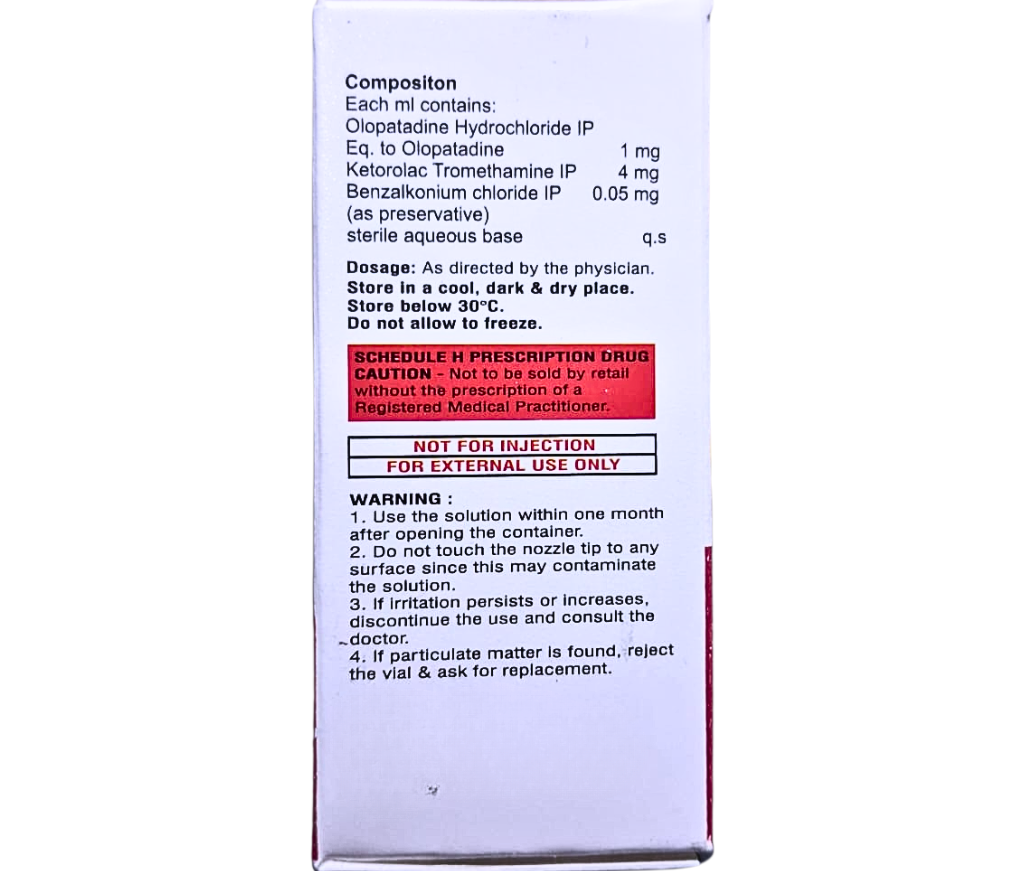
Composition Olopatadine And Ketorolac Tromethamine Ophthalmic Solution
Rs 105.00
MRP Rs 150.00
(30% OFF)
Includes all taxes
Package SIZE
( For 5 ml )

100% Authentic
Products

Free
Shipping*

Products
Return Policy
Description:
Olopatadine and ketorolac tromethamine ophthalmic solution refer to an ophthalmic treatment approach combining two medicines with different pharmacological actions: olopatadine, an antihistamine/mast-cell stabilizing medicine used for allergic eye symptoms, and ketorolac tromethamine, a topical non-steroidal anti-inflammatory drug (NSAID) used for specific ocular inflammation and pain indications.
For patients and healthcare buyers researching this product, it is important to distinguish the individual ingredients and their approved uses. Current U.S. labeling identifies olopatadine ophthalmic products for temporary relief of itchy and red eyes associated with allergens, while ketorolac ophthalmic products have specific indications that can include seasonal allergic-conjunctivitis itching and postoperative inflammation following cataract extraction, depending on the strength and product.
Because formulations, concentrations, regulatory approvals, and availability can differ by country and manufacturer, buyers should verify the exact product label before purchase. A combination product should not automatically be assumed to have the same approved indications or dosing schedule as either ingredient used individually.
What Is Olopatadine and Ketorolac Tromethamine Ophthalmic Solution?
Olopatadine is an antihistamine with mast-cell stabilizing activity. Ophthalmic olopatadine is commonly used to reduce allergy-related eye symptoms such as itching and redness. Current U.S. consumer labeling for 0.1% olopatadine identifies its use for temporary relief of itchy and red eyes associated with pollen, ragweed, grass, animal hair, and dander.
Ketorolac tromethamine is an ophthalmic NSAID. Depending on the formulation, it is used for conditions such as ocular itching associated with seasonal allergic conjunctivitis or inflammation following cataract surgery. A current 0.5% U.S. label lists both indications.
The two ingredients therefore address ocular symptoms through different mechanisms. Olopatadine primarily targets histamine-mediated allergic symptoms, while ketorolac reduces inflammatory activity through prostaglandin-related pathways.
This distinction is particularly important for SEO-driven product information: the phrase “olopatadine and ketorolac tromethamine ophthalmic solution” may describe a particular marketed or compounded product in some markets, but the exact approved use should always be confirmed from the product's local regulatory labeling.
Uses of Olopatadine, Ketorolac, and Tromethamine Ophthalmic Solution
The potential clinical uses depend on the exact formulation and the diagnosis.
Allergy-related eye symptoms
Olopatadine ophthalmic products are used to temporarily relieve allergic eye symptoms, particularly itching and redness caused by common environmental allergens.
Ketorolac ophthalmic solution also has a labeled indication for temporary relief of ocular itching associated with seasonal allergic conjunctivitis for certain 0.5% products.
Postoperative ocular inflammation
Ketorolac ophthalmic solution may be prescribed to treat inflammation following cataract extraction. Current labeling for a 0.5% formulation recommends treatment beginning 24 hours after cataract surgery and continuing through the first two weeks after surgery.
However, this does not mean that every olopatadine/ketorolac combination is automatically indicated after cataract surgery. The indication must be confirmed for the specific product.
Symptom-focused ophthalmic treatment
Depending on the diagnosis, an eye-care professional may select an antihistamine, NSAID, antibiotic, corticosteroid, lubricant, or other ophthalmic therapy. Selecting the correct medicine requires determining whether symptoms are caused by allergy, infection, inflammation, dryness, trauma, surgery, or another eye disorder.
Key Benefits
Dual pharmacological approach
The most notable potential benefit of an olopatadine/ketorolac combination is that the ingredients have different mechanisms. Olopatadine targets allergic pathways, while ketorolac provides NSAID-mediated anti-inflammatory activity.
Helps address allergic itching
Olopatadine is specifically formulated to provide relief from allergy-associated itchy and red eyes. Current labeling identifies allergens such as pollen, ragweed, grass, animal hair, and dander.
Anti-inflammatory activity
Ketorolac can help control specific ocular inflammatory symptoms when used for an appropriate indication. Current 0.5% labeling includes postoperative inflammation following cataract extraction.
Convenient topical administration
Eye drops allow medication to be delivered directly to the ocular surface. This can be convenient for patients who have been prescribed topical treatment rather than systemic therapy.
Potential treatment simplification
Where a legitimately approved combination formulation is available, combining active ingredients into one ophthalmic product may simplify administration compared with using separate products. However, this should only be assumed when supported by the specific product's labeling and prescription.
Dosage and How to Use
Dosage must be based on the exact product and prescription. There is no single universal dose that can safely be applied to every product described by the keyword “olopatadine and ketorolac tromethamine ophthalmic solution.”
For example, current U.S. labeling for one ketorolac tromethamine 0.5% ophthalmic solution recommends one drop in the affected eye(s) four times daily for seasonal allergic-conjunctivitis itching and one drop four times daily beginning 24 hours after cataract surgery for postoperative inflammation.
Olopatadine products can have different concentrations and dosing schedules. Therefore, patients should follow the exact instructions supplied with their product rather than combining dosing instructions from separate medicines.
For correct administration:
- Wash your hands before applying the drops.
- Check the product label and expiry date.
- Shake the product only if the specific label instructs you to do so.
- Avoid touching the dropper tip to the eye, eyelashes, eyelids, or other surfaces.
- Instill the prescribed number of drops.
- Close the eye gently after administration.
- Replace the cap securely.
If multiple topical ophthalmic medicines are prescribed, ask your ophthalmologist or pharmacist how much time should be left between products.
Side Effects
Possible side effects depend on the formulation and the individual patient.
Olopatadine ophthalmic products may cause temporary eye discomfort or other local reactions. Patients should follow the warnings on their particular product; current consumer labeling advises against use if the patient is sensitive to an ingredient and emphasizes avoiding contamination of the container.
Ketorolac ophthalmic solution commonly causes temporary stinging or burning after application. Current prescribing information reports transient stinging and burning as the most frequent adverse reactions, occurring in up to 40% of patients in cited clinical trials.
Other potential ketorolac-related ocular reactions include:
- Eye irritation or discomfort.
- Conjunctival redness.
- Corneal effects.
- Ocular pain or swelling.
- Hypersensitivity reactions.
Topical ketorolac also carries important warnings concerning delayed healing, hypersensitivity, increased bleeding time, and corneal complications, including keratitis.
- A history of NSAID or aspirin sensitivity.
- Previous allergic reactions to ophthalmic medicines.
- Corneal disease or ocular-surface problems.
- Recent eye surgery or planned eye surgery.
- A history of delayed wound healing.
- A bleeding disorder or medicines that may increase bleeding risk.
- Contact-lens use.
The ketorolac label also warns that NSAIDs can interfere with platelet aggregation and potentially increase bleeding time.
- Exact active ingredients.
- Concentration of each ingredient.
- Manufacturer.
- Regulatory approval or registration information.
- Batch or lot number.
- Manufacturing and expiry dates.
- Bottle size and dosage form.
- Packaging and seal.
- Storage instructions.
- Prescription requirements in your country.
This is especially important because olopatadine and ketorolac are also sold as separate ophthalmic products, and their concentrations and approved indications differ. For example, current U.S. labeling lists olopatadine 0.1% as an antihistamine/redness reliever, while a current ketorolac product is available as a 0.5% ophthalmic NSAID.
Avoid buying eye medicines with damaged packaging, missing expiry information, unclear manufacturer details, or uncertain storage history. Ophthalmic products require appropriate handling because contamination can potentially introduce microorganisms into the eye.
Conclusion
Olopatadine and ketorolac tromethamine ophthalmic solution combine two pharmacological concepts relevant to ocular allergy and inflammation: olopatadine targets allergy-related histamine activity, while ketorolac is an ophthalmic NSAID with specific indications that include seasonal allergic-conjunctivitis itching and postoperative inflammation for certain formulations.
The key buyer consideration is to confirm the exact formulation, strength, manufacturer, approved indication, dosage instructions, expiry date, and storage requirements. A combination product should not automatically be treated as interchangeable with either active ingredient individually.
For consumers searching for this product online, professional diagnosis remains essential. Itchy or red eyes can result from allergy, infection, dry eye, injury, or other conditions, and the appropriate treatment depends on the underlying cause. Ketorolac also carries clinically important warnings concerning delayed healing and corneal complications.
Frequently Asked Questions
1. What is olopatadine and ketorolac tromethamine ophthalmic solution used for?
It may be used for ocular conditions involving allergy-related itching or inflammation when the specific formulation is approved and prescribed for that purpose. Olopatadine is used for allergic eye symptoms, while ketorolac has specific ophthalmic indications that vary by product and strength.
2. Is olopatadine an antibiotic?
No. Olopatadine is an antihistamine with mast-cell stabilizing activity. It is used primarily for allergic eye symptoms and does not treat bacterial eye infections.
3. Is ketorolac an antibiotic or steroid?
No. Ketorolac is a non-steroidal anti-inflammatory drug (NSAID). Certain ophthalmic formulations are indicated for seasonal allergic-conjunctivitis itching and postoperative inflammation following cataract surgery.
4. Can this eye drop be used for itchy eyes?
Itchy eyes caused by allergies may respond to olopatadine. Some ketorolac 0.5% ophthalmic products are also labeled for temporary relief of ocular itching caused by seasonal allergic conjunctivitis. The correct product and treatment should be determined according to the diagnosis.
5. What are the common side effects of ketorolac eye drops?
Temporary stinging and burning after instillation are among the most frequently reported adverse reactions. Ketorolac can also cause other ocular reactions and carries warnings about delayed healing and corneal complications.
6. Can I use olopatadine and ketorolac together?
Do not combine separate ophthalmic medicines or use a combination product unless your doctor or pharmacist has confirmed that the regimen is appropriate. The safety, concentration, and approved use of each product must be considered.
7. Can these eye drops be used after cataract surgery?
Ketorolac ophthalmic solution is indicated for postoperative inflammation following cataract extraction for certain formulations. However, a product containing both olopatadine and ketorolac should only be used after surgery if that specific product has been prescribed or approved for your situation.
8. Can I buy olopatadine and ketorolac tromethamine ophthalmic solution online?
Where legally permitted, purchase ophthalmic medicines from a legitimate pharmacy or authorized supplier. Confirm the exact ingredients, strength, manufacturer, batch information, expiry date, packaging, and storage requirements before use.
9. Can ketorolac eye drops damage the cornea?
Rare but serious corneal complications are possible. Current prescribing information warns about corneal effects, including keratitis, as well as delayed healing. Patients with ocular-surface or corneal problems should discuss these risks with an ophthalmologist.
10. Can these eye drops treat an eye infection?
Not necessarily. Olopatadine is an allergy medicine, and ketorolac is an NSAID—not an antibiotic. Redness and discharge can have different causes, so an eye infection should be professionally evaluated rather than treated based solely on symptoms.
11. Should I wear contact lenses while using these drops?
Follow the instructions for the exact product. Contact-lens precautions can differ between ophthalmic formulations, and current labeling for olopatadine and ketorolac products contains specific instructions and warnings concerning contact-lens use.
12. When should I seek medical help after using these eye drops?
Seek prompt medical attention for severe or worsening eye pain, sudden vision changes, significant swelling, pronounced redness, severe irritation, or symptoms suggesting a serious allergic reaction. These symptoms should not be managed solely through self-treatment.