


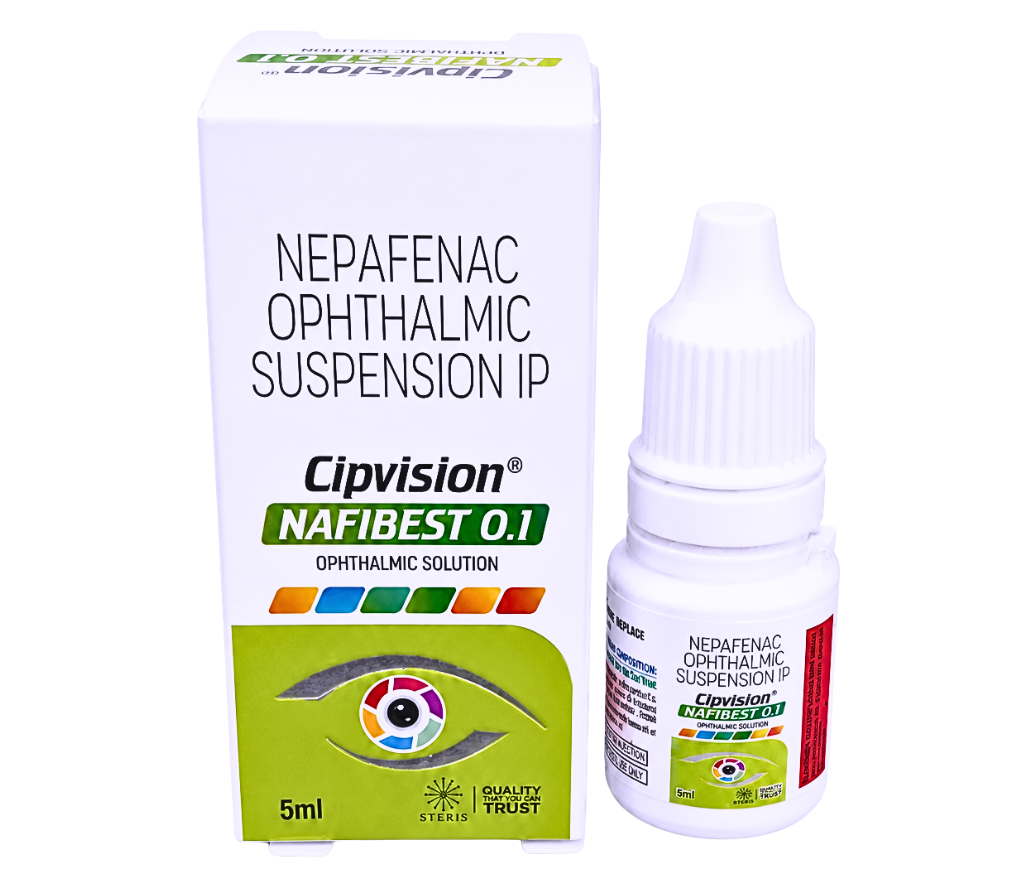

CIPVISION NAFIBEST 0.1
 Item requires a valid prescription
Manufactured By Steris Healthcare Pvt Ltd
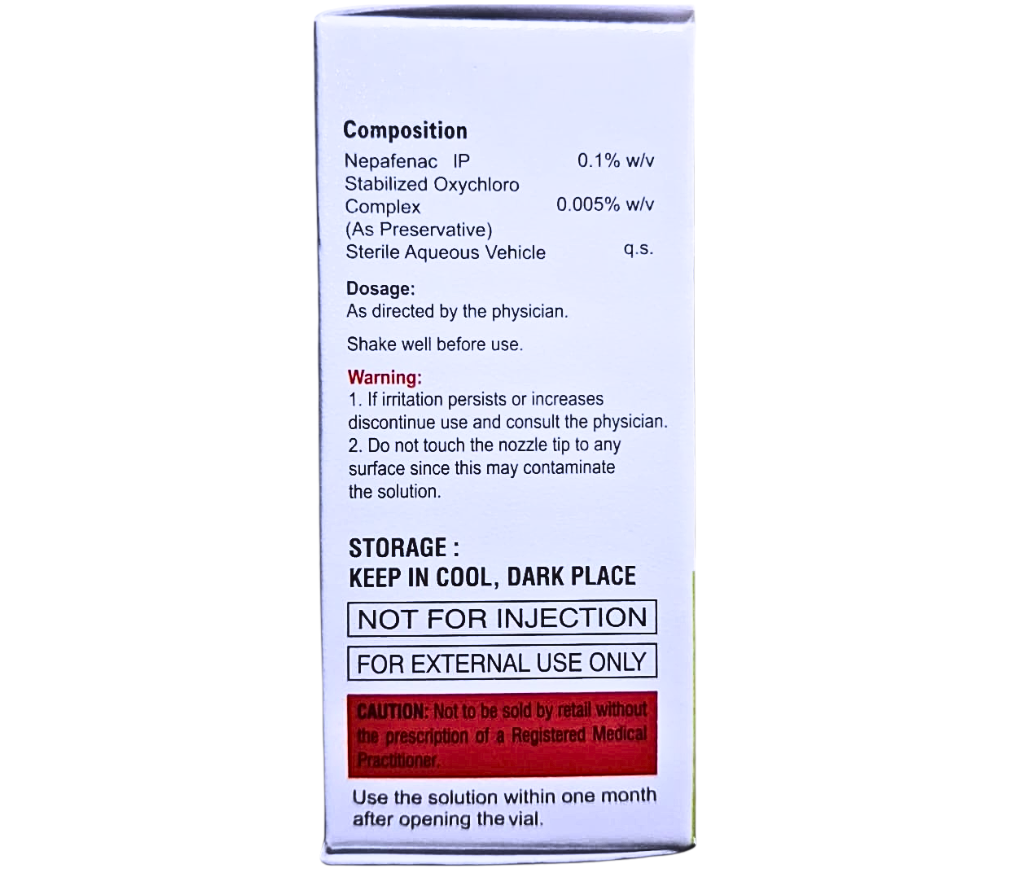
Composition Nepafenac Ophthalmic Suspension IP
Rs 126.00
MRP Rs 180.00
(30% OFF)
Includes all taxes
Package SIZE
( For 5 ml )

100% Authentic
Products

Free
Shipping*

Products
Return Policy
Description:
Nepafenac ophthalmic suspension is a prescription non-steroidal anti-inflammatory eye medicine used primarily to manage pain and inflammation associated with cataract surgery. It belongs to the ophthalmic NSAID class and is formulated as a sterile suspension for topical application to the eye.
Nepafenac is a prodrug that is converted within ocular tissues to amfenac, the active compound responsible for its anti-inflammatory effects. By inhibiting cyclooxygenase-related prostaglandin production, it helps reduce inflammatory responses following appropriate ophthalmic procedures.
For patients and healthcare buyers searching for nepafenac ophthalmic suspension, understanding the exact strength, indication, dosage instructions, potential adverse effects, and product quality is important. Current U.S. prescribing information for NEVANAC 0.1% identifies it for treatment of pain and inflammation associated with cataract surgery and recommends administration beginning before surgery and continuing during the postoperative period.
What Is Nepafenac Ophthalmic Suspension?
Nepafenac ophthalmic suspension is a topical ocular NSAID designed to reduce inflammation and pain following cataract surgery.
Unlike corticosteroid eye drops, nepafenac belongs to the NSAID category. Its pharmacological activity is associated with inhibition of prostaglandin synthesis, which plays an important role in the inflammatory response.
Different nepafenac products can have different concentrations and dosing schedules. For example, current U.S. labeling identifies NEVANAC as a 0.1% sterile ophthalmic suspension, while other approved nepafenac formulations have included 0.3% strength. Therefore, buyers should always verify the exact concentration rather than assuming that every product labeled “nepafenac ophthalmic suspension” is interchangeable.
Because this is an ophthalmic suspension, patients should follow the product's instructions regarding preparation before administration. For products whose labeling specifies it, the bottle should be shaken well before use.
Uses of Nepafenac Ophthalmic Suspension
The primary approved use of nepafenac ophthalmic suspension is management of pain and inflammation associated with cataract surgery. Current prescribing information for NEVANAC 0.1% specifically lists this indication.
An ophthalmologist may prescribe nepafenac as part of a postoperative eye-care regimen to help control the inflammatory response following cataract extraction.
Potential treatment objectives include:
- Reducing postoperative ocular inflammation.
- Helping control pain associated with cataract surgery.
- Supporting patient comfort during recovery.
- Providing a non-steroidal anti-inflammatory option for appropriate postoperative patients.
- Complementing other ophthalmic medicines when specifically prescribed.
Nepafenac should not be considered a general-purpose treatment for unexplained eye pain, redness, or infection. An antibiotic is required for bacterial infection when clinically indicated, while nepafenac itself is an anti-inflammatory medicine and does not replace appropriate antimicrobial treatment.
Key Benefits of Nepafenac Ophthalmic Suspension
The primary benefit of nepafenac ophthalmic suspension is targeted anti-inflammatory treatment following cataract surgery.
Helps control postoperative inflammation
Cataract surgery naturally produces an inflammatory response. Nepafenac reduces prostaglandin-mediated inflammation and can therefore help manage postoperative ocular inflammation when prescribed appropriately.
Helps relieve postoperative pain
By reducing inflammatory mediators, nepafenac can help manage pain associated with cataract surgery. Its approved indication specifically includes both pain and inflammation.
Convenient topical administration
Because nepafenac is administered directly to the eye, it provides localized ophthalmic treatment without requiring an oral NSAID for the same purpose.
Available in different strengths and formulations
Nepafenac has been marketed in different ophthalmic strengths, including 0.1% and 0.3% formulations in the United States. These formulations are not automatically dosed in the same way, making it important to follow the exact prescription and package labeling.
Dosage and How to Use Nepafenac Ophthalmic Suspension
The correct dosage depends on the product strength, indication, and prescribing instructions.
For the currently listed NEVANAC 0.1% formulation, the labeled dosage is one drop in the affected eye three times daily, beginning one day before cataract surgery, continuing on the day of surgery, and through the first two weeks after surgery.
A different nepafenac formulation may have a different dosing schedule. For example, historical U.S. labeling for the 0.3% formulation specified once-daily administration beginning one day before cataract surgery and continuing through the first two postoperative weeks.
This illustrates why patients should never substitute dosing instructions from one strength or brand for another.
For proper administration:
- Wash your hands thoroughly.
- Shake the bottle if instructed by the product label.
- Avoid touching the dropper tip to your eye, eyelid, eyelashes, or fingers.
- Instill the prescribed number of drops.
- Close the eye gently after application.
- Replace the cap securely.
If you are using several topical ophthalmic medicines, current labeling recommends administering them at least five minutes apart.
Side Effects of Nepafenac Ophthalmic Suspension
Like other medicines, nepafenac can cause side effects.
Possible ocular reactions include:
- Eye irritation or discomfort.
- Foreign-body sensation.
- Burning or stinging.
- Blurred vision.
- Increased intraocular pressure.
- Sticky sensation.
- Other postoperative ocular symptoms.
Current prescribing information for NEVANAC 0.1% reports capsular opacity, decreased visual acuity, foreign-body sensation, increased IOP, and sticky sensation among the most frequently reported ocular adverse reactions, occurring in approximately 5% to 10% of patients in clinical studies.
Patients should also understand that topical NSAIDs can cause potentially serious corneal complications in susceptible individuals. These may include keratitis, epithelial breakdown, corneal thinning, erosion, ulceration, or perforation.
If significant eye pain, worsening vision, marked redness, corneal changes, or other serious symptoms develop, contact your ophthalmologist promptly.
Precautions and Warnings
Nepafenac requires particular caution in patients with certain ocular or systemic risk factors.
Delayed corneal healing
Topical ophthalmic NSAIDs can slow or delay healing. The risk may be particularly relevant following eye surgery or in patients with compromised corneal surfaces.
Corneal complications
Serious corneal reactions have been reported with topical NSAIDs. Patients with corneal epithelial defects, ocular-surface disease, diabetes, corneal denervation, rheumatoid arthritis, complicated eye surgery, or repeated ocular surgery may have increased risk.
Increased bleeding risk
NSAIDs can interfere with platelet aggregation. Ophthalmic NSAIDs may therefore increase the potential for bleeding of ocular tissues, particularly around surgery. Patients with bleeding tendencies or those taking medicines that prolong bleeding should inform their doctor.
NSAID hypersensitivity
Nepafenac is contraindicated in patients with demonstrated hypersensitivity to ingredients in the formulation or to other NSAIDs.
Contact lenses
Patients should follow the specific product labeling concerning contact-lens use. Current labeling for nepafenac 0.3% states that it should not be administered while wearing contact lenses.
Patients should also inform their ophthalmologist about all other prescription, over-the-counter, and ophthalmic medicines they use.
Buying Nepafenac Ophthalmic Suspension Online
If your intent is to buy nepafenac ophthalmic suspension, selecting a legitimate pharmacy and verifying the exact formulation should take priority over simply choosing the lowest price.
Before purchasing, check:
- Active ingredient: nepafenac.
- Exact concentration, such as 0.1% or another labeled strength.
- Manufacturer and regulatory information.
- Bottle size and dosage form.
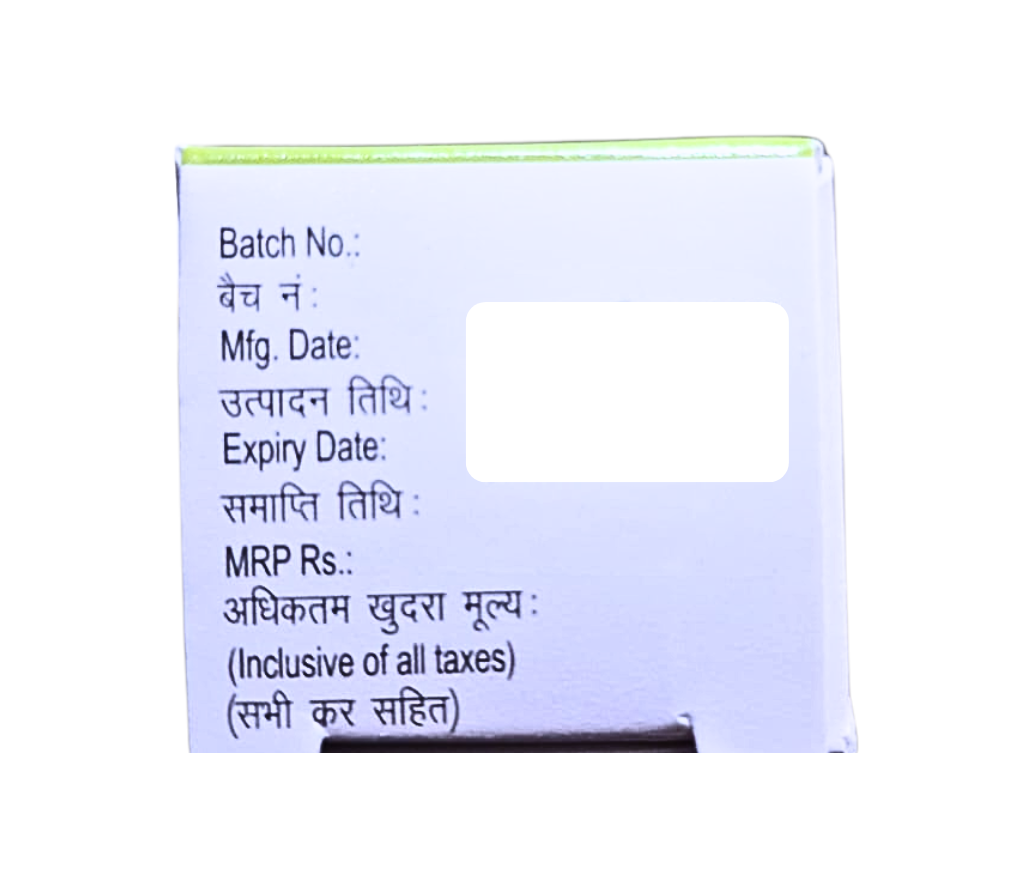
- Batch or lot number.
- Manufacturing and expiry dates.
- Intact packaging and seal.
- Storage instructions.
- Prescription requirements in your country.
Do not assume that two products with the same active ingredient are therapeutically interchangeable. Different concentrations can have different dosing schedules and labeling.
A reputable pharmacy should provide clearly labeled, properly packaged medicine with traceable manufacturing information. Avoid products with damaged packaging, missing expiry information, unclear labeling, or questionable storage history.
Conclusion
Nepafenac ophthalmic suspension is an ophthalmic NSAID primarily used to manage pain and inflammation associated with cataract surgery. Its anti-inflammatory action makes it a useful component of postoperative treatment when prescribed appropriately. Current labeling for NEVANAC 0.1% recommends one drop three times daily beginning one day before cataract surgery and continuing through the first two postoperative weeks. D
However, nepafenac is not appropriate for every eye problem. Topical NSAIDs can delay healing and, in susceptible patients, cause potentially serious corneal complications.
For buyers, the safest approach is to verify the strength, formulation, manufacturer, expiry date, packaging, and prescription instructions before purchasing. Patients should use nepafenac exactly as directed by their ophthalmologist and seek professional evaluation if pain, inflammation, vision changes, or other symptoms worsen.
Frequently Asked Questions
1. What is nepafenac ophthalmic suspension used for?
Nepafenac ophthalmic suspension is primarily used to treat pain and inflammation associated with cataract surgery.
2. Is nepafenac an antibiotic or a steroid?
Neither. Nepafenac is a non-steroidal anti-inflammatory drug (NSAID) used as an ophthalmic medicine. It is not an antibiotic and does not treat bacterial eye infections.
3. How often should nepafenac eye drops be used?
The frequency depends on the concentration and specific product. Current NEVANAC 0.1% labeling recommends one drop three times daily, while a 0.3% formulation has had once-daily labeling. Always follow the instructions for your exact product.
4. What are the common side effects of nepafenac ophthalmic suspension?
Reported ocular reactions include foreign-body sensation, decreased visual acuity, increased intraocular pressure, sticky sensation, and other eye discomforts.
5. Can nepafenac be used for eye redness?
Nepafenac should not be used simply to treat unexplained eye redness. It is primarily indicated for specific inflammatory conditions, particularly pain and inflammation associated with cataract surgery.
6. Can nepafenac damage the cornea?
Rare but potentially serious corneal complications can occur with topical ophthalmic NSAIDs, including keratitis, epithelial breakdown, thinning, ulceration, and perforation in susceptible patients
7. Can I use nepafenac with other eye drops?
It can sometimes be used alongside other ophthalmic medicines when prescribed. Current labeling recommends spacing different topical ophthalmic medications by at least five minutes.
8. Can I buy nepafenac ophthalmic suspension online?
Where legally permitted, nepafenac should be purchased from a legitimate pharmacy and used according to an ophthalmologist's prescription. Verify the exact strength, manufacturer, expiry date, packaging, and storage information before purchasing.
9. Should nepafenac ophthalmic suspension be shaken before use?
Because nepafenac is supplied as a suspension, follow the instructions on your specific product. The manufacturer's labeling should be treated as the authoritative instruction for preparation and administration.
10. How long is nepafenac normally used after cataract surgery?
For NEVANAC 0.1%, current labeling specifies treatment beginning one day before surgery and continuing through the first two weeks after surgery. Your ophthalmologist may modify treatment based on your individual circumstances and the exact formulation prescribed
11. Who should be especially careful when using nepafenac?
People with corneal disease, ocular-surface problems, diabetes, bleeding tendencies, previous NSAID hypersensitivity, complicated eye surgery, or other risk factors should discuss these conditions with their ophthalmologist before use.
12. What should I do if my vision gets worse while using nepafenac?
Worsening vision, significant eye pain, severe redness, or other concerning symptoms should not be ignored. Contact your ophthalmologist promptly for assessment, particularly because serious corneal complications can occur with topical NSAIDs in susceptible patients.