


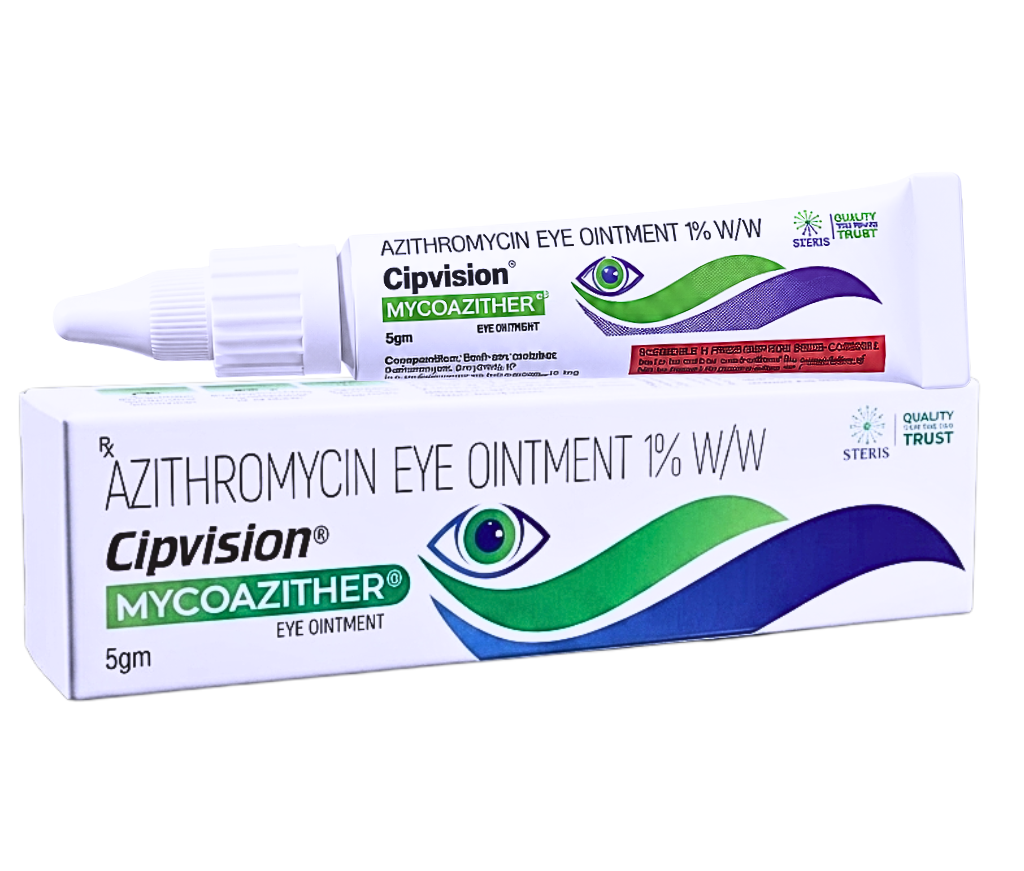
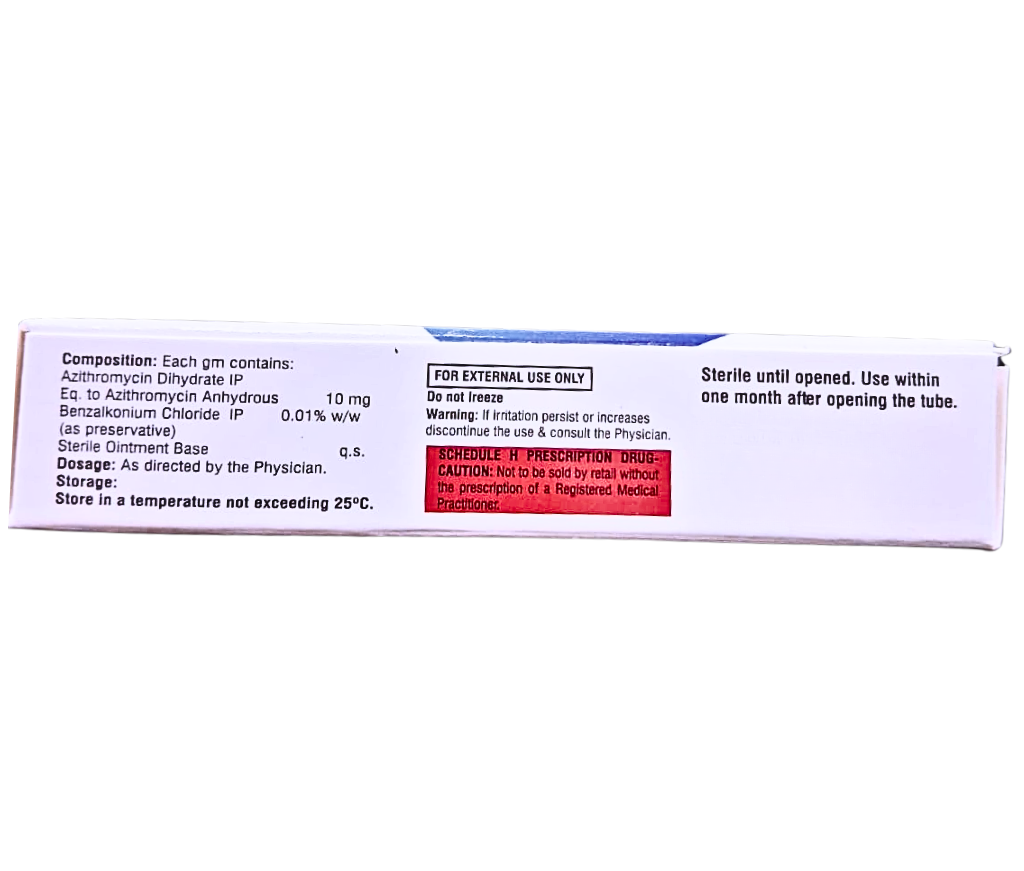
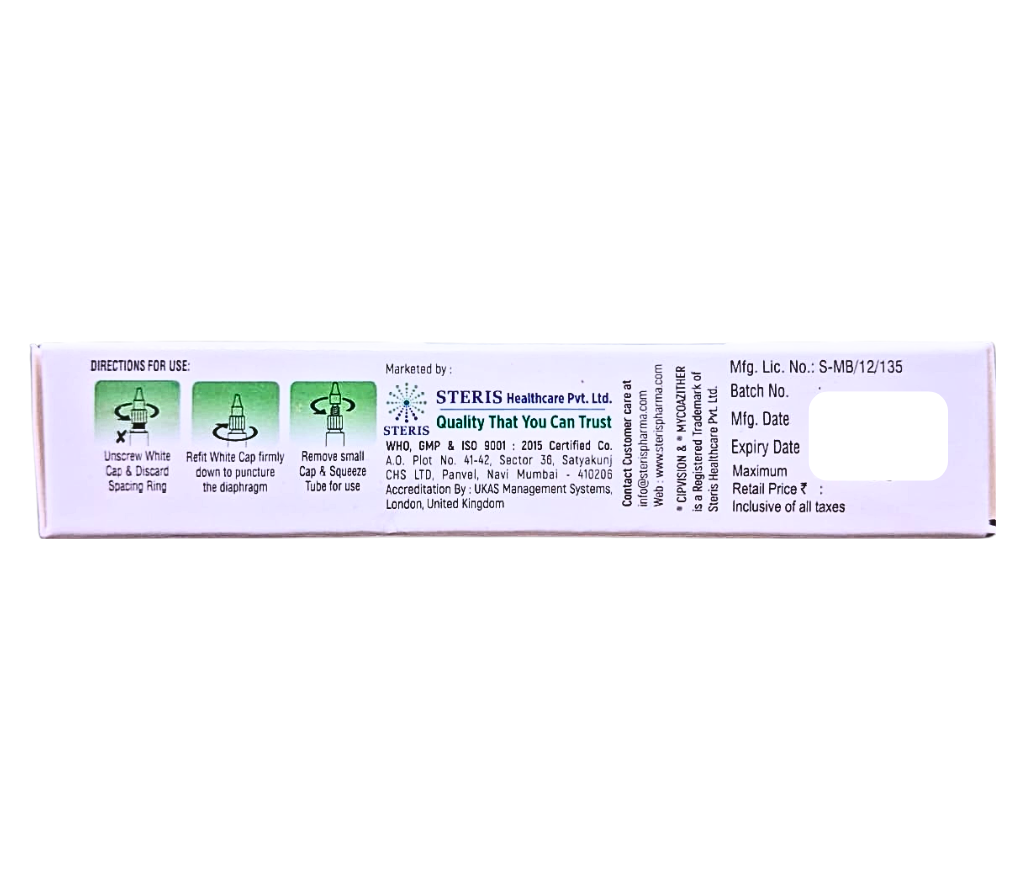
CIPVISION MYCOAZITHER
 Item requires a valid prescription
Manufactured By Steris Healthcare Pvt Ltd
Composition Azithromycin Eye Ointment 1% w/w
Rs 77.00
MRP Rs 110.00
(30% OFF)
Includes all taxes
Package SIZE
( For 5 gm )

100% Authentic
Products

Free
Shipping*

Products
Return Policy
Description:
-
Azithromycin eye ointment is a topical antibiotic medicine used to treat certain bacterial infections of the eye. Azithromycin belongs to the macrolide class of antibiotics and works by interfering with bacterial protein production, helping stop susceptible bacteria from growing. In India, azithromycin 1% w/w ophthalmic ointments are available under different brand names and are generally supplied in 5 g tubes. Current online listings show that these products are prescription medicines.
It is important to distinguish an antibiotic eye ointment from medicines used for allergies, dry eyes, viral infections or inflammation. Azithromycin eye ointment is intended for bacterial eye infections and should be used only when a healthcare professional considers an antibacterial treatment appropriate. MedlinePlus identifies ophthalmic azithromycin as a macrolide antibiotic for certain bacterial eye infections.
What Is Azithromycin Eye Ointment?
Azithromycin eye ointment contains azithromycin, a macrolide antibiotic formulated for ophthalmic use. Indian products such as Azithral Eye Ointment and ZaHa Eye Ointment are listed with azithromycin 1% w/w as the active ingredient.
The ointment formulation is designed to remain in contact with the eye surface for longer than a liquid drop. This can make an ointment useful when sustained contact with the ocular surface is desired.
Azithromycin works by interfering with bacterial protein synthesis. In susceptible bacteria, this prevents normal bacterial growth and helps the body's immune system clear the infection.
The medicine is not an antiviral, antifungal or corticosteroid. Therefore, it should not be assumed to work for every type of red, itchy or watery eye.
Azithromycin Eye Ointment Uses
The main use of azithromycin ophthalmic products is the treatment of susceptible bacterial eye infections.
1. Bacterial conjunctivitis
Bacterial conjunctivitis, commonly called bacterial pink eye, can cause:
- Eye redness
- Yellow or greenish discharge
- Eyelid crusting
- Irritation
- Grittiness
- Watery eyes
- Eyelids sticking together, particularly after sleep
Azithromycin may be prescribed when the clinician determines that bacteria are responsible or that antibiotic treatment is appropriate.
Indian pharmacy listings specifically describe azithromycin 1% eye ointment as an antibiotic used for bacterial infections of the eye, including bacterial conjunctivitis.
2. Other susceptible superficial eye infections
Depending on the diagnosis and local prescribing practices, an ophthalmologist may use topical azithromycin for certain other susceptible bacterial infections involving the ocular surface or eyelids.
The exact indication should come from the prescribing clinician rather than from symptoms alone.
How Does Azithromycin Eye Ointment Work?
Azithromycin belongs to the macrolide antibiotic family.
It acts on bacterial ribosomes, particularly the 50S ribosomal subunit, interfering with bacterial protein synthesis. Without normal protein production, susceptible bacteria cannot grow and multiply effectively.
In simple terms:
Bacterial infection → bacterial growth → azithromycin interferes with protein production → bacterial growth is inhibited → infection can resolve.
This mechanism is fundamentally different from steroid eye drops, which suppress inflammation rather than directly targeting bacteria.
Key Benefits of Azithromycin Eye Ointment
Targets bacterial eye infections
Its principal benefit is antibacterial activity against susceptible organisms responsible for certain eye infections.
Ophthalmic formulation
The medicine is specifically formulated for application to the eye rather than being an ordinary skin antibiotic.
Prolonged ocular contact
An ointment base can remain on the ocular surface longer than a liquid formulation, potentially providing sustained contact with the affected area.
Can help manage bacterial conjunctivitis
When bacterial conjunctivitis is correctly diagnosed, azithromycin can help reduce bacterial infection and associated symptoms such as discharge and redness.
Available in India
Multiple azithromycin 1% ophthalmic ointment products are currently listed by Indian online pharmacies, giving patients and pharmacies several branded options depending on prescription and availability.
How to Apply Azithromycin Eye Ointment
Use azithromycin eye ointment exactly as prescribed by your doctor or ophthalmologist.
General application technique:
- Wash your hands thoroughly with soap and water.
- Remove the cap without touching the inside of the cap or tube tip.
- Tilt your head backward.
- Gently pull down the lower eyelid to create a small pocket.
- Apply the prescribed amount of ointment inside the lower eyelid.
- Avoid touching the tube tip to the eye, eyelashes or skin.
- Close the eye gently for a short period.
- Replace the cap immediately after use.
- Wash your hands again if necessary.
The ointment can temporarily blur vision immediately after application. Wait until your vision becomes clear before driving or operating machinery.
Do not share an eye ointment tube with another person, even if both people appear to have similar symptoms.
Azithromycin Eye Ointment Dosage
The appropriate dosage of an azithromycin ointment formulation depends on the specific product, diagnosis and prescribing instructions.
This is particularly important because the well-established U.S. azithromycin ophthalmic product AzaSite is a 1% ophthalmic solution, not an ointment. Its labeled regimen is one drop twice daily, 8–12 hours apart, for two days followed by once daily for five days.
That dosing schedule should not automatically be transferred to a 1% azithromycin eye ointment sold in India.
For an ointment, follow the exact quantity and frequency printed on your prescription or supplied by your ophthalmologist.
Azithromycin Eye Ointment Side Effects
Like other medicines, azithromycin eye ointment can cause side effects.
Possible ocular effects include:
- Temporary burning
- Stinging
- Eye irritation
- Redness
- Watery eyes
- Temporary blurred vision
- Dryness
- Itching or discomfort
For ophthalmic azithromycin, eye irritation is among the commonly reported adverse effects. The U.S. prescribing information for azithromycin ophthalmic solution reports eye irritation in approximately 1–2% of patients.
Mayo Clinic also lists burning, redness, stinging and other eye irritation among possible adverse effects of ophthalmic azithromycin.
Serious allergic reactions
Although uncommon, seek urgent medical attention if you develop symptoms such as:
- Facial swelling
- Swelling around the eyes
- Hives
- Severe rash
- Difficulty breathing
- Severe swelling of the lips, tongue or throat
MedlinePlus specifically advises contacting a doctor immediately for facial swelling, hives, rash or itching that may indicate a serious reaction.
Is Azithromycin Eye Ointment Safe for Everyone?
Not necessarily.
Before using it, tell your doctor if you have previously experienced an allergic reaction to azithromycin, erythromycin, other macrolide antibiotics or related medicines.
The FDA prescribing information for ophthalmic azithromycin lists hypersensitivity as a contraindication and notes that serious hypersensitivity reactions have been reported with systemic azithromycin.
Children, pregnant or breastfeeding patients, people with significant eye disease and individuals using several ophthalmic medicines should seek individualized medical advice.
Can Azithromycin Eye Ointment Treat Red Eyes?
Not every red eye should be treated with azithromycin.
Redness can be caused by:
- Bacterial conjunctivitis
- Viral conjunctivitis
- Allergies
- Dry eye
- Contact-lens irritation
- Corneal injury
- Foreign bodies
- Blepharitis
- Uveitis
- Glaucoma
- Other inflammatory conditions
An antibiotic will not treat viral or allergic conjunctivitis.
Using antibiotics unnecessarily can also contribute to antimicrobial resistance. The FDA labeling for ophthalmic azithromycin warns that prolonged use can promote the growth of non-susceptible organisms.
For this reason, do not buy azithromycin eye ointment simply because your eye is red or irritated.
Contact Lenses and Azithromycin Eye Treatment
Contact-lens users should be particularly cautious during an active eye infection.
The current FDA labeling for ophthalmic azithromycin advises patients not to wear contact lenses when they have signs or symptoms of bacterial conjunctivitis.
Mayo Clinic likewise advises avoiding contact lenses while using ophthalmic azithromycin to prevent additional irritation.
Follow your ophthalmologist's instructions about when contact lenses can safely be worn again.
These are current online examples, not a guaranteed nationwide retail price. Prices can change with location, stock, offers, taxes and seller.
For wholesale or institutional buyers, supplier listings may show different prices and minimum-order quantities. One current Jaipur supplier listing, for example, advertises a 1% w/w azithromycin ophthalmic ointment at approximately ₹115.50 per unit, with a minimum pack requirement.
What to Check Before Buying Azithromycin Eye Ointment
If your doctor has prescribed this medicine, check:
- Active ingredient: Azithromycin
- Strength: 1% w/w, if that is what your prescription specifies
- Dosage form: ophthalmic ointment
- Tube size
- Manufacturer
- Batch number
- Expiry date
- Storage instructions
- Prescription requirement
- Current MRP
- Pharmacy authenticity
- Whether the package is properly sealed
Do not substitute an azithromycin eye solution for an azithromycin eye ointment simply because both contain the same antibiotic.
Different formulations can have different instructions.
Azithromycin Eye Ointment vs Eye Drops
Both formulations may contain azithromycin, but their physical form is different.
Eye drops/ophthalmic solution are liquid and generally produce less prolonged blurring after administration.
Eye ointments are semisolid and can remain on the ocular surface longer, but they commonly cause temporary blurred vision immediately after application.
The choice should follow the doctor's prescription and the specific product available.
Azithromycin Eye Ointment vs Moxifloxacin Eye Drops
Both are antibiotics, but they belong to different antibiotic classes.
Azithromycin is a macrolide, whereas moxifloxacin is a fluoroquinolone.
Neither should automatically be considered superior. The appropriate antibiotic depends on the suspected organism, local resistance patterns, patient factors, allergy history and clinical diagnosis.
Using a broad-spectrum antibiotic without an appropriate indication can contribute to antibiotic resistance.
Buyer-Intent Guide: How to Buy Azithromycin Eye Ointment
If you are searching for azithromycin eye ointment online, start by checking the prescription rather than choosing based only on price.
For example, if the prescription says azithromycin 1% w/w eye ointment, verify that the product contains exactly that active ingredient and strength.
Before placing an order, compare:
- Brand and manufacturer
- 5 g tube size
- MRP versus selling price
- Expiry date
- Prescription requirements
- Pharmacy credentials
- Delivery and return conditions
- Storage information
For pharmacies, hospitals and distributors, additional checks should include batch traceability, product documentation, regulatory compliance, storage requirements and supplier reliability.
Conclusion
Azithromycin eye ointment is a topical macrolide antibiotic used for certain bacterial infections of the eye, particularly bacterial conjunctivitis when an ophthalmologist determines that antibiotic therapy is appropriate. Indian products commonly contain azithromycin 1% w/w and are available in 5 g ophthalmic-ointment tubes.
Its key benefits include antibacterial activity against susceptible organisms and prolonged contact with the ocular surface because of its ointment formulation. However, it should not be used for every red, watery or itchy eye because viral and allergic eye conditions do not respond to antibiotics.
Common side effects can include temporary irritation, burning, stinging, redness and blurred vision. Serious allergic reactions are uncommon but require prompt medical attention.
For Indian buyers, current 2026 listings suggest that 5 g azithromycin 1% eye ointments commonly fall in the approximate ₹134–₹180 selling-price range, although MRP, discounts, pharmacy and availability can change.
The safest buyer approach is to purchase the exact formulation prescribed by the ophthalmologist, verify the strength and expiry date, and obtain it from a legitimate pharmacy. Antibiotic eye medicines should be used responsibly to reduce unnecessary exposure and the risk of antimicrobial resistance.
Frequently Asked Questions
1. What is azithromycin eye ointment used for?
Azithromycin eye ointment is an antibiotic used to treat certain bacterial eye infections, including bacterial conjunctivitis when prescribed by a healthcare professional. Azithromycin is a macrolide antibiotic that interferes with bacterial protein production. M
2. Is azithromycin eye ointment an antibiotic?
Yes. Azithromycin is a macrolide antibiotic. It works against susceptible bacteria and is not a steroid, antiviral or antifungal medicine.
3. What are the side effects of azithromycin eye ointment?
Possible side effects include temporary burning, stinging, irritation, redness, watery eyes, dryness and blurred vision. Seek medical attention for facial swelling, hives, severe rash, breathing difficulty or other symptoms of a serious allergic reaction. Clinic+1
4. Can azithromycin eye ointment treat conjunctivitis?
It can treat certain bacterial conjunctivitis infections when the bacteria are susceptible and antibiotic treatment is appropriate. It will not treat viral or allergic conjunctivitis.
5. Can I use azithromycin eye ointment for red eyes?
You should not use it simply because your eyes are red. Redness can result from allergies, viruses, dry eye, injury and other conditions that may require completely different treatment.
6. Can I wear contact lenses while using azithromycin eye ointment?
Contact lenses should generally be avoided during bacterial conjunctivitis and while using ophthalmic azithromycin unless your eye-care professional specifically tells you otherwise.
7. How much does azithromycin eye ointment cost in India?
Current 2026 online listings show examples of 5 g azithromycin 1% eye ointments at approximately ₹134–₹180 after discounts, with MRPs around ₹175–₹200 depending on the brand. Prices vary by pharmacy and location.
8. Does azithromycin eye ointment cause blurred vision?
It can cause temporary blurred vision, particularly immediately after applying an ointment because the semisolid base coats the eye surface. Wait until your vision becomes clear before driving or performing visually demanding activities.
9. Is azithromycin eye ointment safe for children?
Azithromycin ophthalmic medicines may be prescribed in children in appropriate circumstances, but the exact product, age, diagnosis and dosage matter. Do not use an adult's prescription for a child without medical advice.
10. Can azithromycin eye ointment be used for viral eye infection?
No. Azithromycin is an antibiotic and does not treat viral infections. A healthcare professional should determine whether an eye infection is bacterial before antibiotic treatment is used.
11. Can I buy azithromycin eye ointment without a prescription?
Current Indian online pharmacy listings identify products such as Azithral and Optithrocin eye ointments as prescription medicines. Requirements can vary by product and pharmacy, so obtain and use them according to professional medical advice.
12. What should I do if my eye infection is not improving?
If symptoms are worsening, persistent, associated with significant pain or accompanied by reduced vision, contact an ophthalmologist promptly. The diagnosis may need to be reassessed rather than simply extending antibiotic treatment.