


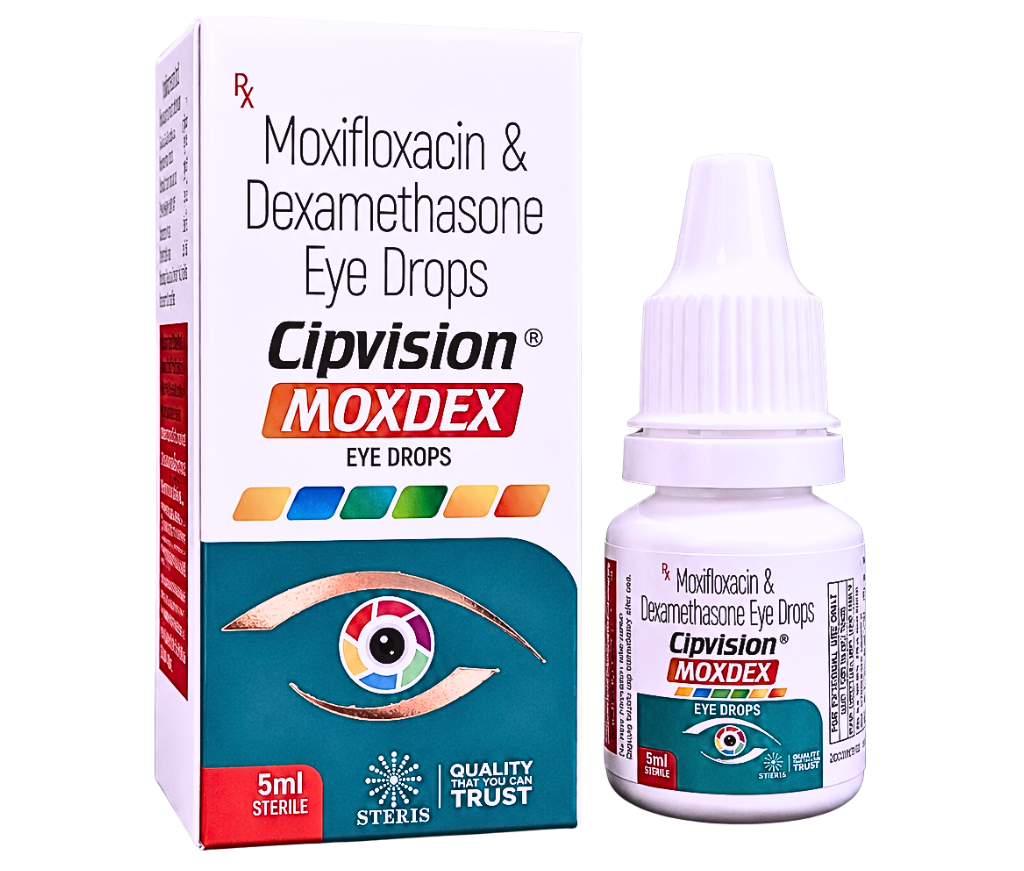
CIPVISION MOXDEX
 Item requires a valid prescription
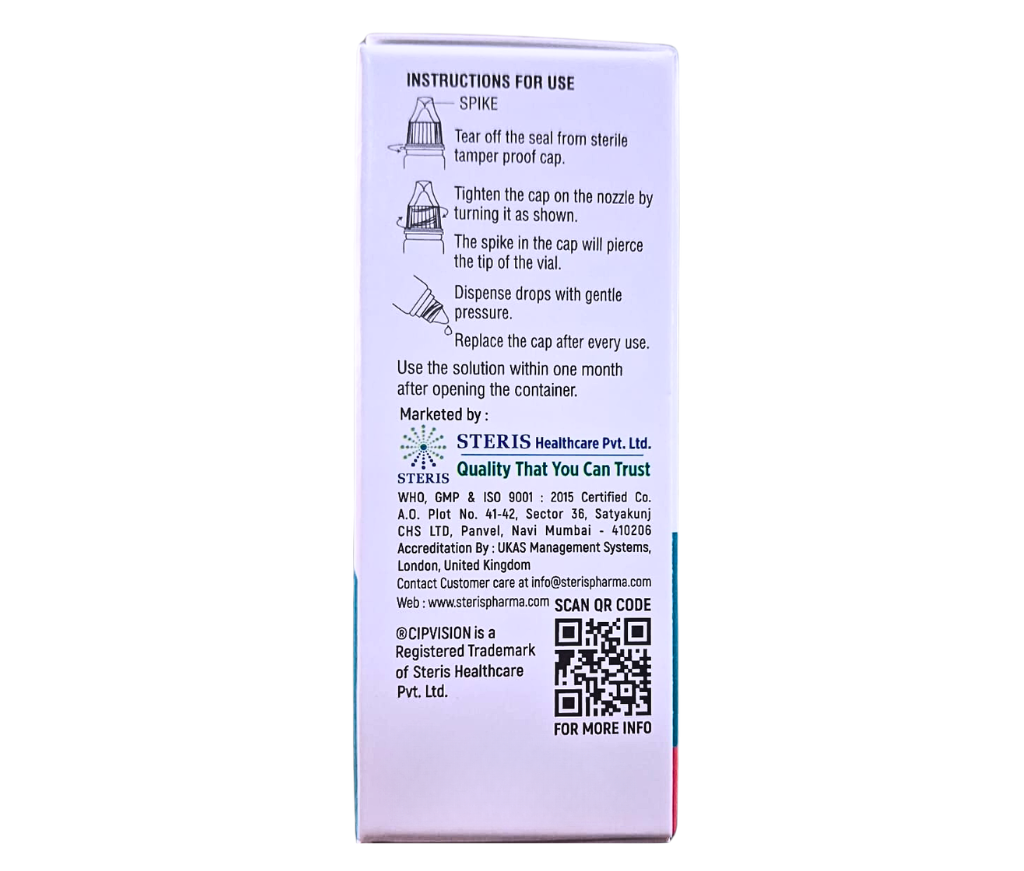
Manufactured By Steris Healthcare Pvt Ltd
Composition Moxifloxacin & Dexamethasone Eye Drops
Rs 65.63
MRP Rs 93.75
(30% OFF)
Includes all taxes
Package SIZE
( For 5 ml )

100% Authentic
Products

Free
Shipping*

Products
Return Policy
Description:
Moxifloxacin and dexamethasone eye drops are prescription ophthalmic medicines that combine an antibiotic with a corticosteroid. They are designed for selected eye conditions in which bacterial infection or bacterial infection risk occurs together with steroid-responsive inflammation.
Moxifloxacin is a fluoroquinolone antibiotic that helps control susceptible bacterial infections, while dexamethasone is a corticosteroid that reduces inflammation, redness, and swelling. Current product information describes the combination for steroid-responsive inflammatory eye conditions when antibacterial treatment is also
Because this medicine contains a steroid, however, it should not be treated as an ordinary eye drop for unexplained redness or irritation. Proper diagnosis is particularly important before using an antibiotic-steroid combination.
What Are Moxifloxacin and Dexamethasone Eye Drops?
Moxifloxacin and dexamethasone eye drops contain two active medicines with different therapeutic roles.
Moxifloxacin
Moxifloxacin is a fourth-generation fluoroquinolone antibiotic. It works against susceptible bacteria by interfering with bacterial enzymes required for DNA replication, particularly DNA gyrase and topoisomerase IV.
This antibacterial action helps control susceptible bacterial infections affecting the eye.
Dexamethasone
Dexamethasone is a corticosteroid. It suppresses inflammatory responses and can reduce symptoms such as redness, swelling, irritation, and inflammation when the underlying condition is steroid responsive.
Why are they combined?
The combination is intended to address two problems at once:
- Moxifloxacin: targets susceptible bacteria.
- Dexamethasone: reduces clinically significant inflammation.
Product information for moxifloxacin/dexamethasone formulations describes their use in steroid-responsive ocular inflammation when bacterial infection or a significant risk of bacterial infection exists.
What Are Moxifloxacin and Dexamethasone Eye Drops Used For?
The primary use of moxifloxacin and dexamethasone eye drops is for selected eye conditions involving bacterial infection and inflammation, when a healthcare professional determines that both antibiotic and corticosteroid treatment are appropriate.
Depending on the specific product and diagnosis, doctors may prescribe the combination for:
- Bacterial eye infections accompanied by significant inflammation.
- Selected cases of bacterial conjunctivitis.
- Steroid-responsive ocular inflammation with bacterial infection or infection risk.
- Certain postoperative eye conditions when both antibacterial protection and inflammation control are required.
- Other clinically appropriate inflammatory ocular conditions following ophthalmic evaluation.
Current Indian pharmacy information lists bacterial eye infections and postoperative inflammation among the common uses of moxifloxacin/dexamethasone combinations.
However, not every red eye is a bacterial infection. Allergies, dry eye, viral infections, fungal infections, trauma, corneal disease, and contact-lens complications can all cause similar symptoms.
This is particularly important because dexamethasone suppresses inflammation. Using a corticosteroid when an unsuitable infection is present can potentially mask symptoms or allow the condition to worsen.
How Do Moxifloxacin and Dexamethasone Eye Drops Work?
The combination works through two complementary mechanisms.
Moxifloxacin interferes with bacterial DNA replication. This prevents susceptible bacteria from multiplying and helps control the infection.
Dexamethasone suppresses inflammatory mediators responsible for redness, swelling, and irritation. This can reduce the inflammatory component of the eye condition.
Together, these medicines can be useful when the clinician needs to manage both bacterial infection and steroid-responsive inflammation.
Importantly, the antibiotic does not treat viral or fungal infections, and the steroid component can make certain infections more difficult to recognize or control.
Key Benefits of Moxifloxacin and Dexamethasone Eye Drops
1. Combines antibiotic and anti-inflammatory treatment
The most obvious benefit is the combination of two therapeutic actions in one ophthalmic product.
Instead of separately administering an antibiotic and corticosteroid when both are clinically indicated, a combination product may simplify the treatment routine.
2. Helps control susceptible bacterial infection
Moxifloxacin provides antibacterial activity against susceptible organisms. Ophthalmic moxifloxacin products are used for bacterial eye infections caused by susceptible bacteria.
3. Reduces inflammation
Dexamethasone can reduce inflammation-related redness, swelling, and discomfort when the condition responds appropriately to corticosteroid therapy.
4. May be useful after selected eye procedures
Some ophthalmologists use antibiotic-steroid combinations following certain eye procedures when both infection prevention/treatment and inflammation control are appropriate.
Current clinical research is also evaluating moxifloxacin 0.5% with dexamethasone phosphate 0.1% in patients undergoing cataract surgery, reflecting continued interest in this combination for postoperative care.
5. Convenient ophthalmic combination therapy
For patients who genuinely require both medicines, a combination formulation can make the treatment schedule easier than managing two separate eye drops.
Moxifloxacin and Dexamethasone Eye Drops Side Effects
Like other prescription medicines, this combination can cause side effects.
Commonly reported or possible eye-related effects include:
- Eye irritation.
- Eye discomfort.
- Temporary burning or stinging.
- Blurred vision.
- Eye itching.
- Eye redness.
- Dryness.
- Eye pain.
- Increased tearing.
- Temporary visual disturbance.
Recent Indian product information for moxifloxacin/dexamethasone combinations lists eye irritation, discomfort, blurred vision, burning, itching, and increased intraocular pressure among possible adverse effects.
Steroid-related risks
The dexamethasone component creates additional risks that are important for long-term or inappropriate use.
These may include:
- Increased intraocular pressure.
- Glaucoma.
- Cataract formation with prolonged corticosteroid exposure.
- Delayed corneal healing.
- Secondary infections.
- Masking or worsening of certain infections.
Therefore, these drops should be used only for the prescribed condition and for the recommended duration.
Can Moxifloxacin and Dexamethasone Eye Drops Be Used for Red Eyes?
Not automatically.
Redness is a symptom rather than a diagnosis.
It can be caused by:
- Bacterial conjunctivitis.
- Viral conjunctivitis.
- Allergic conjunctivitis.
- Dry eye.
- Corneal irritation.
- Contact-lens complications.
- Trauma.
- Inflammatory eye disease.
- More serious ocular conditions.
Because dexamethasone is a corticosteroid, self-treating an unexplained red eye with an antibiotic-steroid combination is not recommended.
A doctor or ophthalmologist should determine whether bacterial infection and steroid-responsive inflammation are actually present.
Can These Eye Drops Be Used for Viral or Fungal Eye Infections?
They should not be self-used for suspected viral or fungal eye infections.
Moxifloxacin is an antibacterial medicine and therefore does not treat fungal or viral disease. At the same time, dexamethasone can suppress inflammatory and immune responses.
Product information for moxifloxacin/dexamethasone combinations specifically emphasizes excluding fungal and viral disease before use.
This is one of the strongest reasons why prescription antibiotic-steroid eye drops should not be purchased solely on the basis of symptoms.
How to Use Moxifloxacin and Dexamethasone Eye Drops
Use the medicine exactly according to your ophthalmologist's prescription and the individual product label.
General administration steps include:
- Wash your hands thoroughly.
- Check the bottle and expiry date.
- Shake the product if the specific label identifies it as a suspension.
- Avoid touching the dropper tip to the eye, fingers, or other surfaces.
- Gently pull down the lower eyelid.
- Instill the prescribed number of drops.
- Close the eye gently after administration.
- Replace the cap without contaminating the dropper.
The exact dosing schedule varies by product and diagnosis. Some Indian-market listings advise administration two or three times daily, while other formulations and clinical situations may require different schedules.
Therefore, do not copy the dosage from another brand or from a generic internet search.
What Happens If You Miss a Dose?
If you miss a dose, follow the instructions provided with your prescription.
In general, apply the missed dose when remembered unless it is almost time for the next scheduled dose. Avoid using extra drops to compensate for a missed dose unless your doctor specifically tells you to do so.
Because treatment schedules vary, the product label or prescribing clinician's instructions should take priority.
Contact Lens Use
People with bacterial eye infections should generally avoid wearing contact lenses during active infection and follow their ophthalmologist's instructions about when lens wear can safely resume.
Contact lenses can complicate infections and increase contamination concerns.
Never allow the dropper tip to contact a contact lens, eye surface, or another potentially contaminated object.
Who Should Avoid Self-Treating With This Combination?
Speak with an ophthalmologist before using moxifloxacin and dexamethasone eye drops if you have:
- Severe eye pain.
- Sudden changes in vision.
- Significant light sensitivity.
- Suspected corneal ulcer.
- Viral eye disease.
- Fungal eye infection.
- Glaucoma or high eye pressure.
- Previous serious reaction to quinolone antibiotics.
- Known corticosteroid sensitivity.
- Recent eye surgery.
- Significant eye injury.
People with symptoms that rapidly worsen should receive prompt ophthalmic assessment rather than repeatedly applying eye drops at home.
When comparing prices, make sure you are comparing the same:
- Active ingredients.
- Strength.
- Bottle size.
- Manufacturer.
- Dosage form.
- Expiry period.
- Prescription status.
The cheapest listing is not necessarily the best purchase if the product source cannot be verified.
What to Check Before Buying Moxifloxacin and Dexamethasone Eye Drops Online
For a buyer with transactional intent, check the following before ordering:
Verify the composition.
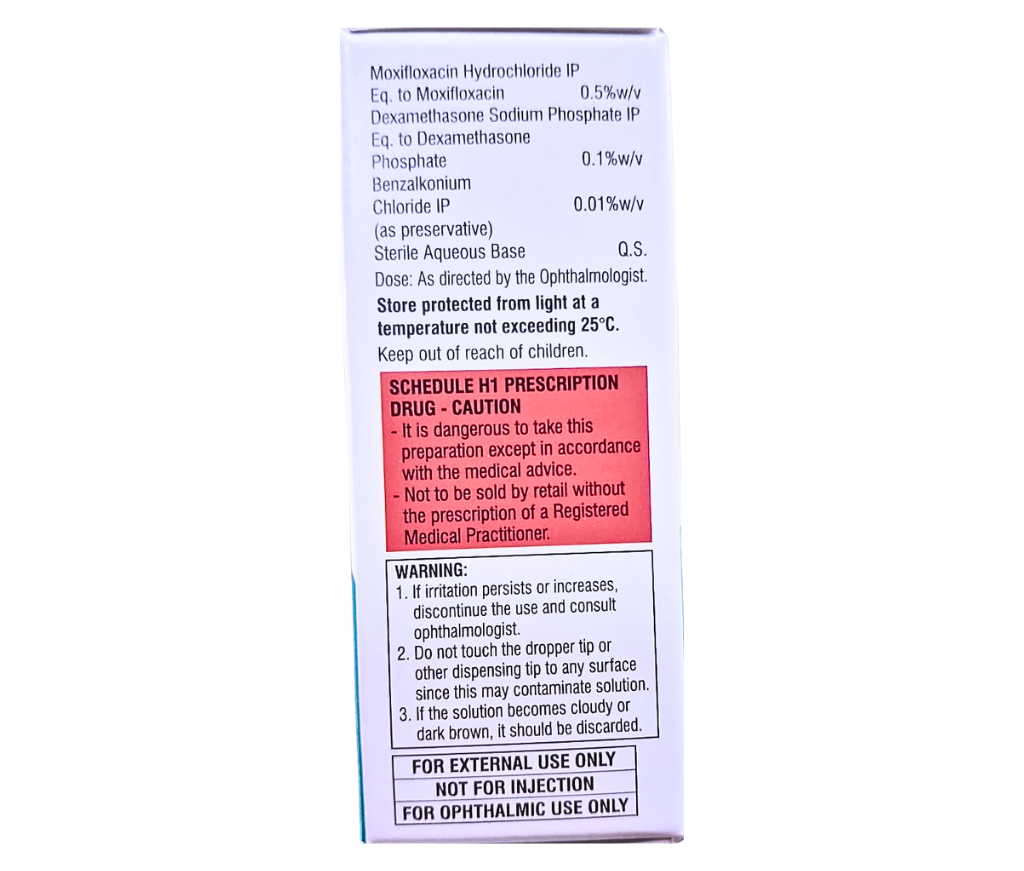
A commonly listed Indian formulation contains:
Moxifloxacin 0.5% w/v + Dexamethasone 0.1% w/v.
Recent 2026 pharmacy listings confirm this composition for multiple brands.
Verify the manufacturer.
Check the manufacturer, batch number, and regulatory information.
Check the expiry date.
Do not purchase an ophthalmic product that is expired or has questionable expiry information.
Inspect the packaging.
The bottle and seal should be intact.
Use an authorized pharmacy.
Prescription ophthalmic medicines should be obtained from a legitimate pharmacy or authorized medicine supplier.
Compare the exact product.
Compare the 5 mL versus 10 mL bottle, strength, manufacturer, and formulation rather than comparing prices based solely on the generic name.
Moxifloxacin Alone vs. Moxifloxacin + Dexamethasone
These medicines should not be considered interchangeable.
Moxifloxacin-only eye drops provide antibacterial treatment.
Moxifloxacin and dexamethasone eye drops provide antibacterial treatment plus corticosteroid anti-inflammatory activity.
The second product therefore has additional clinical uses but also additional risks.
The choice should be based on the patient's diagnosis and the ophthalmologist's assessment rather than on the assumption that “stronger” treatment is automatically better.
When Should You See an Eye Doctor?
Seek professional medical attention if you develop:
- Severe or increasing eye pain.
- Sudden vision changes.
- Significant swelling.
- Severe sensitivity to light.
- Worsening redness.
- Symptoms that fail to improve.
- Symptoms that return after treatment.
- A suspected eye injury.
- A suspected corneal ulcer.
A steroid-containing eye drop should not be continued indefinitely simply because it temporarily makes redness look better.
Frequently Asked Questions
1. What are moxifloxacin and dexamethasone eye drops used for?
Moxifloxacin and dexamethasone eye drops are used for selected eye conditions involving bacterial infection or infection risk together with steroid-responsive inflammation. Moxifloxacin treats susceptible bacteria, while dexamethasone reduces inflammation
2. Are moxifloxacin and dexamethasone eye drops an antibiotic or a steroid?
They are both. Moxifloxacin is the antibiotic, and dexamethasone is the corticosteroid. The combination is intended to treat bacterial infection while controlling appropriate ocular inflammation.
3. Can I use moxifloxacin and dexamethasone eye drops for red eyes?
Not without a proper diagnosis. Redness can have many causes, including viral infection, allergy, dry eye, and corneal disease. The dexamethasone component may be inappropriate for certain infections.
4. What are the side effects of moxifloxacin and dexamethasone eye drops?
Possible side effects include eye irritation, discomfort, burning, itching, redness, and blurred vision. Corticosteroid-related risks include increased eye pressure, glaucoma, cataracts, delayed healing, and secondary infection.
5. What is the composition of moxifloxacin and dexamethasone eye drops?
A commonly marketed Indian formulation contains moxifloxacin 0.5% w/v and dexamethasone 0.1% w/v. Always verify the individual product label because formulations can vary by manufacturer and market.
6. Can moxifloxacin and dexamethasone eye drops be used after cataract surgery?
They may be prescribed after selected ophthalmic procedures when the treating surgeon determines that antibiotic and anti-inflammatory therapy is appropriate. Do not start or stop postoperative eye medication without following the surgeon's instructions.
7. Can these eye drops treat viral conjunctivitis?
No. Moxifloxacin is an antibiotic and does not treat viruses. The dexamethasone component may also be inappropriate in certain viral eye diseases. Viral and fungal diseases should be excluded before using an antibiotic-steroid
8. Can moxifloxacin and dexamethasone eye drops increase eye pressure?
Yes. The dexamethasone component can increase intraocular pressure, especially with prolonged use or in susceptible patients. Patients receiving corticosteroid eye treatment may need monitoring by an eye-care professional.
9. How long should I use moxifloxacin and dexamethasone eye drops?
Use them for the duration prescribed by your doctor. Do not extend treatment simply because symptoms remain, and do not stop early without medical advice. The correct duration depends on the diagnosis and specific product.
10. Can I buy moxifloxacin and dexamethasone eye drops online in India?
Yes, several Indian online pharmacy platforms currently list prescription products containing this combination. Recent 2026 listings show multiple brands and different prices, but buyers should verify the prescription requirement, manufacturer, strength, pack size, expiry, and authenticity before ordering
11. What should I do if my eye becomes more painful after using these drops?
Stop self-treatment and contact an eye-care professional promptly, particularly if pain is severe or accompanied by worsening redness, light sensitivity, or vision changes. These symptoms can indicate a condition requiring examination rather than additional drops.
Conclusion
Moxifloxacin and dexamethasone eye drops combine a fluoroquinolone antibiotic with a corticosteroid to address susceptible bacterial infection and steroid-responsive ocular inflammation when both treatments are clinically appropriate. Moxifloxacin targets bacteria, while dexamethasone helps control inflammation.