


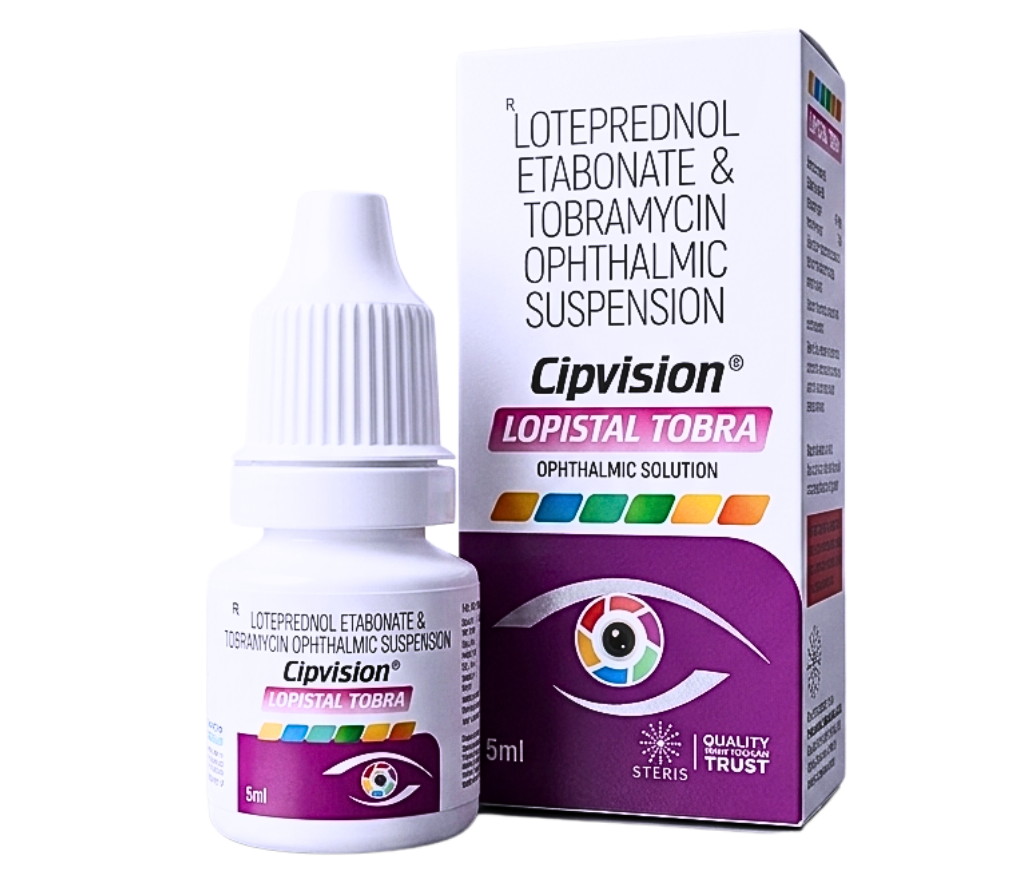
CIPVISION LOPISTAL TOBRA
 Item requires a valid prescription
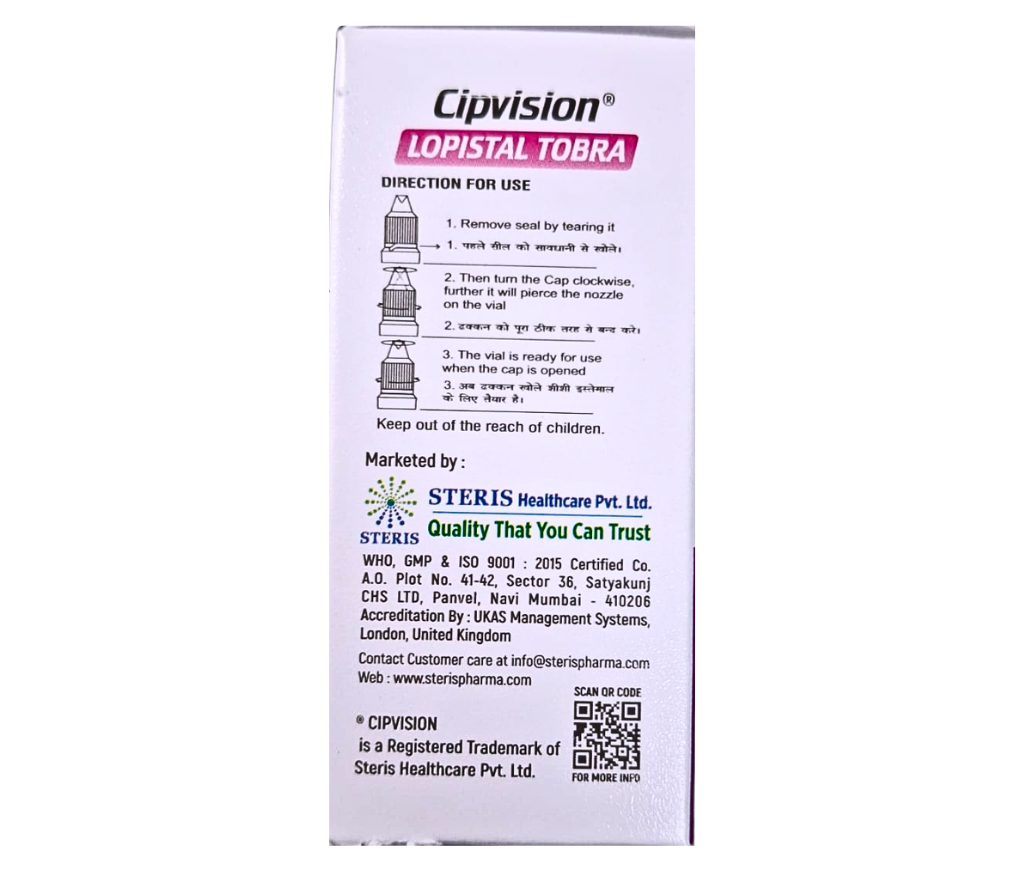
Manufactured By Steris Healthcare Pvt Ltd
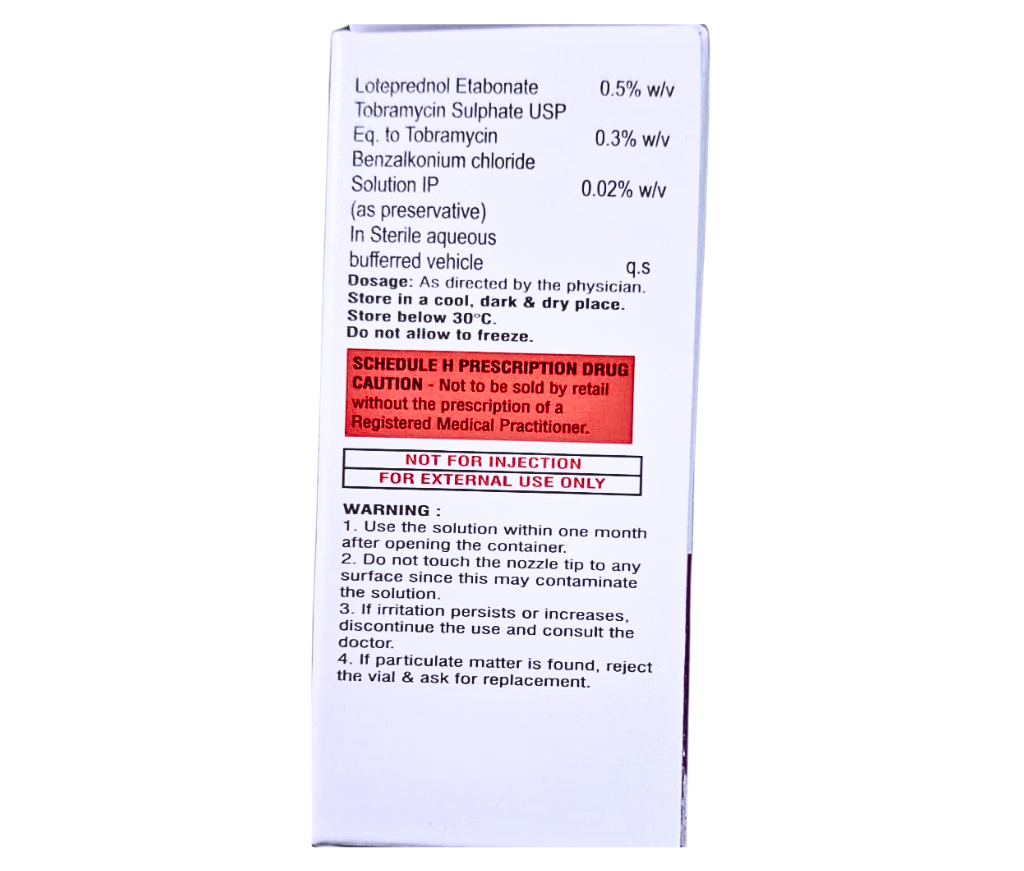
Composition Loteprednol Etabonate & Tobramycin Ophthalmic Suspension
Rs 133.00
MRP Rs 190.00
(30% OFF)
Includes all taxes
Package SIZE
( For 5 ml )

100% Authentic
Products

Free
Shipping*

Products
Return Policy
Description:
Loteprednol etabonate tobramycin ophthalmic suspension is a prescription eye medicine that combines a corticosteroid with an antibiotic. The combination contains loteprednol etabonate 0.5%, a corticosteroid that helps reduce inflammation, and tobramycin 0.3%, an aminoglycoside antibiotic used against susceptible bacteria. Current U.S. prescribing information identifies the combination as a topical anti-infective and corticosteroid for steroid-responsive inflammatory eye conditions when superficial bacterial infection is present or there is a risk of bacterial ocular infection.
Because this medicine contains both a steroid and an antibiotic, it is different from ordinary lubricating eye drops and should not be selected simply because the eye is red or irritated. Corticosteroids can suppress inflammation but can also mask or worsen certain infections when used inappropriately. The product therefore requires appropriate medical assessment and should be used according to the prescribing instructions.
What Is Loteprednol Etabonate Tobramycin Ophthalmic Suspension?
Loteprednol etabonate tobramycin ophthalmic suspension is a prescription ophthalmic suspension containing two active ingredients:
- Loteprednol etabonate 0.5% – a topical corticosteroid that reduces inflammatory responses in the eye.
- Tobramycin 0.3% – an antibiotic belonging to the aminoglycoside class.
The combination is designed for situations in which an eye condition involves steroid-responsive inflammation together with superficial bacterial infection, or where a bacterial infection is considered a risk.
The word “suspension” is important. Unlike a clear solution, a suspension contains dispersed drug particles, so the bottle generally needs to be shaken vigorously before use to distribute the medication properly. The prescribing information specifically instructs patients to shake the product before administration.
What Is Loteprednol Etabonate Tobramycin Used For?
The principal purpose of loteprednol etabonate tobramycin ophthalmic suspension is to treat appropriate ocular conditions where inflammation and bacterial infection or bacterial infection risk occur together.
The current prescribing information describes the product as indicated for steroid-responsive inflammatory ocular conditions when a superficial bacterial infection exists or there is a risk of bacterial ocular infection.
This makes the combination particularly relevant when a healthcare professional determines that treating inflammation alone is insufficient and antibacterial coverage is also appropriate.
However, it is not an appropriate treatment for every red eye. Viral, fungal and certain other nonbacterial infections can require completely different management. The prescribing information specifically warns about viral and fungal infections and states that corticosteroid-containing ophthalmic medicines can suppress the body's response to infection.
How Does Loteprednol Etabonate Tobramycin Work?
The two ingredients have different but complementary roles.
Loteprednol etabonate
Loteprednol is a corticosteroid. Its principal role is to reduce inflammatory activity. This can help decrease symptoms associated with ocular inflammation, such as redness, swelling and discomfort when the underlying condition is steroid responsive.
Loteprednol-only ophthalmic products are used for several steroid-responsive inflammatory conditions, and current labeling also includes postoperative inflammation for certain formulations.
Tobramycin
Tobramycin is an aminoglycoside antibiotic. Its role in the combination is to target susceptible bacteria associated with superficial ocular infection.
Consequently, the combination is intended to address both inflammatory and bacterial components when those two treatment objectives are clinically appropriate.
Key Benefits of Loteprednol Etabonate Tobramycin Eye Drops
1. Combines anti-inflammatory and antibacterial treatment
One of the main advantages is that two therapeutic functions are provided in a single ophthalmic product: loteprednol addresses inflammation while tobramycin provides antibacterial activity.
2. Designed for specific inflammatory eye conditions with bacterial involvement
The combination is not simply a general-purpose eye drop. Its value comes from its specific indication for steroid-responsive inflammation when superficial bacterial infection or bacterial infection risk exists.
3. May reduce inflammatory symptoms
By suppressing inappropriate inflammatory activity, the corticosteroid component may help relieve symptoms associated with inflammation, depending on the underlying diagnosis.
4. Convenient combination therapy
When both an antibiotic and corticosteroid are medically indicated, a combination product can simplify treatment compared with using separate ophthalmic medicines. Whether combination therapy is appropriate should be determined by the prescriber.
5. Prescription-strength treatment
Because corticosteroid-containing eye drops carry important risks, this product is intended for appropriate medical use rather than casual self-treatment.
Loteprednol Etabonate Tobramycin Side Effects
Like other prescription ophthalmic medicines, this combination can cause adverse effects.
Potential eye-related effects reported with loteprednol-containing ophthalmic products include:
- Burning or stinging after application.
- Blurred or abnormal vision.
- Dry eye.
- Eye irritation or discomfort.
- Itching.
- Increased tearing.
- Foreign-body sensation.
- Redness.
- Photophobia.
- Discharge.
Loteprednol ophthalmic labeling reports several of these reactions in approximately 5%–15% of patients studied with 0.2%–0.5% formulations.
More significant steroid-related risks can include increased intraocular pressure, glaucoma, cataract formation, delayed healing and secondary ocular infection. Long-term or inappropriate corticosteroid use can therefore be harmful.
For example, pooled controlled studies of loteprednol ophthalmic formulations used for 28 days or longer found a clinically significant intraocular-pressure increase of at least 10 mmHg in 2% of patients receiving loteprednol, compared with 7% receiving prednisolone acetate 1% and 0.5% receiving placebo. These figures come from loteprednol studies and should not be interpreted as a guarantee of the risk for every loteprednol/tobramycin product or patient.
Important Warnings Before Using This Eye Drop
The steroid component makes appropriate diagnosis particularly important.
Loteprednol-containing ophthalmic products are contraindicated in several infectious conditions, including most viral diseases of the cornea and conjunctiva, epithelial herpes simplex keratitis, certain mycobacterial infections and fungal diseases of ocular structures.
Prolonged corticosteroid use can increase the risk of glaucoma and cataracts and may suppress the body's local response to infection. In eyes with corneal or scleral thinning, topical steroids can also increase the risk of perforation.
The combination product's prescribing information also includes warnings concerning intraocular pressure, delayed healing, bacterial, viral and fungal infections, aminoglycoside hypersensitivity, contamination and contact-lens use.
How to Use Loteprednol Etabonate Tobramycin Ophthalmic Suspension
Use this medicine exactly as prescribed.
Because it is an ophthalmic suspension, shake the bottle vigorously before use. Avoid touching the dropper tip to the eye, fingers or other surfaces because contamination can compromise the product.
If you use contact lenses, follow your prescriber's instructions and the product labeling. The combination's prescribing information specifically addresses contact-lens use.
Do not increase the frequency of application, extend treatment, or restart leftover medication without professional advice. A steroid-containing eye drop can make an incorrectly diagnosed infection more difficult to recognize or treat.
Who Should Not Use It Without Medical Advice?
Speak with an ophthalmologist or other qualified healthcare professional before using this medication if you have:
- A history of glaucoma or elevated eye pressure.
- A known or suspected viral eye infection.
- A fungal or mycobacterial eye infection.
- A history of herpes simplex eye disease.
- Corneal or scleral thinning.
- A known allergy to aminoglycoside antibiotics or other ingredients.
- Recently undergone eye surgery.
- Persistent or unexplained eye pain or vision changes.
Pregnancy and breastfeeding should also be discussed with a healthcare professional. Current labeling notes that the effects of topical ophthalmic corticosteroids during lactation are not fully established.
Buying Loteprednol Etabonate Tobramycin Ophthalmic Suspension: What Should You Check?
If your search is transactional and you are considering purchasing this medicine, focus on the exact formulation rather than the product name alone.
Check:
- Active ingredients: Confirm loteprednol etabonate and tobramycin.
- Strength: Current FDA documentation identifies the combination strength as 0.5% loteprednol etabonate and 0.3% tobramycin.
- Dosage form: Confirm that it is an ophthalmic suspension.
- Prescription status: This is prescription ophthalmic therapy.
- Manufacturer: Verify the manufacturer and authorized product information.
- Packaging: Do not purchase products with damaged or questionable packaging.
- Expiry date: Never use an expired ophthalmic medicine.
- Storage: Follow the specific product's storage instructions.
- Authorized pharmacy: Purchase through a legitimate pharmacy or authorized medicine supplier.
Avoid choosing a product solely because an online listing promises treatment for “red eyes,” “eye infection,” or “dry eyes.” The combination is intended for specific clinical circumstances.
Loteprednol Etabonate Tobramycin vs. Loteprednol-Only Eye Drops
These products should not be considered interchangeable.
Loteprednol-only ophthalmic suspension provides corticosteroid therapy without tobramycin. It can be prescribed for steroid-responsive inflammatory conditions, including certain allergic or postoperative inflammatory conditions depending on the formulation.
Loteprednol etabonate tobramycin ophthalmic suspension combines the corticosteroid with an antibiotic and is intended for situations where bacterial infection or bacterial infection risk is part of the clinical picture.
The correct choice depends on the diagnosis, not simply on which product contains the same steroid.
When Should You Contact an Eye Doctor?
Seek prompt professional assessment if eye pain becomes severe, vision deteriorates, redness continues to worsen, light sensitivity becomes significant, or symptoms do not improve as, dry eye, corneal disease, trauma and other conditions. Because the product contains a corticosteroid, using it for an undiagnosed red eye can be inappropriate or potentially expected.
Persistent symptoms are especially important when using a corticosteroid-containing product because steroids can suppress inflammatory signs while an underlying infection continues.
Current loteprednol labeling also emphasizes reassessment when symptoms fail to improve and monitoring of intraocular pressure when treatment extends beyond the specified period.
Frequently Asked Questions
1. What is loteprednol etabonate tobramycin ophthalmic suspension used for?
It is a prescription combination of a corticosteroid and antibiotic used for steroid-responsive inflammatory eye conditions when a superficial bacterial infection exists or there is a risk of bacterial ocular infection.
2. Is loteprednol etabonate tobramycin an antibiotic or a steroid?
It is both. Loteprednol etabonate is the corticosteroid component, while tobramycin is the antibiotic component. The combination is intended to address inflammation and susceptible bacterial infection or infection risk when both treatments are appropriate.
3. What are the common side effects of loteprednol etabonate tobramycin eye drops?
Possible effects include temporary burning or stinging, blurred vision, eye irritation, itching, dryness, tearing, foreign-body sensation, redness and photophobia. Corticosteroid-related risks include increased intraocular pressure, cataracts and secondary infection, particularly with inappropriate or prolonged use.
4. Can loteprednol tobramycin eye drops be used for any red eye?
No. Redness can result from allergies, bacterial infections, viral infections, dry eye, corneal disease, trauma and other conditions. Because the product contains a corticosteroid, using it for an undiagnosed red eye can be inappropriate or potentially harmful.
5. Does loteprednol etabonate tobramycin contain an antibiotic?
Yes. Tobramycin 0.3% is the antibiotic component of the combination, while loteprednol etabonate 0.5% provides corticosteroid anti-inflammatory activity according to current FDA documentation.
6. Does loteprednol tobramycin increase eye pressure?
It can. Ophthalmic corticosteroids can cause an increase in intraocular pressure, which is why eye-pressure monitoring may be necessary during appropriate longer-term treatment.
7. Can I use loteprednol etabonate tobramycin for a viral eye infection?
It should not be self-used for a viral eye infection. Corticosteroid-containing ophthalmic products are contraindicated in several viral ocular diseases, including epithelial herpes simplex keratitis, and can worsen or mask certain infections.
8. Why should I shake loteprednol etabonate tobramycin ophthalmic suspension?
Because it is a suspension, shaking helps redistribute the medication throughout the formulation so that the administered dose is appropriately mixed. The prescribing information specifically instructs users to shake the product vigorously before use.
9. Can I buy loteprednol etabonate tobramycin ophthalmic suspension without a prescription?
The product is prescription ophthalmic therapy. Availability and dispensing requirements can vary by country, so purchase it through a legitimate pharmacy and follow local prescription requirements.
10. Is loteprednol etabonate tobramycin safe for long-term use?
Long-term use should only occur under appropriate medical supervision. Ophthalmic corticosteroids can increase intraocular pressure, contribute to cataract formation, delay healing and increase the risk of secondary infection.
Conclusion
Loteprednol etabonate tobramycin ophthalmic suspension is a specialized prescription eye medicine combining loteprednol etabonate 0.5%, an anti-inflammatory corticosteroid, with tobramycin 0.3%, an antibacterial antibiotic. Its primary clinical value is treating appropriate steroid-responsive ocular inflammation when superficial bacterial infection is present or there is a risk of bacterial infection.
For buyers, the key takeaway is simple: do not choose this medicine merely because you have red, itchy or irritated eyes. The steroid component means that the underlying eye condition should be appropriately evaluated. Viral, fungal and certain other infections may be unsuitable for corticosteroid treatment, and prolonged steroid exposure can cause complications such as elevated intraocular pressure, cataracts and secondary infection.