


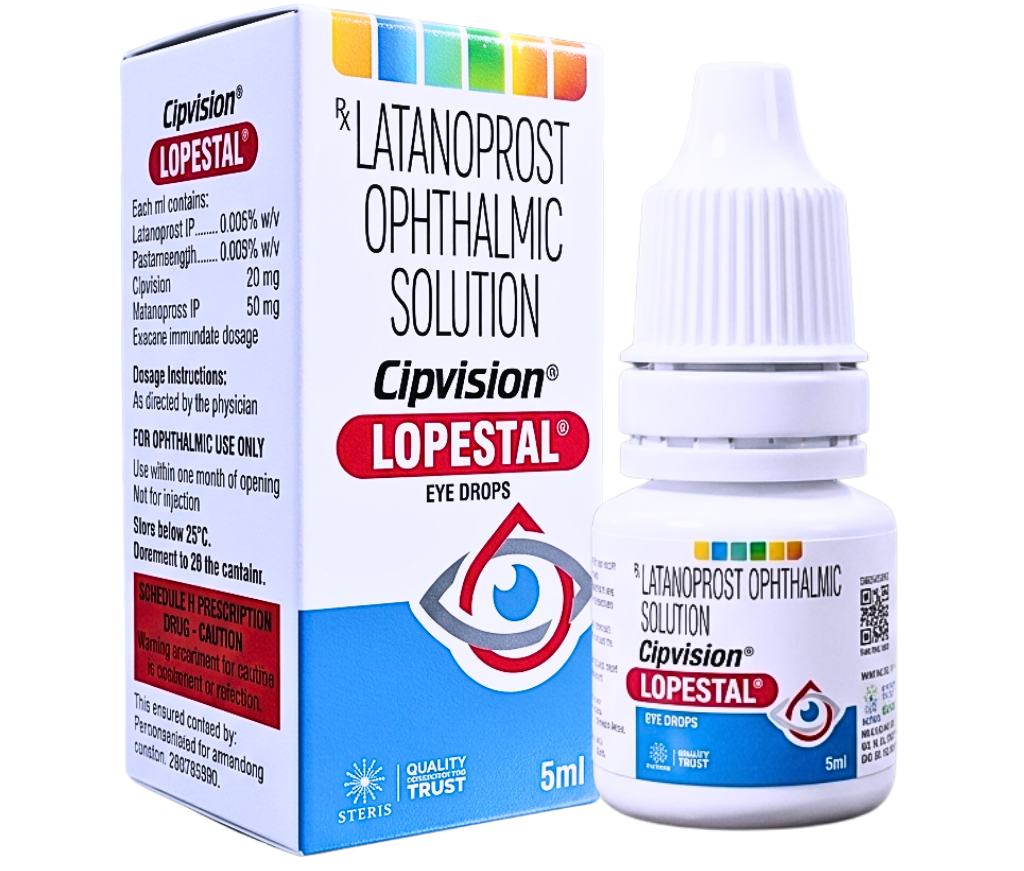
CIPVISION LOPESTAL
 Item requires a valid prescription
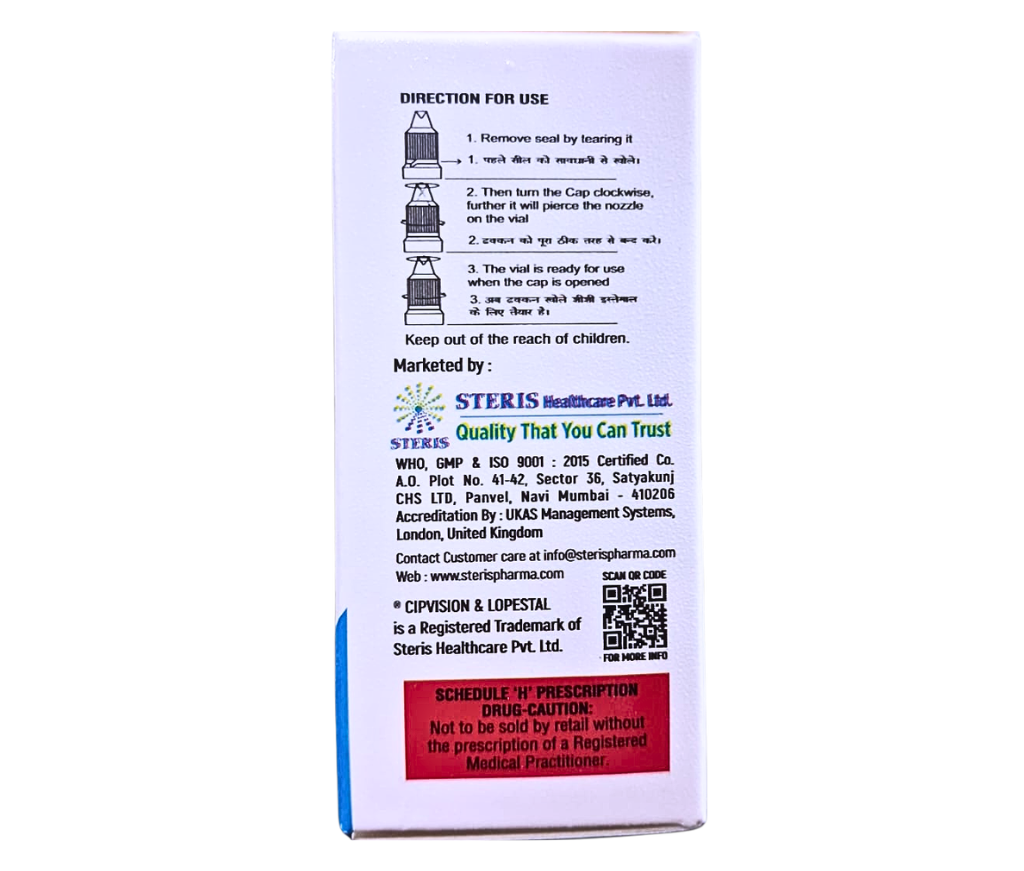
Manufactured By Steris Healthcare Pvt Ltd
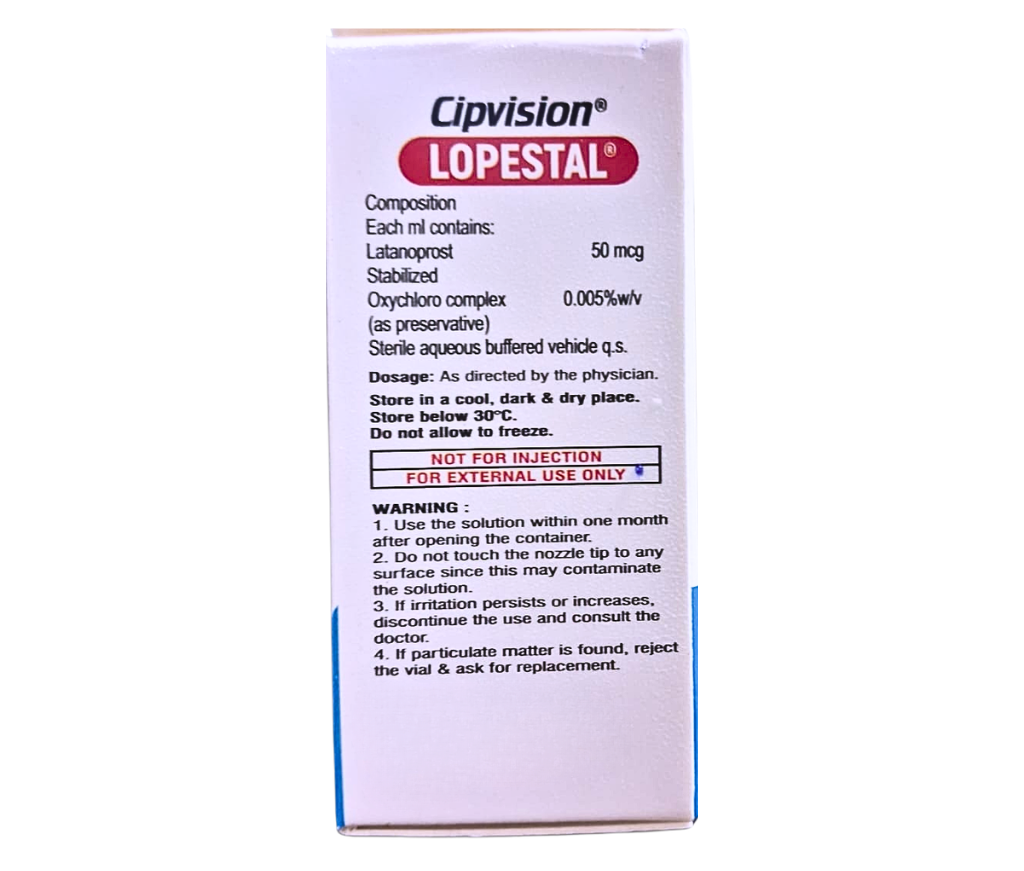
Composition Latanoprost Ophthalmic Solution
Rs 273.00
MRP Rs 390.00
(30% OFF)
Includes all taxes
Package SIZE
( For 5 ml )

100% Authentic
Products

Free
Shipping*

Products
Return Policy
Description:
Latanoprost ophthalmic solution is a prescription eye medicine used to lower elevated intraocular pressure (IOP) in people with open-angle glaucoma or ocular hypertension. It belongs to a class of medicines called prostaglandin analogues and works primarily by increasing the natural drainage of fluid from the eye.
For people searching for a glaucoma eye drop, understanding how latanoprost works, its benefits, how to use it, possible side effects, precautions, and what to check before purchasing can help support informed treatment decisions. Latanoprost controls elevated eye pressure but does not cure glaucoma, so ongoing treatment and regular eye examinations are important.
What Is Latanoprost Ophthalmic Solution?
Latanoprost ophthalmic solution is a topical medication administered directly into the eye. It is a prostaglandin analogue that lowers intraocular pressure by increasing the outflow of aqueous humor, the fluid produced inside the eye.
Elevated IOP is an important risk factor for glaucoma. If glaucoma is not appropriately managed, progressive optic-nerve damage can lead to permanent vision loss. Latanoprost is therefore prescribed to reduce IOP and help manage these conditions.
The medicine is generally supplied as an ophthalmic solution in multidose bottles or, depending on the formulation, single-use containers. Product strength, preservatives, packaging, storage requirements and approved labeling can vary by manufacturer and country.
What Is Latanoprost Ophthalmic Solution Used For?
The primary approved uses of latanoprost ophthalmic solution are:
- Open-angle glaucoma
- Ocular hypertension
- Reduction of elevated intraocular pressure associated with these conditions
The official prescribing information specifies latanoprost ophthalmic solution for reducing elevated IOP in patients with open-angle glaucoma or ocular hypertension.
Latanoprost is not an ordinary lubricating eye drop and should not be purchased as a treatment for dry eye, eye infection or routine eye redness.
How Does Latanoprost Lower Eye Pressure?
Latanoprost is converted in the eye into its active form and acts primarily on prostaglandin receptors. This increases the outflow of aqueous humor from the eye.
In simple terms, latanoprost helps the eye drain fluid more effectively. As fluid leaves the eye more efficiently, intraocular pressure can decrease.
According to current prescribing information, reduction in IOP begins approximately 3 to 4 hours after administration, with the maximum effect occurring approximately 8 to 12 hours after a dose.
Key Benefits of Latanoprost Ophthalmic Solution
1. Helps reduce elevated intraocular pressure
The primary benefit is lowering elevated IOP in appropriate patients with open-angle glaucoma or ocular hypertension. Maintaining the target IOP prescribed by an ophthalmologist is an important part of glaucoma management.
2. Convenient once-daily dosing
The recommended dosage for latanoprost ophthalmic solution is generally one drop in the affected eye or eyes once daily in the evening, unless the prescribing clinician gives different instructions for the specific formulation.
Once-daily dosing can make a long-term treatment routine easier to maintain.
3. Works through a different mechanism from some other glaucoma medicines
Latanoprost primarily increases aqueous-humor outflow. This distinguishes it mechanistically from medicines that primarily reduce aqueous-humor production.
Your ophthalmologist may prescribe latanoprost alone or alongside other IOP-lowering medicines when additional pressure control is needed.
4. Available as a generic medicine
Latanoprost is available in generic formulations as well as certain branded products. Generic availability can provide additional purchasing options, although patients should verify that the active ingredient, strength and formulation match their prescription.
5. Suitable for long-term glaucoma management when prescribed
Glaucoma treatment is often ongoing. Latanoprost controls elevated pressure but does not cure the underlying condition. Patients should continue treatment as prescribed even when they have no noticeable symptoms, unless their ophthalmologist changes the treatment plan.
How to Use Latanoprost Ophthalmic Solution
Always use latanoprost ophthalmic solution exactly as prescribed.
A typical administration process is:
- Wash your hands.
- Remove the bottle cap without contaminating the dropper.
- Tilt your head back and gently pull down the lower eyelid.
- Place the prescribed drop into the eye without touching the eye or eyelashes with the dropper tip.
- Close the eye gently after administration.
- Replace the cap securely.
- Wash your hands after use.
Current patient information recommends one drop once daily in the evening for standard latanoprost ophthalmic solution. Using it more frequently than prescribed can reduce its IOP-lowering effect and may even produce an undesirable increase in IOP.
If you use another eye drop, MedlinePlus advises separating latanoprost from other ophthalmic drops by at least 5 minutes.
What If You Miss a Dose?
If you forget a dose, follow the instructions provided with your product and prescribing clinician. For standard latanoprost ophthalmic solution, patient information advises continuing with the next scheduled dose rather than doubling the dose.
Do not compensate for a missed dose by putting multiple drops into the eye.
Latanoprost Ophthalmic Solution Side Effects
Like other prescription medicines, latanoprost ophthalmic solution can cause side effects.
Some commonly reported effects include:
- Eye stinging or burning
- Eye irritation
- Itching
- Dry eyes
- Foreign-body sensation
- Headache
- Dizziness
These effects may be temporary, but patients should tell their healthcare professional if symptoms are severe, persistent or troublesome.
Changes in eye color
One of the most important counseling points with latanoprost is that it can gradually increase brown pigmentation of the iris. This change may be permanent.
The effect may be especially noticeable when only one eye is treated because the treated and untreated eyes can eventually appear different in color.
Eyelash changes
Latanoprost can also cause eyelashes to become longer, thicker or darker. These changes may occur gradually.
When to seek medical advice
Contact your doctor promptly if you develop significant eye redness, eyelid swelling, light sensitivity, substantial vision changes or other concerning symptoms.
Who Should Tell Their Doctor Before Using Latanoprost?
Before starting treatment, tell your ophthalmologist or pharmacist about your medical history and all medicines you take.
Particularly important information includes:
- Previous eye inflammation
- Eye infection
- A torn, absent or artificial lens
- Previous eye surgery
- Allergies to latanoprost or any product ingredient
- Pregnancy or planned pregnancy
- Breastfeeding
- Use of other glaucoma medicines or eye drops
Patients should also tell their doctor before planned eye surgery.
Latanoprost and Contact Lenses
If you wear contact lenses, they should be removed before applying standard latanoprost eye drops. Current patient information advises waiting at least 15 minutes before putting the lenses back in.
Because different products may contain different preservatives or excipients, always follow the instructions for the exact product you have been prescribed.
What to Check Before Buying Latanoprost Ophthalmic Solution
If you are purchasing latanoprost ophthalmic solution from a pharmacy, compare more than just the price.
Check the active ingredient and strength
Make sure the product contains the exact latanoprost strength prescribed by your ophthalmologist. Do not substitute a different strength or glaucoma medicine without professional advice.
Check the manufacturer and packaging
Look for:
- Clearly identified manufacturer
- Sealed and undamaged packaging
- Batch or lot information
- Valid expiry date
- Appropriate storage instructions
Buy from a legitimate pharmacy
Because latanoprost is a prescription medicine, purchase it through a legitimate, appropriately licensed pharmacy. Be cautious of websites offering unusually low prices, prescription medicines without appropriate verification, or products with unclear manufacturing information.
Check the formulation
Latanoprost products can differ in packaging, preservatives and storage requirements. For example, current patient information describes both multidose and single-use presentations, with different storage and disposal instructions.
Latanoprost Ophthalmic Solution vs. Other Glaucoma Eye Drops
Latanoprost belongs to the prostaglandin analogue class. Other glaucoma medicines may work by reducing aqueous-humor production, increasing fluid outflow through different pathways, or using a combination of mechanisms.
There is no universally “best” glaucoma eye drop. The appropriate medicine depends on factors such as:
- Type of glaucoma
- Target IOP
- Current eye pressure
- Disease severity
- Previous treatment response
- Other medical conditions
- Other medicines being used
- Side-effect tolerance
- Treatment adherence
An ophthalmologist can determine whether latanoprost alone is sufficient or whether another medication or treatment approach is appropriate.
Frequently Asked Questions
1. What is latanoprost ophthalmic solution used for?
Latanoprost ophthalmic solution is used to reduce elevated intraocular pressure in people with open-angle glaucoma or ocular hypertension. It works by increasing the outflow of fluid from the eye.
2. How often should latanoprost eye drops be used?
Standard latanoprost ophthalmic solution is generally administered as one drop in the affected eye or eyes once daily in the evening. Do not use it more frequently unless specifically instructed by your ophthalmologist.
3. What are the most common side effects of latanoprost?
Possible side effects include eye irritation, burning or stinging, itching, dry eyes, foreign-body sensation, headache and dizziness. Latanoprost may also cause gradual darkening of the iris and changes in eyelash length, thickness or color.
4. Can latanoprost change eye color permanently?
Yes. Latanoprost can gradually increase brown pigmentation of the iris, and this change may be permanent. The difference can be particularly noticeable when only one eye is being treated.
5. Can latanoprost make eyelashes grow?
Yes. Latanoprost can cause eyelashes to become longer, thicker and darker. This is a recognized effect of the medicine.
6. Can I use latanoprost with other eye drops?
Latanoprost may be used with other topical ophthalmic medicines when prescribed as part of a glaucoma treatment plan. If you use multiple eye drops, they should generally be separated by at least 5 minutes unless your healthcare professional provides different instructions.
7. Can I wear contact lenses while using latanoprost?
Contact lenses should be removed before applying standard latanoprost eye drops. Current patient guidance recommends waiting at least 15 minutes before reinserting them.
8. Does regular latanop ophthalmic monitoring are essential because glaucoma can progress without obvious symptoms. Never change the dosing schedule, substitute another glaucoma medicine or stop treatment without discussing it with your ophthalmologist.
No. Latanoprost controls elevated eye pressure but does not cure glaucoma. Treatment is generally continued according to the ophthalmologist's instructions, even when the patient feels well.
9. What happens if I accidentally miss a latanoprost dose?
For standard latanoprost, patient information advises continuing with the next scheduled dose rather than doubling the dose. If you are unsure about what to do, consult your pharmacist or prescribing clinician.
10. Is latanoprost safe for long-term use?
Latanoprost is used for ongoing management of glaucoma and ocular hypertension when prescribed by an eye-care professional. However, long-term treatment requires regular monitoring of eye pressure and the health of the optic nerve and ocular structures. Do not discontinue treatment without medical advice.
Conclusion
Latanoprost ophthalmic solution is an established prescription treatment for reducing elevated intraocular pressure associated with open-angle glaucoma and ocular hypertension. Its principal mechanism is increasing aqueous-humor outflow, and standard formulations are generally administered once daily in the evening.
From a buyer's perspective, choosing the right product involves more than comparing prices. Verify the active ingredient, prescribed strength, manufacturer, expiry date, packaging, formulation, and storage requirements, and purchase through a legitimate pharmacy. If you wear contact lenses or use other eye medicines, check the specific product instructions and discuss your complete treatment routine with your eye-care professional.