


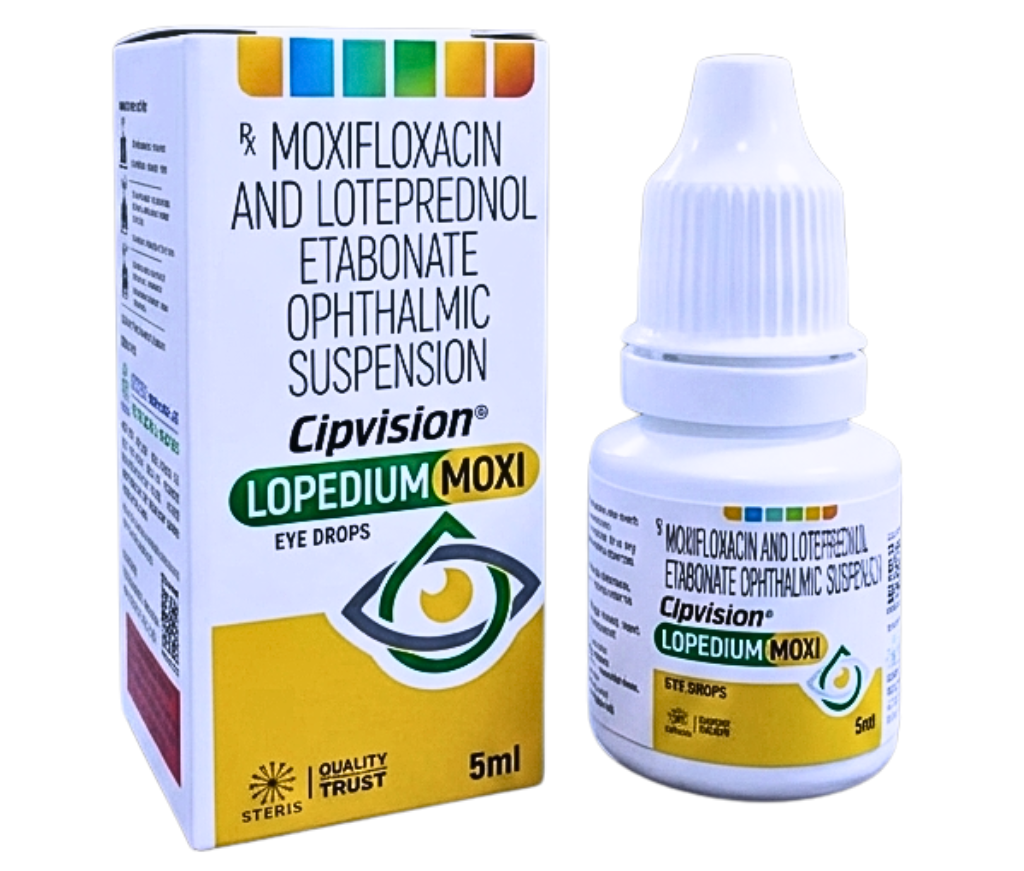
CIPVISION LOPEDIUM MOXI
 Item requires a valid prescription
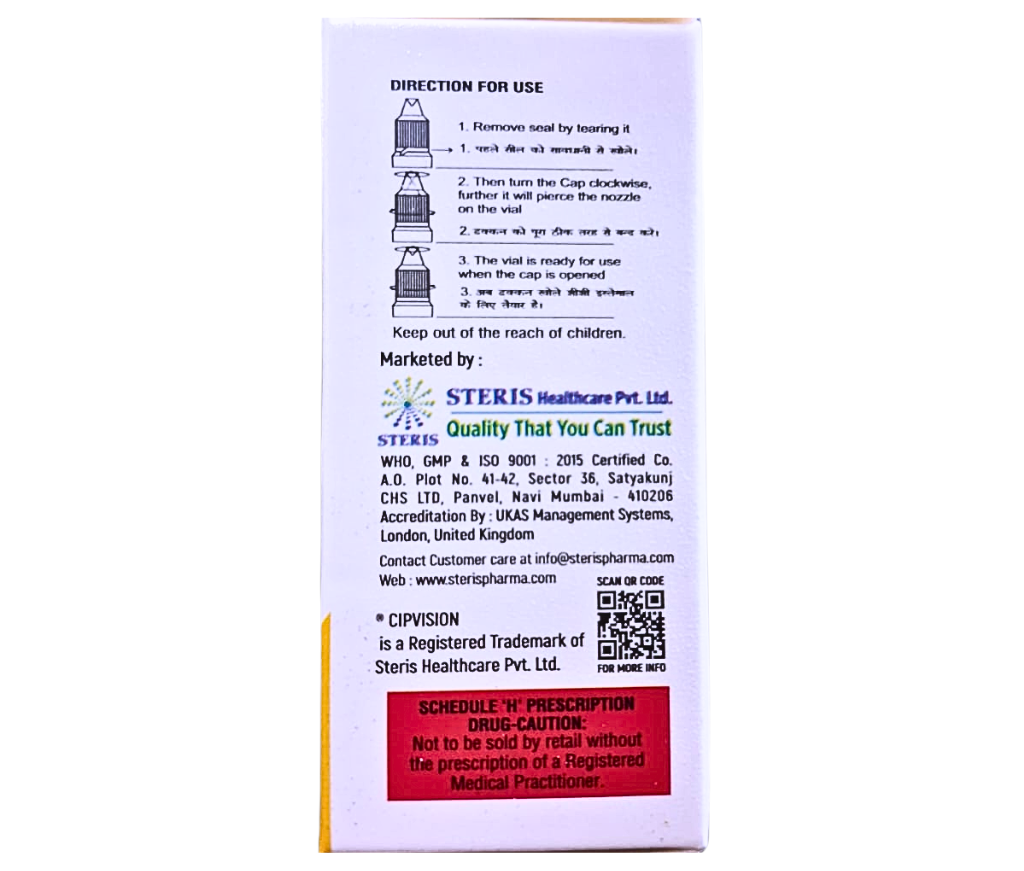
Manufactured By Steris Healthcare Pvt Ltd
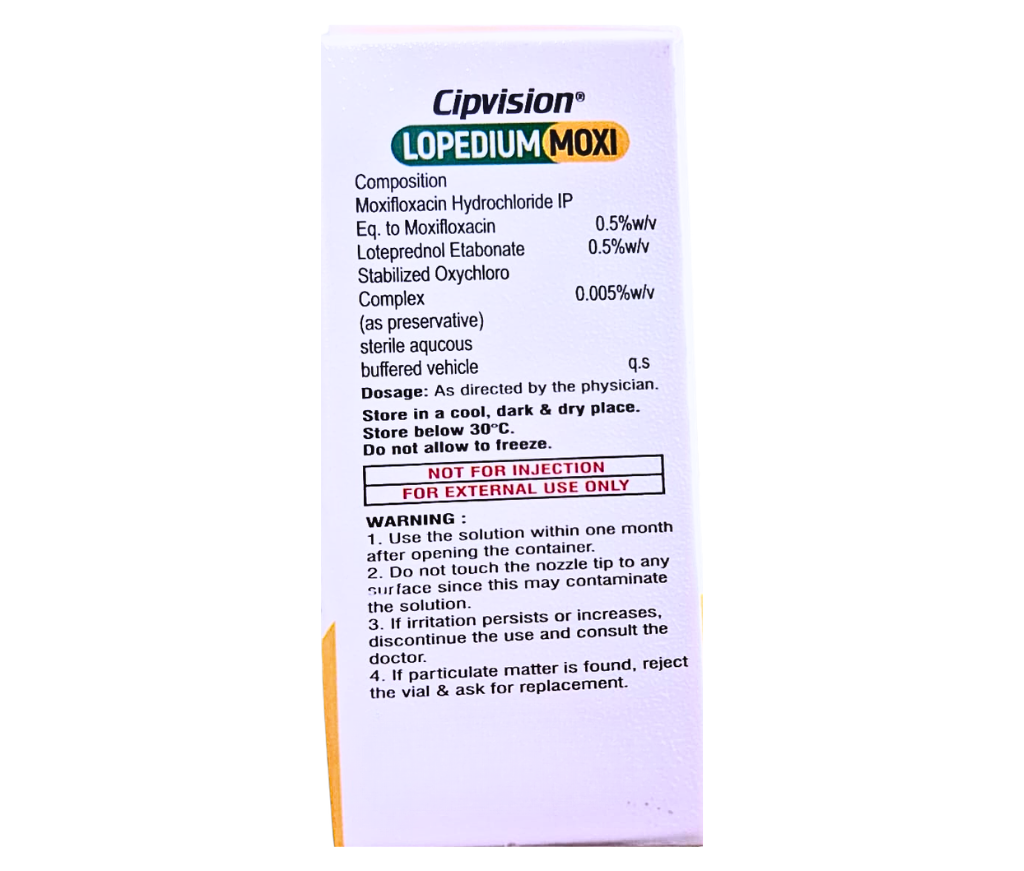
Composition Moxifloxacin And Loteprednol Etabonate Ophthalmic Suspension
Rs 133.00
MRP Rs 190.00
(30% OFF)
Includes all taxes
Package SIZE
( For 5 ml )

100% Authentic
Products

Free
Shipping*

Products
Return Policy
Description:
Moxifloxacin and Loteprednol Etabonate Ophthalmic Suspension is a prescription ophthalmic combination that brings together an antibiotic and a corticosteroid. Moxifloxacin is a fluoroquinolone antibiotic that acts against susceptible bacteria, while loteprednol etabonate is a corticosteroid used to reduce ocular inflammation.
This combination may be prescribed when an eye condition involves a bacterial infection or a suspected bacterial component together with significant inflammation, but it is not appropriate for every red, irritated, or watery eye. Corticosteroid-containing eye medicines require particular care because steroids can worsen or mask certain infections and, with prolonged use, can increase intraocular pressure and contribute to other eye complications.
For anyone researching or purchasing Moxifloxacin and Loteprednol Etabonate Ophthalmic Suspension, understanding its uses, mechanism, potential benefits, side effects, precautions, administration, and purchasing considerations is essential.
What Is Moxifloxacin and Loteprednol Etabonate Ophthalmic Suspension?
This ophthalmic suspension combines two pharmacologically different medicines:
- Moxifloxacin: a fluoroquinolone antibacterial agent that interferes with bacterial enzymes required for DNA replication.
- Loteprednol etabonate: an ophthalmic corticosteroid that suppresses inflammatory responses in the eye.
Moxifloxacin ophthalmic preparations are indicated for bacterial conjunctivitis caused by susceptible organisms. Current U.S. labeling for moxifloxacin ophthalmic solution includes susceptible strains of organisms such as Staphylococcus aureus, Streptococcus pneumoniae, and Haemophilus influenzae.
Loteprednol etabonate ophthalmic suspension is used for steroid-responsive inflammatory conditions affecting ocular tissues and is also indicated in certain formulations for postoperative ocular inflammation.
Because the combination contains a steroid, it should be used under appropriate medical supervision.
What Is Moxifloxacin and Loteprednol Eye Suspension Used For?
The combination is intended for selected ocular conditions where both antibacterial activity and control of inflammation are clinically appropriate.
Depending on the particular product's approved labeling and the ophthalmologist's diagnosis, it may be considered when inflammation accompanies an ocular bacterial infection or after certain eye procedures.
However, the exact approved indication can vary by country, manufacturer, and formulation. Therefore, the product package insert and prescribing information should always take precedence over generalized online descriptions.
It should not be assumed to be appropriate for:
- Simple dry eye
- Routine eye redness
- Uncomplicated allergic irritation
- Every case of conjunctivitis
- Undiagnosed eye pain
- Viral eye infections
- Fungal eye infections
This distinction is particularly important because loteprednol is a corticosteroid. Ophthalmic steroids can suppress immune responses and potentially worsen certain infections. Current loteprednol labeling contraindicates its use in many viral diseases of the cornea and conjunctiva, as well as mycobacterial and fungal diseases of ocular structures.
How Does the Combination Work?
Moxifloxacin fights susceptible bacteria.
Moxifloxacin belongs to the fluoroquinolone class of antibiotics. It works by interfering with bacterial enzymes involved in DNA replication, thereby inhibiting bacterial growth and survival.
Moxifloxacin ophthalmic solution is specifically labeled for bacterial conjunctivitis caused by susceptible organisms.
Loteprednol reduces inflammation.
Loteprednol etabonate is a corticosteroid designed to reduce inflammatory activity in the eye. It can decrease signs and symptoms associated with steroid-responsive ocular inflammation.
Clinical research has demonstrated that loteprednol can reduce postoperative ocular inflammation compared with placebo, while its prescribing information identifies elevated intraocular pressure and secondary ocular infection among important risks associated with ophthalmic corticosteroids.
Why combine the two?
The rationale for a combination product is straightforward: moxifloxacin addresses susceptible bacterial infection, while loteprednol addresses inflammation.
This can be useful when an ophthalmologist determines that both therapeutic effects are needed. It does not mean that combining an antibiotic with a steroid is automatically better for every eye infection.
Key Benefits of Moxifloxacin and Loteprednol Etabonate Ophthalmic Suspension
1. Provides antibacterial activity
Moxifloxacin provides targeted antibacterial activity against susceptible organisms responsible for certain ocular infections. This makes the combination potentially useful when bacterial infection is part of the diagnosed condition.
2. Helps control ocular inflammation
Loteprednol can reduce inflammatory signs and symptoms in appropriate steroid-responsive eye conditions.
Clinical studies have demonstrated benefits of loteprednol in postoperative inflammation and selected inflammatory ocular conditions.
3. Combines two treatment mechanisms
Instead of administering separate antibacterial and anti-inflammatory ophthalmic products, a fixed combination can provide both therapeutic components in one formulation when clinically appropriate.
This may simplify an ophthalmologist-directed treatment regimen.
4. Can address infection and inflammation together
Some eye conditions involve both microbial infection and substantial inflammation. In such circumstances, an ophthalmologist may determine that treating only the infection or only the inflammation is insufficient.
The combination is therefore designed around two complementary treatment objectives rather than simply providing symptomatic lubrication.
5. Convenient ophthalmic formulation
A topical eye preparation delivers the medication directly to the ocular surface. The suspension format should be used according to the manufacturer's instructions, including any requirement to shake the bottle before administration.
How to Use Moxifloxacin and Loteprednol Eye Suspension
Use Moxifloxacin and Loteprednol Etabonate Ophthalmic Suspension exactly as prescribed.
General administration principles include:
- Wash your hands before using the medicine.
- Check the bottle and expiry date.
- If the product label instructs you to shake the suspension, shake it thoroughly before each use.
- Tilt your head back and gently pull down the lower eyelid.
- Instill the prescribed number of drops without allowing the bottle tip to touch the eye, eyelashes, or skin.
- Close the eye gently after application.
- Replace the cap securely.
- Wash your hands after administration if necessary.
Avoid touching the dropper tip to any surface. Contamination of ophthalmic products can introduce microorganisms into the eye and potentially cause serious complications. Moxifloxacin patient guidance specifically emphasizes keeping the dropper tip clean.
The dose and duration are product-specific and should not be copied from another moxifloxacin or loteprednol product. Follow the prescription and current package insert.
Moxifloxacin and Loteprednol Eye Drops: Possible Side Effects
Like other medicines, this combination can cause adverse effects.
Potential ocular reactions associated with loteprednol ophthalmic suspension include:
- Temporary blurred or abnormal vision
- Burning or stinging after application
- Eye redness
- Dry eyes
- Watery eyes
- Foreign-body sensation
- Itching
- Eye irritation or discomfort
- Light sensitivity
These effects have been reported in clinical studies of loteprednol ophthalmic suspension.
Moxifloxacin ophthalmic treatment can also be associated with eye redness, irritation, itching, tearing, blurred vision, eye pain, and dryness.
Important Steroid-Related Risks
The most important safety consideration with this combination is the presence of loteprednol, a corticosteroid.
Prolonged or inappropriate ophthalmic steroid use can cause:
- Increased intraocular pressure
- Glaucoma-related complications
- Cataract formation
- Delayed wound healing
- Secondary ocular infections
- Reactivation or worsening of certain infections
- Corneal or scleral complications in susceptible eyes
Current loteprednol labeling warns that ophthalmic corticosteroids can cause increased IOP, optic-nerve damage, visual-field effects, posterior subcapsular cataracts, and secondary ocular infections.
Although loteprednol has demonstrated a relatively favorable IOP profile in some clinical studies, that does not eliminate the need for appropriate monitoring. One current labeling source reports clinically significant IOP elevation of at least 10 mmHg in 1% of loteprednol-treated patients versus 6% with prednisolone acetate in a controlled study.
Who Should Avoid or Use Extra Caution With This Product?
Tell your ophthalmologist if you have:
- Glaucoma or elevated intraocular pressure
- A history of steroid-induced IOP elevation
- Herpes simplex or another viral eye infection
- A fungal eye infection
- A mycobacterial eye infection
- Recent eye surgery
- Corneal thinning or other corneal disease
- Allergy to moxifloxacin or other quinolone antibiotics
- Allergy to loteprednol or any formulation ingredient
- Contact-lens use
- Pregnancy or breastfeeding
Moxifloxacin ophthalmic products are contraindicated in patients with a history of hypersensitivity to moxifloxacin, other quinolones, or relevant product components.
Because the steroid component can mask or worsen certain infections, an unexplained red eye should not be treated with a steroid-containing combination without appropriate clinical assessment.
Can You Use It for Viral or Fungal Eye Infections?
Generally, no.
This is a crucial distinction when considering a combination antibiotic-steroid eye product.
Moxifloxacin targets susceptible bacteria. It does not treat viruses or fungi. Meanwhile, ophthalmic corticosteroids can potentially worsen some viral, fungal, and mycobacterial infections.
Current loteprednol labeling specifically contraindicates its use in most viral diseases of the cornea and conjunctiva, including epithelial herpes simplex keratitis, as well as mycobacterial and fungal ocular disease.
Therefore, the diagnosis should be established before using this type of combination.
What Should You Check Before Buying?
If your ophthalmologist has prescribed Moxifloxacin and Loteprednol Etabonate Ophthalmic Suspension, use the following buyer checklist.
Verify the exact formulation.
Confirm the:
- Active ingredients
- Strength of moxifloxacin
- Strength of loteprednol etabonate
- Dosage form
- Manufacturer
Do not assume that every product with similar names has the same formulation.
Check the packaging.
Before purchasing, inspect:
- Expiry date
- Batch or lot number
- Seal integrity
- Bottle condition
- Manufacturer information
- Storage instructions
Buy through a legitimate pharmacy.
Because this combination contains an antibiotic and corticosteroid, purchase it through a reputable, appropriately licensed pharmacy and use it only according to professional instructions.
Avoid online sellers that offer prescription ophthalmic medicines without appropriate verification or provide unclear information about the manufacturer and formulation.
Compare the right factors—not only price
For prescription ophthalmic products, the cheapest option is not necessarily the best choice. Verify that the product is authentic, appropriately labeled, within its expiry date, and stored correctly.
Moxifloxacin and Loteprednol vs. Moxifloxacin Alone
These medicines should not be viewed as interchangeable.
Moxifloxacin alone provides antibacterial therapy and is indicated for susceptible bacterial conjunctivitis in appropriate formulations.
Moxifloxacin + loteprednol adds a corticosteroid component intended to control inflammation.
The steroid addition may be useful in selected circumstances but also introduces additional risks, including increased IOP and the potential for masking or worsening certain infections.
Consequently, a combination product should not automatically be selected simply because it contains two active ingredients.
Frequently Asked Questions
1. What is Moxifloxacin and Loteprednol Etabonate Ophthalmic Suspension used for?
It is a prescription combination containing an antibiotic and corticosteroid. It may be used for selected eye conditions in which susceptible bacterial infection and clinically significant inflammation are both being addressed. The exact approved indication depends on the specific product and country.
2. What are the benefits of moxifloxacin and loteprednol eye drops?
The main potential benefit is the combination of antibacterial activity from moxifloxacin and anti-inflammatory activity from loteprednol. This can be useful when both infection and inflammation are clinically relevant.
3. What are the side effects of Moxifloxacin and Loteprednol Etabonate Ophthalmic Suspension?
Possible side effects include temporary burning or stinging, blurred vision, eye redness, irritation, itching, dryness, tearing, and a foreign-body sensation. Because loteprednol is a steroid, prolonged or inappropriate use can also increase IOP, contribute to cataract formation, and increase the risk of secondary ocular infection.
4. Can I use moxifloxacin and loteprednol for any red eye?
No. A red eye can result from bacterial infection, viral infection, allergy, dry eye, corneal injury, or other conditions. A steroid-containing eye medicine should not be used for an undiagnosed red eye because it may worsen or mask certain infections.
5. Do moxifloxacin and loteprednol treat bacterial eye infections?
Moxifloxacin provides antibacterial activity against susceptible bacteria. Whether the combination is appropriate depends on the diagnosis and the specific product. Current moxifloxacin ophthalmic labeling includes bacterial conjunctivitis caused by susceptible organisms.
6. Can this eye suspension increase eye pressure?
Yes. Loteprednol is a corticosteroid, and ophthalmic steroids can increase intraocular pressure. This risk is one reason steroid-containing eye medicines should be used under appropriate medical supervision, especially during prolonged treatment.
7. Can I use this medicine for a viral eye infection?
It should not be used for viral eye infections unless specifically directed by an ophthalmologist for an appropriate clinical reason. Loteprednol-containing ophthalmic products are contraindicated in many viral diseases of the cornea and conjunctiva, including epithelial herpes simplex keratitis.
8. How should I store Moxifloxacin and Loteprednol Etabonate Ophthalmic Suspension?
Storage requirements vary by product. Follow the manufacturer's current package insert regarding temperature, light exposure, bottle handling, and disposal. Do not use an expired or visibly contaminated ophthalmic product.
9. Can I wear contact lenses while using this eye medicine?
Contact-lens use should be discussed with your ophthalmologist. If you have an active bacterial eye infection, contact lenses generally should not be worn until the infection has resolved and your eye-care professional confirms it is appropriate. Moxifloxacin patient guidance specifically advises against wearing contact lenses while symptoms of bacterial conjunctivitis are present.
10. Should I stop using the drops when my eye feels better?
Do not change or stop a prescribed treatment without speaking with your ophthalmologist. Antibiotic treatment should be used according to the prescribed course, while steroid-containing treatment may have specific duration and tapering considerations depending on the condition and formulation.
Conclusion
Moxifloxacin and Loteprednol Etabonate Ophthalmic Suspension combine two different therapeutic actions: moxifloxacin provides antibacterial activity against susceptible organisms, while loteprednol etabonate reduces ocular inflammation. This combination can be valuable in carefully selected ophthalmic conditions where both infection and inflammation need to be addressed.
From a buyer's perspective, however, this is not a routine eye drop for every red or irritated eye. The corticosteroid component makes correct diagnosis particularly important. It can increase intraocular pressure, contribute to cataract formation, and potentially worsen or mask certain infections when used inappropriately or for too long.