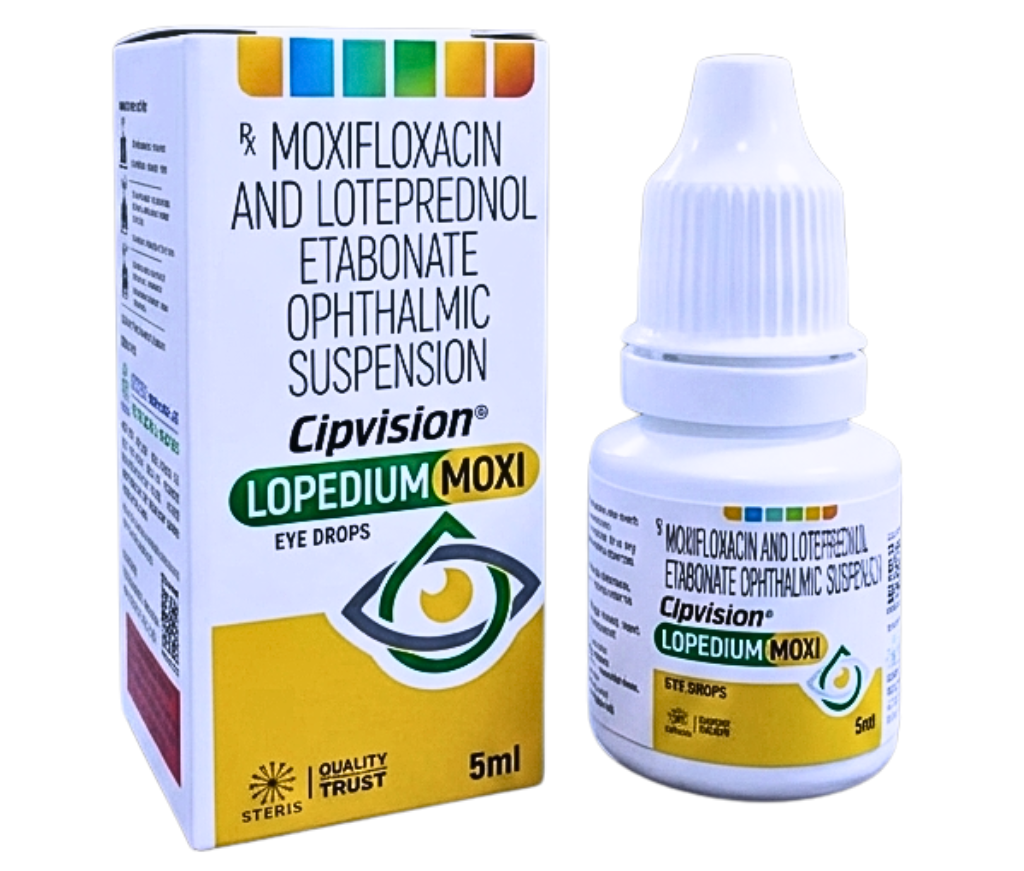


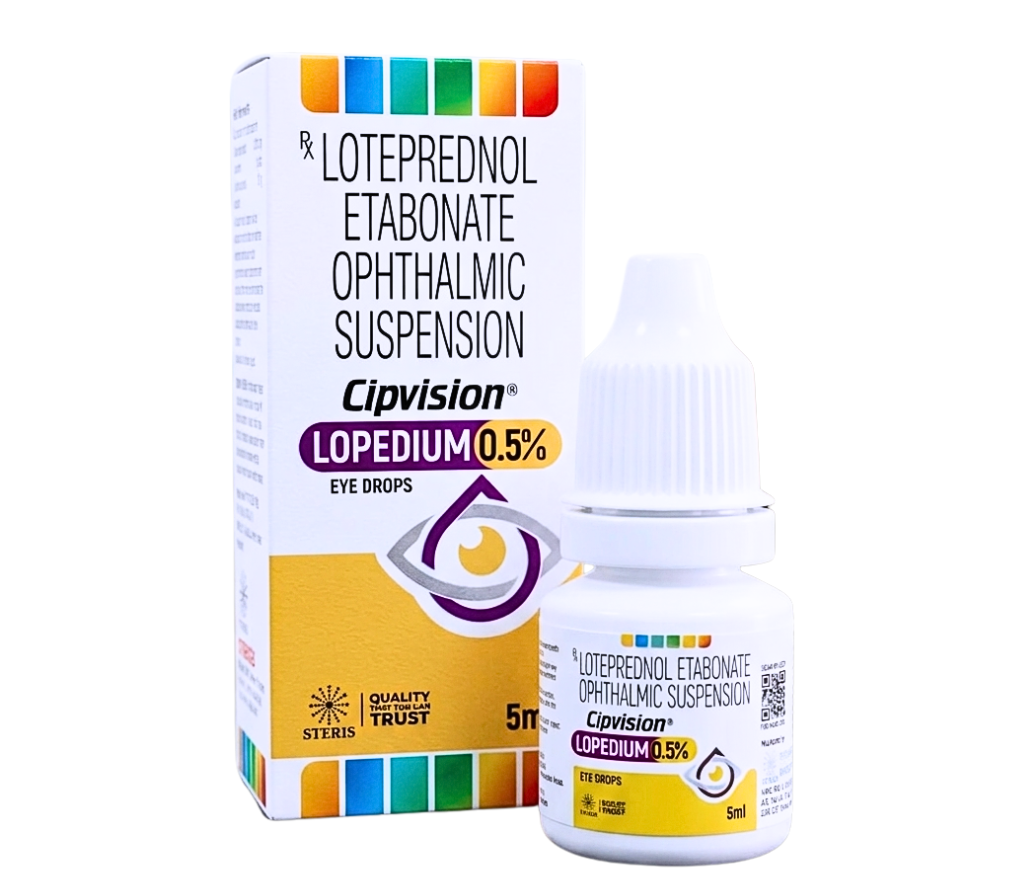
CIPVISION LOPEDIUM 0.5%
 Item requires a valid prescription
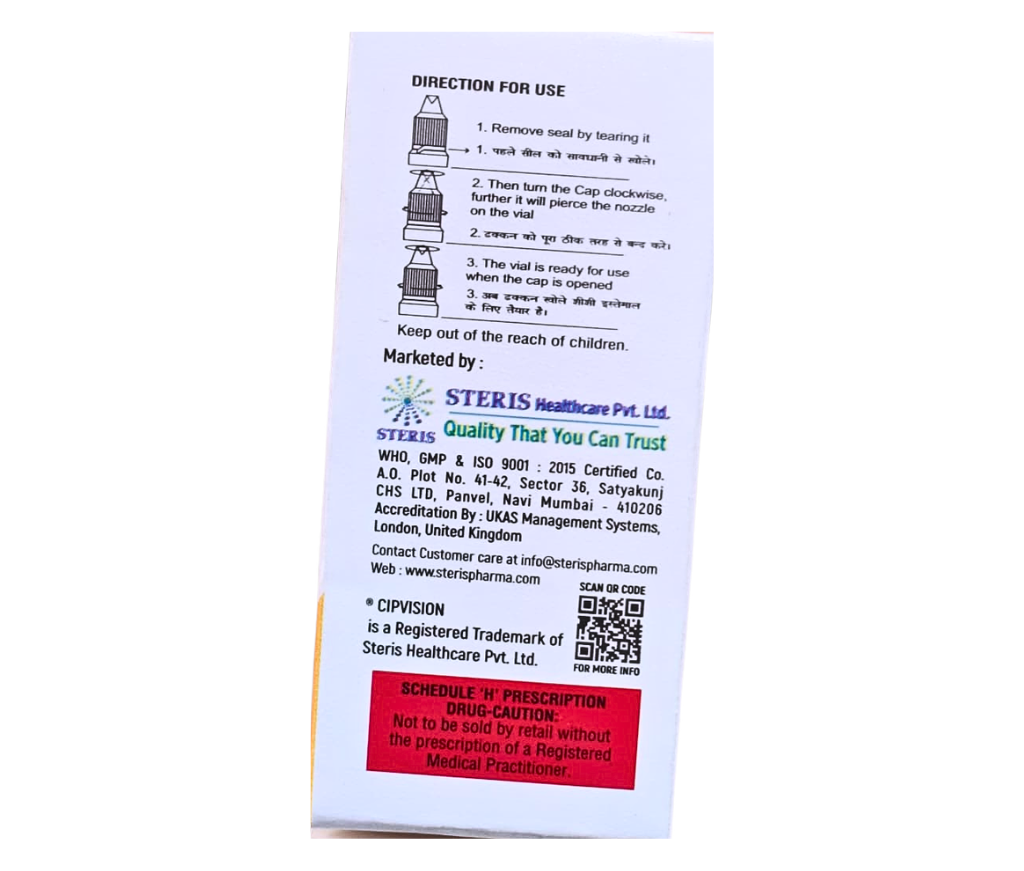
Manufactured By Steris Healthcare Pvt Ltd
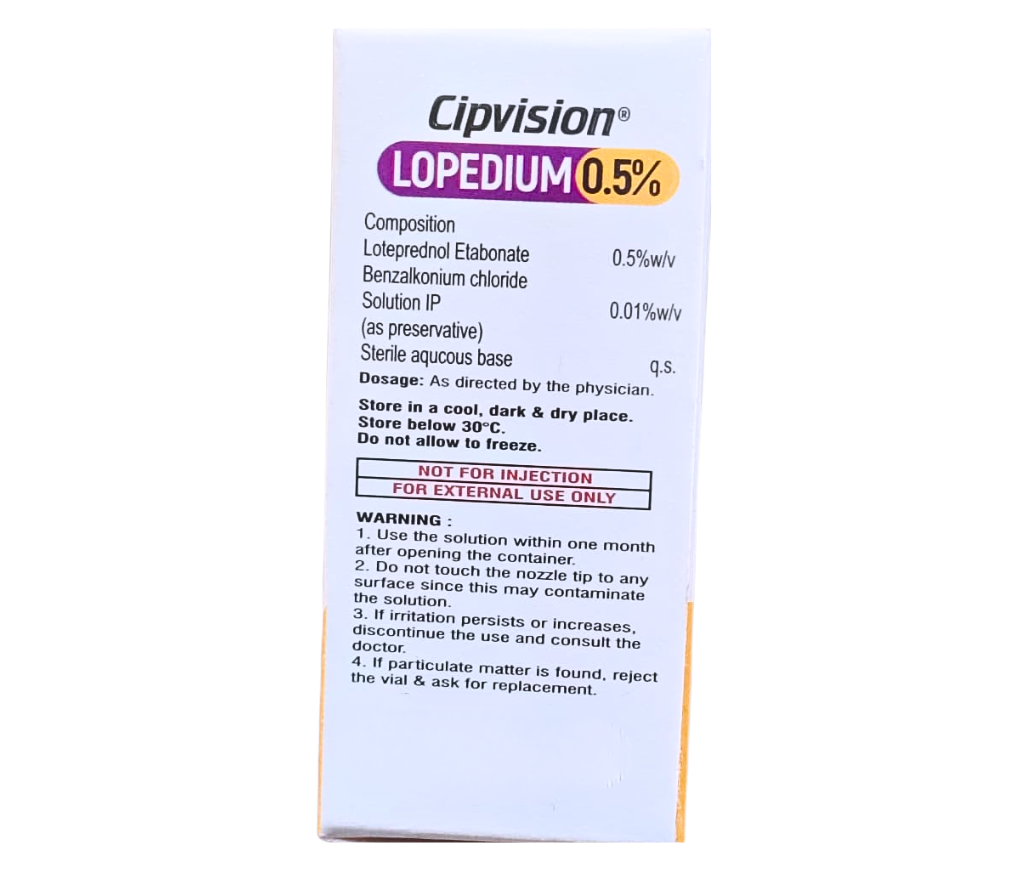
Composition Loteprednol Etabonate Ophthalmic Suspension
Rs 105.00
MRP Rs 150.00
(30% OFF)
Includes all taxes
Package SIZE
( For 5 ml )

100% Authentic
Products

Free
Shipping*

Products
Return Policy
Description:
Loteprednol etabonate ophthalmic suspension is a prescription corticosteroid eye medicine used to reduce inflammation, redness, swelling, itching, and discomfort associated with certain eye conditions. Depending on the strength and specific formulation, loteprednol may be used for steroid-responsive inflammatory eye conditions, seasonal allergic conjunctivitis, and inflammation following certain eye surgeries.
Unlike artificial tears, loteprednol is not simply a lubricant. It is an ophthalmic corticosteroid that acts on inflammatory pathways. This makes it useful when inflammation is a significant part of the diagnosed eye condition, but it also means that it should not be self-used for unexplained eye redness.
Different loteprednol products have different strengths and dosage forms, including 0.2% and 0.5% ophthalmic suspensions, gels, and other formulations. Therefore, buyers should always match the product strength and formulation to the ophthalmologist's prescription.
What Is Loteprednol Etabonate Ophthalmic Suspension?
Loteprednol etabonate is a topical ophthalmic corticosteroid. The medicine is designed to reduce inflammatory responses in the eye.
The 0.5% ophthalmic suspension is one commonly marketed formulation. Depending on the product and diagnosis, it may be prescribed for inflammatory eye disease or postoperative inflammation. The official prescribing information for a 0.5% suspension includes treatment of steroid-responsive inflammatory conditions and postoperative inflammation.
A 0.2% formulation is also available and has an indication for temporary relief of signs and symptoms associated with seasonal allergic conjunctivitis.
This distinction is important for consumers searching online because loteprednol 0.2% and loteprednol 0.5% should not be considered automatically interchangeable.
Loteprednol Etabonate Ophthalmic Suspension Uses
The exact use depends on the strength and formulation prescribed by the eye specialist.
1. Eye inflammation
Loteprednol can be prescribed for certain steroid-responsive inflammatory conditions of the eye. By reducing inflammatory activity, it can help relieve symptoms such as redness, swelling, discomfort, and irritation.
2. Postoperative eye inflammation
Certain loteprednol formulations are used to manage inflammation following ocular surgery. The prescribing information for a 0.5% suspension describes postoperative use beginning after surgery and continuing during the early postoperative period.
Postoperative medicines should always be used according to the surgeon's specific instructions because the appropriate treatment depends on the type of procedure and the patient's individual risk factors.
3. Seasonal allergic conjunctivitis
The 0.2% ophthalmic suspension is indicated for the temporary relief of signs and symptoms of seasonal allergic conjunctivitis.
It may help with inflammatory allergy symptoms such as eye redness, itching, and swelling when prescribed appropriately.
4. Selected dry-eye inflammatory conditions
Loteprednol has also been studied and used for short-term management of inflammation associated with dry-eye disease. A peer-reviewed review of clinical studies found evidence supporting loteprednol ophthalmic suspension in inflammatory dry-eye disease. Central (PMC)
However, this does not mean that every person with dry eye needs a steroid. Long-term dry-eye management often requires identifying the underlying cause and choosing an appropriate treatment strategy.
How Does Loteprednol Etabonate Work?
Loteprednol is a corticosteroid that reduces inflammatory activity in ocular tissues.
Inflammation can cause the release of substances that contribute to redness, swelling, itching, and discomfort. Loteprednol suppresses these inflammatory processes, which can reduce the clinical signs and symptoms of steroid-responsive eye conditions.
One feature of loteprednol is its design as a retrometabolically designed corticosteroid. Research has described it as having a relatively low propensity for some corticosteroid-related adverse effects compared with certain older ophthalmic steroids, although it can still cause steroid-related complications and must be used appropriately.
Key Benefits of Loteprednol Etabonate Ophthalmic Suspension
Helps reduce eye inflammation
The primary therapeutic benefit is suppression of inflammation in steroid-responsive ocular conditions.
Can reduce redness and swelling
As inflammation decreases, associated redness and swelling may also improve.
Helps relieve inflammatory discomfort
Inflammation-related irritation, soreness, and discomfort may improve when the underlying inflammatory process responds to treatment.
Available in different strengths and formulations
Loteprednol is available in formulations such as 0.2% and 0.5% ophthalmic suspensions, allowing ophthalmologists to select a formulation appropriate for the diagnosed condition.
May be useful after selected eye surgeries
Certain formulations are indicated for postoperative ocular inflammation and pain.
How to Use Loteprednol Etabonate Ophthalmic Suspension
Use loteprednol exactly as prescribed.
Because this is a suspension, the bottle generally needs to be shaken well before use according to the specific product instructions.
General administration steps include:
- Wash your hands.
- Shake the bottle as directed.
- Tilt your head backward.
- Gently pull down the lower eyelid.
- Instill the prescribed number of drops.
- Do not allow the bottle tip to touch your eye, eyelashes, or skin.
- Close your eye gently after applying the drop.
- Replace the cap securely.
Do not use more drops than prescribed or continue treatment longer than recommended.
For a commonly labeled 0.5% suspension, the prescribing information describes one to two drops four times daily for certain steroid-responsive conditions, while postoperative treatment may also use one to two drops four times daily for the first two weeks. These are product-specific instructions, not a universal dosing schedule for every loteprednol formulation.
Loteprednol Etabonate Ophthalmic Suspension Side Effects
Like other corticosteroid eye medicines, loteprednol can cause side effects.
Reported ocular reactions with 0.2%–0.5% ophthalmic suspension include:
- Temporary burning or stinging
- Blurred or abnormal vision
- Eye irritation
- Dry eye
- Watery eyes
- Foreign-body sensation
- Itching
- Redness
- Light sensitivity
- Eye discharge
Clinical information reports several of these reactions in approximately 5–15% of patients in studies.
Important steroid-related risks
Although loteprednol may have a favorable safety profile compared with some corticosteroids, it is still a steroid.
Prolonged corticosteroid use can increase intraocular pressure and may contribute to glaucoma or optic-nerve damage. Long-term use can also contribute to posterior subcapsular cataract formation.
For this reason, prolonged treatment may require monitoring of intraocular pressure by an ophthalmologist.
Steroids can also suppress the body's immune response and may worsen or mask certain ocular infections.
Can Loteprednol Be Used for Any Red Eye?
No.
A red eye can have many causes, including:
- Bacterial infection
- Viral infection
- Allergy
- Dry eye
- Corneal injury
- Contact-lens complications
- Glaucoma
- Inflammatory eye disease
Steroid treatment can be inappropriate or harmful in some infections. Loteprednol is contraindicated in most viral diseases of the cornea and conjunctiva, including epithelial herpes simplex keratitis, as well as certain fungal and mycobacterial eye infections.
Therefore, self-treating an unexplained red eye with loteprednol is not recommended.
Who Should Use Loteprednol With Caution?
Tell your ophthalmologist if you have:
- Glaucoma or elevated eye pressure
- A history of steroid-related pressure increases
- Herpes simplex eye disease
- A fungal or mycobacterial eye infection
- Recent eye surgery
- Recurrent eye infections
- Contact-lens use
- Previous allergy to corticosteroids
If treatment continues for an extended period, your doctor may monitor intraocular pressure and examine the cornea and other ocular structures.
Loteprednol Etabonate Ophthalmic Suspension Price in India
The price of loteprednol etabonate ophthalmic suspension in India varies according to strength, brand, manufacturer, bottle size, pharmacy, and current discounts.
Recent Indian online listings provide useful examples:
- A 5 mL loteprednol etabonate 0.5% product was recently listed at approximately ₹182 MRP, with a discounted price around ₹155 on one current listing.
- Another 0.5% loteprednol product was recently listed around ₹152 MRP, with an online discounted price around ₹129.
- Current generic listings show some 5 mL loteprednol products around ₹99–₹164, depending on the brand.
These figures are examples of current online listings rather than a fixed national retail price. MRP, discounts, availability, and delivery charges can change.
What should buyers check before purchasing?
Before buying Loteprednol eye drops, verify:
- Exact loteprednol etabonate strength
- 0.2% or 0.5% concentration
- Suspension, gel, or another dosage form
- Bottle size
- Manufacturer
- Batch number
- Expiry date
- Storage instructions
- Prescription requirements
- Current MRP
- Seller/pharmacy authenticity
Do not purchase a different strength simply because it is cheaper.
Loteprednol 0.2% vs. 0.5%: Are They the Same?
They contain the same active ingredient but are different concentrations and may have different labeled uses.
The 0.2% ophthalmic suspension is indicated for temporary relief of seasonal allergic conjunctivitis symptoms, while 0.5% suspension formulations have indications that include certain steroid-responsive inflammatory conditions and postoperative inflammation.
Therefore, patients should use the strength prescribed by their ophthalmologist rather than substituting one for another.
Loteprednol vs. Prednisolone Eye Drops
Both are ophthalmic corticosteroids, but they are not identical.
Loteprednol was designed as a retrometabolically engineered corticosteroid, and published evidence suggests it may have a lower tendency to cause some steroid-associated adverse effects than certain traditional corticosteroids. However, loteprednol can still increase intraocular pressure and cause other steroid-related complications.
The choice between loteprednol and another steroid should therefore be based on the diagnosis, severity of inflammation, medical history, and ophthalmologist's judgment.
Buyer-Intent Guide: How to Choose Loteprednol Eye Drops
If you are searching online for loteprednol etabonate ophthalmic suspension for purchase, start with the prescription rather than the price.
If the prescription specifies loteprednol 0.5%, verify that exact concentration.
If the prescription specifies 0.2%, do not automatically substitute a 0.5% product.
If your ophthalmologist prescribed a particular brand, formulation, or preservative-free preparation, confirm those details before buying.
For pharmacies, hospitals, and distributors, additional procurement checks may include:
- Manufacturer credentials
- Product documentation
- Sterility information
- Batch traceability
- Regulatory compliance
- Minimum order quantity
- Storage conditions
- Current wholesale quotation
Conclusion
Loteprednol etabonate ophthalmic suspension is a corticosteroid eye medicine used to control inflammation associated with specific eye conditions. Depending on the formulation, it may be prescribed for steroid-responsive ocular inflammation, postoperative inflammation, or seasonal allergic conjunctivitis.
Its main benefits are reducing inflammatory redness, swelling, itching, and discomfort when the underlying condition is steroid-responsive. Loteprednol can be an effective ophthalmic anti-inflammatory treatment, but it is not a general-purpose eye drop for unexplained redness.
Because prolonged corticosteroid use can increase intraocular pressure, contribute to glaucoma or cataract formation, and potentially mask or worsen certain infections, treatment should be used under appropriate ophthalmic supervision.
For buyers in India, current online listings show that prices for 5 mL loteprednol products can vary considerably by brand and seller, with recent examples ranging from roughly ₹99 to ₹182 or more depending on formulation and discounts.
The best purchasing strategy is therefore to match the exact strength and formulation prescribed by the ophthalmologist, check the manufacturer and expiry date, and compare the current price from a legitimate pharmacy.
Frequently Asked Questions
1. What is loteprednol etabonate ophthalmic suspension used for?
Loteprednol is an ophthalmic corticosteroid used to reduce inflammation in certain eye conditions. Depending on the formulation, it can be prescribed for steroid-responsive inflammation, postoperative inflammation, and seasonal allergic conjunctivitis.
2. Is loteprednol etabonate a steroid eye drop?
Yes. Loteprednol etabonate is a corticosteroid eye medicine. It reduces inflammatory activity in the eye and can relieve inflammation-related redness, swelling, itching, and discomfort.
3. What are the side effects of loteprednol eye drops?
Commonly reported ocular effects include temporary burning or stinging, blurred vision, irritation, dry eye, watery eyes, itching, redness, foreign-body sensation, and light sensitivity. Prolonged steroid use can also increase intraocular pressure and contribute to cataract formation.
4. Can loteprednol be used for red eyes?
Only when the cause has been appropriately diagnosed and the ophthalmologist determines that a steroid is suitable. It should not be self-used for an unexplained red eye because corticosteroids can worsen or mask certain viral, fungal, and other infections.
5. What is the difference between loteprednol 0.2% and 0.5%?
Both contain loteprednol etabonate, but they have different concentrations and labeled uses. A 0.2% suspension is indicated for temporary relief of seasonal allergic conjunctivitis, while certain 0.5% formulations are used for steroid-responsive inflammation and postoperative inflammation.
6. Can loteprednol eye drops be used after cataract surgery?
Certain loteprednol formulations are used to manage inflammation and pain after ocular surgery, including cataract surgery. The exact product, dose, and treatment duration should be determined by the operating ophthalmologist.
7. Does loteprednol increase eye pressure?
It can. Like other ophthalmic corticosteroids, prolonged use may increase intraocular pressure and potentially contribute to glaucoma or optic-nerve damage. Patients receiving prolonged treatment may require pressure monitoring.
8. What is the price of loteprednol etabonate ophthalmic suspension in India?
The price depends on the brand, strength, pack size, and pharmacy. Recent online Indian listings show examples of 5 mL 0.5% products around ₹152–₹182 MRP, while some generic listings are lower. Actual prices and discounts can change.
9. How often should loteprednol ophthalmic suspension be used?
The dosage depends on the specific product and diagnosis. For one labeled 0.5% suspension, one to two drops four times daily is specified for certain steroid-responsive conditions and postoperative inflammation. Patients should follow their own prescription rather than copy dosing instructions from another loteprednol product.
10. Can I stop Loteprednol eye drops suddenly?
Do not change or discontinue prescribed steroid eye treatment without discussing it with your ophthalmologist. The appropriate stopping schedule depends on the condition, duration of treatment, and clinical response.
Available Substitutes