


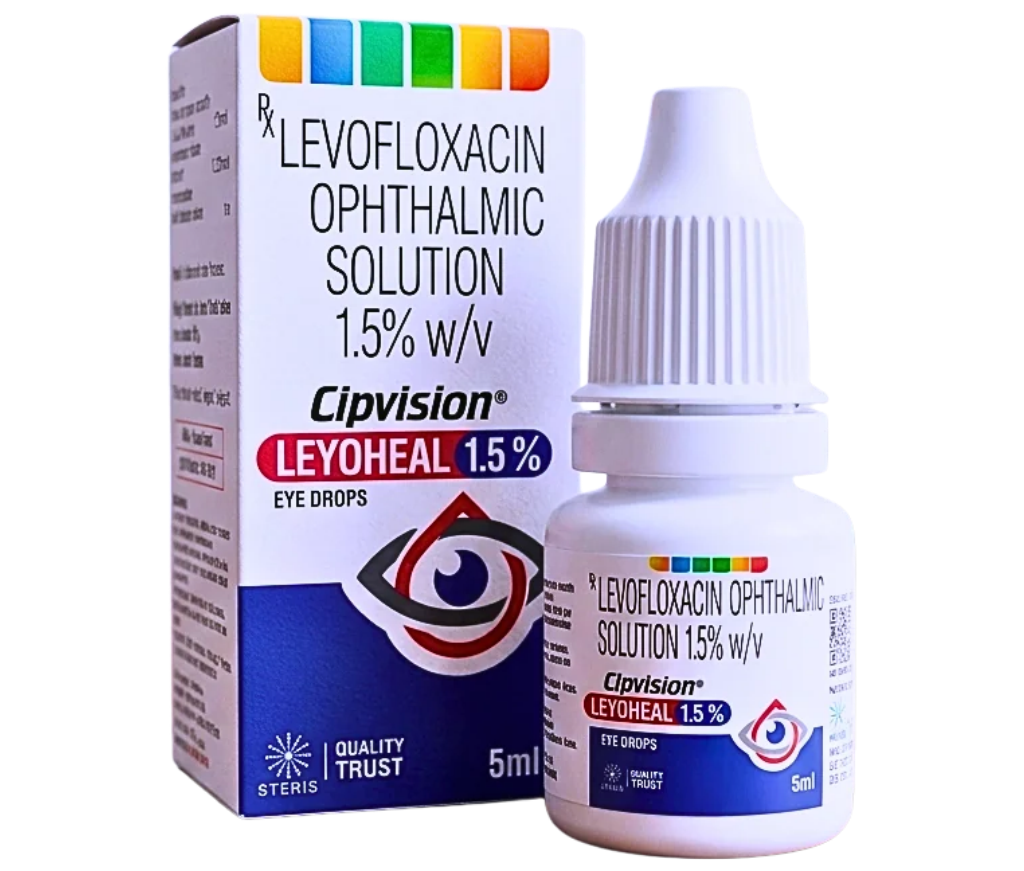
CIPVISION LEYOHEAL 1.5%
 Item requires a valid prescription
Manufactured By Steris Healthcare Pvt Ltd
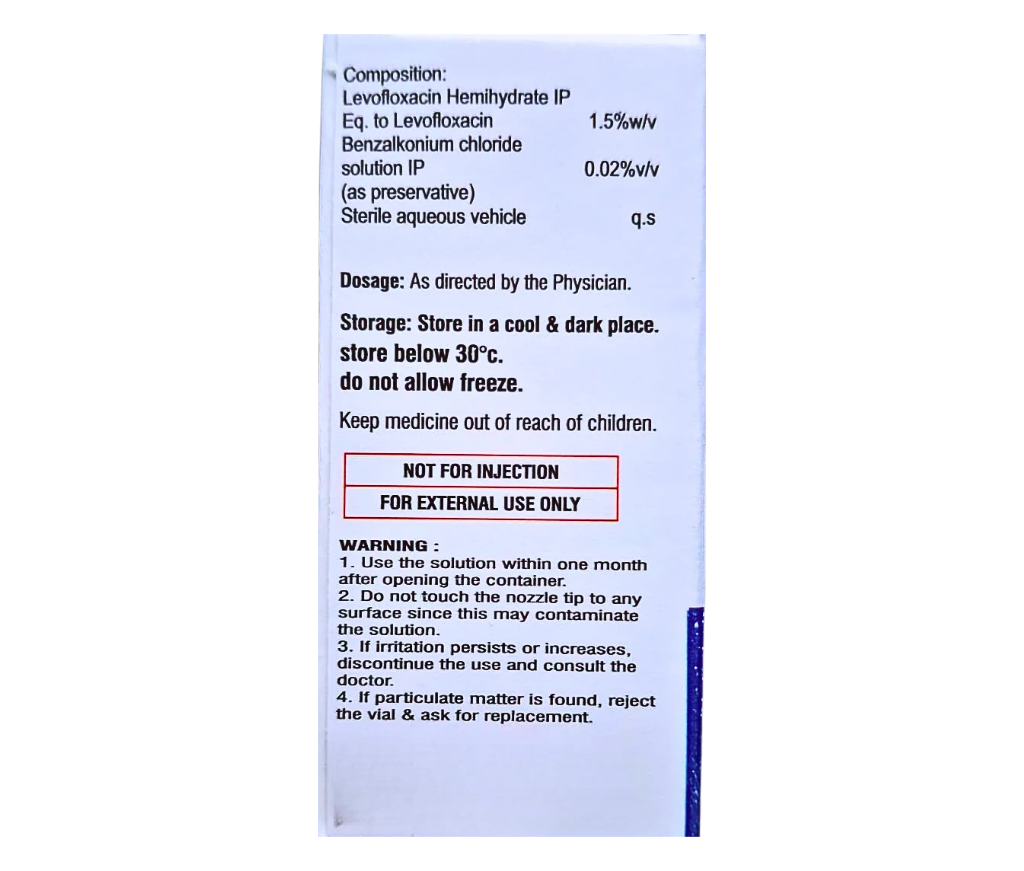
Composition Levofloxacin Ophthalmic Solution 1.5% w/v
Rs 52.50
MRP Rs 75.00
(30% OFF)
Includes all taxes
Package SIZE
( For 5 ml )

100% Authentic
Products

Free
Shipping*

Products
Return Policy
Description:
What Is Levofloxacin Ophthalmic Solution 1.5% w/v?
Levofloxacin Ophthalmic Solution 1.5% w/v is a sterile, preservative-conscious topical antibiotic made for use in the eye. The "1.5% w/v" means 1.5 grams of levofloxacin in every 100 mL of solution, or 15 mg per mL. That is three times the strength of the 0.5% levofloxacin eye drop commonly used for ordinary bacterial conjunctivitis (pink eye).
The higher concentration is deliberate. A corneal ulcer is an infection of the clear front surface of the eye, where antibiotic has to reach high levels in the corneal tissue and tear film to overcome aggressive organisms such as Pseudomonas aeruginosa and Staphylococcus aureus. Published pharmacokinetic data for the reference 1.5% product show high tear concentrations shortly after instillation, which is what makes frequent early dosing effective.
Product Snapshot
| Parameter | Detail |
|---|---|
| Brand | CIPVISION LEYOHEAL 1.5% |
| Active ingredient | Levofloxacin (as levofloxacin hemihydrate) 1.5% w/v |
| Dosage form | Sterile ophthalmic solution (eye drops) |
| Drug class | Fluoroquinolone antibacterial |
| Marketed by | Steris Healthcare Pvt. Ltd. |
| Pack size | [PLACEHOLDER – confirm against carton] |
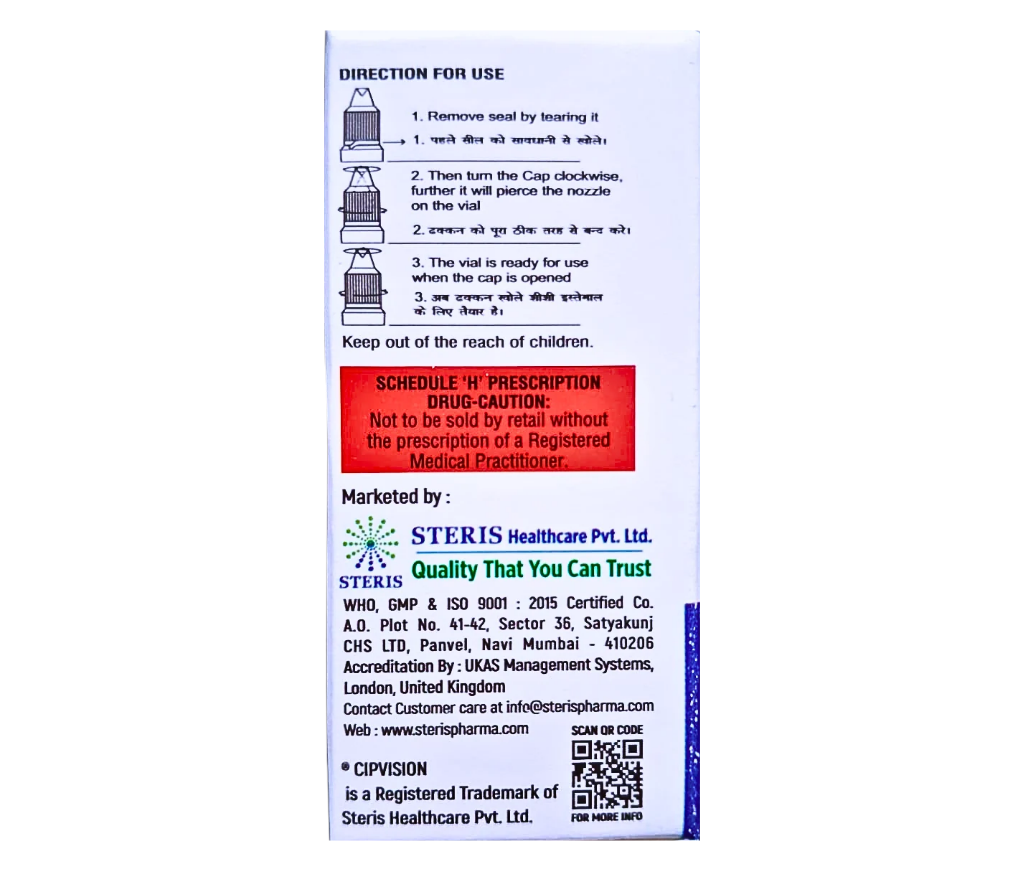
| Prescription status | Schedule H – prescription only |
| Quality standards | WHO-GMP and ISO-certified manufacturer |
What Is Levofloxacin 1.5% Eye Drops Used For?
Levofloxacin 1.5% eye drops are indicated for bacterial corneal ulcers caused by susceptible bacteria. The reference product label lists the following organisms:
| Type | Organisms covered (susceptible strains) |
|---|---|
| Gram-positive | Corynebacterium species, Staphylococcus aureus, Staphylococcus epidermidis, Streptococcus pneumoniae, viridans group streptococci |
| Gram-negative | Pseudomonas aeruginosa, Serratia marcescens |
Doctors may also choose this strength for other serious bacterial eye infections of the cornea (bacterial keratitis), including infections after eye injury or surgery, when they judge the stronger drop to be appropriate. Those decisions are clinical and should never be self-directed.
Signs that may point to a corneal ulcer (see a doctor urgently):
- Moderate to severe eye pain or a feeling that something is stuck in the eye
- Marked redness and watering
- Pus-like or sticky discharge
- A white or grey spot on the cornea
- Light sensitivity and blurred or reduced vision
How Does CIPVISION LEYOHEAL 1.5% Work?
Levofloxacin is a fluoroquinolone. It is bactericidal, meaning it kills bacteria rather than just slowing them. It does this by inhibiting:
- DNA gyrase – needed to coil and uncoil bacterial DNA during copying
- Topoisomerase IV – needed to separate newly copied bacterial DNA
With both enzymes blocked, the bacteria cannot reproduce or repair themselves and die. Because the drug acts on two targets, resistance is less likely to emerge quickly than with a single-target antibiotic, although resistance can still develop with misuse or prolonged exposure.
Key Benefits of Levofloxacin Ophthalmic Solution 1.5% w/v
- High-strength, targeted therapy: 15 mg/mL delivers high drug levels in tears and corneal tissue where the infection sits.
- Broad-spectrum coverage: active against many common Gram-positive and Gram-negative eye pathogens, including Pseudomonas aeruginosa.
- Dual-enzyme mechanism: acts on DNA gyrase and topoisomerase IV.
- Clinically compared with a standard treatment: in two randomised, double-masked trials of 280 culture-positive patients with the reference 1.5% product, the mean clinical cure rate was about 80%, comparable to about 84% with ofloxacin 0.3%.
- Low systemic exposure: when used in the eye, blood levels of levofloxacin are very low compared with oral dosing.
- Generally well tolerated: side effects are mostly mild to moderate, temporary and confined to the eye.
- Simple, preservative-aware formulation: [PLACEHOLDER – confirm excipients and preservative status from the Steris approved composition before publishing].
- Quality-assured manufacturing: produced by a WHO-GMP and ISO-certified manufacturer.
Dosage and How to Use CIPVISION LEYOHEAL 1.5%
| Treatment phase | Usual schedule |
|---|---|
| Days 1–3 | 1–2 drops in the affected eye(s) every 30 minutes to 2 hours while awake, and about 4 and 6 hours after going to bed |
| Day 4 until end of treatment | 1–2 drops in the affected eye(s) every 1–4 hours while awake |
How to instill the drops
- Wash your hands thoroughly.
- Tilt your head back and gently pull down the lower eyelid to form a pocket.
- Hold the bottle upside down close to the eye without letting the tip touch the eye, eyelid, fingers or any surface.
- Squeeze one to two drops into the pocket, then close the eye gently for one to two minutes.
- Press lightly on the inner corner of the eye to reduce drainage into the nose.
- Recap the bottle immediately and wash your hands again.
- If you use another eye medicine, wait at least 5–15 minutes between products, or as your doctor advises.
Side Effects of Levofloxacin Eye Drops
Common side effects
- Headache (about 8–10% in the reference label)
- Temporary change or unpleasant taste after instillation (about 8–10%)
- Decreased or blurred vision for a short time after use (about 1–2%)
- Eye irritation, stinging, burning or discomfort at the time of instillation
- Eye pain, ocular discomfort or mild infection signs
- Nausea, diarrhoea, indigestion, fever or sore throat (less common, about 1–2%)
Less common reactions (under 1%)
- Swelling or redness of the eyelid
- Chemosis (swollen conjunctiva), corneal erosion, floaters, double vision, increased eye redness (hyperaemia)
Serious side effects – stop and get medical help immediately if you notice
- Rash, itching, hives or swelling of the face, lips, tongue or throat
- Difficulty breathing or a feeling of faintness
- Severe or worsening eye pain, swelling or redness after starting the drops
Precautions and Warnings
- Allergy: Do not use if you are allergic to levofloxacin, any other quinolone antibiotic, or any ingredient in the product.
- Contact lenses: Do not wear contact lenses if you have signs or symptoms of a corneal ulcer.
- Contamination: Never touch the dropper tip. Do not share the bottle.
- Not for injection: Do not inject near the eye or into the eye.
- Pregnancy and breastfeeding: The reference label lists Pregnancy Category C. Use only if the benefit outweighs the risk, as decided by your doctor.
- Children: The reference 1.5% product has been used for corneal ulcers in children aged 6 years and above under medical direction. Use in younger children only as prescribed.
- Elderly: No overall differences in safety or effectiveness have been reported.
- Other medicines: Tell your doctor about all medicines you use. Systemic levofloxacin interacts with certain heart-rhythm drugs, diabetes medicines and others, and although eye-drop exposure is low, your doctor should know.
- Driving: If your vision is blurred after instillation, avoid driving until it clears.
CIPVISION LEYOHEAL 1.5% vs Other Levofloxacin 1.5% Eye Drops
| Feature | CIPVISION LEYOHEAL 1.5% | Oftaquix 1.5% (Santen India) | IQUIX 1.5% (reference product) |
|---|---|---|---|
| Active ingredient | Levofloxacin 1.5% w/v | Levofloxacin 15 mg/mL | Levofloxacin 1.5% |
| Class | Fluoroquinolone | Fluoroquinolone | Fluoroquinolone |
| Prescription | Schedule H | Prescription drug | Prescription drug |
| Marketed by | Steris Healthcare Pvt. Ltd. | Santen India Pvt. Ltd. | Reference brand (US) |
| Pack | [PLACEHOLDER] | 5 mL | 5 mL |
What to Know Before You Buy
- A prescription is required. Keep it with you and ask the pharmacist to dispense exactly what was prescribed.
- Check the strength. Make sure the carton reads 1.5% w/v, not 0.5%.
- Inspect the pack. Look for an intact seal, batch number, manufacturing and expiry dates, and the Steris Healthcare Pvt. Ltd. details.
- Buy from licensed sources only. Counterfeit or unsealed eye drops can cause serious infection.
- Do not self-extend the course. Finish the schedule your doctor set and return for review.
- Price and availability. Prices vary by pack and seller. Use Check Price to see current availability for CIPVISION LEYOHEAL 1.5%.
When to See Your Doctor Again
Contact your eye specialist promptly if:
- Pain, redness or discharge is not improving within 48–72 hours of starting treatment (or sooner if getting worse)
- Vision drops or a white spot on the cornea grows
- You develop a rash, swelling or breathing difficulty
- Symptoms return after the course ends
Conclusion
Levofloxacin Ophthalmic Solution 1.5% w/v, available as CIPVISION LEYOHEAL 1.5% from Steris Healthcare Pvt. Ltd., is a high-concentration fluoroquinolone eye drop prescribed for bacterial corneal ulcers. Its dual-enzyme action, broad coverage and low systemic exposure make it a trusted option when the cornea is at risk, and it is generally well tolerated, with headache and a temporary taste change the most common effects.
Because a corneal ulcer can damage sight quickly, treatment should always be started and supervised by an eye doctor. Use the drops exactly as prescribed, keep the dropper tip clean, avoid contact lenses, and report any allergic signs or worsening symptoms at once.
Frequently Asked Questions
1. What is levofloxacin 1.5% eye drops used for?
Levofloxacin 1.5% eye drops are used to treat bacterial corneal ulcers (bacterial keratitis) caused by susceptible bacteria, including Staphylococcus aureus, Streptococcus pneumoniae and Pseudomonas aeruginosa. The higher 1.5% strength is chosen for this serious infection of the clear front of the eye, and it should be used only on a doctor's prescription.
2. What is levofloxacin ophthalmic solution used for?
Levofloxacin ophthalmic solution is a fluoroquinolone antibiotic used for bacterial eye infections. The 0.5% strength is used for bacterial conjunctivitis (pink eye), while the 1.5% strength, such as CIPVISION LEYOHEAL 1.5%, is used for bacterial corneal ulcers.
3. What is levofloxacin eye drops used for?
They are used to kill bacteria that cause eye infections. Depending on the strength, they treat bacterial conjunctivitis (0.5%) or corneal ulcers (1.5%). They do not work against viral infections such as viral pink eye, or against allergies.
4. How many times a day can I safely use levofloxacin eye drops?
It depends on the strength and the stage of treatment. For the 1.5% solution, the reference schedule is 1–2 drops every 30 minutes to 2 hours while awake on Days 1–3 (plus doses about 4 and 6 hours after bedtime), then every 1–4 hours while awake from Day 4. Because this is frequent, use exactly the schedule your eye doctor gives you and never increase it yourself.
5. How many days can you use antibiotic eye drops?
Most antibiotic eye drops are used for about 5–7 days for simple infections, but a corneal ulcer can need a longer, carefully monitored course. Your doctor sets the duration. Using antibiotic drops longer than advised can encourage resistant bacteria and fungal overgrowth, and stopping too early can let the infection return.
6. What are the bad side effects of levofloxacin?
For levofloxacin eye drops, the most frequent effects are headache, taste change, short-lived blurred vision and eye irritation. The serious ones are allergic reactions: rash, hives, swelling of the face or throat, and breathing difficulty, which need emergency care. Oral or injectable levofloxacin carries additional warnings (for example tendon problems and nerve effects), but these are not expected to the same degree with eye drops because very little drug reaches the bloodstream.
7. How quickly will levofloxacin work?
Many people notice less pain, redness and discharge within 24–72 hours, but a corneal ulcer takes longer to heal fully. If symptoms are not improving within 48–72 hours or are getting worse, contact your eye doctor right away.
8. Is levofloxacin high risk?
Levofloxacin tablets and injections are higher-risk because of boxed warnings on tendon rupture, nerve damage, and effects on the central nervous system and muscles. Levofloxacin eye drops carry a much lower systemic risk, but they are still prescription-only and can cause allergic reactions, so use them only under medical supervision.
9. Is CIPVISION LEYOHEAL 1.5% a prescription medicine?
Yes. It is a Schedule H drug and should be used only when prescribed by a registered doctor, preferably an ophthalmologist. Prescription only – consult your doctor.
10. Can I wear contact lenses while using levofloxacin 1.5% eye drops?
No. Avoid contact lenses if you have signs or symptoms of a corneal ulcer, and ask your doctor when it is safe to restart them after recovery. Replace lenses and cases that were in use during the infection as advised.
11. Can children use levofloxacin 1.5% eye drops?
The reference 1.5% product has been used for corneal ulcers in children aged 6 years and older. For any child, use only when prescribed and supervised by a doctor.
12. Is levofloxacin 1.5% eye drop safe in pregnancy or breastfeeding?
The reference label lists it as Pregnancy Category C, meaning it should be used only if the benefit justifies the potential risk. Tell your doctor if you are pregnant, planning pregnancy or breastfeeding before using it.
13. How do I put in levofloxacin eye drops correctly?
Wash your hands, tilt your head back, pull the lower lid down, and drop in the prescribed number of drops without touching the dropper tip to anything. Close your eye gently for a minute or two, then recap the bottle and wash your hands again.
14. Can I use levofloxacin eye drops with other eye drops?
Yes, if your doctor advises it. Wait at least 5–15 minutes between different eye medicines so the first drop is not washed out, and use eye ointments last.
15. What should I do if I miss a dose?
Use it as soon as you remember. If it is nearly time for the next dose, skip the missed one and continue your schedule. Do not use extra drops to catch up.
16. What is the difference between levofloxacin 0.5% and 1.5% eye drops?
Both contain the same antibiotic, but 1.5% is three times stronger. The 0.5% strength is used for bacterial conjunctivitis, while the 1.5% strength is used for bacterial corneal ulcers, which need higher drug levels in the cornea.
17. Can levofloxacin eye drops be used for pink eye?
Levofloxacin 0.5% is the strength usually used for bacterial pink eye. The 1.5% strength is intended for corneal ulcers, so do not use CIPVISION LEYOHEAL 1.5% for pink eye unless your doctor specifically prescribes it. Viral and allergic pink eye do not respond to antibiotics.
18. Where can I check the price of CIPVISION LEYOHEAL 1.5%?
Use Check Price on the Steris Healthcare product page at sterisonline.com for current pricing and availability, or contact Steris Healthcare using the details below. A valid prescription is required.

