


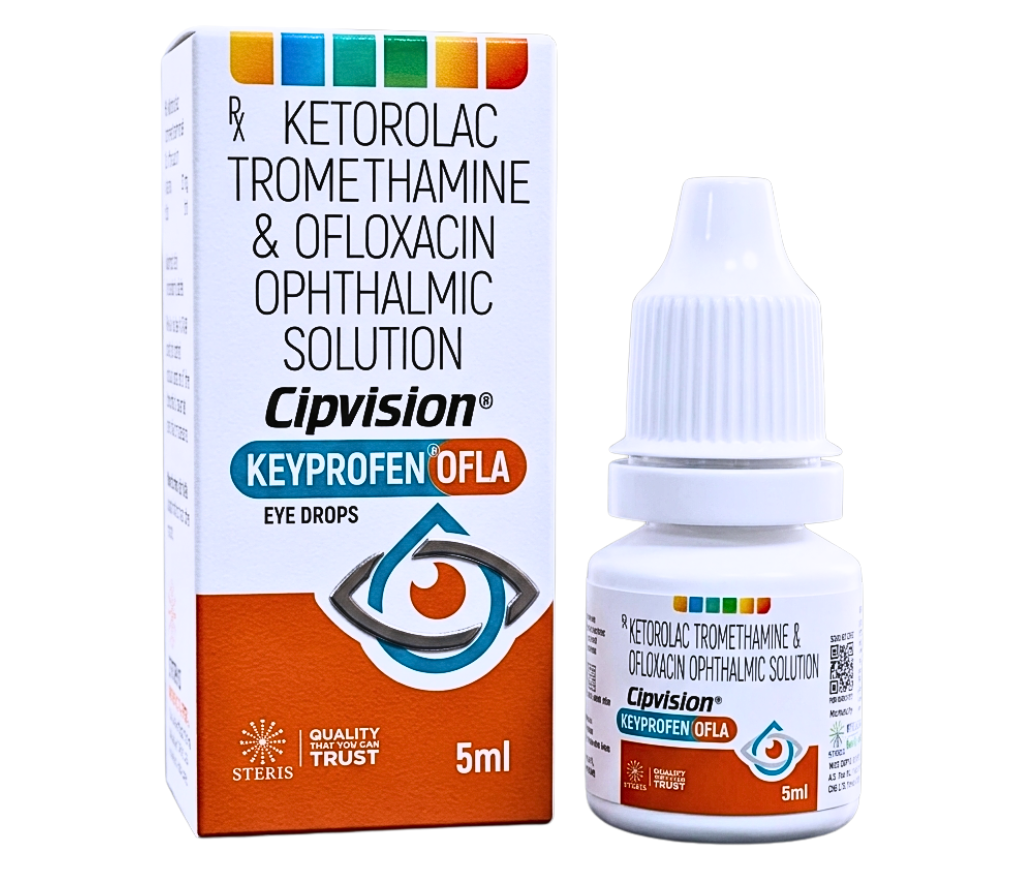
CIPVISION KEYPROFEN OFLA
 Item requires a valid prescription
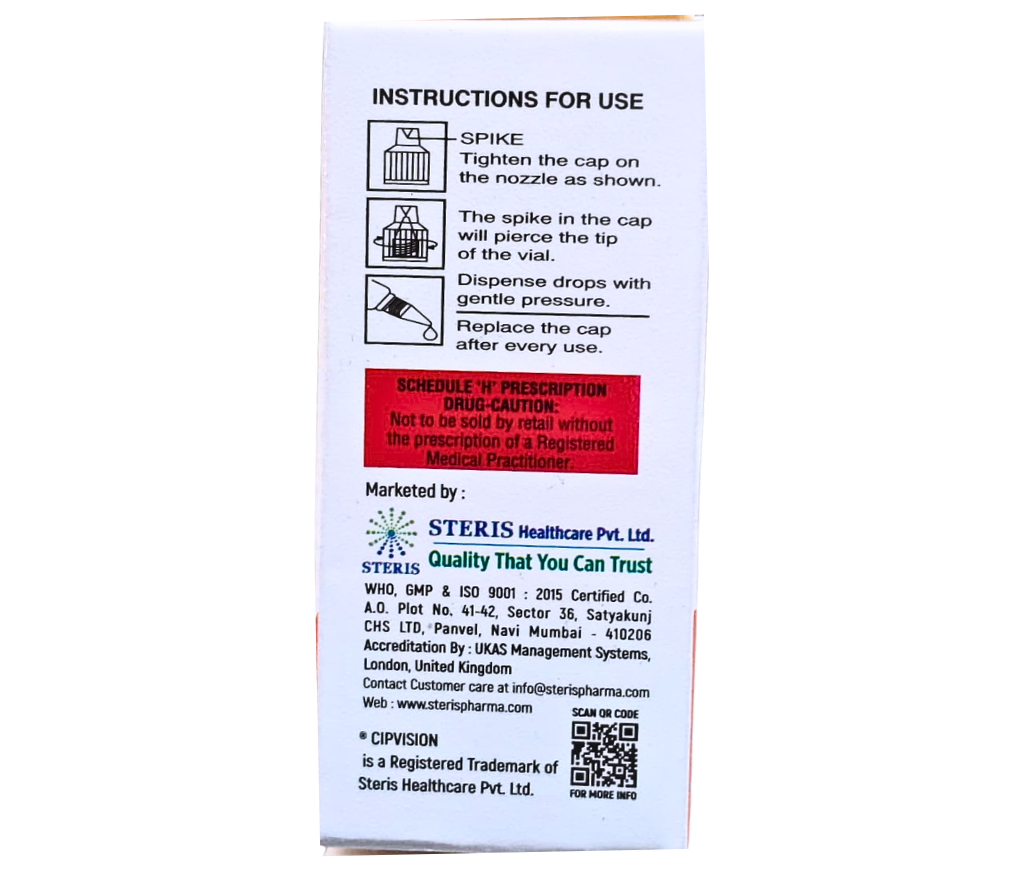
Manufactured By Steris Healthcare Pvt Ltd
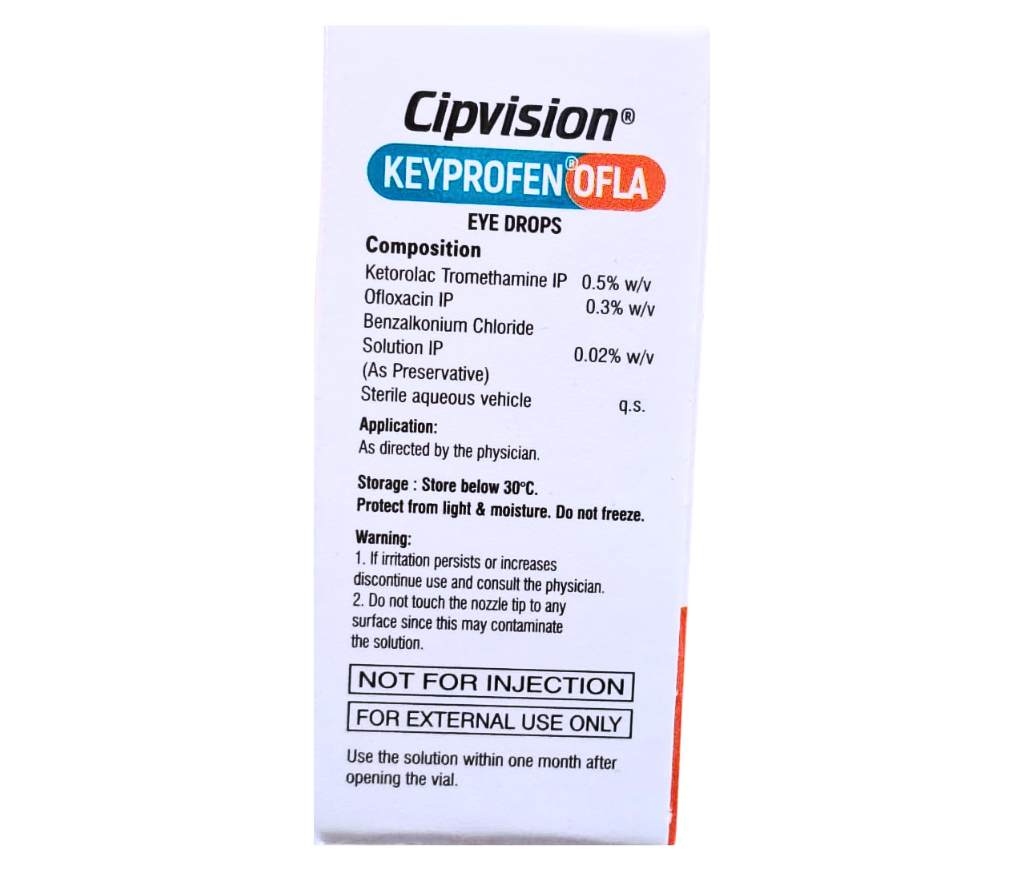
Composition Ketorolac Tromethamine & Ofloxacin Ophthalmic Solution
Rs 63.00
MRP Rs 90.00
(30% OFF)
Includes all taxes
Package SIZE
( For 5 ml )

100% Authentic
Products

Free
Shipping*

Products
Return Policy
Description:
Ketorolac Tromethamine & Ofloxacin Ophthalmic Solution is a combination eye-drop formulation that brings together two different types of medicines: ketorolac tromethamine, a non-steroidal anti-inflammatory drug (NSAID), and ofloxacin, a fluoroquinolone antibiotic. The combination is designed to address eye inflammation or pain together with susceptible bacterial infection when a doctor considers both treatments appropriate.
Indian ophthalmic manufacturers currently list ketorolac tromethamine with ofloxacin in formulations such as ketorolac tromethamine 0.5% + ofloxacin 0.3%, although the exact strength can vary by manufacturer and product. One current Indian manufacturer listing, for example, identifies a combination containing 0.5% ketorolac tromethamine and 0.3% ofloxacin.
Because this is an antibiotic-containing ophthalmic medicine, it should be used according to the diagnosis and prescription of an ophthalmologist rather than simply for ordinary eye redness or irritation.
What Is Ketorolac Tromethamine & Ofloxacin Ophthalmic Solution?
Ketorolac, tromethamine & ofloxacin ophthalmic solution combines:
- Ketorolac tromethamine: an ophthalmic NSAID that helps reduce inflammation and pain.
- Ofloxacin: a fluoroquinolone antibiotic used against susceptible bacteria causing certain eye infections.
The two ingredients work differently. Ketorolac addresses the inflammatory component, while ofloxacin targets susceptible bacterial organisms.
This makes the combination potentially useful when a clinician determines that both bacterial infection and inflammation are present or clinically relevant.
Importantly, antibiotics do not treat viral or fungal eye infections. Using an antibiotic eye drop when it is not medically indicated can also contribute to inappropriate antibiotic exposure and resistance.
Ketorolac Tromethamine & Ofloxacin Ophthalmic Solution Uses
The exact indication depends on the formulation, diagnosis, and ophthalmologist's assessment. Commonly marketed uses include conditions involving bacterial eye infection accompanied by inflammation, as well as selected postoperative ophthalmic situations.
1. Bacterial eye infections with inflammation
Ofloxacin is an antibacterial medicine used against susceptible organisms responsible for certain bacterial eye infections. Official ofloxacin ophthalmic labeling includes bacterial conjunctivitis among its indications.
When inflammation or discomfort is also clinically significant, ketorolac may provide an anti-inflammatory component.
2. Bacterial conjunctivitis
Bacterial conjunctivitis can cause symptoms such as redness, discharge, irritation, and discomfort. If a clinician determines that the infection is bacterial, an ophthalmic antibiotic such as ofloxacin may be prescribed.
The addition of ketorolac is intended to address inflammation and pain rather than to replace the antibacterial action of ofloxacin.
3. Postoperative ophthalmic care
Ketorolac ophthalmic preparations are used in certain eye-care settings to control inflammation and discomfort following ophthalmic procedures. Whether a particular ketorolac-ofloxacin combination is appropriate after surgery depends on the procedure and the surgeon's treatment protocol.
Do not self-start this combination after eye surgery. Postoperative eye treatment needs to be selected by the treating ophthalmologist.
Key Benefits of Ketorolac Tromethamine & Ofloxacin Ophthalmic Solution
The main potential benefit of this combination is its dual therapeutic approach.
Dual-action formulation
The product combines an antibiotic with an NSAID. Ofloxacin works against susceptible bacteria, while ketorolac helps manage inflammation and pain.
Helps manage bacterial infection
Ofloxacin is a fluoroquinolone antibiotic with activity against susceptible bacterial organisms. Its ophthalmic labeling includes treatment of bacterial conjunctivitis and bacterial corneal ulcer in specified circumstances.
Helps reduce inflammatory symptoms
Ketorolac can reduce inflammatory responses and associated ocular discomfort. This may be useful when inflammation accompanies the condition being treated.
Convenient combination therapy
Where both components are clinically indicated, a combination formulation can simplify treatment compared with using separate bottles. However, convenience should not be the reason to use a combination product when only one component is medically necessary.
May support postoperative comfort
In appropriate ophthalmic postoperative protocols, ketorolac can help manage inflammation and discomfort. The precise postoperative regimen should always be determined by the surgeon.
How Do Ketorolac, Tromethamine & Ofloxacin Work?
The two ingredients have different mechanisms.
Ketorolac tromethamine inhibits cyclooxygenase-related prostaglandin production. Prostaglandins contribute to inflammatory processes, so reducing their production can help decrease ocular inflammation and pain.
Ofloxacin is a fluoroquinolone antibiotic. It interferes with bacterial enzymes required for bacterial DNA replication, helping inhibit susceptible bacteria.
Therefore, the combination is not simply a stronger antibiotic. Instead, it combines antibacterial activity and anti-inflammatory activity in one ophthalmic formulation.
How to Use Ketorolac Tromethamine & Ofloxacin Eye Drops
Use the medicine exactly according to the ophthalmologist's prescription and the instructions on the specific product label.
General eye-drop administration principles include:
- Wash your hands before applying the drops.
- Shake the bottle if the product label specifically instructs you to do so.
- Tilt your head back and gently pull down the lower eyelid.
- Instill the prescribed number of drops without touching the dropper tip to the eye or surrounding skin.
- Close the eye gently after administration.
- Avoid rubbing the eye.
- Replace the cap immediately after use.
- If you are using more than one ophthalmic medicine, follow your doctor's instructions about spacing the drops.
Do not increase the frequency or duration because symptoms appear to be improving slowly.
The dosing schedule for ofloxacin alone varies according to the condition; official labeling, for example, provides different regimens for bacterial conjunctivitis and corneal ulcer. This demonstrates why the dosage of a combination product should not be copied from another ofloxacin product.
Ketorolac Tromethamine & Ofloxacin Ophthalmic Solution Side Effects
Like other medicines, this combination may cause adverse effects.
Possible ocular side effects can include:
- Temporary burning or stinging
- Eye irritation
- Redness
- Watery eyes
- Itching or discomfort
- Temporary blurred vision
- Foreign-body sensation
A current Indian product listing reports mild burning or stinging, temporary blurred vision, irritation, redness, watery eyes, and itching as possible effects. Tradeindia
Because ketorolac is an ophthalmic NSAID, prolonged or inappropriate use can be associated with important corneal complications in susceptible patients. Ophthalmic NSAIDs also warrant caution in patients with certain corneal conditions or who have undergone complicated eye surgery.
Ofloxacin ophthalmic products can also cause local irritation or hypersensitivity reactions.
When should you contact an eye doctor urgently?
Seek prompt medical attention if you develop:
- Severe or increasing eye pain
- Significant vision changes
- Severe swelling
- A serious allergic reaction
- Marked or persistent redness
- Increasing corneal or eye discomfort
- Symptoms that worsen rather than improve
Do not assume that severe pain or worsening vision is simply a normal side effect of an eye drop.
Who Should Use This Eye Drop With Caution?
Tell your ophthalmologist if you have:
- A history of allergy to ketorolac, aspirin, NSAIDs, or ofloxacin
- Previous corneal problems
- A history of complicated eye surgery
- Severe dry eye or other significant ocular surface disease
- Current use of multiple ophthalmic medicines
- Contact-lens use
- Pregnancy or breastfeeding concerns
The doctor can determine whether the combination is suitable for your particular condition.
Contact Lenses and Eye-Drop Hygiene
Contact lenses may need to be removed before applying ophthalmic medicines, particularly when the formulation contains preservatives. Follow the specific product label and your ophthalmologist's instructions.
Never allow the bottle tip to touch your eye, eyelashes, fingers, or another surface. Contaminating an ophthalmic bottle can introduce microorganisms into the product.
Do not share eye drops with another person.
Ketorolac Tromethamine & Ofloxacin Ophthalmic Solution Price in India
The price of Ketorolac Tromethamine & Ofloxacin Ophthalmic Solution varies according to the manufacturer, strength, brand, bottle size, supplier, taxes, and order quantity.
For transactional buyers, a current Indian supplier listing for a 5 mL bottle shows a listed price of ₹90 per unit before 5% GST, or ₹94.50 including the stated GST, although that listing has a minimum order quantity and therefore should not be interpreted as a standard retail pharmacy price. Tradeindia
Another current supplier listing shows ₹90 per unit for a 5 mL bottle. S. Steris Pharma
Prices can change, so buyers should verify the latest quotation before placing an order.
What should buyers check before purchasing?
For commercial or pharmacy procurement, compare:
- Active ingredients
- Exact concentration of ketorolac
- Exact concentration of ofloxacin
- Bottle volume
- Manufacturer
- Batch number
- Manufacturing and expiry dates
- Storage conditions
- Minimum order quantity
- Prescription/regulatory requirements
- GST and delivery charges
- Whether the product is intended for human ophthalmic use
Do not compare products by brand name alone. Two eye drops can have similar names but different active ingredients or concentrations.
Storage of Ketorolac Tromethamine & Ofloxacin Eye Drops
Follow the storage conditions printed on the individual product label. One current Indian supplier listing specifies storage below 25°C in a cool, dry location. Tradeindia
Keep the bottle tightly closed and away from excessive heat and direct sunlight unless the manufacturer's label states otherwise.
Do not use an expired ophthalmic product.
Are Ketorolac, Tromethamine & Ofloxacin the Same as Ofloxacin Alone?
No.
Ofloxacin ophthalmic solution contains the antibiotic component only, whereas Ketorolac Tromethamine & Ofloxacin Ophthalmic Solution contains both an antibiotic and an anti-inflammatory medicine.
Likewise, a ketorolac-only ophthalmic solution contains the NSAID without ofloxacin. Indian manufacturers list ketorolac ophthalmic solutions separately from ketorolac-plus-ofloxacin combinations.
Therefore, patients should not substitute one formulation for another without medical advice.
Buyer-Intent Guide: Which Product Should You Choose?
If you are searching for Ketorolac, Tromethamine & Ofloxacin Ophthalmic Solution for purchase, the correct product should be the one that matches the ophthalmologist's prescription.
If your prescription says ketorolac + ofloxacin, verify both active ingredients and their strengths.
If your prescription says ofloxacin only,: do not automatically select a combination product simply because it contains an additional anti-inflammatory ingredient.
If your doctor prescribed ketorolac only, a combination with an antibiotic may not be an appropriate substitute.
For businesses, distributors, and institutional buyers, verify the manufacturer's product documentation, regulatory requirements, batch details, and current quotation before purchasing.
Conclusion
Ketorolac Tromethamine & Ofloxacin Ophthalmic Solution is a combination eye drop containing an ophthalmic NSAID and an antibiotic. Its purpose is to provide anti-inflammatory and antibacterial treatment when both components are clinically appropriate. Ofloxacin is used against susceptible bacterial eye infections, while ketorolac helps manage ocular inflammation and associated pain.
The major advantages are the dual-action formulation, antibacterial activity, and anti-inflammatory effect, but the medicine is not appropriate for every red or irritated eye. Viral and fungal infections require different treatment, and unnecessary antibiotic use should be avoided.
For buyers, always verify the strength, composition, 5 mL or other pack size, manufacturer, expiry date, storage conditions, and current price before purchasing. Current Indian supplier listings demonstrate that pricing and minimum order requirements can differ substantially between suppliers.
Most importantly, use this ophthalmic combination only according to the advice of a qualified eye-care professional. Severe pain, worsening vision, significant swelling, or other serious symptoms require prompt medical assessment.
Frequently Asked Questions
1. What is Ketorolac Tromethamine & Ofloxacin Ophthalmic Solution used for?
It is a combination eye drop containing ketorolac, an NSAID, and ofloxacin, an antibiotic. It may be prescribed when an eye condition involves bacterial infection together with inflammation or when both antibacterial and anti-inflammatory treatment is clinically appropriate.
2. What are the benefits of Ketorolac, Tromethamine & Ofloxacin eye drops?
The primary benefit is combining two therapeutic actions in one formulation: ofloxacin targets susceptible bacteria, while ketorolac helps reduce inflammation and pain. This combination can be convenient when both medicines are required.
3. What are the side effects of Ketorolac, Tromethamine & Ofloxacin Ophthalmic Solution?
Possible side effects include temporary burning or stinging, eye irritation, redness, watery eyes, itching, discomfort, and temporary blurred vision. Serious or persistent symptoms should be evaluated by an eye-care professional.
4. Can Ketorolac, Tromethamine & Ofloxacin eye drops treat eye redness?
Not necessarily. Eye redness can have many causes, including allergies, viral infections, dry eye, trauma, and bacterial infections. This combination should not be used simply as a general-purpose treatment for redness unless an ophthalmologist determines that its ingredients are appropriate.
5. Is Ketorolac, Tromethamine & Ofloxacin an antibiotic eye drop?
Yes, it contains ofloxacin, which is an antibiotic. However, it also contains ketorolac, an NSAID. Therefore, it is a combination antibacterial and anti-inflammatory ophthalmic formulation.
6. Can I use ketorolac, tromethamine & ofloxacin after eye surgery?
It may be used in selected postoperative treatment plans, but only when prescribed by the operating ophthalmologist. Postoperative eye treatment varies according to the procedure, patient's condition, and risk factors.
7. How often should I use Ketorolac, Tromethamine & Ofloxacin eye drops?
The correct frequency depends on the specific product, strength, diagnosis, and treatment plan. Do not copy the dosing schedule of ofloxacin-only eye drops or another brand. Follow your prescription and product label.
8. What is the price of Ketorolac Tromethamine & Ofloxacin Ophthalmic Solution in India?
There is no single nationwide price. Current supplier listings show examples around ₹90 per 5 mL unit before applicable GST, with one listing showing ₹94.50 including 5% GST. Actual retail, wholesale, and institutional prices can differ.
9. Can I buy Ketorolac, Tromethamine & Ofloxacin eye drops without a prescription?
Whether a particular product can be supplied without a prescription depends on the applicable Indian regulatory and pharmacy requirements. Because this medicine contains an antibiotic and is intended for specific ophthalmic conditions, it should be purchased and used under appropriate medical guidance.
10. Is Ketorolac, Tromethamine & Ofloxacin better than Ofloxacin alone?
Neither is universally “better.” Ofloxacin alone may be appropriate when antibacterial treatment is required without an NSAID. A ketorolac-plus-ofloxacin combination may be selected when the ophthalmologist believes both antibacterial and anti-inflammatory treatments are appropriate.