


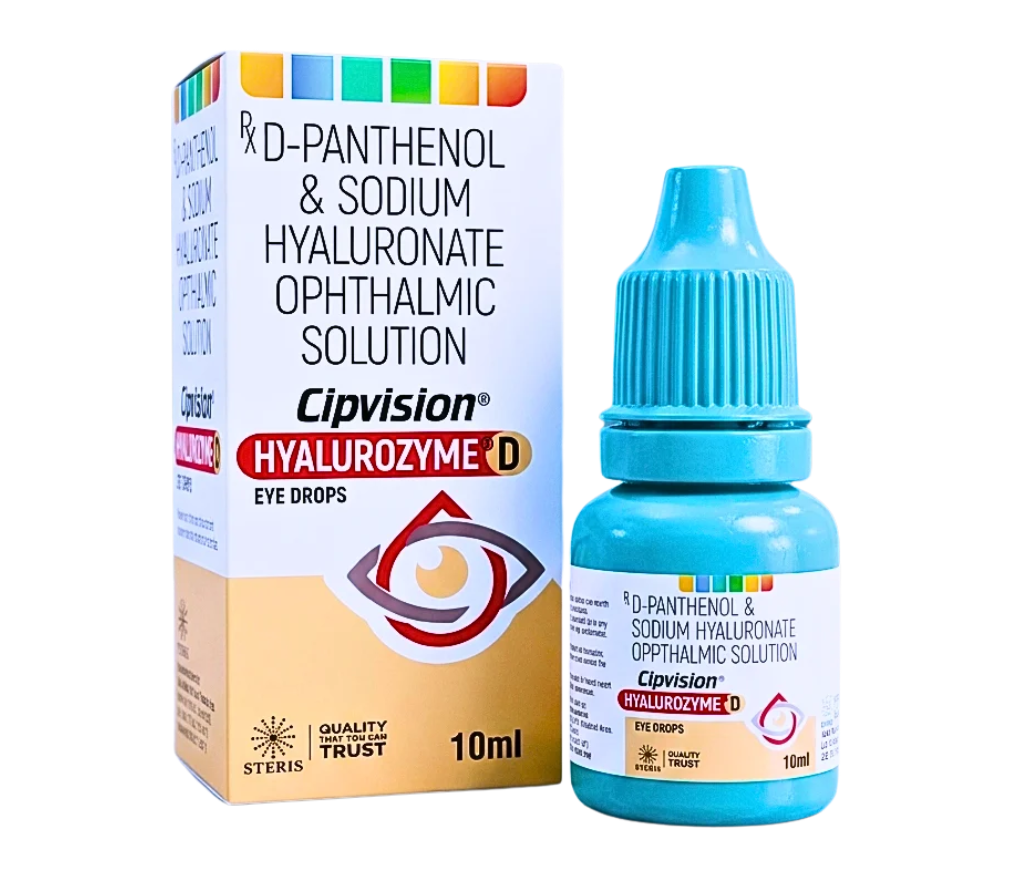

Cipvision Hyalvrozymed
 Item requires a valid prescription
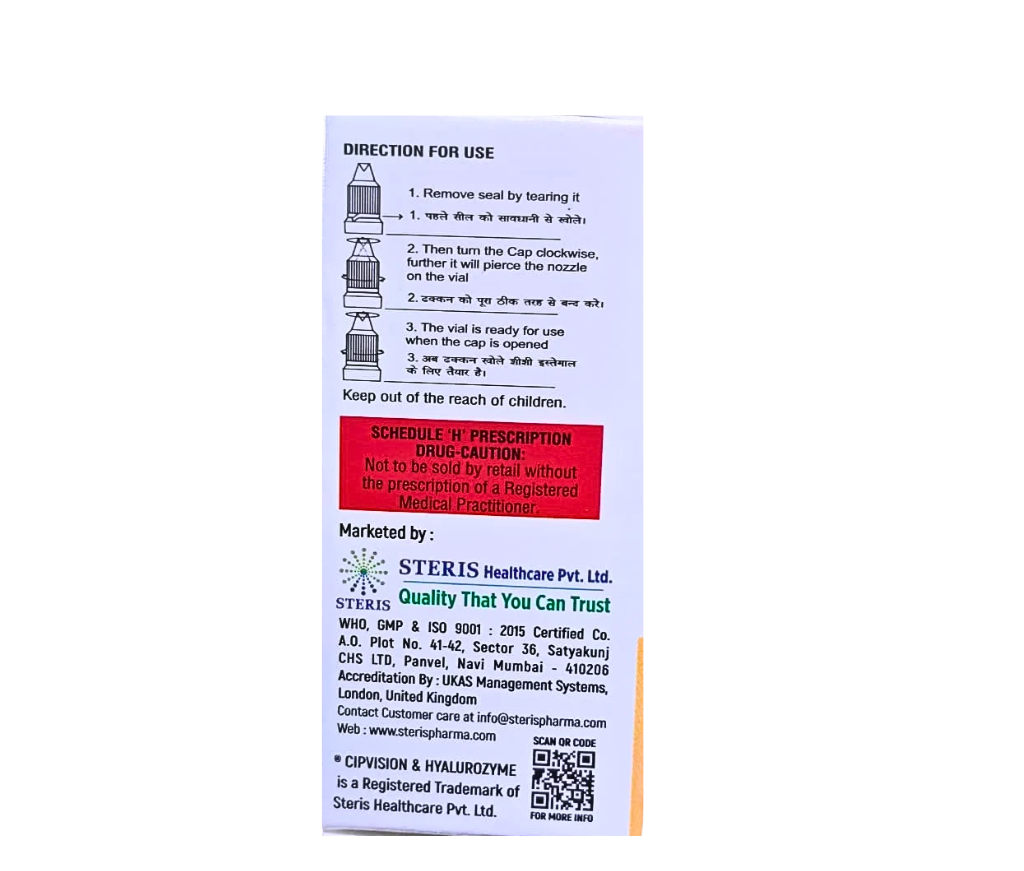
Manufactured By Steris Healthcare Pvt Ltd
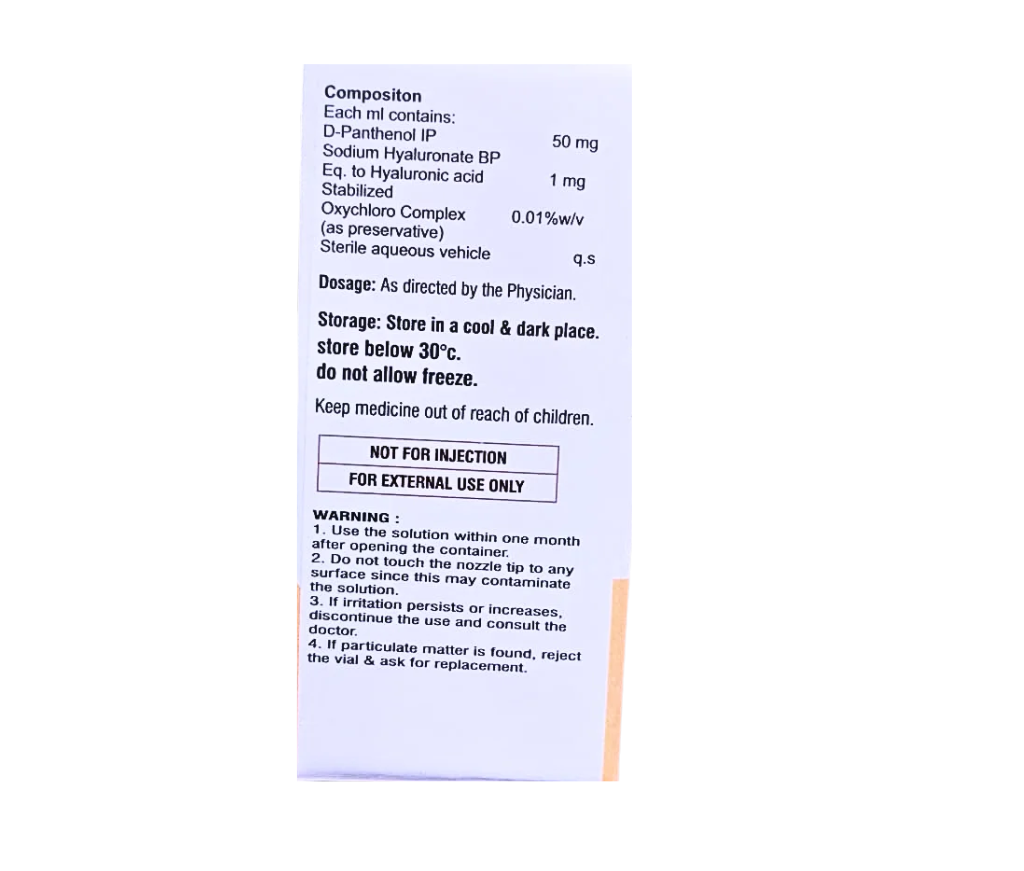
Composition D-panthenol & sodium hyaluronate ophtalmic solution
Rs 269.50
MRP Rs 385.00
(30% OFF)
Includes all taxes
Package SIZE
( For 10 ml )

100% Authentic
Products

Free
Shipping*

Products
Return Policy
Description:
D-Panthenol & Sodium Hyaluronate ophthalmic solution is a lubricating and soothing eye drop used to relieve dryness, burning, grittiness and irritation caused by dry eye, screen use, air conditioning, dust, wind or contact lens wear. Sodium hyaluronate holds moisture on the eye surface and keeps the tear film stable. D-Panthenol (dexpanthenol, a provitamin B5) supports the healing and comfort of the surface tissue. It is generally a gentle, short-term to regular-use eye drop. Check your pack to see whether it is sold over the counter or on prescription in your market, and see a doctor if symptoms are severe or persistent.
What Is D-Panthenol & Sodium Hyaluronate Ophthalmic Solution?
This is a sterile lubricant eye drop (artificial tear) that combines two ingredients with complementary roles:
- Sodium hyaluronate is the sodium salt of hyaluronic acid, a natural moisture-binding molecule found in the eye. It lubricates, hydrates and extends how long the drop stays on the eye.
- D-Panthenol (dexpanthenol) is the alcohol form of pantothenic acid (vitamin B5). In the body it converts to pantothenic acid, which plays a role in tissue repair and maintaining a healthy surface.
Dry and irritated eyes are among the most common reasons people look for eye drops. The combination aims to give both instant comfort (lubrication) and surface support (soothing and healing support).
| Detail | Information |
|---|---|
| Product name | D-Panthenol & Sodium Hyaluronate Ophthalmic Solution |
| Dosage form | Sterile ophthalmic solution (eye drops) |
| Active ingredients | D-Panthenol (Dexpanthenol) + Sodium Hyaluronate |
| Typical strengths | Vary by brand (for example, dexpanthenol around 2% and sodium hyaluronate around 0.1% to 0.3%) |
| Therapeutic category | Ophthalmic lubricant / Artificial tears / Dry eye care |
| Route | Topical, into the eye |
| Availability | OTC or prescription, depending on brand and country |
Always confirm the strength, preservative type and approved uses on your product label.
How Does It Work?
Sodium hyaluronate: long-lasting hydration
Sodium hyaluronate can bind and hold a large amount of water. On the eye surface, it forms a smooth, viscoelastic film that spreads evenly with each blink and stays in contact with the eye longer than a thin watery drop. This reduces friction between the eyelid and the eye and keeps the surface moist.
D-Panthenol: soothing and surface support
Dexpanthenol is converted into pantothenic acid, which is involved in the normal renewal and repair of surface cells. In eye care, it is used for its soothing, moisturising and healing-support properties on the corneal and conjunctival surface.
Why the combination helps
- Sodium hyaluronate keeps the eye wet and comfortable.
- D-Panthenol supports the surface’s recovery and calms irritation.
- Together they can ease discomfort while helping maintain a healthier tear film.
Uses of D-Panthenol & Sodium Hyaluronate Ophthalmic Solution
A doctor or pharmacist may recommend it for:
- Dry eye symptoms: burning, stinging, scratchy or gritty feeling, and fluctuating vision from dryness.
- Digital eye strain: tired, dry eyes after long hours on phones, laptops or TVs, when blinking rate falls.
- Environmental irritation: dust, smoke, wind, pollution, air conditioning, heating and dry climates.
- Contact lens discomfort, if the product is labelled as safe for use with lenses or if lenses are removed first.
- Mild surface irritation or minor corneal surface damage, under medical advice.
- Support after eye procedures, such as cataract or refractive surgery, only when advised by the eye surgeon.
- Relief from irritation after swimming or sun exposure, as a soothing rinse-like drop.
It is not a treatment for eye infections, glaucoma, allergic conjunctivitis, or serious eye injury.
Key Benefits of D-Panthenol & Sodium Hyaluronate Eye Drops
1. Long-lasting lubrication
Sodium hyaluronate stays on the eye longer than a basic watery drop, so you may need fewer applications through the day.
2. Soothes irritation and burning
D-Panthenol helps calm a stressed, dry eye surface and supports comfort.
3. Supports healing of the eye surface
Dexpanthenol is widely used for its role in supporting tissue renewal, making this combination useful where the surface feels sore or irritated.
4. Improves comfort during screen time and contact lens wear
By stabilising the tear film, it can reduce the dryness and tired feeling linked to long visual tasks.
5. Gentle and well tolerated
Both ingredients are naturally related to substances the body already uses, so most people tolerate them well.
6. Compatible with a daily routine
Many formulations are suitable for frequent use, and preservative-free versions are available for people with sensitive eyes or those who need drops many times a day.
7. Clear and generally non-sticky
Properly formulated solutions are clear and cause only brief blurring.
How to Use the Eye Drops Correctly
General awareness only. Follow your doctor’s advice and the label for the number of drops and frequency.
- Wash your hands before use.
- Remove contact lenses unless the label says the drops can be used with lenses. If you remove them, wait about 15 minutes before reinserting.
- Tilt your head back, gently pull down the lower eyelid to form a pocket, and instil one drop (or as directed).
- Close your eye gently for a minute and press lightly at the inner corner to keep the drop on the surface.
- Do not touch the dropper tip to your eye, eyelid or fingers.
- If you use more than one eye medicine, wait at least 5 to 10 minutes between them. Use this lubricant as advised by your doctor, and use eye ointments last.
- Single-dose vials should be discarded after use. Multi-dose bottles should usually be discarded after the period on the label once opened (commonly 28 days for preserved bottles, and sooner for some preservative-free bottles).
- Replace the cap immediately after use.
- Do not share your bottle with anyone.
Side Effects of D-Panthenol & Sodium Hyaluronate Ophthalmic Solution
Side effects are generally mild and temporary.
Common or mild side effects
- Brief stinging or burning right after instillation
- Temporary blurred vision for a few minutes
- Mild redness or watering
- A slight sticky feeling of the eyelids
- Feeling of something in the eye
Uncommon side effects
- Eye irritation or itching
- Mild eyelid swelling
- Allergic reaction to an ingredient or preservative
Stop using and consult a doctor if you notice:
- Eye pain, severe or persistent redness
- Sudden changes in vision or vision loss
- Swelling of the eyelids, face or lips, or rash
- Discharge, pus or crusting
- Light sensitivity that gets worse
- Symptoms that continue or worsen for more than 72 hours
This is not a complete list. Read the package insert and report unusual symptoms to your doctor or pharmacist.
Precautions and Who Should Be Careful
Do not use if you:
- Are allergic to dexpanthenol, pantothenic acid, sodium hyaluronate, or any other ingredient, including preservatives
- Have a suspected eye infection or injury that has not been examined (see a doctor first)
Use under medical advice if you:
- Have eye pain, reduced vision, or sudden-onset redness. These need an eye examination, not just lubricating drops.
- Wear contact lenses. Use only if the label permits, or remove lenses first.
- Are pregnant or breastfeeding. Topical eye lubricants are generally considered low risk, but confirm with your doctor.
- Are giving it to a child. Age suitability depends on the product, so ask a doctor or pharmacist.
- Have severe or chronic dry eye such as Sjögren’s syndrome. You may need additional treatment beyond artificial tears.
- Use other eye medicines. Space the drops as advised.
Good practice
- If your eyes need drops more than 4 to 6 times a day for several days, see an eye specialist. Persistent dryness can have an underlying cause.
- Do not use if the solution is cloudy, discoloured or the seal is broken.
Everyday Tips for Dry and Tired Eyes
- Follow the 20-20-20 rule: every 20 minutes, look at something 20 feet away for 20 seconds.
- Blink fully and often while using screens.
- Keep screens slightly below eye level.
- Use a humidifier in dry or air-conditioned rooms.
- Wear wraparound sunglasses outdoors to reduce wind and dust exposure.
- Stay hydrated, and include foods rich in omega-3 fatty acids if your doctor agrees.
- Avoid rubbing your eyes.
- Get routine eye check-ups, especially if you work long hours on screens or wear lenses.
Buying Guide: How to Purchase Safely (Buyer Intent)
If you are comparing brands, checking availability or planning to buy:
- Check the product category. Some brands are OTC lubricants while others are sold on prescription. Follow your doctor’s advice if one was prescribed.
- Read the composition. Confirm that the pack contains D-Panthenol (Dexpanthenol) and Sodium Hyaluronate and note the strengths.
- Choose the right format. Decide between multi-dose bottles (more economical) and preservative-free single-dose vials (better for sensitive eyes or frequent use).
- Check contact lens compatibility on the label if you wear lenses.
- Buy from licensed pharmacies with a verifiable drug licence and registered pharmacist.
- Verify the label: brand name, batch number, manufacturing and expiry dates, and manufacturer address.
- Prefer manufacturers with quality certifications such as WHO-GMP and ISO, especially for sterile eye products.
- Inspect the packaging: the seal should be intact, the printing clear, and the solution clear without particles.
- Check pack size and in-use shelf life. Note the discard date once opened.
- Compare value properly. Look at cost per millilitre, pack type and quality standards, not just the lowest price. Prices vary by brand, pack size and seller.
- Avoid unverified sellers and deep discounts, which raise the risk of counterfeit or contaminated sterile products.
- Confirm current availability and pricing with your pharmacist or the manufacturer’s authorised distributor, as these can change.
- For bulk, institutional or distributor enquiries, contact the company through its official channels for current stock and terms.
Storage tips
Store in a cool, dry place below the temperature stated on the label, away from direct sunlight, with the cap tightly closed. Keep out of the reach of children.
Why Trust This Information? (E-E-A-T Note)
This guide summarises the known pharmacology, typical uses and safety considerations of dexpanthenol and sodium hyaluronate as described in standard references and product information. It is written for educational purposes and should be reviewed by a qualified medical professional, ideally an ophthalmologist or pharmacist, before publishing. For your CMS page, add a “Medically reviewed by [Name, Qualification, Date]” line and a “Last updated [Date]” line to strengthen trust signals. Approved indications, strengths, preservative types and age limits differ between brands and countries, so always rely on the approved label.
Conclusion
D-Panthenol & Sodium Hyaluronate ophthalmic solution offers a gentle, two-in-one approach to dry, tired and irritated eyes. Sodium hyaluronate hydrates and lubricates the eye surface for longer-lasting comfort, while D-Panthenol soothes and supports the surface’s natural recovery. This makes the combination a practical choice for people dealing with dry eye symptoms, long screen hours, contact lens discomfort or environmental irritation. Side effects are usually mild and short-lived, but eye pain, sudden vision changes or symptoms that do not settle within a few days need a proper eye examination. For safe use, keep the dropper clean, never share your bottle, follow the discard date and space your drops from other eye medicines. When buying, choose licensed pharmacies, match the exact composition and format, and check batch and expiry details. If you need drops very frequently, an eye specialist can look for the underlying cause and tailor your treatment.
Medical disclaimer: This content is for general information and does not replace professional medical advice, diagnosis or treatment. Consult your doctor or pharmacist before starting or changing any medicine.
Frequently Asked Questions (Google Search and Voice Search Optimized)
1. What is D-Panthenol & Sodium Hyaluronate ophthalmic solution used for?
It is used to relieve dryness, burning, grittiness and irritation of the eyes caused by dry eye, screen use, contact lenses and environmental factors.
2. How do D-Panthenol and Sodium Hyaluronate eye drops work?
Sodium hyaluronate holds moisture and lubricates the eye surface, while D-Panthenol soothes irritation and supports the healing of the surface tissue.
3. What is D-Panthenol in eye drops?
D-Panthenol, also called dexpanthenol, is a provitamin of vitamin B5. In the eye it helps moisturise, soothe and support the renewal of surface cells.
4. What is sodium hyaluronate in eye drops?
It is a moisture-binding lubricant related to the hyaluronic acid naturally present in the eye. It keeps the surface hydrated and the tear film stable.
5. Is this eye drop good for dry eyes?
Yes. It is commonly used to relieve mild to moderate dry eye symptoms. Severe or persistent dry eye should be assessed by an eye doctor.
6. Can I use it for computer or mobile screen strain?
Yes. It can ease dryness and tired eyes from long screen use, along with regular breaks and frequent blinking.
7. How many times a day can I use it?
Use as directed on the label or by your doctor. If you need it more than 4 to 6 times a day for several days, consult an eye specialist.
8. Is a prescription required to buy it?
This depends on the brand and country. Some are sold as lubricants without a prescription, while others require one. Check the pack or ask your pharmacist.
9. What are the common side effects?
Brief stinging, temporary blurred vision, mild redness, watering, and a slight sticky feeling of the eyelids are the most common.
10. Can I use these drops with contact lenses?
Only if the label says it is lens-compatible. Otherwise, remove your lenses first and wait about 15 minutes before putting them back.
11. Is it safe during pregnancy and breastfeeding?
Topical eye lubricants are generally considered low risk, but confirm with your doctor before use.
12. Can children use D-Panthenol & Sodium Hyaluronate eye drops?
Only after consulting a doctor or pharmacist, as suitability depends on the specific product and the child’s age.
13. Can I use it with other eye drops?
Yes, but leave at least 5 to 10 minutes between different drops, and use eye ointments last. Follow your doctor’s advice.
14. Does it treat eye infections or pink eye?
No. It is a lubricant and soothing drop, not an antibiotic or antiviral. See a doctor if you have discharge, pain or redness that does not settle.
15. How soon will I feel relief?
Many people feel comfort within minutes of use, as the drop lubricates the surface. Regular use may be needed for lasting relief.
16. Will it blur my vision?
It may cause brief blurring right after use, especially with thicker formulations. Wait until your vision clears before driving or operating machinery.
17. Are preservative-free drops better?
They can be gentler for sensitive eyes or for people who need drops many times a day. Your pharmacist or eye doctor can advise which is best for you.
18. How long can I use the bottle after opening?
Follow the label. Many multi-dose bottles are discarded after about 28 days, and single-dose vials are discarded right after use.
19. How should I store the eye drops?
Store in a cool, dry place away from direct sunlight with the cap tightly closed, and keep out of reach of children.
20. When should I see an eye doctor instead of using eye drops?
See a doctor if you have eye pain, sudden vision changes, severe redness, light sensitivity, discharge, an eye injury, or symptoms lasting more than 72 hours.
21. How can I identify a genuine product when buying online?
Buy from licensed pharmacies, check the manufacturer details, batch number and expiry date, inspect the seal and be cautious of unusually low prices.

