

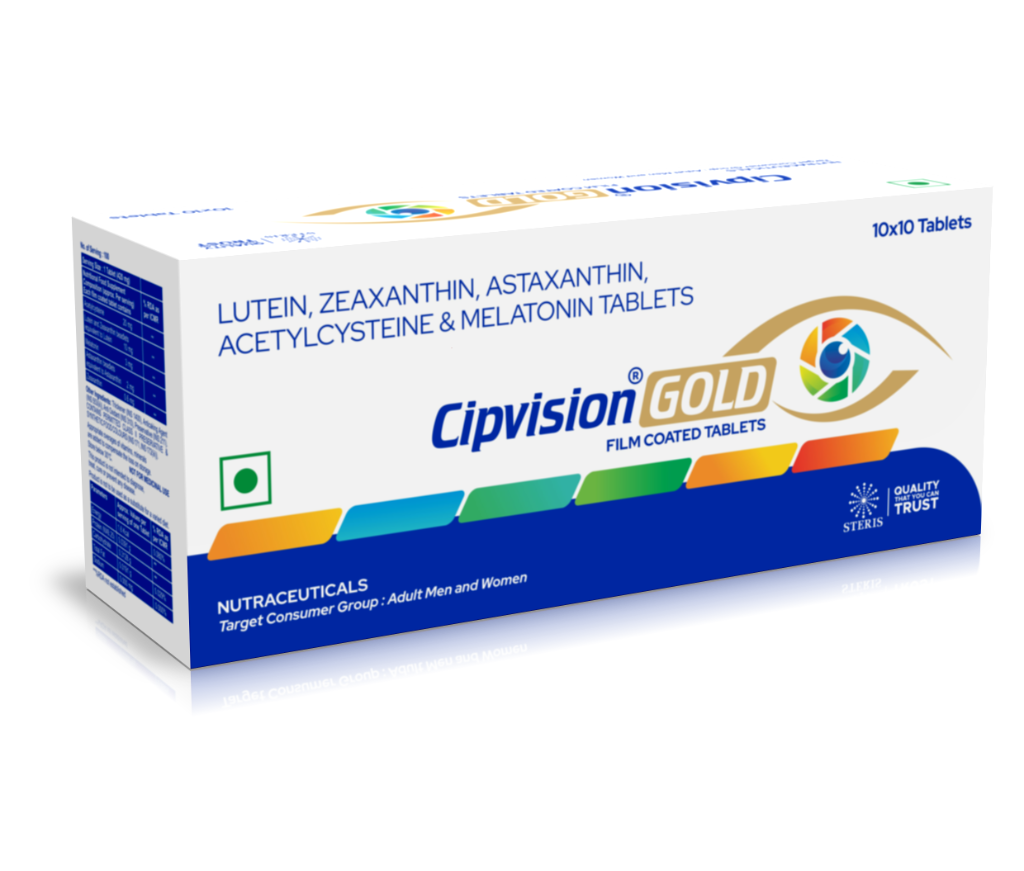
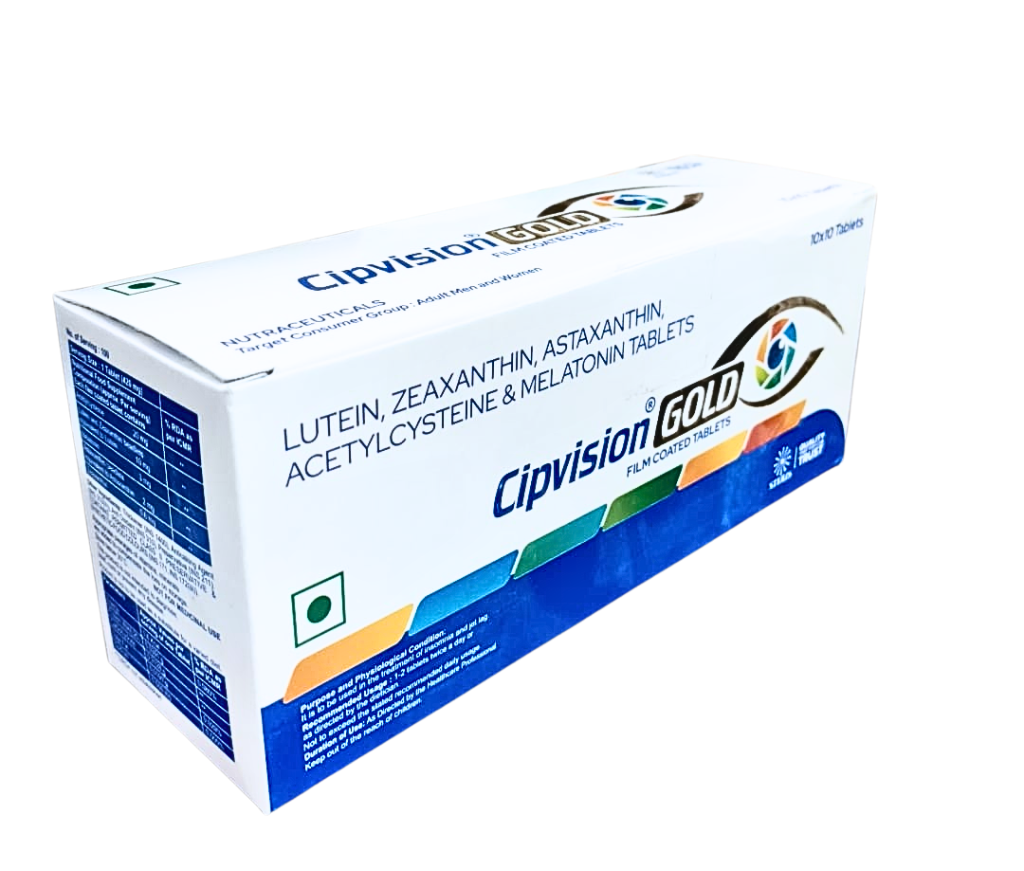

CIPVISION GOLD
 Item requires a valid prescription
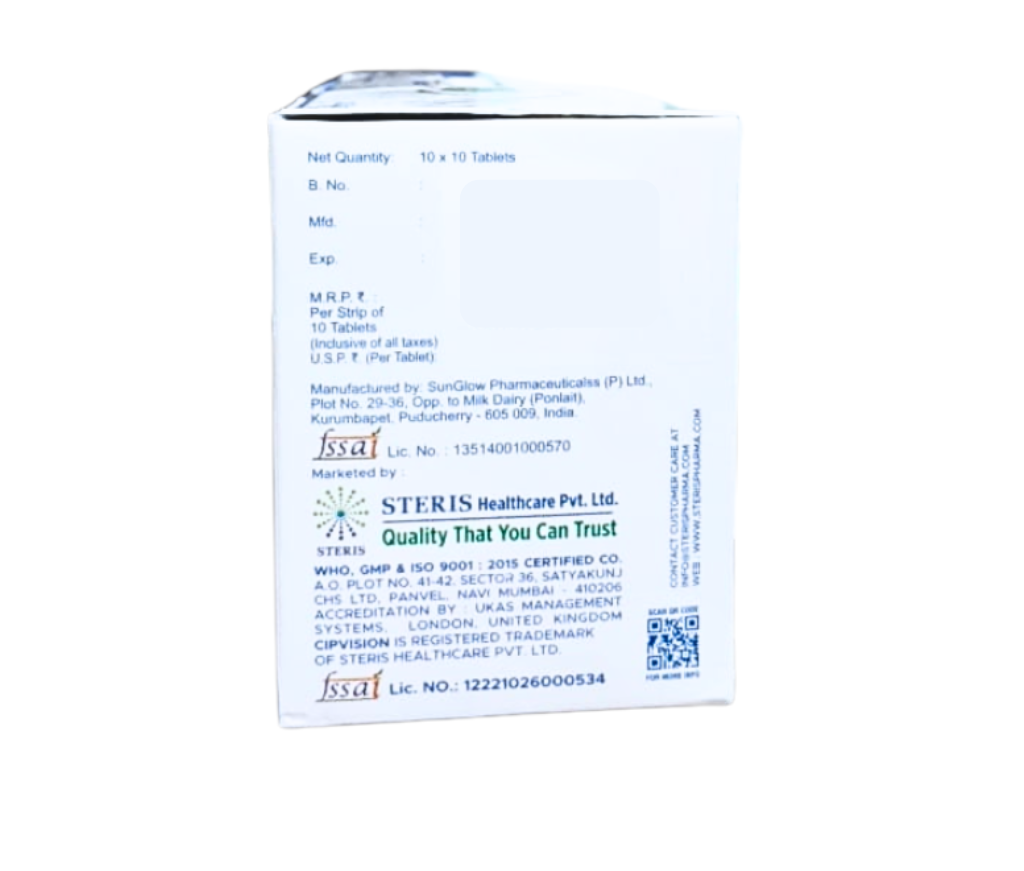
Manufactured By Steris Healthcare Pvt. Ltd.
Composition lutein, Zeaxanthin, Astaxanthin, Acetylcysteine & Melatonin Tablets
Rs 238.00
MRP Rs 340.00
(30% OFF)
Includes all taxes
Package SIZE
( FOR 10 TABLETS )

100% Authentic
Products

Free
Shipping*

Products
Return Policy
Description:
Lutein, zeaxanthin, astaxanthin, acetylcysteine & melatonin tablets are a combination nutritional product designed to provide antioxidant and nutritional support, particularly for people interested in eye health, oxidative-stress protection, and healthy sleep patterns. Because formulations and doses can vary substantially between manufacturers, buyers should always check the product label for the exact quantities of each ingredient.
Lutein and zeaxanthin are carotenoids naturally concentrated in the retina and lens. Research from the National Eye Institute (NEI) has established that a specific combination containing lutein and zeaxanthin, together with vitamins and minerals, can help slow progression from intermediate to advanced age-related macular degeneration (AMD) in appropriate patients. However, this evidence applies to the AREDS2 formulation, not automatically to every supplement containing lutein and zeaxanthin.
Astaxanthin is another carotenoid with antioxidant properties. N-acetylcysteine (NAC) is a precursor to glutathione, one of the body's important antioxidant systems. Melatonin is a hormone involved in regulating the sleep-wake cycle. Therefore, a product containing all five ingredients may be positioned as a broader nutritional supplement rather than a treatment for one specific disease.
For consumers searching with buyer intent—such as “buy lutein zeaxanthin astaxanthin acetylcysteine melatonin tablets,” “price,” “uses,” “benefits,” or “side effects”—the most important consideration is the exact formulation, evidence supporting each ingredient, product quality, and suitability for the individual.
What Are Lutein, Zeaxanthin, Astaxanthin, Acetylcysteine & Melatonin Tablets?
This combination contains five ingredients with different biological roles.
Lutein and zeaxanthin are carotenoids found in the macula and other parts of the eye. They are thought to act as antioxidants and help absorb high-energy blue and ultraviolet light. The NEI notes that these nutrients are naturally present in the retina and lens.
Astaxanthin is a naturally occurring carotenoid found in certain algae and seafood. It has antioxidant activity and is commonly included in nutritional products marketed for cellular and eye-health support. However, evidence for astaxanthin should not be confused with the much stronger clinical evidence available for the specific AREDS2 formula in eligible AMD patients.
Acetylcysteine, more commonly called N-acetylcysteine or NAC, is a compound that can contribute to the body's glutathione production. It is used medically in specific circumstances, but its presence in a nutritional combination does not mean the product is a treatment for a medical condition.
Melatonin is a hormone naturally produced by the brain in response to darkness and helps regulate circadian rhythms and sleep timing.
Together, these ingredients may be selected for a supplement intended to provide antioxidant and nutritional support while also supporting normal sleep-wake timing.
Uses of Lutein, Zeaxanthin, Astaxanthin, Acetylcysteine & Melatonin Tablets
The appropriate use depends on the product's formulation, label claims, and the individual's health needs.
Eye-health nutritional support
Lutein and zeaxanthin are particularly relevant to eye health because they accumulate in the retina. Their role has been extensively studied in relation to AMD and retinal health.
The strongest clinical evidence is for the AREDS2 formulation, which contains lutein 10 mg and zeaxanthin 2 mg along with vitamin C, vitamin E, zinc, and copper. NEI research found that AREDS2 supplements can reduce the risk of progression from intermediate to advanced AMD by about 25%.
Importantly, AREDS2 is not intended for everyone. The NEI states that AREDS/AREDS2 supplements benefited people with intermediate or late AMD but did not benefit people without AMD or those with early AMD.
Antioxidant nutritional support
Lutein, zeaxanthin, astaxanthin, and NAC are commonly associated with antioxidant activity. A supplement containing these ingredients may therefore be used as part of a broader nutritional approach.
However, “antioxidant” should not be interpreted as proof that a product can prevent every condition associated with oxidative stress. Clinical benefits depend on the ingredient, dose, population studied, and health condition.
Sleep and circadian support
Melatonin is involved in the body's sleep-wake cycle. Evidence suggests that melatonin supplements can be useful in certain circumstances, including jet lag and delayed sleep-wake phase disorder, although evidence varies by condition. N
Melatonin should not automatically be considered a treatment for chronic insomnia. NCCIH notes that clinical guidelines have recommended against its use for chronic insomnia because evidence has been insufficient or inconsistent.
Key Benefits
Supports macular nutritional health
Lutein and zeaxanthin are concentrated in the retina and may contribute to the eye's natural antioxidant and light-filtering systems.
Provides carotenoid antioxidants
Lutein, zeaxanthin, and astaxanthin are carotenoids with antioxidant properties. Including multiple carotenoids in one formulation may provide broad nutritional support, although the clinical significance of each ingredient differs.
Supports glutathione-related antioxidant pathways
NAC provides cysteine, which the body can use to synthesize glutathione. This makes NAC an ingredient of interest in products focused on antioxidant support.
Supports normal sleep timing
Melatonin participates in circadian rhythm regulation and may be useful for selected sleep-timing problems.
Convenient combination formulation
A combination tablet can be convenient for consumers who have been advised by a healthcare professional to use several nutritional ingredients. However, convenience should not replace checking whether each ingredient is appropriate for the individual.
Dosage and How to Take These Tablets
There is no universal dosage for “lutein, zeaxanthin, astaxanthin, acetylcysteine & melatonin tablets” because the quantities can vary significantly between products.
The correct dose should therefore come from the specific manufacturer's label or a healthcare professional.
Do not assume that a product containing lutein and zeaxanthin is equivalent to AREDS2. The NEI's studied AREDS2 formulation contains specific amounts of vitamin C, vitamin E, zinc, copper, lutein, and zeaxanthin. Institute
For products containing melatonin, timing is particularly important because melatonin is associated with circadian rhythm regulation rather than simply acting as a conventional sedative.
General administration considerations include:
- Take the product according to its label.
- Do not exceed the recommended serving.
- Check the amount of melatonin per tablet.
- Avoid combining multiple melatonin-containing products unless advised.
- Keep a consistent schedule when melatonin is being used for a sleep-timing purpose.
- Do not change an ophthalmologist-prescribed AREDS2 regimen without professional advice.
Side Effects
The potential side effects depend on the individual ingredients, their doses, and the person's health status.
Possible melatonin side effects
NCCIH reports that mild adverse effects associated with melatonin can include:
- Headache.
- Dizziness.
- Nausea.
- Sleepiness.
Short-term use appears relatively safe for many people, but the long-term safety of melatonin supplementation remains less certain.
Because melatonin can cause drowsiness, caution is appropriate when driving or performing activities requiring alertness.
Possible effects from other ingredients
Lutein and zeaxanthin are generally well tolerated at commonly studied supplemental amounts, but individual products may contain additional ingredients that cause gastrointestinal or allergic reactions.
NAC can cause gastrointestinal symptoms in some individuals, particularly at higher doses. Astaxanthin may also cause digestive or other mild reactions in susceptible users.
The exact safety profile should therefore be assessed from the complete product label rather than from the ingredient list alone.
Precautions and Warnings
Although these tablets may be marketed as nutritional supplements, they are not automatically suitable for everyone.
Check medicines and medical conditions.
People taking prescription medicines should discuss combination supplements with a doctor or pharmacist. NCCIH specifically advises people taking medicines to consult healthcare providers before using melatonin, with particular caution for people with epilepsy or those taking blood-thinning medicines.
Pregnancy and breastfeeding
There is insufficient research to establish the safety of melatonin supplementation during pregnancy and breastfeeding. Anyone who is pregnant, planning pregnancy, or breastfeeding should obtain professional advice before using a product containing melatonin.
Children
Do not give a melatonin-containing supplement to children without guidance from a healthcare professional. NCCIH highlights concerns regarding accidental ingestion, product-label accuracy, and limited long-term safety information in children.
Older adults
Melatonin may remain active longer in older adults and can contribute to daytime drowsiness. Extra caution is appropriate when other medicines that cause sedation are being used.
Existing eye disease
People with AMD or other retinal diseases should consult an eye-care professional before choosing an eye-health supplement.
AREDS2 should be considered specifically in the context of an ophthalmologist's diagnosis. It is not a general-purpose supplement for preventing AMD in healthy individuals.
Buying Lutein, Zeaxanthin, Astaxanthin, Acetylcysteine & Melatonin Tablets Online
For consumers intending to buy lutein, zeaxanthin, astaxanthin, acetylcysteine & melatonin tablets, product verification is essential.
Before purchasing, check:
- Exact amounts of all five active ingredients.
- Manufacturer and brand.
- Batch or lot number.
- Manufacturing and expiry dates.
- Complete ingredient list.
- Recommended serving size.
- Storage conditions.
- Regulatory or quality certifications applicable to your country.
- Packaging integrity.
- Seller or pharmacy credentials.
Do not select a product solely because it contains the same ingredient names as an AREDS2 supplement. The dose and complete formulation matter.
For example, NEI explains that AREDS2 contains lutein 10 mg, zeaxanthin 2 mg, vitamin C 500 mg, vitamin E 400 IU, zinc 80 mg, and copper 2 mg. A product containing lutein and zeaxanthin but lacking the rest of this formulation should not be described as equivalent to AREDS2.
Consumers should also be cautious about exaggerated claims such as “cures macular degeneration,” “restores eyesight,” or “guarantees better vision.” Evidence-based product descriptions should clearly distinguish nutritional support from disease treatment.
Conclusion
Lutein, zeaxanthin, astaxanthin, acetylcysteine & melatonin tablets combine several ingredients associated with antioxidant, nutritional, eye-health, and circadian-support roles. Lutein and zeaxanthin have particularly important evidence in the context of the AREDS2 formula for people with appropriate stages of age-related macular degeneration, while melatonin has evidence for selected sleep and circadian-rhythm applications.
The key buyer-intent point is that not every combination tablet containing these ingredients has the same clinical evidence or formulation as AREDS2. Consumers should verify ingredient quantities, manufacturer information, expiry date, quality standards, and intended use before purchasing.
For people considering a product containing melatonin, additional attention should be paid to drug interactions, drowsiness, pregnancy or breastfeeding, age, and long-term use. NCCIH states that short-term melatonin use appears relatively safe for many people, while long-term safety remains less established.
A high-quality product description should therefore present these tablets as a nutritional supplement rather than a guaranteed treatment or cure. People with diagnosed AMD, significant vision changes, chronic sleep problems, or other medical conditions should obtain individualized advice from an appropriate healthcare professional.
Frequently Asked Questions
1. What are lutein, zeaxanthin, astaxanthin, acetylcysteine, and melatonin tablets used for?
These combination tablets are generally intended for nutritional and antioxidant support, with lutein and zeaxanthin particularly associated with eye health and melatonin associated with sleep-wake regulation. The exact intended use depends on the product formulation and label.
2. Are lutein and zeaxanthin good for eye health?
Lutein and zeaxanthin are naturally found in the retina and lens. They have been studied extensively in relation to AMD. The strongest clinical evidence relates to the specific AREDS2 formulation, which can slow progression from intermediate to advanced AMD in appropriate patients.
3. Can these tablets cure macular degeneration?
No. Supplements should not be advertised as a cure for AMD. AREDS2 was shown to reduce the risk of progression from intermediate to advanced AMD, not to cure existing disease or restore lost vision.
4. What is the role of astaxanthin in these tablets?
Astaxanthin is a carotenoid with antioxidant properties and is commonly included in nutritional supplements. However, evidence for astaxanthin should not be presented as equivalent to the clinical evidence supporting the specific AREDS2 formulation.
5. What is acetylcysteine or NAC used for in a supplement?
N-acetylcysteine (NAC) supplies cysteine for the body's glutathione synthesis and is commonly included in products marketed for antioxidant support. Its medical uses and evidence depend on the specific condition and dose.
6. Does melatonin help with sleep?
Melatonin can be useful for certain sleep-timing problems, including jet lag and delayed sleep-wake phase disorder. Evidence for chronic insomnia is less convincing, and NCCIH notes that clinical guidelines have recommended against its routine use for chronic insomnia.
7. What are the side effects of melatonin?
Reported mild side effects include sleepiness, headache, dizziness, and nausea. Long-term safety is less well established. Melatonin can also interact with medicines, so people taking prescription drugs should consult a healthcare professional.
8. Can I take melatonin-containing tablets every night?
The appropriate duration depends on why melatonin is being used and the individual's health circumstances. Long-term safety is not as well established as short-term use, so regular long-term use should be discussed with a healthcare professional.
9. Are these tablets the same as AREDS2 supplements?
Not necessarily. AREDS2 has a specific evidence-based formulation containing vitamin C, vitamin E, zinc, copper, lutein, and zeaxanthin. A tablet containing lutein, zeaxanthin, astaxanthin, NAC, and melatonin is not automatically equivalent to AREDS2
10. Who should consult a doctor before taking these tablets?
People who are pregnant or breastfeeding, children, older adults, individuals with chronic medical conditions, people taking prescription medicines, and anyone with diagnosed eye disease should consider professional advice before using a product containing these ingredients.
11. Can I buy lutein, zeaxanthin, astaxanthin, acetylcysteine, and melatonin tablets online?
Where legally permitted, purchase from a reputable pharmacy, manufacturer, or authorized supplement seller. Check the exact ingredient quantities, batch number, expiry date, packaging, storage requirements, and seller credentials before purchasing.
12. What should I check before buying this supplement?
Check the exact composition, dosage per tablet, manufacturer, expiry date, batch information, quality or regulatory documentation, recommended serving, and any warnings or contraindications.