


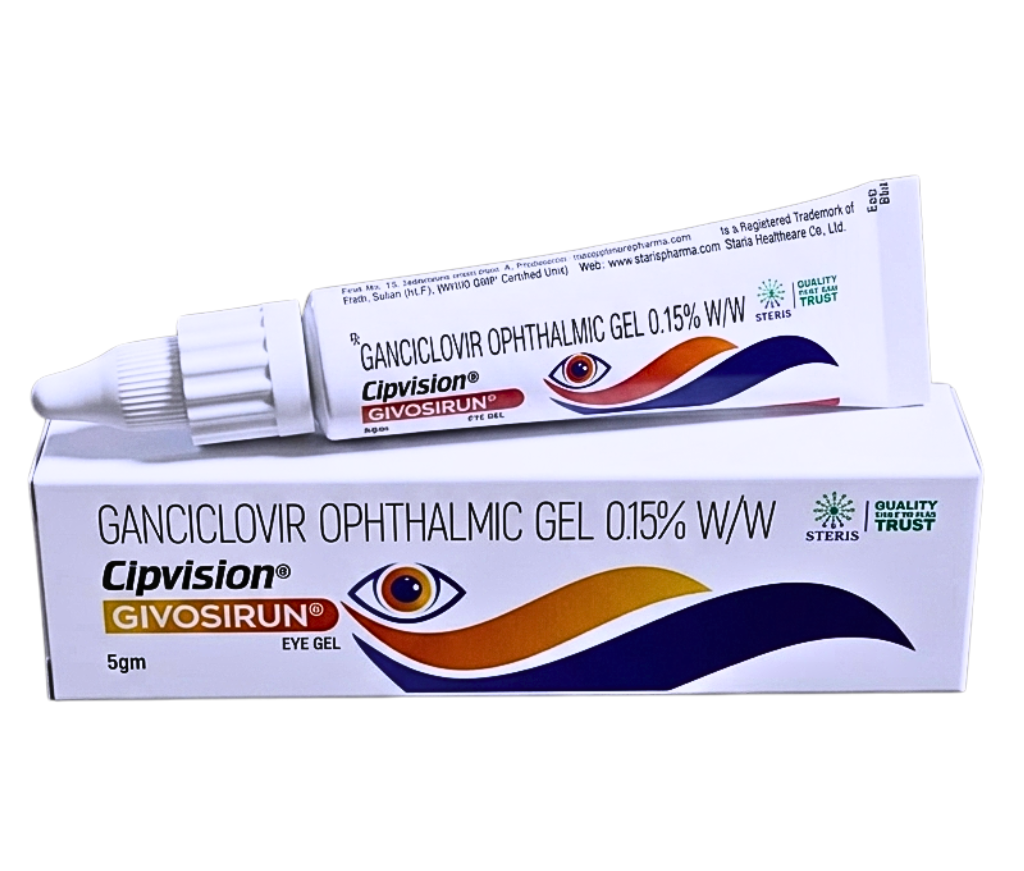
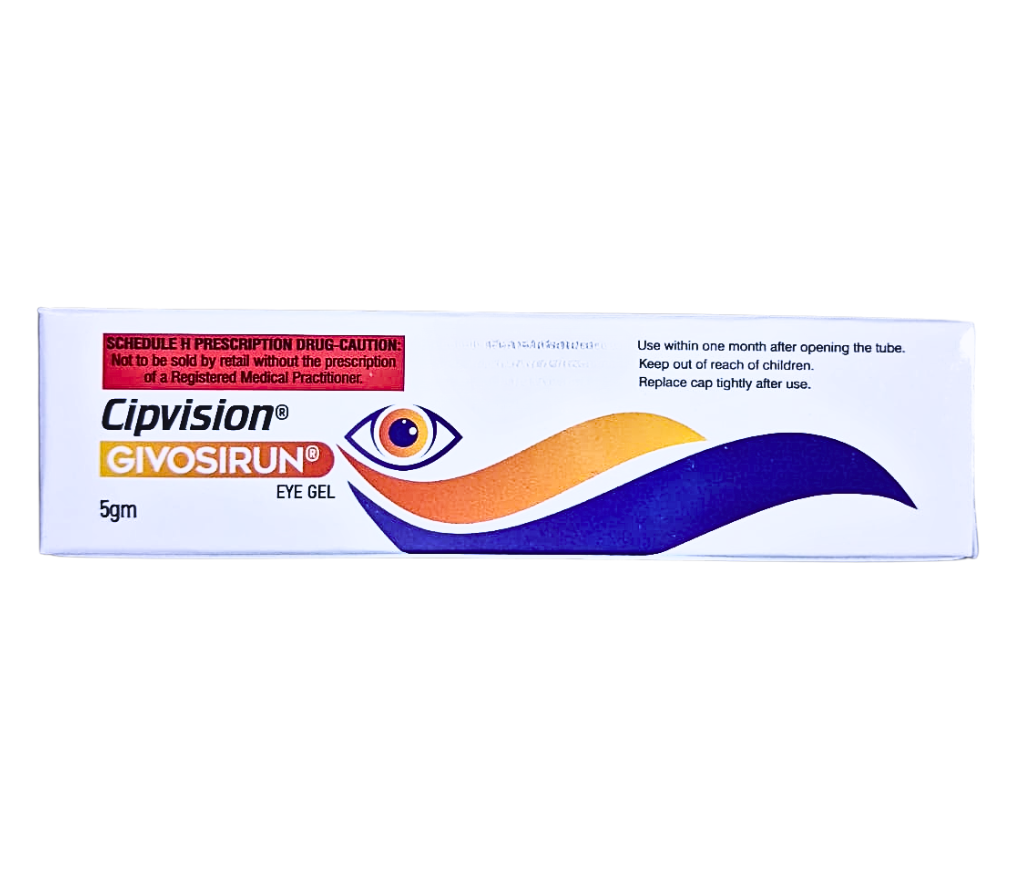
CIPVISION GIVOSIRUN
 Item requires a valid prescription
Manufactured By Steris Healthcare Pvt Ltd
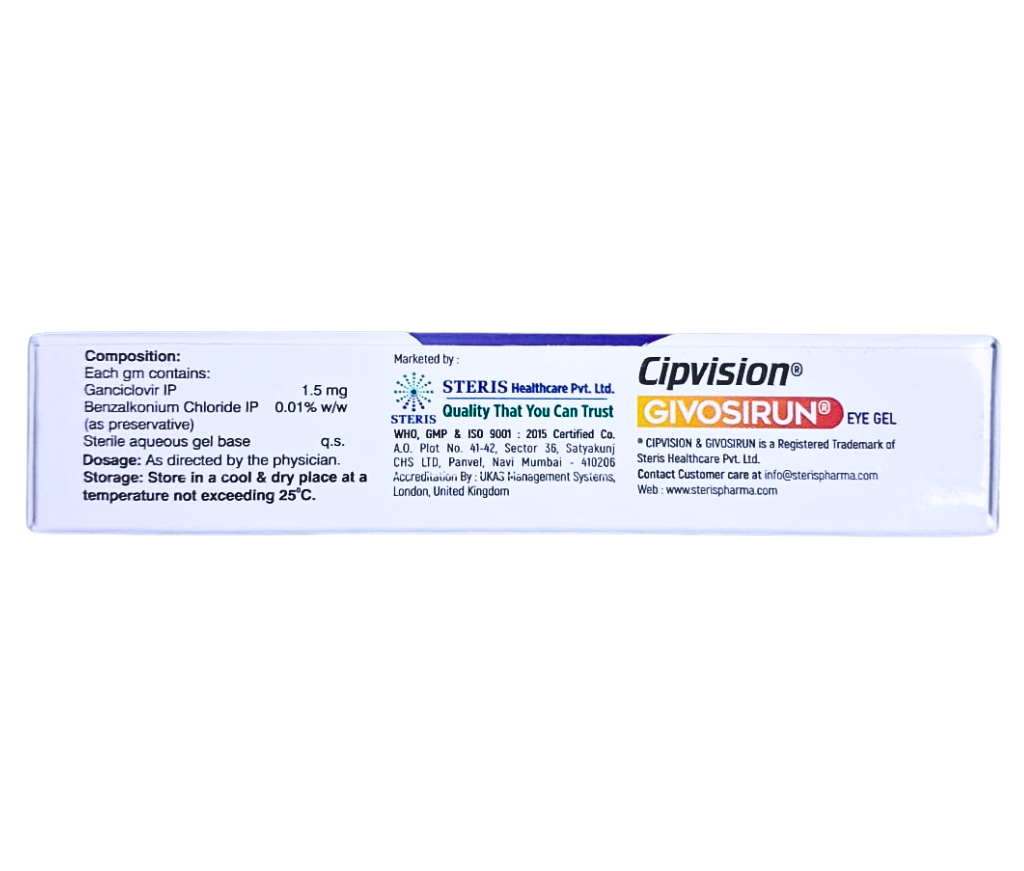
Composition Ganciclovir Ophthalmic Gel 0.15% W/W
Rs 105.00
MRP Rs 150.00
(30% OFF)
Includes all taxes
Package SIZE
( For 5 gm )

100% Authentic
Products

Free
Shipping*

Products
Return Policy
Description:
Ganciclovir ophthalmic gel 0.15% w/w is an antiviral eye medicine used for the treatment of acute herpetic keratitis, particularly dendritic corneal ulcers caused by herpes simplex virus (HSV). Unlike antibiotic eye drops, which target bacteria, ganciclovir is designed to act against a viral infection.
For patients, caregivers, pharmacists, distributors, and buyers researching ganciclovir ophthalmic gel 0.15% w/w, understanding its approved use, mechanism of action, benefits, potential side effects, administration, precautions, and purchasing considerations is important. The medicine is not a general-purpose treatment for red eyes, dry eyes, bacterial conjunctivitis, or unexplained eye irritation.
Current DailyMed prescribing information identifies ganciclovir ophthalmic gel 0.15% as an ophthalmic antiviral product and reports clinical evidence supporting its use in herpetic keratitis.
What Is Ganciclovir Ophthalmic Gel 0.15% w/w?
Ganciclovir ophthalmic gel 0.15% w/w is a topical ophthalmic antiviral preparation containing ganciclovir at a concentration of 1.5 mg per gram of gel. Current U.S. labeling lists ganciclovir 1.5 mg/g as the active ingredient.
The gel is applied directly to the affected eye. Its purpose is to deliver an antiviral medicine to the ocular surface and cornea, where herpes simplex virus can cause infectious lesions.
The 0.15% gel formulation is different from systemic ganciclovir medicines used for other viral conditions. Patients should therefore use the ophthalmic product only according to the ophthalmologist's instructions and the specific product's prescribing information.
What Is Ganciclovir Ophthalmic Gel Used For?
The primary use of ganciclovir ophthalmic gel 0.15% w/w is the treatment of acute herpetic keratitis, including dendritic ulcers caused by herpes simplex virus.
Herpetic keratitis is a viral infection affecting the cornea. It can cause symptoms such as
- Eye redness
- Eye discomfort or pain
- Watery eyes
- Sensitivity to light
- Blurred vision
- A characteristic corneal lesion
Because corneal herpes can threaten vision if inadequately managed, diagnosis by an eye-care professional is important.
Ganciclovir is not an appropriate treatment for every red or painful eye. A bacterial eye infection, allergic conjunctivitis, dry eye, corneal injury, fungal infection, or another inflammatory condition may require a completely different treatment.
How Does Ganciclovir Ophthalmic Gel Work?
Ganciclovir is an antiviral medicine that interferes with viral DNA synthesis.
After entering infected cells, ganciclovir undergoes phosphorylation to an active form. The active compound inhibits viral DNA polymerase and thereby interferes with replication of susceptible viruses.
This mechanism makes ganciclovir fundamentally different from antibacterial ophthalmic medicines such as moxifloxacin or chloramphenicol.
The practical takeaway for buyers is simple: ganciclovir ophthalmic gel is intended for a specific viral eye infection, not as a general antibiotic or lubricating eye drop.
Key Benefits of Ganciclovir Ophthalmic Gel 0.15% w/w
1. Targets herpes simplex virus in the eye
The principal benefit is antiviral treatment of appropriate cases of herpetic keratitis. Current labeling identifies acute herpetic keratitis caused by HSV as the therapeutic indication.
2. Direct ophthalmic delivery
The medicine is applied directly to the affected eye, allowing topical delivery to the ocular surface and cornea.
3. Gel formulation can provide sustained contact.
Unlike a very watery solution, an ophthalmic gel has greater viscosity. This allows the medication to remain in contact with the ocular surface longer than a conventional aqueous drop.
4. Evidence of effectiveness in dendritic ulcers
Current prescribing information reports a randomized controlled clinical trial involving patients with herpetic keratitis. In that study, clinical resolution at Day 7 occurred in 77% of patients treated with ZIRGAN versus 72% treated with acyclovir ophthalmic ointment in the primary reported comparison. The labeling concluded that ZIRGAN was non-inferior to acyclovir ophthalmic ointment 3% for dendritic ulcers.
5. Useful when a clinician identifies HSV keratitis
The major value of ganciclovir is its specificity. When an ophthalmologist identifies appropriate HSV-related corneal disease, an antiviral ophthalmic gel can directly address the viral cause rather than merely treating symptoms such as redness or discomfort.
How to Use Ganciclovir Ophthalmic Gel 0.15% w/w
Use ganciclovir ophthalmic gel exactly as prescribed by your ophthalmologist.
Because dosing can depend on the stage of infection and the particular product, patients should follow the current prescription and package insert rather than relying on dosing information from another ganciclovir formulation.
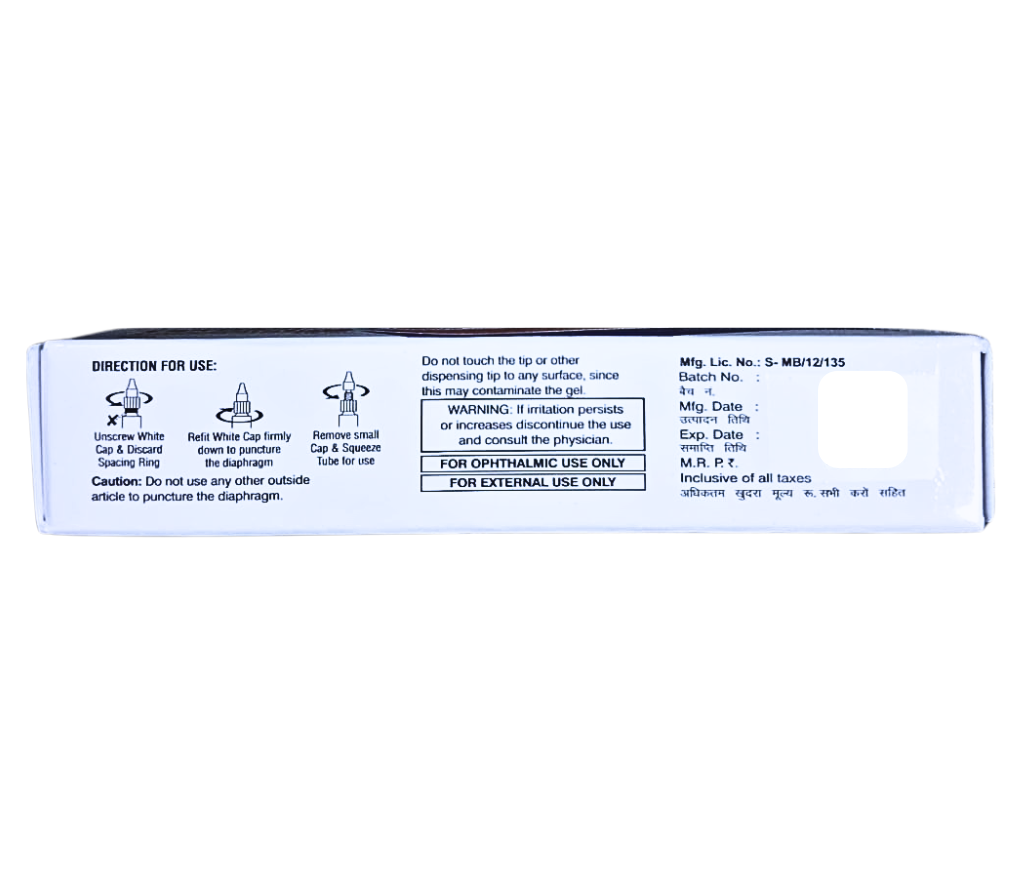
General administration technique includes:
- Wash your hands before applying the medicine.
- Avoid touching the applicator tip to the eye, eyelashes, fingers, or another surface.
- Gently pull down the lower eyelid.
- Apply the prescribed amount of gel into the affected eye.
- Close the eye gently.
- Replace the cap securely.
- Wash your hands after application if necessary.
Current labeling emphasizes avoiding contamination of the container.
Because the product is a gel, temporary blurred vision can occur after application. Patients should wait until vision becomes clear before driving or performing activities requiring precise vision.
Ganciclovir Ophthalmic Gel Side Effects
Like all medicines, ganciclovir ophthalmic gel 0.15% w/w can cause side effects.
The most frequently reported adverse reactions in clinical studies were
- Blurred vision
- Eye irritation
- Punctate keratitis
- Conjunctival hyperemia, commonly described as eye redness
Current DailyMed labeling reports blurred vision in 60%, eye irritation in 20%, punctate keratitis in 5%, and conjunctival hyperemia in 5% of patients in the cited clinical experience.
These percentages come from clinical-trial data and should not be interpreted as a guarantee that an individual patient will experience these effects.
Blurred vision
Temporary blurred vision is particularly relevant because ganciclovir is formulated as a gel. Do not drive or operate machinery until your vision has returned to normal.
Eye irritation
Some patients may experience irritation after applying the gel. Persistent or worsening discomfort should be discussed with an ophthalmologist.
Punctate keratitis
Punctate keratitis refers to small areas of corneal epithelial disturbance. Because the underlying disease itself affects the cornea, any new or worsening visual symptoms should be evaluated rather than automatically attributed to the medicine.
Eye redness
Conjunctival hyperemia may occur during treatment. However, increasing redness accompanied by pain, reduced vision, or worsening inflammation warrants medical evaluation.
Important Safety Precautions
Ganciclovir ophthalmic gel should be used under appropriate ophthalmic supervision.
Tell your doctor about:
- Previous reactions to ganciclovir or related medicines
- Pregnancy or plans to become pregnant
- Breastfeeding
- Other eye medicines you use
- Contact-lens use
- Previous corneal disease
- Recurrent herpes infections
- Recent eye surgery
Current labeling states that there are no available human pregnancy data sufficient to establish drug-associated risk for topical ZIRGAN. Animal studies with systemic ganciclovir showed reproductive and developmental toxicity at high exposures. Patients who are pregnant, planning pregnancy, or breastfeeding should discuss treatment with their healthcare professional.
Can Ganciclovir Gel Be Used for a Red Eye?
No—not simply because the eye is red.
Redness can result from many conditions, including:
- Viral conjunctivitis
- Bacterial conjunctivitis
- Allergies
- Dry eye
- Corneal abrasion
- Herpetic keratitis
- Uveitis
- Contact-lens-related complications
Ganciclovir is specifically intended for appropriate herpes simplex viral eye disease. Using it for an unrelated condition may delay correct treatment.
If you have eye pain, reduced vision, significant light sensitivity, a corneal spot, or worsening symptoms, prompt examination by an eye-care professional is particularly important.
Ganciclovir Ophthalmic Gel vs. Antibiotic Eye Drops
A common buyer mistake is treating all medicated eye drops as interchangeable.
Ganciclovir is an antiviral.
Moxifloxacin and chloramphenicol are antibacterial medicines.
An antiviral will not treat a bacterial infection, while an antibiotic will not eliminate herpes simplex virus.
The correct medicine therefore depends on the diagnosis rather than simply the symptom of “red eye.”
What to Check Before Buying Ganciclovir Ophthalmic Gel 0.15% w/w
If your ophthalmologist has prescribed this medicine, consider the following checklist before purchasing.
Verify the exact strength.
Confirm that the product contains ganciclovir 0.15% w/w, equivalent to 1.5 mg/g in the formulation described by current U.S. labeling.
Check the manufacturer
Verify the manufacturer's name and product registration or labeling information applicable to your country.
Inspect the packaging.
Before purchasing, check:
- Expiry date
- Batch or lot number
- Seals
- Tube or applicator condition
- Product name
- Strength
- Storage instructions
Do not use a damaged, expired, or visibly contaminated ophthalmic product.
Purchase through a legitimate pharmacy
For prescription ophthalmic antiviral medicines, choose a reputable pharmacy or authorized pharmaceutical supplier. Avoid websites that offer prescription medicines without appropriate verification or provide unclear manufacturer information.
Compare formulation, not just price.
Two products may contain the same active ingredient but differ in packaging, excipients, preservatives, tube size, regulatory status, and storage requirements.
For a prescription ophthalmic medicine, authenticity and correct formulation are more important than choosing the lowest advertised price.
Frequently Asked Questions
1. What is ganciclovir ophthalmic gel 0.15% w/w used for?
Ganciclovir ophthalmic gel 0.15% w/w is used to treat acute herpetic keratitis caused by herpes simplex virus, including appropriate dendritic corneal ulcers.
2. Is ganciclovir eye gel an antibiotic?
No. Ganciclovir is an antiviral medicine, not an antibiotic. It is designed to inhibit replication of susceptible herpes viruses and should not be substituted for an antibacterial eye medicine when a bacterial infection is diagnosed.
3. What are the side effects of ganciclovir ophthalmic gel?
The most commonly reported adverse effects include blurred vision, eye irritation, punctate keratitis, and conjunctival hyperemia, or eye redness. Current prescribing information reports blurred vision as the most frequently observed adverse reaction.
4. Can ganciclovir ophthalmic gel be used for conjunctivitis?
It depends on the cause. Ganciclovir is not a general treatment for conjunctivitis. It is intended for appropriate herpes simplex-related ocular disease, whereas bacterial and allergic conjunctivitis require different treatment approaches.
5. Does ganciclovir ophthalmic gel cure herpes eye infection?
It treats the active viral eye infection but should not be described as eliminating herpes simplex virus permanently from the body. HSV can remain latent and may reactivate later. Recurrent or persistent symptoms require ophthalmic evaluation.
6. Can ganciclovir gel cause blurred vision?
Yes. Temporary blurred vision is a commonly reported adverse reaction. Current labeling reports blurred vision in 60% of patients in the cited clinical data. Because vision can be affected immediately after application, avoid driving until your vision is clear.
7. How long should I use ganciclovir ophthalmic gel?
The treatment schedule should be determined by your ophthalmologist and the specific product labeling. Do not extend treatment, stop early, or change the frequency without professional advice.
8. Can I use ganciclovir eye gel with other eye drops?
Sometimes multiple ophthalmic medicines are prescribed together, but the correct timing depends on the products involved. Tell your ophthalmologist or pharmacist about every eye drop, ointment, or other medicine you use.
9. Is ganciclovir ophthalmic gel safe during pregnancy?
Human pregnancy data for topical ZIRGAN are limited. Current labeling states that there are no adequate human data to establish the associated risk. If you are pregnant, planning pregnancy, or breastfeeding, discuss the treatment with your healthcare professional before use.
10. Where can I buy ganciclovir ophthalmic gel 0.15% w/w?
Purchase ganciclovir ophthalmic gel 0.15% w/w from a legitimate pharmacy or authorized pharmaceutical supplier, particularly because it is a prescription ophthalmic antiviral. Verify the active ingredient, 0.15% strength, manufacturer, expiry date, packaging integrity, and storage requirements before use.
Conclusion
Ganciclovir ophthalmic gel 0.15% w/w is a specialized antiviral eye medicine intended primarily for appropriate cases of acute herpetic keratitis caused by herpes simplex virus. Its key advantage is targeted antiviral treatment delivered directly to the eye. Current clinical evidence in the prescribing information demonstrates that ganciclovir ophthalmic gel was non-inferior to acyclovir ophthalmic ointment for dendritic ulcers in the cited clinical trials.
For buyers, the most important consideration is correct diagnosis rather than simply finding an eye gel at the lowest price. Ganciclovir should not be used as a substitute for antibiotics, lubricants, allergy, or other ophthalmic medicines unless an eye-care professional determines that it is appropriate.